
Author

admin

Browsing

 1911 Gold Corporation (‘1911 Gold’ or the ‘Company’) (TSXV: AUMB) (OTCQB: AUMBF) (FRA: 2KY) is pleased to announce that the Manitoba Mineral Development Fund (MMDF) has approved a $300,000 grant to support the current, ongoing underground drill program at the True North Gold Project, located within the Company’s 100%-owned Rice Lake Gold property in southeast Manitoba, Canada.

‘We extend our sincere gratitude to the MMDF for their continued support of the True North Gold Project, and our near-term vision to restart mining operations in 2027.’ Shaun Heinrichs, CEO and President, stated, ‘The MMDF’s active involvement and interest in our progress reflect our shared commitment to advancing responsible resource development in Manitoba, creating meaningful employment for surrounding communities, including the Hollow Water and Black River First Nations, and fostering sustainable economic growth for years to come.’

‘We appreciate the opportunity to support projects such as this.’ Edward Suzuki, Program Manager (MMDF), ‘By providing this funding support and confidence, we aim to attract more investment into Manitoba. The socio-economic impacts from the True North redevelopment project will demonstrate the value of MMDF and justify the continuation of the program in the coming years.’

1911 Gold has been working with the MMDF over the past several years and has enjoyed strong support for both exploration programs and development projects. Proceeds from the grant will be allocated directly toward the underground delineation drill program which comprises approximately 9,000 metres in 80 drill holes, focussed on upgrading the current resources within two target areas scheduled for test mining in 2026 (see news release dated September 25, 2025). The test mining is intended to validate the planned mining method and economics – critical information as the Company advances toward the restart of operations in early 2027.

As announced in a press release by Business, Mining, Trade and Job Creation Minister Jamie Moses (dated October 8, 2025), the Manitoba government is providing $1.2 million to six mineral exploration projects through the MMDF to support mining projects that create Indigenous partnerships, increase job opportunities and stimulate investment in northern Manitoba.

About MMDF

The MMDF is a provincial fund administered by the Manitoba Chambers of Commerce (MCC). Communities and businesses, including Indigenous groups, municipalities and the not-for-profit sector, are eligible to apply for funding. Financial assistance from the fund could include one-time grants for activities that help advance new mining opportunities and outreach to First Nations for collaborative resource development in Manitoba.

For more information on the Manitoba Mineral Development Fund and the next intake, visit www.mmdf.ca.

About 1911 Gold Corporation

1911 Gold is a junior developer with a highly prospective, consolidated land package totaling more than 61,647 hectares within and adjacent to the Archean Rice Lake greenstone belt in Manitoba, Canada. The Company also owns the True North mine and mill complex in Bissett, Manitoba. 1911 Gold believes its land package represents a prime exploration opportunity, with the potential to develop a mining district centred on the True North complex.

In addition, the Company holds the Apex project near Snow Lake, Manitoba and the Denton-Keefer project near Timmins, Ontario, and remains focused on advancing organic growth while pursuing accretive acquisition opportunities across North America.

1911 Gold’s True North complex and the exploration land package are located within and among the First Nation communities of the Hollow Water First Nation and the Black River First Nation. 1911 Gold looks forward to maintaining open, cooperative, and respectful communications with all of our local communities and stakeholders to foster mutually beneficial working relationships. 

ON BEHALF OF THE BOARD OF DIRECTORS
Shaun Heinrichs
President and CEO

CAUTIONARY STATEMENT REGARDING FORWARD-LOOKING INFORMATION

This news release may contain forward-looking statements. Often, but not always, forward-looking statements can be identified by the use of words such as ‘plans’, ‘expects’ or ‘does not expect’, ‘is expected’, ‘budget’, ‘scheduled’, ‘estimates’, ‘forecasts’, ‘intends’, ‘anticipates’ or ‘does not anticipate’, or ‘believes’, or describes a ‘goal’, or variation of such words and phrases or state that certain actions, events or results ‘may’, ‘could’, ‘would’, ‘might’ or ‘will’ be taken, occur or be achieved.

All forward-looking statements reflect the Company’s beliefs and assumptions based on information available at the time the statements were made. Actual results or events may differ from those predicted in these forward-looking statements. All of the Company’s forward-looking statements are qualified by the assumptions that are stated or inherent in such forward-looking statements, including the assumptions listed below. Although the Company believes that these assumptions are reasonable, this list is not exhaustive of factors that may affect any of the forward-looking statements.

Forward-looking statements involve known and unknown risks, future events, conditions, uncertainties and other factors which may cause the actual results, performance or achievements to be materially different from any future results, predictions, projections, forecasts, performance or achievements expressed or implied by the forward-looking statements. All statements that address expectations or projections about the future, including, but not limited to, the Company’s current business plans, including the underground drilling and development programs and the planned test mining program, leading towards a potential mine restart in 2027 and, generally, the plans, operations and prospects of the Company, are forward-looking statements.

In making the forward-looking statements included in this news release, the Company have applied several material assumptions, including: the Company´s financial condition is sufficient for development plans and do not change because of unforeseen events, and management’s ability to execute its business strategy and no unexpected or adverse regulatory changes with respect to the Company’s mineral projects. Forward-looking statements and information are subject to various known and unknown risks and uncertainties, many of which are beyond the ability of the Company to control or predict, that may cause the Company’s actual results, performance or achievements to be materially different from those expressed or implied thereby, and are developed based on assumptions about such risks, uncertainties and other factors set out herein. Although 1911 Gold has attempted to identify important factors that could cause actual actions, events or results to differ materially from those described in forward-looking statements, there may be other factors that cause actions, events or results not to be as anticipated, estimated or intended. There can be no assurance that forward-looking statements will prove to be accurate, as actual results and future events could differ materially from those anticipated in such statements. Accordingly, readers should not place undue reliance on forward-looking statements.

All forward-looking statements contained in this news release are given as of the date hereof. The Company disclaims any intention or obligation to update or revise any forward-looking statements whether as a result of new information, future events or otherwise, except in accordance with applicable securities laws.

Neither TSX Venture Exchange nor its Regulation Services Provider (as that term is defined in the policies of the TSX Venture Exchange) accepts responsibility for the adequacy or accuracy of this release.

SOURCE 1911 Gold Corporation

View original content to download multimedia: http://www.newswire.ca/en/releases/archive/November2025/10/c7009.html

News Provided by Canada Newswire via QuoteMedia

This post appeared first on investingnews.com

Prosper NWT is providing a C$3.8 million loan to help complete the acquisition from JFSL

Fortune Minerals Limited (TSX: FT,OTC:FTMDF) (OTCQB: FTMDF) (‘ Fortune ‘ or the ‘ Company ‘) ( www.fortuneminerals.com ) is pleased to announce that it has entered into a binding offer letter (the ‘Agreement’) for a loan with a principal amount of C$3.8 million from Prosper NWT, a public agency of the Government of the Northwest Territories (‘ GNWT ‘) established to support the economic objectives of the GNWT in a manner that benefits the people and economy of the Northwest Territories (‘ NWT ‘). The loan will enable Fortune to complete the purchase of the Lamont County, Alberta site (the ‘ Refinery Site ‘) and existing facilities from JFSL Field Services LLC (‘ JFSL ‘) where the Company plans to construct a hydrometallurgical facility to process concentrates from the NICO cobalt-gold-bismuth-copper mine in the NWT, and make value-added critical mineral products for the energy transition, new technologies and defense.

Like our news? Click-to-post on X .

Pursuant to the Agreement, which was entered into between Prosper NWT and Fortune Minerals Alberta Inc. (‘ Fortune Alberta ‘), a wholly owned subsidiary of Fortune, Prosper NWT will provide a C$3.8 million loan over a term of up to 60 months at a fixed 8.45% interest rate, with interest only payments for the first 24 months, followed by a blended interest and principal amount for the remaining 36 months based on a 180-month amortization. Fortune Alberta will provide the Refinery Site, buildings and equipment as security for the loan, which will also be guaranteed by the Company. Fortune has already made installment payments totalling C$3,037,500 towards the C$6 million purchase price for the Refinery Site and facilities. The Prosper NWT loan will enable Fortune to complete the purchase and is expected to close by year-end.

Robin Goad, President and CEO of Fortune commented, ‘With this key Alberta Refinery site secured, Fortune will be able to move the vertically integrated NICO cobalt-gold-bismuth-copper critical minerals project closer to a construction decision, while also removing a significant development risk. We are grateful for this financial commitment from Prosper NWT demonstrating the importance of the critical minerals industry to the economy of Canada’s North.’

Alberta Hydrometallurgical Facility

The JFSL site is comprised of 76.78 acres of lands adjacent to the Canadian National Railway in Alberta’s Industrial Heartland, an association of five municipalities northeast of Edmonton with the planning approvals already in place for industrial development and tax incentives keyed to capital investment. The JFSL site is a steel fabrication plant with more than 42,000 square feet of serviced shops and buildings situated close to the human resources, services and reagents in place for an existing world class petrochemicals and critical minerals processing hub. The Refinery Site and facilities are expected to materially reduce capital and operating costs for development of the NICO Project.

NICO Project

The NICO cobalt-gold-bismuth-copper critical minerals project (‘ NICO Project ‘) is comprised of a planned open pit and underground mine and concentrator in the NWT and a dedicated hydrometallurgical facility in Alberta where concentrates from the mine, and other feed sources, will be processed to value-added products. The NICO Project contains three critical minerals (cobalt, bismuth and copper) and more than one million ounces of in-situ gold as a countercyclical and highly liquid co-product to mitigate metal price volatility. Development of the vertically integrated NICO Project will strengthen North American critical mineral supply chain resilience and security, a priority for western governments that need to reduce their dependence on foreign entities of concern. The NICO Project will be a reliable producer of critical mineral products in a Tier 1 jurisdiction with supply chain transparency and custody control of the contained metals from ores through to the production of value-added critical mineral products.

For more detailed information about the NICO Mineral Reserves and certain technical information in this news release, please refer to the Technical Report on the NICO Project, entitled ‘Technical Report on the Feasibility Study for the NICO-Gold-Cobalt-Bismuth-Copper Project, Northwest Territories, Canada’, dated April 2, 2014 and prepared by Micon International Limited which has been filed on SEDAR and is available under the Company’s profile at www.sedarplus.ca .

The disclosure of scientific and technical information contained in this news release have been approved by Robin Goad, M.Sc., P.Geo., President and Chief Executive Officer of Fortune and Alex Mezei, M.Sc., P.Eng. Fortune’s Chief Metallurgist, who are ‘Qualified Persons’ under National Instrument 43-101.

About Fortune Minerals

Fortune is a Canadian mining company focused on developing the NICO cobalt-gold-bismuth-copper project in the Northwest Territories and Alberta. Fortune also owns the satellite Sue-Dianne copper-silver-gold deposit located 25 km north of the NICO deposit and is a potential future source of incremental feed to extend the life of the NICO concentrator.

Follow Fortune Minerals:

Click here to subscribe to Fortune’s email list.

Click here to follow Fortune on LinkedIn.

@FortuneMineral on X.

This press release contains forward-looking information and forward-looking statements within the meaning of applicable securities legislation. This forward-looking information includes statements with respect to, among other things, the advance of the some or all of the loan from Prosper NWT in accordance with the Agreement, including the satisfaction of all conditions precedent by the Company to the advance of the loan; the exercise of the option by the Company and the purchase of the JFSL site, the construction of the proposed Hydrometallurgical Facility at the JFSL site, and the Company’s plans to develop the NICO Project. Forward-looking information is based on the opinions and estimates of management as well as certain assumptions at the date the information is given (including, in respect of the forward-looking information contained in this press release, assumptions regarding: the advance of the proposed loan to fund the exercise of the option and complete the purchase of the JFSL site, the Company’s ability to complete construction of a NICO Project Hydrometallurgical Facility; the Company’s ability to arrange the necessary financing to continue operations and develop the NICO Project; the receipt of all necessary regulatory approvals for the construction and operation of the NICO Project and the related Hydrometallurgical Facility and the timing thereof; the time required to construct the NICO Project; and the economic environment in which the Company will operate in the future, including the price of gold, cobalt and other by-product metals, anticipated costs and the volumes of metals to be produced at the NICO Project). However, such forward-looking information is subject to a variety of risks and uncertainties and other factors that could cause actual events or results to differ materially from those projected in the forward-looking information. These factors include the risks related to the new Mineral Reserves, Mine Plan and production schedule for the NICO Project, the Company may not be able to satisfy the conditions precedent to the advance of the loan from Prosper NWT or comply with the terms and conditions of the Agreement; the Company may not be able to complete the purchase of the JFSL site and secure a site for the construction of a Hydrometallurgical Facility, the Company may not be able to finance and develop NICO on favourable terms or at all, uncertainties with respect to the receipt or timing of required permits, approvals and agreements for the development of the NICO Project, including the related Hydrometallurgical Facility, the construction of the NICO Project may take longer than anticipated, the Company may not be able to secure offtake agreements for the metals to be produced at the NICO Project, the Sue-Dianne Property may not be developed to the point where it can provide mill feed to the NICO Project, the inherent risks involved in the exploration and development of mineral properties and in the mining industry in general, the market for products that use cobalt or bismuth may not grow to the extent anticipated, the future supply of cobalt and bismuth may not be as limited as anticipated, the risk of decreases in the market prices of cobalt, bismuth and other metals to be produced by the NICO Project, discrepancies between actual and estimated Mineral Resources or between actual and estimated metallurgical recoveries, uncertainties associated with estimating Mineral Resources and Reserves and the risk that even if such Mineral Resources prove accurate the risk that such Mineral Resources may not be converted into Mineral Reserves once economic conditions are applied, the Company’s production of cobalt, bismuth and other metals may be less than anticipated and other operational and development risks, market risks and regulatory risks. Readers are cautioned to not place undue reliance on forward-looking information because it is possible that predictions, forecasts, projections and other forms of forward-looking information will not be achieved by the Company. The forward-looking information contained herein is made as of the date hereof and the Company assumes no responsibility to update or revise it to reflect new events or circumstances, except as required by law.

View source version on businesswire.com: https://www.businesswire.com/news/home/20251110105334/en/

For further information please contact:
Fortune Minerals Limited
Troy Nazarewicz
Investor Relations Manager
info@fortuneminerals.com
Tel: (519) 858-8188
www.fortuneminerals.com

News Provided by Business Wire via QuoteMedia

This post appeared first on investingnews.com

Here’s a quick recap of the crypto landscape for Monday (November 10) as of 9:00 a.m. UTC.

Get the latest insights on Bitcoin, Ether and altcoins, along with a round-up of key cryptocurrency market news.

Bitcoin and Ether price update

Bitcoin (BTC) was priced at US$105.995, a 3.7 percent increase in 24 hours. Its highest valuation of the day so far was US$$106,491, while its lowest was US$102,061.

Bitcoin price performance, November 10, 2025.

Chart via TradingView

After a weekend that saw Bitcoin briefly dip below US$100,000 and retest a US$99k support zone, the market staged a modest rebound on Monday (November 10) with BTC trading around the mid-$100k range, signaling short-term resilience after October’s steep correction.

At the same time, demand through spot Bitcoin ETFs has been uneven. The week into Friday saw multi-day outflows and a recent climb in redemptions that reversing a brief stretch of inflows. Those ETF redemptions act mechanically to create sell pressure at the margin and were a key amplifier of October’s deleveraging.

Meanwhile, macro conditions continues to matter. The US government shutdown has delayed key economic data, including the jobs report, though independent estimates peg the monthly unemployment rate at around 4.4 percent. With limited official data and a still-tight labor market, traders remain focused on how these factors could influence liquidity and interest rates.

Adding to the week’s early developments, market commentator Axel Adler Jr. took note President Trump’s announcement on Truth Social of a US$2,000 direct-payment program for most Americans, funded by tariff revenues and estimated to cost between US$300 billion and US$500 billion.

Adler suggested that if some recipients channel these funds into crypto, retail demand for Bitcoin could strengthen, echoing the buying patterns seen during prior stimulus rounds and potentially positioning retail investors as the next catalyst for Bitcoin’s recovery.

Ether (ETH) was priced at US$3,592.47, a 4.1 percent increase in 24 hours. Its highest valuation of the day was US$3,647.92, while its lowest was US$3,441.75.

Altcoin price update

  • Solana (SOL) was priced at US$166.61, up by 5.3 percent over the last 24 hours. Its highest valuation of the day was US$169.36, while its lowest was US$159.11.
  • XRP was trading for US$2.49, up by 11.3 percent over the last 24 hours. Its highest valuation of the day was US$2.56, while its lowest was US$2.27.

Today’s crypto news to know

Crypto funds face US$1.3 billion in weekly outflows

Digital asset funds logged another week of heavy redemptions, with over US$1.3 billion flowing out of crypto investment products.

The decline marks the second straight week of billion-dollar losses as investors remain cautious after a record 40-day US government shutdown and the absence of key economic data.

Bitcoin products led the retreat with US$932 million in outflows, followed by Ethereum’s US$438 million, signaling widespread risk-off sentiment. Meanwhile, short Bitcoin funds recorded their largest inflows since May, hinting that some traders expect further downside before a rebound.

Nasdaq, Cboe, CME to offer spot, leveraged crypto trading

The Commodity Futures Trading Commission (CFTC) is preparing to authorize leveraged spot trading for Bitcoin and Ethereum across several regulated U.S. exchanges, marking a major step toward integrating crypto with mainstream markets.

Acting Chair Caroline Pham confirmed on X that the agency is in talks with CME Group, Cboe, Nasdaq, ICE Futures, Coinbase Derivatives, Kalshi, and Polymarket to roll out the new trading framework.

The plan would place all leveraged crypto transactions under the Commodity Exchange Act, requiring execution through a Designated Contract Market, which is the same system governing commodities futures.

Analysts expect the move to draw global trading volume away from offshore exchanges like Binance and Bybit, which have long dominated the leveraged space.

Japan’s FSA move to license crypto custodians

Japan’s Financial Services Agency (FSA) is drafting new registration rules for third-party custody and trading service providers following last year’s DMM Bitcoin hack, which exposed more than 48 billion yen (US$312 million) in losses.

Under the proposal, all custodians and external system operators would need to register with regulators before servicing licensed exchanges. The plan also mandates that exchanges use only FSA-approved partners to minimize operational risks.

Currently, Japan’s crypto framework requires exchanges to segregate and cold-store user funds but imposes no oversight on outsourced management systems—a loophole exploited in the DMM breach.

The attack was traced to Ginco, a Tokyo-based software firm that managed DMM’s trading infrastructure.

Most members of the Financial System Council’s working group have backed the proposal, which is expected to be submitted to the Diet in the 2026 legislative session.

Securities Disclosure: I, Giann Liguid, hold no direct investment interest in any company mentioned in this article.

Securities Disclosure: I, Meagen Seatter, hold no direct investment interest in any company mentioned in this article.

This post appeared first on investingnews.com

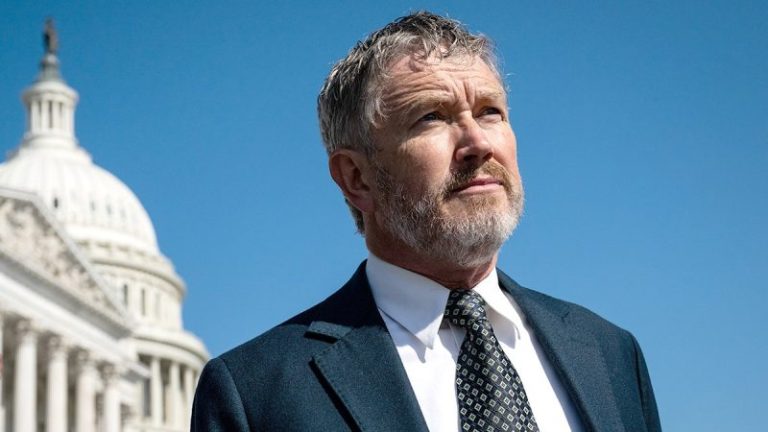
Rep. Thomas Massie — a Republican fiscal hawk facing a President Donald Trump-backed primary challenger in Kentucky — has previously described himself as ‘America First,’ but now he says he thinks that he’s ‘America only.’ 

‘I am tired of sending money overseas,’ he told Fox News Digital during an interview on Thursday. 

‘I am tired of favoring foreign beef over U.S.A.-grown beef,’ he continued. ‘I’m ready to be America only. And I think all congressmen should be that way.’

Massie gave Trump a mixed review, saying that the president is America First on ‘some’ fronts.

‘But when it comes to the beef, he is not America first. When it comes to sending money overseas to Ukraine and Israel,’ Massie said, ‘I think he needs to get back to his campaign promises and put America first. Because we’re not gonna make America great again by sending our money overseas.’

Massie noted that his ‘biggest disagreement’ with both the Trump administration and House Speaker Mike Johnson, R-La., is the increase in spending.

‘I mean, I thought we were conservatives. Why are we spending more this year than Joe Biden spent in his last year? Actually, we’re spending about $200 billion dollars more,’ he said, adding that the consequence ‘is inflation and higher interest rates.’

‘And people are feeling that. You can’t gaslight them,’ Massie added. ‘You can’t tell them that things are getting cheaper when they’re not getting cheaper.’

In a statement to Fox News Digital, White House spokesman Kush Desai accused Massie of ‘Fake Math.’ 

‘Here are the facts: President Trump’s Working Families Tax Cut Act cut mandatory spending by $1.5 trillion over the next 10 years, and the budget deficit from April to September of this year is down a staggering 40% compared to last year, when Joe Biden was president,’ Desai declared in the statement.

‘Instead of Fake Math, Thomas Massie should reflect on how he betrayed his voters and hardworking Americans when he voted with every Democrat against the biggest tax cut for working families in American history, including no tax on tips, no tax on Social Security, no tax on overtime pay, increased child tax credits, and permanence for the 2017 Trump Tax Cuts,’ he added.

Massie said his other disagreements with what has been happening in D.C. are ‘secondary’ to the spending issue.

‘I would say, we need to follow through on some of our campaign promises. For instance, release the Epstein files,’ he said.

Massie and Rep. Ro Khanna, D-Calif., have been spearheading a bid to force a House vote on a proposal that would compel the release of materials pertaining to Jeffrey Epstein. 

Their discharge petition has amassed 217 of the 218 signatures needed to force the vote, but Democratic Rep.-elect Adelita Grijalva, who has said she will sign on, has still not yet been sworn in to office more than six weeks after winning a special election in Arizona.

Johnson ‘has tried every which way he can to avoid this vote,’ Massie claimed, asserting that the speaker has not sworn in the Democrat because she ‘represents the 218th signature I need to force a vote on releasing the Epstein files.’

Fox News Digital reached out to Johnson’s office for comment.

Massie, who owns cattle himself, said the president has ‘sort of gut punched the cattle ranchers and… livestock farmers’ in the U.S.

During remarks aboard Air Force One last month, Trump indicated the U.S. was considering buying beef from Argentina to drive down prices. 

Days later Reuters reported that a White House official indicated that the administration was quadrupling the nation’s low-tariff imports of beef from the South American nation. Increasing the tariff rate quota to 80,000 metric tons will allow Argentina to send greater quantities of the product to America at a lower rate of duty, according to the outlet.

The president has Massie in his political crosshairs — he has repeatedly reviled the congressman on Truth Social.

In a post on Monday, Trump referred to Massie as ‘a Weak and Pathetic RINO’ — a pejorative acronymn that stands for ‘Republican in name only.’ He also called the congressman ‘a totally ineffective LOSER,’ while expressing his support for primary challenger Ed Gallrein, who Trump is backing in the race.

Even as the president tries to convince voters in Kentucky’s 4th Congressional District to reject Massie, the lawmaker said that he does not regret endorsing Trump ahead of the 2024 election, noting that former Vice President Kamala Harris would have been a total ‘disaster.’

Massie initially backed Florida Gov. Ron DeSantis in the GOP presidential primary, but DeSantis dropped out and backed Trump, and Massie later endorsed the Republican juggernaut as well.

‘And I’m glad that President Trump won,’ he said. 

Trump has ‘done a lot of good things,’ he said, adding that many of them have been carried out via executive order, and he thinks Congress should vote on more of the issues so that the president’s moves are not simply ‘temporary actions.’

Asked whether he’d have any interest in potentially running for president himself, Massie said that he is not interested.

This post appeared first on FOX NEWS

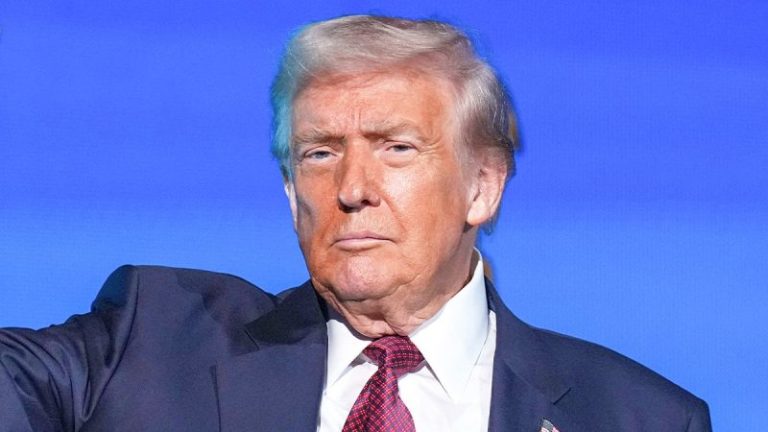
President Donald Trump has urged Senate Republicans to abolish Obamacare and reroute federal health care spending directly to individual Americans.

In a Truth Social post Saturday morning, Trump wrote: ‘I am recommending to Senate Republicans that the Hundreds of Billions of Dollars currently being sent to money sucking Insurance Companies in order to save the bad Healthcare provided by ObamaCare, BE SENT DIRECTLY TO THE PEOPLE SO THAT THEY CAN PURCHASE THEIR OWN, MUCH BETTER, HEALTHCARE, and have money left over.’

‘In other words, take from the BIG, BAD Insurance Companies, give it to the people, and terminate, per Dollar spent, the worst Healthcare anywhere in the World, ObamaCare.’

‘Unrelated, we must still terminate the Filibuster!’

This is a developing story. Please check back for updates.

This post appeared first on FOX NEWS

The Senate could take a test vote as early as tomorrow afternoon on a revamped Republican bill to end the government shutdown and fund parts of the government for the rest of the fiscal year. 

We are still waiting on bill text on a measure which would fund the government through late January and provide money for the Agriculture Department (which funds SNAP), the Veterans Affairs Department and military construction projects and Congress through Sept. 30, 2026. 

But things will begin moving once text is posted tonight or tomorrow morning. 

This appears to be a pure spending bill with nothing separate for renewing Obamacare subsidies. 

The test vote needs 60 yeas. That entails Democratic buy-in. Fox is told to watch the following Democratic senators to see if they will vote to break a filibuster — although they might not be needed to vote for the final bill. Only a simple majority is needed there. 

Fox is told here is the universe of potential senators who caucus with the Democrats to watch as possible yeas to break a filibuster:

Senate Minority Whip Dick Durbin, D-Ill., Sens. Jeanne Shaheen, D-N.H., Jack Reed, D-R.I., Jon Ossoff, D-Ga., John Fetterman, D-Pa., Catherine Cortez Masto, D-Nev., Maggie Hassan, D-N.H., Gary Peters, D-Mo., Angus King, I-Maine, and Patty Murray, D-Wash. Murray is the top Democrat on the Senate Appropriations Committee. Fox is told that Murray scored some significant language in the tenuous spending pact. 

This is a fragile coalition and could fall apart. 

But if the Senate breaks the filibuster, it is just a matter of time before the senators vote to re-open the government. In fact, it’s possible that the Senate could vote Sunday night if senators can forge a time agreement. 

By the book, the Senate is afforded significant debate time once it breaks a filibuster. Fox is told that progressives, steamed that they scored nothing on health care — and were burned by their own party — could try to stretch things out as much as possible. That could mean the Senate doesn’t vote until Tuesday or beyond on final passage. 

But by the same token, Democrats are only preventing SNAP benefits from going out. So they could agree to an expedited process. 

The House is on 48 hours notice to come back. So the House may not return until midweek to align with the Senate and re-open the government. But it’s likely the House could be recalled as soon as possible. 

The House’s disposition is unclear on this legislation. However, it’s hard to believe that most Republicans wouldn’t take this deal. In additon, Reps. Tom Suozzi, D-N.Y., Marie Gluesenkamp Perez, D-Wash., and Jared Golden, D-Maine, are among moderate Democrats who may be in play to vote yes if the GOP loses a few votes. Golden was the lone House Democrat who voted for the old interim spending bill on Sept. 19. Golden has since announced his retirement.

Here’s another question:

Would the House swear-in Rep.-elect Adelita Grijalva, D-Ariz., before or after the vote? Democrats will bray if Johnson fails to swear-in Grijalva before a possible House vote.

And, as we say, it’s always about the math. 

Swearing-in Grijalva puts the House at 433 members with two vacancies. The breakdown is 219 Republicans to 214 Democrats. That means the GOP can only lose two votes before needing help from the Democrats.
 

In addition, brace for the internecine Democratic warfare which will start once Democrats break with their party. Big divisions will emerge between those Democrats who vote to break the filibuster and those holding out for Obamacare subsidies. 

Moreover, consider the emerging chasm between House and Senate Democrats once this is over. 

And, here’s the kicker: It’s entirely possible that a group of Senate Democrats threw their colleagues under the bus to end the shutdown — and the party scored no guarantees on health care money despite their risky political shutdown gambit. 

This post appeared first on FOX NEWS

A reckoning is coming.

Or shall we say, ‘reckonings.’

And they’re coming, whether the government re-opens soon or remains shuttered.

If the government stays closed, voters will likely torch both parties for not hammering out a deal. Air traffic delays are stacking up. Those problems only intensify as we near Thanksgiving and Christmas. That’s to say nothing of multiple missed paychecks for federal employees, stress, economic consequences and no SNAP benefits for the needy.

Some of those concerns will dissipate if lawmakers address the shutdown quickly. But there will be a reckoning if the shutdown drags deeper into November.

There are likely specific reckonings for both political parties.

For Republicans, it’s a resistance by GOP leaders to address spiking health care subsidies. Yes. The GOP is making a compelling argument that health care subsidies are only necessary because Obamacare is a problem and health care prices skyrocketed. So Republicans are back fighting against Obamacare.

In fact, the entire government shutdown is not about spending levels and appropriations. It’s a re-litigation of the touchstone law passed under President Obama in 2010. And Republicans — despite multiple campaign promises and dozens of efforts to kill the law over a six-year period, failed at nearly every turn.

Despite issues with Obamacare, Democrats annexed the public’s concern about health care costs and linked that to government funding. Democrats appear like the party trying to address the issue as premiums spike. And Republicans, despite promises that they’ll get to it, are inert on the subject. They’re even championing efforts to lambaste Obamacare — much the same as they did in 2010 when Congress passed the law.

Republicans are latched on to the concept that the subsidies are ‘pumping money to insurance companies,’ as Sen. James Lankford, R-Okla., put it on Fox. Lankford also characterized those who benefitted from Obamacare as a ‘select group.’ It works out to about 24 million people. That’s seven percent of the U.S. population. So maybe that burns the GOP politically. Maybe it doesn’t.

A major reckoning looms for the Democrats, too.

It’s possible that a coalition of Democratic senators may break with the Democratic Party and support a new GOP plan to re-open the government on a temporary basis. Nowhere is it written that Democrats — who made the shutdown about health care — are guaranteed an outcome on Obamacare subsidies. Yes, House Speaker Mike Johnson, R-La., and Senate Majority Leader John Thune, R-S.D., have said they’ll address the health care issue after the government is open. But that’s not necessarily a fix.

So Democrats are fuming.

Therefore, it’s a distinct possibility that Democrats will refuse to fund the government in an effort to extract a concession on Obamacare subsidies — and walk away empty-handed.

Such an outcome will spark an internecine firestorm inside the Democratic Party. Progressives felt that Senate Minority Leader Chuck Schumer, D-N.Y., rolled them back in March when he and a squadron of other Democrats helped the GOP crack a filibuster to avoid a shutdown.

It’s doubtful that Schumer will help this time. But Senate Republicans hope to coax just enough Democrats to overcome the filibuster on a pending test vote and then fund the government through late January.

That’s the reckoning for the Democrats. 

No outcome on health care. And getting the screws put to them by members of their own party.

Again.

Progressives will be apoplectic. And House Democrats will seethe — not so privately — at Senate Democrats.

The Senate’s test vote on the new GOP proposal could come as early as Sunday evening. The revised package would also fund the Department of Agriculture and Department of Veterans Affairs, plus, Congress until Sept. 30, 2026.

Fox is told Republicans believe they are in range of persuading Democrats who are sweating the shutdown to join them.

Fox is told that air traffic control and flight delays are contributing to the Democrats’ consternation.

That said, it is believed that the Senate GOP leadership is reluctant to force a vote related to the retooled, spending bill without a guarantee it could break a filibuster. The last thing the Senate needs is another failed procedural vote – after repeated failed test votes over the past six weeks.

Let’s game out the timing for a moment:

By the book, if the Senate breaks the filibuster late Sunday, it’s doubtful the chamber can take a final vote on the package until Monday or Tuesday.  But Fox is told there is a distinct possibility that Democrats could yield back time to expedite the process in the interest of quickly re-opening the government. By the same token, angry liberal senators could bleed out the parliamentary clocks and attempt to amend the bill to their liking — presumably with Obamacare provisions.

The Senate must break yet another filibuster to finish the bill. Then it’s on to final passage. That only needs a simple majority. And even if some Democrats voted to hurdle the filibuster, they might not support the underlying plan at the end. However, that’s not a problem if GOP senators provide the necessary votes.

Then it’s on to the House. The House’s disposition is unclear on this legislation. However, it’s hard to believe that most Republicans wouldn’t take this deal. Reps. Tom Suozzi, D-N.Y., Marie Gluesenkamp Perez, D-Wash. and Jared Golden, D-Maine, are among moderate Democrats who may be in play to vote yes if the GOP loses a few votes. Golden was the lone House Democrat who voted for the old interim spending bill on Friday, September 19. Golden has since announced his retirement.

Another big question: 

Would the House swear-in Rep.-elect Adelita Grijalva, D-Ariz., before or after the vote? Democrats will bray if Johnson fails to swear-in Grijalva before a possible House vote

And, as we say, it’s always about the math.

Swearing-in Grijalva puts the House at 433 members with two vacancies. The breakdown is 219 Republicans to 214 Democrats. That means the GOP can only lose two votes before needing help from the Democrats.

Regardless, the House would not come back until at least the middle of next week if not later. It hinges on how fast the Senate can move, if it has the votes to break a filibuster and what happens to the Obamacare question.

All of this is uncertain after 39 days of the government shutdown.

And the only thing which is certain is the political reckoning for both parties.

This post appeared first on FOX NEWS

Nov. 8, 2025, marks the 50th anniversary of Chevy Chase’s comedic portrayal of U.S. President Gerald Ford as a bumbling klutz on ‘Saturday Night Live.’

Nowadays, we expect ‘SNL’ to mock the president. (There’s even speculation going into each administration about who will play the president.) 

But when Chase did it for the first time, it was groundbreaking. In fact, in the years before ‘SNL,’ mocking the president on what was still the relatively new mass medium of television often had to overcome resistance from network censors and presidential pressure.

In the early 1960s, NBC executives would not allow a comedy sketch about President John F. Kennedy to appear on its ‘Art Carney Show.’ As a network spokesperson explained, ‘We thought it would have been improper to have performers actually portraying the president and his wife,’ adding the ‘decision was based on a matter of good taste.’

The networks were similarly reluctant to mock Kennedy’s successor, Lyndon Johnson. In 1964, NBC imported the British parody show ‘That Was the Week That Was,’ which was specifically developed in England to ‘prick the pomposity of public figures.’ 

Although the show did get in an occasional poke at Johnson, NBC censors constantly battled the show’s producers over LBJ jokes. NBC also took the step of suspending all political humor on the show around the 1964 presidential election.

Another show that tried to make fun of the president was ‘The Smothers Brothers Comedy Hour.’ The show, which premiered on CBS in 1967, even got pushback from Johnson himself. One skit that mocked Johnson prompted Johnson to tell CBS Chairman William Paley in a late-night call, ‘get those b——- off my back.’ Paley asked the show to go easier on the president.

When Richard Nixon was elected in 1968, the brothers pledged to ‘lay off the jokes’ about the incoming president for a time. But that pledge did not stop them from having the comedian David Frye impersonate Nixon on the show. 

Still, the show was canceled in April 1969, over a host of controversies, including sex and religion jokes, as well as political ones.

On the final episode, the brothers read a letter from former President Johnson, claiming that he had been OK with being mocked.

‘It is part of the price of leadership to be the target of clever satirists. You have given the gift of laughter to us. May we never grow so somber or self-important that we fail to appreciate humor.’ 

Although the words were admirable, it was a little hard to take Johnson seriously given his earlier intervention with Paley.

As for Frye, with the show canceled, he continued to impersonate Nixon on comedy albums. But even here, the networks continued to obstruct. In 1973, the three major networks refused to accept advertising in New York for Frye’s Watergate-related album. According to a WABC-TV spokesman, ‘It’s such a serious matter we’ve decided not to accept advertising for any comedy material relating to Watergate.’

With this backdrop in mind, ‘SNL’ must have known that it was taking a risk when it had Chase send up the president on live TV. Chase’s portrayal went beyond light jokes at the president’s expense. Chase was pratfalling around the Oval Office, holding up a glass rather than a phone to his ear and pouring water from a pitcher onto the papers on his desk. Yet the show not only survived, it thrived.

That first ‘SNL’ presidential skit was a watershed moment that helped fundamentally change the relationship between the American people and the president. The 1960s and 1970s had brought the U.S. presidency down in the eyes of the American people. The Kennedy assassination shocked Americans who did not realize the president was so vulnerable. 

The Johnson years punctured the bubble of presidential honesty about foreign affairs. Nixon’s Watergate scandal punctured a similar bubble about domestic affairs. And then the unelected Ford came to power and almost immediately pardoned Nixon for Watergate. The decision is lauded in retrospect but was controversial at the time.

Chase’s opening the show as Ford on that day in 1975 brought mocking presidents out from the narrowcast world of Lenny Bruce and Mort Sahl comedy routines and more regularly into the mass media. That first ‘SNL’ sketch ushered in a period in which presidents became both closer to and further from the American people. 

Mockery can keep physically- removed politicians less distant from everyday citizens. As a result, presidents are now nearly ubiquitous in a world of TV and social media, with constant mockery taking them down a peg — or more. In this world, even a short presidential disappearance of a day or two can lead to unfounded rumors of a presidential demise.

At the same time, presidents are further from the American people in that the security bubble around them is so much tighter. The White House resembles an armed camp. Presidential motorcades are unapproachable, and presidents are hard-pressed to continue to communicate regularly with friends. George W. Bush gave up e-mail. Obama resisted pressure to give up his BlackBerry.

In our current Chevy Chase-enabled world, presidential mockery is a constant. While Stephen Colbert and Jimmy Kimmel learned that presidents and network suits can still target an individual comic or show, those are unfortunate exceptions rather than the rule, and even Kimmel’s exile lasted barely a week. 

The continuing mockery of the president on Kimmel, as well as South Park, Jon Stewart, social media and a host of other places, shows that the genie of mass market, largely uncensored, mockery of presidents unleashed by Chevy Chase on ‘SNL’ a half century ago is not going back in the bottle, and for that we should be grateful.

This post appeared first on FOX NEWS

The Senate is in for a rare weekend session as the chamber remains in limbo while lawmakers try to find a way out of the government shutdown.

Behind the scenes, appropriators are cooking up a trio of spending bills to attach to the House-passed continuing resolution (CR), along with an extension to the bill that would, if passed, reopen government until December or January.

Whether a vote on the revamped CR and spending package happens Saturday is still up in the air. Senate Democrats, as they’ve done 14 times previously, are likely to block it. It all comes as the upper chamber is scheduled for a week-long recess to coincide with Veterans’ Day.

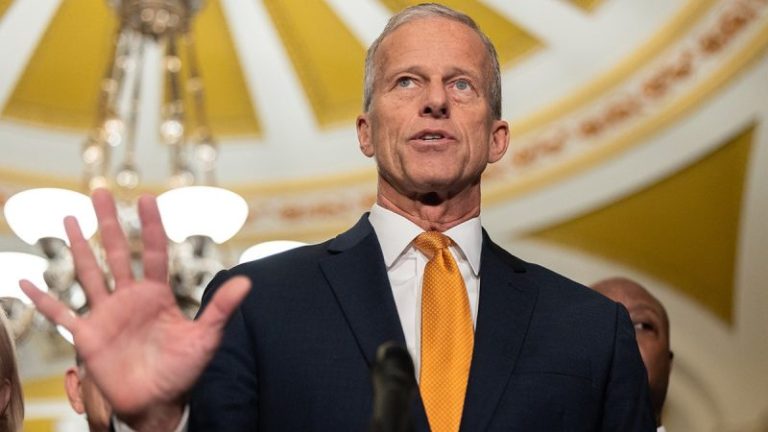
But Senate Majority Leader John Thune, R-S.D., now wants to keep lawmakers in town until the shutdown ends.

When asked if there would be a vote on the plan, Thune said it would be ideal to have the package on the floor, but that ‘we’ve got to have votes to actually pass it.’ Republicans are reticent to putting the CR out again just to see it fail.

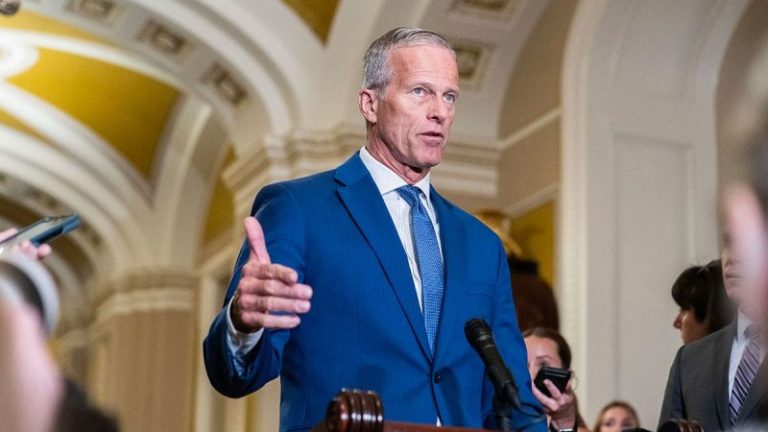
‘I’ve been talking all morning with some of the folks that are involved with the meeting, and I think we’re getting close to having it ready,’ Thune said. ‘We just need to get the text out there.’

Senate Minority Leader Chuck Schumer, D-N.Y., and his caucus, freshly emboldened by sweeping Election Day victories earlier in the week, are sticking by their newly released plan that would extend the expiring Obamacare subsidies by one year, and create a bipartisan working group to negotiate next steps after the government reopens.

But Senate Republicans immediately rejected the idea; Thune called it a ‘non-starter,’ while others in the GOP were angered by the proposal.

Sen. Eric Schmitt, R-Mo., charged that he would appeal to President Donald Trump and his administration to slash funding from ‘pet projects’ in blue states and cities to pay federal workers as the shutdown drags on.

‘The idea that you’ve got a bunch of kamikaze pilots trying to burn this whole place down because they’re emboldened by an election where Democrats won in Democrat areas is totally insane,’ he said.

Senate Democrats were largely unsurprised that Republicans rejected the offer, however.

‘I know many Republicans stormed out of the gate to dismiss this offer, but that’s a terrible mistake,’ Schumer said.

Thune and his conference have, throughout the course of the 39-day shutdown, said that they would only deal with the subsidies after the government reopened, and have offered Schumer and Senate Democrats a vote on a bill addressing the healthcare issue once the closure ends.

‘I’m not surprised,’ Sen. Mark Kelly, D-Ariz., said. ‘They don’t want to help people with their health care.’

But Republicans countered that a simple extension of the enhanced subsidies, which were modified under former President Joe Biden during the COVID-19 pandemic, would funnel money straight to insurers.

Sen. Katie Britt, R-Ala., has been in talks with Senate Democrats on a path forward, particularly through jump-starting government funding with the impending trio of spending bills.

After Schumer unveiled Democrats’ plan, she charged that ‘since Obamacare came into effect, look, who’s gotten rich? It’s not the people.’

‘They’re talking about the people’s premiums and have … they taken it to the companies that are actually making the money off of it? They’re not,’ Britt said. ‘So I look forward to hearing why in the world they want to continue these profits and not actually help the people they serve.’

Senate Democrats, however, contend that their offer was fair.

Sen. Chris Murphy, D-Conn., argued that there were some in the caucus that wanted to do a multi-year extension, while others wanted to go beyond just the enhanced subsidies. He reiterated his frustration that the core of the issue, from his perspective, was that neither Schumer nor Thune would sit down and negotiate.

‘We made a really simple, really scaled-down offer that could get the government up and operating and [is] really good for them politically,’ he said. ‘I just still don’t understand why they won’t accept the offer.’

This post appeared first on FOX NEWS

The Senate is in for a rare weekend session as the chamber remains in limbo while lawmakers try to find a way out of the government shutdown.

Behind the scenes, appropriators are cooking up a trio of spending bills to attach to the House-passed continuing resolution (CR), along with an extension to the bill that would, if passed, reopen government until December or January.

But the package was not ready for primetime Saturday, and no votes were held. Instead, Senate Republicans spent hours railing against Obamacare and Senate Democrats’ desire to extend the expiring premium subsidies on the floor. 

When the package does hit the floor, Senate Democrats, as they’ve done 14 times previously, are likely to block it. It all comes as the upper chamber is scheduled for a week-long recess to coincide with Veterans Day.

Senate Majority Leader John Thune, R-S.D., now wants to keep lawmakers in town until the shutdown ends.

When asked if there would be a vote on the plan, Thune said it would be ideal to have the package on the floor, but ‘we’ve got to have votes to actually pass it.’ Republicans are reticent to put the CR out again just to see it fail.

‘I’ve been talking all morning with some of the folks that are involved with the meeting, and I think we’re getting close to having it ready,’ Thune said. ‘We just need to get the text out there.’

The spending package, however, is just one piece of the puzzle to reopening the government. 

Senate Minority Leader Chuck Schumer, D-N.Y., and his caucus, freshly emboldened by sweeping Election Day victories earlier in the week, are sticking by their newly released plan that would extend the expiring Obamacare subsidies by one year and create a bipartisan working group to negotiate next steps after the government reopens.

But Senate Republicans immediately rejected the idea; Thune called it a ‘non-starter,’ while others in the GOP were angered by the proposal.

Sen. Eric Schmitt, R-Mo., said he would appeal to President Donald Trump and his administration to slash funding from ‘pet projects’ in blue states and cities to pay federal workers as the shutdown drags on.

‘The idea that you’ve got a bunch of kamikaze pilots trying to burn this whole place down because they’re emboldened by an election where Democrats won in Democrat areas is totally insane,’ he said.

Senate Democrats were largely unsurprised that Republicans rejected the offer, however.

‘I know many Republicans stormed out of the gate to dismiss this offer, but that’s a terrible mistake,’ Schumer said.

Thune and his conference have, throughout the course of the 39-day shutdown, said they would only deal with the subsidies after the government reopened and have offered Schumer and Senate Democrats a vote on a bill addressing the healthcare issue once the closure ends.

‘I’m not surprised,’ Sen. Mark Kelly, D-Ariz., said. ‘They don’t want to help people with their healthcare.’

But Republicans countered that a simple extension of the enhanced subsidies, which were modified under former President Joe Biden during the COVID-19 pandemic, would funnel money straight to insurers.

Sen. Katie Britt, R-Ala., has been in talks with Senate Democrats on a path forward, particularly through jump-starting government funding with the impending trio of spending bills.

After Schumer unveiled Democrats’ plan, she charged that ‘since Obamacare came into effect, look who’s gotten rich? It’s not the people.’

‘They’re talking about the people’s premiums and have … they have taken it to the companies that are actually making the money off of it? They’re not,’ Britt said. ‘So, I look forward to hearing why in the world they want to continue these profits and not actually help the people they serve.’

Senate Democrats, however, contend that their offer was fair.

Sen. Chris Murphy, D-Conn., argued that there were some in the caucus that wanted to do a multi-year extension, while others wanted to go beyond just the enhanced subsidies. He reiterated his frustration that the core of the issue, from his perspective, was that neither Schumer nor Thune would sit down and negotiate.

‘We made a really simple, really scaled-down offer that could get the government up and operating and [is] really good for them politically,’ he said. ‘I just still don’t understand why they won’t accept the offer.’

This post appeared first on FOX NEWS