Author

admin

Browsing

Platinum and palladium are both basking in gold’s glow, however their performance is tempered by each metal’s unique market dynamics.

Of the two, platinum has been the biggest winner in 2025. The price of the precious metal climbed by 90 percent to its year-to-date high of US$1,725 per ounce it reached briefly on October 16. Although the market has since experienced a pull back below the US$1,600 level, platinum prices remain at 12-year highs.

As for palladium, the precious metal rose by nearly 80 percent to reach a peak of US$1,630 on October 16. However, the palladium price has since fallen back to the US$1,430 level.

In its annual Precious Metals Investment Focus report published October 25, Metals Focus showcased key supply and demand trends moving the market and prices for precious metals such as platinum and palladium.

Platinum market reflecting more than gold’s shine

Platinum is no doubt benefitting from strong investor demand for precious metals on stagnation fears in 2025. But the metal’s robust supply and demand fundamentals are also at play, according to Metals Focus analysts.

Above ground inventories of platinum remain tight while future mine production is bogged down in operation challenges. “In Southern Africa, outages and heavy rainfall have disrupted production, while North America is undergoing restructuring,” noted the report.

On the demand side, the platinum demand from the jewelry sector has posted significant gains this year, especially in China. As the price of gold skyrockets, platinum jewelry has become a much more attractive alternative. Investment flows into platinum exchange-trade products in China and the US are another key demand driver for the metal this year.

Platinum and palladium prices

Chart via Metals Focus, Bloomberg

While platinum prices are at levels not seen in 12 years, palladium prices are only experiencing a 2-year high. “Palladium has also benefited at the margin, but remains a laggard, with a more lacklustre fundamental outlook limiting investor enthusiasm,” according to Metals Focus.

2026: Platinum bull and palladium bear

Platinum prices will continue to benefit from the overall upward trend in precious metals prices in the remainder of 2025 and well into 2026. The ongoing supply deficit in the platinum market is also highly price supportive.

Metals Focus is forecasting a third consecutive year of physical deficit for 2025, totaling 415,000 ounces as platinum mine output is expected to decline by 6 percent year-over-year. Demand is projected to fall by 4 percent largely due to lower outputs in the glass and automotive sectors.

Platinum’s supply deficit is expected to continue into 2026 and grow to an estimated 480,000 ounces as mine supply is forecast to fall by 2 percent to a 12 year low (excluding COVID 2020). “With few new projects coming online after years of underinvestment, mine supply is undergoing structural decline,” noted the report’s authors.

This will be happening at the same time that demand is expected to rebound by 1 percent on renewed industrial demand, specifically out of the glass and chemical sector in China. Yet, Metals Focus cautions that demand out the automotive and jewelry sectors are likely to contract.

The trend toward electrification is the auto industry may have slowed, but it’s still expected to erode platinum demand, especially as catalytic converter manufacturers shift back to more cost-effective palladium.

Metals Focus is forecasting a 2026 average platinum price of US$1,670 per ounce, up 34 percent over the previous year.

Platinum and palladium price outlook

Chart via Metals Focus, Bloomberg

Looking over to palladium, Metals Focus has a more bearish view. The firm is projecting palladium prices to average US$1,350 per ounce in Q4 2025, falling to US$1,150 by Q4 2026. Although the palladium market has been in a physical deficit for the past few years, that deficit is expected to shrink from 566,000 ounces in 2024 to 367,000 ounces in 2025 before narrowing even further to 178,000 in 2026.

The same structural issues plaguing platinum are also of course weighing on palladium mine supply, which is forecast to fall by 3 percent in 2026. However, secondary supply is projected to increase by 10 percent as recycling activity recovers. Overall, total palladium supply is expected to grow by 1 percent for the year. At the same time, demand for palladium is set to decline by just over 1 percent in 2026 on a drop from the automotive sector.

Investor takeaway

Both platinum and palladium are considered precious metals based on their rarity and use in jewelry fabrication and physical bullion. As such, they both are known to benefit when investor sentiment for safe-haven gold is high.

However, not all precious metals are precious to investors at the same time. Just ask silver. The industrial uses for these metals is a much bigger driver of demand compared to the investment space. For 2026, it’s platinum that will continue to ride gold’s rally and provide investors with plenty of upside based on its strong fundamentals.

Securities Disclosure: I, Melissa Pistilli, currently hold no direct investment interest in any company mentioned in this article.

This post appeared first on investingnews.com

(TheNewswire)

Highlights:

  • Three samples from the mineralized zone within the Pinos Cuates underground mine were sent to the SGS Lab in Durango, Mexico for grinding, bottle roll cyanide leach and gravity tests.

  • Initial grind calibration tests in a ball milling application achieved a target grind of 80% passing 270 mesh (53 micron) particle size.

  • Average unoptimized reagent consumption was 0.71 kg/t NaCN and 1.62 kg/t CaO, both within expected ranges for a preliminary test.

  • Initial gravity tests utilising a Knelson concentrator and Mozley table resulted in variable recoveries ranging from 29.1% to 76.38% for gold and 3.98% to 15.91% for silver.

‘We are very pleased with the results from this preliminary round of metallurgical tests , especially for gold recoveries, and considering that there were only three samples from one of the three historic mines,’ stated Robert Archer, Pinnacle’s President & CEO.  ‘These tests were run using simple baseline parameters and without any optimization.  The results indicate that we need to conduct mineralogical tests on the mineralization to determine the nature of the gold and silver occurrences.  While it is likely that gold occurs either as free particles or in electrum, silver can occur in electrum, silver sulphides or silver sulphosalts.  Once this has been established, further testing will be able to fine tune the metallurgical processes in order to increase recoveries, particularly for silver.  Metallurgical testing is an iterative process, and it is expected that sampling of the other mines on the property will result in further variations.  However, this is the whole point of the testing as we aim to maximize recoveries and streamline the flow sheet prior to rebuilding the plant.’

The Pinos Cuates mine is the central mine of the three historic workings on the Dos de Mayo low sulphidation epithermal vein system at El Potrero.  The three metallurgical samples were taken from the raise and upper level of the mine, based upon the results of previous channel sampling.  Each sample weighed approximately 25 kg.  Samples were fire assayed with AAS finish for gold and silver, in duplicate, and analysed for 32 elements by 4-acid digestion and ICP finish.  The latter confirmed that there are negligible amounts of copper, lead, zinc, arsenic, mercury or any other deleterious elements present.  Some variation between gold analyses of the channel samples versus the metallurgical samples suggests the presence of a nugget effect, likely due to fine free gold, as silver analyses were comparable.  A comparison of the two sets of analyses can be seen in the table below:

Channel sample

MET sample

Au g/t

Ag g/t

EPUG25097

2.91

108

EPMET25001

6.20

99

EPUG25136

13.00

56

EPMET25002

5.10

52

EPUG25421

34.60

228

EPMET25003

17.30

210

Prior to the bottle leaching tests, a grinding calibration was carried out for each sample using a ball mill in order to achieve the target particle size for the leaching and gravity concentration tests, which was 80% passing 270 mesh (53 microns).  This information will be used in future tests on hardness and work index.

A bottle roll test was carried out for each sample, separately from the gravity test, in order to evaluate the gold and silver extraction response for each method.  The bottle roll test was performed in a 2-gallon Nalgene bottle, using 1,000 g of sample, with a retention time of 72 hours.  Monitoring was conducted at intervals of 12, 24, 48, and 72 hours to collect solution samples and evaluate the gold and silver extraction kinetics.  Additionally, sodium cyanide and lime consumptions were determined.

Dissolution kinetics showed rapid recoveries of 79-92% for gold after only 24 hours, increasing gradually to their ultimate levels of 92.81%, 95.68% and 96.79%, averaging 95.09%, after 72 hours.  Silver recoveries increased more gradually towards 41.41%, 73.53% and 49.11%, with an average of 54.68%, after 72 hours.  It is considered that a longer leach time could improve the silver recoveries.

Sodium cyanide (NaCN) consumption ranged from 0.49 to 0.94 kg/t, while lime (CaO) consumption ranged from 0.93 to 2.03 kg/t, both within expected ranges for unoptimized tests.

According to the SGS report, ‘Gravity concentration using the Knelson concentrator is based on the separation of mineral particles according to their density differences, applying centrifugal force. This equipment concentrates the heavy minerals (such as free gold or high-density sulfides) into a small volume of concentrate, while the lighter material is discharged as tailings.

The concentrate obtained from the Knelson is subsequently subjected to cleaning on a Mozley table, which allows for a finer and more selective separation. This stage improves the purity of the final concentrate by removing gangue minerals and obtaining a fraction richer in valuable minerals.

For metallurgical balance purposes, the sum of the Knelson concentrate and the Mozley ‘middlings’ is necessary, since both products belong to the same gravity concentration stream and contain a significant portion of the recovered metallic values. Combining these products provides a more accurate representation of the total recovery attributable to the gravity circuit, preventing underestimation of the metallic content in the overall balance.’

Approximately 20 kg of each sample with a particle size of 53 microns was used for the gravity tests.  Gold recoveries were somewhat variable, yielding 29.10%, 33.02% and 76.38%, whereas silver was a little more consistent, albeit lower, with recoveries of 3.98%, 7.77% and 15.31%.  As gold is heavier than silver, it is normal for gold to yield higher recoveries in a gravity circuit.  The particularly high gold recoveries of 76.38% in one sample is likely due to the presence of a higher percentage of free gold.  It is worth noting that this sample also had the highest head assay of 17.2 g/t Au and the highest recovery from leaching of 96.79%.

In subsequent metallurgical work, gravity and leaching tests will likely be conducted in series, with the high-grade gravity concentrate being removed and the tails being leached.  While it is normal for higher grade material to yield higher recoveries, it is also considered that a finer grind and extended leach times may improve recoveries at the lower end.  These along with other optimized process details will be addressed in the next testing stage.

Qualified Person

Mr. David Salari, P.Eng., a Director of Pinnacle and a Qualified Person as defined by National Instrument 43-101, has reviewed and approved this news release.

Mr. Jorge Ortega, P. Geo, a Qualified Person as defined by National Instrument 43-101, and the author of the NI 43-101 Technical Report for the Potrero Project, has also reviewed and approved this news release.

About the Potrero Property

El Potrero is located in the prolific Sierra Madre Occidental of western Mexico and lies within 35 kilometres of four operating mines, including the 4,000 tonnes per day (tpd) Ciénega Mine (Fresnillo), the 1,000 tpd Tahuehueto Mine (Luca Mining) and the 250 tpd Topia Mine (Guanajuato Silver).

High-grade gold-silver mineralization occurs in a low sulphidation epithermal breccia vein system hosted within andesites of the Lower Volcanic Series and has three historic mines along a 500 metre strike length.  The property has been in private hands for almost 40 years and has never been systematically explored by modern methods, leaving significant exploration potential.

A previously operational 100 tpd plant on site can be refurbished / rebuilt and historic underground mine workings rehabilitated at relatively low cost in order to achieve near-term production once permits are in place. The property is road accessible with a power line within three kilometres.  Surface rights covering the plant and mine area are privately owned (no community issues).

Pinnacle will earn an initial 50% interest immediately upon commencing production.  The goal would then be to generate sufficient cash flow with which to further develop the project and increase the Company’s ownership to 100% subject to a 2% NSR.  If successful, this approach would be less dilutive for shareholders than relying on the equity markets to finance the growth of the Company.

About Pinnacle Silver and Gold Corp.

Pinnacle is focused on the development of precious metals projects in the Americas.  The high-grade Potrero gold-silver project in Mexico’s Sierra Madre Belt hosts an underexplored low-sulphidation epithermal vein system and provides the potential for near-term production . In the prolific Red Lake District of northwestern Ontario, the Company owns a 100% interest in the past-producing, high-grade Argosy Gold Mine and the adjacent North Birch Project with an eight-kilometre-long target horizon . With a seasoned, highly successful management team and quality projects, Pinnacle Silver and Gold is committed to building long -term , sustainable value for shareholders.

Signed: ‘Robert A. Archer’

President & CEO

For further information contact :

Email: info@pinnaclesilverandgold.com

Tel.:  +1 (877) 271-5886 ext. 110

Website: www.pinnaclesilverandgold.com

Neither the TSX Venture Exchange nor the Investment Industry Regulatory Organization of Canada accepts responsibility for the adequacy or accuracy of this release .

Copyright (c) 2025 TheNewswire – All rights reserved.

News Provided by TheNewsWire via QuoteMedia

This post appeared first on investingnews.com

(TheNewswire)

Brossard, Quebec TheNewswire – October 28, 2025 CHARBONE CORPORATION (TSXV: CH,OTC:CHHYF; OTCQB: CHHYF; FSE: K47) (‘ CHARBONE ‘ or the ‘ Company ‘), a North American producer and distributor specializing in clean Ultra High Purity (‘ UHP ‘) hydrogen and strategic industrial gases, is pleased to announce that civil construction work officially began yesterday, October 27, 2025, at the Sorel-Tracy site in accordance with the timeline presented in the Company’s October 22 press release.

This milestone marks the concrete launch of the construction phase for CHARBONE’s first clean UHP hydrogen production module in Quebec. The work involves the complete preparation of technical infrastructure and the installation of foundations required for the reassembly of the main equipment, the delivery of which was successfully completed earlier this month.

We are extremely proud to see the project progressing exactly according to plan, thanks to the outstanding commitment of our teams and partners ,’ said Dave B. Gagnon, CEO of CHARBONE . ‘ The start of civil construction work brings our vision of local, decarbonized clean UHP hydrogen production in Quebec to life. Each milestone achieved brings us closer to commissioning in November and to the broader deployment of our modular model .’


Click Image To View Full Size

About CHARBONE CORPORATION

CHARBONE is an integrated company specializing in clean Ultra High Purity (UHP) hydrogen and the strategic distribution of industrial gases in North America and Asia-Pacific. Through a modular approach, the Company is building a distributed network of green hydrogen production plants while diversifying revenues via helium and specialty gas partnerships. This disciplined model reduces risk, enhances flexibility, and positions CHARBONE as a leader in the transition to a low-carbon future. CHARBONE is listed on the TSX Venture Exchange (TSXV: CH,OTC:CHHYF) , the OTC Markets (OTCQB: CHHYF) , and the Frankfurt Stock Exchange (FSE: K47) . Visit www.charbone.com .

Forward-Looking Statements

This news release contains statements that are ‘forward-looking information’ as defined under Canadian securities laws (‘forward-looking statements’). These forward-looking statements are often identified by words such as ‘intends’, ‘anticipates’, ‘expects’, ‘believes’, ‘plans’, ‘likely’, or similar words. The forward-looking statements reflect management’s expectations, estimates, or projections concerning future results or events, based on the opinions, assumptions and estimates considered reasonable by management at the date the statements are made. Although Charbone believes that the expectations reflected in the forward-looking statements are reasonable, forward-looking statements involve risks and uncertainties, and undue reliance should not be placed on forward-looking statements, as unknown or unpredictable factors could cause actual results to be materially different from those reflected in the forward-looking statements. The forward-looking statements may be affected by risks and uncertainties in the business of Charbone. These risks, uncertainties and assumptions include, but are not limited to, those described under ‘Risk Factors’ in the Corporation’s Filing Statement dated March 31, 2022, which is available on SEDAR at www.sedar.com; they could cause actual events or results to differ materially from those projected in any forward-looking statements.

Except as required under applicable securities legislation, Charbone undertakes no obligation to publicly update or revise forward-looking information.

Neither TSX Venture Exchange nor its Regulation Services Provider (as that term is defined in policies of the TSX Venture Exchange) accepts responsibility for the adequacy or accuracy of this release .

Contact Charbone Corporation

Telephone: +1 450 678 7171

Email: ir@charbone.com

Benoit Veilleux

CFO and Corporate Secretary

Copyright (c) 2025 TheNewswire – All rights reserved.

News Provided by TheNewsWire via QuoteMedia

This post appeared first on investingnews.com

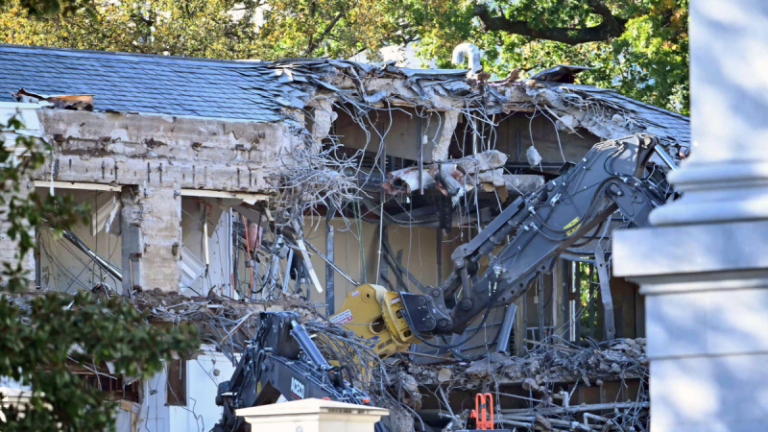
History is being rewritten on the White House grounds, where a new formal ballroom is rising in place of the East Wing. The project has become a political lightning rod, as images of its construction reignite debate over President Donald Trump’s imprint on the nation’s most iconic address.

While the White House has hosted countless ceremonial events, it has never had a dedicated ballroom. The new structure will fill that void, replacing the historic East Wing with a space designed instead to host large-scale gatherings.

The ballroom is estimated to cost $250 million and will be financed jointly by Trump and private donors.

While the White House has pledged to release details on the individuals and corporations funding the ballroom’s construction, a comprehensive breakdown of contributions has not yet been made public.

During a July 31 briefing, White House press secretary Karoline Leavitt detailed the administration’s plans to construct a 90,000-square-foot ballroom on the White House grounds.

Leavitt said the new ballroom will accommodate approximately 650 seated guests and will stay true to the classical design of the White House.

‘The White House is currently unable to host major functions honoring world leaders in other countries without having to install a large and unsightly tent approximately 100 yards away from the main building’s entrance,’ Leavitt said on July 31.

She added that the new ballroom will be ‘a much-needed and exquisite addition.’

This post appeared first on FOX NEWS

Rep. Eric Swalwell, D-Calif., said the next Democratic presidential nominee must vow to demolish President Donald Trump‘s White House ballroom, proposing the pledge a litmus test for the party’s 2028 contenders.

‘Don’t even think of seeking the Democratic nomination for president unless you pledge to take a wrecking ball to the Trump Ballroom on DAY ONE,’ Swalwell wrote on X on Saturday.

Swalwell’s office did not immediately respond to Fox News Digital for additional comment.

For the first time in its history, the White House will have a formal ballroom, a new addition built where the East Wing once stood, a project that has become a political flashpoint as photos of the demolition fuel debate over President Trump’s mark on the historic residence.

On July 31, White House press secretary Karoline Leavitt announced the planned construction of a 90,000-square-foot ballroom. The sprawling ballroom will accommodate approximately 650 seated guests and will stay true to the classical design of the White House.

‘The White House is currently unable to host major functions honoring world leaders in other countries without having to install a large and unsightly tent approximately 100 yards away from the main building’s entrance,’ Leavitt said, adding the new ballroom will be ‘a much-needed and exquisite addition.’

Construction on the White House grounds, which began earlier this month, is estimated to cost $250 million and will be financed by Trump and private donors.

The ballroom isn’t the only update. 

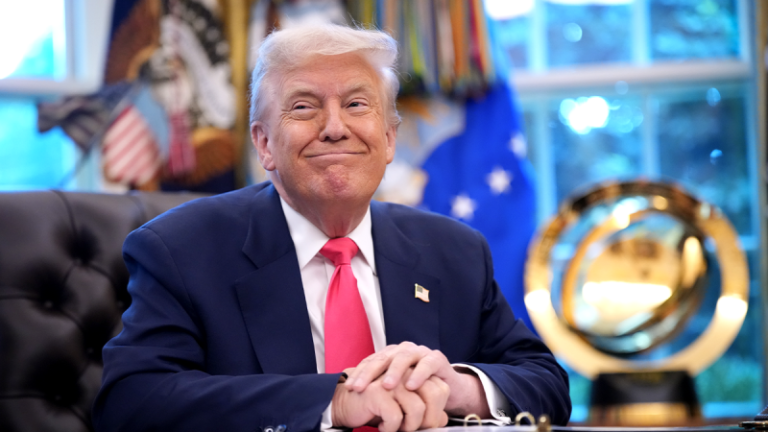
Trump has introduced gold accents in the Oval Office and Cabinet Room, a new monument dubbed the ‘Arc de Trump,’ the ‘walk of fame’ with portraits of former presidents, including a photo of the autopen representing former President Joe Biden’s time in office, added stone pavers to the Rose Garden lawn and installed two 88-foot flagpoles.

This post appeared first on FOX NEWS

In a political environment where little is agreed upon, there stands one exception: China. That country is cited by nearly every national security expert as the No. 1 geopolitical threat to the U.S. The question is how to coexist without being codependent, how to compete without conflict, and how to protect American producers and consumers while China plays by its arbitrary rules.

No sooner had a meeting between President Donald Trump and Chinese President Xi Jinping been announced before China threatened U.S. access to rare earth minerals. The U.S. countered by threatening an additional 100% tariff on Chinese imports.

Most Americans could not conjure why China would make such a provocative move after both presidents agreed to meet. Surely, the Chinese government must know Trump would react. Xi has been the leader of China for well over a decade with no sign of relenting.

Conversely, Trump is nearly a year into his final term in office. China has always played the long game, assuming Americans lack the will to wait out a prolonged contest. China thinks patience will win — that Americans can’t sustain pressure. It may wind up being surprised that patience is an overrated virtue and how quickly this administration can act.

The Trump administration has already resolved conflicts around the globe, as evidenced by its history-defying peace agreement in the Middle East. The administration has used tariffs and the threat thereof to increase revenue for the U.S., balance the trade playing field and reposition the U.S. for increased domestic manufacturing.

It has been clear about the threats posed by Venezuela, repositioned our relationship with Colombia, opened dialogue between Israel and moderate Arab states, bombed Iranian nuclear ambitions and closed a porous border. All of that in less than a year.

The conflict left to be resolved is in Eastern Europe, and the ‘white whale’ among outstanding trade agreements is China. The two are interconnected. While the U.S. was trying to isolate Russia for its aggression against Ukraine, China was providing both military and economic assistance to Russia.

Next on the administration’s agenda is ending the Russian invasion of Ukraine and negotiating a trade agreement with China that can withstand the reality that the problematic forces within today’s Chinese Communist Party aren’t going anywhere.

Even if Xi steps down or his power wanes, there is no Chinese equivalent to America’s 22nd Amendment — no constitutional limit to the number of terms or years a leader can serve. That means Beijing’s leadership can remain in power indefinitely, which is a central pillar of the Communist Party’s strategy. The United States must live with that reality and yet negotiate from a position of strength to achieve our interests.

While recent reports suggest Xi’s grip may be weakening amid internal purges and speculation about dissent within the Chinese Communist Party, history teaches such reports are often exaggerated. And even if Xi were to fall, his successor would continue the long-term authoritarian policies that define modern China.

China perceives time and our democratic system as allies in its strategy. The key is to make Beijing recognize Trump’s impatience with that country’s malingering and duplicity is not a weakness but rather a threat to their own interests.

The administration’s China pressure strategy isn’t confined to tariffs. It extends to the technological front, where the next great battles for global power will be fought.

The Trump administration has already resolved conflicts around the globe, as evidenced by its history-defying peace agreement in the Middle East. 

Recognizing that China’s dominance in communications and artificial intelligence poses an existential threat to U.S. security, the Trump administration has moved to aggressively end Beijing’s control of critical infrastructure.

For example, the Department of Justice has taken decisive steps to counter the dominance of Huawei, a company controlled by the Chinese Communist Party, over global telecommunications. Huawei still controls the global telecom market (and, by extension, the AI and 5G future) and has repeatedly been found by the Department of Defense and our security agencies to include backdoors and security vulnerabilities.

To level this playing field, the Trump administration — working together with U.S. intelligence officials — approved the HPE-Juniper merger, giving America a credible competitor and a real chance to out-innovate China while securing critical communications infrastructure.

There were opponents to this merger — both the usual suspects and a few new ones. Democrat attorneys general, led by Colorado Attorney General Phil Weiser — are crying foul but doing so without access to any of the information necessary to make an informed decision. Too often, visceral disdain for the president has supplanted a reasoned consideration of national security realities.

When the president perceived national security threats in the computer chip realm, he took the unprecedented step of teaming with Intel. Unconventional? Yes. But these are not traditional times, and the next conflicts will not be waged in conventional terms.

While progress has been made both practically and in principle with China, more remains to be done, which is why the president and his economic, trade and national security teams are willing to meet with China. Next may come tightening export controls on other sensitive technologies and strengthening military partnerships in the Indo-Pacific to deter Chinese ambitions.

Beijing has watched Trump re-invigorate NATO, end several wars, impose tariffs and meet intended pain with imposed pain. Beijing has seen patience when warranted, power when called for, and an overarching preference for peace.

While recent reports suggest Xi’s grip may be weakening amid internal purges and speculation about dissent within the Chinese Communist Party, history teaches such reports are often exaggerated. 

Do not mistake diplomacy for weakness or discussion for a lack of resolve. Trump can make peace, level the playing field, stop intellectual property theft, punish currency manipulation and allow for healthy, fair competition, even among perceived opponents.

The fact that someone seeks peace does not mean he isn’t preparing for a world without it. China would be wise to know that while democracy limits a person’s time in office, it does nothing to deter the speed with which actions can be taken to preserve that democracy.

This post appeared first on FOX NEWS

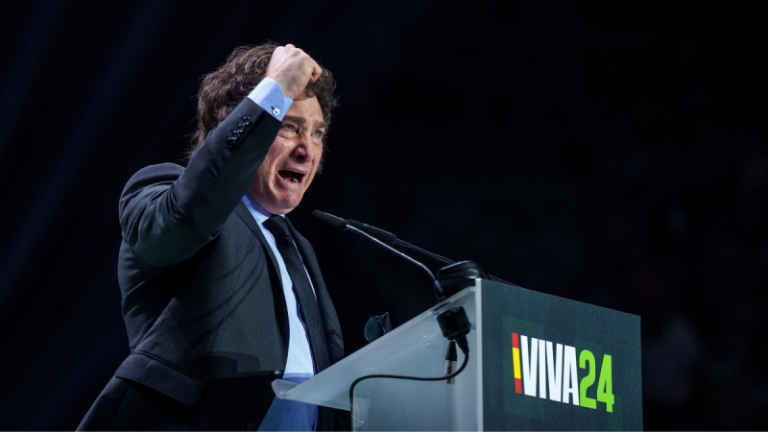
Argentine President Javier Milei secured a decisive victory Sunday in midterm elections, expanding his control of Congress and giving his government fresh momentum to push forward with deep spending cuts and sweeping free-market reforms.

The result gives Milei’s libertarian movement a boost and marks another sharp turn for one of Latin America’s largest and most volatile economies.

Milei’s party, La Libertad Avanza, won about 41.5% of the vote in Buenos Aires province, a historic upset in a region long dominated by the Peronist opposition. The rival coalition took 40.8%, according to figures cited by Reuters and The Associated Press.

Nationwide, La Libertad Avanza increased its seats in the lower house from 37 to 64, positioning Milei to more easily defend his vetoes and executive decrees that have defined his economic agenda.

‘The result is better than even the most optimistic Milei supporters were hoping for,’ Marcelo Garcia, Americas director at the risk-analysis firm Horizon Engage, said in comments reported by Reuters. ‘With this result, Milei will be able to easily defend his decrees and vetoes in Congress.’

Political consultant Gustavo Cordoba told Reuters the outcome reflected a cautious optimism among voters who appear willing to give Milei’s economic policies more time.

‘Many people were willing to give the government another chance,’ Cordoba said. ‘The triumph is unobjectionable, unquestionable.’

Reuters reported that inflation has fallen from 12.8% before Milei’s inauguration to 2.1% last month. His government has also posted a fiscal surplus and pushed through broad deregulation measures — a dramatic reversal after years of economic turbulence.

According to The Associated Press, the U.S. government under President Donald Trump offered Argentina a $40 billion aid package, including a $20 billion currency swap and a proposed $20 billion debt-investment facility, after tying future U.S. support to Milei’s performance in the midterms.

Investors reacted positively to the results. Reuters reported that Argentine bonds and stocks are expected to rally as Milei’s stronger hand in Congress gives him the political capital to accelerate his reforms

Milei called the election ‘a turning point for Argentina,’ according to AFP via the Times of Israel.

This post appeared first on FOX NEWS

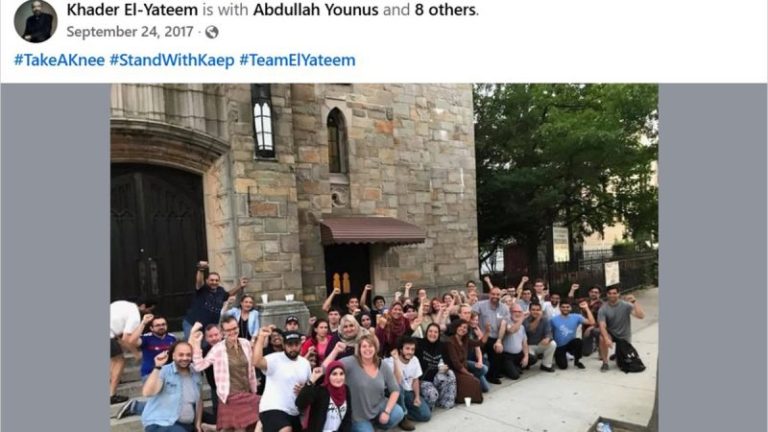
In late September 2017, Palestinian American activist Linda Sarsour, once the darling of the Women’s March and the self-declared face of the ‘resistance’ against Donald Trump, was facing mounting criticism for antisemitic remarks and her embrace of extremist views. 

But, beaming in a photograph taken on a city sidewalk, Sarsour appeared unfazed, her iconic fist pumped in the air as she knelt shoulder-to-shoulder with campaign volunteers for City Council candidate Khader El-Yateem. The photo was posted by El-Yateem on the Facebook page he used to promote his campaign, which he lost, but among the smiling faces was a young organizer named Zohran Mamdani.

That photo would mark the start of a carefully constructed political project that, in less than a decade, would propel a now-34-year-old socialist newcomer to the precipice of running America’s largest city – even while campaigning with radical imams, some of whom have supported terrorists and terrorist financiers.

A Fox Digital investigation reveals that Mamdani’s rise was no accident. It was engineered.

A database of 110 groups backing Mamdani exposes a tight inner circle of organizations that identify as Muslim or socialist, working hand-in-glove with 76 Democratic Party affiliates, allied groups and unions. Particularly important in this political machine are two networks – Sarsour’s MPower organizations and another constellation of groups called Emgage, with which she works closely.

The organizations have been generously funded. In total, billionaire George Soros’ Open Society philanthropies have given MPower and Emgage nearly $2.5 million in recent years, according to tax filings. 

‘We fund a range of civil society organizations that work to deepen civic engagement through peaceful democratic participation, counter discrimination including against Muslim Americans and advance human rights,’ a spokesperson for Open Society Foundations told Fox News Digital. ‘The grants that you cite all occurred years before the mayoral race, and we are a nonpartisan organization that does not fund political candidates and their campaigns.’

Mamdani, Sarsour and the groups supporting Mamdani’s campaign didn’t return requests for comment.

MPower and Emgage have been part of a tight inner circle of 30 ethnic and religious groups, that also includes CAIR Action, the 501(c)(4) political wing of the 501(c)(3) Council on American-Islamic Relations nonprofit, the Islamic Circle of North America,’ ‘Muslim Action Coalition,’ Yemeni American Merchants Associations Inc., the ‘Bangladeshi American Advocacy Group’ and ‘Desis Rising Up and Moving.’ They have pumped up Mamdani’s campaign with social media campaigns, canvassing, voters and buzz.

Altogether, they have annual revenues of about $24 million, and they have worked to promote Mamdani’s campaign with endorsements, fund-raising, social media campaigns and canvassing.

The result: a carefully constructed political career that mainstreams the socialist goals long embraced by Sarsour and fellow members of the Democratic Socialists of America.

It’s a machine that is expressing itself in races from New York to Virginia, Minnesota, Texas and California with MPower and Emgage aligning with the Democratic Socialists of America and the Democratic Party to propel candidates who may share their views. In a campaign called ‘Defend and Advance,’ Emgage SuperPac is pushing Mamdani and Democratic Virginia Lt. Governor candidate Ghazala Hashmi as its ‘star candidates.’

Emgage’s ‘Defend and Advance’ roster of supported candidates and office holders includes Dearborn, Mich., Mayor Abdullah Hammoud.

‘I want you to know as mayor, you are not welcome here,’ Hammoud recently told a Christian pastor who objected to a proposal to name a street in honor of a local man who had allegedly praised terrorist groups Hamas and Hezbollah. ‘And the day you move out of the city will be the day that I launch a parade celebrating the fact that you moved out of the city because you are not somebody who believes in coexistence.’

Emgage’s donations include $175,000 from a group little-noticed by political observers but important in Islamist circles: Sterling Charitable Gift Fund, based in Herndon, Va. It is part of a network of groups that FBI agents raided in 2002 as part of wider investigations into the funding of Palestinian terrorist groups, including Hamas. Federal prosecutors ultimately didn’t file criminal charges against any officials at Sterling Charitable Gift Fund.

Over almost a decade, Sarsour and her allies have orchestrated a network of well-financed and tightly connected socialist activists, radical imams, political organizers and nonprofit organizations funded with millions of dollars by major philanthropies, including Foundation to Promote Open Society, the Ford Foundation, Macarthur Foundation and the Tides Foundation.

The confluence of big philanthropy, partisan operatives and clerical authority has helped drive Mamdani’s ascent. Its architecture combines nonprofit activism with faith-based politics and the precision of a professional campaign operation. 

‘To the casual observer, Zohran Mamdani’s rise might appear meteoric – a story of grassroots energy and demographic change in America’s largest city,’ said Dalia Al-Aqidi, an Iraqi American Muslim who is running against Democratic Rep. Ilhan Omar in Minnesota, with Omar supported by the same kind of political machine being unleashed to propel Mamdani to office.

‘The data, the money trail and the affiliations, from the Democratic Socialists of America to the Islamists, tells a different story.’

‘Mamdani’s ascent is the product of deliberate design: a sophisticated collaboration between socialist activism and Islamist organizing, lubricated by millions in foundation grants and political donations and normalized through a revolving door of political operatives and nonprofits who embrace Islamists, the destruction of the state of Israel and hostilities to the police, the U.S. and the West,’ Al-Aqidi said.

The timeline of Mamdani’s rise tracks precisely with the growth of this network. In 2012, as a student at Bowdoin College, in Maine, he cofounded a chapter of Students for Justice in Palestine, the campus organization known for its rabid anti-Israel activism. By 2017, he was canvassing for El-Yateem’s campaign with Sarsour’s mentorship.

In 2018, Mamdani formally entered Sarsour’s orbit through the Muslim Democratic Club of New York, an organization she co-founded in 2013 to mobilize Muslim voters and elect progressive Democrats to local office. The Muslim Democratic Club of New York served as both incubator and amplifier for Sarsour’s political brand, one that fused progressive politics with an explicitly Islamist social identity. By December 2018, Mamdani joined the board, in an announcement in which the group said, ‘Help build Muslim power across the city with us!’

With his new role, Mamdani gained access to an emerging infrastructure of influence: voter lists, donor networks and organizing muscle that would later power his campaign to a seat on the New York General Assembly. The Muslim Democratic Club endorsed Mamdani.

Around that time, Sarsour was building her own empire, founding MPower Change as a 501(c)(3) nonprofit housed at Neo Philanthropy Inc. Public filings show MPower Change took in at least $2.4 million between 2017 and 2024, the latest year available, with Soros’s Foundation to Promote Open Society giving her organization $1.125 million and the Macarthur Foundation funneling her $450,000. It would become a flagship digital organizing hub for not just Sarsour but Mamdani. 

Meanwhile, Emgage Action was expanding its footprint nationally. Also backed by the Open Society network, Emgage Action received a share of $42.5 million that Soros’ foundations pledged to Muslim, Arab and South Asian civic groups beginning in 2021. It has received $1.8 million from the Open Society Policy Center and another $1.35 million from the Foundation to Promote Open Society.

Together, MPower Change and Emgage created an unprecedented financial and political ecosystem, leveraging big philanthropy’s dollars and digital strategy to elevate candidates like Mamdani under the banner of Muslim empowerment.

In 2020, Mamdani won his first election to the New York State Assembly, with Sarsour’s explicit endorsement and fundraising help.

By 2020, Mamdani was being featured in Sarsour’s #MyMuslimVote summit, promoted by MPower Change as the face of a new generation of unapologetic Muslim progressives. By this year, his campaign for mayor became the culmination of that project — backed by PAC money, boosted by clerical endorsements and legitimized by an activist ecosystem that had spent a decade grooming him for this very moment.

To push Mamdani toward the helm of the nation’s biggest city, the network extended far beyond activist circles. Central to Mamdani’s political ascent was a series of carefully cultivated relationships with clerics with some troubling views.

In January, Mamdani courted Imam Muhammad Al-Barr of the Islamic Society of Bay Ridge, visiting his mosque just months after Al-Barr had publicly prayed to ‘annihilate’ Israel.

In May, Imam Siraj Wahhaj, the longtime imam of Brooklyn’s Masjid At-Taqwa, personally donated $1,000 to the Unity and Justice Fund. More recently, Mamdani met with Wahhaj and called him ‘one of the nation’s foremost Muslim leaders and a pillar of the Bed-Stuy community.’

Wahhaj, who served as a character witness in the trial of Omar Abdel-Rahman, the ‘Blind Sheikh’ later convicted of masterminding the 1993 World Trade Center bombing, has a long history of calling for the exploitation of America’s democracy to further a conquest for Islam.

‘You don’t get in politics because it’s the American thing to do,’ he said in a videotaped 1991 sermon. ‘You get involved in politics because politics can be a weapon to use in the cause of Islam.’ 

Wahhaj has also denounced the U.S. government as ‘controlled by Shaitan,’ the Arabic word for the devil, urged Muslims not to befriend ‘non-believers,’ condemned homosexuality as ‘a disease of this society,’ and supported Islamic laws that punish sex outside of marriage with 100 lashes and stoning. In 2011, Wahhaj urged Muslims to donate to the legal defense of the since-convicted Aafia Siddiqui, a Pakistani neuroscientist dubbed ‘Lady Al Qaeda’ for attempting to kill U.S. troops in Afghanistan.

Over the years, Wahhaj’s sermons have praised ‘jihad’ without ‘a gun,’ called for an Islamic America governed by sharia law and urged the creation of an ‘army of 10,000 men in New York City.’

Other imams now backing Mamdani’s mayoral run have also been controversial. Imam Talib Abdur-Rashid, a cleric leading the Mosque of Islamic Brotherhood in Harlem, co-founded the Muslim Alliance in North America, alongside Wahhaj. In 2005, Abdur-Rashid publicly defended Rafiq Sabir, an American doctor who joined al Qaeda and was subsequently sentenced to 25 years in prison.

In 2008, Abdur-Rashid defended Sami Al-Arian, a Palestinian American professor whom the U.S. later deported to Turkey for ‘conspiring to provide services’ to Palestinian Islamic Jihad. Still in the U.S., Al-Arian’s wife joined the anti-Israel encampments at Columbia University.

In September, Mamdani appeared as the special guest speaker at Abdur-Rashid’s annual gala. A month earlier, Muslim Association of North America’s social media featured Abdur-Rashid visiting Wahhaj’s mosque, underscoring the continued collaboration between the two imams.

In Manhattan, Imam Khalid Latif, the executive director of the Islamic Center at New York University, has been another prominent Mamdani backer. Latif publicly endorsed Mamdani on Facebook in June, calling him ‘a bearer of compassion in a time where it is far too rare.’

In 2012, Latif led a pilgrimage to Saudi Arabia that included Omar Mateen, who would later murder 49 people at the Pulse nightclub in Orlando, the deadliest anti-LGBTQ attack in U.S. history. He has denied radicalizing Mateen and he hasn’t faced the same type of allegations that surround the other imams.

For many Muslim political organizations backing Mamdani, these clerics are not liabilities but assets, serving as trusted gatekeepers to the city’s growing community of Muslim voters.

After Mamdani visited Wahhaj’s mosque earlier this month, he tweeted out a photo of the two with the caption: ‘Pleasure to meet Imam Siraj Wahhaj, one of the nation’s foremost Muslim leaders.’ When a firestorm ensued, several allies rose to his defense: Sarsour, the Council on American-Islamic Relations and the leaders at Emgage Action.

Sarsour shared a selfie with Mamdani, beaming, like they did back in 2017, and wrote, ‘May Allah continue to bless and protect you.’

A defiant Wa’el Alzayat, the executive director of Emgage Action, sent out a dispatch to followers on Tuesday, amid criticism for their political work, promising, ‘We are in this for the long haul.’

Back in Minnesota, Al-Aqidi closely watched the defense of Mamdani.

‘For over a decade, Linda Sarsour and her network of allies have built the Mamdani machine piece by piece: the institutions, the donors, the narratives and now, the candidate. There was no way they were going to throw him under the bus for one photo with one imam whom they happen to love,’ said Al-Aqidi. ‘Mamdani is the fresh face of a radical coalition, and I hope New Yorkers will reject him. Win or lose, one fact remains undeniable. His rise was not spontaneous. It was engineered and the machinery behind it is only getting stronger.’

Al-Aqidi said; ‘I hope New Yorkers will shut the Mamdani machine down.’

This post appeared first on FOX NEWS

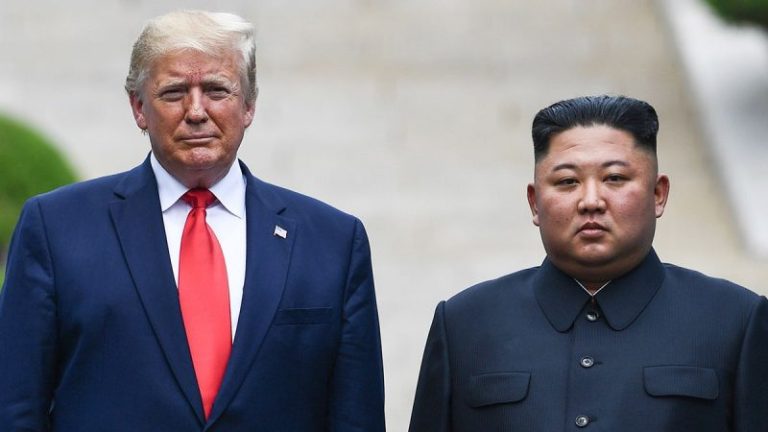
President Donald Trump said he’d be willing to extend his trip abroad to Asia if North Korea’s Kim Jong Un wants to meet with him.

‘But I’d love to meet with him if he’d like to meet. I got along great with Kim Jong Un. I liked him, he liked me,’ Trump said during a gaggle on Air Force One.

When asked if he’d extend his trip in order to meet with the North Korean figure, Trump indicated that he would be willing to do so.

The president had previously noted during a prior gaggle aboard Air Force One that he would be open to meeting with Kim Jong Un.

‘I got along very well with him,’ he said of the foreign leader.

North Korea is one of the few nations around the globe armed with nuclear weapons.

During his first term, Trump met with Kim Jong Un several times.

He even made history as the first sitting U.S. president to step into North Korea.

This post appeared first on FOX NEWS
President Donald Trump shot down speculation that he would run as a vice presidential candidate in 2028, telling reporters aboard Air Force One that Republicans already have ‘great’ prospective candidates.

Trump made the statement during a gaggle with reporters on Sunday, brushing off questions about whether he would fully pursue such an option. Trump pointed to Vice President JD Vance and Secretary of State Marco Rubio as two potential successors, while denigrating potential Democratic candidates as ‘low IQ.’

‘We have great people. I don’t have to get into that, but we have one of them standing right here. We have JD, obviously. The Vice President is great. Marco is great, I think. I’m not sure if anybody would run against those. I think if they ever formed a group, it would be unstoppable,’ Trump said.

‘They have Jasmine Crockett, a low IQ person. They have AOC’s low IQ. If you give her an IQ test, have her pass, like, the exams that I decided to take when I was at Walter Reed. I took those very hard, they’re really aptitude tests, I guess, in a certain way, but they’re cognitive tests. Let AOC go against Trump. Let Jasmine go against him,’ he continued.

‘The first couple of questions are easy. A tiger, an elephant, a giraffe, you know. When you get up to about five or six, and then when you get up to 10 and 20 and 25, they couldn’t come close to answering any of those questions,’ he asserted.

Asked about whether he would run as vice president in 2028, Trump noted that he would be ‘allowed to do that,’ but he called the plan ‘too cute.’

‘Is it the White House, or the White House counsel’s, or your legal position, I guess, that you could do that?’ a reporter pressed.

‘You’d be allowed to do that, but I wouldn’t do that. I think it’s too cute,’ Trump responded.

Trump’s comments come as he flies across Asia meeting with world leaders in a five-day tour this week. The president landed in Japan early Tuesday morning, and he is expected to meet with newly-elected Prime Minister Sanae Takaichi in Tokyo. Takaichi is Japan’s first female prime minister.

Trump also confirmed on Sunday that he would be open to meeting with North Korean dictator Kim Jong Un during his visit to South Korea.

This post appeared first on FOX NEWS