
Author

admin

Browsing

The Democrats, or Socialists, or whatever they are these days, are hopping mad over President Donald Trump’s construction of a ballroom in the East Wing of the White House, and while it may be their silliest freakout of the entire Trump era, it is also quite telling.

The ladies on ABC’s ‘The View’ were apoplectic when they saw images of demolition, a fairly ordinary way to begin renovations, at 1600 Pennsylvania Avenue. They echoed one-time resident Hillary Clinton’s complaint that Trump doesn’t own the White House, even taking to song about it.

What makes this argument so absurd, is that Trump is not building this ballroom for his personal use or glory. It’s not a vanity project. It is a long-considered addition to an executive home that lacked the capacity to hold large indoor events.

Trump, as has always been his wont, is looking to create grandeur, and that seems to be something to which leftists reflexively object.

Trump is obviously not the first president to renovate the White House. President Franklin Delano Roosevelt put in a swimming pool. His successor, President Harry Truman, practically gutted the place to add a balcony. President Nixon covered the swimming pool but added a bowling alley. Finally, President Obama transformed the tennis court into a basketball court.

Note that these are all changes that were made to serve the respective president’s personal taste or enjoyment, like a Roman emperor adding a water feature to his personal dining area.

What Trump is doing is completely different. The ballroom he is constructing will likely survive as a symbol of American power long after we are all gone. It will be, in a sense, our generation’s contribution to the people’s home.

Trump wants this venue, this symbol of America, to be grand and classically inspired, a timeless marble monument to a United States that emerged from the 20th century as the world’s only super power.

And in a way, this is part of what the left objects to, not just in regard to the White House project, but to Trump’s proposed new arch in Washington, D.C., and great statuaries of American heroes, not to mention the recent massive military parade.

In the post-Cold War era, part of America’s international style and sensibility was to be understated. Like the star quarterback who is also a model and a chess prodigy, we learned not to rub it in.

In that time, very little public art or architecture was done on a grand and classic scale, and in more recent times, our society has been so hellbent on taking statues and monuments down, that we gave little thought to putting them up.

Trump instinctively understands that in 2025, America may still be the world’s only superpower, but not by so hegemonic a distance as in the recent past. China, among others have been catching up, and the ‘aw, shucks’ attitude of the past needs some adjusting.

World leaders as well those on public White House tours should have their breath taken away when they walk into the presidential ballroom. Such displays are as old as nations themselves, from the pyramids to the Coliseum, it’s nothing to be ashamed of.

Though this expansion of the White House would be well worth taxpayer money, Trump has found a way to build it with private donations, as well as his own funds. Still the left is throwing a fit. Why?

Recent polling showed that only 36% of Democrats are very, or even just somewhat, proud of America. This being the case, it’s easy to understand why they object to building testaments to its power and glory.

What Democrats and socialists are really objecting to here is not that Trump’s ballroom celebrates himself, it’s that his ballroom unabashedly celebrates America.

Fifty years from now, when King George VII of Great Britain dines at the White House, people will little remember that it was built by Trump, even if all the gold leaf remains. By then, it will simply be a great piece of American architecture we can all be proud of.

Americans want and deserve a big, beautiful ballroom for their nation’s executive mansion, and there has never been a president more capable of delivering it than our real estate mogul-in-chief.

Liberals can stamp their feet in anger all they want. But the ballroom is going to be built, and eventually, most of them will come to appreciate it.
This post appeared first on FOX NEWS

In today’s political environment, it is hard to envision important issues where Republicans and Democrats can find common ground. Protecting the safety and security of citizens from the Chinese Communist Party (CCP) is hopefully still that issue. 

In recent years, we have seen growing agreement among lawmakers that the CCP is actively working against the security of the U.S. Whether through coercive trade practices, espionage, military aggression or technology theft, the CCP is intent on undermining American strength. 

President Donald Trump has rightly identified our nation’s increased dependence on Chinese companies as a clear threat to national security. In response, he has taken action to rebuild our domestic industrial manufacturing bases. This is especially true in critical security industries like defense, nuclear development, pharmaceutical manufacturing and data center infrastructure. 

The Trump administration should now look at medical devices. This lesser-known threat to American privacy and security lurks within our hospitals, health care facilities and even in the homes of everyday Americans. Used to treat patients, monitor patient health and inform medical decisions made by health care professionals, medical devices are critical tools used in the everyday care of our most vulnerable members of society. 

It is no wonder, then, that medical devices made by Chinese companies not only have the potential to take advantage of that intimate access, but have already been shown to exploit those vulnerabilities to gain access to the personal, private data of American patients.

Just this month, it was reported that medical hardware from Shanghai-based United Imaging has been installed in some of the country’s top research labs. In some instances, these labs were even funded by the National Institutes of Health (NIH). Not only has United Imaging worked alongside the Chinese military and the state-run Chinese Academy of Sciences, according to the FBI, the company has also bribed employees working at an NIH-funded lab to backchannel non-public information about their research to United Imaging and the Chinese Academy of Sciences. 

Earlier this year, the Food and Drug Administration (FDA) issued a warning about a patient monitor made by Chinese-based company Contec, specifically calling attention to a software backdoor on the device that once connected to the internet ‘begins gathering patient data, including personally identifiable information (PII) and protected health information (PHI), and exfiltrating (withdrawing) the data outside of the health care delivery environment.’ 

The Department of Homeland Security’s Cybersecurity and Infrastructure Security Agency (CISA) followed up with its own report, saying that the backdoor enabled remote actors to engage in ‘remote code execution and device modification with the ability to alter its configuration.’

Far from being an idle threat, CISA explained that this vulnerability in a machine that monitors and displays critical information like electrocardiograms and blood pressure could result in life-or-death consequences: ‘This introduces risk to patient safety as a malfunctioning monitor could lead to improper responses to vital signs displayed by the device.’

Medical devices made by Chinese companies have quietly made their way into many hospitals and clinics in the United States, bringing with them hidden risks that are waiting to be abused by the CCP. 

First, patient privacy is compromised when unknown actors can access and siphon the most sensitive and confidential data from every patient in America, undermining the very foundation of trust in our health care system. 

Compounded with the fact that Chinese law compels Chinese companies to cooperate and share information with the CCP and that China prizes big data and is gathering information on individuals around the world, we can be assured that whatever private information is gathered on American patients is not in our national interest.

Second, we cannot trust that information siphoning will not escalate to more serious tactics that put patient lives at risk. Remote access to medical devices could result in real-world harm to patients if those devices were reconfigured to display false information that then led to unnecessary and harmful medical interventions. 

Third, the U.S. healthcare system is becoming too dependent on Chinese companies to run our hospitals. It does not take much of a leap to think about what would happen if the CCP decided to cut off the supply of medical devices. Just like critical minerals, energy or military equipment, depending on Chinese companies for medical devices is a clear threat to American security.

What these threats amount to is that the U.S. can no longer blindly outsource medical devices – some of our most vital and sensitive equipment – to companies that operate at the behest of foreign adversarial governments like the CCP. It is critical that America has a domestic supply chain of medical devices. 

Now is the time that lawmakers, both at the federal and state level, take this threat seriously and take meaningful steps to reduce the risks posed by these medical devices. 

Protecting Americans from threats to their health and security should be an easy, bipartisan win.

This post appeared first on FOX NEWS

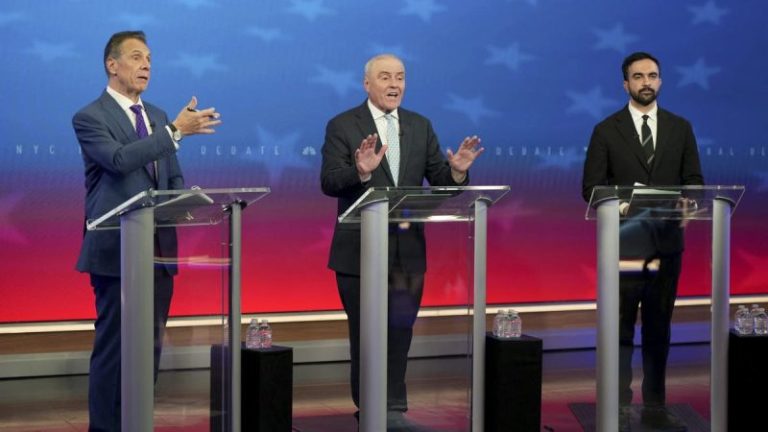
Front-runners for New York City mayor, Zohran Mamdani and Andrew Cuomo, wasted little time attacking each other on alleged personal scandals they have been involved in during a Wednesday night debate between the pair and GOP candidate Curtis Sliwa.  

Mamdani and Sliwa took the opportunity during Wednesday’s debate to drill down on past sexual harassment allegations against Cuomo, the former governor of New York, ahead of an impeachment inquiry that preceded Cuomo’s 2021 resignation. Cuomo was also hit by Mamdani over accusations he has – while in public office – failed to meet with Muslim constituents and only began doing so amid pressure from his mayoral campaign, and over his alleged poor handling of the COVID-19 virus in New York after Cuomo was party to issuing guidance forcing nursing homes and long-term care facilities to admit COVID-19 positive patients.

Meanwhile, Cuomo did not hold back on targeting Mamdani over alleged controversies that have embattled his campaign. Cuomo blasted the self-proclaimed socialist over his lack of experience, ties to radical politics, and past radical comments about law enforcement, Israel and the situation in Gaza.

‘My main opponent has no new ideas. He has no new plan. … He’s never run anything, managed anything. He’s never had a real job,’ Cuomo said of Mamdani during the debate. Cuomo also branded Mamdani as someone who has proven to be ‘a divisive force in New York,’ pointing to past incidents that have garnered Mamdani heat from critics. 

One of those incidents included a picture he took with a hard-lined Ugandan lawmaker who has pushed policies of imprisoning people for being gay, which Mamdani took while taking a break from the campaign trail to visit his home country of Uganda for a wedding. Cuomo also hit the controversy over whether Mamdani supports Jewish New Yorkers, as his critics have claimed he is anti-Israel pointing to statements he has made, like ‘globalize the intifada.’ 

Cuomo also accused Mamdani of disrespecting Italian-Americans after a video of him surfaced giving the middle finger to a statue of Christopher Columbus, while also pointing to criticism the self-proclaimed socialist candidate has garnered from 9/11 first-responders after posting a photo with a Muslim cleric who served as a character witness for the mastermind behind the September 11, 2001 attacks. 

‘You have been a divisive force in New York, and I believe that’s toxic energy for New York. It’s with the Jewish community. It’s with the Italian-American community – when you give the Columbus statue the finger. It’s with the Sunni Muslims when you say decriminalize prostitution, which is Haram. It’s the Hindus,’ Cuomo continued. ‘Then, you take a picture with Rebecca Kadaga, deputy Prime Minister of Uganda. … She’s known as Rebecca ‘Gay Killer.’ … You’re a citizen of Uganda. You took the picture. You said you didn’t know who she was. It turns out you did. How do you not renounce your citizenship or demand BDS against Uganda for imprisoning people who are gay just by their sexual orientation? Isn’t that a basic violation of human rights?’

Mamdani shot back that his politics have remained ‘consistent’ and that they are built on a belief in human rights for all people, including LGBTQ+ folks. Had he known Kadga’s role in drafting legislation to imprison gay folks, Mamdani said, he never would have taken the picture. 

‘This constant attempt to smear and slander me is an attempt to also distract from the fact that, unlike myself, you do not actually have a platform or a set of policies,’ Mamdani shot back at Cuomo before introducing his own claims about the former governor regarding past accusations of sexual harassment.

‘Mr. Cuomo. In 2021, 13 different women who worked in your administration credibly accused you of sexual harassment. Since then, you have spent more than $20 million in taxpayer funds to defend yourself, all while describing these allegations as entirely political,’ Mamdani said while attacking Cuomo Wednesday night. 

‘You have even gone so far as to legally go after these women. One of those women, Charlotte Bennett, is here in the audience this evening. You sought to access her private gynecological records. She cannot speak up for herself because you lodged a defamation case against her. I, however, can speak. What do you say to the 13 women that you sexually harassed?’ 

Cuomo, in 2021, was accused of multiple incidents of sexual harassment that preceded his resignation as governor that year. A subsequent report from New York Attorney General Letitia James confirmed Cuomo ‘sexually harassed multiple women from 2013 through 2020,’ while in January 2024, the U.S. Department of Justice announced it had reached a nearly $500,000 settlement with Cuomo’s executive office over one of the claims. However, no criminal charges were ever filed against Cuomo, with some district attorneys citing insufficient evidence.

Cuomo defended himself against Mamdani’s accusations, noting the cases were eventually dropped, before returning to questions about Mamdani’s alleged past. 

Meanwhile, Sliwa didn’t skip an opportunity to slam Cuomo over the sexual assault allegations either, saying early in the debate during a discussion about homelessness that Cuomo ‘fled’ the governor’s office amid an impeachment inquiry that was investigating him.

‘Andrew, you didn’t ‘leave.’ You fled from being impeached by the Democrats in the state legislature,’ Sliwa began before getting into the homelessness issue, earning him a round-of-applause from the audience. 

”Leave?’ You fled!’ Sliwa continued to applause. ‘But let’s get back on topic.’ 

This post appeared first on FOX NEWS

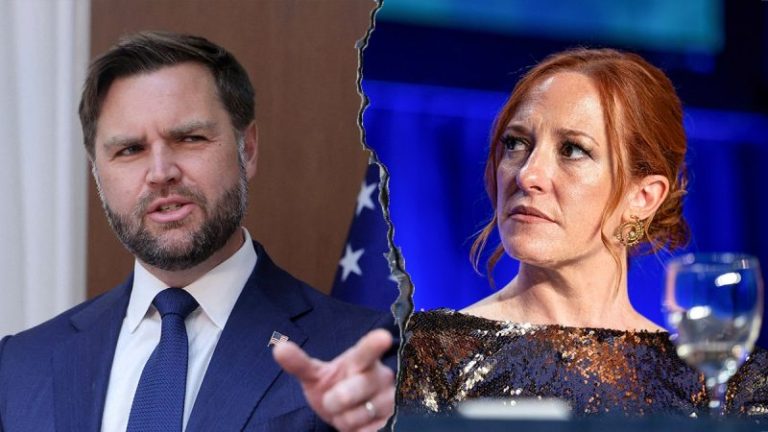
Vice President JD Vance slammed former White House press secretary Jen Psaki’s ‘disgraceful’ remarks implying that second lady Usha Vance is afraid of her husband.

‘I think it’s disgraceful, but of course the second lady can speak for herself,’ Vance told reporters in Israel on Thursday. 

He remarked that he is ‘very lucky to have a wonderful wife’ and that he was honored to have her by his side during his recent trip to Israel.

Psaki made remarks about the second lady during an appearance on the ‘I’ve Had It’ podcast and suggested that the vice president is ‘scarier’ than President Donald Trump.

‘I think the little Manchurian candidate, JD Vance, wants to be president more than anything else,’ Psaki said. ‘I always wonder what’s going on in the mind of his wife. Like, are you OK? Please blink four times. We’ll come over here. We’ll save you.’

‘And that he’s willing to do anything to get there. And your whole iteration you just outlined, I mean, he’s scarier in certain ways in some ways. And he’s young and ambitious and agile in the sense that he’s a chameleon who makes himself whatever he thinks the audience wants to hear from him,’ she added.

Social media exploded with criticism of Psaki’s remarks as the clip of her podcast appearance went viral.

Steven Cheung, Trump’s communications director, accused Psaki of ‘transferring her own personal issues onto others’ and said she ‘has to overcompensate for her lack of talent by saying untrue things.’

Fox News contributor Joe Concha also chimed in, saying that Psaki is, ‘Not a good person. At all.’

Usha Vance met her husband while attending Yale Law School. The White House notes in its biography of the second lady that she ‘is an experienced litigator whose work involved complex civil litigation and appeals in a wide variety of industries.’ Additionally, she clerked for Supreme Court Chief Justice John Roberts and for then-Judge Brett Kavanaugh, who was serving on the U.S. Court of Appeals for the District of Columbia Circuit.

In his memoir, ‘Hillbilly Elegy,’ which was originally published in June 2016, the now-vice president called Usha his ‘Yale spirit guide’ and said that, ‘In a place that always seemed a little foreign, Usha’s presence made me feel at home,’ according to PBS.

The Vances welcomed their first son, Ewan, in June 2017, according to People magazine. Their second son, Vivek, was born in February 2020, and their daughter, Mirabel, was born in December 2021.

Fox News Digital’s Lindsay Kornick contributed to this report.

This post appeared first on FOX NEWS

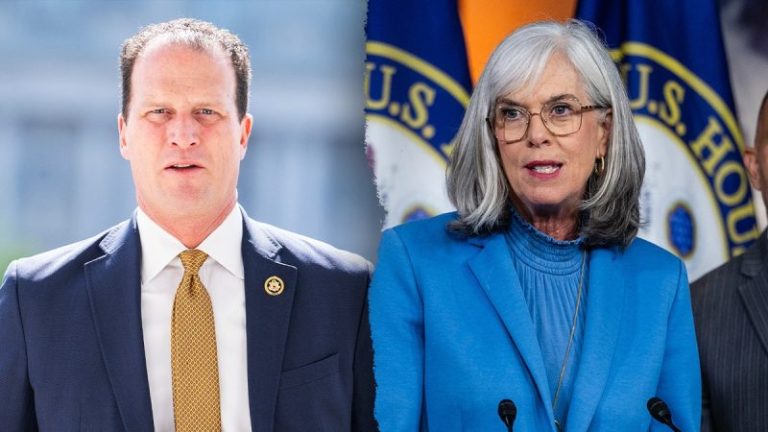
A top House Republican is criticizing one of Democrats’ senior leaders for saying the government shutdown and its effects are a ‘leverage point’ to accomplish their goals on healthcare.

‘It’s appalling to see the number two House Democrat openly admit that the left is weaponizing hardworking Americans as ‘leverage’ for political gain, even acknowledging families will suffer in the process,’ Republican Study Committee Chair August Pfluger, R-Texas, told Fox News Digital.

‘This isn’t governance — it’s calculated hostage-taking, with struggling families caught in the balance as Democrats attempt to force through their radical agenda. Families are seen only as leverage by Democrats. We always knew it, now they’re saying it out loud. Absolutely shameful.’

House Minority Whip Katherine Clark, D-Mass., sat down for an interview with Fox News’ Chad Pergram last week. At one point, Clark was asked about who Americans would find responsible for the ongoing shutdown.

‘I mean, shutdowns are terrible and, of course, there will be, you know, families that are going to suffer. We take that responsibility very seriously. But it is one of the few leverage times we have,’ Clark responded.

‘It is an inflection point in this budget process where we have tried to get the Republicans to meet with us and prioritize the American people, and it’s been an absolute refusal, and they were willing to let government shut down when they control the House, the Senate and the White House rather than come and talk about an issue as important to the American people is if they can afford healthcare.’

Fox News Digital reached out to Clark’s office for a response to Pfluger’s comments.

The government shutdown is now in its 23rd day after Senate Democrats rejected the GOP’s federal funding bill for a 12th time on Wednesday evening.

Republicans proposed a measure that would keep federal funding roughly flat until Nov. 21, a spending patch called a continuing resolution (CR), so that negotiators would have more time to strike a longer-term deal on fiscal year (FY) 2026.

The bill passed the House largely along partisan lines on Sept. 19.

But Democrats have been pushing for any funding deal to include an extension of Obamacare subsidies that were enhanced during the COVID-19 pandemic. Those enhancements are set to expire at the end of 2025.

Republican leaders have signaled a willingness to negotiate on those subsidies, but have ruled out doing so in the current package.

‘Mike Johnson said, we have an eternity to talk about this, an eternity. This impact of the ACA is in the next few weeks,’ Clark said. ‘Yes, there are repercussions to a shutdown that are terrible for people.’

She continued, ‘I feel for military families that even if they get paid, you know, there are lots of spouses that also work that are feeling these cuts because we’ve encouraged military spouses to become federal workers to accommodate all the travel and moving that military families so frequently experience. And now we’re saying to them, you’re not going to be paid for your work. I mean, let’s get it together here. The Republicans need to come to town. They need to sit down with us.’

Republicans have seized on Clark’s comments in recent days, however.

House GOP Chairwoman Lisa McClain, R-Mich., said in a statement on Wednesday, ‘Democrats are holding American families hostage to advance their political agenda, and they’re admitting it.’

This post appeared first on FOX NEWS

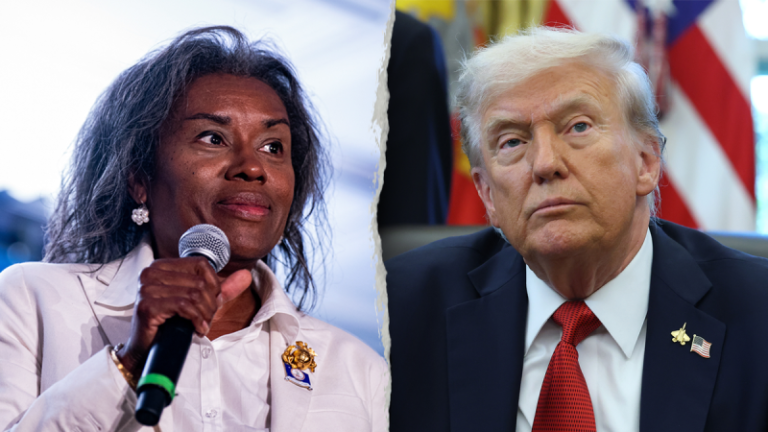
President Donald Trump maintains he’s steering clear of Virginia politics, but his in-flight remarks about Winsome Earle-Sears are prompting questions about whether he’s backing her after all.

The president has issued a full-throated endorsement for Attorney General Jason Miyares’ re-election bid but has stopped short of doing so for Earle-Sears or lieutenant governor nominee John Reid.

He has notably endorsed New Jersey Republican gubernatorial nominee Jack Ciattarelli as a ‘winner’ with a ‘complete and total endorsement’ – and that ‘after getting to know and understand MAGA, [Ciattarelli] has gone all-in.’

At a White House event in which he hosted outgoing Gov. Glenn Youngkin, Trump wished him ‘good luck with the upcoming election’ and said the fellow former business executive has been ‘working very hard’ for the candidates.

‘He wants to see that young woman win,’ Trump said of Youngkin, appearing to refer to Earle-Sears.

‘And the attorney general who I endorsed.’

After the Jay Jones murder-texts scandal broke, Trump called on the Norfolk Democrat to drop out ‘immediately’ and said Virginia must ‘continue to have a GREAT (sic) attorney general in Jason Miyares who by the way has my complete and total endorsement.’

‘Jason will never let you down,’ Trump said.

When asked in June about appealing to moderate voters while running in Trump’s party, Reid told the Hampton Roads’ ABC affiliate that he is running his own race.

‘Donald Trump’s in D.C. John Reid’s in Richmond, and I’m looking to help Virginia, and so, if you love Donald Trump, awesome. If you hate Donald Trump, I really don’t intend to argue with you. I want to save Virginia and that’s why I’m running,’ Reid said.

This week, Trump again obliquely complimented Earle-Sears while speaking to reporters on Air Force One – but declined again to issue a Miyares-type ‘total endorsement.’

‘I haven’t been too much involved in Virginia — I love the state; I did very well in the state … I think the Republican candidate is very good, and she should win because the Democrat candidate is a disaster,’ he said.

He warned that both Virginia gubernatorial candidate Abigail Spanberger and Rep. Mikie Sherrill, D-N.J. – the Democratic nominee in the Garden State – will preeminently be bad for the current U.S. energy dominance agenda.

‘Both the Democrats are going to drive the energy prices through the roof,’ he said.

Trump also faulted Spanberger for refusing to directly call for Jones’ ouster.

Fox News Digital reached out to the White House for clarity on whether Trump’s comments thus far have equated to an endorsement or whether he plans to offer one in the closing days, but did not receive a response.

When reached as well, the Republican National Committee indicated they were not at liberty to discuss the presidential prerogative in endorsements.

Earle-Sears, however, said she looks forward to working with Trump as governor to continue Republican policies focused on public safety, energy costs to Virginians and conservative values – and that Trump has indeed been supportive of her bid.

‘I am deeply grateful for President Trump’s support and his direct encouragement to voters in Virginia to vote Republican,’ she said.

‘We must ensure Virginia is the best place to live, work and raise a family and, with President Trump, I’ll fight to keep energy costs low, keep our families safe and defend our commonsense values.’

Sources have pointed to Youngkin’s own success brought on by keeping Trump at arm’s length during his own hard-fought campaign against Terry McAuliffe in a closely-divided state.

Youngkin’s messaging in predominantly Democratic northern Virginia and the I-95 corridor focused on issues like biological males in girls sports and parents’ rights that could and did draw crossover votes from Virginia voters not inclined to support someone associated with Trump.

Meanwhile, on the other end of the state, Youngkin campaigned on broader conservative or Trumpian tenets and successfully ran up the score in friendlier southside and southwest Virginia, where turnout in those less-populated counties was elevated.

This post appeared first on FOX NEWS

Here’s a quick recap of the crypto landscape for Wednesday (October 22) as of 9:00 p.m. UTC.

Get the latest insights on Bitcoin, Ether and altcoins, along with a round-up of key cryptocurrency market news.

Bitcoin and Ether price update

Bitcoin (BTC) was priced at US$107,811, a 3.5 percent decrease in 24 hours. Its lowest valuation of the day was US$107,657, and its highest was US$108,936.

Bitcoin price performance, October 22, 2025.

Chart via TradingView.

Bitwise Chief Investment Officer Matt Hougan believes gold’s explosive price performance this year could offer a glimpse of what lies ahead for Bitcoin, arguing that the world’s top cryptocurrency may be preparing for a similar structural breakout once its remaining pool of sellers runs dry.

Gold has surged roughly 57 percent in 2025, powered largely by sustained central bank accumulation. Bitcoin, meanwhile, has traded in a relatively narrow range between US$108,000 and US$112,000. According to Hougan, the comparison between the two assets provides a potential roadmap for their trajectory going into next year.

“Don’t look at gold’s meteoric rise with envy. Look at it with anticipation. It could end up showing us where bitcoin is headed,” Hougan wrote in a client note this week.

In addition, steady accumulation by exchange-traded funds (ETFs) and corporate treasuries has provided a similar source of structural demand. Since the launch of spot Bitcoin ETFs in January 2024, institutions and corporations have purchased roughly 1.39 million BTC, far outpacing new supply generated by the network.

Market data this week supports the idea of renewed accumulation. Following a US$19 billion liquidation event earlier this month, spot Bitcoin ETFs have recorded US$477 million in positive net inflows.

Predictions about a breakdown below US$100,000 have not materialized, though ongoing long liquidations over the past four hours reveal how vulnerable bullish traders remain near current support.

Ether (ETH) was priced at US$3,796.34, a 4.9 percent decrease in 24 hours. Its lowest valuation of the day was US$3,795.42, and its highest was US$3,873.52.

Altcoin price update

  • Solana (SOL) was priced at US$179.68, at its lowest valuation of the day, down by 7.5 percent over the last 24 hours. Its highest valuation of the day was US$185.98.
  • XRP was trading for US$2.37, a decrease of 5.2 percent over the last 24 hours and its lowest valuation of the day. Its highest was US$2.41.

Fear and Greed Index snapshot

CMC’s Crypto Fear & Greed Index remains locked in a state of anxiety, sitting in “fear” territory (29) for seven consecutive days and marking its longest streak since April. Its stagnation reflects a growing sense of caution among investors, as Bitcoin continues to trade within a narrow band between US$103,000 and US$115,000 for nearly two weeks.

Over the past 30 days, the index has been in greed territory for just seven days — the same period when Bitcoin reached its all-time high of US$126,000 in early October. Since then, investor sentiment has reversed sharply.

CMC Crypto Fear and Greed Index, Bitcoin price and Bitcoin volume.

Chart via CoinMarketCap.

The current fear phase began on October 11, a day after the largest liquidation event in crypto history erased more than US$20 billion in leveraged positions. Historically, similar periods of heightened fear have marked turning points for Bitcoin. The last extended stretch of fear occurred in March and April during the Trump administration’s tariff standoff with China, when Bitcoin bottomed near US$76,000. Market analysts say the prevailing mood underscores uncertainty following the US Federal Reserve’s recent policy pivot and renewed US-China trade negotiations.

Crypto derivatives and market indicators

Bitcoin derivatives metrics suggest traders are taking a wait-and-see approach.

Liquidations for contracts tracking Bitcoin have totaled approximately US$6.12 million in the last four hours, with the majority being long positions, signaling continued risk aversion. Ether liquidations showed a similar pattern, with long positions making up the majority of US$9.35 million in liquidations.

Futures open interest for Bitcoin was down by 1.09 percent to US$68.51 billion over four hours, with further decreases in the final hour of trading. Ether futures open interest moved by -1.15 percent to US$43.7 billion.

The funding rate remains positive for both crytocurrencies, with Bitcoin at 0.008 and Ether at 0.002, indicating more overall bullish positioning than bearish.

Bitcoin’s relative strength index stood at 44.98, meaning its price momentum is in a neutral to slightly bearish zone.

Today’s crypto news to know

Senate Democrats tell Trump envoy to explain undivested crypto stakes

Senate Democrats have called on Steve Witkoff, US President Donald Trump’s special envoy to the Middle East, to explain why he has not divested from his crypto holdings despite federal ethics requirements.

In a letter led by Senator Adam Schiff, eight lawmakers pressed Witkoff for details on his interests in World Liberty Financial, the Trump-linked crypto firm he co-founded in 2024, and several affiliated entities.

Witkoff’s latest ethics disclosure, dated August 13, shows he still owns stakes in multiple crypto-related businesses, including WC Digital Fi and SC Financial Technologies. Lawmakers allege these investments pose potential conflicts of interest given his diplomatic role and the company’s business ties to the United Arab Emirates.

The scrutiny follows a New York Times report linking Witkoff’s crypto dealings to a US$2 billion Emirati investment in Binance funded through World Liberty Financial’s stablecoin, USD1.

Neither the White House nor World Liberty Financial has commented on the matter.

FalconX announces plans to acquire 21Shares

FalconX announced plans to acquire 21Shares, one of Europe’s leading crypto exchange-traded product issuers.

The deal, confirmed Wednesday, will integrate FalconX’s prime brokerage operations, which serves over 2,000 institutional clients, with 21Shares’ portfolio of 55 listed products across Bitcoin, Ether and other digital assets.

21Shares currently oversees more than US$11 billion in assets and will continue operating independently under CEO Russell Barlow following the deal. While the financial terms remain undisclosed, the transaction marks FalconX’s third major acquisition this year after Arbelos Markets and Monarq Asset Management.

Hong Kong approves first spot Solana ETF

Hong Kong regulators have approved the region’s first spot Solana ETF.

The Securities and Futures Commission granted authorization to China Asset Management Company to launch the Hua Xia Solana ETF on the Hong Kong Stock Exchange on October 27. The product will trade through OSL Exchange, with OSL Digital Securities as sub-custodian and BOCI-Prudential Trustee serving as the primary custodian.

Each unit will consist of 100 shares, with a minimum investment of about US$100.

The fund’s debut makes Solana the third cryptocurrency — after Bitcoin and Ethereum — to receive regulatory approval for a spot ETF in Hong Kong.

Fed governor proposes skinny master accounts for crypto access to Fed payments

Fed Governor Christopher Waller signaled a major policy shift during his opening remarks at the Payments Industry Conference on Tuesday (October 21), welcoming DeFi and crypto innovators into mainstream payments dialogue and proposing a new framework for direct access to Fed payment infrastructure for eligible firms.

In his speech, Waller recognized traditional banks and crypto-native fintechs as core stakeholders and stressed the Fed’s intent to be active in technology-driven payment revolutions like distributed ledger technology, tokenized assets and artificial intelligence (AI). The proposed payment accounts, referred to as skinny master accounts, would offer eligible nonbank entities direct access to the Fed’s payments rails, bypassing third-party banks, but without interest, overdraft protection or discount window access, and potentially with balance caps.

Waller said this tailored access aims to match the needs and risks of payment firms and digital asset companies with a simpler review. He also noted that the Fed is conducting hands-on research into tokenization, smart contracts and AI/payments intersection and will seek industry input on the new account framework.

Andreessen Horowitz highlights maturing crypto industry

Andreessen Horowitz’s most recent State of Crypto 2025 report highlights a new era in the cryptocurrency industry that the firm says is defined by real utility and maturing institutional adoption.

The authors point out stablecoins’ explosion as a dominant macroeconomic force, citing nearly US$46 trillion in processed transactions over the past year, a figure that rivals traditional payment systems.

The report also emphasizes infrastructure upgrades across blockchains like Ether and Solana, which have increased transaction speeds while lowering costs, as well as improved regulatory clarity in the US through supportive legislative actions, which have been major catalysts helping revive builder confidence and establish frameworks for digital asset oversight that balance innovation with investor protection.

World app expands into prediction markets

World, the digital identity project formerly known as Worldcoin, is expanding into prediction markets by integrating Polymarket. The company, which is led by OpenAI CEO Sam Altman, announced on Tuesday that its World app, a mobile app combining a digital wallet with a decentralized identity tool, has integrated the Polymarket app.

The launch of the Polymarket mini app on World enables World app users to place Polymarket bets directly from the World app wallet using Circle’s USDC or World’s token, Worldcoin.

Securities Disclosure: I, Giann Liguid, hold no direct investment interest in any company mentioned in this article.

Securities Disclosure: I, Meagen Seatter, hold no direct investment interest in any company mentioned in this article.

This post appeared first on investingnews.com

Volatility punctuated the global lithium market during the third quarter of 2025, as prices, supply/demand dynamics and geopolitics converged to reshape the landscape.

After slipping to a four year low at the end of June, benchmark lithium carbonate prices rallied through July to reach an 11 month high of US$12,067 per metric ton on August 21. However, the momentum proved unsustainable and prices slipped shortly thereafter, ending the three month session at US$11,185.89.

According to Fastmarkets, the surge was driven by rumors that Australian producers Mineral Resources (ASX:MIN,OTC Pink:MALRF) and Liontown Resources (ASX:LTR,OTC Pink:LINRF) might scale back supply.

Both companies denied the reports, and analysts have suggested that even if such reductions were implemented, they would do little to rebalance the current surplus in the lithium market.

“The nascency of the lithium market means that it is prone to be led by sentiment,” Fastmarket’s Claudia Cook wrote in a July update. “However, with healthy inventory levels and continued ramp-up of production, the reported supply cuts, even if they proved true, may not be enough to dip the market into a deficit.”

US policy uncertainty also weighed on sentiment. The Trump administration’s bill to roll back electric vehicle (EV) tax credits, alongside tariff concerns and a perceived retreat from the Inflation Reduction Act, rattled investors.

The repeal had the potential to spur a short-term rush in EV purchases, although liquidity in North America remains thin, and the medium-term outlook has turned bearish, Cook noted.

Elsewhere China’s fair competition policy — intended to curb market monopolies and prevent below-cost dumping — stirred speculation across the lithium supply chain. Though the directive primarily targets downstream industries, traders are watching closely to see whether it will ripple upstream and influence pricing dynamics.

Oversupply expected to meet rising lithium demand

The largest undercurrent for the lithium market is excessive supply. Since 2020, mined output has climbed 192 percent from 82,000 metric tons to 240,000 metric tons in 2024, as outlined by the US Geological Survey.

As supply grew, demand was unable to keep pace, leading to a mounting glut that has weighed on prices.

“While futures activity can catalyse short-term price movements, beneath the surface demand remains tepid, inventories high and buyers cautious, underscoring a disconnect between price action and market reality,” Paul Lusty, head of battery raw materials at Fastmarkets explained in a September update. “We expect continued price instability in the near term with potential for further corrections unless meaningful supply disruptions materialise.”

The supply increase was anticipated to satiate a growing appetite for EVs that has yet to fully materialize.

The EV boom has fueled strong long-term growth forecasts for lithium, but the market is now facing a sharp imbalance. Global EV sales climbed past 17 million units in 2024 and are projected to top 20 million in 2025, yet a 22 percent surge in mined supply last year has outpaced demand, pushing prices lower and creating a persistent oversupply.

This discrepancy was underscored by industry attendees at Fastmarkets’ Lithium Supply & Battery Raw Materials conference, who warned that the imbalance could persist until at least 2030.

As a result, lithium prices remain under pressure despite strong EV uptake, and a meaningful re-balancing will likely depend on new supply expansions being delayed, mine closures and steeper than anticipated demand growth — potentially in the second half of the decade.

With EV demand expected to accelerate beyond 2030 and new supply projects lagging, Q3 2025 could mark the start of a tighter era. For investors watching battery metals, the key question is whether the market has found a floor — or is merely in the calm before the next supply squeeze.

Chinese lithium supply and access in question

As mentioned, the market did find support through July and August, thanks in part to Chinese battery giant Contemporary Amperex Technology (CATL) (SZSE:300750,HKEX:3750) suspending operations at its Jianxiawo lepidolite mine. Located in the country’s Jiangxi province, it is one of the world’s largest lithium sources.

The shutdown followed the August 9 expiration of the mine’s operating permit, with CATL confirming it is seeking an extension but providing no timeline for restarting production. The halt was expected to last at least three months, removing about 65,000 metric tons of lithium carbonate equivalent — roughly 6 percent of global supply — from the market and reigniting bullish sentiment in an otherwise oversupplied sector.

The shuttering of the mine propelled lithium prices and mining stocks.

In mid-October China introduced new export restrictions on advanced lithium-ion batteries, key materials and production equipment — a move set to ripple through global supply chains.

Effective November 8, 2025, companies will now need export licenses to ship high-energy batteries, cathodes, synthetic graphite anodes and related machinery abroad. The new policy follows July’s limits on lithium iron phosphate (LFP) technology exports, tightening Beijing’s control over the battery sector.

China produces over 70 percent of global cathode materials and more than 95 percent of synthetic graphite, making its export decisions pivotal. S&P Global notes in an October briefing that the new controls are expected to delay production timelines and complicate sourcing for manufacturers outside China, particularly in the US, which imports roughly two-thirds of its lithium-ion batteries from Chinese suppliers.

“Export control does not mean an outright export ban, but rather a stricter approval process,” said Fastmarkets’ Walter Zhang. “We believe that the primary intent is to counter measures such as the US OBBB (One Big Beautiful Bill) Act, while preventing potential technology transfer demands from European or American governments and avoiding the military or dual-use applications of advanced battery technologies.”

Additionally, the move adds a new front to the US-China trade standoff, with Washington expected to deepen partnerships with Korean and Japanese producers like LG Energy Solution and Panasonic to reduce dependency.

While China’s CATL will likely pivot toward Europe and emerging markets, global battery costs and supply volatility are expected to rise through 2026.

US government makes lithium push

Outside of China, the US invested heavily in the lithium-mining segment in Q3.

On October 1, Washington released the first US$435 million tranche of a landmark US$2.23 billion loan to Lithium Americas (TSX:LAC,NYSE:LAC), marking one of the Trump administration’s most significant steps yet to strengthen domestic control over critical minerals.

The funds, directed through the Department of Energy, will support construction of the Thacker Pass lithium project in Nevada, which is set to become the largest lithium source in the Western Hemisphere.

As part of the deal, the department will receive warrants representing a 5 percent equity stake in Lithium Americas and an equivalent interest in its joint venture with General Motors (NYSE:GM).

The agency also agreed to defer US$182 million in debt service over five years, underscoring Washington’s long-term commitment to building a resilient battery supply chain.

Thacker Pass is central to US efforts to reduce reliance on Chinese lithium refining and rival major producers in Australia and Chile. Once operational, Phase 1 of the project will produce 40,000 metric tons of battery-grade lithium carbonate annually — enough to power roughly 800,000 EVs — and reinforce the administration’s push to secure supply.

Looking at the rest of the year and remainder of the decade sentiment towards lithium is cautiously optimistic, according to Benchmark analysts fresh off the heels of this year’s LME Week in London.

“Market participants noted that strong spodumene appetite continues amid limited lepidolite supply from Jiangxi,” a Benchmark overview states. “Attention turned to CATL’s Jianxiawo mine, with its start‑up – whether as soon as next month or delayed to early Q1 26 – likely to influence short‑term pricing.”

Securities Disclosure: I, Georgia Williams, hold no direct investment interest in any company mentioned in this article.

This post appeared first on investingnews.com