Author

admin

Browsing

The Senate advanced its version of a colossal package to authorize funding for the Pentagon on Thursday in the midst of the ongoing government shutdown.

The 2026 National Defense Authorization Act (NDAA), which had been gathering dust as lawmakers worked to break through holds on the bill for over a month, advanced in the upper chamber on a bipartisan vote. The legislation would authorize roughly $925 billion in defense spending.

However, successful advancement of the bill after a marathon Senate vote on amendments came as the government entered Day 9 of the government shutdown with no clear end in sight. Lawmakers in the upper chamber aren’t expected to return until Tuesday, all but guaranteeing that military service members won’t get their paychecks next week. 

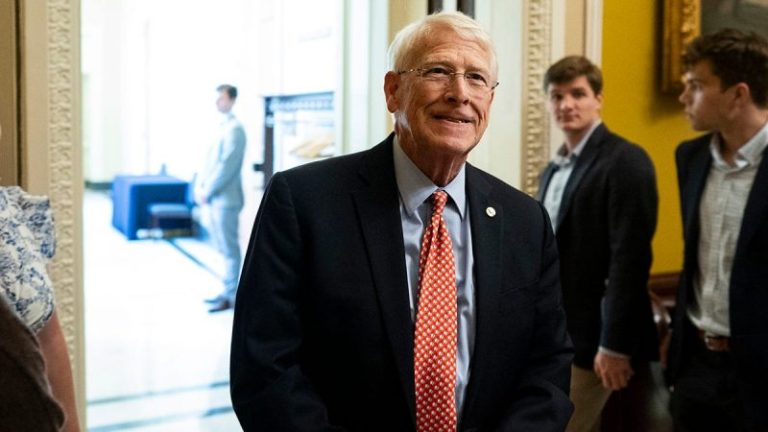
Senate Armed Services Committee Chair Roger Wicker, R-Miss., formally announced the breakthrough on the Senate floor after Senate Majority Leader John Thune, R-S.D., teased a possible vote Thursday morning. Wicker noted that in a particularly partisan moment in the upper chamber, the NDAA was able to sail through committee earlier this year on a near unanimous vote.

‘In this time, when we can’t seem to muster up a 60-vote majority to keep us in business as a federal government, we were able to pass the National Defense Authorization Act by a vote of 26-to-1,’ Wicker said.

Lawmakers were finally able to move on the legislative package after Sen. Ruben Gallego, D-Ariz., dropped his hold on the measure.

Gallego had called for a vote on his amendment that would have prevented Ashli Babbitt, who was killed during the Jan. 6, 2021, Capitol riot, from receiving military funeral honors. The Air Force extended an offer for military funeral honors for Babbitt in August.

Senators charged through over a dozen partisan amendments and a massive batch of roughly 50 add-ons to the legislative package before moving the bill. The House passed its own version last month.

Among the failed amendments was one from Senate Minority Leader Chuck Schumer, D-N.Y., which would have blocked money to retrofit a Boeing 747 that President Donald Trump accepted from the Qatari government earlier this year.  

Another, from Sen. Chris Van Hollen, D-Md., would have prevented Trump and governors around the country from signing off on sending the National Guard from one state to another if a governor or mayor rejected the move. 

One successful amendment, from Sen. Tim Kaine, D-Va., would repeal the 2002 Authorization for Use of Military Force for Iraq, which, at the time, authorized President George W. Bush to use the U.S. military as he deemed ‘to be necessary and appropriate’ in the wake of Sept. 11, 2001.

It would also repeal a similar resolution passed in 1991 during the Gulf War. The House’s version of the bill included repeals of both authorizations, too. 

However, Sen. Tammy Duckworth, D-Ill., had vowed to block the package Thursday afternoon in an effort to ‘secure a hearing to investigate this gross abuse of our military’ in response to Trump sending the National Guard to Chicago and other cities across the country.

But she backed off her threat after Wicker promised a hearing on the matter ‘in the coming weeks.’

‘I look forward to asking tough questions of the Trump administration about their unconstitutional National Guard deployments to American cities against state and local officials’ objections,’ she said in a statement. 

This post appeared first on FOX NEWS

When President Donald Trump and Finnish President Alexander Stubb sealed their latest trade agreement on Thursday, it wasn’t just a handshake for 11 rugged ships. 

It was another sign of a friendship that’s quickly turning into strategy.

Where other European leaders have tried to win Trump’s respect through policy and persuasion, Stubb chose the fairway. In March, the Finnish president — once a national golf team player — turned up at Mar-a-Lago not with briefing notes, but with clubs, challenging Trump to a round and earning something rarer than a trade deal: rapport.

Presentation matters to Trump, and Stubb — 6-foot-3, fit and sharply dressed in a double-breasted coat — seemed to meet the moment. When the two last met at the White House in August, Trump told him he ‘looked better than ever’ and introduced him as ‘a young, powerful man.’

That personal chemistry, maintained through frequent text exchanges, has quietly opened doors for the Finnish president, a longtime marathoner and triathlete with a competitive streak. What’s more, it’s translating into real policy — from defense contracts to Arctic cooperation — elevating the once-quiet Nordic nation to new prominence in Washington.

It’s an unlikely rise for a country better known for saunas and serenity than for summits. Stubb hails from a nation of 5.6 million that routinely tops the world’s happiness index, where forests blanket nearly 75% of the land and lakes glint by the hundreds of thousands.

Finland — slightly smaller than the state of Montana and wedged between Sweden and Russia — has long had its security outlook shaped by geography, a position that now places it on the front line of NATO and Arctic strategy.

The trade deal signed Thursday, for 11 ships valued at roughly $6.1 billion, is the latest sign of how that alignment is taking shape. Under the deal Trump approved, three of the ships will be built by Davie in Galveston, Texas, and four by Bollinger Shipyards in Houma, Louisiana, a setup that aligns with his ‘Made in America’ credo and emphasis on creating U.S. jobs, injecting billions of dollars into the maritime industrial base.

And when it comes to icebreakers, Helsinki is firmly in its element: Finnish companies design roughly 80% of the world’s fleet.

Finland’s expertise has made it more than just a supplier. It’s turned Helsinki into a trusted player in Trump’s Arctic strategy, a region increasingly defined by military competition with Russia and China, melting sea routes and access to critical minerals.

That partnership cuts both ways. For Finland, the agreement deepens defense cooperation with the U.S. and elevates it from NATO newcomer to strategic partner, a bridge linking Washington to the fast-changing Arctic frontier.

‘We are very pleased with the fact that we have so much training going on with American soldiers right now. They are getting experience from our Arctic conditions, and we are integrating our militaries together,’ Stubb said during a meeting in the Oval Office Thursday. 

For now, Stubb’s rapport with Trump has turned the fairway into a diplomatic fast track. Whether that personal chemistry endures amid shifting politics remains to be seen, but, for Finland, the gains are already tangible. 

Stubb has learned what some other global counterparts haven’t. With Trump, a well-timed drive can travel farther than any policy memo. And, so far, that lesson is paying off for both men.

This post appeared first on FOX NEWS

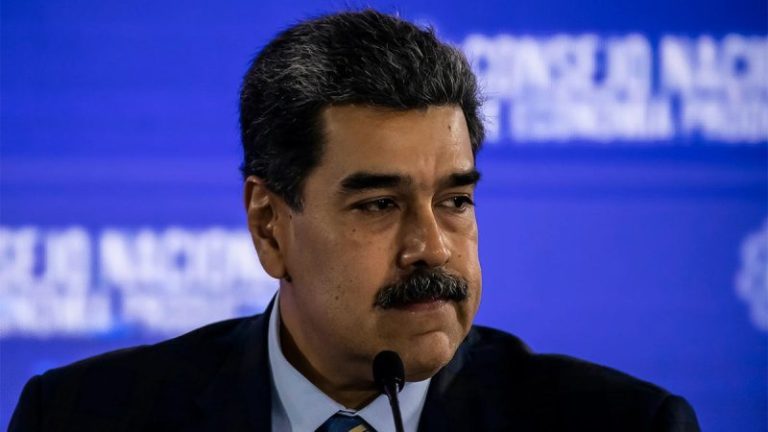
Publicly, the White House says the latest strikes in the Caribbean are aimed at cartel infrastructure. Privately, some analysts suspect the campaign is calibrated to do something else: weaken longtime U.S. foe Nicolás Maduro’s grip on power.

President Donald Trump is ramping up pressure on the Venezuelan regime, striking four boats in the Caribbean Sea linked to drug trafficking networks tied to Caracas over the past month. Alongside those strikes, the U.S. has repositioned three destroyers, an amphibious assault ship, a nuclear-powered attack submarine and a squadron of F-35s to Puerto Rico — a deployment that has prompted one question in Washington and across the region: is the United States preparing for all-out war on Caracas?

So far, defense analysts say that seems unlikely. A ground invasion would require far more troops than are currently in the theater — between 50,000 and 150,000 by some estimates.

Somewhere around 10,000 troops have been repositioned in Latin America, a senior defense official told The New York Times.

‘The U.S. just doesn’t have enough forces there,’ said Mark Cancian, a senior defense adviser at the Center for Strategic and International Studies. ‘What I think they’ve put in place is the capability to launch strikes at either the cartels or the Maduro regime. If I had to bet, it’s probably against the cartels — but I wouldn’t rule out something against the regime.’

That limited but flexible posture reflects what some experts call a modern form of coercive diplomacy.

‘It sort of looks like we’re in the throes of a 21st-century version of gunboat diplomacy,’ said Brandan Buck, a foreign policy analyst at the Cato Institute. ‘The Trump administration is doing what it can to force some sort of transition [of] power — out of Maduro’s hands and into someone else’s — without a classic invasion.’

The pressure campaign has accelerated this year. The administration raised the bounty on Maduro — Venezuela’s kleptocratic leader for more than a decade — to $50 million, and officials familiar with internal discussions say Trump has grown frustrated with the dictator’s refusal to step aside. Diplomatic outreach to Caracas was reportedly suspended this week.

While the Pentagon continues to frame the campaign as counter-narcotics, the U.S. military’s posture now allows for much more. Ryan Berg, director of the Americas Program at the Center for Strategic and International Studies, said Washington’s evolving approach reflects a growing willingness to confront the regime directly.

‘There appears to be growing appetite to confront Maduro’s regime directly — including potentially land-based strikes within Venezuela,’ Berg said. ‘The force posture currently in the southern Caribbean is consonant with the potential for precision strikes using Tomahawk missiles or other weapons, but without risking the lives of U.S. service personnel.’

Behind the scenes, Berg noted, the administration has taken steps to prepare the legal ground for such action.

‘The clearest signal yet is the legal justification for a non-international armed conflict,’ he said. ‘That tells us several departments’ Office of Legal Counsel were tasked with building the case for potential strikes.’

The White House continues to describe the operation as homeland defense — stopping drug and fentanyl shipments before they reach U.S. shores — but analysts say Venezuela’s unique role in the drug trade blurs that line.

‘Under Maduro, Venezuela is a criminal regime,’ Berg said. ‘What makes the threat unique is that the regime controls the institutions of the state — and its military — to move drug shipments and participate in other illicit economies.’

That dynamic means targeting cartels could also destabilize the regime that depends on them. Brent Sadler, a senior research fellow at the Heritage Foundation and retired Navy officer, said striking cartel networks could ultimately make Maduro’s rule unsustainable.

‘The Maduro regime is reliant on the cartels to maintain its bottom line and stay in power,’ Sadler said. ‘If you weaken the cartel backing of the regime, then the regime itself becomes unsustainable. You don’t have to go in guns blazing — you let it crumble under its own weight.’

Cancian said the expanding U.S. presence at sea and in the air ‘indicates this thing may end up being larger or go on longer than expected.’ Any strikes against cartel production facilities inland, he added, risk bleeding into regime targets such as intelligence or defense ministries.

‘They could easily strike the intelligence service or the Ministry of Defense,’ Cancian said. ‘That’s where things could start to blur.’

But Democrats have accused Trump officials of trying to get the U.S. roped into another war. Republican senators on Thursday blocked an effort led by Senate Democrats to curb Trump’s war powers with a resolution stating Trump does not have the power to authorize strikes without approval from Congress.

The potential for retaliation remains a wild card. Venezuela’s conventional forces are weak, but analysts warn that the regime could rely on its cartel allies or proxy networks to strike back indirectly.

‘Maduro could facilitate their retaliation,’ Cancian said. ‘That could mean attacks on DEA agents or American citizens in the Caribbean. The cartels have the ability to do that.’

So far, few regional actors appear willing to come to Maduro’s defense. Berg said even many of the regime’s neighbors would quietly welcome his fall.

‘Many would be secretly happy to see him go,’ he said. ‘But you’d expect a few voices —  [President Gustavo] Petro in Colombia, [President Inacio] Lula in Brazil — to object to the use of force.’

Erik Suarez, a Venezuelan-born political activist, said the hemisphere is already dividing over the issue.

‘We can divide South America [into] two sides,’ he said. ‘Lula in Brazil and Petro in Colombia are aligned with Maduro, but many others — Ecuador, Peru, Guyana, and Caribbean states — see Venezuela as a major threat because of mass migration and the spread of drug traffickers and terrorists.’

Suarez said the Maduro regime’s alliances with armed groups and terror networks make it not just a domestic problem but a direct threat to U.S. security.

‘Venezuela represents a huge national security threat — not only ideologically, but to homeland security,’ he said. ‘They’ve issued passports to Hezbollah members and targeted dissidents abroad. Keeping Maduro in power is a long-term danger to the U.S.’

That view is shared by Venezuelan opposition leaders in the U.S. and many Latin Americans who fled communist dictatorships and their descendants, including Secretary of State Marco Rubio.

Even if Washington succeeds in toppling Maduro, rebuilding Venezuela would be a monumental challenge. The country’s opposition — led by María Corina Machado and 2024 President-elect Edmundo González Urrutia — has legitimacy but faces the task of stabilizing a shattered state.

‘The opposition has had months to prepare for governing,’ Berg said. ‘They’re full of plans to get Venezuela back on a path of development and greater security.’

This post appeared first on FOX NEWS

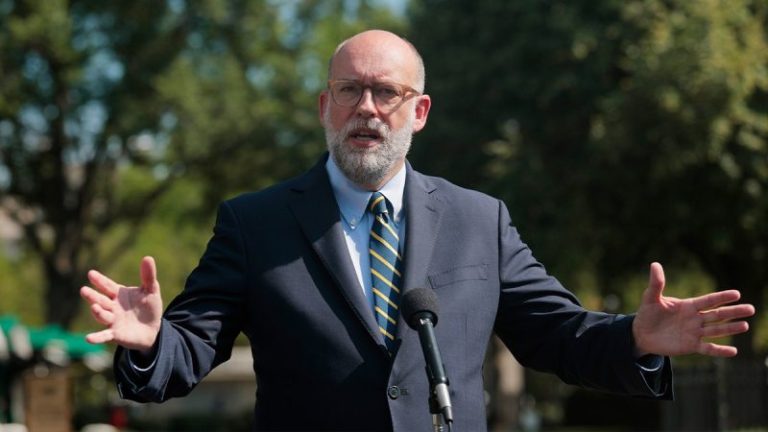
Senate Republicans are taking a hands-off approach to threats from White House budget chief Russ Vought, arguing that his pressure on Senate Democrats to reopen the government, for now, is warranted.

Away from the gridlock on Capitol Hill, Vought, who is the director of the Office of Management and Budget (OMB), has made moves to pressure Senate Democrats, led by Senate Minority Leader Chuck Schumer, D-N.Y., to reopen the government.

Before the shutdown started earlier this month, the OMB released a memo to government agencies instructing mass firings beyond the typical furloughs of nonessential employees during government shutdowns. He has since withheld nearly $30 billion in infrastructure funding to blue states and cities.

And earlier this week, a memo circulated around the White House that suggested that furloughed employees would not receive back pay when the government reopened — a move that runs counter to a law signed by President Donald Trump in 2019.

‘We heard earlier, right at the beginning of the shutdown, that we may see some terminations, some firings within the department,’ Sen. Lisa Murkowski, R-Alaska, told Fox News Digital. ‘We saw a lot of big numbers kind of thrown around, and they haven’t materialized, which I think is good, but certainly what it does, it’s very unsettling.’

The administration’s latest actions come as conversations on a path out of the shutdown have been ongoing. For now, Republicans don’t believe that Vought’s moves are undercutting those talks.

Sen. John Hoeven. R-N.D., told Fox News Digital that Vought was what Vought ‘thinks probably helps push Democrats to come to the table and open the government back up.’

‘I mean, that’s for him to decide,’ he said. ‘What I’m looking to do is to try to talk to enough Democrats, and I hope that between reaching out to them and pressure they get from back home, we can get the government open and back to work on these things.’

Senate Majority Leader John Thune, R-S.D., told Fox News Digital that the administration was ‘going to do what they’re going to do, and they’ve got to manage this, and they’re going to manage it according to their priorities.’

‘I think they’re trying to be sensitive to discussions up here that might be productive,’ Thune said. ‘But, you know, as of right now, it’s like I said before, all this stuff is just kind of window dressing until we fundamentally get down to the issue about, are we going to open up the government or not?

‘And I think when all those issues go away, these guys, the things that the White House is talking about doing or hinting that they might do, become unnecessary,’ he continued.

Senate Democrats are demanding a deal extending expiring Obamacare subsidies, and won’t provide the votes needed to reopen the government unless they get more than a guarantee to tackle the issue.

Thune and Senate Republicans are adamant that they will negotiate on extending the tax credits, with reforms baked in, only after the government reopens. And so far, as the stalemate has dragged on, neither Vought nor the administration have taken action on their threats of mass firings or back pay.  

‘Right now it’s fine,’ Sen. Thom Tillis, R-N.C., told Fox News Digital. ‘If he starts taking Draconian sorts of actions, then I think it creates a more difficult scenario for us. It puts us further away from what he wants to get accomplished, too.’

Still, Senate Democrats have not taken kindly to his overtures.

Sen. Gary Peters, D-Mich., told Fox News Digital that there was ‘no question’ Vought was hurting ongoing talks between the parties.

‘Russ Vought is basically acting like a bomb thrower, and bomb throwers are never helpful in negotiations,’ he said. 

This post appeared first on FOX NEWS

The Senate is set to leave town on Friday until early next week as neither side is ready to give in the ongoing government shutdown stalemate.

Lawmakers voted deep into the night on Thursday on the 2026 National Defense Authorization Act, which advanced on a largely bipartisan vote. But the $925 billion package, which authorizes funding for the Pentagon, was effectively the last hurrah for the week in the upper chamber.

While there was discussion of putting the House GOP’s continuing resolution (CR), along with congressional Democrats’ counter-proposal, on the floor for one last vote, the plan never came to fruition. Both would likely have failed for an eighth consecutive time.

Senate Republicans and Democrats will instead return on Tuesday next week, after observing Columbus Day, to continue the ongoing back and forth on the GOP’s CR following a week of trying and failing to pass the bill and reopen the government.

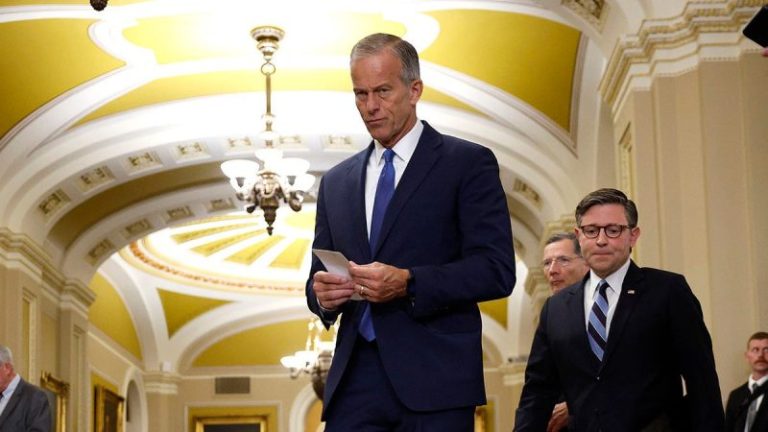
Senate Majority Leader John Thune, R-S.D., plans to continue bringing the Republicans’ bill to the floor in an effort to fragment Senate Democrats. So far, only three Democratic caucus members have consistently split from their largely unified party.

Talks have continued in the background behind closed-doors, but nothing has quite yet materialized into full-blown negotiations on expiring Obamacare, formally known as the Affordable Care Act (ACA), tax credits to find an off-ramp as the government shutdown barrels into a third week.

‘The ACA issue is important to a lot of us, not just to Democrats,’ Sen. Susan Collins, R-Maine, said. ‘The tax subsidies were enhanced during COVID. They do need to be reformed, but they do need to be extended as well.’

Sen. Markwayne Mullin, R-Okla., is one of a handful of Republicans consistently meeting with Democrats. He said he’s not meeting with lawmakers ‘so dug in that they can’t get off their position,’ but still, no movement across the aisle has happened.

Mullin and other Republicans want to pass their short-term CR until Nov. 21, while Senate Democrats are adamant that, unless there is a deal on the ACA subsidies, they won’t provide GOP with the votes to reopen the government.

‘Well, if it continues, the way it’s gone, the longer we go, the harder it is,’ Mullin said. ‘It’s a big task. Anything to do with ACA or healthcare, you get a lot of moving parts. I think that gets very difficult the longer this thing [goes on]. You get into next week. I mean, we’ve got four and a half weeks left, right, and so that timeframe keeps getting shorter.’

Their return next week also all but guarantees that members of the military will not receive their paychecks on time, given that the date to have payroll locked in and processed falls on Monday.

‘Certainly, if folks miss a paycheck, the intensity will go up,’ Sen. Shelley Moore Capito, R-W.V., said.

The continued gridlock has most in the Senate GOP unwilling to consider turning to the ‘nuclear option,’ a move they made last month when they unilaterally changed the Senate’s rules for confirmations on nominations to break through Senate Minority Leader Chuck Schumer, D-N.Y., and his caucus’ blockade of President Donald Trump’s nominees, to change the filibuster.

‘There’s always a lot of swirl out there, as you know, from, you know, social media, etc., but no, we’re not having that conversation,’ Thune said.

But not every Republican wants to ignore nuking the 60-vote filibuster as, day in and day out, the GOP’s plan to reopen the government falls five votes short.

Sen. Bernie Moreno, R-Ohio, said that if the shutdown continues, it’s an option that should be considered.

‘Look, 50%, 60% of Americans live paycheck to paycheck,’ he said. ‘We’re going to trip that wire next week. Now if there’s another paycheck — that’s probably 80% of Americans that can’t go without two paychecks in a row. I think at that point we have to look at it and say ‘the Democrats are still doing political stunts.’’

Republicans also found a new point of attack against Democrats. Schumer told Punchbowl News in an interview that ‘Every day gets better for us,’ in his assessment of Senate Democrats’ political momentum as the shutdown marches onward.

‘Who is ‘us?’ Not better for the American people,’ Senate Majority Whip John Barrasso, R-Wyo., said. ‘Who does he mean by ‘us?’ Not the military who is not getting paid. Not the Border Patrol who are not getting paid. Not the air traffic controllers who are not getting paid. Who is ‘us?’ He’s playing a game!’

But Senate Democrats are largely shrugging off the issue. Sen. Brian Schatz, D-Hawaii, contended that it was Republicans’ latest attempt to ‘change the topic from 114% increase in premiums,’ a point Democrats have argued could happen if the Obamacare tax credits aren’t extended.

‘They’re a little desperate to change the news cycle, and this is their latest attempt,’ Schatz said. 

This post appeared first on FOX NEWS

President Donald Trump turned heads when he signed a recent executive order promising to defend the state of Qatar from attack and – in so doing – protect U.S. interests. The language of the order is clear: if Qatar is attacked, ‘the United States shall take all lawful and appropriate measures – including diplomatic, economic, and, if necessary, military.’

This move comes after Israel, another close American ally, hit Qatar with airstrikes targeting Hamas officials. Some people who don’t understand the full context of the president’s Middle East peace strategy have questioned this order, even though Israeli Prime Minister Benjamin Netanyahu has since apologized for the strikes and promised no further action in Qatar.

The truth is that Trump’s executive order is yet another example of his abiding commitment to protecting American interests in the Middle East. During his first term, he declared that ‘The nation of Qatar, unfortunately, has historically been a funder of terrorism at a very high level.’ 

The Biden administration rewarded Qatar’s support during its withdrawal from Afghanistan by designating the nation a major non-NATO ally in 2022. We are in a new strategic calculus surrounding Qatar, and this is the context in which Trump has taken such a bold move.

President Trump is interpreting the strategic moment unlike any United States president before him. The Qatar announcement puts all parties in the region on notice: Israel conducted military strikes against Doha. It won’t do that again any time soon. Iran struck Qatar. It will think long and hard about doing anything close. The Saudis have paired up with the Pakistanis for mutual defense. Trump has done a checkmate. The political office of Hamas in Qatar is just less relevant now. 

Trump is forcing peace by clarifying options and the game for long-standing divisions from the Levant to the Gulf. This is bringing the broader Middle East closer to peace than it has been in years.

Who else could staunchly support Israel’s right to defend itself from Hamas and Iran’s nuclear program while simultaneously being tough on Netanyahu to actively pursue peace? There’s a tremendous amount of nuance in this approach.

Here is the president’s goal: A durable peace deal, not just between Israel and Hamas, but one that brings all parties in the Middle East to the table. This is why the United States has been so involved in brokering a deal in the Middle East and has relied on the positive relationships that Trump has built through trade and diplomacy.

America has been clear that there is some room for negotiation, but some things won’t change. Primary among them is that Hamas must disarm. This is a prerequisite to any lasting peace and Trump knows it. That’s why the 20-part plan is take it or leave it on the condition of disarmament.

Further evidence of the genius of this approach is the broad support the plan has received from disparate countries, both in the Middle East and in Europe. It has garnered support from countries that are both for and against Palestinian statehood. The plan has served as a unifying beacon to a region (and a world) that has long wanted peace but has never had a leader courageous and tenacious enough to make that dream a reality.

Another outcome of this broad support is the true isolation of Hamas. They’re the only ones who are for their continued militarization. In effect, by their protracted resistance to peace, they have alienated almost everyone who may be sympathetic to some of their nonviolent goals. That puts Hamas under enormous pressure – pressure that is both intentional and calculated to move the Middle East toward lasting peace.

All this comes while Trump has doubled down on American and European support of Ukraine to find a way to speed up the end of Europe’s horrible war, yet another example of the administration keeping promises made during the presidential campaign. The approach should sound familiar. 

The president provided Russia with every opportunity to end the conflict peacefully. Despite that effort, Moscow refused and has continued its aggression toward Ukraine. Now, as a last resort — just like the situation with Iran’s nuclear program – the United States is providing additional support to its allies, all in service of the ultimate goal, which has always been and will always be lasting peace, not just for the Middle East, but for the world. Trump is determined to be the peace strategist. 

This post appeared first on FOX NEWS

Revolve Renewable Power Corp. (TSXV:REVV)(OTCQB:REVVF) (‘Revolve‘ or the ‘Company‘), a North American owner, operator and developer of renewable energy projects, is pleased to announce it has signed a partnership agreement dated October 8, 2025 with an experienced Engineer, Procure and Construct company (the ‘EPC Partner‘) in Mexico to develop and build a new portfolio of distributed generation power solutions for commercial and industrial customers (the ‘Partnership Agreement‘). The EPC Partner has previously developed more than 50 MW of distributed generation solar projects and brings valuable expertise to the partnership.

Under the Partnership Agreement, Revolve and the EPC Partner have agreed to target two initial portfolios of commercial projects totalling more than 5 megawatts (‘MW’) of capacity (the ‘Target Projects‘). The partnership is a key element of Revolve’s broader mandate to increase the size of the Company’s operating asset portfolio in Mexico by partnering with EPC groups that have access to pipelines of late stage, investment ready distributed generation projects that deliver innovative power solutions.

This is a watershed partnership for Revolve as we join forces with a new partner to advance this portfolio of distributed generation projects in Mexico,’ said COO, Omar Bojorquez. ‘The aim of the partnership, and others we are pursuing, is to accelerate the development and deployment of commercial power solutions throughout Mexico. This partnership has the potential to accelerate our distributed generation pipeline and bring a meaningful number of projects to us for assessment and execution.’

Following the signing of power purchase agreements of any of the Target Projects, the Company intends to own and operate the projects and will provide financial forecasts once definitive agreements are signed. The Partnership consists of a 70% ownership interest for Revolve and 30% for the EPC Partner, with economic benefits being shared on a pro-rata basis on anything over and above Revolve’s required rate of return. The EPC Partner will contribute project opportunities and construction services to the partnership and Revolve will provide project finance and operating expertise, with the economics determined on a project-by-project basis.

With the growing regulatory certainty in Mexico and a lack of investment in the electricity network over the last number of years companies are increasingly focusing on reducing their energy costs and improving energy resiliency. Mexico’s distributed generation market increased by 32% in 2024, reaching 4.4 gigawatts (‘GW’) from 3.4 GW, primarily driven by solar installations, according to BNamericas. This growth is occurring as companies seek on-site power solutions and decarbonization to alleviate strain on the national power grid. With a history of operating in Mexico since 2012, Revolve is well-positioned to capitalize on this growth.

‘As part of the agreement, the EPC Partner will originate, develop and construct projects and Revolve will finance, own and operate them under long-term power purchase agreements with commercial customers. We are confident this partnership will result in additional distributed generation opportunities for Revolve fueled by increasing electricity demand growth from data centers, electrification and industrial onshoring,’ concluded Bojorquez.

For further information contact:
Myke Clark, CEO
IR@revolve-renewablepower.com
778-946-0072

About Revolve

Revolve was formed in 2012 to capitalize on the growing global demand for renewable power. Revolve develops utility-scale wind, solar, hydro and battery storage projects in the US, Canada and Mexico. Revolve also installs and operates sub 20MW ‘behind the meter’ distributed generation (or ‘DG’) assets. Revolve’s portfolio includes the following:

  • Operating Assets: 12 MW (net) of operating assets under long term power purchase agreements across Canada and Mexico covering wind, solar, battery storage and hydro generation;
  • Development: a diverse portfolio of utility scale development projects across the US, Canada and Mexico with a combined capacity of over 3,000MWs as well as a 140MW+ distributed generation portfolio that is under development.

Revolve has an accomplished management team with a demonstrated track record of taking projects from ‘greenfield’ through to ‘ready to build’ status and successfully concluding project sales to large operators of utility-scale renewable energy projects. To-date, Revolve has developed and sold over 1,550MW of projects.

Going forward, Revolve is targeting 5,000MW of utility-scale projects under development in the US, Canada and Mexico, and in parallel is rapidly growing its portfolio of revenue-generating DG assets.

Forward Looking Information

The forward-looking statements contained in this news release constitute ‘‘forward-looking information” within the meaning of applicable securities laws in each of the provinces and territories of Canada and the respective policies, regulations and rules under such laws and ‘‘forward-looking statements” within the meaning of the U.S. Private Securities Litigation Reform Act of 1995 (collectively, ‘‘forward-looking statements’). The words ‘will’, ‘expects’, ‘estimates’, ‘projections’, ‘forecast’, ‘intends’, ‘anticipates’, ‘believes’, ‘targets’ (and grammatical variations of such terms) and similar expressions are often intended to identify forward-looking statements, although not all forward-looking statements contain these identifying words. Forward looking statements in this press release include statements with respect to the partnership with EPC Partner and the Target Projects, including their acquisition, target construction dates, targeted completion dates, expected power generation and related matters. This forward-looking information and other forward-looking information are based on our opinions, estimates and assumptions considering our experience and perception of historical trends, current conditions and expected future developments, as well as other factors that we currently believe are appropriate and reasonable in the circumstances. Despite a careful process to prepare and review the forward-looking information, there can be no assurance that the underlying opinions, estimates and assumptions will prove to be correct. Material factors underlying forward-looking information and management of the Company’s (‘Management‘) expectations include: the receipt of applicable regulatory approvals; the absence of material adverse regulatory decisions being received and the expectation of regulatory stability; the absence of any material equipment breakdown or failure; availability of financing on commercially reasonable terms and the stability of credit ratings of the Company and its subsidiaries; the absence of unexpected material liabilities or uninsured losses; the continued availability of commodity supplies and stability of commodity prices; the absence of interest rate increases or significant currency exchange rate fluctuations; the absence of significant operational, financial or supply chain disruptions or liability, including relating to import controls and tariffs; the continued ability to maintain systems and facilities to ensure their continued performance; the absence of a severe and prolonged downturn in general economic, credit, social or market conditions; the successful and timely development and construction of new projects; the absence of capital project or financing cost overruns; sufficient liquidity and capital resources; the continuation of long term weather patterns and trends; the absence of significant counterparty defaults; the continued competitiveness of electricity pricing when compared with alternative sources of energy; the realization of the anticipated benefits of the Company’s acquisitions and joint ventures; the absence of a change in applicable laws, political conditions, public policies and directions by governments, materially negatively affecting the Company; the ability to obtain and maintain licenses and permits; maintenance of adequate insurance coverage; the absence of material fluctuations in market energy prices; the absence of material disputes with taxation authorities or changes to applicable tax laws; continued maintenance of information technology infrastructure and the absence of a material breach of cybersecurity; the successful implementation of new information technology systems and infrastructure; favourable relations with external stakeholders; our ability to retain key personnel; our ability to maintain and expand distribution capabilities; and our ability to continue investing in infrastructure to support our growth.

These and other uncertainties and risks could cause actual results to differ materially from those expressed or implied by the forward-looking statements or to cause the underlying assumptions to prove incorrect. Such uncertainties and risks may include, among others, market conditions, delays in obtaining or failure to obtain required regulatory approvals in a timely fashion, or at all; the availability of financing, fluctuating prices, the possibility of project cost overruns, mechanical failure, unavailability of parts and supplies, labour disturbances, interruption in transportation or utilities, adverse weather conditions, and unanticipated costs and expenses, variations in the cost of energy or materials or supplies or environmental impacts on operations, disruptions to the Company’s supply chains; changes to regulatory environment, including interpretation of production tax credits; armed hostilities and geopolitical conflicts; risks related to the development and potential development of the Company’s projects; conclusions of economic evaluations; changes in project parameters as plans continue to be refined; the availability of tax incentives in connection with the development of renewable energy projects and the sale of electrical energy; as well as those factors discussed in the sections relating to risk factors discussed in the Company’s continuous disclosure filings on SEDAR+ at sedarplus.ca. There can be no assurance that such statements will prove to be accurate, and actual results and future events could differ materially from those anticipated in such statements. Readers are cautioned that given these risks, undue reliance should not be placed on these forward-looking statements, which apply only as of their dates.

Future-oriented financial information (‘FOFI‘) and financial outlooks contained in this release, including statements regarding estimated capital costs and projected annual revenues for the Target Projects, are provided for illustrative purposes only and are subject to the same assumptions, risk factors, and uncertainties described above with respect to forward-looking information. Such FOFI reflects Management’s current estimates and assumptions considered reasonable in the circumstances, which may prove incorrect. Actual financial results may differ materially from Management’s expectations, and such variations may be material and adverse. The Company’s financial projections are inherently speculative, were not prepared with a view toward compliance with applicable GAAP and have not been reviewed or audited by independent accountants or other third-party experts, and should not be relied upon as indicative of future results. Such information is presented for illustrative purposes only and may not be an indication of our actual financial position or results of operations.

Other than as specifically required by law, the Company undertakes no obligation to update any forward-looking statements or FOFI to reflect new information, subsequent or otherwise. The Company does not intend, and expressly disclaims any intention or obligation to, update or revise any forward-looking statements or FOFI whether because of new information, future events or otherwise, except as required by law.

‘Neither TSX Venture Exchange nor its Regulation Services Provider (as defined in the policies of the TSX Venture Exchange) accepts responsibility for the adequacy or accuracy of this release.’

Source

This post appeared first on investingnews.com

VVC Exploration Corporation, dba VVC Resources (‘VVC’ or the ‘Company’) (TSX-V: VVC; OTC: VVCVF) announces that Plateau Helium Corporation (‘PHC’), a wholly owned subsidiary of the Company, has completed the purchase of the Ithaca 1-17 well together with approximately five miles of associated pipeline located in Rush county, Kansas in a prolific helium, gas and oil area known as the Central Kansas Uplift (CKU). The acquisition was initiated in April 2025 and PHC took possession in July 2025. As previously disclosed in our May 30, June 26 and September 2025 MD&As, PHC has a 50% operating interest in the well.

The CKU Project targets helium-rich natural gas within multiple stacked reservoirs in Rush and Pawnee Counties, Kansas, where PHC has now assembled a meaningful lease position, acquired one producing property (Ithaca 1-17) and associated gas gathering system, and identified multiple development well locations. The acquisition of an existing gas gathering system serves to lower initial development cost while expediting the time needed to commence gas/helium sales and provide cashflow.

« Building on a producing asset while securing midstream capacity is a practical way to de-risk our development program in the CKU, » said Bill Kerrigan, President of VVC and PHC. « The Ithaca 1-17 well and pipeline give us a backbone to bring wells online more efficiently. »

About VVC Resources
VVC engages in the exploration, development, and management of natural resources – specializing in scarce and increasingly valuable materials needed to meet the growing, high-tech demands of industries such as manufacturing, technology, medicine, space travel, and the expanding green economy. Our portfolio includes a diverse set of multi-asset, high-growth projects, comprising: Helium & industrial gas production in western U.S.; Gold & associated metals operations in northern Mexico; and Strategic investments in carbon sequestration and other green energy technologies. VVC is a Canada-based, publicly-traded company on the TSXV (TSX-V:VVC). To learn more, visit our website at: www.vvcresources.com .

On behalf of the Board of Directors

Michel J. Lafrance, Secretary-Treasurer

For further information, please contact: For further information in French, please contact:
Emily Bigelow – (615) 504-4621
E-mail: emily@vvcresources.com
Patrick Fernet – (514) 631-2727
E-mail: pfernet@vvcexploration.com

Neither TSX Venture Exchange nor its Regulation Services Provider (as that term is defined in policies of the TSX Venture Exchange) accepts responsibility for the adequacy or accuracy of this release.

2369 Kingston Road, PO Box 28059 Terry Town, Scarborough, ON M1N 4E7 – Tel: 416-619-5304

FORWARD-LOOKING STATEMENTS:

This news release contains ‘forward-looking information’ (within the meaning of applicable Canadian securities laws) and ‘forward-looking statements’ (within the meaning of the U.S. Private Securities Litigation Reform Act of 1995). Such statements are generally identified by words such as ‘anticipate,’ ‘believe,’ ‘expect,’ ‘plan,’ ‘intend,’ ‘potential,’ ‘estimate,’ ‘propose,’ ‘project,’ ‘outlook,’ ‘strategy,’ or similar words suggesting future outcomes or statements regarding an outlook. Such statements include, among others: « … to lower initial development cost while expediting …; … de-risk our development program …; … bring wells online more efficiently. »

Such forward-looking information or statements are based on several risks, uncertainties and assumptions which may cause actual results or other expectations to differ materially from those anticipated and which may prove to be incorrect. Assumptions have been made regarding, among other things, management’s expectations regarding acquisitions, production of helium, oil or gas, future development and growth, plans for and completion of projects by Company’s third-party relationships, availability of capital, and the necessity to incur capital and other expenditures. Actual results could differ materially due to a number of factors, without limitation, operational risks in the completion of Company’s anticipated projects, delays or changes in plans with respect to the development of Company’s anticipated projects by Company’s third-party relationships, risks affecting the ability to develop projects, risks in legislative changes in the applicable jurisdictions, risks inherent in operating in foreign jurisdictions, the ability to attract key personnel, risks in decrease of price of helium, gas or oil. No assurances can be given that the efforts by Company will be successful.

Although the Company believes that the expectations reflected in the forward-looking information or statements are reasonable, prospective investors in the Company’s securities should not place undue reliance on forward-looking statements because the Company can provide no assurance that such expectations will prove to be correct. Forward-looking information and statements contained in this news release are as of the date of this news release and the Company assumes no obligation to update or revise this forward-looking information and statements, except as required by law.

Investors are cautioned that notwithstanding the expectations described herein, there can be no assurance that the plans described herein will be completed as proposed. Trading in the securities of VVC should be considered highly speculative.  All forward-looking statements contained in this press release are expressly qualified in their entirety by these cautionary statements and by those made in our filings with SEDAR in Canada (available at www.sedarplus.ca ).

News Provided by GlobeNewswire via QuoteMedia

This post appeared first on investingnews.com

Perth, Australia (ABN Newswire) – Locksley Resources Ltd (ASX:LKY,OTC:LKYRF) (FRA:X5L) (OTCMKTS:LKYRF) announces a major advancement at its Mojave Project in California. Recent structural mapping has dramatically expanded the target mineralised corridor at the Desert Antimony Mine (DAM) Prospect and identified a parallel structural target, enhancing the potential for a larger mineralised system across multiple mineralised zones. This expanded target has the potential to strengthen Mojave’s position as a strategic U.S. critical minerals hub, aligned with accelerating domestic supply-chain initiatives.

Highlights

– Structural mapping expands target mineralised corridor at Desert Antimony Mine (DAM) fourfold to 1.2 km, dramatically increasing the exploration target footprint and scale potential

– New parallel structural target zone identified 150m west of the main DAM structure, indicating the potential for a multi-zone system

– Updated 3D geological model defines seven priority follow up surface sampling targets, supporting imminent exploration targeting and JORC Exploration Target work

– Regional mapping identifies lamprophyre dykes, highlighting potential for additional critical mineral occurrences including carbonatites

– Mojave emerging as a district-scale critical minerals hub, strategically aligned with accelerating U.S. onshoring policies

– Third phase structural mapping program to commence late November to continue building geological understanding of the project and identify new targets

– High-grade silver assays up to 216 g/t Ag returned from Hendricks Prospect, alongside anomalous Zn, Pb, and Cu, indicating a broader polymetallic system

The structural geology mapping completed in late August/September 2025 at the Mojave Project has expanded the strike extent of the target structure at the Desert Antimony Mine (DAM) Prospect from 0.3 km to 1.2 km, representing a ~400% increase and highlighting the potential of the system. Mapping confirmed the continuity of the NNE-striking structural zone that hosts high-grade stibnite mineralisation at DAM, and identified a second, parallel shear zone, approximately 150 m to the west, exhibiting similar alteration and structural characteristics.

The updated geological interpretation also highlights steep north-plunging intersections between the mapped shear zones and folded host rocks as possible mineralisation plunge controls. Collectively, these findings have been incorporated into a new 3D geological model, which has defined seven priority surface sampling targets to guide the next phase of exploration and support the development of a JORC Exploration Target to guide future drilling programs.

The scale and geometry of these target zones align with the type of high-grade, clean stibnite feedstock required to fast-track U.S. antimony supply chains under programs such as DPA Title III and DOE ARPA-E. The program, undertaken by a specialist structural geologist, delivered five key outcomes:

– Significant expansion of geological mapping to the northeast and southwest of the DAM Prospect, extending the target horizon to 1.2 km of strike and materially increasing the scale potential of the mineralised system.

– Completion of new geological maps for the Hendricks Prospect (2.5km south east of DAM) and the Junipero Prospect (1.1km north of the Mountain Pass Mine).

– Identification of multiple lamprophyre dykes across all areas mapped suggest the presence of deepseated mantle tapping structures.

– Updated 3D geological models across the claim package, providing enhanced structural understanding and supporting refined exploration targeting

– Definition of 18 priority target areas for follow-up detailed mapping and intensive sampling programs to further assess mineralisation potential (to commence in October).

Desert Antimony Mine (DAM)

Mapping at DAM focussed on extending to the NE and SW from the previous mapping campaign, resulting in a comprehensive geological map now covering ~1.8km of strike and the development of an updated 3D geological model (Figure 1*). This work has significantly enhanced the understanding of the structural framework and potential controls to mineralisation. Key highlights from mapping and modelling in this area include:

– Confirmation of continuity of the structural zone (which is host to the mineralisation at DAM) for approximately 400m NNE from the existing adits.

– Identification of a second parallel structural zone located approximately 150m west of the main mineralised trend, exhibiting a comparable alteration signature and kinematics to that seen at DAM.

– Extension of the target mineralisation corridor to ~1.2km (previously ~0.3km) representing a ~400% increase in strike length.

– Improved understanding of mineralisation controls, particularly the role of steep north plunging intersections between mapped shears and folded host rocks.

– Definition of seven priority areas for detailed follow up sampling and mapping to refine exploration targeting.

– Enhanced structural interpretation, revealing clear associations between E-W trending stratigraphy and regional fold hinges and NNE striking shear zones, critical for targeting additional mineralised zones.

– Completion of an updated 3D solid geology model, providing a robust foundation for refined drill planning, target prioritisation and the potential definition of a JORC Exploration Target (Figure 1*).

Hendricks Prospect

First pass mapping was undertaken at the Hendricks Prospect (Figure 1*). The area was selected as a priority target area for mapping due to rock chips previously collected by Locksley being elevated in REE.

A significant finding from the mapping was the identification of a substantial shaft and associated workings not previously known by the Company. Initial grab sampling has returned high-grade silver assays of 216g/t Ag with anomalous lead (0.3% Pb), Zinc (0.9%Zn) and Copper (0.1%).

Highlights from mapping and modelling in this area include:

– The overall structural architecture across the Hendricks prospect area shares many similarities with that surrounding the Desert Antimony Mine (DAM).

– Presence of multiple NNE striking shears throughout the mapping area which mirror the orientation of the mineralisation seen at DAM, demonstrating a regional structural consistency and potential for additional zones of mineralisation.

– Highly weathered and altered ENE to ESE striking shear zones with potential to host mineralisation

– Elevated scintillometer readings acquired from on syenogranite dykes, indicating potential for REE mineralisation.

– Multiple prospecting pits/costeans throughout the area proximal to the Hendricks Shaft targeting discrete NNE striking shear zones.

– Definition of 11 priority areas for detailed follow up sampling and mapping.

– A 3D solid geology model of Hendricks Prospect is underway and will be used for 3D target generation and drill program planning.

Mapping completed at the Hendricks Prospect Area has confirmed that target zones of interest continue to the south and will form part of the priority follow up mapping scheduled for late November 2025.

Junipero Prospect

First pass mapping was completed at the Junipero Prospect located just 1.1km north of the Mountain Pass Mine pit crest. The area was targeted due to a gravity high anomaly, the proximity to Mountain Pass and the potential for carbonatites to be found in the area. Highlights from mapping and modelling in this area include:

– Identification of multiple E-W trending lamprophyre dykes across the mapping area indicating deep seated mantle tapping structures highlighting the potential for REE hosting carbonatites throughout the area which could exploit the same pathways.

– Abundant felsic rocks (Tonalites, Syenogranites) providing potential sources of REE when assimilated with carbonatite magmas from the mantle.

– Collection of samples for multielement analysis and whole rock classification.

– A 3D solid geology model of Junipero Prospect has been completed and forms part of the DAM 3D geological model (Figure 1*) and will be used for ongoing 3D target generation and future activity.

Locksley Resources CEO Kerrie Matthews commented:

‘Our second structural mapping program at the Mojave Project has markedly advanced our geological understanding and confirmed the substantial exploration potential of this critical district. The fourfold expansion of the Desert Antimony Mine (DAM) target horizon has fundamentally changed the scale of the opportunity, demonstrating the potential for a much larger mineralised system. This success, coupled with high-grade silver confirmed at Hendricks and the identification of multiple regional shear zones, has effectively lit up the entire Mojave Project for polymetallic vein discoveries. These outstanding results strongly validate our rapid exploration and development strategy, aligning perfectly with the accelerating U.S. government focus on securing domestic critical mineral supply chains.’

*To view tables and figures, please visit:
https://abnnewswire.net/lnk/7WY0FHM0

About Locksley Resources Limited:

Locksley Resources Limited (ASX:LKY,OTC:LKYRF) (FRA:X5L) (OTCMKTS:LKYRF) is an ASX listed explorer focused on critical minerals in the United States of America. The Company is actively advancing exploration across two key assets: the Mojave Project in California, targeting rare earth elements (REEs) and antimony. Locksley Resources aims to generate shareholder value through strategic exploration, discovery and development in this highly prospective mineral region.

Mojave Project

Located in the Mojave Desert, California, the Mojave Project comprises over 250 claims across two contiguous prospect areas, namely, the North Block/Northeast Block and the El Campo Prospect. The North Block directly abuts claims held by MP Materials, while El Campo lies along strike of the Mountain Pass Mine and is enveloped by MP Materials’ claims, highlighting the strong geological continuity and exploration potential of the project area.

In addition to rare earths, the Mojave Project hosts the historic ‘Desert Antimony Mine’, which last operated in 1937. Despite the United States currently having no domestic antimony production, demand for the metal remains high due to its essential role in defense systems, semiconductors, and metal alloys. With significant surface sample results, the Desert Mine prospect represents one of the highest-grade known antimony occurrences in the U.S.

Locksley’s North American position is further strengthened by rising geopolitical urgency to diversify supply chains away from China, the global leader in both REE & antimony production. With its maiden drilling program planned, the Mojave Project is uniquely positioned to align with U.S. strategic objectives around critical mineral independence and economic security.

Tottenham Project

Locksley’s Australian portfolio comprises the advanced Tottenham Copper-Gold Project in New South Wales, focused on VMS-style mineralisation

Source:
Locksley Resources Limited

Contact:
Locksley Resources Limited
T: +61 8 9481 0389
E: info@locksleyresources.com.au

News Provided by ABN Newswire via QuoteMedia

This post appeared first on investingnews.com