Author

admin

Browsing

Syrian President Ahmad al-Sharaa made history at the United Nations General Assembly on Wednesday, delivering a speech that marked the first time in nearly six decades a Syrian leader has addressed the world body. His appearance in New York drew thousands of Syrian supporters who gathered outside UN headquarters, celebrating what they described as a new chapter for their war-torn country and urging U.S. President Donald Trump to back Syria’s reintegration into the international community.

The moment carried special weight for Syrians abroad, many of whom fled during the country’s 14-year civil war. They waved flags, carried banners, and chanted calls for peace and reconstruction. For them, the sight of a Syrian president welcomed at the U.N. was both symbolic and deeply personal.

Hamza Mustafa, Syria’s information minister, joined the demonstration and told Fox News Digital it was an emotional day. ‘It’s a historical moment for all the Syrian people — after 14 years of conflict, after revolution, after a lot of sacrifice, now we are here representing the Syrian people,’ he said. ‘We are gathering with the Syrian people to say that we are all serious in our struggle for a united and sovereign Syria.’

Mustafa also thanked the Trump administration for steps to ease sanctions, saying, ‘As a government, we say thank you to Mr. Trump for his courage in lifting sanctions on Syria.’

In his U.N. address, President al-Sharaa called for lifting sanctions, pledging to pursue ‘a new Syria built on unity, sovereignty, and peace with its neighbors.’ He said the conflict had brought ‘untold suffering’ and emphasized that ‘Syrians deserve the right to rebuild their lives, their homes, and their country.’

Syria’s Minister of Emergency and Disaster Management, Raad Saleh, addressed reports of a U.S.-brokered security agreement with Israel, telling Fox News Digital: ‘It’s a political decision, and we are leaving it to our president to take that decision. But Syrians are not looking for any conflict anymore — Syrians are only looking for reconstruction and rebuilding.’

The stakes are high: Israel has carried out dozens of strikes across Syria in recent months, targeting what officials say are Iranian-backed forces, weapons depots and positions near the Israeli border. Israeli officials have framed the operations as both a warning to Syria’s new leadership and a move to protect vulnerable minorities such as the Druze, who have faced attacks and massacres under al-Sharaa’s government.

Prime Minister Benjamin Netanyahu, who will speak at UNGA on Friday, said in a statement that any deal ‘is contingent on securing Israel’s interests,’ including the ‘demilitarization of southwestern Syria and safeguarding the Druze.’

The rally outside the UN was organized by Dr. Hicham Alnachawati, who emphasized that the new Syrian leadership wants peace — including with Israel.

‘This is a historic moment for us as Syrians. We haven’t seen a president give such a speech at the UN in over 57 years,’ Alnachawati said. ‘We are hoping that this message of peace and prosperity will encourage other world leaders, and especially President Trump, to support lifting the remaining sanctions so we can rebuild a new Syria.’

Alnachawati went further, directly linking Syria’s future to regional reconciliation. ‘We sent a message of peace to establish relations with our neighbors, especially Israel,’ he said. ‘Let’s extend the Abraham Accords here — this is an opportunity for the Trump administration to lead a peace process. Israelis are looking for the same thing, and Syrians are ready for peace, reconstruction, and development.’

Al-Sharaa’s past as a wanted terrorist has drawn sharp criticism from Western officials. When asked about it, Alnachawati responded that people can change, citing U.S. General David Petraeus, who has previously suggested Sharaa had the capacity to evolve into a statesman. 

‘I listened to Petraeus, and he said he saw this man as having hope to change,’ Alnachawati said. ‘He wants to unite Syria, achieve peace in the region, and reflect that peace on the whole world. Syrians are ready to reestablish themselves, to live a normal life like any other citizen, and to extend their hands for peace.’

For many Syrians who resettled in the United States, the day was especially poignant. Shadi Martini, CEO of the Multifaith Alliance and a Syrian who fled at the start of the war and personally met President al-Sharaa in Syria a few months ago, told Fox News Digital, ‘It’s probably been 50 or 60 years since a Syrian president came to the U.N., so it’s very historic and emotional for a lot of Syrian Americans to see. President Sharaa was greeted by so many presidents and foreign dignitaries, and hopefully there will also be a meeting with President Trump.’ 

This post appeared first on FOX NEWS

Rep. Jasmine Crockett, D-Texas, was among a select group of Democrats who then-Vice President Kamala Harris sought to bolster via a top secret ‘Stars Project,’ the 2024 White House hopeful’s new memoir reveals.

Harris dove deep into her brief presidential campaign in a new book released on Tuesday called ‘107 Days,’ with the title referencing the time between the beginning and end of her 2024 bid.

In one section, Harris discussed planning the Democratic National Convention (DNC) and said it was ‘in the party’s interest to highlight our stars, while we make it as entertaining as possible.’

‘When I became VP, I had a secret project – I called it the Stars Project – that only my senior team knew about. We’d brainstorm about the younger talents in the party and then, on Friday afternoons, I’d invite one or another to visit my office in the West Wing or the residence,’ Harris wrote.

Several were nervous, she recounted, but Harris recalled telling them, ‘No, I think you’re very talented. What are you working on, and how can I help you?’

‘Many of those on my list spoke at the convention: Lauren Underwood, Robert Garcia, Angela Alsobrooks, Lateefah Simon, Maxwell Frost, Joe Neguse, Lina Hidalgo, Jasmine Crockett,’ Harris listed.

Crockett, who has received backlash from conservatives for comparing ICE to ‘slave patrols’ and supporting defunding police, appeared to reference the passage in content she cross-posted on her personal Instagram account.

The post was from a Texas politics-based account called ‘howdypolitics’ that shared, ‘Kamala Harris had a secret project only known to senior staff called the ‘Stars Project,’ to privately mentor rising stars in the party. She made sure that many of them received speaking slots during the convention. That is what Jasmine Crockett was talking about in her speech at the DNC.’

Crockett did reference a meeting with Harris in her speech at the DNC in summer 2024.

‘When I first got to Congress, I wasn’t sure I made the right decision. The chaos caucus couldn’t elect a speaker and the Oversight Committee was unhinged. I was going through all of this when I visited the vice president’s residence for the first time. As I approached Vice President Harris for our official photo, she turned to me and asked, ‘What’s wrong?’’ Crockett recalled.

‘Mind you, we’d never met. But she saw right through me. She saw the distress. I immediately began crying, and the most powerful woman in the world wiped my tears and listened.’

She said Harris told her, ‘You are exactly where God wants you. Your district chose you because they believe in you. And so do I.’

‘The next month I went viral for the first of many times to come for hitting Republicans with a dose of their own medicine. That brief but impactful interaction gave me my legislative legs and I’ve been running ever since,’ Crockett said.

Crockett recently ignited backlash from conservatives after slamming White lawmakers for honoring Charlie Kirk after his assassination.

‘And to be clear, you can wave all the flags you want to, but I am telling you right now that the most unpatriotic people that we have in this country are MAGA and this president. We are the real patriots. And it is time for us to take our flag back and show people what America is about,’ she said.

Fox News Digital reached out to Crockett for further comment on Harris’ book excerpt and her speech at the DNC.

This post appeared first on FOX NEWS

TSX Venture Exchange: BSK
Frankfurt Stock Exchange: MAL2
OTCQB Venture Market (OTC): BKUCF

Blue Sky Uranium Corp. (TSXV: BSK,OTC:BKUCF) (FSE: MAL2) (OTC: BKUCF), (‘Blue Sky’ or the ‘Company’) is pleased to announce that the Río Negro Provincial Mining Authority has formally registered the transfer of mining concessions from Minera Cielo Azul S.A . (‘ MCA ‘) to Ivana Minerales S.A. (‘ IMSA ‘) the joint venture company (‘ JVCO ‘) established to advance the Ivana Uranium-Vanadium Project in the Province of Río Negro, Argentina .

The registration, completed on June 10, 2025 , is another significant milestone in the advancement of the Ivana Project. This formal recognition by the provincial authority completes the legal process for the transfer of mining rights to IMSA in accordance with the requirements of the Argentine Mining Code and provincial regulations. The issuance of official titles in the name of IMSA is pending and expected imminently.

Nikolaos Cacos , President & CEO of the Company stated, ‘We established IMSA to align the interests and expertise of Blue Sky Uranium and its local partners. The JVCO structure will be most effective in advancing the project through each stage of the project development, as demonstrated by the completion of this step of registering the mining rights. Meanwhile, IMSA is operating the ongoing drilling program which is delivering data to support engineering and other studies for the planned pre-feasibility study.’

About Ivana Minerales S.A.

Ivana Minerales S.A. is the operating company for the joint-venture between Blue Sky and its partner Abatare Spain, S.L.U. (‘ COAM ‘) to advance the Ivana Uranium-Vanadium deposit in Rio Negro Province of Argentina . The activities of IMSA are subject to the earn-in transaction (the ‘ Agreement ‘) in which COAM will fund cumulative expenditures of US$35 million to acquire a 49.9% indirect equity interest in the Ivana deposit, and then has the further right to earn up to an 80% equity interest in IMSA by completion of a feasibility study and funding the costs and expenditures up to US$160,000,000 to develop and construct the project to commercial production, subject to the terms and conditions in the Agreement. For additional details, please refer to the News Release dated February 27, 2025 , as well as the Company’s latest Financial Statements and MD&A available at www.blueskyuranium.com .

About Blue Sky Uranium Corp.

Blue Sky Uranium Corp. is a leader in uranium discovery in Argentina . The Company’s objective is to deliver exceptional returns to shareholders by rapidly advancing a portfolio of uranium deposits into low-cost producers, while respecting the environment, the communities, and the cultures in all the areas in which we work. Blue Sky’s flagship Amarillo Grande Project was an in-house discovery of a new district that has the potential to be both a leading domestic supplier of uranium to the growing Argentine market and a new international market supplier. The Company’s recently optioned Corcovo project has demonstrated potential to host an in-situ recovery uranium deposit. The Company is a member of the Grosso Group, a resource management group that has pioneered exploration in Argentina since 1993.

ON BEHALF OF THE BOARD

‘Nikolaos Cacos’
______________________________________
Nikolaos Cacos , President, CEO and Director

Neither TSX Venture Exchange nor its Regulation Services Provider (as that term is defined in policies of the TSX Venture Exchange) accepts responsibility for the adequacy or accuracy of this release.

This news release may contain forward-looking statements and forward-looking information (collectively, the ‘forward-looking statements’) within the meaning of applicable securities laws. Forward-looking statements address future events and conditions and therefore involve inherent risks and uncertainties. Any statements that are contained in this press release that are not statements of historical fact may be deemed to be forward-looking statements. Forward-looking statements are often identified by terms such as ‘may’, ‘should’, ‘anticipate’, ‘will’, ‘estimates’, ‘believes’, ‘intends’ ‘expects’ and similar expressions which are intended to identify forward-looking statements. More particularly and without limitation, this press release contains forward-looking statements that, other than statements of historical fact, address activities, events or developments the Company believes, expects or anticipates will or may occur in the future, including, without limitation, statements about the Company’s planned exploration campaigns. Forward-looking statements are not guarantees of future performance and accordingly undue reliance should not be put on such statements due to the inherent uncertainty therein.

Forward-looking statements are subject to a number of risks and uncertainties that may cause the actual results of the Company to differ materially from those discussed in the forward-looking statements and, even if such actual results are realized or substantially realized, there can be no assurance that they will have the expected consequences to, or effects on, the Company. Factors that could cause actual results or events to differ materially from current expectations include, among other things: uncertainty relating to mineral resources; risks related to heavy metal and transition metal price fluctuations, particularly uranium and vanadium; risks relating to the dependence of the Company on key management personnel and outside parties; the potential impact of global pandemics; risks and uncertainties related to governmental regulation and the ability to obtain, amend, or maintain licenses, permits, or surface rights; risks associated with technical difficulties in connection with mining activities; and the possibility that future exploration, development or mining results will not be consistent with the Company’s expectations, including in respect of the Company’s planned exploration program described in this news release. Actual results may differ materially from those currently anticipated in such statements. Readers are encouraged to refer to the Company’s public disclosure documents for a more detailed discussion of factors that may impact expected future results. The forward-looking statements contained in this press release are made as of the date of this press release, and the Company does not undertake any obligation to update publicly or to revise any of the included forward-looking statements, whether as a result of new information, future events or otherwise, except as expressly required by securities law.

View original content to download multimedia: https://www.prnewswire.com/news-releases/blue-sky-uranium-announces-registration-of-mining-rights-transfer-for-ivana-uranium-vanadium-project-argentina-302566522.html

SOURCE Blue Sky Uranium Corp.

View original content to download multimedia: http://www.newswire.ca/en/releases/archive/September2025/25/c8947.html

News Provided by Canada Newswire via QuoteMedia

This post appeared first on investingnews.com

It can be tempting for investors to focus on specific assets or strategies when building an investment portfolio, but those taking a long-term approach will want to diversify in order to balance out potential portfolio instability.

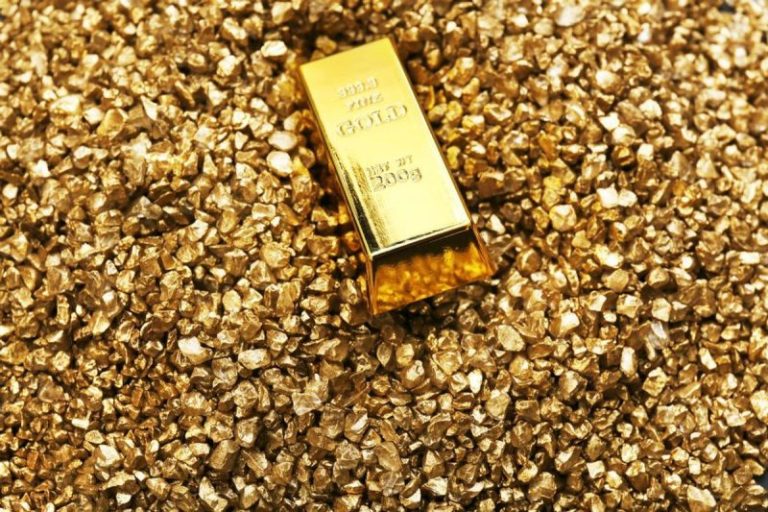
Gold has a reputation for being a reliable diversifier because it can act as a hedge against various risks.

For those unfamiliar with the term, put simply, a hedge is an investment position whose main purpose is to offset potential losses or gains related to another asset. But how does that work, and what’s the best way to get exposure to gold as a hedge?

Read on for a look at how this strategy works and why it’s worth considering.

In this article

    Why use gold investments as a hedge?

    Gold is looked at as a hedge investment in many different situations. The first and most popular use of gold as a source of protection is as a hedge against the decline of a currency, typically the US dollar. When the dollar slips, the yellow metal not only becomes less expensive to hold, but also tends to rise in value.

    “Gold’s relationship with the dollar is determined by US-based gold supply and demand, as well as by the status of the dollar as the reserve currency globally,” states the World Gold Council. “Historically, a weak dollar tends to provide a stronger boost to gold’s performance than the drag created by a strong dollar.”

    By holding the precious metal as a diversification tool when the economy negatively affects currencies, investors can incur gains from the metal’s increased value.

    The second reason why gold makes a good hedge is that it can act as a defense against inflation. When the cost of living begins to rise, the stock market often falls. In those cases, investors with assets that are negatively affected by a volatile market need something to balance that out — that’s where gold comes in.

    Over the past 50 years, investors have seen gold make huge gains when the stock market is crumbling. As Investopedia points out, “This is because, when fiat currency loses its purchasing power to inflation, gold tends to be priced in those currency units and thus tends to arise along with everything else.”

    Interestingly, the yellow metal has also been used as a hedge against deflation, which happens when prices drop, the economy is in a downturn and excessive debt looms. This situation has not occurred since the Great Depression of the 1930s, and to a much smaller degree after the 2008 financial crisis.

    Market participants may decide to hoard cash in this type of scenario, and the safest place to hold cash is in gold. Again, while this situation is not commonplace, many investors keep the yellow metal in their portfolios on the off chance that another massive period of deflation will take place.

    Finally, gold can be used as a general portfolio hedge when market participants hold investments that are not related to one another. Since the precious metal generally has a negative correlation to stocks, bonds and other financial instruments, investors often diversify by creating a portfolio that combines gold with stocks and bonds in order to reduce both volatility and risk.

    While it is true that the yellow metal goes through times of volatility, it has always maintained its value over the long term, making it a steady addition to investors’ portfolios.

    Those who have decided to add gold to their portfolio as a hedge have a variety of options. Here’s an overview of three of the most popular ways of getting exposure to gold.

    1. How to use physical gold as a hedge

    Investors can get the most direct exposure to gold by buying physical gold, and holding the physical metal also adds diversification from digital assets. Physical gold can be purchased through government mints, private mints, precious metals dealers and even jewelry stores.

    Physical gold investors should generally focus on 0.999 fine items, as these will also be the easiest to sell. The majority of gold bullion products fit this description.

    One of the most common choices for investors are gold bullion coins, such as the South African Krugerrand or the Canadian Gold Maple Leaf, which are 0.999 fine. The American Gold Eagle is reputable and popular as well, but has a lower purity at 91.67 percent. Another option is gold rounds, which are similar to coins, but are not legal tender, making them often slightly cheaper.

    Gold bars are another popular option, and because they come in a variety of sizes, they can accommodate a range of investors. Large investments may best be made in bars since bigger sizes are available. Further, it is often easier to manage several large products than it is to manage an array of smaller gold items.

    When deciding on what to purchase, gold buyers will want to keep their plans for selling in mind. For example, large products may be more difficult and thus slower to sell, meaning it could be harder to take advantage of gold price movements or convert it to cash in an emergency. Individuals making ongoing or significant investments may therefore want to consider purchasing gold in various weights to give them versatility.

    Click here to learn more about physical gold as an investment.

    Click here to learn what moves the gold price and the highest price for gold is.

    2. How to use gold ETFs as a hedge

    One of the common ways investors add gold as a hedge is through investing in a gold exchange-traded fund (ETF), which trade on a stock exchange just like equities. There are several kinds of gold ETFs, offering exposure to different aspects of the gold market. Gold ETFs can offer investors access to gold price movements by holding physical gold or the gold futures market through holding futures contracts. There are also gold ETFs focused on gold mining stocks, providing a more stable alternative to investing in individual gold stocks.

    It is important to keep in mind that investors who own gold ETFs do not own any physical gold — even gold ETFs that track physical gold generally cannot be redeemed for it, with the exception of the Vaneck Merk Gold ETF (ARCA:OUNZ). Nonetheless, gold ETFs are a good option for getting exposure to the precious metal without personally trading physical gold, gold futures or gold stocks.

    Click here for a list of five biggest gold ETFs and more information on gold ETFs.

    Click here for a list of top ASX-listed gold ETFs.

    3. How to use gold futures as a hedge

    A futures contract is an agreement to buy or sell gold on a date in the future for a price determined when the contract is initiated. In a gold futures transaction, two parties agree on a price, the amount of gold being purchased and the future delivery month.

    The futures market is often referred to as an arena for paper trading. The bulk of the activity is just that, as metal is not actually exchanged and settlements are made in cash. It allows investors to buy or sell gold as they want without management fees, and taxes are split between short-term and long-term capital gains.

    In some cases, the futures market can be an arena for purchasing physical gold. However, obtaining gold through the futures market requires a large investment and involves a list of additional costs. The process can be complicated, cumbersome and lengthy, which is why actually buying physical gold through futures is considered best for highly experienced market participants.

    Click here to learn more about gold futures.

    Securities Disclosure: I, Lauren Kelly, hold no direct investment interest in any company mentioned in this article.

    This post appeared first on investingnews.com

    Platinum-group metals (PGMs) include platinum, palladium, rhodium and other metals, all of which are prized for their durability, resistance to corrosion and excellent catalytic properties.

    The automotive industry is the world’s largest consumer of these metals, which among other things are used in catalytic converters for vehicle exhaust systems. A rebound and continued growth in auto production is projected in the coming years, particularly in developing markets, and this should increase demand for PGMs, especially when it comes to platinum and palladium.

    On the supply side, the platinum market slid into a significant deficit in 2024, which has extended into 2025 and is expected to continue into the next year. These fundamentals led platinum prices to a 12 year high of US$1,495 per ounce on September 23, 2025.

    But where do platinum and palladium come from? The list of the world’s top palladium- and platinum-mining countries is a short one, and most PGMs come from South Africa and Russia. We dive into the miners, markets and regulations affecting the top PGM countries below, and you can also learn more about the companies mining these metals here.

    Russia’s ongoing war in Ukraine and electricity shortages in South Africa are expected to seriously hamper the ability of these nations to bring PGMs to market.

    So what other countries are platinum and palladium producers, and which countries hold the most platinum and palladium reserves? Below is a list of the five top producers in 2024, as per the latest data from the US Geological Survey.

    1. South Africa

    Platinum production: 120,000 kilograms
    Palladium production: 72,000 kilograms
    PGM reserves: 63 million kilograms

    South Africa is top of the list of the world’s top platinum producers, with production of 120,000 kilograms in 2024. South Africa is also a major producer of palladium, taking second place globally with 72,000 kilograms last year. The country holds the largest-known reserves of PGMs globally at 63 million kilograms, accounting for over 75 percent of known global reserves.

    According to the US Geological Survey, 2024 production of PGMs in South Africa ‘decreased compared with (74,900 kilograms) in 2023 owing to declining prices, higher costs associated with deep-level mining, labor disputes, and ongoing disruptions to the supply of electricity.’

    The Bushveld complex is the largest PGMs resource in the world, and represents a large majority of annual global production of platinum and palladium. Impala Platinum Holdings (OTCQX:IMPUF,JSE:IMP), commonly called Implats, is a significant producer in the complex, which hosts the company’s Impala Rustenburg mine, Marula mine, Bafokeng and Two Rivers joint venture.

    2. Russia

    Platinum production: 18,000 kilograms
    Palladium production: 75,000 kilograms
    PGM reserves: 16 million kilograms

    Despite being the world’s second biggest platinum-mining country, Russia’s annual production trails behind South Africa’s by a large margin, coming in at 18,000 kilograms for 2024. That said, Russia was the world’s top palladium producer in 2024, putting out 75,000 kilograms last year — 3,000 kilograms higher than South Africa’s output.

    Russian mining company Norilsk Nickel (MCX:GMKN) is the world’s largest palladium producer, and it plans to invest US$35 billion in infrastructure upgrades between 2021 and 2030, which will ultimately result in higher metals output.

    While Russia held its spot as the top palladium producer last year, its palladium production dropped significantly from 87,000 kilograms in 2023. The USGS attributed the drop to ‘disruptions from natural disasters, lower metal grades and ore recovery, ongoing issues related to the Russia-Ukraine conflict, and planned outages at a major metallurgical plant.’

    3. Zimbabwe

    Platinum production: 19,000 kilograms
    Palladium production: 15,000 kilograms
    PGM reserves: 1.2 million kilograms

    Zimbabwe is a major producer of both platinum and palladium, producing 19,000 and 15,000 kilograms of the precious metals respectively in 2024. Zimplats Holdings (ASX:ZIM) is the biggest platinum miner in the country, and it is 87 percent owned by Implats.

    In October 2022, Zimbabwe introduced a policy that allows it to stockpile physical metals, including PGMs. A change to the country’s existing cash royalties on miners, the rules require mining companies to instead pay the royalties based on their production in a 50/50 combination of cash and refined metals.

    The policy currently applies to PGMs, gold, diamonds and lithium. However, it is dynamic, with the option to add or subtract affected metals and change royalty percentages based on factors such as geological scarcity and demand trends.

    In January 2025, the Government of Zimbabwe officially implemented a 5 percent levy on unbeneficiated platinum exports, which it had postponed to allow mining companies time to build refining capacity.

    In line with the government’s goal of adding value to the country’s platinum products, Zimplats has expanded its smelting capacity and is making slow progress on a US$190 million refurbishment of its mothballed base metals refinery to process PGM mattes into pure platinum metal concentrates.

    4. Canada

    Platinum production: 5,200 kilograms
    Palladium production: 15,000 kilograms
    PGM reserves: 310,000 kilograms

    Canada’s strong palladium production of 15,000 kilograms tied with Zimbabwe to make it the third highest producer globally in 2024. Canada’s platinum production was also significant at 5,200 kilograms. The North American country’s palladium and platinum production were nearly both on par with the previous year.

    The country only holds 310,000 kilograms of known PGMs reserves — the lowest total reserves on this list — but companies continue to explore for PGMs in Canada in search of more deposits.

    Canadian PGMs production takes place mainly in the province of Ontario, but PGMs output also comes out of Québec and Manitoba. The country has one primary PGMs-producing mine, the Lac des Iles mine in Western Ontario, which is owned by Implats Canada. The remainder of the country’s production is as a by-product of Canada’s nickel mines.

    5. United States

    Platinum production: 2,000 kilograms
    Palladium production: 8,000 kilograms
    PGM reserves: 820,000 kilograms

    The United States produced 8,000 kilograms of palladium in 2024 alongside 2,900 kilograms of platinum. The US holds 820,000 kilograms of identified PGM reserves.

    Sibanye Stillwater’s (NYSE:SBSW,JSE:SSW) Stillwater Complex in Montana is the only primary producer of PGMs in the US. The company also maintains a smelter, refinery and laboratory in Montana and recovers PGMs from spent catalytic convertor material from vehicles.

    Low palladium prices forced Sibanye Stillwater to curtail production and layoff about 700 employees at the Stillwater Complex in 2024. The company has pointed to Russia flooding the palladium market to depress prices.

    In response, on July 30, 2025, Sibanye Stillwater and related industry participants filed antidumping and countervailing duty petitions with the US Department of Commerce and the US International Trade Commission (ITC) on imports of unwrought palladium from Russia.

    On September 18, the ITC determined there is a reasonable indication the industry was ‘materially injured’ by the Russian imports, and commenced the final phase of investigations.

    FAQs for investing in palladium and platinum

    What is platinum?

    Platinum is a precious metal that belongs to the platinum-group metals category. Platinum has a silverish-white hue and is represented by the symbol Pt and atomic number 78 on the periodic table of elements.

    What is platinum used for?

    Platinum has several uses, including playing a large role in the auto industry for its ability to reduce emissions. Additionally, platinum is in high demand for jewelry and as an investment metal.

    Platinum is also benefiting from growing demand from the hydrogen fuel cell sector. The metal is a key catalyst in the process that converts hydrogen into electricity.

    What is palladium metal?

    Palladium fits into the precious metals category and is a PGM. It is represented by the symbol Pd and atomic number 46 on the periodic table of elements. Palladium has a silvery-white color and is prized for its rarity.

    What is palladium used for?

    The automotive sector is the primary end user of palladium. The metal is a key component in the catalytic convertors of internal combustion engine vehicles, where it is used to reduce emissions.

    Like platinum, palladium is used in jewelry and valued as an investment. It has other smaller-scale uses, and is consumed in various ways by the medical and dental fields, among others.

    What is the best way to invest in palladium?

    While there is no single best way to investing in palladium, those interested in gaining exposure to this market have a variety of options. Investors who prefer more tangible assets can add physical palladium to their portfolios, including palladium bullion and coins. Palladium exchange-traded funds such as the Sprott Physical Platinum and Palladium Trust (ARCA:SPPP) and the Aberdeen Standard Physical Palladium Shares (ARCA:PALL) offer another route. Palladium-focused stocks are yet another option, with pure-play palladium miners including Sibanye-Stillwater and Impala Platinum Holdings.

    Why are metals like gold, platinum and palladium so expensive?

    Precious metal gold has long been valued as a form of currency and a store of wealth, all of which have built up its high intrinsic value. Platinum and palladium are 30 times rarer than gold, much harder to mine and are in high demand due to their important industrial uses.

    Securities Disclosure: I, Melissa Pistilli, hold no direct investment interest in any company mentioned in this article.

    This post appeared first on investingnews.com
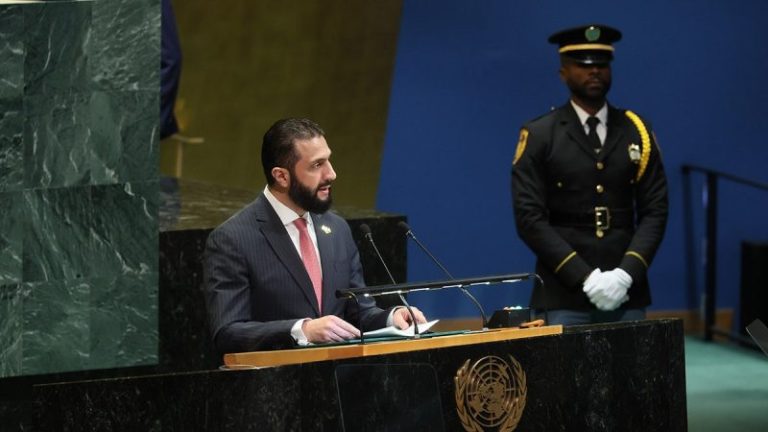
    Will the First Majestic Silver (TSX:FR,NYSE:AG) CEO’s silver price prediction of over US$100 per ounce come true?

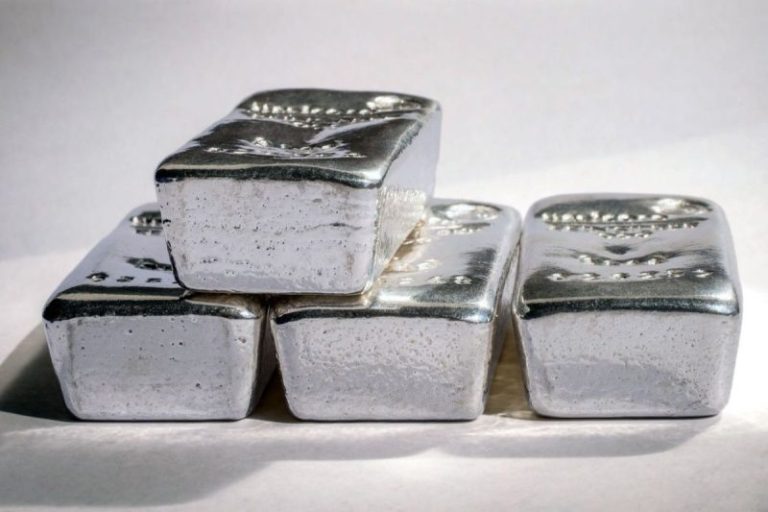
    The silver spot price has surged over 50 percent in the first nine months of 2025, reaching a 14 year high above US$44 on September 22 after breaking through the US$40 per ounce mark in early September. Silver’s price is rallying on growing economic uncertainty amid ongoing geopolitical tensions and US President Donald Trump’s escalating trade war, supported by long-term demand fundamentals.

    Well-known figure Keith Neumeyer, CEO of First Majestic, has frequently said he believes the white metal could climb even further, hitting the US$100 mark or even reaching as high as US$130 per ounce.

    Neumeyer has voiced this opinion often over the past decade. He put up a US$130 price target in a November 2017 interview with Palisade Radio, when silver was just US$17, and he also discussed it in an August 2022 interview with Wall Street Silver. He has reiterated his triple-digit silver price forecast in multiple interviews with Kitco over the years, including one in March 2023.

    In 2024, Neumeyer made his US$100 silver call in a conversation with ITM Trading’s Daniela Cambone at the Prospectors & Developers Association of Canada (PDAC) convention, and in April of that year he acknowledged his reputation as the ‘triple-digit silver guy’ on the Todd Ault Podcast.

    At times he’s been even bolder, suggesting in 2016 that silver could reach US$1,000 if gold were to hit US$10,000. More recently, he has pushed his expected timeline for US$100 silver back, but he remains very bullish in the long term.

    In order to better understand where Neumeyer’s opinion comes from and whether a triple-digit silver price is really in the cards, it’s important to take a look at the factors that affect the metal’s movements, as well as where prices have been in the past and where other industry insiders think silver could be headed.

    First, let’s dive a little deeper into Neumeyer’s US$100 silver prediction.

    In this article

      Why is Neumeyer calling for a US$100 silver price?

      Neumeyer believes silver could hit US$100 due to a variety of factors, including its consistent deficit, its industrial demand and how undervalued it is compared to gold.

      There’s a significant distance for silver to go before it reaches the success Neumeyer has boldly predicted. In order for the metal to jump to the US$100 mark from US$44, its price would have to increase by around 125 percent. However, silver has already jumped by nearly 160 percent from its price of around US$17 per ounce when he made his US$130 call in November 2017.

      Neumeyer has previously said he expects a triple-digit silver price in part because he believed the market cycle could be compared to the year 2000, when investors were sailing high on the dot-com bubble and the mining sector was down. He thinks it’s only a matter of time before the market corrects, like it did in 2001 and 2002, and commodities see a big rebound in pricing. It was during 2000 that Neumeyer himself invested heavily in mining stocks and came out on top.

      “I’ve been calling for triple-digit silver for a few years now, and I’m more enthused now,” Neumeyer said at an event in January 2020, noting that there are multiple factors behind his reasoning. “But I’m cautiously enthused because, you know, I thought it would have happened sooner than it currently is happening.”

      In an August 2022 with Wall Street Silver, he reiterated his support for triple-digit silver and said he’s not alone in this optimistic view — in fact, he’s been surpassed in that optimism. ‘I actually saw someone the other day call for US$500 silver,’ he said. ‘I’m not quite sure I’m at the level. Give me US$50 first and we’ll see what happens after that.’

      Another factor driving Neumeyer’s position is his belief that the silver market is in a deficit. In a May 2021 interview, when presented with supply-side data from the Silver Institute indicating the biggest surplus in silver market history, Neumeyer was blunt in his skepticism. “I think these numbers are made up,” he said. “I wouldn’t trust them at all.”

      He pointed out that subtracting net investments in silver exchange-traded products leaves the market in a deficit, and also questioned the methodology behind the institute’s recycling data given that most recycled silver metal comes from privately owned smelters and refineries that typically don’t make those figures public.

      ‘I’m guessing the mining sector produced something in the order of 800, maybe 825 million ounces in 2022,’ Neumeyer said when giving a Q4 2022 overview for his company. ‘Consumption numbers look like they’re somewhere between 1.2 and 1.4 billion ounces. That’s due to all the great technologies, all the newfangled gadgets that we’re consuming. Electric vehicles, solar panels, windmills, you name it. All these technologies require silver … that’s a pretty big (supply) deficit.’

      In a December 2023 interview with Kitco, Neumeyer stressed that silver is more than just a poor man’s gold and he spoke to silver’s important role in electric vehicles and solar cells. In line with this view on silver, First Majestic is a member of a consortium of silver producers that in January 2024 sent a letter to the Canadian government urging that silver be recognized as a critical mineral. Silver’s inclusion on the list would allow silver producers to accelerate the development of strategic projects with financial and administrative assistance from the government.

      In this 2024 PDAC interview, Neumeyer once again highlighted this sizable imbalance in the silver’s supply-demand picture. “We’re six years into this deficit. The deficit in 2024 looks like it’s gonna be bigger than 2023, and why is that? Because miners aren’t producing enough silver for the needs of the human race,” he said.

      More controversially, Neumeyer is of the opinion that the white metal will eventually become uncoupled from its sister metal gold, and should be seen as a strategic metal due to its necessity in many everyday appliances, from computers to electronics, as well as the technologies mentioned above. He has also stated that silver production has gone down in recent years, meaning that contrary to popular belief, he believes the metal is actually a rare commodity.

      Neumeyer’s March 2023 triple-digit silver call was a long-term call, and he explained that while he believed gold would break US$3,000 that year, he thought silver will only reach US$30. However, once the gold-silver ratio is that unbalanced, he believes that silver will begin to take off, and it would just need a catalyst.

      ‘It could be Elon Musk taking a position in the silver space,’ Neumeyer said. ‘There’s going to be a catalyst at some time, and headlines in the Wall Street Journal might talk about the silver supply deficit … I don’t know what the catalyst will be, but investors and institutions will wake up to the fundamentals of the metal, and that’s when it will start to move.’

      In an August 2023 interview with SilverNews, Neumeyer said banks are holding the silver market down. He pointed to the paper market for the metal, which he said the banks have capped at US$30 even in times of high buying.

      ‘If you want to go and buy 100 billion ounces of (paper) silver, you might not even move the price, because some bank just writes you a contract that says (you own that),’ he noted, saying banks are willing to get short because once buying stops, they push the price down to get the investors out of the market and buy the silver back. ‘… If the miners started pulling their metal out of the current system, then all of a sudden the banks wouldn’t know if they’re going to get the metal or not, so they wouldn’t be taking the same risks they’re taking today in the paper markets.’

      The month after the interview, his company First Majestic launched its own minting facility, named First Mint.

      In 2024, gold experienced a resurgence in investor attention as the potential for Fed rate cuts came into view. In an interview with Cambone at PDAC 2024, Neumeyer countered that perception, stating, “There’s a rush into gold because of the de-dollarization of the world. It has nothing to do with the interest rates.”

      In an April 2025 Money Metals podcast, Neumeyer reiterated his belief that silver is in an extreme supply deficit and that eventually silver prices will have to rise in order to incentivize silver miners to dig up more of the metal.

      ‘You need triple digit silver just to motivate the mining companies to start investing again because the mining companies aren’t going to make the investment because there’s just so much risk in it,’ he said.

      Several market analysts have raised concerns about this silver supply deficit.

      Moreover, in April at the Sprott Silver Conference, Maria Smirnova, senior portfolio manager and chief investment officer at Sprott Asset Management, highlighted the deficit as well.

      Smirnova explained that silver has been in a supply deficit of 150 million ounces to 200 million ounces annually (or 10 percent to 20 percent of total supply), while production has been stagnant or declining over the past decade. She emphasized that above-ground inventories have declined by nearly 500 million ounces in recent years.

      What factors affect the silver price?

      In order to glean a better understanding of the precious metal’s chances of trading around the US$100 range, it’s important to examine the elements that could push it to that level or pull it further away.

      The strength of the US dollar and US Federal Reserve interest rate changes are factors that will continue to affect the precious metal, as are geopolitical issues and supply and demand dynamics.

      Although Neumeyer believes that the ties that bind silver to gold need to be broken, the reality is that most of the same factors that shape the price of gold also move silver.

      For that reason, it’s helpful to look at gold price drivers when trying to understand silver’s price action. Silver is, of course, the more volatile of the two precious metals, but nevertheless it often trades in relative tandem with gold.

      First, it’s useful to understand that higher interest rates are generally negative for gold and silver, while lower rates tend to be positive. That’s because when rates are higher, investment demand shifts to products that can accrue interest.

      When the COVID-19 pandemic hit, the Fed cut rates down to zero from 1 to 1.25 percent. However, rising inflation led the Fed and other central banks to hike rates, which negatively impacted gold and silver. In February 2023, the Fed raised rates by just 25 basis points, the smallest hike since March 2022, as Chair Jerome Powell said the process of disinflation has begun. The Fed continued these small rate hikes over the next year with the last in July 2023.

      The Fed’s rate moves are currently playing a key role in pumping up silver prices. In early July 2024, as analysts factored in the rising potential for interest rate cuts in the remainder of 2024, silver prices were once again testing May’s nearly 12 year high, and they topped US$31 in September in the days leading up to the anticipated first rate cut.

      Heading into September of this year, the silver price was testing 14 year highs as market watchers expected the first rate cuts on the part of the Fed since it paused its interest rate moves in November 2024. The Fed chose to cut rates at the meeting, and silver and gold have both climbed even further in the week following the decision.

      While central bank actions are important for gold, and by extension silver, another key price driver lately has been geopolitical uncertainty. The past few years have been filled with major geopolitical events such as tensions between the US and other countries such as North Korea, China and Iran. The huge economic impact of the COVID-19 pandemic, the banking crisis in early 2023, Russia’s ongoing war with Ukraine, and rising tensions in the Middle East brought about by the Israel-Hamas war have been sources of concern for investors.

      Trump’s tariffs have also rattled stock markets and ratcheted up the level of economic uncertainty pervading the landscape in 2025. This has proved price positive for gold, bringing silver along for the ride.

      However, silver’s industrial side can not be ignored. In the current environment, the industrial case of silver is weakening in the short term; but longer term still holds some prospects for larger gains.

      Higher industrial demand from emerging sectors due to factors like the transition to renewable energy and the emergence of AI technology will be highly supportive for the metal over the next few years. Solar panels are an especially exciting sector as manufacturers have found increasing the silver content increases energy efficiency.

      “Even in the US, the policy really is ‘all of the above’ — all forms of energy. So I’m not concerned about solar cells diminishing. Could they go flat? Yeah, that’s fine. Flat at 300 million ounces? That’s great demand for silver,” said former Hecla Mining (NYSE:HL) CEO Phil Baker during a May webinar hosted by Simon Catt of Arlington Group.

      “(Prime Minister Narendra) Modi made a policy decision a year ago to grow the solar industry in India. So in India, only about 10 percent of their demand for silver is used for industrial purposes. In China, it’s 90 percent, and so what you’re going to have in India is you’re going to see their solar panel growth skyrocket,” he added.

      Could silver hit US$100 per ounce?

      While we can’t know if we’ll reach a $100 per ounce silver price in the near future, there is support for Neumeyer’s belief that the metal is undervalued and that “ideal conditions are present for silver prices to rise.”

      So, if the silver price does rise further, can it go that high?

      Let’s look at silver’s recent history. The highest price for silver was just under US$50 in the 1970s, and it came close to that level again in 2011. The commodity’s price uptick came on the back of very strong silver investment demand. While it has yet to reach these levels again, the silver price has increased significantly in recent years.

      After spending the latter half of the 2010s in the teens, the 2020s have seen silver largely hold above US$20.

      In August 2020, the price of silver reached nearly US$28.50 before pulling back again, and moved back up near those heights in February 2021. The price of silver saw a 2022 high point of US$26.46 in February, and passed US$26 again in both May and November 2023. Silver rallied in the later part of the first quarter of 2024, and by April 12 was once again flirting with the US$30 mark as it reached an 11 year high of US$29.26. Despite pulling back to the US$26 level soon after, by October 22 the price of silver had a nice run in the lead up to the election, rising up to US$34.80.

      However, a stronger dollar and signs that the Fed might not be so quick to cut interest rates as deeply as expected were seen as price negative for silver. It was in a downward slide for much of the remainder of the year.

      For much of the first half of 2025, silver has followed gold higher on factors including persistent inflationary pressures brought on by Trump’s aggressive tariff announcements and the ongoing geopolitical risks in the Middle East.

      On September 22, 2025, the price of silver had reached a 14 year high of US$44.11, up over 50 percent since the beginning of the year.

      What do other experts think about US$100 silver?

      As silver’s trajectory continues upwards, some silver market experts are agreeing with Neumeyer’s triple-digit silver hypothesis, or at least that the price of silver still has further room to grow.

      ‘One day the market will run, and if you’re not in, you won’t win it,’ Middelkoop said.

      Substack newsletter writer John Rubino sees the silver supply deficit as not only an issue for the industrial sector, but for the COMEX futures markets as well, which could spark a major rally in the silver price.

      Rubino explained that there is real danger in an exchange defaulting on delivering physical metal to futures contract traders and needing to pay cash instead. This scenario is likely to trigger panic buying.

      He added that he would be shocked if silver didn’t reach US$100 an ounce “somewhere along the way, and it’s possible that much higher prices could happen when the panic buying starts.”

      “It’s hard not to reference Keith, our CEO, and triple digit comes to mind pretty frequently now — more people are talking about it,” Alkhafaji explained at the time. He elaborated, “I’m a believer of economics, you look at the mining ratio and that’s sitting at 7:1, yet the price ratio is sitting at 90:1 right now. We just talked about that gold is comfortable at US$3,000, so that tells us that silver needs to play catch up to collapse that ratio.”

      ‘Another thing that’s important to note is the price inelasticity,’ he explained. ‘Most commodities, when the price goes up, the supply goes up. But with silver, it’s primarily a by-product from base metal mining. It depends on the nature of the recession we get and how severe it is, but that could impact the demand for base metals, and therefore you may not see an increase in mining supply for silver.’

      “I think we’ll see new highs in the next 12 months and I think we will recast the highs in the next six months. Recasting meaning US$50 in the next six, and then breaking out to new highs in the next 12 months,” he said.

      Concerning his reasons for laying out this path forward for silver, Costa cited the high volumes of silver purchases occurring after days when prices declined, as well as the clear outperformance of silver even when gold is falling.

      Analyst firm InvestingHaven is very bullish on the silver market and is expecting prices to test all-time highs in 2025, moving as high as US$49 before blasting through new records in the next few years. InvestingHaven even sees the precious metal reaching as high as US$77 in 2027 and US$82 by 2030.

      FAQs for silver

      Can silver hit $1,000 per ounce?

      As things are now, it seems unlikely silver will ever reach highs of US$1,000 per ounce, which Keith Neumeyer predicted in 2016 could happen if gold ever climbed to US$10,000 per ounce.

      This is related to the gold to silver production ratio discussed above. At the time of the 2016 prediction, this ratio was around 1 ounce of gold to 9 ounces of silver, or 1:9. In 2024, it was about 1:7.5.

      If silver was priced according to production ratio today, when gold is at US$3,000 silver would be around US$400, or US$333 at 1:9. However, the gold to silver pricing ratio has actually sat around 1:80 to 1:90 recently, and when gold moved above US$3,000 in March 2025, silver was around US$34.

      Additionally, even if pricing did change drastically to reflect production rates, gold would need to climb by more than 300 percent from its current price to hit the US$10,000 gold price Neumeyer mentioned back in 2016.

      Why is silver so cheap?

      The primary reason that silver is sold at a significant discount to gold is supply and demand, with more silver being mined annually. While silver does have both investment and industrial demand, the global focus on gold as an investment vehicle, including countries stockpiling gold, can overshadow silver.

      Additionally, jewelry alone is a massive force for gold demand.

      There is an abundance of silver — according to the US Geological Survey, to date 1,740,000 metric tons (MT) of silver have been discovered, while only 244,000 MT of gold have been found, a ratio of about 1 ounce of gold to 7.1 ounces of silver. In terms of output, 25,000 MT of silver were mined in 2024 compared to 3,300 MT for gold.

      Looking at these numbers, that puts gold and silver production at about a 1:7.5 ratio last year, while the price ratio on June 11, 2025, was around 1:92 — a huge disparity.

      Is silver really undervalued?

      Many experts believe that silver is undervalued compared to fellow currency metal gold. As discussed, their production and price ratios are currently incredibly disparate.

      While investment demand is higher for gold, silver has seen increasing time in the limelight in recent years, including a 2021 silver squeeze that saw new entrants to the market join in.

      Another factor that lends more intrinsic value to silver is that it’s an industrial metal as well as a precious metal. It has applications in technology and batteries — both growing sectors that will drive demand higher.

      Silver’s two sides has been on display in recent years: silver demand hit record highs in 2022, according to the Silver Institute, with physical silver investment rising by 22 percent and industrial by 5 percent over 2021. For 2023, industrial demand was up 11 percent over the previous year, compared to a 28 percent decline in physical silver investment.

      Is silver better than gold?

      There are merits for both metals, especially as part of a well-balanced portfolio. As many analysts point out, silver has been known to outperform its sister metal gold during times of economic prosperity and expansion.

      On the other hand, during economic uncertainty silver values are impacted by declines in fabrication demand.

      Silver’s duality as a precious and industrial metal also provides price support. As a report from the CPM Group notes, “it can be seen that silver in fact almost always (but not always) out-performs gold during a gold bull market.”

      At what price did Warren Buffet buy silver?

      Warren Buffett’s Berkshire Hathaway (NYSE:BRK.A) bought up 37 percent of global silver supply between 1997 and 2006. Silver ranged from US$4 to US$10 during that period.

      In fact, between July 1997 and January 1998 alone, the company bought about 129 million ounces of the metal, much of which was for under US$5. Adjusted for inflation, the company’s purchases in that window cost about US$8.50 to US$11.50.

      How to invest in silver?

      There are a variety of ways to get into the silver market. For example, investors may choose to put their money into silver-focused stocks by buying shares of companies focused on silver mining and exploration. As a by-product metal, investors can also gain exposure to silver through some gold companies.

      There are also silver exchange-traded funds that give broad exposure to silver companies and the metal itself, while more experienced traders may be interested in silver futures. And of course, for those who prefer a more tangible investment, purchasing physical bullion in silver bar and silver coin form is also an option.

      Securities Disclosure: I, Melissa Pistilli, hold no direct investment interest in any company mentioned in this article.

      This post appeared first on investingnews.com

      Nevgold Corp. (‘ NevGold ‘ or the ‘ Company ‘) ( TSXV:NAU,OTC:NAUFF) (OTCQX:NAUFF) (Frankfurt:5E50 ) is pleased to announce further significant historic oxide gold-antimony (‘Antimony’, ‘Sb’) results at its Limousine Butte Project (the ‘Project’, ‘Limo Butte’) in Nevada. The Company continues to expand the gold-antimony potential of the Project, highlighting its promising prospects for further exploration and development in Nevada, one of the world’s prolific mining jurisdictions.

      Key Highlights

      • More high-grade oxide gold-antimony at Resurrection Ridge including:
        • RR03_01: 11.41 g/t AuEq* over 6.1 meters (10.60 g/t Au and 0.18% Sb), within 2.19 g/t AuEq* over 56.4 meters (1.74 g/t Au and 0.10% Sb)
        • LB010: 3.19 g/t AuEq* over 26.2 meters (2.24 g/t Au and 0.21% Sb), within 2.16 g/t AuEq* over 57.2 meters (1.45 g/t Au and 0.16% Sb)
        • LB028: 4.62 g/t AuEq* over 6.1 meters (0.14 g/t Au and 1.0% Sb) within 0.66 g/t AuEq* over 128.0 meters (0.06 g/t Au and 0.13% Sb)
        • LB133: 1.78 g/t AuEq* over 12.2 meters (0.11 g/t Au and 0.37% Sb)
        • *Gold equivalents (‘AuEq’) are based on assumed metals prices of US$2,000/oz of gold and US$35,000 per tonne of antimony (~30% discount to current spot prices), and assumed metals recoveries of 85% for gold and 70% for antimony.
      • The Company has completed 8 drillholes in the current 2025 drill campaign with assays pending ; based on drilling completed by the Company at the Project since 2021, and historical drilling completed by previous operators, there is strong potential to advance to an initial gold-antimony Mineral Resource Estimate in 2025 (‘MRE’) (see Figure 1, Figure 2)
      • Phase II metallurgical testwork on gold and antimony continues to advance with results expected over the coming weeks

      Limo Butte Planned 2025 Activities / Status Update
      NevGold will continue its active exploration program at Limo Butte including:

      • Evaluate the historical geological database with focus on gold and antimony (completed) ;
      • Analyze historical drilling with focus on gold and antimony (continuous activity) ;
      • Advance metallurgical testwork (in progress, Phase II results in coming weeks) ;
      • Continue to drill test gold-antimony targets (ongoing, 8 drillholes completed to date) ;
      • Advance initial gold-antimony Mineral Resource Estimate (MRE) (in progress) .

      NevGold CEO, Brandon Bonifacio, comments: ‘We continue to add to the large oxide gold-antimony mineralization footprint at Limo Butte in Nevada with the objective of rapidly advancing the Project to an initial gold-antimony Mineral Resource Estimate (MRE) . There is a clear commitment from the United States to advance high-quality, domestic, mineral projects and Limo Butte is optimally positioned with its significant near-surface, oxide gold-antimony mineralization and large geological database. The current 2025 drill program is positively advancing with 8 holes completed and assays pending . Another key milestone that we are driving forward is the Phase II metallurgical testwork building on our positive results from Phase I . All of these various work programs will help us rapidly and systematically advance the gold-antimony potential at Limo Butte as we de-risk and progress the asset to the next stages of project development.’

      Figure 1 – Limousine Butte Gold-Antimony Project with selected gold-antimony drillhole results.
      To view image please click here

      Figure 2 – Limousine Butte Gold-Antimony Project cross-section with selected gold-antimony drillhole results. Thin colored discs show Antimony (Sb ppm) in drilling, and wide colored discs show Gold (Au ppm) in drilling.
      To view image please click here

      Figure 3 – Limousine Butte Gold-Antimony Project with selected gold-antimony drillhole results at Resurrection Ridge and Cadillac Valley. The total strike length between Resurrection Ridge and Cadillac Valley is +5km.
      To view image please click here

      Historical and Re-Assayed Drill Results

      Hole ID Length, m* g/t Au % Sb g/t AuEq** From, m To, m
      Resurrection Ridge
      RR03_01 56.4 1.74 0.10% 2.19 85.3 141.7
      including 6.1 10.60 0.18% 11.41 126.5 132.6
      LB010 57.2 1.45 0.16% 2.16 13.0 70.1
      including 26.2 2.24 0.21% 3.19 17.1 43.3
      LB028 128.0 0.06 0.13% 0.66 36.6 164.6
      including 6.1 0.14 1.00% 4.62 42.7 48.8
      LB133 12.2 0.11 0.37% 1.78 182.9 195.1
      LB031 80.8 0.10 0.08% 0.44 30.5 111.3
      including 18.3 0.19 0.15% 0.88 30.5 48.8
      LB025 16.8 0.12 0.10% 0.55 128.0 144.8

      *Downhole thickness reported; true width varies depending on drill hole dip and is approximately 70% to 90% of downhole thickness.
      **The gold equivalents (‘AuEq’) are based on assumed metals prices of US$2,000/oz of gold and US$35,000 per tonne of antimony (~30% discount to current spot prices), and assumed metals recoveries of 85% for gold and 70% for antimony.

      Drillhole Orientation Details

      Hole ID Target Zone Easting Northing Elevation (m) Length (m) Azimuth Dip
      RR03_01 RR 667246 4417388 2176 182.8 161 -70
      LB010 RR 667229 4417327 2187 82.2 90 -50
      LB028 RR 667060 4417254 2164 237 70 -60
      LB133 RR 666661 4417217 2102 240.8 140 -50
      LB031 RR 667142 4417273 2173 259.1 225 -60
      LB025 RR 667023 4417193 2167 176.7 0 -90

      Limo Butte Geology & Antimony Summary
      A review of historical geochemical and drilling data at the Limousine Butte Project has identified multiple areas with strong gold-antimony potential. These zones correlate closely with outcrops of the Devonian Pilot Shale, the primary host rock for Carlin-type gold mineralization in the area. Positive gold grade at Limousine Butte is typically associated with silicification and the formation of jasperoid breccias within the Pilot Shale, an alteration feature also observed in the positive antimony results.

      Through the Project data review, the Company uncovered reports detailing two small-scale historic mining operations at the Nevada Antimony Mine and Lage Antimony Prospect within the Limo Butte Project boundary. (Figure 1) The Nevada Antimony Mine featured two prospect pits that extracted stibnite (formula: Sb 2 S 3 ) from a hydrothermal breccia. The Lage Antimony Prospect reported historical additional prospect pits extracting antimony.

      Historical geochemical rock chip sampling within the past-producing Golden Butte pit from a Brigham Young University (‘BYU’) Thesis study produced numerous results that exceeded 1% antimony in jasperoid breccias (see Figure 1). Several results were greater than 5% antimony, including a sample of 9.6% antimony with visible stibnite and stibiconite . BYU Thesis Report

      Figure 4 – Limousine Butte Project with historical antimony in rock chips and soils. The total strike length between Resurrection Ridge and Cadillac Valley is +5km. To view image please click here

      US Executive Order – Announced March 20, 2025
      The Company is pleased to report the sweeping Executive Order to strengthen American mineral production and reduce U.S. reliance on foreign nations for its mineral supply . Antimony (Sb) has been identified as an important ‘Critical Mineral’ in the United States essential for national security, clean energy, and technology applications, yet no domestically mined supply currently exists.

      The Executive Order invokes the use of the Defense Production Act as part of a broad United States (‘US’) Government effort to expand domestic minerals production on national security grounds. As it relates to project permitting, the Order states that it will ‘identify priority projects that can be immediately approved or for which permits can be immediately issued, and take all necessary or appropriate actions…to expedite and issue the relevant permits or approvals.’ Furthermore, the Order includes provisions to accelerate access to private and public capital for domestic projects, including the creation of a ‘dedicated mineral and mineral production fund for domestic investments’ under the Development Finance Corporation (‘DFC’).

      This decisive action by the US Government highlights the urgent need to expand domestic minerals output to support supply chain security in the United States. This important Order will help revitalize domestic mineral production by improving the permitting process and providing financial support to qualifying domestic projects.

      Importance of Antimony
      Antimony is considered a ‘Critical Mineral’ by the United States based on the U.S. Geological Survey’s 2022 list (U.S.G.S. (2022)). ‘Critical Minerals’ are metals and non-metals essential to the economy and national security. Antimony is utilized in all manners of military applications, including the manufacturing of armor piercing bullets, night vision goggles, infrared sensors, precision optics, laser sighting, explosive formulations, hardened lead for bullets and shrapnel, ammunition primers, tracer ammunition, nuclear weapons and production, tritium production, flares, military clothing, and communication equipment. Other uses include technology (semi-conductors, circuit boards, electric switches, fluorescent lighting, high quality clear glass and lithium-ion batteries) and clean-energy storage.

      Globally, approximately 90% of the world’s current antimony supply is produced by China, Russia, and Tajikistan. Beginning on September 15, 2024, China, which is responsible for nearly half of all global mined antimony output and dominates global refinement and processing, announced that it will restrict antimony exports. In December-2024, China explicitly restricted antimony exports to the United States citing its dual military and civilian uses, which further exacerbated global supply chain concerns. (Lv, A. and Munroe, T. (2024)) The U.S. Department of Defense (‘DOD’) has designated antimony as a ‘Critical Mineral’ due to its importance in national security, and governments are now prioritizing domestic production to mitigate supply chain disruptions. Projects exploring antimony sources in North America play a key role in addressing these challenges.

      Perpetua Resources Corp. (‘Perpetua’) has the most advanced domestic gold-antimony project in the United States. Perpetua’s project, known as Stibnite, is located in Idaho approximately 130 km northeast of NevGold’s Nutmeg Mountain and Zeus projects. Positive advancements at Stibnite including the technical development and permitting has led to US$75 million in Department of Defense (‘DOD’) awards, and over $1.8 billion in indicative financing from the Export Import Bank of the United States (‘US EXIM’) ( see Perpetua Resources News Release from April 8, 2024 ) (Perpetua Resources. (2025))

      Figure 5 – Limousine Butte Land Holdings and District Exploration Activity To view image please click here

      ON BEHALF OF THE BOARD

      ‘Signed’

      Brandon Bonifacio, President & CEO

      For further information, please contact Brandon Bonifacio at bbonifacio@nev-gold.com, call 604-337-4997, or visit our website at www.nev-gold.com .

      Historical Data Validation
      NevGold QA/QC protocols are followed on the Project and include insertion of duplicate, blank and standard samples in all drill holes. A 30g gold fire assay and multi-elemental analysis ICP-OES method was completed by ISO 17025 certified American Assay Labs, Reno.

      The Company’s Qualified Person (‘QP’), Greg French, Vice President, Exploration has completed a review of the historical data in this press release. The historic data collection chain of custody procedures and analytical results by previous operators appear adequate and were completed to industry standard practices. For the Newmont and US Gold data a 30g gold fire assay and multi-elemental analysis ICP-OES method MS-41 was completed by ISO 17025 certified ALS Chemex, Reno or Elko Nevada.

      Geochemical ICP (5g) analysis for the Wilson, Christianson and Tingey report was completed by Geochemical Services Inc. and the XRF analyses (glass disk or pellets) by Brigham Young University.

      Technical information contained in this news release has been reviewed and approved by Greg French, CPG, the Company’s Vice President, Exploration, who is NevGold’s Qualified Person under National Instrument 43-101 and responsible for technical matters of this release.

      About the Company
      NevGold is an exploration and development company targeting large-scale mineral systems in the proven districts of Nevada and Idaho. NevGold owns a 100% interest in the Limousine Butte and Cedar Wash gold projects in Nevada, and the Nutmeg Mountain gold project and Zeus copper project in Idaho.

      Neither the TSX Venture Exchange nor its Regulation Services Provider (as that term is defined in the policies of the TSX Venture Exchange) accepts responsibility for the adequacy or accuracy of this release.

      Cautionary Note Regarding Forward Looking Statements

      This news release contains forward-looking statements that are based on the Company’s current expectations and estimates. Forward-looking statements are frequently characterized by words such as ‘plan’, ‘expect’, ‘project’, ‘intend’, ‘believe’, ‘anticipate’, ‘estimate’, ‘suggest’, ‘indicate’ and other similar words or statements that certain events or conditions ‘may’ or ‘will’ occur. Forward-looking statements include, but are not limited to, the proposed work programs at Limousine Butte, and the exploration potential at Limousine Butte. Such forward-looking statements involve known and unknown risks, uncertainties and other factors that could cause actual events or results to differ materially from estimated or anticipated events or results implied or expressed in such forward-looking statements. Such risks include, but are not limited to, general economic, market and business conditions, and the ability to obtain all necessary regulatory approvals. There is some risk that the forward-looking statements will not prove to be accurate, that the management’s assumptions may not be correct or that actual results may differ materially from such forward-looking statements. Accordingly, readers should not place undue reliance on the forward-looking statements. Any forward-looking statement speaks only as of the date on which it is made and, except as may be required by applicable securities laws, the Company disclaims any intent or obligation to update any forward-looking statement, whether as a result of new information, future events or results or otherwise. Forward-looking statements are not guarantees of future performance and accordingly undue reliance should not be put on such statements due to the inherent uncertainty therein.

      References

      Blackmon, D. (2021) Antimony: The Most Important Mineral You Never Heard Of. Article Prepared by Forbes.

      Kurtenbach, E. (2024) China Bans Exports to US of Gallium, Germanium, Antimony in response to Chip Sanctions . Article Prepared by AP News.

      Lv, A. and Munroe, T. (2024) China Bans Export of Critical Minerals to US as Trade Tensions Escalate . Article Prepared by Reuters.

      Lv, A. and Jackson, L. (2025) China’s Curbs on Exports of Strategic Minerals . Article Prepared by Reuters.

      Perpetua Resources. (2025) Antimony Summary . Articles and Videos Prepared by Perpetua Resources.

      Sangine, E. (2022) U.S. Geological Survey, Mineral Commodity Summaries, January 2023 . Antimony Summary Report prepared by U.S.G.S

      U.S.G.S. (2022) U.S. Geological Survey Releases 2022 List of Critical Minerals . Reported Prepared by U.S.G.S

      Wilson, D.,J., Christiansen, E., H., and Tingey, D., G., 1994, Geology and Geochemistry of the Golden Butte Mine- A Small Carlin- Type Gold Deposit in Eastern Nevada: Brigham Young University Geology Studies, v.40, P.185-211. BYU V.40 P.185-211.


      News Provided by GlobeNewswire via QuoteMedia

      This post appeared first on investingnews.com
      Bold Ventures Inc. (TSXV: BOL,OTC:BVLDF) (the ‘Company’ or ‘Bold’) is pleased to provide an update of activities at its Burchell Gold Copper project, 100 km west of Thunder Bay, Ontario, and Koper Lake in the Ring of Fire, Ontario.

      Burchell Gold Copper Project

      Mechanical stripping at the 111 Gold Zone and at 7 additional target areas on the Burchell Property has progressed and is expected to be completed in the next two to three days. Washing and sampling of the exposed locations has begun.

      A ground Very Low Frequency (VLF) electromagnetic survey has been completed in the Northwest claim area and across the area of the 111 Zone. The data is currently being processed and interpreted. The aim of these two geophysical surveys is to aid in delineating drill targets for Bold’s first phase of drilling in these prospective areas.

      The Northwest Claim Area

      This area represents the northeastern strike extension of the Moss Trend on the adjacent Moss Gold Property of Gold X2 Mining (formerly Goldshore Resources). A 2024-2025 MMITM survey across this area identified clusters of gold, copper and molybdenum anomalies (see Bold’s July 21, 2025 news release). Approximately 13 line km of ground VLF (Very Low Frequency) geophysics were surveyed during the summer, which in conjunction with the soil anomalies will aid in generating drill targets. Data is currently being processed and interpreted.

      The 111 Zone

      The 111 Gold Zone was identified late in 2024, with one December grab sample returning 68 g/t Au (see Bold’s January 9, 2025 news release). Gold mineralization occurs within the sheared contact zone between felsic and mafic metavolcanics. Limited hand-stripping and channel sampling during the summer identified an anomalous gold zone 4.5 to 6.5 meters plus wide, with one channel sample returning 2.1 g/t Au over 0.5 meters (see Bold’s September 11, 2025 news release). The zone has now been stripped by excavator and washed, with channel sampling to commence shortly. 7 additional target areas near the mafic-felsic contact zone, where gold anomalies have been identified in rock and soil samples, are in the process of being exposed by mechanical stripping, to be completed in 2-3 days.

      Ring of Fire News

      Bold Ventures’ Koper Lake Project is centrally located within the Ring of Fire discovery area. A recent article in Northern Ontario Business may be viewed at:

      RoF Northern Ontario Business September 19 2025

      Bold Management is pleased to see the engagement effort put forth by the Provincial Government led by Premier Doug Ford and Minister Greg Rickford. Bold CEO David Graham commented that ‘Seeing Premier Ford and Minister Rickford personally involved is very encouraging. It signals the importance of this development that is situated in a very rich geological environment hosting critical minerals. Since our discoveries in 2007, while working with Noront Resources and my initial engagement with the local First Nations, we have seen an ongoing effort by First Nations leaders, Government and Industry to provide information surrounding the mining cycle, infrastructure development and environmental studies. Our hope is that the effort will result in multiple positive effects for the region including: economic development, improved access, education and a higher standard of living. We believe this is possible while respecting the culture and values of the affected Communities.’

      Koper Lake Project in the Ring of Fire

      The Black Horse is part of the Koper Lake Project where KWG is the Operator of the chromite exploration effort.

      Bold owns a 10% carried interest (through to production) in the Black Horse Chromite NI 43-101 Inferred Resource of 85.9 Mt grading 34.5% Cr2O3 at a cut-off of 20% Cr2O3 (KWG Resources Inc., NI 43-101 Technical Report, Aubut 2015). Bold also owns a 40% working interest in all other metals found within the Koper Lake claims and has a Right of First Refusal on a 1% NSR covering all metals found within the claim group.

      The Black Horse is contiguous with the Blackbird Chromite deposits owned by Ring of Fire Metals (formerly Noront Resources Inc.). The Koper Lake claims are located approximately 300 m from their Eagle’s Nest Ni-Cu Massive Sulphide Deposit that is in the permit acquisition stage. Chromite, nickel and copper are critical minerals that will play an important role in the electrification plans of Ontario and North America. The Company is encouraged by these ongoing developments in this emerging critical mineral mining camp.

      The environmental assessment process for all-weather road access to the Ring of Fire is being developed as three proposed road projects. The Northern Road link, the Marten Falls Community Access Road and the Webeque Supply Road. Information and progress regarding these projects may be accessed via the links provided on Bold’s critical and battery metals page.

      The technical information found within this news release has been reviewed and approved by Coleman Robertson, B.Sc., P.Geo., a qualified person (QP) for the purposes of NI 43-101 and the Company’s V.P. Exploration.

      Bold Ventures management believes our suite of Battery, Critical and Precious Metals exploration projects are an ideal combination of exploration potential meeting future demand Our target commodities are comprised of: Copper (Cu), Nickel (Ni), Lead (Pb), Zinc (Zn), Gold (Au), Silver (Ag), Platinum (Pt), Palladium (Pd) and Chromium (Cr). The Critical Metals list and a description of the Provincial and Federal electrification plans are posted on the Bold website here.

      About Bold Ventures Inc.

      The Company explores for Precious, Battery and Critical Metals in Canada. Bold is exploring properties located in active gold and battery metals camps in the Thunder Bay and Wawa regions of Ontario. Bold also holds significant assets located within and around the emerging multi-metals district dubbed the Ring of Fire region, located in the James Bay Lowlands of Northern Ontario.

      For additional information about Bold Ventures and our projects please visit boldventuresinc.com or contact us at 416-864-1456 or email us at info@boldventuresinc.com.

      ‘Bruce A MacLachlan’
      Bruce MacLachlan
      President and COO
      ‘David B Graham’ 
      David Graham 
      CEO 

       
      Direct line: (705) 266-0847

      Email: bruce@boldventuresinc.com

      Neither TSX Venture Exchange nor its Regulation Services Provider (as that term is defined in the policies of the TSX Venture Exchange) accepts responsibility for the adequacy or accuracy of this release.

      Cautionary Note Regarding Forward-Looking Statements: This Press Release contains forward-looking statements that involve risks and uncertainties, which may cause actual results to differ materially from the statements made. When used in this document, the words ‘may’, ‘would’, ‘could’, ‘will’, ‘intend’, ‘plan’, ‘anticipate’, ‘believe’, ‘estimate’, ‘expect’ and similar expressions are intended to identify forward-looking statements. Such statements reflect our current views with respect to future events and are subject to such risks and uncertainties. Many factors could cause our actual results to differ materially from the statements made, including those factors discussed in filings made by us with the Canadian securities regulatory authorities. Should one or more of these risks and uncertainties, such actual results of current exploration programs, the general risks associated with the mining industry, the price of gold and other metals, currency and interest rate fluctuations, increased competition and general economic and market factors, occur or should assumptions underlying the forward looking statements prove incorrect, actual results may vary materially from those described herein as intended, planned, anticipated, or expected. We do not intend and do not assume any obligation to update these forward-looking statements, except as required by law. Shareholders are cautioned not to put undue reliance on such forward-looking statements.

      NOT FOR DISTRIBUTION TO U.S. NEWSWIRE SERVICES OR FOR DISSEMINATION 
      IN THE UNITED STATES

      To view the source version of this press release, please visit https://www.newsfilecorp.com/release/267899

      News Provided by Newsfile via QuoteMedia

      This post appeared first on investingnews.com