Author

admin

Browsing

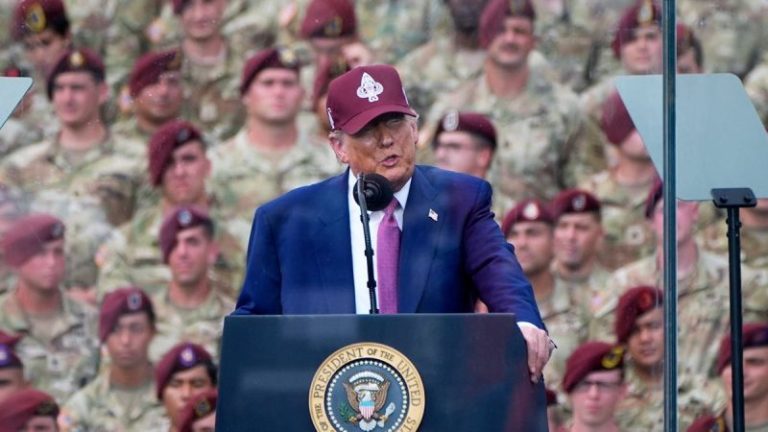
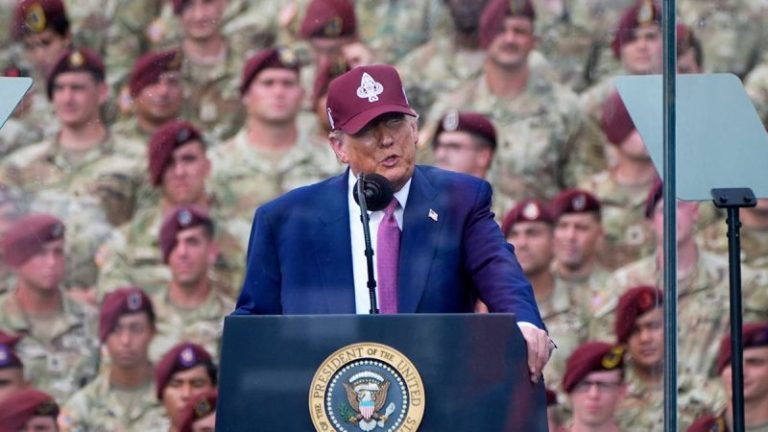
President Donald Trump on Friday signed his 200th executive order which authorized the Department of Defense to revert its name back to the ‘Department of War.’

Speaking from the Oval Office, Trump said the new name ‘sends a message of victory, a message of strength’ to the world.

‘It has to do with winning,’ the president went on. ‘We should have won every war. We could have won every war. But we really chose to be very politically correct or woke.’

‘We won the First World War, we won the Second World War, we won everything before that and in between. And then we decided to go woke and we changed the name to the Department of Defense. So, we’re going Department of War,’ he added.

Trump said the name is ‘a much more appropriate name, especially in light of where the world is right now.’

‘We have the strongest military in the world. We have the greatest equipment in the world. We have the greatest men. New factories of equipment, by far. There’s nobody to even compete,’ he said.

Turning to Defense Secretary Pete Hegseth, Trump said while smiling, ‘I’d like to ask our, secretary of war, to say a few words.’

Hegseth thanked Trump for signing the order, saying, the name change restores the ‘warrior ethos’ to America’s military.

‘After winning a War for Independence in 1789, George Washington established the War Department and Henry Knox was his first secretary of war. And this country won every major war after that … 150 years after that, we changed the name after World War Two from the Department of War to the Department of Defense in 1947 and as you pointed out, Mr. President, we haven’t won a major war since,’ said Hegseth.

 ‘This name change is not just about renaming, it’s about restoring,’ said the secretary. ‘Words matter. It’s restoring, as you’ve gotten us to, Mr. President, restoring the warrior ethos, restoring victory and clarity as an end state, restoring intentionality to the use of force.’  

Hegseth pledged the War Department ‘is going to fight decisively, not endless conflicts. It’s going to fight to win, not to lose. We’re going to go on offense, not just on defense. Maximum lethality, not tepid legality. Violent effect, not politically correct,’ he said, adding, ‘We’re going to raise up warriors, not just defenders. So, this War Department, Mr. President, just like America is back.’

The executive order calls for using the Department of War as a secondary title for the Department of Defense, along with phrases like ‘secretary of war’ for Hegseth, according to a White House fact sheet previously shared with Fox News Digital. 

It’s unclear if Congress, which has the authority to establish federal executive departments, will need to step in to issue final approval on the move. However, Trump expressed confidence the name will stick, saying, ‘We’re going with it, and we’re going with it very strongly … but we’ll put it before Congress.’

Fox News Digital’s Diana Stancy and Emma Colton contributed to this report.

This post appeared first on FOX NEWS

One of former President Joe Biden’s top spokespeople dismissed the fallout from the former president’s disastrous June 2024 debate performance during a closed-door interview with the House Oversight Committee that lasted over five hours.

Andrew Bates, who served as White House senior deputy press secretary and worked in Biden’s communications shop for nearly his entire term, said reactions to Biden’s debate against then-candidate Donald Trump were ‘overblown,’ according to a source familiar with his interview.

Bates ‘ultimately agreed with President Biden’s decision to drop out’ after viewing polling data the week Biden made his choice to drop his re-election bid, the source said.

A source close to Bates, however, said after he had time to process the then-president’s decision and a turn in public polling during the final week of Biden’s candidacy, he agreed Biden had made the right decision to withdraw.

He dismissed concerns about Biden’s age as a ‘polling problem,’ however, and wrote off Americans’ concerns about his age and abilities as the product of mainstream media and right-wing critics, according to the first source – similar to previous Biden allies in their closed-door interviews.

The former spokesman also described relatively infrequent interactions with Biden and allegedly said Biden only met with his press team a few times in a year.

‘He would see President Biden in person a little over once a month, but this could be anything from travel, going with him to the Hill or just seeing him in the hallway,’ the first source said.

But a former Biden White House staffer argued that the press secretary and the communications director were the default representatives of the press and communications team for daily meetings with the president.

Bates also allegedly told investigators he supported the sweeping, and controversial, pardon granted to Hunter Biden toward the end of the president’s term. 

The second source, however, said Bates told investigators that Biden conducted himself ‘honorably’ when asked whether any of his actions were done to benefit his son’s business dealings.

That pardon and the hundreds of other clemency orders signed by Biden are of particular interest to the House Oversight Committee.

Oversight Committee Republicans are investigating whether Biden’s top White House allies covered up signs of mental decline in the former president, and by extension, are looking into whether executive actions signed by autopen were executed with Biden’s full awareness and approval.

Biden himself told the New York Times recently that he made every clemency decision on his own.

His allies have also blasted the GOP-led probe as a partisan exercise.

During his opening statement, obtained by Fox News Digital, Bates defended Biden’s fitness for office while criticizing Trump’s own actions as president.

‘I was proud to support Joe Biden as President because we believe in the same values. In the White House, it was universally understood that Joe Biden was in charge. That is completely consistent with my personal experience with the President,’ Bates told House investigators, according to another source.

A House Oversight Committee spokesperson blasted Bates as ‘delusional’ and accused his opening statement of leaking to media before he read it in the room.

Fox News Digital reached out to Bates via his public relations firm Wolfpack Strategies, as well as his counsel, for further comment.

This post appeared first on FOX NEWS

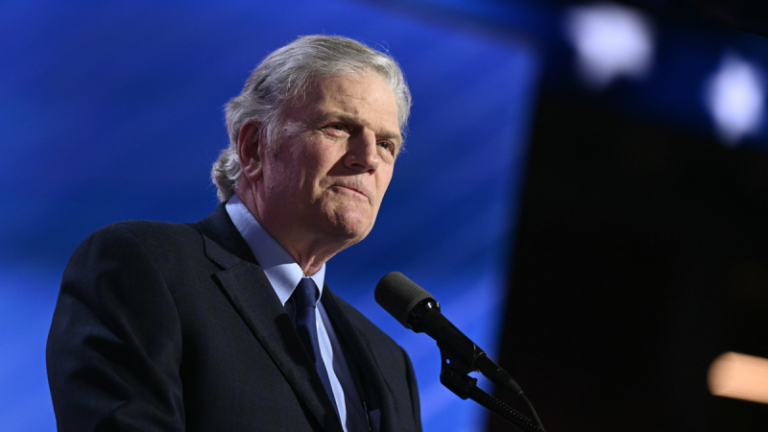
Reverend Franklin Graham, one of the nation’s most prominent Christian voices, is standing behind Vice President JD Vance after his profane rebuke of senators in a heated social media post over Health and Human Services Secretary Robert F. Kennedy Jr. 

In an exclusive statement to Fox News Digital, Graham acknowledged that while he admired Vance’s stand, the Vice President’s ‘salty’ choice of words could have been better.

Graham said in the statement: ‘We have had many vice presidents who have used salty language, but the point Vice President Vance was making is correct. Could he have used a better choice of words? In my opinion, yes; but I appreciate the vice president standing up for Secretary Kennedy who is trying to buck a very corrupt system and is trying to improve the health of the American people. God bless Secretary Kennedy and Vice President Vance.’

The exchange follows Vance’s viral X post declaring senators were ‘full of s—.’ Kennedy himself endorsed the message, one day after more than 1,000 current and former HHS employees called for Kennedy’s resignation.

The clash unfolded during a contentious Senate Finance Committee hearing on Thursday where Sen. Ron Wyden pressed Kennedy over health policies and accusations of promoting conspiracy theories. Kennedy pushed back, defending his record and policies aimed at challenging pharmaceutical companies.

Vance quickly jumped to Kennedy’s defense on X. ‘When I see all these senators trying to lecture and ‘gotcha’ Bobby Kennedy today all I can think is: You all support off-label, untested, and irreversible hormonal ‘therapies’ for children, mutilating our kids and enriching big pharma. You’re full of s— and everyone knows it,’ Vance wrote.

Kennedy reposted the comment, thanking him: ‘Thank you @JDVance. You put your finger squarely on the preeminent problem.’

That defense extended beyond Vance. White House press secretary Karoline Leavitt also backed Kennedy, framing Democrat criticism as proof that the secretary is ‘over the target’ in challenging entrenched interests.

This is not the first time Graham has weighed in on political leaders’ language. He previously urged President Donald Trump to cut down on his profanity. ‘Your storytelling is great, but it could be so much better if you didn’t use foul language,’ Graham wrote in a letter to Trump, citing Matthew 12:36: ‘I tell you, on the day of judgment people will give account for every careless word they speak.’

Graham ultimately closed his statement to Fox News Digital with a blessing: ‘God bless Secretary Kennedy and Vice President Vance.’ 

Representatives for Vice President Vance did not immediately respond to Fox News Digital’s request for comment.

Fox News’ Alexandra Koch contributed to this report.

This post appeared first on FOX NEWS

President Donald Trump wrapped up the week Friday signing an executive order to change the name of the Department of Defense to the Department of War. 

The executive order gives the green light to use the name ‘Department of War’ as a secondary title for the Department of Defense, along with terms like ‘secretary of war’ for Secretary of Defense Pete Hegseth, according to a White House fact sheet.

The order also calls for Hegseth to propose both legislative and executive actions to permanently cement the title as the U.S. Department of War.

Additionally, a White House official told Fox News Digital that implementing the order would mean making alterations to public-facing websites and office signage at the Pentagon. For example, one change on the horizon is renaming the public affairs briefing room the ‘Pentagon War Annex,’ the official said, noting other longer-term projects also will emerge. 

The U.S. previously used the Department of War title for its military agency until 1949, but modified it to the Department of Defense to align with multiple reforms included in the National Security Act of 1947.

Trump signaled in late August the change might happen. 

‘Everybody likes that we had an unbelievable history of victory when it was Department of War,’ Trump told reporters Aug. 25. ‘Then we changed it to Department of Defense.’

Here’s what also happened this week:

War on cartels

Trump also announced that the U.S. military strike against an alleged drug-laden Venezuelan boat in the southern Caribbean killed 11 suspected Tren de Aragua narco-terrorists Tuesday. 

Trump shared a video on social media Tuesday depicting the strike against the Venezuelan vessel, just days after he authorized sending three U.S. Navy guided missile destroyers to enhance the administration’s counternarcotics efforts in the region.

‘You had massive amounts of drugs,’ Trump told reporters Wednesday about the recent strike. ‘We have tapes of them speaking. It was massive amounts of drugs coming into our country to kill a lot of people. And everybody fully understands that fact. You see it, you see the bags of drugs all over the boat and they were hit.’

‘Obviously, they won’t be doing it again. And I think a lot of other people won’t be doing it again. When they watch that tape, they’re going to say, ‘Let’s not do this.’ We have to protect our country, and we’re going to. Venezuela has been a very bad actor.’

After the deployment of the destroyers, Maduro said Venezuela was ready to respond to any attacks and said the ship’s presence in the region was ‘an extravagant, unjustifiable, immoral and absolutely criminal and bloody threat.’

‘In the face of this maximum military pressure, we have declared maximum preparedness for the defense of Venezuela,’ Maduro said during a Monday press conference. 

Meanwhile, the Pentagon confirmed Thursday that two Venezuelan aircraft buzzed a U.S. Navy vessel in international waters. 

‘This highly provocative move was designed to interfere with our counter narco-terror operations,’ the Defense Department wrote in a statement posted to X. ‘The cartel running Venezuela is strongly advised not to pursue any further effort to obstruct, deter or interfere with counter-narcotics and counter-terror operations carried out by the U.S. military.’

Space Command HQ move 

Trump also unveiled plans Tuesday to move Space Command’s headquarters from Colorado to Alabama — putting an end to the controversy about where the command would be based. 

Space Command has been operating out of Peterson Space Force Base in Colorado Springs, Colorado, but Trump long has backed moving the command’s headquarters to Huntsville, Alabama. But in 2023, former President Joe Biden announced that the command would remain based in Colorado. 

‘The U.S. Space Command headquarters will move to the beautiful locale of a place called Huntsville, Alabama, forever to be known from this point forward as Rocket City,’ Trump told reporters Tuesday.

This post appeared first on FOX NEWS

Just over a year ago, Matthew Thomas Crooks nearly blew off President Trump’s head at a rally in Butler, Pennsylvania. Only by the grace of God did Crooks’ bullets miss their target by millimeters because President Trump had turned his head ever so slightly to look at an immigration chart. Crooks did manage to murder a rallygoer and seriously wound two others before the Secret Service killed him. Just under a year ago, Ryan Wesley Routh took his shot at President Trump, establishing a sniper’s nest at the Doral golf course where he knew the president would play later that day. Routh was a hole ahead of Trump when Secret Service agents spotted him. A gun battle followed, and Routh escaped, yet he was captured 50 miles away. He now sits in jail awaiting trial before Aileen Cannon, a superb federal judge.

While Cannon epitomizes the gold standard of the federal judiciary, Obama-appointed D.C. Chief District Judge Jeb Boasberg represents the garbage standard. Throughout the January 6 saga, Boasberg had no problem keeping defendants—even nonviolent ones—locked up before their trials, in part based on social media posts. He let off disgraced former FBI lawyer Kevin Clinesmith with probation after Clinesmith had altered an email to secure a surveillance warrant against former Trump campaign official Carter Page. Boasberg claimed that Clinesmith would receive punishment from the disciplinary authorities (the D.C. Bar) in the form of possible disbarment; yet, Clinesmith kept his license. Then, Boasberg made clear early in the second Trump administration that he was itching for a fight, expressing his baseless concern to Chief Justice John Roberts that President Trump and his subordinates would violate court orders.

This March, Boasberg instigated the fight he had longed for when he illegally ordered planes full of Tren de Aragua terrorists and vicious MS-13 gang members to turn around after they had departed for Honduras and El Salvador. This was an ongoing military operation. The planes would have been in danger trying to fly back over the Gulf of America with minimal fuel. Additionally, there were not the appropriate security resources in place in the United States to deal with the return of hundreds of foreign terrorists and violent gang members, unlike the situation in El Salvador and Honduras where the proper resources were in place. The planes did not turn around, and Boasberg ‘found’ probable cause to hold administration officials in contempt. A D.C. Circuit panel reversed; yet, Boasberg, undaunted by the smackdown he had received, mused at a hearing about disciplinary proceedings against Trump Justice Department lawyers before the jurisdictions in which they hold law licenses.

This past week, Boasberg has outdone himself. Nathalie Rose Jones is a nutcase from Indiana who is staying in New York City. She thinks that President Trump is a Nazi and a terrorist, and she blames him for the deaths caused by the coronavirus. Earlier this month, Jones posted on Facebook that ‘I am willing to sacrificially kill this POTUS by disemboweling him and cutting out his trachea with [former] U.S. Representative] Liz Cheney and all the affirmation present.’ Jones then told the Secret Service that she would kill President Trump at ‘the compound’ (presumably the White House) if she had to and that she had a bladed object to accomplish her ghastly goal. The next day, law enforcement arrested Jones at a protest that had begun at Dupont Circle and wound up near the White House.

A magistrate judge correctly ordered Jones detained without bail. It is hard to imagine a clearer case of someone who poses a danger, but Jones found an ally: Boasberg. He decided to send Jones back to New York with an ankle bracelet, and he ordered her to see a shrink. Boasberg found the case hard because Jones had not brought a gun. Never mind that Jones had referred to a bladed object that she had somewhere ready to kill President Trump. Never mind that guns are easy to procure, even for convicted felons who are prohibited from possessing them by federal law. Never mind that Jones could have returned to the White House at any time after the day that she showed up without a gun. Francisco Martin Duran, a former Army sergeant, gave no warnings before he showed up at the White House early in President Clinton’s first term and fired off dozens of shots outside the gate. These maniacs often strike without warning, as Crooks and Routh also did. Jones has telegraphed what she wants to do to President Trump, and still it is not enough for Boasberg.

Boasberg has established a pattern of utterly horrific judgment. After his illegal order in March, Congressman Brandon Gill of Texas filed an article of impeachment. It is time to move forward with that article—and add to it based on the Jones farce, as well as the revelation of Boasberg’s grossly improper comments to Chief Justice Roberts. President Trump is only alive thanks to divine intervention; a millimeter and a millisecond could have changed the course of history.

CLICK HERE TO DOWNLOAD THE FOX NEWS APP

Reckless robed partisans like Boasberg, however, do not appear to care about the danger the president faces.

Trump-deranged judge refuse to accept that he won the election, and they have put up roadblock after roadblock in an appalling effort to overturn the will of American voters. The disgrace of the Jones case is just the latest example. The time has come for the House to exercise its core Article I power and use a legal tool to curtail these judges: impeachment.

This post appeared first on FOX NEWS

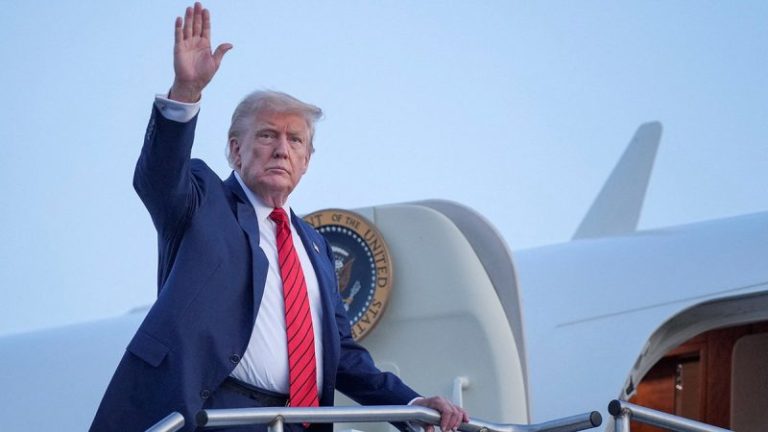
President Donald Trump has his sights on a new version of Air Force One as delays and cost overruns continue to plague Boeing’s long-awaited presidential aircraft replacements.

The most recent data from 2020 says at least 20 planes make up the executive fleet. A newly constructed plane has not been added in nearly 27 years. Some of the ones currently in service are expected to stay flying for another 13 years.

‘They’re not building the plane fast enough. I mean, they’re actually in default,’ Trump said about Boeing in a February interview with Sean Hannity.

Air Force One is used to designate any Air Force aircraft carrying the commander in chief. There are currently two highly customized Boeing aircraft that were deployed in 1990 when George H.W. Bush was president. The planes have since carried Presidents Bill Clinton, George W. Bush, Barack Obama, Trump, Joe Biden and now Trump once again.

‘I miss Air Force One,’ Bush said at an event for Veterans in 2014. ‘In eight years, they never lost my baggage.’

The two forthcoming Boeing planes have been plagued by delays due to the complex technology needed onboard Air Force One.

‘They’ve got to debug it, make sure there’s no signals intelligence risks. And I think just to make it secure against any potential military attacks. It was ironic for a long time. It was one of the Prince’s planes, which I think they were trying to sell. And now they’re giving it to the U.S., and it’s costing quite a bit to update,’ staff writer for the Free Press Jay Solomon said.

The Qatari jet is estimated to have a faster timeline than the two Boeing planes, but it still needs some of the same technology to make it Air Force One.

‘If you look at it just through economics, maybe it makes sense, but I still think the fact that we’re allowing a foreign country to gift something of that magnitude to a sitting president on top of all these other concerns,’ Soloman said. ‘I think it’s a risk, and it’s not a good look.’

Air Force One is required to have four engines, unlike most of today’s passenger planes which have two. Onboard is the highest level of classified communications and external protections against foreign surveillance. The planes are equipped with air-to-air refueling capabilities so they can fly for as long as is needed. Air Force One is built for the worst possible scenarios, like nuclear war, so that the president can still command military forces from the sky.

‘They’re extremely complex, and I’m not going to go into it, but they’re not like a normal plane. You know, it’s not like building a 747 normal,’ Trump said during his Middle East Trip on ‘Special Report’ in May.

Air Force officials say it is possible to add some of the security features to the Qatari jet, but it’s unlikely to have the full suite of technology by Trump’s February timeline.

‘Initially it was supposed to be like, maybe he’ll get it done by the end of his presidency,’ Solomon said.

Four modified Boeing 757s or C-32As are the newest planes in the executive fleet. Those were added in 1998 and 1999. The Air Force is studying potential replacement options, but the current planes will continue to fly until 2038. The aircraft are primarily used by the vice president, Cabinet members, members of Congress and other officials.

‘Even today and regardless of the airplane, we have to operate it differently based on the threat environment that even the current or any of the future aircraft will go into. Again, can’t talk in detail about that, but that is always a consideration,’ Air Force Secretary Troy Meink said during a June Senate Hearing. 

Air Force One isn’t the only aging plane; much of the executive fleet is more than two decades old. The aircraft have undergone modernization modifications, but officials have questioned the timeline for major updates as several incidents have taken place over the years.

In 2014, Obama was forced to switch planes during a campaign event in Philadelphia after a minor mechanical problem was reported on Air Force One.

In 2021, Vice President Kamala Harris’ plane requested an emergency return to Joint Base Andrews as she began her first foreign trip overseas to Guatemala and Mexico.

Most recently, Secretary of State Marco Rubio’s plane was forced to turn around while en route to Munich in February, after a mechanical issue.

The newest aircraft among the executive fleet are the Marine One Helicopters. Biden first rode in the newly designed Marine One in 2024 during the Democratic National Convention. Updating those took nearly two decades and in some cases replaced helicopters flying since the 1970s.

The Boeing 777X is expected to be the next new major commercial aircraft. It’s scheduled to enter service in 2026 after a nearly six-year delay with Lufthansa taking the first flight. The modernized plane is designed to have a folding wingtip, a touchscreen flight deck and wider cabin space.

This post appeared first on FOX NEWS

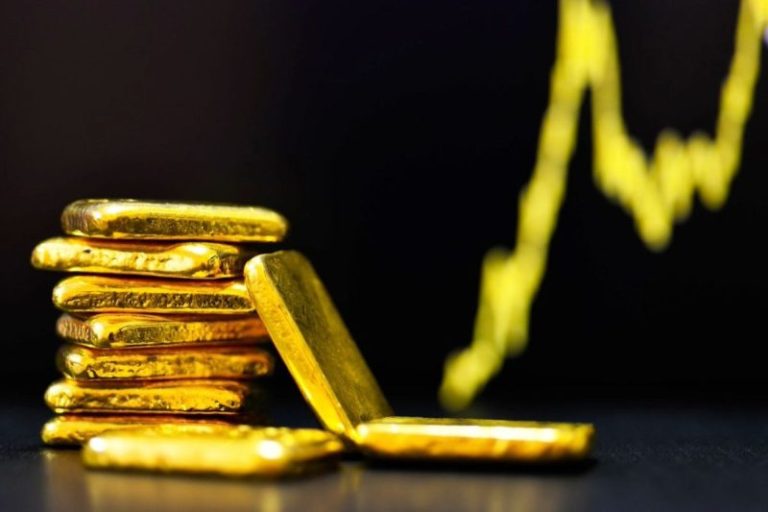
Gold’s record-breaking rise continued on Friday (September 5), with the price approaching US$3,600 per ounce.

After spending the summer months consolidating, the yellow metal began breaking out this week. It pushed through US$3,500 on Tuesday (September 5) and then kept rising, coming within less than a dollar of US$3,600 on Friday.

Gold price chart, August 29, 2025, to September 5, 2025.

Expectations that the US Federal Reserve will lower interest rates when it meets later this month are part of what’s driving gold’s move. The central bank hasn’t made a cut since December 2024, but comments made by Fed Chair Jerome Powell in a recent Jackson Hole, Wyoming, speech stoked anticipation among market participants.

US jobs data for August, released on Friday by the Bureau of Labor Statistics (BLS), has essentially locked in a downward move in rates. Nonfarm payrolls were up by 22,000, significantly lower than the 75,000 expected by economists.

Meanwhile, the country’s unemployment rate came in at 4.3 percent.

The report is the first to be released since US President Donald Trump fired Erika McEntarfer, former commissioner at the BLS. She was ousted after July jobs data came in lower than expected, and after major downward revisions to May and June jobs numbers. The latest BLS report also brought revisions — the July number was boosted by 6,000 to come in at 79,000, but June stands at a net loss of 13,000 after a downward revision of 27,000.

CME Group’s (NASDAQ:CME) FedWatch tool now shows a 90.2 percent probability of a 25 basis point rate cut in September, with a 9.8 percent probability of a 50 basis point reduction.

Target rate probabilities for September 17, 2025, Fed meeting.

Chart via CME Group.

Bond market turmoil also helped move the gold price this week.

Yields for 30 year US bonds rose to nearly 5 percent midway through the period, their highest level since mid-July, on the back of a variety of concerns, including tariffs, inflation and Fed independence.

Globally the situation was even more tumultuous, with 30 year UK bond yields reaching their highest point since 1998; meanwhile, 30 year bond yields for German, French and Dutch bonds rose to levels not seen since 2011.

In Japan, 30 year bond yields hit a record high.

Looking at gold’s path forward, experts agree that its prospects are bright, although what kicks off its next leg and how high it could go during this cycle remain to be seen. While rates are in focus as a key price mover right now, other potential drivers include a stock market correction and the return of western investors.

Watch six experts share their thoughts on gold’s next price trigger.

Elsewhere in the precious metals space, silver was trading at the US$41 per ounce level, down from its peak of around US$41.30 seen earlier in the week, but still at highs not seen since 2011.

Securities Disclosure: I, Charlotte McLeod, hold no direct investment interest in any company mentioned in this article.

This post appeared first on investingnews.com

(TheNewswire)

Brossard, Quebec TheNewswire – September 5, 2025 Charbone Hydrogen Corporation (TSXV: CH,OTC:CHHYF; OTCQB: CHHYF; FSE: K47) (the ‘Company’ or ‘CHARBONE ‘), a company focused on green hydrogen production and distribution, is pleased to announce it has signed, on September 4, 2025, an Asset Purchase Agreement to acquire operational hydrogen production and refuelling equipment in Quebec. The strategic acquisition will enable CHARBONE to fast-track the commissioning of CHARBONE’s flagship Sorel-Tracy facility phase 1 and empower CHARBONE to produce and deliver first industrial high purity hydrogen (UHP) sales in the upcoming quarter.

The equipment, currently in use will be dismantled, repurposed and relocated to Sorel-Tracy .

This transaction follows CHARBONE’s signing of a non-dilutive USD 50 million construction capital facility announced on May 1 and June 4, 2025. While this facility is earmarked for broader project financing rather than this equipment purchase, it demonstrates CHARBONE’s strengthened capital position and ability to scale up its overall development plan.

Key Investor Highlights

  • Accelerated Timeline : Repurposing proven operating equipment reduces installation costs of new equipment — enabling production by early Q4 2025

  • Selection Process : CHARBONE has been selected as the buyer of the equipment as the seller has accepted $1M in CHARBONE stock as part of a portion of the purchase price at an issue price equal to the market price of CHARBONE’s shares on the TSX Venture Exchange on the effective date plus a cash balance payable in 3 tranches payment , with one-third payment on the effective date and the remaining paid over two years — preserving cash for growth.

  • Operational Progress : Grid connection is completed; Hydro-Québec installed the energy meter on July 22, and completed the interconnection on August 13, while the Town of Sorel-Tracy completed the water connection to its main system, providing the site with the two elements needed for hydrogen production.

Private Placement Details

Additionally, CHARBONE is pleased to announce the sequential closings of its $1M non-brokered private placement (the ‘Equity Offering’). The Company has already secured $0.5 million to accelerate the completion of its flagship green hydrogen production facility in Sorel-Tracy, Quebec.

  • The initial tranche involved the issuance of 7,699,666 units. A second tranche for the remaining $0.5M is expected to close by October 15, 2025.

  • The proceeds from the Equity Offering will be primarily allocated to the Company’s purchase of the operating hydrogen equipment, re-installation at the Sorel-Tracy site, and infrastructure development, and general working capital requirements.

  • The closing of the Equity Offering remains subject to the approval of the TSX Venture Exchange and other customary closing conditions. The Company may close a second tranche in the coming days, but no later than October 15, 2025.  All securities issued under the Offering are subject to a statutory four-month and one-day hold period in Canada following the Closing Date

  • This news release does not constitute an offer to sell or a solicitation of an offer to buy, nor shall there be any sale of securities in any jurisdiction where such offer, solicitation, or sale would be unlawful, including in the United States. The securities have not been and will not be registered under the United States Securities Act of 1933, as amended (the 1933 Act ‘) or any applicable state securities laws and may not be offered or sold within the United States or to, or for the account or benefit of, U.S. Persons (as defined in Regulation S under the 1933 Act) unless registered under the 1933 Act and relevant state laws, or if an exemption from registration is available

CEO Comment

‘Investors have waited for Sorel-Tracy to move from development to revenue,’ said Dave Gagnon, President and CEO of CHARBONE. ‘By repurposing proven equipment — at a lower cost of a new build — and structuring the deal to preserve cash, we’re entering execution mode with strong capital backing and minimal dilution. He continues; This acquisition positions us to deliver green and high purity hydrogen (UHP) to our industrial customers quicker, and with best-in-class operating equipment.

Why This Matters

This acquisition signals a turning point for CHARBONE: after years of development, the company is positioned to deliver its first hydrogen revenues, leverage non-dilutive capital to scale, and capture early-mover advantages in the North American green hydrogen market.

About Charbone Hydrogen CORPORATION

CHARBONE is an integrated company specialized in Ultra High Purity (UHP) hydrogen and the strategic distribution of industrial gases in North America and the Asia-Pacific region. It is developing a modular network of green hydrogen production while partnering with industry players to supply helium and other specialty gases without the need to build costly new plants. This disciplined strategy diversifies revenue streams, reduces risks, and increases flexibility. The CHARBONE group is publicly listed in North America and Europe on the TSX Venture Exchange (TSXV: CH,OTC:CHHYF), the OTC Markets (OTCQB: CHHYF), and the Frankfurt Stock Exchange (FSE: K47). For more information, visit www.charbone.com .

Forward-Looking Statements

This news release contains statements that are ‘forward-looking information’ as defined under Canadian securities laws (‘forward-looking statements’). These forward-looking statements are often identified by words such as ‘intends’, ‘anticipates’, ‘expects’, ‘believes’, ‘plans’, ‘likely’, or similar words. The forward-looking statements reflect management’s expectations, estimates, or projections concerning future results or events, based on the opinions, assumptions and estimates considered reasonable by management at the date the statements are made. Although Charbone believes that the expectations reflected in the forward-looking statements are reasonable, forward-looking statements involve risks and uncertainties, and undue reliance should not be placed on forward-looking statements, as unknown or unpredictable factors could cause actual results to be materially different from those reflected in the forward-looking statements. The forward-looking statements may be affected by risks and uncertainties in the business of Charbone. These risks, uncertainties and assumptions include, but are not limited to, those described under ‘Risk Factors’ in the Corporation’s Filing Statement dated March 31, 2022, which is available on SEDAR at www.sedar.com; they could cause actual events or results to differ materially from those projected in any forward-looking statements.

Except as required under applicable securities legislation, Charbone undertakes no obligation to publicly update or revise forward-looking information.

Neither TSX Venture Exchange nor its Regulation Services Provider (as that term is defined in policies of the TSX Venture Exchange) accepts responsibility for the adequacy or accuracy of this release .

Contact Charbone Hydrogen Corporation

Telephone: +1 450 678 7171

Email: ir@charbone.com

Benoit Veilleux

CFO and Corporate Secretary

Copyright (c) 2025 TheNewswire – All rights reserved.

News Provided by TheNewsWire via QuoteMedia

This post appeared first on investingnews.com

Gold has long been considered a store of wealth, and the price of gold often makes its biggest gains during turbulent times as investors look for cover in this safe-haven asset.

The 21st century has so far been heavily marked by episodes of economic and sociopolitical upheaval. Uncertainty has pushed the precious metal to record highs as market participants seek its perceived security.

And each time the gold price rises, there are calls for even higher record-breaking levels.

Gold market gurus from Lynette Zang to Chris Blasi to Jordan Roy-Byrne have shared eye-popping predictions on the gold price that would intrigue any investor — gold bug or not.

Some have posited that the gold price may rise as high as US$4,000 or US$5,000 per ounce, and there are those who believe that US$10,000 gold or even US$40,000 gold could become a reality.

These impressive price predictions have investors wondering, what is gold’s all-time high (ATH)?

In the past year, gold has reached a new all-time high dozens of times. Find out what has driven it to these levels, plus how the gold price has moved historically and what has driven its performance in recent years.

In this article

    How is gold traded?

    Before discovering what the highest gold price ever was, it’s worth looking at how the precious metal is traded. Knowing the mechanics behind gold’s historical moves can help illuminate why and how its price changes.

    Gold bullion is traded in dollars and cents per ounce, with activity taking place worldwide at all hours, resulting in a live price for the metal. Investors trade gold in major commodities markets such as New York, London, Tokyo and Hong Kong. London is seen as the center of physical precious metals trading, including for silver. The COMEX division of the New York Mercantile Exchange is home to most paper trading.

    There are many popular ways to invest in gold. The first is through purchasing gold bullion products such as bullion bars, bullion coins and rounds. Physical gold is sold on the spot market, meaning that buyers pay a specific price per ounce for the metal and then have it delivered. In some parts of the world, such as India, buying gold in the form of jewelry is the largest and most traditional route to investing in gold.

    Another path to gold investment is paper trading, which is done through the gold futures market. Participants enter into gold futures contracts for the delivery of gold in the future at an agreed-upon price.

    In such contracts, two positions can be taken: a long position under which delivery of the metal is accepted or a short position to provide delivery of the metal. Paper trading as a means to invest in gold can provide investors with the flexibility to liquidate assets that aren’t available to those who possess physical gold bullion.

    One significant long-term advantage of trading in the paper market is that investors can benefit from gold’s safe-haven status without needing to store it. Furthermore, gold futures trading can offer more financial leverage in that it requires less capital than trading in the physical market.

    Interestingly, investors can also purchase physical gold via the futures market, but the process is complicated and lengthy and comes with a large investment and additional costs.

    Aside from those options, market participants can invest in gold through exchange-traded funds (ETFs). Investing in a gold ETF is similar to trading a gold stock on an exchange, and there are numerous gold ETF options to choose from. For instance, some ETFs focus solely on physical gold bullion, while others focus on gold futures contracts. Other gold ETFs center on gold-mining stocks or follow the gold spot price.

    It is important to understand that you will not own any physical gold when investing in an ETF — in general, even a gold ETF that tracks physical gold cannot be redeemed for tangible metal.

    With regards to the performance of gold versus trading stocks, gold has an interesting relationship with the stock market. The two often move in sync during “risk-on periods” when investors are bullish. On the flip side, they tend to become inversely correlated in times of volatility. There are a variety of options for investing in stocks, including gold mining stocks on the TSX and ASX, gold juniors, precious metals royalty companies and gold stocks that pay dividends.

    According to the World Gold Council, gold’s ability to decouple from the stock market during periods of stress makes it “unique amongst most hedges in the marketplace.” It is often during these times that gold outperforms the stock market. For that reason, it is often used as a portfolio diversifier to hedge against uncertainty.

    What was the highest gold price ever?

    The gold price peaked at US$3,599.61, its all-time high, during trading on September 5, 2025.

    What drove it to set this new ATH? Gold reached its new highest price following the release of unexpectedly weak US job data. Following the release, FedWatch’s odds for a 25 basis point rate cut at the upcoming US Federal Reserve meeting dropped from 99 to 90.2 percent, while odds of a 50 point drop jumped to 9.8 percent. The meeting will take place from September 16 to 17.

    Gold set new highs several times in the preceding week amid significant uncertainty in the US and global economies and surging gold ETF purchases.

    One significant driver came on August 29, when a US federal appeals court ruled that US President Donald Trump’s ‘liberation day’ tariffs, announced in April, are illegal, stating that only Congress has the power to enact widespread tariffs. The Trump administration is expected to appeal the ruling, which will go into effect on October 14.

    Stock markets fell during trading September 2, while treasury yields in the US and abroad rose significantly, providing tailwinds to the gold price. Gold was also boosted by the expectation of interest rate cuts by the US Federal Reserve at the September meeting.

    News surrounding the tariffs had previously led gold to reach multiple new highs back in April, as we dive into below.

    Gold price chart, December 31, 2024, to September 5, 2025.

    Why is the gold price setting new highs in 2025?

    This string of record-breaking highs this year are caused by several factors.

    Increased economic and geopolitical turmoil caused by the new Trump administration has been a tailwind for gold this year, as well as a weakening US dollar, sticky inflation in the country and increased safe haven gold demand.

    Since coming into office in late January, Trump has threatened or enacted tariffs on many countries, including blanket tariffs on longtime US allies Canada and Mexico and tariffs on the European Union. Trump has also implemented 25 percent tariffs on all steel and aluminum imports.

    The gold price set a string of new highs in the month of April amid high market volatility as markets reacted to tariff decisions from Trump and the escalating trade war between the US and China. By April 11, Trump had raised US tariffs on Chinese imports to 145 percent and China has raised its tariffs on US products to 125 percent.

    As for the effect of these widespread tariffs raising prices for the American populace, Trump has reiterated his sentiment that the US may need to go through a period of economic pain to enter a new ‘golden age’ of economic prosperity. Falling markets and a declining US dollar support gold, as did increased gold purchasing in China in response to US tariffs on the country. Elon Musk’s call to audit the gold holdings in Fort Knox has also brought attention to the yellow metal.

    What factors have driven the gold price in the last five years?

    Despite these recent runs, gold has seen its share of both peaks and troughs over the last decade. After remaining rangebound between US$1,100 and US$1,300 from 2014 to early 2019, gold pushed above US$1,500 in the second half of 2019 on a softer US dollar, rising geopolitical issues and a slowdown in economic growth.

    Gold’s first breach of the significant US$2,000 price level in mid-2020 was due in large part to economic uncertainty caused by the COVID-19 pandemic. To break through that barrier and reach what was then a record high, the yellow metal added more than US$500, or 32 percent, to its value in the first eight months of 2020.

    Gold price chart, August 31, 2020, to September 1, 2025.

    The gold price surpassed that level again in early 2022 as Russia’s invasion of Ukraine collided with rising inflation around the world, increasing the allure of safe-haven assets and pulling the yellow metal up to a price of US$2,074.60 on March 8, 2022. However, it fell throughout the rest of 2022, dropping below US$1,650 in October.

    Although it didn’t quite reach the level of volatility as the previous year, the gold price experienced drastic price changes in 2023 on the back of banking instability, high interest rates and the breakout of war in the Middle East.

    After central bank buying pushed the gold price up to the US$1,950.17 mark by the end of January, the US Federal Reserve’s 0.25 percent rate hike on February 1 sparked a retreat as the dollar and Treasury yields saw gains. The precious metal went on to fall to its lowest price level of the year at US$1,809.87 on February 23.

    The banking crisis that hit the US in early March caused a domino effect through the global financial system and led to the mid-March collapse of Credit Suisse, Switzerland’s second-largest bank. The gold price jumped to US$1,989.13 by March 15. The continued fallout in the global banking system throughout the second quarter of the year allowed gold to break above US$2,000 on April 3, and go on to flirt with a near-record high of US$2,049.92 on May 3.

    Those gains were tempered by the Fed’s ongoing rate hikes and improvements in the banking sector, resulting in a downward trend in the gold price throughout the remainder of the second quarter and throughout Q3. By October 4, gold had fallen to a low of US$1,820.01 and analysts expected the precious metal to drop below US$1,800.

    That was before the October 7 attacks by Hamas on Israel ignited legitimate fears of a much larger conflict erupting in the Middle East. Reacting to those fears, and to rising expectations that the Fed would begin to reverse course on interest rates, gold broke through the important psychological level of US$2,000 and closed at US$2,007.08 on October 27. As the fighting intensified, gold reached a then-new high of US$2,152.30 in intraday trading on December 3.

    That robust momentum in the spot gold price continued into 2024, chasing new highs on fears of a looming US recession, the promise of Fed rate cuts on the horizon, the worsening conflict in the Middle East and the tumultuous US presidential election year. By mid-March, gold was pushing up against the US$2,200 level.

    That record-setting momentum continued into the second quarter of 2024 when gold broke through US$2,400 in mid-April on strong central bank buying, sovereign debt concerns in China and investors expecting the Fed to start cutting interest rates. The precious metal went on to hit US$2,450.05 on May 20.

    Throughout the summer, the hits kept on coming.

    The global macro environment was highly bullish for gold in the lead up to the US election. Following the failed assassination attempt on Trump and a statement about coming interest rate cuts by Fed Chair Powell, the gold spot price hit a then new all-time high on July 16 at US$2,469.30. One week later, news that then-President Joe Biden would not seek re-election and would instead pass the baton to Vice President Kamala Harris eased some of the tension in the stock markets and strengthened the US dollar. This also pushed the price of gold down to US$2,387.99 on July 22, 2024.

    However, the bullish factors supporting gold remained in play, and the spot price for gold went on to breach US$2,500 on August 2 that year on a less than stellar US jobs report; it closed just above the US$2,440 level. A few weeks later, gold pushed past US$2,500 once again on August 16, closing above that level for the first time ever after the US Department of Commerce released data showing a fifth consecutive monthly decrease in a row for homebuilding.

    The news that the Chinese government issued new gold import quotas to banks in the country following a two month pause also helped fuel the gold price rally. Central bank gold buying has been a significant tailwind for the gold price this year, and China’s central bank has been one of the strongest buyers.

    Market watchers expected the Fed to cut interest rates by a quarter point at their September 2024 meeting, but news on September 12 that the regulators were still deciding between the expected cut or a larger half-point cut led gold prices on a rally that carried through into the next day, bringing gold prices near US$2,600.

    At the September 18 Fed meeting, the committee ultimately made the decision to cut rates by half a point, news that sent gold even higher. By September 20, it moved above US$2,600 and held above US$2,620.

    In October 2024, gold first breached the US$2,700 level and continued to higher on a variety of factors, including further rate cuts and economic data anticipation, the escalating conflict in the Middle East between Israel and Hezbollah, and economic stimulus in China — not to mention the very close race between the US presidential candidates.

    While the gold price fell following Trump’s win in early November and largely held under US$2,700 through the end of the year, it began trending upwards in 2025 to the new all-time high discussed earlier in the article.

    What’s next for the gold price?

    What’s next for the gold price is never an easy call to make. There are many factors to consider, but some of the most prevalent long-term drivers include economic expansion, market risk, opportunity cost and momentum.

    Economic expansion is one of the primary gold price contributors as it facilitates demand growth in several categories, including jewelry, technology and investment. As the World Gold Council explains, “This is particularly true in developing economies where gold is often used as a luxury item and a means to preserve wealth.”

    Market risk is also a prime catalyst for gold values as investors view the precious metal as the “ultimate safe haven,” and a hedge against currency depreciation, inflation and other systemic risks.

    Going forward, in addition to the Fed, inflation and geopolitical events, experts will be looking for cues from factors like supply and demand. In terms of supply, the world’s five top gold producers are China, Australia, Russia, Canada and the US. The consensus in the gold market is that major miners have not spent enough on gold exploration in recent years. Gold mine production has fallen from around 3,200 to 3,300 metric tons (MT) each year between 2018 and 2020 to around 3,000 to 3,100 MT each year between 2021 and 2023.

    On the demand side, China and India are the biggest buyers of physical gold, and are in a perpetual fight for the title of world’s largest gold consumer. That said, it’s worth noting that the last few years have brought a big rebound in central bank gold buying, which dropped to a record low in 2020, but reached a 55 year high of 1,136 MT in 2022.

    World Gold Council data shows 2024 central bank gold purchases came to 1,044.6 MT, marking the third year in a row above 1,000 MT. In H1 2025, the organization says gold purchases from central banks reached 415.1 MT.

    In addition to central bank moves, analysts are also watching for escalating tensions in the Middle East, a weakening US dollar, declining bond yields, and further interest rate cuts as factors that could push gold higher as investors look to secure their portfolios. “When it comes to outside factors that affect the market, it’s just tailwind after tailwind after tailwind. So I don’t really see the trend changing,” Coffin said.

    Joe Cavatoni, senior market strategist, Americas, at the World Gold Council, believes that market risk and uncertainty surrounding tariffs and continued demand from central banks are the main drivers of gold.

    Should you beware of gold price manipulation?

    It’s important for investors to be aware that gold price manipulation is a hot topic in the industry.

    In 2011, when gold hit what was then a record high, it dropped swiftly in just a few short years. This decline after three years of impressive gains led many in the gold sector to cry foul and point to manipulation.

    Early in 2015, 10 banks were hit in a US probe on precious metals manipulation.

    Evidence provided by Deutsche Bank (NYSE:DB) showed “smoking gun” proof that UBS Group (NYSE:UBS), HSBC Holdings (NYSE:HSBC), the Bank of Nova Scotia (TSX:BNS,NYSE:BNS and other firms were involved in rigging gold and silver rates in the market from 2007 to 2013. Not long after, the long-running London gold fix was replaced by the LBMA gold price in a bid to increase gold price transparency. The twice-a-day process, operated by the ICE Benchmark Administration, still involves a variety of banks collaborating to set the gold price, but the system is now electronic.

    Still, manipulation has by no means been eradicated, as a 2020 fine on JPMorgan Chase & Co. (NYSE:JPM) shows. The next year, chat logs were released in a spoofing trial for two former precious metals traders from the Bank of America’s (NYSE:BAC) Merrill Lynch unit. They show a trader bragging about how easy it is to manipulate the gold price.

    Gold market participants have consistently spoken out about manipulation. In mid-2020, Chris Marcus, founder of Arcadia Economics and author of the book “The Big Silver Short,” said that when gold fell back below the US$2,000 mark after hitting close to US$2,070, he saw similarities to what happened with the gold price in 2011.

    Marcus has been following the gold and silver markets with a focus specifically on price manipulation for nearly a decade. His advice? “Trust your gut. I believe we’re witnessing the ultimate ’emperor’s really naked’ moment. This isn’t complex financial analysis. Sometimes I think of it as the greatest hypnotic thought experiment in history.”

    Investor takeaway

    While we have the answer to what the highest gold price ever is as of now, it remains to be seen how high gold can climb, and if the precious metal can reach as high as US$5,000, US$10,000 or even US$40,000.

    Even so, many market participants believe gold is a must have in any investment profile, and there is little doubt investors will continue to see gold price action making headlines this year and beyond.

    Securities Disclosure: I, Lauren Kelly, hold no direct investment interest in any company mentioned in this article.

    This post appeared first on investingnews.com
    Purepoint Uranium Group Inc. (TSXV: PTU,OTC:PTUUF) (OTCQB: PTUUF) (‘Purepoint’ or the ‘Company’) announces the closing of the final tranche of its previously announced private placement (the ‘Private Placement’) comprising of a combination of:

    • 5,768,824 Saskatchewan charity flow through units (the ‘SK Flow Through Units‘) at a price of $0.65 per unit for aggregate gross proceeds of $3,749,735.60; and
    • 3,041,295 National charity flow through units (the ‘NT Flow Through Units‘, together with the SK Flow Through Units, the ‘Flow Through Units‘) at a price of $0.59 per unit for aggregate gross proceeds of $1,794,364.05.

    ‘This final tranche not only completes our raise but strengthens our alignment with IsoEnergy and reinforces our shared commitment to long-term uranium discovery in the Basin,’ said Chris Frostad, President & CEO of Purepoint. ‘With exploration now underway across several properties, this financing ensures we can move into the fall and winter seasons with both momentum and flexibility.’

    Each Flow-Through Unit consists of one common share in the capital of the Company to be issued on a ‘flow through’ basis pursuant to the Income Tax Act (Canada) and one common share purchase warrant (‘Warrant‘). Each Warrant entitles its holder to purchase one common share in the capital of the Company at an exercise price of $0.50 per share for a period of 24 months from the date of issue. Together with the first tranche of the Private Placement that closed on August 29, 2025, the Company has issued a total of 772,946 traditional flow through units, 5,768,824 SK Flow Through Units and 3,041,295 NT Flow Through Units for aggregate gross proceeds of $6,000,137.79.

    In connection with the closing of the final tranche of the Private Placement, the Company paid Ventum Financial Corp., Stephen Avenue Securities Inc., and Canaccord Genuity Corp. finders’ fees consisting of, in aggregate, $106,662.14 in cash and 264,111 non-transferable compensation warrants. Each compensation warrant entitles its holder to purchase one common share in the capital of the Company at an exercise price of $0.50 per share for a period of 24 months from the closing date.

    The proceeds of the Private Placement will be used for the exploration and advancement of the Company’s projects in the Athabasca Basin, Saskatchewan. All securities issued in connection with the closing of the final tranche of the Private Placement are subject to a four-month hold period pursuant to the applicable securities laws with an expiry date of January 6, 2026. The closing is subject to final acceptance by TSX Venture Exchange of the Private Placement.

    In connection with the Private Placement, IsoEnergy Ltd. (TSX: ISO) (OTCQX: ISENF) (‘IsoEnergy‘) acquired 2,531,646 SK Flow Through Units. Acquisition of the SK Flow Through Units by IsoEnergy is considered a ‘related party transaction’ pursuant to Multilateral Instrument 61-101 – Protection of Minority Security Holders in Special Transactions (‘MI 61-101‘). IsoEnergy is considered a related party of the Company under MI 61-101 by virtue of holding 10.6% of the issued and outstanding common shares of the Company on a non-diluted basis prior to its participation in the Private Placement. The Company was exempt from the requirements to obtain a formal valuation or minority shareholder approval in connection with IsoEnergy’s participation in the Private Placement in reliance of sections 5.5(a) and 5.7(1)(a) of MI 61-101. A material change report will be filed in connection with the participation of IsoEnergy in the Private Placement less than 21 days in advance of the closing of the Private Placement, which the Company deemed reasonable in the circumstances so as to be able to avail itself of potential financing opportunities and complete the Private Placement in an expeditious manner.

    Following completion of the Private Placement, IsoEnergy owns an aggregate of 9,864,980 Common Shares and 5,864,980 Warrants, representing approximately 12.57% of Purepoint’s issued and outstanding Common Shares on a non-diluted basis, and approximately 18.65% of Purepoint’s issued and outstanding Common Shares on a partially diluted basis, assuming full exercise of the Warrants held by IsoEnergy. While IsoEnergy currently has no plans or intentions with respect to the Purepoint securities, IsoEnergy may develop such plans or intentions in the future and, at such time, may from time to time acquire additional securities, dispose of some or all of the existing or additional securities or may continue to hold the Common Shares, Warrants or other securities of Purepoint based on market conditions, general economic and industry conditions, trading prices of Purepoint’s securities, Purepoint’s business, financial condition and prospects and/or other relevant factors. A copy of the early warning report filed by IsoEnergy will be available under Purepoint’s profile on SEDAR+ at www.sedarplus.ca or by contacting Graham du Preez, Chief Financial Officer of IsoEnergy, at 306-373-6399. IsoEnergy’s head office is located at 217 Queen St. West, Suite 401, Toronto, Ontario, M5V 0R2.

    About Purepoint

    Purepoint Uranium Group Inc. (TSXV: PTU,OTC:PTUUF) (OTCQB: PTUUF) is a focused explorer with a dynamic portfolio of advanced projects within the renowned Athabasca Basin in Canada. Highly prospective uranium projects are actively operated on behalf of partnerships with industry leaders including Cameco Corporation, Orano Canada Inc. and IsoEnergy Ltd.

    Additionally, the Company holds a promising VHMS project currently optioned to and strategically positioned adjacent to and on trend with Foran Corporation’s McIlvena Bay project. Through a robust and proactive exploration strategy, Purepoint is solidifying its position as a leading explorer in one of the globe’s most significant uranium districts.

    For more information, please contact:

    Chris Frostad, President & CEO
    Phone: (416) 603-8368
    Email: cfrostad@purepoint.ca

    For additional information please visit our new website at https://purepoint.ca, our Twitter feed: @PurepointU3O8 or our LinkedIn page @Purepoint-Uranium.

    Neither the Exchange nor its Regulation Services Provider (as that term is defined in the policies of the Exchange) accepts responsibility for the adequacy or accuracy of this Press release.

    Disclosure regarding forward-looking statements

    This news release contains ‘forward-looking information’ within the meaning of applicable Canadian securities legislation. ‘Forward-looking information’ includes, but is not limited to, statements with respect to the activities, events or developments that the Company expects or anticipates will or may occur in the future, including the Company’s anticipated use of proceeds from the Private Placement. Generally, but not always, forward-looking information and statements can be identified by the use of words such as ‘plans’, ‘expects’, ‘is expected’, ‘budget’, ‘scheduled’, ‘estimates’, ‘forecasts’, ‘intends’, ‘anticipates’, or ‘believes’ or the negative connotation thereof or variations of such words and phrases or state that certain actions, events or results ‘may’, ‘could’, ‘would’, ‘might’ or ‘will be taken’, ‘occur’ or ‘be achieved’ or the negative connotation thereof.

    Such forward-looking information and statements are based on numerous assumptions, including among others, that the Company’s planned exploration activities will be completed in a timely manner, the Company will use the proceeds of the Private Placement as anticipated, and the Company will receive final regulatory approval with respect to the Private Placement. Although the assumptions made by the Company in providing forward-looking information or making forward-looking statements are considered reasonable by management at the time, there can be no assurance that such assumptions will prove to be accurate. Important factors that could cause actual results to differ materially from the Company’s plans or expectations include the risk that the Company may not use the proceeds of the Private Placement as anticipated, the risk that the Company may not receive final regulatory approval with respect to the Private Placement, the risk relating to the tax treatment of flow-through shares, the risk relating to the actual results of current exploration activities, fluctuating uranium prices, possibility of equipment breakdowns and delays, exploration cost overruns, general economic, market or business conditions, regulatory changes, timeliness of government or regulatory approvals and other risks detailed from time to time in the filings made by the Company with securities regulators.

    Although the Company has attempted to identify important factors that could cause actual results to differ materially from those contained in the forward-looking information or implied by forward-looking information, there may be other factors that cause results not to be as anticipated, estimated or intended. There can be no assurance that forward-looking information and statements will prove to be accurate, as actual results and future events could differ materially from those anticipated, estimated or intended. Accordingly, readers should not place undue reliance on forward-looking statements or information. The Company expressly disclaims any intention or obligation to update or revise any forward-looking statements whether as a result of new information, future events or otherwise except as otherwise required by applicable securities legislation.

    For Immediate Release – Not for Dissemination in the United States or through U.S. Newswire Services

    To view the source version of this press release, please visit https://www.newsfilecorp.com/release/265309

    News Provided by Newsfile via QuoteMedia

    This post appeared first on investingnews.com