Author

admin

Browsing

Gold has long been considered a store of wealth, and the price of gold often makes its biggest gains during turbulent times as investors look for cover in this safe-haven asset.

The 21st century has so far been heavily marked by episodes of economic and sociopolitical upheaval. Uncertainty has pushed the precious metal to record highs as market participants seek its perceived security.

And each time the gold price rises, there are calls for even higher record-breaking levels.

Gold market gurus from Lynette Zang to Chris Blasi to Jordan Roy-Byrne have shared eye-popping predictions on the gold price that would intrigue any investor — gold bug or not.

Some have posited that the gold price may rise as high as US$4,000 or US$5,000 per ounce, and there are those who believe that US$10,000 gold or even US$40,000 gold could become a reality.

These impressive price predictions have investors wondering, what is gold’s all-time high (ATH)?

In the past year, gold has reached a new all-time high dozens of times. Find out what has driven it to these levels, plus how the gold price has moved historically and what has driven its performance in recent years.

In this article

    How is gold traded?

    Before discovering what the highest gold price ever was, it’s worth looking at how the precious metal is traded. Knowing the mechanics behind gold’s historical moves can help illuminate why and how its price changes.

    Gold bullion is traded in dollars and cents per ounce, with activity taking place worldwide at all hours, resulting in a live price for the metal. Investors trade gold in major commodities markets such as New York, London, Tokyo and Hong Kong. London is seen as the center of physical precious metals trading, including for silver. The COMEX division of the New York Mercantile Exchange is home to most paper trading.

    There are many popular ways to invest in gold. The first is through purchasing gold bullion products such as bullion bars, bullion coins and rounds. Physical gold is sold on the spot market, meaning that buyers pay a specific price per ounce for the metal and then have it delivered. In some parts of the world, such as India, buying gold in the form of jewelry is the largest and most traditional route to investing in gold.

    Another path to gold investment is paper trading, which is done through the gold futures market. Participants enter into gold futures contracts for the delivery of gold in the future at an agreed-upon price.

    In such contracts, two positions can be taken: a long position under which delivery of the metal is accepted or a short position to provide delivery of the metal. Paper trading as a means to invest in gold can provide investors with the flexibility to liquidate assets that aren’t available to those who possess physical gold bullion.

    One significant long-term advantage of trading in the paper market is that investors can benefit from gold’s safe-haven status without needing to store it. Furthermore, gold futures trading can offer more financial leverage in that it requires less capital than trading in the physical market.

    Interestingly, investors can also purchase physical gold via the futures market, but the process is complicated and lengthy and comes with a large investment and additional costs.

    Aside from those options, market participants can invest in gold through exchange-traded funds (ETFs). Investing in a gold ETF is similar to trading a gold stock on an exchange, and there are numerous gold ETF options to choose from. For instance, some ETFs focus solely on physical gold bullion, while others focus on gold futures contracts. Other gold ETFs center on gold-mining stocks or follow the gold spot price.

    It is important to understand that you will not own any physical gold when investing in an ETF — in general, even a gold ETF that tracks physical gold cannot be redeemed for tangible metal.

    With regards to the performance of gold versus trading stocks, gold has an interesting relationship with the stock market. The two often move in sync during “risk-on periods” when investors are bullish. On the flip side, they tend to become inversely correlated in times of volatility. There are a variety of options for investing in stocks, including gold mining stocks on the TSX and ASX, gold juniors, precious metals royalty companies and gold stocks that pay dividends.

    According to the World Gold Council, gold’s ability to decouple from the stock market during periods of stress makes it “unique amongst most hedges in the marketplace.” It is often during these times that gold outperforms the stock market. For that reason, it is often used as a portfolio diversifier to hedge against uncertainty.

    What was the highest gold price ever?

    The gold price peaked at US$3,599.61, its all-time high, during trading on September 5, 2025.

    What drove it to set this new ATH? Gold reached its new highest price following the release of unexpectedly weak US job data. Following the release, FedWatch’s odds for a 25 basis point rate cut at the upcoming US Federal Reserve meeting dropped from 99 to 90.2 percent, while odds of a 50 point drop jumped to 9.8 percent. The meeting will take place from September 16 to 17.

    Gold set new highs several times in the preceding week amid significant uncertainty in the US and global economies and surging gold ETF purchases.

    One significant driver came on August 29, when a US federal appeals court ruled that US President Donald Trump’s ‘liberation day’ tariffs, announced in April, are illegal, stating that only Congress has the power to enact widespread tariffs. The Trump administration is expected to appeal the ruling, which will go into effect on October 14.

    Stock markets fell during trading September 2, while treasury yields in the US and abroad rose significantly, providing tailwinds to the gold price. Gold was also boosted by the expectation of interest rate cuts by the US Federal Reserve at the September meeting.

    News surrounding the tariffs had previously led gold to reach multiple new highs back in April, as we dive into below.

    Gold price chart, December 31, 2024, to September 5, 2025.

    Why is the gold price setting new highs in 2025?

    This string of record-breaking highs this year are caused by several factors.

    Increased economic and geopolitical turmoil caused by the new Trump administration has been a tailwind for gold this year, as well as a weakening US dollar, sticky inflation in the country and increased safe haven gold demand.

    Since coming into office in late January, Trump has threatened or enacted tariffs on many countries, including blanket tariffs on longtime US allies Canada and Mexico and tariffs on the European Union. Trump has also implemented 25 percent tariffs on all steel and aluminum imports.

    The gold price set a string of new highs in the month of April amid high market volatility as markets reacted to tariff decisions from Trump and the escalating trade war between the US and China. By April 11, Trump had raised US tariffs on Chinese imports to 145 percent and China has raised its tariffs on US products to 125 percent.

    As for the effect of these widespread tariffs raising prices for the American populace, Trump has reiterated his sentiment that the US may need to go through a period of economic pain to enter a new ‘golden age’ of economic prosperity. Falling markets and a declining US dollar support gold, as did increased gold purchasing in China in response to US tariffs on the country. Elon Musk’s call to audit the gold holdings in Fort Knox has also brought attention to the yellow metal.

    What factors have driven the gold price in the last five years?

    Despite these recent runs, gold has seen its share of both peaks and troughs over the last decade. After remaining rangebound between US$1,100 and US$1,300 from 2014 to early 2019, gold pushed above US$1,500 in the second half of 2019 on a softer US dollar, rising geopolitical issues and a slowdown in economic growth.

    Gold’s first breach of the significant US$2,000 price level in mid-2020 was due in large part to economic uncertainty caused by the COVID-19 pandemic. To break through that barrier and reach what was then a record high, the yellow metal added more than US$500, or 32 percent, to its value in the first eight months of 2020.

    Gold price chart, August 31, 2020, to September 1, 2025.

    The gold price surpassed that level again in early 2022 as Russia’s invasion of Ukraine collided with rising inflation around the world, increasing the allure of safe-haven assets and pulling the yellow metal up to a price of US$2,074.60 on March 8, 2022. However, it fell throughout the rest of 2022, dropping below US$1,650 in October.

    Although it didn’t quite reach the level of volatility as the previous year, the gold price experienced drastic price changes in 2023 on the back of banking instability, high interest rates and the breakout of war in the Middle East.

    After central bank buying pushed the gold price up to the US$1,950.17 mark by the end of January, the US Federal Reserve’s 0.25 percent rate hike on February 1 sparked a retreat as the dollar and Treasury yields saw gains. The precious metal went on to fall to its lowest price level of the year at US$1,809.87 on February 23.

    The banking crisis that hit the US in early March caused a domino effect through the global financial system and led to the mid-March collapse of Credit Suisse, Switzerland’s second-largest bank. The gold price jumped to US$1,989.13 by March 15. The continued fallout in the global banking system throughout the second quarter of the year allowed gold to break above US$2,000 on April 3, and go on to flirt with a near-record high of US$2,049.92 on May 3.

    Those gains were tempered by the Fed’s ongoing rate hikes and improvements in the banking sector, resulting in a downward trend in the gold price throughout the remainder of the second quarter and throughout Q3. By October 4, gold had fallen to a low of US$1,820.01 and analysts expected the precious metal to drop below US$1,800.

    That was before the October 7 attacks by Hamas on Israel ignited legitimate fears of a much larger conflict erupting in the Middle East. Reacting to those fears, and to rising expectations that the Fed would begin to reverse course on interest rates, gold broke through the important psychological level of US$2,000 and closed at US$2,007.08 on October 27. As the fighting intensified, gold reached a then-new high of US$2,152.30 in intraday trading on December 3.

    That robust momentum in the spot gold price continued into 2024, chasing new highs on fears of a looming US recession, the promise of Fed rate cuts on the horizon, the worsening conflict in the Middle East and the tumultuous US presidential election year. By mid-March, gold was pushing up against the US$2,200 level.

    That record-setting momentum continued into the second quarter of 2024 when gold broke through US$2,400 in mid-April on strong central bank buying, sovereign debt concerns in China and investors expecting the Fed to start cutting interest rates. The precious metal went on to hit US$2,450.05 on May 20.

    Throughout the summer, the hits kept on coming.

    The global macro environment was highly bullish for gold in the lead up to the US election. Following the failed assassination attempt on Trump and a statement about coming interest rate cuts by Fed Chair Powell, the gold spot price hit a then new all-time high on July 16 at US$2,469.30. One week later, news that then-President Joe Biden would not seek re-election and would instead pass the baton to Vice President Kamala Harris eased some of the tension in the stock markets and strengthened the US dollar. This also pushed the price of gold down to US$2,387.99 on July 22, 2024.

    However, the bullish factors supporting gold remained in play, and the spot price for gold went on to breach US$2,500 on August 2 that year on a less than stellar US jobs report; it closed just above the US$2,440 level. A few weeks later, gold pushed past US$2,500 once again on August 16, closing above that level for the first time ever after the US Department of Commerce released data showing a fifth consecutive monthly decrease in a row for homebuilding.

    The news that the Chinese government issued new gold import quotas to banks in the country following a two month pause also helped fuel the gold price rally. Central bank gold buying has been a significant tailwind for the gold price this year, and China’s central bank has been one of the strongest buyers.

    Market watchers expected the Fed to cut interest rates by a quarter point at their September 2024 meeting, but news on September 12 that the regulators were still deciding between the expected cut or a larger half-point cut led gold prices on a rally that carried through into the next day, bringing gold prices near US$2,600.

    At the September 18 Fed meeting, the committee ultimately made the decision to cut rates by half a point, news that sent gold even higher. By September 20, it moved above US$2,600 and held above US$2,620.

    In October 2024, gold first breached the US$2,700 level and continued to higher on a variety of factors, including further rate cuts and economic data anticipation, the escalating conflict in the Middle East between Israel and Hezbollah, and economic stimulus in China — not to mention the very close race between the US presidential candidates.

    While the gold price fell following Trump’s win in early November and largely held under US$2,700 through the end of the year, it began trending upwards in 2025 to the new all-time high discussed earlier in the article.

    What’s next for the gold price?

    What’s next for the gold price is never an easy call to make. There are many factors to consider, but some of the most prevalent long-term drivers include economic expansion, market risk, opportunity cost and momentum.

    Economic expansion is one of the primary gold price contributors as it facilitates demand growth in several categories, including jewelry, technology and investment. As the World Gold Council explains, “This is particularly true in developing economies where gold is often used as a luxury item and a means to preserve wealth.”

    Market risk is also a prime catalyst for gold values as investors view the precious metal as the “ultimate safe haven,” and a hedge against currency depreciation, inflation and other systemic risks.

    Going forward, in addition to the Fed, inflation and geopolitical events, experts will be looking for cues from factors like supply and demand. In terms of supply, the world’s five top gold producers are China, Australia, Russia, Canada and the US. The consensus in the gold market is that major miners have not spent enough on gold exploration in recent years. Gold mine production has fallen from around 3,200 to 3,300 metric tons (MT) each year between 2018 and 2020 to around 3,000 to 3,100 MT each year between 2021 and 2023.

    On the demand side, China and India are the biggest buyers of physical gold, and are in a perpetual fight for the title of world’s largest gold consumer. That said, it’s worth noting that the last few years have brought a big rebound in central bank gold buying, which dropped to a record low in 2020, but reached a 55 year high of 1,136 MT in 2022.

    World Gold Council data shows 2024 central bank gold purchases came to 1,044.6 MT, marking the third year in a row above 1,000 MT. In H1 2025, the organization says gold purchases from central banks reached 415.1 MT.

    In addition to central bank moves, analysts are also watching for escalating tensions in the Middle East, a weakening US dollar, declining bond yields, and further interest rate cuts as factors that could push gold higher as investors look to secure their portfolios. “When it comes to outside factors that affect the market, it’s just tailwind after tailwind after tailwind. So I don’t really see the trend changing,” Coffin said.

    Joe Cavatoni, senior market strategist, Americas, at the World Gold Council, believes that market risk and uncertainty surrounding tariffs and continued demand from central banks are the main drivers of gold.

    Should you beware of gold price manipulation?

    It’s important for investors to be aware that gold price manipulation is a hot topic in the industry.

    In 2011, when gold hit what was then a record high, it dropped swiftly in just a few short years. This decline after three years of impressive gains led many in the gold sector to cry foul and point to manipulation.

    Early in 2015, 10 banks were hit in a US probe on precious metals manipulation.

    Evidence provided by Deutsche Bank (NYSE:DB) showed “smoking gun” proof that UBS Group (NYSE:UBS), HSBC Holdings (NYSE:HSBC), the Bank of Nova Scotia (TSX:BNS,NYSE:BNS and other firms were involved in rigging gold and silver rates in the market from 2007 to 2013. Not long after, the long-running London gold fix was replaced by the LBMA gold price in a bid to increase gold price transparency. The twice-a-day process, operated by the ICE Benchmark Administration, still involves a variety of banks collaborating to set the gold price, but the system is now electronic.

    Still, manipulation has by no means been eradicated, as a 2020 fine on JPMorgan Chase & Co. (NYSE:JPM) shows. The next year, chat logs were released in a spoofing trial for two former precious metals traders from the Bank of America’s (NYSE:BAC) Merrill Lynch unit. They show a trader bragging about how easy it is to manipulate the gold price.

    Gold market participants have consistently spoken out about manipulation. In mid-2020, Chris Marcus, founder of Arcadia Economics and author of the book “The Big Silver Short,” said that when gold fell back below the US$2,000 mark after hitting close to US$2,070, he saw similarities to what happened with the gold price in 2011.

    Marcus has been following the gold and silver markets with a focus specifically on price manipulation for nearly a decade. His advice? “Trust your gut. I believe we’re witnessing the ultimate ’emperor’s really naked’ moment. This isn’t complex financial analysis. Sometimes I think of it as the greatest hypnotic thought experiment in history.”

    Investor takeaway

    While we have the answer to what the highest gold price ever is as of now, it remains to be seen how high gold can climb, and if the precious metal can reach as high as US$5,000, US$10,000 or even US$40,000.

    Even so, many market participants believe gold is a must have in any investment profile, and there is little doubt investors will continue to see gold price action making headlines this year and beyond.

    Securities Disclosure: I, Lauren Kelly, hold no direct investment interest in any company mentioned in this article.


    This post appeared first on investingnews.com

    Purepoint Uranium Group Inc. (TSXV: PTU,OTC:PTUUF) (OTCQB: PTUUF) (‘Purepoint’ or the ‘Company’) announces the closing of the final tranche of its previously announced private placement (the ‘Private Placement’) comprising of a combination of:

    • 5,768,824 Saskatchewan charity flow through units (the ‘SK Flow Through Units‘) at a price of $0.65 per unit for aggregate gross proceeds of $3,749,735.60; and
    • 3,041,295 National charity flow through units (the ‘NT Flow Through Units‘, together with the SK Flow Through Units, the ‘Flow Through Units‘) at a price of $0.59 per unit for aggregate gross proceeds of $1,794,364.05.

    ‘This final tranche not only completes our raise but strengthens our alignment with IsoEnergy and reinforces our shared commitment to long-term uranium discovery in the Basin,’ said Chris Frostad, President & CEO of Purepoint. ‘With exploration now underway across several properties, this financing ensures we can move into the fall and winter seasons with both momentum and flexibility.’

    Each Flow-Through Unit consists of one common share in the capital of the Company to be issued on a ‘flow through’ basis pursuant to the Income Tax Act (Canada) and one common share purchase warrant (‘Warrant‘). Each Warrant entitles its holder to purchase one common share in the capital of the Company at an exercise price of $0.50 per share for a period of 24 months from the date of issue. Together with the first tranche of the Private Placement that closed on August 29, 2025, the Company has issued a total of 772,946 traditional flow through units, 5,768,824 SK Flow Through Units and 3,041,295 NT Flow Through Units for aggregate gross proceeds of $6,000,137.79.

    In connection with the closing of the final tranche of the Private Placement, the Company paid Ventum Financial Corp., Stephen Avenue Securities Inc., and Canaccord Genuity Corp. finders’ fees consisting of, in aggregate, $106,662.14 in cash and 264,111 non-transferable compensation warrants. Each compensation warrant entitles its holder to purchase one common share in the capital of the Company at an exercise price of $0.50 per share for a period of 24 months from the closing date.

    The proceeds of the Private Placement will be used for the exploration and advancement of the Company’s projects in the Athabasca Basin, Saskatchewan. All securities issued in connection with the closing of the final tranche of the Private Placement are subject to a four-month hold period pursuant to the applicable securities laws with an expiry date of January 6, 2026. The closing is subject to final acceptance by TSX Venture Exchange of the Private Placement.

    In connection with the Private Placement, IsoEnergy Ltd. (TSX: ISO) (OTCQX: ISENF) (‘IsoEnergy‘) acquired 2,531,646 SK Flow Through Units. Acquisition of the SK Flow Through Units by IsoEnergy is considered a ‘related party transaction’ pursuant to Multilateral Instrument 61-101 – Protection of Minority Security Holders in Special Transactions (‘MI 61-101‘). IsoEnergy is considered a related party of the Company under MI 61-101 by virtue of holding 10.6% of the issued and outstanding common shares of the Company on a non-diluted basis prior to its participation in the Private Placement. The Company was exempt from the requirements to obtain a formal valuation or minority shareholder approval in connection with IsoEnergy’s participation in the Private Placement in reliance of sections 5.5(a) and 5.7(1)(a) of MI 61-101. A material change report will be filed in connection with the participation of IsoEnergy in the Private Placement less than 21 days in advance of the closing of the Private Placement, which the Company deemed reasonable in the circumstances so as to be able to avail itself of potential financing opportunities and complete the Private Placement in an expeditious manner.

    Following completion of the Private Placement, IsoEnergy owns an aggregate of 9,864,980 Common Shares and 5,864,980 Warrants, representing approximately 12.57% of Purepoint’s issued and outstanding Common Shares on a non-diluted basis, and approximately 18.65% of Purepoint’s issued and outstanding Common Shares on a partially diluted basis, assuming full exercise of the Warrants held by IsoEnergy. While IsoEnergy currently has no plans or intentions with respect to the Purepoint securities, IsoEnergy may develop such plans or intentions in the future and, at such time, may from time to time acquire additional securities, dispose of some or all of the existing or additional securities or may continue to hold the Common Shares, Warrants or other securities of Purepoint based on market conditions, general economic and industry conditions, trading prices of Purepoint’s securities, Purepoint’s business, financial condition and prospects and/or other relevant factors. A copy of the early warning report filed by IsoEnergy will be available under Purepoint’s profile on SEDAR+ at www.sedarplus.ca or by contacting Graham du Preez, Chief Financial Officer of IsoEnergy, at 306-373-6399. IsoEnergy’s head office is located at 217 Queen St. West, Suite 401, Toronto, Ontario, M5V 0R2.

    About Purepoint

    Purepoint Uranium Group Inc. (TSXV: PTU,OTC:PTUUF) (OTCQB: PTUUF) is a focused explorer with a dynamic portfolio of advanced projects within the renowned Athabasca Basin in Canada. Highly prospective uranium projects are actively operated on behalf of partnerships with industry leaders including Cameco Corporation, Orano Canada Inc. and IsoEnergy Ltd.

    Additionally, the Company holds a promising VHMS project currently optioned to and strategically positioned adjacent to and on trend with Foran Corporation’s McIlvena Bay project. Through a robust and proactive exploration strategy, Purepoint is solidifying its position as a leading explorer in one of the globe’s most significant uranium districts.

    For more information, please contact:

    Chris Frostad, President & CEO
    Phone: (416) 603-8368
    Email: cfrostad@purepoint.ca

    For additional information please visit our new website at https://purepoint.ca, our Twitter feed: @PurepointU3O8 or our LinkedIn page @Purepoint-Uranium.

    Neither the Exchange nor its Regulation Services Provider (as that term is defined in the policies of the Exchange) accepts responsibility for the adequacy or accuracy of this Press release.

    Disclosure regarding forward-looking statements

    This news release contains ‘forward-looking information’ within the meaning of applicable Canadian securities legislation. ‘Forward-looking information’ includes, but is not limited to, statements with respect to the activities, events or developments that the Company expects or anticipates will or may occur in the future, including the Company’s anticipated use of proceeds from the Private Placement. Generally, but not always, forward-looking information and statements can be identified by the use of words such as ‘plans’, ‘expects’, ‘is expected’, ‘budget’, ‘scheduled’, ‘estimates’, ‘forecasts’, ‘intends’, ‘anticipates’, or ‘believes’ or the negative connotation thereof or variations of such words and phrases or state that certain actions, events or results ‘may’, ‘could’, ‘would’, ‘might’ or ‘will be taken’, ‘occur’ or ‘be achieved’ or the negative connotation thereof.

    Such forward-looking information and statements are based on numerous assumptions, including among others, that the Company’s planned exploration activities will be completed in a timely manner, the Company will use the proceeds of the Private Placement as anticipated, and the Company will receive final regulatory approval with respect to the Private Placement. Although the assumptions made by the Company in providing forward-looking information or making forward-looking statements are considered reasonable by management at the time, there can be no assurance that such assumptions will prove to be accurate. Important factors that could cause actual results to differ materially from the Company’s plans or expectations include the risk that the Company may not use the proceeds of the Private Placement as anticipated, the risk that the Company may not receive final regulatory approval with respect to the Private Placement, the risk relating to the tax treatment of flow-through shares, the risk relating to the actual results of current exploration activities, fluctuating uranium prices, possibility of equipment breakdowns and delays, exploration cost overruns, general economic, market or business conditions, regulatory changes, timeliness of government or regulatory approvals and other risks detailed from time to time in the filings made by the Company with securities regulators.

    Although the Company has attempted to identify important factors that could cause actual results to differ materially from those contained in the forward-looking information or implied by forward-looking information, there may be other factors that cause results not to be as anticipated, estimated or intended. There can be no assurance that forward-looking information and statements will prove to be accurate, as actual results and future events could differ materially from those anticipated, estimated or intended. Accordingly, readers should not place undue reliance on forward-looking statements or information. The Company expressly disclaims any intention or obligation to update or revise any forward-looking statements whether as a result of new information, future events or otherwise except as otherwise required by applicable securities legislation.

    For Immediate Release – Not for Dissemination in the United States or through U.S. Newswire Services

    To view the source version of this press release, please visit https://www.newsfilecorp.com/release/265309

    News Provided by Newsfile via QuoteMedia

    This post appeared first on investingnews.com

    Locksley Resources Ltd is a mineral exploration company with a primary focus on identifying, exploring, and developing copper and gold deposits in New South Wales, Australia. Its Tottenham Project is a prospective for gold and copper.

    This post appeared first on investingnews.com

    It’s been a historic week for precious metals, with gold nearly hitting the US$3,600 per ounce mark, and silver passing US$41 per ounce for the first time since 2011.

    The gold price spent the summer in a consolidation phase, and part of what’s spurring its latest move is expectations that the US Federal Reserve will lower interest rates at its next meeting.

    The central bank has held rates steady since December 2024, even as President Donald Trump places increasing pressure on Fed Chair Jerome Powell to cut.

    Powell’s August 22 speech in Jackson Hole, Wyoming, began stoking anticipation of a cut, and August US jobs data, released on Friday (September 5), has all but guaranteed it will happen.

    Non-farm payrolls were up by 22,000, significantly lower than the 75,000 expected by economists. Meanwhile, the country’s unemployment rate came in at 4.3 percent.

    CME Group’s (NASDAQ:CME) FedWatch tool now shows a 90.2 percent probability of a 25 basis point rate cut in September, with a 9.8 percent probability of a 50 basis point reduction.

    Bond market turmoil also helped move the gold price this week.

    Yields for 30 year US bonds rose to nearly 5 percent midway through the period, their highest level since mid-July, on the back of a variety of concerns, including tariffs, inflation and Fed independence.

    Globally the situation was even more tumultuous, with 30 year UK bond yields reaching their highest point since 1998; meanwhile, 30 year bond yields for German, French and Dutch bonds rose to levels not seen since 2011. In Japan, 30 year bond yields hit a record high.

    Tariff developments have also created uncertainty this past week.

    After an appeals court upheld a ruling that many of Trump’s tariffs are illegal, the president’s administration asked the Supreme Court to fast track its review of the decision.

    Going back to gold and silver, their recent price activity is certainly raising questions about what’s next. The broad consensus among the experts focused on the sector is positive, but the metals are beginning to get more mainstream attention too.

    Notably, investment bank Goldman Sachs (NYSE:GS) now has a gold price prediction of US$4,000 by mid-2026, although the firm notes that the yellow metal could rise to nearly US$5,000 if just 1 percent of private investors shift from treasuries to gold.

    ‘If 1 per cent of the privately owned US Treasury market were to flow to gold, the gold price would rise to nearly $5,000 per troy ounce’ — Daan Struyven, Goldman Sachs

    Bullet briefing — Hoffman on gold, Hathaway on silver

    It’s been a short week, at least in North America, so instead of the usual news stories this bullet briefing will highlight a couple of my favorite recent interviews.

    Nothing in gold’s path

    First is Ken Hoffman of Red Cloud Securities. It was my first time speaking with Hoffman, and he made a compelling case for how gold could get to US$10,000.

    Watch the full interview with Hoffman above.

    Silver a ‘smouldering volcano’

    Next is John Hathaway of Sprott. He shared what he thinks will be the trigger for gold’s next move higher — a major decline in equities — but he also discussed his bullish outlook on silver, which moved past US$40 not long after our interview.

    Watch the full interview with Hathaway above.

    We’re definitely entering uncharted territory right now, and I want to make sure I bring you commentary from the experts you want to hear from — drop a comment below to let me know who you’d like me to talk to, and also what questions you have.

    Securities Disclosure: I, Charlotte McLeod, hold no direct investment interest in any company mentioned in this article.
    This post appeared first on investingnews.com

    Lode Gold Resources Inc. (TSXV: LOD,OTC:LODFF) (OTCQB: LODFF) (‘Lode Gold’ or the ‘Company’) is pleased to announce that it has now closed its previously announced non-brokered private placement offering for $1.0 million (the ‘Offering’). In three tranches, the Company raised total gross proceeds of $1,513,768 through the issuance of 8,409,825 units of the Company (‘Unit’) at a price of $0.18 per Unit, (see related Company news first tranche, second tranche, and final tranche).

    Each Unit consists of one common share of the Company (‘Common Share’) and one common share purchase warrant (‘Warrant’). Each Warrant shall entitle the holder to purchase one Common Share at an exercise price of $0.35 per share for a period of 36 months following the date of closing. The Company may accelerate the Warrant expiry date if the Company’s shares trade at $0.65 or more for a period of 10 days, including days where no trading occurs.

    In conjunction with the private placement finder’s fees of $16,039 will be paid in cash and 89,100 Finders’ Warrants will be issued. Each Finders’ Warrant shall entitle the holder to purchase one Common Share of the Company at an exercise price of $0.35 per share for a period of 36 months following the date of closing.

    Insiders of the Company subscribed to 1,022,111 Units of the private placement.

    All securities issued pursuant to this private placement, including common shares underlying the Warrants, are subject to a statutory hold period which expires 4 months from the date of closing.

    The completion of the private placement remains subject to the final acceptance of the TSX Venture Exchange.

    The proceeds raised from the Offering will go toward execution of the business plans for Lode Gold and its subsidiary, Gold Orogen (1475039 B.C. Ltd.).

    Management Changes
    Winfield Ding has resigned as the CFO with immediate effect. The Company has initiated a search for a new CFO and has identified several potential candidates for the position. Wayne Moorhouse has agreed to act as the Company’s Acting CFO. Wayne has a wealth of senior company management experience including holding the position of CFO for Roxgold Inc. (TSXV), Midnight Sun Mining Corp. (TSXV), Genco Resources Inc. (TMX), Bluestar Gold (TSXV), and other private and public companies.

    Construction Loan Extension
    The Company has entered into an amending agreement with Romspen Investment Corporation (the ‘Lender’) to extend the maturity date of a construction loan agreement. The new maturity date of the loan is October 31, 2025. In consideration for extending the maturity date of the loan, the Company will pay the Lender $200,000 of interest owing consisting of $100,000 to be paid in cash and $100,000 to be paid in shares subject to final approval of the TSX Venture Exchange.

    Legal Update
    As part of the 2024 Restructuring and Growth Plans, a senior secured debt holder, aligned with the Company’s new strategic direction, converted to become one of the largest shareholders, exceeding 19.9%. The former CEO resigned, citing change of control as the reason and proceeded to make a severance compensation claim. The Company disagreed that compensation is due as this debt holder is an existing key shareholder and a Director of the Board. A claim was filed and the court ruled in favor of the claimant for a payment of $222,469. The outcome will have no material impact on the Company’s 2025 financial results as this amount had been accrued in the Company’s accounting records in a prior period.

    About Lode Gold

    Lode Gold (TSXV: LOD,OTC:LODFF) is an exploration and development company with projects in highly prospective and safe mining jurisdictions in Canada and the United States.

    In Canada Lode Gold holds assets in the Yukon and New Brunswick. Lode Gold’s Yukon assets are located on the southern portion of the prolific Tombstone Belt and cover approximately 99.5 km2 across a 27 km strike. Over 4,500 m have been drilled on the Yukon assets with confirmed gold endowment and economic drill intercepts over 50 m. There are four reduced-intrusive targets (RIRGS), in addition to sedimentary-hosted orogenic exploration gold.

    In New Brunswick, Lode Gold, through its subsidiary 1475039 B.C. Ltd., has created one of the largest land packages in the province with its Acadian Gold Joint Venture, consisting of an area that spans 445 km2 with a 44 km strike. It has confirmed gold endowment with mineralized rhyolites.

    In the United States, the Company is focused on its advanced exploration and development asset, the Fremont Mine in Mariposa, California. It has a recent 2025 NI 43-101 report and compliant MRE that can be accessed here https://lode-gold.com/project/freemont-gold-usa/

    Fremont was previously mined until gold mining prohibition in WWII, when its mining license was suspended. Only 8% of the resource identified in the 2025 MRE has been extracted. This asset has exploration upside and is open at depth (three step-out holes at 1,300 m hit structure and were mineralized) and on strike. This is a brownfield project with over 43,000 m drilled, 23 km of underground workings and 14 adits. The project has excellent infrastructure with close access to electricity, water, state highways, railhead and port.

    The Company recently completed an internal scoping study evaluating the potential to resume operations at Fremont based on 100% underground mining. Previously, in March 2023, the Company completed a Preliminary Economic Assessment (‘PEA’) in accordance with NI 43-101 which evaluated a mix of open pit and underground mining. The PEA and other technical reports prepared on the Company’s properties are available on the Company’s profile on SEDAR+ (www.sedarplus.ca) and the Company’s website (www.lode-gold.com)

    ON BEHALF OF THE COMPANY
    Wendy T. Chan
    CEO & Director

    Information Contact:

    Wendy T. Chan
    CEO
    info@lode-gold.com
    +1-(604)-977-GOLD (4653)

    Kevin Shum
    Investor Relations
    kevin@lode-gold.com
    +1 (604) -977-GOLD (4653)

    Cautionary Statement Regarding Forward-Looking Information

    Neither the TSX Venture Exchange nor its Regulation Services Provider (as that term is defined in the policies of the TSX Venture Exchange) accepts responsibility for the adequacy or accuracy of this release.

    This news release includes ‘forward-looking statements’ and ‘forward-looking information’ within the meaning of Canadian securities legislation. All statements included in this news release, other than statements of historical fact, are forward-looking statements including, without limitation, statements with respect to the use of proceeds, advancement and completion of resource calculation, feasibility studies, and exploration plans and targets. Forward-looking statements include predictions, projections and forecasts and are often, but not always, identified by the use of words such as ‘anticipate’, ‘believe’, ‘plan’, ‘estimate’, ‘expect’, ‘potential’, ‘target’, ‘budget’ and ‘intend’ and statements that an event or result ‘may’, ‘will’, ‘should’, ‘could’ or ‘might’ occur or be achieved and other similar expressions and includes the negatives thereof.

    Forward-looking statements are based on a number of assumptions and estimates that, while considered reasonable by management based on the business and markets in which the Company operates, are inherently subject to significant operational, economic, and competitive uncertainties, risks and contingencies. These include assumptions regarding, among other things: the status of community relations and the security situation on site; general business and economic conditions; the availability of additional exploration and mineral project financing; the supply and demand for, inventories of, and the level and volatility of the prices of metals; relationships with strategic partners; the timing and receipt of governmental permits and approvals; the timing and receipt of community and landowner approvals; changes in regulations; political factors; the accuracy of the Company’s interpretation of drill results; the geology, grade and continuity of the Company’s mineral deposits; the availability of equipment, skilled labour and services needed for the exploration and development of mineral properties; currency fluctuations; and impact of the COVID-19 pandemic.

    There can be no assurance that forward-looking statements will prove to be accurate and actual results, and future events could differ materially from those anticipated in such statements. Important factors that could cause actual results to differ materially from the Company’s expectations include a deterioration of security on site or actions by the local community that inhibits access and/or the ability to productively work on site, actual exploration results, interpretation of metallurgical characteristics of the mineralization, changes in project parameters as plans continue to be refined, future metal prices, availability of capital and financing on acceptable terms, general economic, market or business conditions, uninsured risks, regulatory changes, delays or inability to receive required approvals, unknown impact related to potential business disruptions stemming from the COVID-19 outbreak, or another infectious illness, and other exploration or other risks detailed herein and from time to time in the filings made by the Company with securities regulators, including those described under the heading ‘Risks and Uncertainties’ in the Company’s most recently filed MD&A. The Company does not undertake to update or revise any forward-looking statements, except in accordance with applicable law.

    To view the source version of this press release, please visit https://www.newsfilecorp.com/release/265413

    News Provided by Newsfile via QuoteMedia

    This post appeared first on investingnews.com

    The average rate on the 30-year fixed mortgage dropped 16 basis points to 6.29% Friday, according to Mortgage News Daily, following the release of a weaker-than-expected August employment report.

    It’s the lowest rate since Oct. 3 and the biggest one-day drop since August 2024. Rates are finally breaking out of the high 6% range, where they’ve been stuck for months.

    “This was a pretty straightforward reaction to a hotly anticipated jobs report,” said Mortgage News Daily Chief Operating Officer Matt Graham. “It’s a good reminder that the market gets to decide what matters in terms of economic data, and the bond market has a clear voting record that suggests the jobs report is always the biggest potential source of volatility for rates.”

    Graham said in a post on X that many lenders are “priced better” than Oct. 3 and would be quoting in the high 5% range.

    The drop is a major change from May, when the rate on the 30-year fixed peaked at 7.08%. It’s big for buyers out shopping for a home today, especially given high home prices.

    Take, for example, someone purchasing a $450,000 home, which is just above August’s national median price, using a 30-year fixed mortgage with a 20% down payment. Not including taxes or insurance, the monthly payment at 7% would be $2,395. At 6.29%, that payment would be $2,226, a difference of $169 per month.

    That might not sound like a lot to some, but it can mean the difference in not just affording a home, but qualifying for a mortgage.

    Homebuilder stocks reacted favorably Friday, with names like Lennar, DR Horton and Pulte all up roughly 3% midday. Homebuilding ETF ITB has been running hot for the last month as rates slowly moved lower. It’s up close to 13% in the past month.

    The big question is whether the drop in rates will be enough to get homebuyers back in the market.

    Mortgage demand from homebuyers, an early indicator, have yet to respond to gradually improving rates. Applications for a mortgage to purchase a home last week were 6.6% lower from four weeks before, according to the Mortgage Bankers Association.

    “Homebuyers grapple with a lack of affordability, sellers contend with more competition, and builders deal with lower buyer demand,” Danielle Hale, chief economist at Realtor.com, said Friday in a statement after the release of the August employment report. “These conditions haven’t spelled catastrophe, but have created a cruel summer for the housing market.”

    Some analysts have argued that buyers need to see mortgage rates in the 5% range before it really makes a difference. Home prices remain stubbornly high, and while the gains have definitely cooled, they are not yet coming down on a national level. In addition, uncertainty about the state of the economy and the job market has left many would-be buyers on the sidelines.

    This post appeared first on NBC NEWS

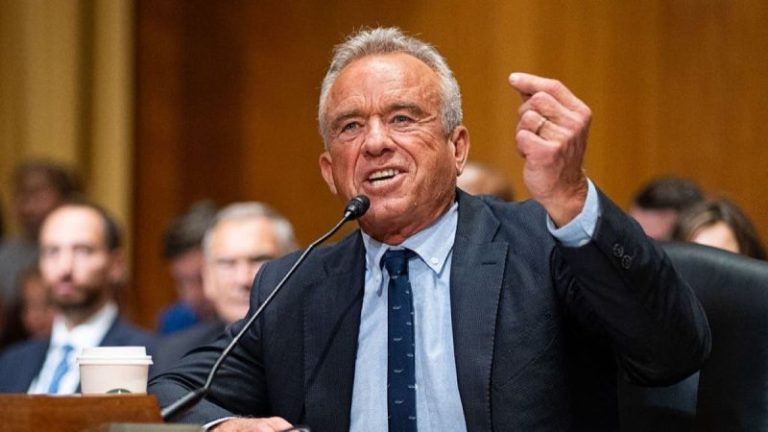
    Vice President JD Vance shot back at senators who clashed withHealth and Human Services Secretary Robert F. Kennedy Jr. at a hearing before the Senate Finance Committee Thursday, saying they are ‘full of s— and everyone knows it.’

    Sen. Ron Wyden, D-Ore., pressed Kennedy during the hearing, accusing him of endangering children with reckless decisions and conspiracy-driven policies, adding that he believed Kennedy had ‘no regrets’ about a ‘fundamentally cruel’ agenda. 

    Kennedy countered by noting Wyden’s decades in office while chronic disease rates climbed to 76%.

    The Vice President later sounded off on X, using profanity while directly addressing the opposition.

    ‘When I see all these senators trying to lecture and ‘gotcha’ Bobby Kennedy today all I can think is: You all support off-label, untested, and irreversible hormonal ‘therapies’ for children, mutilating our kids and enriching big pharma,’ Vance wrote in an X post. ‘You’re full of s— and everyone knows it.’

    Secretary Kennedy reposted the Vice President, writing ‘Thank you @JDVance. You put your finger squarely on the preeminent problem.’

    Other White House voices chimed in to support Secretary Kennedy after the fiery hearing. Press secretary Karoline Leavitt wrote, ‘Secretary @RobertKennedyJr is taking flak because he’s over the target. The Trump Administration is addressing root causes of chronic disease, embracing transparency in government, and championing gold-standard science. Only the Democrats could attack that commonsense effort.’

    ‘Democrats are getting absolutely TORCHED by @SecKennedy,’ wrote Deputy White House chief of staff Taylor Budowich. ‘They seem uninterested in health or human services, just parrots of a failed medical orthodoxy that has made America less healthy. Great hearing and preparation by the Sec.’

    The exchange came a day after more than 1,000 current and former HHS employees called for Kennedy’s resignation.

    At the hearing, Wyden accused Kennedy of elevating conspiracy theories and mismanaging federal health agencies, saying his tenure has been defined by ‘chaos’ and ‘corruption’ benefiting himself and President Donald Trump and rising health costs for families.

    He also accused Kennedy of ‘taking vaccines away from Americans’ and threatening doctors who deviated from his guidelines.

    Kennedy touted his department’s work, saying it has been ‘the busiest, most proactive administration in HHS history.’ 

    In six months, he said, HHS has tackled issues ranging from food and baby formula contamination to drinking water safety, drug prices, e-cigarettes, heroin at gas stations and prior authorization delays.

    ‘We’re ending gain of function research, child mutilation and reducing animal testing,’ Kennedy said. ‘We are addressing cellphone use in schools, excessive screen time for youth, lack of nutrition education in our medical schools, sickle cell anemia, hepatitis C, the East Palestine chemical spill and many, many others. At FDA, we are now on track to approve more drugs this year than at any time in history.’

    Committee Chairman Mike Crapo, R-Idaho, Vance and Wyden did not immediately respond to Fox News Digital’s requests for comment.

    Fox News Digital’s Anders Hagstrom contributed to this report.

    This post appeared first on FOX NEWS

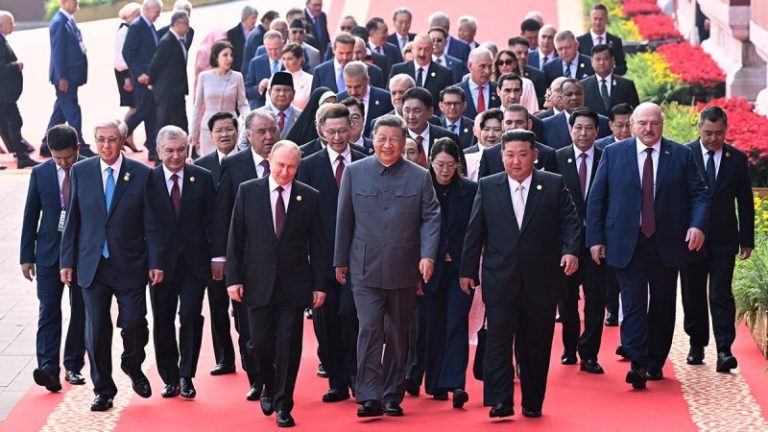
    China’s Xi Jinping likes getting the world stirred up with military confrontation. Perhaps that’s why he wore his Mao Zedong high-collar suit, channeling the aura of the 1949 revolution, to the first major military parade in China since 2019. 

    With him stood Russia’s Vladimir Putin and North Korea’s Kim Jong Un, marking the first time in 66 years that this terrible trio of leaders of China, North Korea and Russia have gotten together. 

    And did you catch the hot mic moment with Xi and Putin, both 72, groaning like the ‘Grumpy Old Men’ they are about how ’70 is just a child’ and wondering if organ transplants can enable immortality? Kim, just 41, stifled a grin. Who knows who will have the last laugh in that trio. They are not my picks for immortality. 

    Xi, Putin and Kim had their serious dictator faces back on as they watched as China’s People’s Liberation Army Rocket Force – teacher’s pet to Xi – roll their DF-5C intercontinental nuclear missiles down the streets of Beijing. They also showed off a new variant of their DF-26D medium-range missile. They claim it can hit U.S. ships and aircraft carriers or the island of Guam. 

    Dealing with this trio is a challenge like no other. And it’s all in a day’s work for President Donald Trump. Trump said he’s not concerned and called them out with some choice trash-talk, posting on Truth Social about their rather obvious efforts to ‘conspire’ against the U.S.

    The China-Russia military alliance is the single biggest danger the U.S. military has ever faced. 

    However, Xi’s plan for world domination is showing some fault lines. Xi has scrambled for 13 years to build up China’s military. His strategy is based on loading up with missiles, missiles and more missiles. Yet looking at what rolled down the streets in Beijing, the fact remains that China can’t outpace U.S. military technology, despite decades of espionage, copycat designs and heavy military spending. 

    The U.S. has some far superior systems. I’m talking about the new B-21 stealth bombers and F-47 sixth-gen fighters, for example. China has no true equivalents. 

    The U.S. also has new ways to deal with China’s missiles. The U.S. Space Force’s new Hypersonic and Ballistic Track and Surveillance System will use a constellation of satellites in low earth orbit, cued to use a medium field-of-view, to track China’s hypersonic missiles as they maneuver. Innovations like this nix China’s gains. 

    The parade showcasing ‘multi-domain’ technologies that might be used during an invasion of Taiwan was underwhelming. China’s laser gun on the truck, the unmanned surface vessels and even the big underwater drones are nothing remarkable. The U.S. has all that. Just check out the U.S. Navy’s massive Orca drone, which can lay seabed mines all by itself. Or the U.S. Army’s high-energy laser tests against drone swarms at Fort Sill, Oklahoma, this summer. 

    Xi needs his thug friends to challenge the U.S. and allies. Sadly, China allows Putin the option of refusing to talk about ending the war in Ukraine. The warm welcome given to North Korea showed that China is eager for Kim’s rising nuclear capabilities to provoke the U.S. and Pacific partners. Kim toured a solid-fueled missile facility before boarding the train to Beijing and North Korea is working on nuclear submarines as well. That’s scary.

    Trump’s nonchalance in dealing with this terrible trio is possible because the administration is taking action every day to shore up America’s power and oppose the China-Russia alliance. 

    In the Oval Office Tuesday, Trump flexed American power with two very different announcements.

    First, U.S. forces blew up a Tren de Aragua drug runner’s fast boat with an anti-ship missile. The strike opened a whole new chapter in the drug war.  

    Tren de Agua is a designated terrorist organization, so in tactical terms, this is no different from striking ISIS or Houthi terrorists in the Middle East.  Believe me, the U.S. Navy has plenty more anti-ship missiles and it’s high time to clean up the Western Hemisphere. Trump’s predecessor James Monroe, famous for the Monroe Doctrine, would be proud.

    Next, Trump announced that U.S. Space Command will be headquartered in Huntsville, Alabama. U.S. dominance in military and commercial space is essential for the economy and for global power; that’s why Trump created the United States Space Force as the sixth military branch in 2019. 

    Elon Musk’s Starlink and now Amazon’s Kuiper are muscling China out with thousands of satellites in low-earth orbit to deliver broadband, and backstop U.S. military freedom of action in space. And the Space Force is key to the Golden Dome defenses for the U.S.

    Finally, no military parade can cover up the fact that China, Russia and North Korea all face economic problems. China’s growth rate has halved in recent years and tariffs threaten the continued expansion in global markets that is Xi’s top economic priority. Russia is running on defense production and oil sales, and North Korea has no discernible economy apart from its trade with China. 

    Those other leaders in the parade photo had better not be looking to do more business with the U.S. anytime soon. The larger economic reality is that the U.S. is winning the AI race and, with concerted effort, can shut the door on China’s attempts to dominate AI. 

    This post appeared first on FOX NEWS

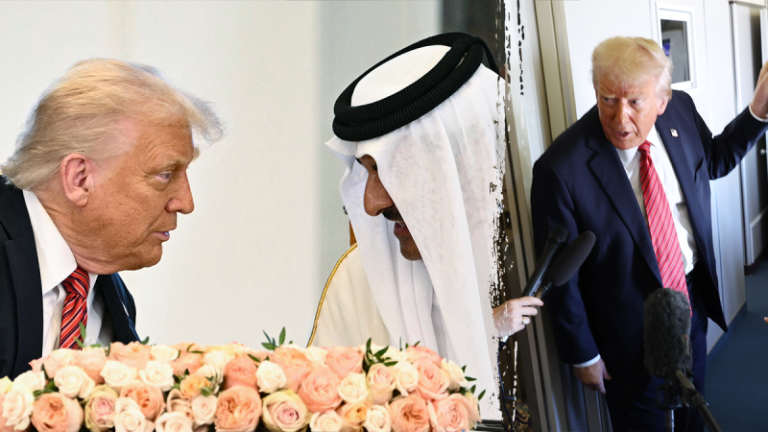
    The U.S. accepted a luxury Boeing Jet as a gift from Qatar in May, with plans to retrofit it to become the next Air Force One. The Air Force says the effort will cost less than $400 million for the updates. Other estimates show it could cost more than $1 billion. 

    Meanwhile, a separate deal with Boeing to produce two new 747-8s has faced significant delays and cost the company more than $1 billion.

    ‘They’re getting a new Air Force One. I didn’t want to do it because if I did it they’d say why are you doing that?,’ President Donald Trump said in January 2016. ‘I don’t mind getting that plane, but, you know, it does seem like an awful lot of money, doesn’t it?’

    The Air Force first announced the plan to develop the 747-8s in 2015, when President Barack Obama was in office.

    ‘The President doesn’t need a new plane right now. But eight years from now, whoever is President, they are likely to need a new plane,’ White House Press Secretary Josh Earnest said in October 2015.

    Nearly ten years later, the Air Force One project has yet to deliver, prompting President Trump to look for other options.

    ‘I’m not happy with Boeing. It takes them a long time to do, you know, Air Force One,’ President Trump said in February. ‘I could buy one from another country, perhaps. Or get one from another country.’

    The Air Force and Boeing now say their jets could fly by 2027. A White House report estimates the debut might not take place until 2029. President Trump told reporters on July 29, the retrofitted Qatar Jet could be in the air by February. 

    ‘I think it’s another example of them pulling us so closely to them that our interests become aligned, even if they’re not,’ Staff Writer for the Free Press Jay Solomon said.

    According to an investigation by Solomon and fellow Free Press writer Frannie Bock, Qatar has spent almost $100 billion to establish its influence in the U.S. Qatari officials have funneled money into Ivy League universities to build campuses in Doha, newsrooms like Al Jazeera and corporations to establish offices in Qatar. Doha has also made an effort to invite congressional delegations to visit, while paying lobbyists to align with lawmakers on both sides of the aisle. President Trump even made a stop in the country as part of the first major foreign trip of his second term.

    ‘Their national security apparatus is fused now into the United States. They’re surrounded by Iran, Saudi Arabia, the UAE countries they’re either kind of frenemies with or not friends at all,’ Solomon said.

    Qatar’s ties to Iran and extremist groups lead many of its neighbors to sever diplomatic relations for several years.

    ‘The nation of Qatar, unfortunately, has historically been a funder of terrorism at a very high level,’ President Trump said in June 2017.

    The blockade ended with little impact on Qatar’s economy and without Doha meeting the demands to end its ties to terror groups.

    ‘They sort of use their relationship with the United States as a way to project what is a very aggressive foreign policy. Which there are a lot of questions, is that foreign policy really aligned with the U.S.?’

    Qatar allowed the Taliban to open a political office in Doha in 2013 while maintaining close relations with the U.S. The Qataris have also worked to negotiate peace between Israel and Hamas.

    ‘It’s really unfair accusations for [saying] Qatar’s trying to buy influence. Throughout the last 25 years or 30 years, you will see, you’ll find Qatar always by the side of the U.S. in many areas and many things,’ Qatari Prime Minister Sheikh Mohammed bin Abdulrahman Al Thani said.

    Qatar said they are proud of their relationships with U.S. entities and its effort to mediate conflicts, but some question the country’s intentions.

    ‘I stew over this, to be honest. A lot of people do. I think they have gotten some of the hostages if you look at it on a positive note, they helped Americans get out of Afghanistan. They helped negotiate the end of our role in Afghanistan. You could look at that and say, wow, that’s positive,’ Solomon said. ‘But I do think they empower groups in a lot instances that are not our friends.’

    Lawmakers on both sides of the aisle express unease over Qatar’s controversial record on human rights and terror links.

    ‘Qatar is not, in my opinion, a great ally,’ Sen. Rick Scott, R-Fla., said in May.

    Rep. Ted Lieu, D-Calif., said at a press conference with other democrats that ‘there is no such thing as a free palace in the sky.’ And Sen. Chris Coons, D-Del., noted ‘the Trojan Horse was a gift.’

    The White House deflected concerns. Treasury Secretary Scott Bessent told CNN, ‘the French gave us the Statue of Liberty. The British gave us the Resolute Desk.’

    Senate Minority Leader Chuck Schumer, D-N.Y., announced a hold on approving all Justice Department nominees until the White house gave more details about the jet deal.

    ‘This just isn’t naked corruption. It’s also a national security threat,’ Schumer said on the Senate Floor in May.

    Democrats have now delayed more than 140 judicial nominees.

    ‘When it comes to gifts, we have ethics rules. We have them in the Senate. We’ve got them in White House. Those rules need to be followed. And ultimately what we want is to make sure that we’ve got the president traveling in a way that’s as safe as possible,’ Sen. Pete Ricketts, R-Neb., said.

    A memo reviewed by ABC News stated the donation of the jet is unconditional and that ‘the aircraft may be used or disposed by the DOD in its sole discretion.’

    U.S. laws generally prohibit the acceptance of large foreign gifts by government employees, including the president. However, the statute can be interpreted to show gifts can be put into official government use with the agency’s approval.

    ‘This plane’s not for me. This goes to the United States Air Force. For whoever is president. At some point, it’ll be like Ronald Reagan, it will be decommissioned. You know, it’s 11 years old,’ President Trump said on Special Report during his trip to the Middle East. ‘It would be decommissioned because they won’t want it. Plus, they’ll have the other two planes by that time.’

    Legal analysis also shows an individual may transfer large gifts to a government agency for sale or donation. President Trump says the jet would be donated to his presidential library after he leaves office.

    ‘When they give you a putt, you pick it up and you walk to the next hole and you say, thank you very much,’ President Trump said to questions over the ethics of the gift.

    ‘There seems to be conflicts of interest all over the place. When it comes to Qatar and the highest wrongs of the administration,’ Solomon said. ‘Are their decisions on these types of issues gonna be in any way conflicted or influenced by the fact that they’re taking major gifts from a government that’s the main Sponsor of the Muslim Brotherhood.’

    This post appeared first on FOX NEWS

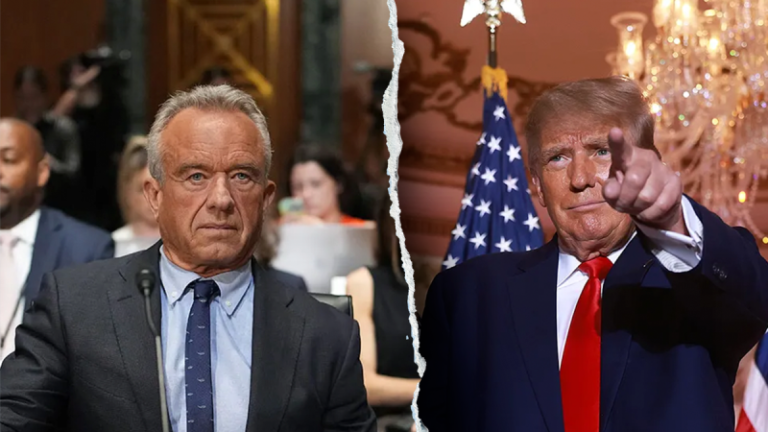
    President Donald Trump stood by Health and Human Services Secretary Robert Kennedy Jr. after he faced an intense grilling from senators on Capitol Hill on Thursday, telling reporters, ‘I like the fact that he’s different.’

    While speaking with the press during his dinner with technology industry leaders at the White House, Trump was asked about the hearing.

    ‘Mr. President, Sen. Bill Cassidy [R-La.] said, effectively, we’re denying people vaccines. Do you have full confidence in what RFK Jr. is doing?’ asked a reporter.

    Trump noted that he ‘didn’t get to watch the hearings today,’ but spoke highly of Kennedy, saying, ‘he’s a very good person.’

    ‘He means very well. And he’s got some little different ideas. I guarantee a lot of the people at this table like RFK Jr., and I do, but he’s got a different take, and we want to listen to all of those takes,’ said the president.

    ‘But I heard he did very well today,’ Trump went on. ‘It’s not your standard talk, I would say that, and that has to do with medical and vaccines. But if you look at what’s going on in the world with health and look at this country also with regard to health, I like the fact that he’s different.’

    While testifying before the Senate Finance Committee, Kennedy faced intense criticism from Democratic senators, including Sen. Ron Wyden, D-Ore., who accused Kennedy of putting children into ‘harm’s way’ with his policies.

    Wyden pressed Kennedy during the hearing, saying that he believed Kennedy had ‘no regrets’ about a ‘fundamentally cruel’ agenda. 

    ‘This is about kids being pushed into harm’s way by reckless and repeated decisions to get scientists and doctors out of the way and allow conspiracy theories to dictate this country’s health policy,’ Wyden said at the end of his questioning. 

    ‘I don’t see any evidence that you have any regrets about anything you’ve done or plans to change it. And my last comment is, I hope that you will tell the American people how many preventable child deaths are an acceptable sacrifice for enacting an agenda that I think is fundamentally cruel and defies common sense,’ said Wyden.

    Kennedy countered by noting Wyden’s decades in office while chronic disease rates climbed significantly.

    ‘Senator, you’ve sat in that chair how long? Twenty, 25 years, while the chronic disease of our children went up to 76%. And you said nothing.’

    ‘You never asked the question of why it’s happening. Why is this happening? Today, for the first time in 20 years, we’ve learned that infant mortality has increased in our country. It’s not because I came in here. It’s because of what happened during the Biden administration that we’re going to end,’ he continued.

    Vice President JD Vance also came to Kennedy’s defense on Thursday, saying the senators who grilled him are ‘full of s— and everyone knows it.’

    ‘When I see all these senators trying to lecture and ‘gotcha’ Bobby Kennedy today all I can think is: You all support off-label, untested, and irreversible hormonal ‘therapies’ for children, mutilating our kids and enriching big pharma,’ Vance wrote in an X post. ‘You’re full of s— and everyone knows it.’

    Kennedy reposted the vice president, writing, ‘Thank you @JDVance. You put your finger squarely on the preeminent problem.’

    Kennedy’s testimony came one day after over 1,000 current and former HHS employees signed a letter calling for his resignation on Wednesday. Sen. Bernie Sanders, I-Vt., also called for his resignation.

    Fox News Digital’s Alexandra Koch, Jasmine Baehr and Anders Hagstrom contributed to this report.

    This post appeared first on FOX NEWS