Author

admin

Browsing

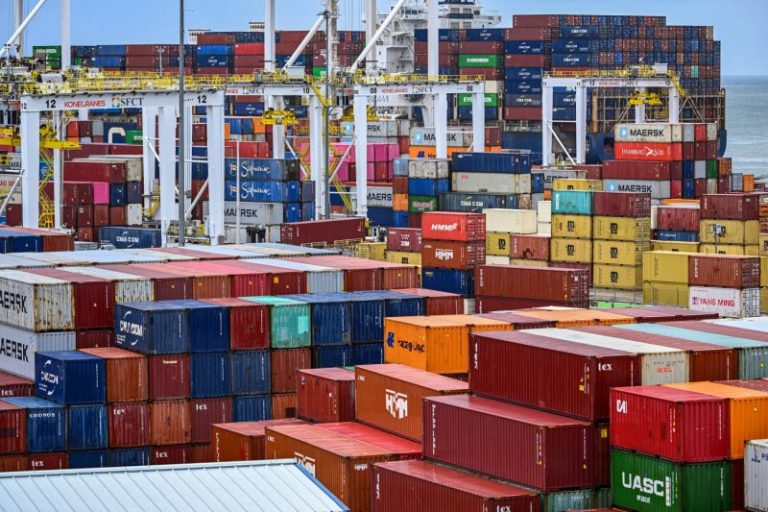
The de minimis exemption, an obscure trade law provision that has simultaneously fueled and eroded businesses across the globe, officially came to an end on Friday following an executive order by President Donald Trump.

For nearly a decade, shipments valued under $800 were allowed to enter the country virtually duty free and with less oversight. Now, those shipments from the likes of Tapestry, Lululemon and just about any other retailer with an online presence will be tariffed and processed in the same way that larger packages are handled.

In May, Trump ended the exemption for goods coming from China and Hong Kong, and on July 30 he expanded the rollback to all countries, calling it a “catastrophic loophole” that’s been used to evade tariffs and get “unsafe or below-market” products into the U.S.

The de minimis exemption had previously been slated to end in July 2027 as part of sweeping legislation passed by Congress, but Trump’s executive order eliminated the provision much sooner, giving businesses, customs officials and postal services less time to prepare.

“The ending of that under-$800-per-person-per-day rule, from a global perspective, is about to probably cause a bit of pandemonium,” said Lynlee Brown, a partner in the global trade division at accounting firm EY. “There’s a financial implication, there’s an operational implication, and then there’s pure compliance, right? Like, these have all been informal entries. No one’s really looked at them.”

Already, the sudden change has snarled supply chains from France to Singapore and led post offices across the world to temporarily suspend shipments to the U.S. so they can ensure their systems are updated and able to comply with the new regulations.

It’s forced businesses both large and small to rethink not just their supply chains, but their overall business models, because of the impact the change could have on their bottom lines — setting off a panic in board rooms across the country, logistics experts said.

“Obviously it’s a big change for operating models for companies, not just the Sheins and the Temus, but for companies that have historically had e-com and brick-and-mortar stores,” Brown said.

The change also means consumers, already are under pressure from persistent inflation and high interest rates, could now see even higher prices on a wide range of goods, from Colombian bathing suits to specialty ramen subscription boxes shipped straight from Japan.

The end of de minimis could cost U.S. consumers at least $10.9 billion, or $136 per family, according to a 2025 paper by Pablo Fajgelbaum and Amit Khandelwal for the National Bureau of Economic Research. The research found low-income and minority consumers would feeling the biggest impact as they rely more on the cheaper, imported purchases.

Popularized by Chinese e-tailers Shein and Temu, use of the de minimis exemption has exploded in the last decade, ballooning from 134 million shipments in 2015 to over 1.36 billion in 2024. Prior to the recent change to limit its use, U.S. Customs and Border Protection said it was processing over 4 million de minimis shipments into the country each day.

A 2023 House report found more than 60% of de minimis shipments in 2021 came from China, but because the packages require less information than larger containers, very little information is known about their origins and the types of goods they contain. That opacity is one of the key reasons why both former President Joe Biden and Trump sought to curtail or end the exemption.

Both administrations have said the exemption was overused and abused and that it’s made it difficult for CBP officials to target and block illegal or unsafe shipments coming into the U.S. because the packages aren’t subject to the same level of scrutiny as larger containers.

“We didn’t have any compliance information … on those shipments, and then that is where the danger of drugs and whatnot being in those shipments” comes in, said Irina Vaysfeld, a principal in KPMG’s trade and customs practice.

The Biden administration particularly focused on how the exemption allowed goods made with forced labor to make it into the country in violation of the Uyghur Forced Labor Protection Act. Meanwhile, Trump has said the exemption has been used to ship fentanyl and other synthetic opioids into the U.S. In a fact sheet published on July 30, the White House said 90% of all cargo seizures in fiscal 2024, including 98% of narcotics seizures and 97% of intellectual property rights seizures, originated as de minimis shipments.

Across the globe, it’s common for countries to allow low-value shipments to be imported duty-free as a means to streamline and facilitate global trade, but typically, it’s for packages valued around $200, not $800, said EY’s Brown.

Until 2016, the U.S.’s threshold for low-value shipments was also $200, but it was changed to $800 when Congress passed the Trade Facilitation and Trade Enforcement Act, which sought to benefit businesses, U.S. consumers and the overall U.S. economy, according to the Congressional Research Service. It said higher thresholds provide a “significant economic benefit” to both business and shoppers and thus, the overall economy.

While well-intentioned, the law came with unintended consequences, said Brown.

The “rise in value, from $200 to $800, just made it kind of like a free for all to say, OK, everything come in,” she said.

Eventually companies designed supply chains around the exemption: They set up bonded warehouses, where duties can be deferred prior to export, in places like Canada and Mexico and then imported goods in bulk to those regions before sending them across the border one by one, duty free, as customer orders rolled in, said Brown.

“Companies have really laid out their supply chain in a very specific way [around de minimis] and that’s really the crux of the issue,” said KPMG’s Vaysfeld. “The way that the supply chain has been laid out now may need to change.”

Until the rise of Shein and Temu, the de minimis exemption was rarely discussed in retail circles. Soon, the e-commerce behemoths began facing widespread criticism for their use of what many called a loophole.

In 2023, the House Select Committee on the Chinese Communist Party released a report on Shein and Temu and said the two companies were “likely responsible for more than 30 percent of all packages shipped to the United States daily under the de minimis provision, and likely nearly half of all de minimis shipments to the U.S. from China.”

The revelation sparked widespread consternation among retail executives, lobbyists and government officials who said the companies’ use of the exemption was unfair competition.

However, behind closed doors, companies large and small began mimicking the same model after realizing how it could reduce the steep costs that come along with selling goods online.

Direct-to-consumer companies that only have online presences have relied on it more heavily, so much so that their businesses may not work without it, said Vaysfeld.

“Some of the companies we’ve spoken to, they’ve modeled out, if the tariffs continue for one year, for two years, how does that impact their profitability, and they know how long they can last,” said Vaysfeld. “These aren’t the huge companies, right? These are the smaller companies … Depending on what country they’re sourcing from or where they’re manufacturing, it could really impact their profitability that they can’t stay in business for the long term.”

While smaller, digital companies are more exposed, “pretty much most companies that you can think of” had been using the exemption in some form before it ended, said Vaysfeld.

Take Coach and Kate Spade’s parent company Tapestry: About 13% to 14% of the company’s sales were previously covered under de minimis and will now be subject to a 30% tariff, according to an estimate by equity research firm Barclays.

On the company’s earnings call earlier this month, Chief Financial Officer Scott Roe said tariffs will hit its profits by a total of $160 million this year, including the impact of the end of de minimis. That amounts to about 2.3% of margin headwind, he said.

Shares of the company fell nearly 16% the day that Tapestry reported the profit hit.

In a statement, Roe said Tapestry used de minimis to help support its strong online business, adding it is a practice that “many companies with sophisticated supply chains have been doing for years.”

To help offset its termination, he said Tapestry is looking for ways to reduce costs and is leaning on its manufacturing footprint across many different countries.

Canadian retailer Lululemon is another company that uses de minimis, according to Wells Fargo. Last week, the bank cut its price target on the company’s stock from $225 to $205, citing the end of de minimis. In the note, Wells Fargo analyst Ike Boruchow said the equity research firm sees a potential 90 cent to $1.10 headwind to Lululemon’s earnings per share from the de minimis elimination.

Lululemon declined to comment, citing the company’s quiet period ahead of its reporting earnings.

The National Retail Federation, the industry’s largest trade organization, has not taken a position in favor of or against the exemption. It has members who both supported and opposed the policy, said Jonathan Gold, vice president of supply chain and customs policy at NRF.

Retailers of all sizes, including independent sellers with digital storefronts, have used the approach as “a convenient way to get products to the consumer” for less, Gold said.

“Their costs are going to go up and those costs could be passed on to the consumer at the end of the day,” Gold said.

The most acute impact of the end of de minimis is expected to be felt on online marketplaces where millions of small businesses sell goods like Etsy, eBay and Shopify and used de minimis to defray costs when sending online orders from other parts of the globe to the U.S.

American shoppers have gotten used to buying artwork, coffee mugs, T-shirts and other items from merchants outside the country without paying duties. With that tariff exemption gone, consumers could face higher costs and a more limited selection of items to choose from.

Etsy, eBay and some other retailers sought to defend the loophole prior to its removal, submitting public comments on proposed de minimis regulation by the CBP. An eBay public policy executive said the company was concerned that restrictions to de minimis “would impose significant burdens on American consumers and importers.”

Etsy’s head of public policy, Jeffrey Zubricki, said the artisan marketplace supports “smart U.S. de minimis reform,” but that it was wary of changes that could “disproportionately affect small American sellers.”

“These exemptions are a powerful tool that help small creators, artisans and makers participate in and navigate cross-border trade,” Zubricki wrote in a March letter to CBP.

An Etsy spokesperson declined to comment on the policy change. Etsy CFO Lanny Baker said at a Bernstein conference in May that transactions between U.S. buyers and European sellers comprise about 25% of the company’s gross merchandise sales.

EBay didn’t immediately provide a comment in response to a request from CNBC. The company warned in its latest earnings report that the end of de minimis outside of China could impact its guidance, though CEO Jamie Iannone told CNBC in July that he believes eBay is generally “well suited” to navigate the shifting trade environment.

Some eBay and Etsy sellers based in the UK, Canada and other countries are temporarily closing off their businesses to the U.S. as they work out a plan to navigate the higher tariffs. Blair Nadeau, who owns a Canadian bridal accessories company, was forced to take that step this week.

“This is devastating on so many levels and millions of small businesses worldwide are now having their careers, passions and livelihoods threatened,” Nadeau wrote in an Instagram post on Tuesday. “Just this past hour I have had to turn away two U.S. customers and it broke my heart.”

Nadeau sells her bespoke wedding veils, jewelry and hair adornments through her own website and on Etsy, where 70% of her customer base is in the U.S. The de minimis provision had been a “lifeline” for many Canadian businesses to get their products in the hands of American consumers, Nadeau said in an interview.

“This is really hitting me,” Nadeau said. “It’s like all of a sudden 70% of your salary has been removed overnight.”

In the absence of de minimis, online merchants are faced with either paying import charges upfront and potentially passing those costs on to shoppers through price hikes, or shipping products “delivery duty unpaid,” in which case it’s the customer’s responsibility to pay any duties upon arrival.

Alexandra Birchmore, an artist based in the Cotswolds region of England, said she expects to raise the price of her oil paintings on Etsy by 10% as a result of paying the duties upfront.

“At the moment every small business forum I am on is in chaos about this,” Birchmore said. “It looks to me to be a disaster where no one benefits.”

The disruption could end up being a boon for the likes of Amazon and Walmart. U.S. consumers may turn to major retailers if they face steeper prices elsewhere, as well as potential shipping delays due to backlogs or other issues at the border.

Amazon, in particular, has already proven resilient after the U.S. axed the de minimis provision for shipments from China and Hong Kong in May. The company’s sales increased 13% in the three-month period that ended June 30, compared with 10% growth in the prior quarter. Amazon’s unit sales grew 12%, an acceleration from the first quarter.

Both Amazon and Walmart have fulfillment operations in the U.S. that allow overseas businesses to ship items in bulk and store them in the companies’ warehouses before they’re dispatched to shoppers. Shein and Temu largely eschewed the model in the past in favor of the de minimis exception, but they’ve since moved to open more warehouses in the U.S. in the wake of rising tariffs.

Since the exemption ended on Chinese imports in May, the impact on Shein and Temu has been swift. Temu was forced to change its business model in the U.S. and stop shipping products to American consumers from Chinese factories.

The end of de minimis, as well as Trump’s new tariffs on Chinese imports, also forced Temu to raise prices, reign in its aggressive online advertising push and adjust which goods were available to American shoppers.

The Financial Times reported on Tuesday that Temu has resumed shipping goods to the U.S. from Chinese factories and will also increase its advertising spend following what it called a “truce” between Washington and Beijing.

Temu didn’t return a request for comment.

Meanwhile, Shein has been forced to raise prices and daily active users on both platforms in the U.S. have fallen since the de minimis loophole was closed, CNBC previously reported. Temu’s U.S. daily active users plunged 52% in May versus March, while Shein’s were down 25%, according to data shared with CNBC by market intelligence firm Sensor Tower.
This post appeared first on NBC NEWS

The nominee President Donald Trump tapped to serve as ambassador to a United Nations office charged with overseeing global aviation standards has a checkered tax history and background donating to Democrats and political opponents of the president, a Fox News Digital review of the nominee’s public records found. 

The White House and Trump allies, however, have doubled down in support of the nominee, saying he will assist the administration in ‘ushering in the Golden Age of aviation.’ 

Jeffrey Anderson was tapped to lead the International Civil Aviation Organization in July, when the White House published a list of nominations to fill various roles, from the International Civil Aviation Organization ambassadorship to director of the Mint to membership with the National Labor Relations Board. Anderson is a U.S. Navy veteran who worked as a commercial airline captain for more than 34 years, retiring from that role earlier in 2025, according to his LinkedIn. 

The International Civil Aviation Organization is a U.N. office based in Montreal that is charged with overseeing international aviation standards, including issues related to safety, navigation and environmental protection. The role had sat vacant for the past three years, when the former ambassador, pilot Chesley ‘Sully’ Sullenberger, stepped down in 2022. 

Sullenberger gained widespread applause in 2009, when the US Airways pilot landed Flight 1549 on the Hudson River after a bird strike disabled both engines — an event known as the ‘Miracle on the Hudson.’

Anderson is a former Delta Air Lines pilot whose nomination drew ire from the Air Line Pilots Association, a union that represents nearly 80,000 pilots across the U.S. and Canada, arguing his ‘only’ qualification was supporting an effort to raise the mandatory pilot retirement age. 

The union opposes increasing the mandatory retirement from 65 years of age to 67, arguing it ‘would leave the United States as an outlier in the global aviation space and create chaos on pilot labor, and international and domestic flight operations,’ the group’s statement in July read.

Fox News Digital took a look back at Anderson’s political campaign contributions and found he donated to a handful of Democratic candidates often hostile to Trump and his policies. 

He also made a handful of small dollar donations to Republican Nikki Haley during the 2024 campaign cycle, when the former U.S. ambassador to the U.N. ran against Trump, whom she slammed as ‘unhinged’ while on the campaign trail before dropping out of the race and endorsing Trump as the GOP nominee for president. 

Anderson contributed at least $200 to Haley during the month of February 2024, when Haley and Trump were the only GOP candidates left in the primary race, according to four small dollar donations recorded by the Federal Election Commission. 

The former pilot also donated to Shawn Harris, the former Democratic opponent who tried to unseat Republican Georgia Rep. Marjorie Taylor Greene in the 2024 cycle. The $100 donation was made in September 2024 through ActBlue, the Democratic Party’s massive fundraising arm, and earmarked for the Democratic candidate who ultimately failed to oust Greene. 

Harris’ campaign included slamming Trump and characterizing him as a politician who acts as a ‘king’ and threatens democracy. 

Anderson’s political donations to Democrats stretch back years, including in 2017 when he donated to Democrats, such as former House candidate Dan Ward in Virginia and former Rep. Peter DeFazio of Oregon — both of whom received $250 contributions from Anderson that year, according to election records. 

Both Democrats had slammed Trump and his policies across his first administration, including DeFazio declaring after the Jan. 6, 2021, breach of the Capitol that: ‘Donald Trump is a threat to our democracy, national security and the safety of all Americans. He must be removed from office immediately.’ 

The former Delta pilot has also landed in hot water over unpaid taxes, Fox News Digital found. IRS records show Anderson and his wife had over $426,000 in unpaid federal taxes across seven years from 2013 to 2019, raising concerns that his financial responsibility. The taxes were related to a ‘small business,’ according to the forms. 

‘Jeffrey Anderson isn’t a Trump Republican at all; he’s a liberal sleeper who slipped through the cracks of PPO (Presidential Personnel Office),’ a former Trump official told Fox Digital of Anderson’s political donations and tax history. 

When approached for comment on the previous donations and tax issues, Anderson told Fox News Digital that at ‘the very least, some of your information is factually incorrect or tendered well out of context.’ Anderson did not respond when asked for additional details on what was ‘factually incorrect.’

‘At the very least, some of your information is factually incorrect or tendered well out of context. I am fully supportive of President Trump and his America First agenda. I have been fully vetted by the White House and appreciate the approval of the President, House Aviation Chair Troy Nehls and House T&I Chair Sam Graves, among others. I look forward to advancing American interests as the next Permanent Representative to ICAO,’ he wrote in a direct message on LinkedIn to Fox Digital in August, while adding that Trump is seeking to ‘move effectively forward in a space negligently left vacant by Biden.’

When asked about Anderson’s tax history and donations to Democrats and Trump opponents, a White House official told Fox Digital: ‘Jeffrey Alderson is highly qualified to serve as America’s ambassador to the ICAO, and he is a great choice to represent the President’s America First foreign policy agenda in the international aviation community.’

Fox News Digital additionally reached out to the State Department, which helps manage the vetting of potential ambassador nominees, for comment and was directed the White House’s statement. 

The former pilot himself also floated a run for political office more than a decade ago in Georgia as a Democrat, according to a local Georgia news report that called him ‘prospective Democratic Congressional candidate Jeff Anderson.’ In an opinion piece published that same year, titled ‘The sinking Democratic Party in Georgia is bad news for everyone,’ Anderson was described as a ‘a 2010 Independent candidate for the U.S. House in Georgia’s 11th District.’ 

While old social media posts on X show Anderson celebrated former President Biden’s 2012 DNC speech at the time as ‘wonderful American message: major concepts, not petty; Democratic, but not commercially political.’ While other tweets targeted the NRA and celebrated how Anderson ‘politely but firmly faced’ NRA representatives and gun manufacturers on ‘sensible policy ideals’ back in 2023, according to a review of the X account @JeffAndersonPAI that ceased activity back in 2014.  

In addition to the White House defending Anderson’s nomination, Texas Republican Rep. Troy Nehls, who serves as chairman of the House Transportation and Infrastructure Subcommittee on Aviation, told Fox Digital that Anderson will help usher in ‘the Golden Age of aviation’ under the Trump administration. 

‘As Chairman of the House Aviation Subcommittee, I have complete confidence in Jeffrey Anderson to serve as ambassador to the International Civil Aviation Organization (ICAO),’ Nehls said in comment to Fox Digital in August. ‘Mr. Anderson served as a naval aviator and has more than three decades of experience as a pilot for Delta. He is, without a doubt, qualified to represent the United States of America at ICAO, where his first-hand experience with the aviation industry will play a crucial role in advancing President Trump’s mission of ushering in the Golden Age of aviation.’

A board member of a pilots group called Experienced Pilots Advancing Aviation Safety, added that he fully backs Anderson’s nomination, citing his honesty and credentials as an airline captain. The Experienced Pilots Advancing Aviation Safety, which endorsed Anderson’s nomination, also advocates raising the mandatory retirement age for airline pilots, arguing experienced pilots lead to safer skies and can mentor the next generation instead of ‘forced retirements of America’s most experienced aviators,’ according to its website. 

‘I feel 100% confident in Captain Anderson’s honesty and professional credentials. Having flown aircraft around the world in international operations for the past 40 years in the Marine Corps and Delta Airlines, and my working with and in association with ICAO and IATA, I feel Jeff would be a perfect fit for this position as it seems the president of the United States does also,’ the board member told Fox Digital in emailed comment earlier in August. 

International aviation rules currently prohibit airline pilots older than 65 from flying. Global airline groups such as the International Air Transport Association has called on the ICAO to consider raising the international pilot retirement age to 67. The UN General Assembly will convene on Sept. 23, with the ICAO expected to consider the proposal, Reuters reported on Thursday. 

Anderson’s nomination was sent to the Senate in July, and was then referred to the Committee on Foreign Relations. The nomination is currently awaiting final confirmation proceedings. 

This post appeared first on FOX NEWS

Foxit, a major PDF software company founded in China, removed any mention of its various U.S. government customers from its website after Fox News Digital began asking questions about its government ties and Chinese connections.

The company develops PDF software for reading, editing and signing documents, with customers ranging from businesses to U.S. agencies. Foxit was founded in 2001 in Fuzhou, China, by Eugene Xiong. Its parent company — Fujian Foxit Software Development Joint Stock Co., Ltd. — is traded on the Shanghai stock market and oversees a U.S. subsidiary based in Fremont, Calif.

Until Fox News Digital began pressing Foxit on its background, the company’s website touted clients across the federal government — from the Missile Defense Agency (MDA) and State Department to the Army, Navy, Air Force, Department of Homeland Security (DHS), Food and Drug Administration (FDA), U.S. courts and the Department of Transportation.

But following Fox News Digital’s request for comment, Foxit scrubbed any mention of U.S. government customers from its site. The company did not respond to questions.

Over the course of reporting, multiple agencies confirmed they had either removed Foxit products or no longer maintained active contracts with Foxit’s U.S. subsidiary. 

An MDA spokesperson said Foxit had been used on an isolated network ‘not connected to any operational missile defense system’ but is ‘no longer in any MDA system.’ The spokesperson did not say when Foxit had been removed from its systems but added that the team behind the initial decision to use the software is no longer with the agency, and that an updated review of all software is underway. 

A State Department source said small Foxit contracts had existed in the past but were terminated, though did not clarify when.

Before the website purge, Foxit even published ‘case studies’ on work with U.S. Citizenship and Immigration Services and the FDA. A DHS source, however, told Fox News Digital that Foxit is now ‘specifically identified and listed on our prohibited software list.’

The FDA handles trade secrets, sensitive clinical trial data and even biodefense-related health information. The agency did not return a request for comment on whether it is still using Foxit. 

The Department of Justice likewise confirmed Foxit was removed from its networks last year after a security review.

Other agencies, including the Office of the Secretary of Defense (OSD) and the National Institutes of Health, acknowledged receiving questions from Fox News Digital but did not confirm current usage.

Foxit is difficult to track in publicly available records: government purchases may be logged under distributors, integrators or resellers rather than the company itself.

Fox News Digital identified dozens of solicitation requests — documents federal agencies issue when seeking bids for goods and services — that specifically mentioned Foxit software, from the Army, Navy, NIH, NASA, the Defense Department and the General Services Administration. Which of those turned into finalized contracts is unclear.

One known Foxit contract with OSD expired in 2023.

On its U.S. website, Foxit emphasizes its California headquarters and ‘global’ reach, without mention of its Chinese listing. On its Chinese-language site, however, Foxit highlights clients such as the Chinese Ministry of Foreign Affairs, the State Intellectual Property Office, and the National Standards Committee. In 2023, it announced a partnership with China Media Group, which operates under the Chinese Communist Party’s Publicity Department.

Its Chinese website lists offices in Fuzhou, Beijing, Nanjing and Hefei. 

U.S. agencies typically contract through the California-based Foxit Software Inc., not the Chinese parent, allowing Foxit to present itself as a U.S.-based company. Still, Foxit’s parent company remains subject to Chinese law — including the 2017 National Intelligence Law, which compels companies to assist Chinese intelligence if requested. 

One analyst questioned whether the corporate separateness could fully insulate the U.S. subsidiary from the interests of the Chinese parent. 

‘It sounds especially similar to the TikTok argument. We’re doing everything here, all the data is located here, we have TikTok USA. We’re a Singaporean company, we have no relations with the Chinese mainland – outside of our corporate structure, which is almost wholly owned by a Chinese based company,’ said Joel Thayer, a Washington-based tech and telecommunications attorney.

‘Chinese companies are masters of concealing their intentions through corporate filings and corporate infrastructure,’ he said.

Foxit counts Idax.ai as its subsidiary, a company specifically tailored to redact sensitive documents. ‘The company’s AI-powered solutions are aimed at professionals across various industries, including healthcare, finance, real estate, law, and government,’ according to a branded content release in NY Weekly.

Fox News Digital could not determine whether Idax has been used by government agencies.

Foxit claims to have 750 million users and over 425,000 clients around the world, with business centers not just in the U.S. and China but Japan, Europe and Australia, with plans to expand into Russia, Brazil and India. 

 Critics warn that even seemingly routine data could be of intelligence value.

‘Even if Foxit isn’t being used for secret documents, the information the company could potentially glean would be invaluable to the CCP,’ said Thayer. 

‘You are basically banking on it that the platform isn’t behind the veil, collecting an immense amount of data about what contracts and services are being provided to our government,’ he said.

Foxit originally positioned itself as a cheaper alternative to Adobe Acrobat. But China tech watchers warn the discount may come with hidden risks.

‘That’s invaluable information for any of our adversaries – how much money a contract is worth, what services are being rendered, what technologies are they looking at, what are they hiring people to do, what the government is looking into… competitors would kill for that information,’ Thayer said. 

This post appeared first on FOX NEWS

A spokesperson for Kamala Harris confirmed to Fox News on Friday that the former vice president’s Secret Service protection has been revoked by President Donald Trump.

The spokesperson added that there was no reason given as to why it was removed.

A senior White House official told Fox News Digital that vice presidents usually have a Secret Service detail for only six months after departing office.

A source briefed on the matter also told Fox News that the decision to revoke Harris’ Secret Service protection was made yesterday and that is when the Secret Service was notified.

Former President Joe Biden signed an executive memorandum before leaving office which extended Harris’ protection for an additional year after the normal six months that former vice presidents received in the past.

On Thursday, Trump rescinded that memorandum and Harris’ Secret Service protection officially ends on Sept. 1.

The move comes as Harris is set to kick off a tour for her upcoming book ‘107 Days’ in late September.

The tour is scheduled to visit major American cities in its opening days, including New York City, Philadelphia and Los Angeles.

This is a developing story. Please check back for updates.

This post appeared first on FOX NEWS

Bipartisan anger is brewing over the drama that unfolded at the Centers for Disease Control (CDC), with the top members of the Senate’s healthcare panel forming a united front in the midst of the turmoil.

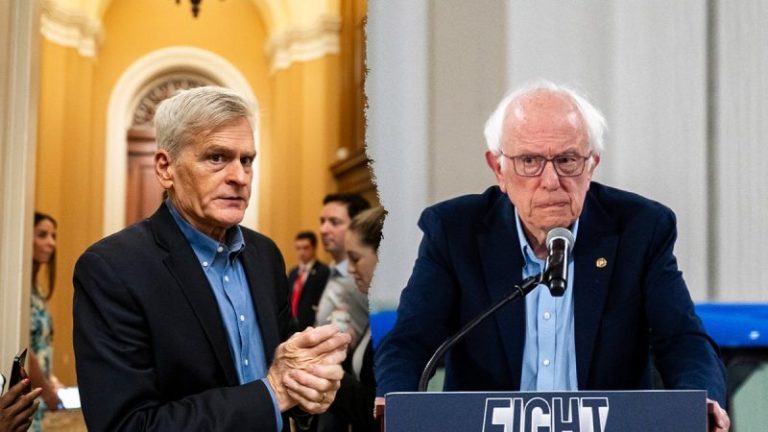
Senate Healthcare, Education, Labor and Pensions Committee Chair Bill Cassidy, R-La., and the panel’s ranking member, Sen. Bernie Sanders, I-Vt., dove head first into the issues stemming from the firing of CDC Director Susan Monarez, which spurred a string of departures from the agency.

Monarez was abruptly fired from her position by the Department of Health and Human Services (HHS), less than a month after being confirmed by the Senate. Her removal, which her lawyers rejected, appeared to stem from disagreements over vaccines with HHS Secretary Robert F. Kennedy, Jr., a vaccine skeptic.

Cassidy was the deciding vote during Kennedy’s confirmation hearing earlier this year.

Monarez has since refused to leave the post, with her lawyers arguing that she had neither resigned nor been fired and had not received notification from the president of her removal.

Following news of her ouster, a string of top officials at the CDC announced their resignations, too, including National Center for Emerging and Zoonotic Infectious Diseases Director Dr. Daniel Jernigan, Chief Medical Officer Debra Houry, National Center for Immunization and Respiratory Diseases Director Demetre Daskalakis and Director of Public Health Data, Science, Technology Jennifer Layden.

In response to their resignations, Cassidy demanded that the federal government’s vaccine advisory panel, which was filled with Kennedy’s handpicked replacements after he recently booted the original panel members, postpone its scheduled meeting in September.

His demand marks the second time this year that Cassidy called on the panel to halt its meeting, a move that directly bucks Kennedy’s and President Donald Trump’s Make America Healthy Again (MAHA) agenda. 

Cassidy argued Thursday that there were ‘serious allegations made about the meeting agenda, membership, and lack of scientific process being followed for the now announced September [Advisory Committee on Immunization Practices] meeting.’

‘These decisions directly impact children’s health, and the meeting should not occur until significant oversight has been conducted,’ Cassidy said. ‘If the meeting proceeds, any recommendations made should be rejected as lacking legitimacy given the seriousness of the allegations and the current turmoil in CDC leadership.’

Daskalakis posted his reason for resigning on X, where he charged that he was ‘unable to serve in an environment that treats CDC as a tool to generate policies and materials that do not reflect scientific reality and are designed to hurt rather than to improve the public’s health.’

Meanwhile, Sanders demanded a congressional investigation be opened into the Trump administration’s decision to fire Monarez.

‘We need leaders at the CDC and HHS who are committed to improving public health and have the courage to stand up for science, not officials who have a history of spreading bogus conspiracy theories and disinformation,’ Sanders said Thursday.

HHS did not immediately respond to a request for comment for this story.  

This post appeared first on FOX NEWS

A Centers for Disease Control and Prevention official who posted his resignation letter on social media used the term ‘pregnant people’ and capped off his missive by including ‘he/his/him’ pronouns after his name.

‘I am writing to formally resign from my position as Director of the National Center for Immunization and Respiratory Diseases at the Centers for Disease Control and Prevention (CDC), effective August 28, 2025, close of business,’ Dr. Demetre Daskalakis wrote in the lengthy post on X.

Daskalakis accused President Donald Trump’s administration of attempting ‘to erase transgender populations.’

‘For decades, I have been a trusted voice for the LGBTQ community when it comes to critical health topics. I must also cite the recklessness of the administration in their efforts to erase transgender populations, cease critical domestic and international HIV programming, and terminate key research to support equity as part of my decision,’ he wrote.

The inclusion of pronouns and the term ‘pregnant people’ caught people’s attention.

‘This resignation is a huge win for the Trump administration and the American people. We don’t need anyone who can’t understand basic biology working at the CDC,’ noted Jeremy Redfern, communications director for Florida Attorney General James Uthmeier.

Karol Markowicz tweeted, ‘No one who uses ‘pregnant people’ should work at the CDC. This isn’t hard.’ 

Responding to Markowicz’s post, Florida Gov. Ron DeSantis wrote, ‘Example of how ‘trusting the science’ really means following the political science and perpetuating the prevailing narrative…’ He added, ‘Embracing evidence-based medicine should be the bare minimum for working at the CDC…’

Daskalakis suggested that the Department of Health and Human Services is on a ‘dangerous’ path.

‘I am unable to serve in an environment that treats CDC as a tool to generate policies and materials that do not reflect scientific reality and are designed to hurt rather than to improve the public’s health,’ he wrote.

‘I wish the CDC continued success in its vital mission and that HHS reverse its dangerous course to dismantle public health as a practice and as an institution. If they continue the current path, they risk our personal well-being and the security of the United States,’ Daskalakis concluded at the end of his message.

Fox News Digital reached out to HHS for comment on Thursday.

This post appeared first on FOX NEWS

An American energy leader is warning that several progressive ‘green’ environmental groups opposing President Donald Trump’s nuclear energy plans are linked to a ‘web of dark money’ groups with ties to former President Barack Obama and other Democrats.

Jason Isaac, CEO of the American Energy Institute, warned during an interview with Fox News Digital that while claiming to stand for the planet, these groups ‘have prioritized ideology over innovation’ and are ‘driven by green activists and groups deeply tied to the Democratic Party.’

‘You follow the money, you’ll see where it leads. It leads straight to partisan mega-donors, foreign interests, and failed climate crusaders,’ Isaac said. ‘This isn’t about the environment. It’s about political control over America’s energy future and our energy dominance.’

Isaac’s comments follow Trump’s signing of several executive orders in May to ‘usher in a nuclear renaissance’ by cutting red tape to accelerate advancements in nuclear technologies. In one of the orders, Trump said that ‘abundant energy is a vital national- and economic-security interest’ and ‘in conjunction with domestic fossil fuel production, nuclear energy can liberate America from dependence on geopolitical rivals.’

However, several environmentalist groups, such as the Union of Concerned Scientists, Nuclear Threat Initiative, Greenpeace, Friends of the Earth, the Sierra Club and several individuals have been critical of Trump’s actions as unscientific.  

In late July, the Union of Concerned Scientists published a statement lambasting Trump, saying that ‘since the Inauguration, the administration has systematically destroyed federal scientific systems.’

UCS published a report that claimed the Trump administration is advancing a ‘systematic effort to suppress climate science and dismantle actions to address the climate crisis that will increase costs and suffering, particularly for disadvantaged communities, while boosting fossil fuel pollution and profits.’

A Fox News Digital review of UCS donors found that the group has received financial support from left-wing donors like the Tides Foundation, whose 2023 U.S. tax return shows it has helped bankroll anti-Israel protests on college campuses, and the Alliance for Global Justice, which in turn is a fiscal sponsor of the Samidoun Palestinian Prisoner Solidarity Network, a group the U.S. Department of the Treasury later designated as ‘a sham charity that serves as an international fundraiser for the Popular Front for the Liberation of Palestine (PFLP) terrorist organization.’ 

UCS has also received support from the U.S. Energy Foundation, which Fox News Digital previously reported was spun off from the same foundation as the Energy Foundation China.

Meanwhile, Nuclear Threat Initiative, another group that has been publicly wary of Trump’s nuclear agenda, was co-founded by Ted Turner, who once urged other countries to adopt China’s one-child policy, and led by CEO Ernest Moniz, who was secretary of energy under Obama.

Other Nuclear Threat Initiative leaders have links to Democratic causes through political contributions, such as the group’s president, Joan Rohlfing, who donated to former President Joe Biden and former Vice President Kamala Harris, its vice president, Scott Roecker, who has donated to the Democratic National Committee, and its senior director, Nickolas Roth, who donated to Biden. 

A spokesperson for NTI told Fox News Digital that the organization ‘actively supports the rapid expansion of safe, secure, and cost-effective nuclear energy through the Nuclear Scaling Initiative (NSI), in partnership with the Clean Air Task Force and the EFI Foundation.’

‘NSI’s goal is to enable the scaling of more than 50 gigawatts of nuclear capacity annually across the globe by the 2030s—advancing climate goals, energy security, nonproliferation, and economic development.’

The spokesperson added that NTI is a ‘nonprofit, nonpartisan global security organization’ while pointing to a New York Post letter to the editor from Roecker pushing back on allegations of bias. 

Another group, Friends of the Earth, which has actively urged the world to ‘reject’ Trump, has a history of far-left endorsements and contributions. In 2020, Friends of the Earth endorsed Black Lives Matter and called for defunding the police. The group has also endorsed the Green New Deal and said the U.S. must ‘provide finance for people in developing countries commensurate with what science and justice demand.’

During the 2020 election, Friends of the Earth Action endorsed Sen. Bernie Sanders, I-Vt., and Sen. Elizabeth Warren, D-Mass., for the Democratic presidential nomination. In 2024, the group endorsed Harris for president.

Since 2015, Friends of the Earth Action PAC has donated thousands to Democratic or progressive candidates and causes, according to data gathered by OpenSecrets.

For its part, the Sierra Club, which routinely pushes back against Trump on its social media account, has had an even more extensive history of advancing progressive causes.

In 2020, the Sierra Club supported defunding the police, saying, ‘The problems with policing can’t be solved through piecemeal reforms or getting rid of ‘a few bad apples.’’

The group also endorsed the Green New Deal, calling it a ‘big, bold transformation of the economy to tackle the twin crises of inequality and climate change.’

It has also said it is ‘committed to being an anti-racist organization.’ In 2020, the group even condemned its founder, naturalist John Muir, for using racist language in the 1800s, saying it was ‘time to take down some of our own monuments.’

The Sierra Club Foundation has, in turn, received significant support from George Soros’ Open Society Foundations, left-wing Swiss megadonor Hansjorg Wyss’s Wyss Foundation, and The Climate Imperative Foundation, which infamously pushed the Biden administration’s move to ban gas stoves.

Greenpeace, which is well known for its dramatic climate protests, including boarding an oil vessel, has been a vocal critic of Trump for years, accusing the president of ‘defying science.’

Greenpeace has received support from New Venture Fund, whose website states that its day-to-day operations are managed in part by Arabella Advisors, the behemoth philanthropy services firm that also manages left-wing ‘dark money’ funds. According to a 2017 tax filing, Greenpeace has also received funding from the Silicon Valley Community Foundation, which in turn receives funding from Mark Zuckerberg, Reed Hastings, and Jack Dorsey.

In 2020, Greenpeace touted that a staff member was involved in creating a ‘Vision for Black Lives’ platform and fully endorsed the program that called for reparations and a ‘guaranteed minimum livable income for all Black people.’ The program also supported cutting funding from law enforcement and decriminalizing ‘all drug-related offenses and prostitution.’

The group has provided funding to progressive state committees like the Colorado League of Responsible Voters, Colorado Rising for Health & Safety, and Democratic candidates and causes.

Speaking with Fox News Digital, Isaac described the groups opposing Trump’s nuclear push as a ‘whole web of dark money-funded partisan and foreign-tied organizations.’

I don’t think they want to solve the problem,’ he said, adding, ‘these groups are about control, they’re about driving the cost of energy up and driving access to energy down so they can control the narrative and control every aspect of our lives.’

Will Hild, executive director of Consumers’ Research, told Fox News Digital, ‘the reality is the green agenda is a hodgepodge of anti-human activists who have adopted the green agenda as their religion, coupled with megalomaniacs and political operatives exploiting climate issues to push a broader ideological agenda.’

‘What we have seen for years is so-called ‘green’ groups pushing an anti-nuclear agenda that defies science, common sense, and the interests of the American people,’ he said.

NTI has been publicly wary of Trump’s nuclear expansion, while UCS, Friends of the Earth, the Sierra Club and Greenpeace have been heavily critical of the administration’s actions on environmental issues more generally. 

‘Nuclear energy is statistically the safest, cleanest, and most reliable source of power we have, yet the left is doing everything they can to shut it down,’ Hild went on. He criticized these ‘activist groups’ for ‘the damage they’re doing to our economy, our security, and our future in pursuit of an extreme climate ideology.’

Steve Milloy, who is a senior policy fellow at the Energy and Environment Institute and served on Trump’s 2016 transition team for the Environmental Protection Agency, also chimed in, calling the current moment ‘a critical turning point for the future of energy.’

‘For decades, radical environmental groups have tried to block nuclear energy, despite its unmatched record for safety and reliability,’ he said. ‘By championing nuclear power, the President is putting science, technology, and common sense ahead of the outdated, anti-energy green agenda pushed by the Left.’

Fox News Digital also reached out to the Sierra Club, Greenpeace, Friends of the Earth, and UCS for comment but did not receive a response.

This post appeared first on FOX NEWS

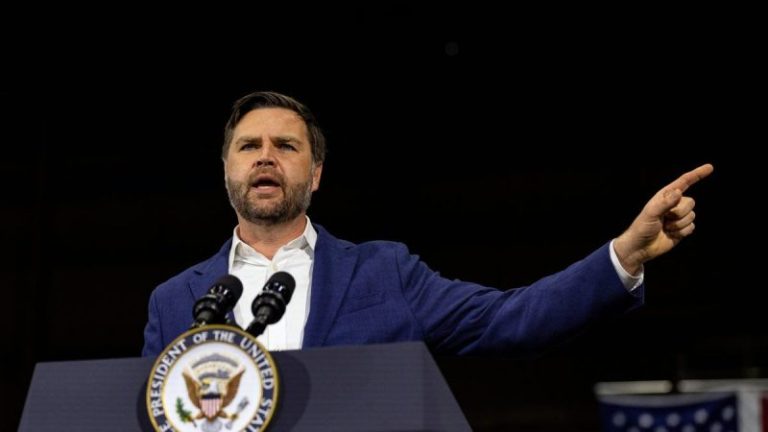
As we settle into the second Trump administration, eyes are already turning toward 2028. With President Donald Trump barred from a third elected term by the 22nd Amendment, the Republican nomination looks like a coronation for Vice President JD Vance. Polling shows Vance dominating the GOP field, with 46% support in a recent survey. That’s far ahead of potential challengers.

Vance, the Ohio senator and author of ‘Hillbilly Elegy,’ embodies the Trumpian blend of populism, economic nationalism and cultural conservatism that has reshaped the GOP. Operationally, his run would extend Trump’s legacy, focusing on border security, trade deals favoring American workers and an America First foreign policy.

On the Democratic side, the picture is murkier. The list of potential nominees reads like a progressive wish list: California Gov. Gavin Newsom, former Transportation Secretary Pete Buttigieg, Rep. Alexandria Ocasio-Cortez, D-N.Y., Minnesota Gov. Tim Walz, former Vice President Kamala Harris, Sen. Bernie Sanders, I-Vt., Kentucky Gov. Andy Beshear, Pennsylvania Gov. Josh Shapiro, Sen. Cory Booker, D-N.J., Illinois Gov. J.B. Pritzker, Rep. Ro Khanna, D-Calif.., and Sen. Mark Kelly, D-Ariz.

Nationally, an Emerson College poll from June 2025 pegs the race as wide open with former V.P. and 2024 Democratic nominee Kamala Harris fading quickly. Early polls for the 2028 nomination reveal a crowded field of far-left contenders, with Newsom emerging as a frontrunner in recent weeks. A Newsweek analysis of state-level polling shows Newsom leading in at least two key states, including his home turf of California as well as Ohio, where he reportedly commands strong support among Democratic voters.

Other polls, such as one from Zeteo and Data for Progress in April 2025, show Buttigieg, Booker and Ocasio-Cortez leading in scenarios without Harris. But Newsom’s name recognition and fundraising prowess give him an edge — especially with Newsom’s high-profile, but likely doomed effort to redistrict California via ballot initiative this November.

In America’s two-party system, winning the presidency hinges on capturing the Electoral College, which rewards candidates who appeal to the center. Candidates typically tack toward the commonsense center in general elections, shedding primary extremism to court swing voters in states like Pennsylvania, Michigan and Wisconsin.

But Democrats have struggled with this since 1968, when the Vietnam War radicalized the elite left, pulling the party away from the mainstream. 

The result? Four blowout elections out of five contests: 1972, Richard Nixon with 520 Electoral College votes to George McGovern with 17; 1980, Ronald Reagan, 489 to Jimmy Carter, 49; 1984, Ronald Reagan 525 to Walter Mondale, 13; 1988, George H.W. Bush 426 to Mike Dukakis, 111. 

Bill Clinton’s two elections in the 1990s were anomalies fueled by George H.W. Bush’s infamous ‘no new taxes’ pledge break, which alienated conservatives, and H. Ross Perot’s third-party run (fueled by personal animus towards Bush), which siphoned votes from Bush. 

The Democratic Leadership Council (DLC) played a huge role as well, as it pushed for a moderate and electable nominee. Even so, Bush’s sky-high popularity (the result of the crushing victory against Iraq in 1991 in the Gulf War) caused many popular Democrats not to run for the nomination.

Clinton won two general elections with 43% of the popular vote in 1992 and 49% in 1996. Importantly, Clinton governed with centrist moves like welfare reform and a balanced budget (though largely due to the Republican takeover of Congress in 1994)—policies that today’s Democrats would decry as right-wing.

Fast-forward to today, and the Democratic Party is adrift. The influence of progressives, supercharged during President Barack Obama’s eight years, has made it nearly impossible to nominate someone who can win nationally. 

The Democratic Party base demands fealty to identity politics, open borders and climate extremism. This alienates working-class voters who flipped to Trump in 2016 and stayed Republican thereafter. Polls consistently show Americans rejecting these positions: majorities support border walls, favor energy independence over green mandates and oppose defunding the police.

Newsom exemplifies this dilemma. As California’s governor, he’s presided over skyrocketing homelessness, rapidly rising energy prices and a population exodus — policies that play well in San Francisco, but flop in Pennsylvania.

Early in 2025, Newsom made a rare nod to the center, stating during a podcast that allowing biological males to compete in women’s sports is ‘deeply unfair’ and an ‘issue of fairness.’ Newsom’s remarks align with public sentiment; surveys show 80% or more of Americans oppose transgender athletes in female competitions, viewing it as a commonsense protection for women’s opportunities. 

Newsom quickly backpedaled amid backlash from party activists. By April, he downplayed the remarks as unplanned and in May he supported rule changes allowing more transgender participation in state events — despite controversy.

Newsom’s flip-flop under left-wing pressure reveals the bind: Stray from the left and you risk the nomination. Stick to it and you lose the general.

A few Democrats hint at moderation, like Khanna of California. Khanna, a progressive who co-chaired Sen. Bernie Sanders’ 2020 presidential campaign has carved out bipartisan ground on issues like tech regulation and manufacturing revival. He’s advocated for bringing jobs back to America, echoing Trump-era themes and called for Democratic unity amid ideological excesses. 

Khanna critiques ‘woke’ politics as weakening the party, positioning himself as a bridge-builder. Yet even he supports progressive staples like ‘Medicare for All’ and aggressive climate action, limiting his appeal beyond the base.

Barring an economic or foreign crisis, the Democrats’ leftward drift dooms them. Vance, inheriting Trump’s coalition and likely expanding it, starts with advantages in the Rust Belt and Sun Belt. 

History shows parties win by claiming the center. Republicans have mastered that under Trump. Democrats? Their left-wing tidal lock leaves them wholly unable to see, much less voice, commonsense policies.

This post appeared first on FOX NEWS

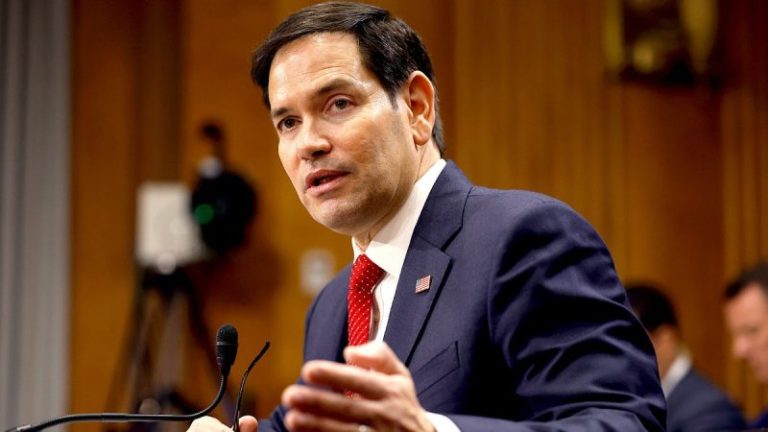
Secretary of State Marco Rubio has denied Palestinian leaders visas to attend next month’s United Nations General Assembly, citing longstanding U.S. law that prohibits recognition of Palestinian statehood and sanctions the Palestinian Authority for so-called ‘pay for slay’ payments to terrorists.

According to internal documents reviewed by Fox News, Rubio signed off on recommendations that would block visas for senior officials of the Palestinian Authority (PA) and the Palestine Liberation Organization (PLO), including PA President Mahmoud Abbas. 

‘In compliance with the laws and national security interests of the United States, Secretary of State Marco Rubio is denying and revoking visas from members of the Palestine Liberation Organization (PLO) and the Palestinian Authority (PA) ahead of the upcoming UN General Assembly,’ State Department spokesperson Tommy Pigott said in a statement on Friday. 

‘Before they can be taken seriously as partners for peace, the PA and PLO must repudiate terrorism, lawfare campaigns at the ICC and ICJ, and the pursuit of unilateral recognition of statehood.  The PA Mission to the UN will receive waivers per the UN Headquarters agreement.  The United States remains open to re-engagement should the PA/PLO demonstrably take concrete steps to return to constructive engagement.  The Trump Administration does not reward terrorism.’ 

The move prevents Palestinian leaders from addressing the annual U.N. gathering in New York next month, a stage they have frequently used to advance unilateral recognition of statehood.

The decision stems from findings under the Palestinian Liberation Organization Commitments Compliance Act (PLOCCA) and the Middle East Peace Commitments Act (MEPCA), which determined the PA and PLO were out of compliance with U.S. commitments by ‘unilaterally declaring Palestinian statehood; glorifying violence; promoting antisemitism; and providing material support to terrorists.’ The sanctions mandate an automatic denial of visas for at least 180 days.

While the United States has previously denied visas on a case-by-case basis — including for members of the Iranian delegation — officials acknowledged in the documents that Washington has never before barred an entire delegation from attending the U.N. General Assembly. The internal guidance argues that the unprecedented step is justified because Palestinian leaders plan to use the September forum to push a ‘constitutional declaration’ of independence, a move the U.S. views as a major propaganda victory for Hamas and a threat to ceasefire talks in Gaza.

The recommendations call for rejecting visa applications from Palestinian officials, declining a waiver for Abbas himself, and revoking visas issued before July 31 for PLO and PA members. However, the guidance makes one exception: permanent staff and dependents at the Palestinian U.N. Observer Mission would be allowed to remain under U.S. obligations to the U.N. Headquarters Agreement.

U.S. officials wrote that granting waivers ‘would undermine the credibility’ of existing sanctions and embolden the PA to pursue unilateral recognition efforts. By contrast, enforcing the visa bans was described as a ‘low-cost, high-impact action’ to reinforce U.S. policy.

Since 2012, Palestinian representatives have held non-member observer status at the U.N., a designation that allows them to participate in debates but not vote. While the U.S. has pledged under the U.N. Headquarters Agreement not to obstruct travel for official U.N. business, the documents argue that the PA’s use of the General Assembly to advance statehood recognition falls outside routine mission work and poses a direct challenge to U.S. national interests.

Rubio’s decision marks a historic departure from the U.S. practice of accommodating U.N. participation, setting up a likely clash with international bodies and U.S. allies that continue to recognize Palestinian representatives.

The move follows decades of friction between Washington and the United Nations over Israel-related issues, most especially after the Hamas attack on October 7, 2023. 

The United States has used its Security Council veto power dozens of times to block resolutions critical of Israel — more than any other permanent member has used its veto for a single ally.

This post appeared first on FOX NEWS

There is no question that President Donald Trump is deserving of the Nobel Peace Prize. Nations, statesmen and elected officials around the globe have seen the fruits of his labor to bring peace to different hemispheres. 

The big question is, ‘Is there a real pathway for President Trump to actually receive the Nobel Peace Prize?’ I believe there is. But it’s a pathway that must be flawlessly executed. 

And in doing so, it’s important to understand the history of the Nobel Peace Prize and the actual process for awarding it. We can also gain insight from how a former Trump appointee led an international organization to receive it. And we can learn from how a former Republican president worked to end a war and received the Nobel Peace Prize despite protests from Norwegian and Swedish politicians and media.

The Nobel Prizes were established by the will of the famed Swedish industrialist and inventor, Alfred Nobel. Nobel was the inventor of dynamite and, at the time of his death in 1896, was the owner of Bofors, the Swedish armaments manufacturer. 

I personally became intrigued with the Nobel Prizes while doing consulting work for Bofors in the late 1990s and visiting Karlskoga, Sweden, a number of times.

Nobel’s will provided for prizes in physics, chemistry, physiology or medicine, literature and peace. A Nobel Memorial Prize in Economic Sciences was added in 1968. The original prizes have been awarded since 1901. 

In his will, Nobel provided that the prizes were to be awarded by different Swedish entities, with the exception of the Nobel Peace Prize, which was to be awarded ‘by a committee of five persons to be elected by the Norwegian Storting [Parliament].’ Today, the Norwegian Nobel Committee is responsible for selecting Nobel Peace Prize laureates. Appointed by the Norwegian Parliament, it should surprise no one that historically its members have been former members of Parliament and cabinet ministers.

Only ‘qualified nominators’ can submit a name for the Nobel Peace Prize. These include members of national assemblies, national governments, current heads of state, previous recipients, certain university professors and directors of peace research institutions. 

This explains why President Trump has been nominated by numerous members of Congress, several nations, heads of state and university professors. Nominations are due on Jan. 31 each year, followed by a multi-stage selection process. The winner is announced in early October, with the award ceremony taking place on Dec. 10 every year at Oslo City Hall.

Make no mistake, this is a very political process. I served for a number of years on the board of the Norwegian-American Foundation. I remember when the Nobel Peace Prize was awarded to President Barack Obama for ‘the promise’ of his vision. My Norwegian friends were flabbergasted. 

The running joke in Norway was that he received it because a couple of left-wingers on the Committee wanted a chance to meet him and have a photo-op. In Trump’s case, you actually have a president who has resolved conflicts and helped to bring peace to different regions of the world.

In addition to the formal nominations, I believe there are key actions supporters of President Trump can undertake to maximize his chances. Consider these: 

, the former NATO secretary-general, is back in the current Labour government’s cabinet serving as finance minister. Following Trump’s victory last November, Stoltenberg said that during Trump’s first term, they had ‘established a good and reliable working relationship.’ He further noted that they ‘got things done,’ and that ‘NATO had become stronger.’ A former Labour prime minister, he could be helpful with one or two members of the committee. In fact, committee member Gry Larsen is a member of the Labour Party and served as state secretary for the Ministry of Foreign Affairs when Stoltenberg was prime minister. 

, founded by former Norwegian Prime Minister Kjell Magne Bondevik, is considered much less political than the Norwegian Nobel Institute. It has a history of actually being in the field promoting peace and strengthening democratic political institutions and processes. I met with him as he was laying the foundation for the center and heard his vision. An ordained Lutheran minister, he’s the former head of the Christian Democratic Party. Current committee member Anne Enger served as Bondevik’s deputy during his first term as prime minister. And committee member Kristin Clemet served as Bondevik’s minister of education during his second term.

Either through the ambassador when he’s confirmed, or through the current charge d’affaires, the embassy needs to take a proactive role in making the case for President Trump to the Norwegian media and institutions. 

: Former South Carolina Gov. David Beasley received the prize as the Trump-appointed executive director of the World Food Program (WFP) in 2020. The WFP had been nominated numerous times over 40 years, but it was under a Trump appointee’s leadership that it finally happened. Insights on how Beasley and the WFP interacted with Norwegian authorities can be helpful. 

: The Republican president received the Nobel Peace Prize despite protests from liberal Norwegian politicians and Swedish media. His efforts to end the Russo-Japanese War were too meritorious and couldn’t be ignored. Likewise, President Trump supporters can make a similar case with the conflicts that he has helped to end. The embassy can play a big role in articulating this.

On the merits, President Trump deserves the Nobel Peace Prize. But this is a political process, and his supporters need to work the process. 

A Norwegian friend reminded me that the prize is supposed to consider achievements over a period of time. He pointed to President Trump’s brokering the Abraham Accords during his first term as laying a foundation for real peace in the Middle East. 

He’s right. President Trump’s achievements during his first term, combined with what he’s done so far in his second term, have earned him the Nobel Peace Prize.

This post appeared first on FOX NEWS