
Author

admin

Browsing

Apollo Silver Corp. (‘ Apollo ‘ or the ‘ Company ‘) (TSX.V:APGO, OTCQB:APGOF, Frankfurt:6ZF0) is pleased to announce a number of positive developments at its Calico Silver Project (‘Calico’ or the ‘Calico Project’) located in San Bernardino County, California.

Highlights:

  • Appointment of Senior Project Manager: Tony Gonzales, P.Geo., with over 35 years of mineral exploration experience, including leading roles at BHP and Fission Uranium, joins as Senior Project Manager with a focus on advancing Calico.
  • Langtry Option Extension: The Company has executed an amendment to one of its Option to Purchase Agreements for the Strachan portion of the Langtry Property, extending its right to acquire up to 100% of that portion of the property by an additional nine (9) years.
  • Waterloo Permit Extension: The Company has received approval for a third extension of the Temporary Use Permit (‘TUP’) for the Waterloo Property, which allows for exploration drilling activities for the next twelve (12) months.
  • Strengthening of Technical Advisors: The Company has engaged George Kenline, PG, CHg, CEG, a California-licensed Engineering Geologist and Hydrogeologist, and Genesg, a consulting firm with global expertise specializing in permitting, stakeholder relations, sustainability, and ESG leadership, to its technical advisory team for Calico.

Appointment of Senior Project Manager

To support the advancement of Calico, Apollo is also pleased to announce the appointment of Tony Gonzales, P. Geo., as Senior Project Manager.

Tony brings more than 35 years of mineral exploration experience, including nearly two decades with mining giant BHP. He was instrumental in advancing the EKATI Diamond Mine from exploration through to production, holding senior positions such as Senior Exploration Geologist, Technical Specialist (R&D), and Superintendent of Exploration.

As Project Manager at Fission Energy, Tony oversaw advanced exploration of the J Zone uranium deposit at Waterbury Lake. He later served as Senior Project Manager for Fission Uranium, contributing to both the discovery and advancement of the award-winning Triple-R deposit. Tony was also a key member of the team that discovered F3 Uranium’s JR-Zone in Northern Saskatchewan.

Ross McElroy, President and CEO of Apollo, commented, ‘ Calico consists of a major, high confidence silver resource surrounded by one of the most prospective land packages in the region. Thanks to the success of prior work programs, we already have an exciting list of exploration targets, including high-grade silver, gold, and barite. Now, with the appointment of Tony Gonzales, we have one of the industry’s top exploration team leaders to take Calico into its next phase of growth.’

Langtry Option Extension

The Company has entered into an amendment (the ‘Amendment’) to its Option to Purchase Agreement with David K. Strachan as Trustee of the Bruce & Elizabeth Strachan Revocable Living Trust dated July 25, 2007 (‘Strachan’). Under the original agreement, the Company was required to make a payment equal to the greater of US$5.2 million or the spot price of 220,000 troy ounces of silver, less any option payments made to date, by December 24, 2025, in order to acquire 100% interest in 20 patented and 2 unpatented mineral claims (the ‘Strachan Property’) within the Langtry Property, part of the Company’s larger Calico Project. The Langtry deposit, the majority of which is located on the Strachan Property, has a 2022 inferred Mineral Resource Estimate of 19.3 M tonnes at a grade of 81 g/t Ag for a total of 50 M oz of Ag using a 50 g/t silver cut-off (see news release dated February 9, 2022).

The Amendment extends the option period expiry date from December 24, 2025 to December 24, 2034; increases the purchase price to the greater of US$7.0 million or the spot price of 250,000 troy ounces of silver (the ‘Amended Purchase Price’), less any option payments made to date; and provides for annual option maintenance payments to be made over the duration of the eight-year extension totaling US$3.9 million, all of which can be credited against the Amended Purchase Price upon exercise.

To date, the Company has made a total of US$500,000 in option maintenance payments, which can be credited against the Amended Purchase Price upon exercise.

Waterloo Permit Extension

The Company has received approval from the San Bernardino County Land Use Services Department for its third extension of its TUP, allowing the Company to conduct exploration drilling at Waterloo for the next twelve (12) months

Technical Advisory Additions

The Company has entered into an Advisory Agreement with George Kenline to act as an independent technical advisor to the Company. Mr. Kenline is a California licensed Engineering Geologist and Hydrogeologist with extensive experience in environmental review processes. In particular, he has deep expertise in the permitting of mineral resource extraction, water supply development, reclamation, and habitat restoration in the County of San Bernardino, California. For over 15 years, he led as the Mining Engineering Geologist/Environmental Compliance Manager for the San Bernardino County’s Land Use Services Department Mining Section as the County’s Mining/Engineering Geologist.

Additionally, Apollo has also strengthened its project development team by engaging Genesg, a consulting firm with global expertise in permitting, stakeholder engagement, sustainability, and ESG Leadership, to support the Company as it advances Calico towards project development.

Qualified Person

The scientific and technical data contained in this news release was reviewed and approved by Isabelle Lépine, M.Sc., P.Geo., Apollo’s Director, Mineral Resources. Ms. Lépine is a registered professional geologist in British Columbia and a QP as defined by NI 43-101 and is not an independent of the Company.

About Apollo Silver Corp.

Apollo is advancing one of the largest undeveloped primary silver projects in the US. The Calico project hosts a large, bulk minable silver deposit with significant barite credits – a critical mineral essential to the US energy and medical sectors. The Company also holds an option on the Cinco de Mayo Project in Chihuahua, Mexico, which is host to a major carbonate replacement (CRD) deposit that is both high-grade and large tonnage. Led by an experienced and award-winning management team, Apollo is well positioned to advance the assets and deliver value through exploration and development.

Please visit www.apollosilver.com for further information.

ON BEHALF OF THE BOARD OF DIRECTORS

Ross McElroy
President and CEO

For further information, please contact:

Email: info@apollosilver.com
Telephone: +1 (604) 428-6128

Neither the TSX Venture Exchange nor its Regulation Services Provider (as that term is defined in the policies of the TSX Venture Exchange) accepts responsibility for the adequacy or accuracy of this release.

This news release includes ‘forward-looking statements’ and ‘forward-looking information’ within the meaning of Canadian securities legislation. All statements included in this news release, other than statements of historical fact, are forward-looking statements including, without limitation he expected benefits of the Strachan Option Extension; the timing, scope, and success of planned exploration activities, including at the Waterloo Project; the potential for silver, gold, and barite mineralization; the contributions of newly appointed personnel and advisors to the advancement of Calico; and the Company’s ability to advance, develop, and permit the Calico Project. Forward-looking statements include predictions, projections and forecasts and are often, but not always, identified by the use of words such as ‘anticipate’, ‘believe’, ‘plan’, ‘estimate’, ‘expect’, ‘potential’, ‘target’, ‘budget’ and ‘intend’ and statements that an event or result ‘may’, ‘will’, ‘should’, ‘could’ or ‘might’ occur or be achieved and other similar expressions and includes the negatives thereof.

Forward-looking statements are based on the reasonable assumptions, estimates, analysis, and opinions of the management of the Company made in light of its experience and its perception of trends, current conditions and expected developments, as well as other factors that management of the Company believes to be relevant and reasonable in the circumstances at the date that such statements are made. Forward-looking information is based on reasonable assumptions that have been made by the Company as at the date of such information and is subject to known and unknown risks, uncertainties and other factors that may have caused actual results, level of activity, performance or achievements of the Company to be materially different from those expressed or implied by such forward-looking information, including but not limited to: risks associated with mineral exploration and development; metal and mineral prices; availability of capital; accuracy of the Company’s projections and estimates; realization of mineral resource estimates, interest and exchange rates; competition; stock price fluctuations; availability of drilling equipment and access; actual results of current exploration activities; government regulation; political or economic developments; environmental risks; insurance risks; capital expenditures; operating or technical difficulties in connection with development activities; personnel relations; and changes in Project parameters as plans continue to be refined. Forward-looking statements are based on assumptions management believes to be reasonable, including but not limited to the price of silver, gold and Ba; the demand for silver, gold and Ba; the ability to carry on exploration and development activities; the timely receipt of any required approvals; the ability to obtain qualified personnel, equipment and services in a timely and cost-efficient manner; the ability to operate in a safe, efficient and effective matter; and the regulatory framework regarding environmental matters, and such other assumptions and factors as set out herein. Although the Company has attempted to identify important factors that could cause actual results to differ materially from those contained in forward-looking information, there may be other factors that cause results not to be as anticipated, estimated or intended. There can be no assurance that forward-looking statements will prove to be accurate and actual results, and future events could differ materially from those anticipated in such statements. Accordingly, readers should not place undue reliance on forward looking information contained herein, except in accordance with applicable securities laws. The forward-looking information contained herein is presented for the purpose of assisting investors in understanding the Company’s expected financial and operational performance and the Company’s plans and objectives and may not be appropriate for other purposes. The Company does not undertake to update any forward-looking information, except in accordance with applicable securities laws .

News Provided by GlobeNewswire via QuoteMedia

This post appeared first on investingnews.com

The Trump administration said Friday that it had taken a 10% stake in Intel, the president’s latest extraordinary move to exert federal government control over private business.

The United States will not seek direct representation on Intel’s board and pledged to vote with the current Board of Directors on matters requiring shareholder approval, ‘with limited exceptions,’ according to a joint release from the Trump administration and Intel. The move also comes as the United States vies with China in the race to dominate the artificial intelligence industry.

President Donald Trump announced the deal on his Truth Social platform Friday, praising the company’s CEO just two weeks after he called on the executive to resign over alleged China ties.

‘It is my Great Honor to report that the United States of America now fully owns and controls 10% of INTEL, a Great American Company that has an even more incredible future,’ he wrote. ‘I negotiated this Deal with Lip-Bu Tan, the Highly Respected Chief Executive Officer of the Company. The United States paid nothing for these Shares, and the Shares are now valued at approximately $11 Billion Dollars. This is a great Deal for America and, also, a great Deal for INTEL. Building leading edge Semiconductors and Chips, which is what INTEL does, is fundamental to the future of our Nation.’

While the U.S. held temporary stakes in firms at the center of the 2008-2009 global financial meltdown as part of a bailout, this move is unusual since the economy is not embroiled in a crisis. Congress published a study in 2003 that examined the impact of the federal government taking direct stakes in public companies, concluding that doing so would “not offer a free lunch” and expose taxpayers to “greater risk” alongside the upside potential.

The stake will be paid for through $5.7 billion in grants previously awarded to Intel under the 2022 U.S. CHIPS and Science Act, plus $3.2 billion awarded to the company as part of a program called Secure Enclave. It’s a formerly classified initiative that Congress appropriated funds for in 2024 after lobbying by Intel, Politico reported in 2024.

Including $2.2 billion in CHIPs grants Intel has received so far, the total investment is $11.1 billion, or 9.9%. Intel is valued at about $108 billion on the stock market.

Trump continues to bulldoze through long-held norms regarding government and business, departing from the free-market ethos that has long prevailed in both major U.S. political parties.

This month, Trump persuaded the chipmakers Nvidia and AMD to pay the U.S. government 15% of their revenues from some sales to China in return for securing export licenses there.

While those firms have seen their fortunes rise amid the larger artificial intelligence boom, a windfall from any of them is no sure thing. In the case of California-based Intel, the company has struggled to keep up with rivals in recent years, with its shares down some 60% from the highs seen during the pandemic.

But amid the ongoing artificial intelligence arms race — and the goal of making computer chips a national security priority — Trump officials zeroed in on Intel as a means of leveling up U.S. control over semiconductor production.

Earlier this week, Japan’s SoftBank also announced it would invest $2 billion in Intel to “deepen their commitment to investing in advanced technology and semiconductor innovation in the United States.’

Some Democrats signaled they were on board with the move.

‘U.S. leadership is critical for both our economy and national security,’ U.S. Senator Mark Warner, D-Virginia, said in a statement Friday evening.

‘Taking an equity stake in Intel may or may not be the right approach, but one thing is clear: allowing cutting-edge chips to flow to China without restraint will erode the value of any investment we make here at home. We need a strategy that protects American innovation, strengthens our workforce, and keeps the technologies of the future firmly in American hands.’

This post appeared first on NBC NEWS

On Saturday, Israeli tanks and troops began maneuvering ever closer to Gaza City’s outskirts in preparation for a full-scale offensive. Eyewitness accounts reported intensified shelling as Israel is moving toward what could be the defining battle of its war against Hamas terrorists: the capture of Gaza City.

Israel’s security cabinet approved the operation, known as Gideon’s Chariots B, and has deployed up to five IDF divisions toward the city’s outskirts—a highly significant mobilization. Thousands of reservists—some 60,000—have been called up.

John Spencer, chair of urban warfare studies at the Madison Policy Forum and executive director of the Urban Warfare Institute, told Fox News Digital the scale of this operation is unprecedented. ‘This will be a bigger challenge than anything the IDF has faced, arguably ever. It is the densest location in Gaza, the heart of Hamas’s stronghold. And you don’t really know what the tunnels are until you get into them.’

Spencer said that ‘Hamas built semi-circles of defenses oriented at Israel. But the IDF has shown creativity in maneuvering around obstacles.’ Israel plans to send more combat power into Gaza City than it has deployed across the entire Strip thus far. ‘If your goal is to clear Gaza City of Hamas’s military capabilities and search for hostages, you need that scale,’ he said.

Gadi Shamni, former commander of the Gaza Division and ex-head of IDF Central Command, told Fox News Digital, ‘It is a crowded city with refugee camps, dense neighborhoods, high-rises and a highly developed underground. People say the IDF controls above and below ground, but in the last campaign we saw that wasn’t always true. Even when you destroy tunnels, Hamas can rebuild them quickly. The longer you stay with more forces, the more opportunities you create for the other side to attack.’

A former senior Israeli security official, speaking on the condition of anonymity, told Fox News Digital, ‘The IDF can militarily conquer Gaza, but the costs will be immense on both sides. The IDF will fight with a method of ‘destroy everything first’—air force bombs, massive charges, detonating streets from afar, wiping out entire areas and advancing slowly.

‘The IDF has gained enormous experience over the past two years and will use those tactics in this battle. … You are strong, the enemy is weak, and you have patience. Even the weather is on Israel’s side, with winter not arriving until January.’

The tunnels remain the most formidable element of Hamas’s defense. Unlike ISIS terrorists in Mosul, Spencer said, Hamas has built an underground tunnel network that allows commanders and fighters to move between positions avoid strikes, and conceal hostages. ‘The IDF that will go into Gaza City is not the IDF of 2023,’ Spencer said, pointing to rapid adaptations in the use of drones, robots, and specialized units for tunnel warfare. ‘They’ve learned so much. But this will still be slow, very careful, and costly.’

To illustrate the scale, Spencer pointed to the 2004 battle for Fallujah in Iraq. ‘It took the Marine Corps about two weeks to clear Fallujah—every single home, building, shop. About 68,000 structures were cleared, as if somebody physically looked in them,’ he said. ‘If all five of these [IDF] divisions were doing that, absolutely, you could get it done in a few months. But the enemy always gets a vote. You can’t rush to failure.’

The former Israeli senior security official described the operation as ‘telescopic—very slow, with pistons working one by one. This pace also gives Hamas the chance at every stage to try to cut a deal.’

On the fate of hostages possibly held in Gaza City, the official was blunt: ‘Some of the hostages will die. I wouldn’t be surprised if more brigades are brought in—the IDF is using immense ground power to seize urban terrain.’

Shamni also warned Hamas may relocate hostages, 50 hostages, of whom 20 are still believed to be alive, into combat zones to deter strikes—a tactic he said the IDF would be reluctant to engage for fear of harming captives, a conflict between military necessity and core values.

Shamni highlighted a particularly fraught dilemma: evacuating civilians. ‘You don’t know who will leave, how many will leave, how they’ll react—or whether Hamas will even allow them to leave,’ he said. ‘I assume many will not evacuate, and then you face the hard dilemma of fighting in a place full of noncombatants.’

Spencer added that history shows around 10% of civilians stay behind. ‘Even 10% of a million is 100,000 people,’ he said.

Shamni forecast a protracted operation: ‘It could take months. Two months might seize the surface, but then you still have to clear tunnels. It will cost many lives—including civilians. The worst-case scenario is that no hostages are found alive or dead because of the destruction.’

Shamni, who also served as Israel’s military attaché in Washington, warned that the dual goals of defeating Hamas and returning hostages are contradictory, risking years of drawn-out fighting. 

Spencer, however, called the decision to press forward a ‘calculated risk,’ explaining that while military action carries dangers, ‘you weigh the risk of Hamas killing the hostages against the certainty that they’re being starved and tortured. Military pressure is the last resort. Without conquering Gaza City, Hamas will continue to hold a sanctuary.’


This post appeared first on FOX NEWS

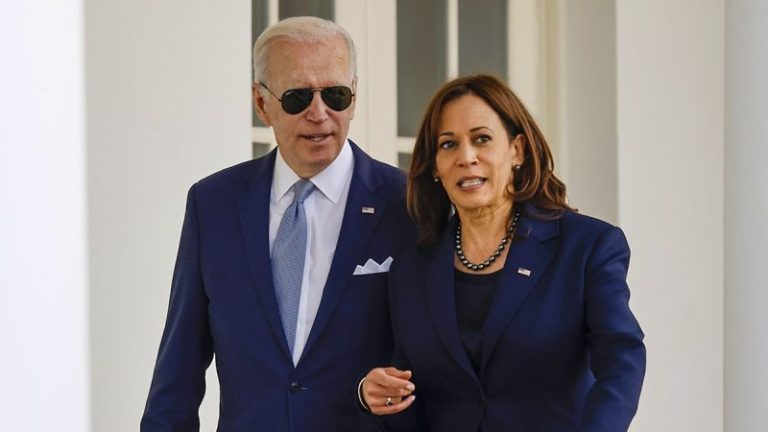
As the 11th member of former President Joe Biden’s administration appeared before the House Oversight Committee this week, Fox News Digital asked senators on Capitol Hill if former Vice President Kamala Harris should testify next. 

‘I think they should take her behind closed doors and figure out what she knows and what she’s willing to talk about,’ Sen. Roger Marshall, R-Kan., said. 

House Oversight Committee Chair James Comer, R-Ky., is leading the investigation into the alleged cover-up of Biden’s cognitive decline and use of the autopen during his tenure as president. 

Comer said on Fox News’ ‘The Ingraham Angle’ last month that the ‘odds’ of Harris getting a subpoena to appear before the House Oversight Committee are ‘very high.’ 

While Marshall told Fox News Digital that Harris should testify, he admitted, ‘I don’t think you need her testimony to show Americans what I knew as a physician a long time ago, that Joe Biden had a neurodegenerative disease of some sort.’

Marshall has a medical degree from the University of Kansas and practiced medicine for more than 25 years before running for public office. 

‘All you had to do is look at his very fixed, flat face,’ Marshall explained. ‘Look at his gait, the way he walked. He had a shuffled walk. He didn’t move his arms, hardly at all. When he talked, it was very monotone, a very soft voice. He had malingering thought processes. I don’t think it took much to figure that out.’

After listing the former president’s symptoms, the Kansas senator lamented that Biden ‘turned weakness into war,’ creating a national security threat. 

During Biden’s presidency, the United States’ withdrawal from Afghanistan resulted in the death of 13 U.S. soldiers, Russia invaded Ukraine and Hamas attacked Israel, triggering the ongoing war in Gaza.

But as Republicans demand transparency, Sen. Richard Blumenthal, D-Conn., told Fox News Digital he is far more worried about the ‘challenges we face right now,’ particularly on the economy, inflation and the effect of Trump’s tariff policies. 

Meanwhile, Sen. John Hoeven R-N.D., defended the accountability argument, telling Fox News Digital that Americans ‘always want more information and more transparency.’

‘If you’re involved in an administration, you [should] always be willing to come in and say what you did and why you did it, and you know what it’s all about. I mean, that’s how it works, and that’s what the American people want,’ he said. 

Fox News Digital reached out to Biden and Harris for comment but did not immediately receive a response. 

Fox News Digital’s Elizabeth Elkind contributed to this report. 

This post appeared first on FOX NEWS

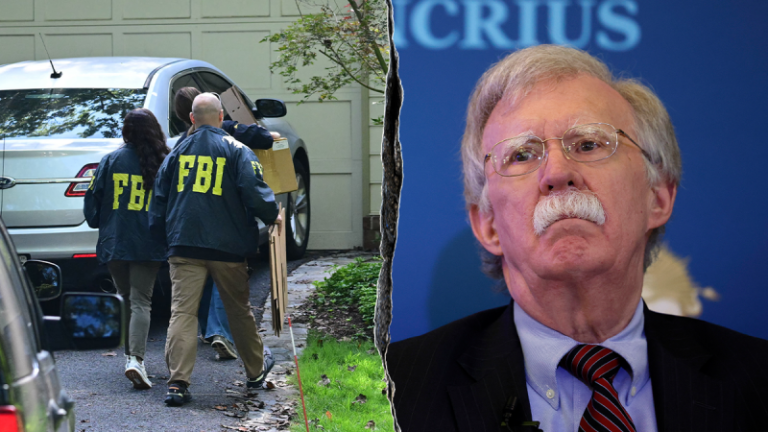
FBI agents raided the Bethesda, Md., home of former national security adviser John Bolton on Friday morning, marking a new tension point in his difficult relationship with President Donald Trump. Agents also raided Bolton’s D.C. office.

The reason behind the raids was reportedly linked to a probe of allegations that Bolton sent classified documents to his family from a private email server while working at the White House, according to the New York Post. The Post cited a Trump administration official who said FBI Director Kash Patel ordered the raid.

The outlet also reported that yet-to-be-unsealed search warrants reference a controversy over his memoir to establish a pattern of behavior. However, a senior U.S. official told the Post the probe was a ‘clean break’ from the investigation regarding Bolton’s book.

Shortly after the raid began, Patel wrote on X that ‘no one is above the law… [FBI] agents on a mission.’

FBI Deputy Director Dan Bongino shared the post and wrote, ‘Public corruption will not be tolerated.’

Bolton, who served in Trump’s first administration, has not been arrested or taken into custody. Trump revoked his security clearance and Secret Service detail in January 2025.

Trump was asked about the raid on Friday and said he did not know about it ahead of time, claiming he saw it on television. The president then made clear his disdain for his former national security adviser.

‘I’m not a fan of John Bolton. He’s a real lowlife,’ Trump told reporters. He went on to call Bolton ‘not a smart guy’ and said ‘he could be very unpatriotic.’

The president also said Bolton was ‘a very quiet person except on television if he can say something bad about Trump.’

Vice President JD Vance told ‘Meet the Press’ on Friday that ‘we’re in the very early stages of an ongoing investigation into John Bolton.’ Vance denied Bolton was being targeted for criticizing Trump.

A source familiar with the Bolton raid and the evidence used to justify it told Fox News Digital that ‘Bolton really had some nerve to attack Trump over his handling of classified information,’ but would not give more details.

Bolton criticized Trump’s handling of classified documents after the FBI raided Mar-a-Lago in 2022. Trump was later indicted on 37 felony counts, which expanded to 40 before the case was dropped in July 2024.

During Trump’s first administration, a probe into classified documents was launched but later shut down by the Biden administration. The Justice Department argued that Bolton’s 2020 memoir, ‘The Room Where it Happened,’ contained classified material and attempted to block it from being published. 

The FBI and Bolton’s office declined to comment on the matter.

Reporting contributed by Axios and Fox News’ Michael Dorgan, David Spunt, Breanne Deppisch, Emma Woodhead and Brooke Singman.

This post appeared first on FOX NEWS

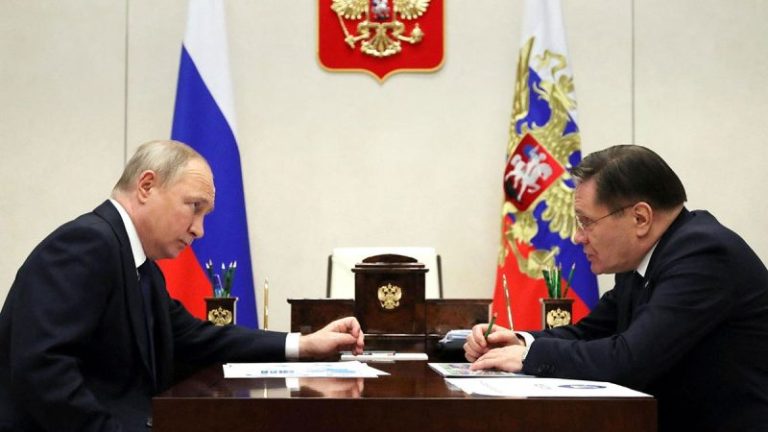
Russia’s top nuclear official this week said Moscow is facing ‘colossal threats’ and needs to update its nuclear capabilities.

Without directly naming where Russia’s chief nuclear threat is coming from, Director General of the State Atomic Energy Corporation Rosatom Alexei Likhachev said, ‘the current geopolitical situation, is a time of colossal threats to the existence of our country.’

‘Therefore, the nuclear shield, which is also a sword, is a guarantee of our sovereignty,’ he added, according to Russian state news agency RIA. ‘We understand today that the nuclear shield must only be improved in the coming years.’

The comments came less than a week after Russian President Vladimir Putin and President Donald Trump convened for a face-to-face meeting that marked the first time a U.S. leader has met with the Kremlin chief since Russia invaded Ukraine in 2022. 

While Trump and Putin appeared positive following the talks, little seemed to have been concretely accomplished in the meeting and hope surrounding a Russia-Ukraine ceasefire appeared to decline as the week progressed. 

It is unclear why Likhachev issued comments regarding Russia’s nuclear program at this time, and he did not detail what sort of updates he would be looking to make to Moscow’s ‘shield’ program. 

Trump issued similar comments earlier this year when in May he announced his plans to develop the ‘Golden Dome’ missile defense system — inspired by Israel’s ‘Iron Dome’ defense system — and which is expected to cost at least $175 billion.

Though security experts have been sounding the alarm when it comes to China’s escalating nuclear development, together Russia and the U.S. continue to possess 90% of the world’s nuclear arsenal.

Moscow continues to hold nearly 4,400 nuclear warheads, over 1,500 of which are ‘strategically deployed’ while the U.S. possesses more than 3,700 warheads in its stockpiles with 1,400 deployed, according to the Arms Control Association. 

While nuclear disarmament was the standing international goal following the end of the Cold War, the trajectory of this policy remains dubious as relations between Washington and Moscow have once again turned precarious amid Putin’s war in Ukraine, and his burgeoning relationship with Chinese President Xi Jinping. 

The New Start Treaty remains the only bilateral nuclear arms control agreement between the U.S. and Russia, and though it was extended in 2021, it is set to expire in February 2026. The future of the treaty – first signed in 2010 – also remains unclear as Moscow paused its participation in the agreement in 2023.

Putin said that this suspension meant he would continue to abide by stockpile limits under the treaty, but he would not allow for continued U.S. inspections. 

Fox News Digital could not immediately reach the International Atomic Energy Agency (IAEA) for comment as nations increasingly look to expand their nuclear capabilities just six months ahead of when the New Start Treaty is set to expire. 

This post appeared first on FOX NEWS

EXCLUSIVE – New Republican National Committee (RNC) chair Joe Gruters outlined his mission as he took over steering the GOP’s national party committee.

‘The midterms are ahead, where we must expand our major majority in the House, in the Senate, and continue electing Republicans nationwide,’ Gruters said as he addressed committee members moments after being unanimously elected chair at the RNC’s summer meeting, held this year in Atlanta, Georgia.

Gruters, a state senator and RNC committee member from Florida, who, until his election as chair on Friday, briefly served as the national party committee’s treasurer, is a longtime ally of President Donald Trump. His move to the RNC chairmanship cements Trump’s dominance over the GOP as it prepares for midterm battles next year.

And a month ago, Trump endorsed Gruters to succeed now-former RNC chair Michael Whatley, who stepped down as he runs for the Senate in battleground North Carolina in the blockbuster race to succeed retiring GOP Sen. Thom Tillis.

The ascension of Gruters to RNC chair is the latest sign of Trump’s complete control over the national party committee.

‘This is the president’s party. This is the president’s vision, overall. The party fully embraces the president,’ Gruters said as he and Whatley stood for an exclusive interview with Fox News Digital.

Whatley, who Trump picked to steer the RNC a year and a half ago, noted that ‘we have transformed the RNC, basically the way that President Trump has transformed the Republican Party.’

Gruters has been a major Trump supporter dating back to the president’s first campaign for the White House. Gruters served as Florida co-chair Trump’s 2016 campaign.

The Democratic National Committee, taking aim at Gruters following his election as chair, claimed that ‘Gruters and Trump will have a lot to bond over while they turn the Republican Party into even more of a personal propaganda machine for Trump.’

Republicans swept back to power last November, with Trump winning the White House, the GOP retaking control of the Senate and holding onto their fragile majority in the House.

But looking ahead to next year’s midterms, when the party in power traditionally faces political headwinds and loses House and Senate seats, the GOP will be defending their congressional majorities.

A key part of the RNC’s strategy going forward is Trump.

‘We’re gonna ride the president all the way to victory in the midterms, and we are going to win big,’ Gruters emphasized.

Asked about the top three items on his to-do list as he takes over as RNC chair, Gruters said, ‘number one, it’s still election integrity. That’s the most important thing, protecting the vote. And it’s about winning the midterms.’

‘It’s about going back to the fundamentals of registering voters and turning our voters out,’ the new chair added.

Gruters also highlighted Trump’s sweeping GOP-crafted domestic policy bill, which the Republican majorities in Congress passed this summer along near-party lines.

‘It’s our agenda,’ Whatley said in a Fox News Digital interview last month, as he pointed to the massive tax cuts and spending bill that Trump signed into law on July 4.

The measure is stuffed full of Trump’s 2024 campaign trail promises and second-term priorities on tax cuts, immigration, defense, energy and the debt limit. 

It includes extending the president’s signature 2017 tax cuts and eliminating taxes on tips and overtime pay. 

By making his first-term tax rates permanent – they were set to expire later this year – the bill will cut taxes by nearly $4.4 trillion over the next decade, according to analysis by the Congressional Budget Office and the Committee for a Responsible Federal Budget. 

The measure also provides billions for border security and codifies the president’s controversial immigration crackdown.

And the new law also restructures Medicaid – the almost 60-year-old federal program that provides health coverage to roughly 71 million low-income Americans. 

The changes to Medicaid, as well as cuts to food stamps, another one of the nation’s major safety net programs, were drafted in part as an offset to pay for extending Trump’s tax cuts. The measure includes a slew of new rules and regulations, including work requirements for many of those seeking Medicaid coverage.

Democrats, for months, have repeatedly blasted Republicans over the social safety net changes. And they’ve spotlighted a slew of national polls conducted both  before and after the measure was passed into law, that indicate the bill’s popularity in negative territory.

But Gruters sees the new law as campaign ammunition.

‘Every single Democrat in Congress voted for a tax increase on average everyday Americans,’ Gruters argued. ‘And that big, beautiful bill has something for every single American, whether you’re working class, whether you’re a small business owner, everybody benefits, and we’re going to be able to ride that bill all the way to victory.’

This post appeared first on FOX NEWS

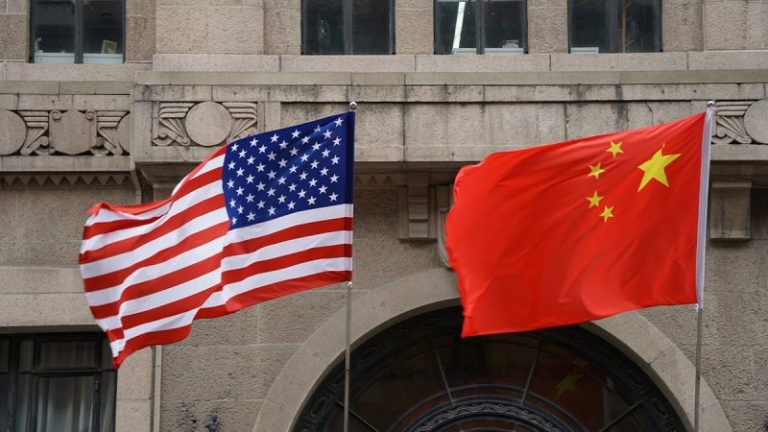
When President Donald Trump returned to the White House in 2025, he faced the same formidable adversary that defined much of his first term: China. This time the stakes were even higher. The trade deficit with China had ballooned to roughly $300 billion, while IP protection, currency manipulation and predatory industrial and international development practices remained significant issues. And Beijing doubled down — weaponizing its control of rare earth minerals, tightening its grip on semiconductors and wielding economic coercion against U.S. allies from Australia to Lithuania. 

Against this backdrop, Trump 47 adopted a two-pronged approach. On offense, the administration has kept maximum pressure on Beijing, staying firm on negotiation positions and refusing to trade away leverage until real concessions emerge. On defense, it has wielded tariffs not only as bargaining chips but as engines of industrial revival — reshoring supply chains, rebuilding America’s manufacturing base and hardening strategic alliances to reduce dependence on China. 

These were not easy calls. Tariffs rattled markets. Pressure campaigns risked alienating partners. Yet the strategy has been to hold the line, play a long game and push forward until the U.S. secured fairer, reciprocal trade terms. In a world where semiconductors and rare earths are the new oil, this is about nothing less than U.S. national security. 

I have seen firsthand how high-stakes these negotiations can be. As I recount in my forthcoming book, ‘A Seat at the Table,’ Chinese officials have long relied on psychological tactics, slow-walking responses through layers of bureaucracy, handing us last-minute drafts in Chinese —  even removing chairs at negotiating tables. These are not trivial gestures. They are meant to unnerve, unsettle and push the U.S. team toward compromise. 

The Trump response was simple but powerful: don’t flinch. In Beijing, when presented with a Chinese draft that ignored our work, Secretary Steven Mnuchin waved it away and insisted the talks proceed on the American document. When a chair was removed to show disrespect, we calmly got it back—without ever conceding authority. 

That posture of confidence — staying the course under pressure — continues today in Trump 47. Tariffs are sharper, more targeted and higher than before; allied trade deals (Japan, South Korea, the EU) allow us to focus resources on China; and deadlines are extended when useful, but only on U.S. terms. 

Critics say tariffs raise consumer prices. In the short term, they can. But the broader truth is that tariffs are tools to rewire incentives, drive investment back home, and ensure the United States does not remain vulnerable in sectors critical to survival. Already, the tariffs of Trump 47 are accelerating investment in domestic chip foundries, battery plants and energy infrastructure. They are also forcing hard conversations with allies about aligning supply chains — from rare earth processing in Australia to semiconductor alliances with Japan and the Netherlands. 

When Beijing weaponized exports of gallium and graphite, vital for defense and electronics, Trump invoked the Defense Production Act and doubled down on Indo-Pacific partnerships. The message is clear: America will not be held hostage to coercion. Strategic autonomy requires resilience, even if it comes with short-term discomfort. 

How do you stay steady when the stakes are so high, when the pressure is relentless? Stand aside Hans Morgenthau. For me, the source I found was the timeless wisdom of ‘Kedushas Levi,’ an 18th-century Chassidic work by Rabbi Levi Yitzchok of Berditchev.  

The ‘Kedushas Levi’ teaches that challenges — no matter how overwhelming — are never insurmountable. ‘If you encounter an obstacle that is bigger than you, do not be fearful or frightened. With simple faith, what you fear will not harm you,’ it states. That teaching, echoing the Talmudic reality that the good Lord gives trials in proportion to a person’s strength, gave me composure when sprinting to translate a Chinese draft in a Beijing motorcade, or when facing off with officials determined to stall and delay. 

It also teaches that truth, even when inconvenient, carries divine weight. When Chinese officials resisted opening their financial markets, I pointed out the obvious but often ignored truth: Chinese banks in the U.S. had seen double- and triple-digit growth, while U.S. banks in China struggled for even single digits. That argument broke through where posturing could not.  

Negotiations with China will not be wrapped up overnight. But this is a contest of wills as much as economics. And here, the lessons of faith matter most. Facing giants, the Jewish tradition teaches, you do not shrink back. You lift your head high, stand on truth, and trust that what feels impossible can indeed be achieved. 

That is how we approached China in Trump 45. That is how we are approaching China in Trump 47. And that is how America, with faith and fortitude, can win. 

This post appeared first on FOX NEWS

President Donald Trump has the golden touch — and nowhere is that more evident than in the Oval Office, where gilded accents now adorn the nation’s most famous workspace, reflecting his signature style.

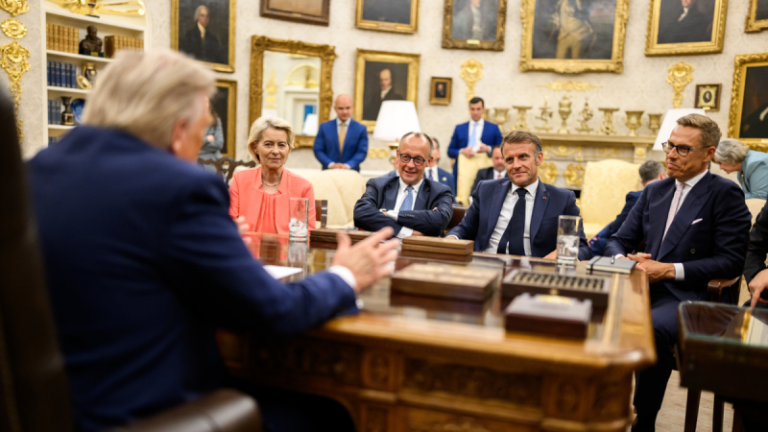
The gold additions throughout the Oval Office were on full display last week as global leaders met with Trump to discuss a path to ending Russia’s war in Ukraine. 

A White House spokesperson told Fox News Digital that the gold Trump added to the Oval Office ‘is of the highest quality,’ declining to provide further details. The spokesperson also said that Trump personally covered the cost of the gold accents, though did not specify how much gold was added or how much Trump spent.

In March, Trump told Fox News host Laura Ingraham during a tour of the Oval Office that the room ‘needed a little life’ when asked about the gold details. 

‘Throughout the years, people have tried to come up with a gold paint that would look like gold, and they’ve never been able to do it,’ Trump told Ingraham. ‘You’ve never been able to match gold with gold paint, that’s why it’s gold,’ Trump added.

Since then, Trump has added gold accents throughout the Oval Office to include the room’s 18-foot-6-inch ceiling. Below is a picture of the presidential seal that overlooks the Resolute Desk, shown in 2008 and after the addition of all the gold.

Behind the Resolute Desk, Trump added gold curtains and a display of flags, including those representing the U.S. military’s sister services.

Meanwhile, gold trim was added to details along the ceiling and doorways. Even the cherubs inside the door frames were given a golden makeover.

In March, Trump said he had installed a copy of the Declaration of Independence in the Oval Office. He told Fox News host Laura Ingraham that the document must be kept behind heavy curtains to protect it from light damage. 

The signed Declaration of Independence is on permanent display at the National Archives on Constitution Avenue in Washington, D.C., where it has been housed since 1952.

The framed document is seen on the wall behind Trump in the photograph below:

Presidents traditionally choose the portraits displayed in the Oval Office, with special attention given to the one above the fireplace.

Former President Joe Biden chose a portrait of Franklin Delano Roosevelt above the fireplace, accompanied by additional portraits of George Washington, Abraham Lincoln, Alexander Hamilton and Thomas Jefferson.

Above the fireplace, Trump chose to display a portrait of George Washington in military uniform, accompanied by several other prominent portraits.

Gold accents were applied to the white marble fireplace mantel, enhancing its neoclassical details.

Here’s a closer view of the details added to the fireplace:

Trump also placed gold trinkets on the fireplace mantel, though their arrangement has changed frequently.

In the Oval Office, Trump added gold coasters bearing his last name and the number 47, marking his position as the 47th president.

The gold details added to the Oval Office come as Trump undertakes broader renovations across the White House grounds.

Last month, the White House announced that Trump, together with private donors, will fund an estimated $200 million project to build a new ballroom. Intended to host official events, state dinners, and large ceremonial gatherings, the 90,000-square-foot addition will accommodate about 650 seated guests and maintain the White House’s classical design.

The announcement followed a similar move earlier this year, when Trump personally financed the installation of two 88-foot American flags flanking the White House, each reportedly costing around $50,000. 

This post appeared first on FOX NEWS

A broad selloff in heavyweight tech stocks at the start of the week abruptly reversed after US Federal Reserve Chair Jerome Powell delivered a speech that bolstered expectations of a September interest rate cut.

Speaking at the Jackson Hole Economic Policy Symposium, Powell took a more dovish tone than investors may have been expecting, noting a slowdown in both worker supply and demand that could lead to employment risks.

He stated that the shifting balance of risks may warrant adjusting the Fed’s policy stance, stressing the need to balance both sides of the central bank’s dual mandate when goals are in tension.

This is a change from the Fed’s previous stance, which had been more focused on the need to keep rates high to fight inflation. Powell acknowledged the visible, though likely temporary, effects of tariffs, cautioning about the potential for persistent inflation, but signaled that the Fed is now also seriously considering the downside risks to employment.

A risk-on rally ensued, impacting various market sectors: the S&P 500 (INDEXSP:.INX), Dow Jones Industrial Average (INDEXDJX:.DJI) and Nasdaq Composite (INDEXNASDAQ:.IXIC) all closed up by more than 1.5 percent.

Bitcoin climbed above US$116,800, the Russell 2000 Index (INDEXRUSSELL:RUT) surged by 3.9 percent and 10 year treasury yields decreased by 0.07 percentage points to 4.26 percent. Traders now have higher expectations for a September rate cut, with probabilities exceeding 83 percent according to CME Group’s (NASDAQ:CME) FedWatch tool.

Here’s a look at the other drivers that shaped the tech sector this week.

1. Softbank to invest US$2 billion in Intel

Intel’s (NASDAQ:INTC) share price got a boost this week after a series of major announcements, beginning with SoftBank Group’s (TSE:9984) Monday (August 18) announcement that it plans invest US$2 billion in the company.

“Semiconductors are the foundation of every industry. For more than 50 years, Intel has been a trusted leader in innovation,’ said Masayoshi Son, chairman and CEO of SoftBank, in a press release.

‘This strategic investment reflects our belief that advanced semiconductor manufacturing and supply will further expand in the United States, with Intel playing a critical role,” he added.

Following that news, sources confirmed last week’s reports that the US government was seeking an equity stake in Intel in exchange for Biden-era Chips Act funding. Then, on Friday (August 22), US Secretary of Commerce Howard Lutnick announced that Intel had agreed to sell an 8.9 percent stake to the federal government, a move that will convert billions of dollars in previously awarded grants into a passive ownership stake.

Intel performance, July 28 to August 18, 2025.

Chart via Google Finance.

These developments have sent Intel’s market value soaring, with its share price increasing over 28 percent from the start of the month. Shares of Intel closed up on Friday at US$24.80.

2. Figure files for Nasdaq IPO

Figure Technology filed for an initial public offering (IPO) on the Nasdaq on Monday under the ticker symbol FIGR, joining a growing list of crypto-related companies looking to access public markets following the successful debut of stablecoin issuer Circle Internet Group (NYSE:CRCL).

Figure leverages blockchain to streamline financial services. The company’s filing reveals a strong financial performance, with profit reaching US$29 million in the first half of 2025, compared to a US$13 million loss in the same period last year. Its revenue for the first half of the year was US$191 million.

Goldman Sachs (NYSE:GS), Jefferies Financial Group (NYSE:JEF) and Bank of America Securities are acting as lead underwriters for the offering. The number of shares and price ranges are yet to be confirmed.

3. Google unveils new Pixel and more

Google (NASDAQ:GOOGL) made headlines this week with several new developments spanning its business lines.

The week kicked off with the tech giant announcing it has increased its stake in data center operator and Bitcoin miner TeraWulf (NASDAQ:WULF) to roughly 14 percent, worth US$3.2 billion.

The company also revealed a partnership with advanced nuclear startup Kairos Power and the Tennessee Valley Authority to power its data centers in Tennessee and Alabama using a new nuclear reactor.

On Wednesday (August 20), Google unveiled its latest Pixel smartphone, the Pixel 10, and accessories, with upgrades including a health coach powered by artificial intelligence (AI).

The week culminated with reports of a US$10 billion cloud computing agreement with Meta Platforms (NASDAQ:META) to provide the necessary servers and infrastructure for Meta’s expanding AI operations. The news sent Google’s share price up by over 3 percent and Meta’s up by over 2 percent.

4. NVIDIA tumbles amid China tension and chip sales

NVIDIA (NASDAQ:NVDA) experienced a volatile week, with its share price slipping in early trading on Monday following reports of renewed tensions with China. The downturn was triggered by news that Beijing will move to restrict sales of the H20 AI chip, the company’s most advanced product approved for the Chinese market.

China’s internet and telecom regulator, as well as the state planning agency, issued informal guidance to major tech companies, instructing them to halt new orders of the H20 chips, citing security concerns.

According to unnamed officials who spoke to the Financial Times, the decision was also influenced by “insulting” remarks from US Secretary of Commerce Howard Lutnick.

In response to the Chinese directive, NVIDIA has reportedly instructed its component suppliers, including Foxconn Technology (TPE:2354), Samsung Electronics (KRX:005930) and Amkor Technolgy (NASDAQ:AMKR), to suspend production of the H20 chip; the company also said it is working on a new AI chip for China.

Alphabet, NVIDIA, Palo Alto Networks and Meta Platforms performance, August 19 to 22, 2025.

Chart via Google Finance.

NVIDIA saw the greatest losses midweek, falling over 4 percent between Tuesday and Thursday. The company recovered some of its losses during Friday’s rally, but finished the week over one percent lower.

5. Palo Alto Networks rises on strong forecast

Palo Alto Networks (NASDAQ:PANW) surged over 7 percent on Tuesday after the cybersecurity company forecast that revenue and profit for its 2026 financial year will come in above estimates.

The company gave a strong performance in its 2025 fiscal year, with total revenue increasing 15 percent year-on-year to US$9.2 billion, fueled by an increase in revenue from newer, cloud-based security products. This growth occurred alongside a 24 percent rise in its future contracted business to US$15.8 billion.

The company also surpassed a US$10 billion revenue run rate while maintaining its “Rule-of-50” status — a measure of the balance between growth and profitability — for the fifth consecutive year.

Securities Disclosure: I, Meagen Seatter, hold no direct investment interest in any company mentioned in this article.

This post appeared first on investingnews.com