Author

admin

Browsing

Stefan Gleason, CEO of Money Metals, shares his outlook for gold, silver and platinum.

He also weighs in on Tether Investments’ recent deal with Elemental Altus Royalties (TSXV:ELE,OTCQX:ELEMF) and advances in US sound money policies.

Securities Disclosure: I, Charlotte McLeod, hold no direct investment interest in any company mentioned in this article.

This post appeared first on investingnews.com

Investor Insight

Horizon Minerals’ near-term cash-flow potential, large-scale gold resource base, and strategic processing infrastructure in the prolific Western Australian Goldfields position the company to transition into a sustainable, standalone mid-tier gold producer. Recent acquisitions, operational start-ups and high-grade resource expansions strengthen Horizon’s ability to leverage record gold prices and deliver consistent shareholder returns.

Overview

Horizon Minerals (ASX:HRZ,OTC:HRZMF) is an emerging standalone gold producer strategically positioned in the heart of Western Australia’s world-class goldfields. The company has built a robust portfolio of high-quality gold projects complemented by significant base and precious metal resources, all within easy haulage distance of key processing infrastructure.

Horizon currently holds 1.8 Moz of resources across 1,386 sq km of exploration tenure.

Following the transformational merger with Poseidon Nickel in early 2025 and the acquisition of the Gordons project in August 2025, Horizon now controls a total mineral resource of 1.82 million ounces (Moz) of gold at an average grade of 1.84 grams per ton (g/t), along with substantial silver, zinc, nickel, cobalt and manganese resources.

Central to Horizon’s growth strategy is the 2.2 Mtpa Black Swan processing facility, acquired through the Poseidon transaction. Located just 40 km north of Kalgoorlie, the plant is currently on care and maintenance but is fully permitted and connected to power and water. A low-capex refurbishment and conversion to a gold CIL circuit is underway, forming the backbone of Horizon’s plan to establish a sustainable ~100,000 ounce per annum production profile from late 2026.

The Black Swan processing facility is at the heart of Horizon’s stand-alone gold production strategy.

In parallel, Horizon is generating strong near-term cash flow from ore sales and toll milling arrangements at its Boorara and Phillips Find operations, respectively, both of which have delivered first gold in 2025. These operations, together with high-grade satellite deposits such as Burbanks, Penny’s Find, Cannon and the newly acquired Gordons Dam, will provide the feedstock for Black Swan’s initial five-year mine plan.

The company’s consolidated 1,386 sq km landholding spans some of the most prospective geological trends in the Goldfields, offering a mix of advanced development assets, near-mill open pits, and highly prospective exploration ground. With approximately 50,000 metres of drilling budgeted for FY25–26, Horizon is targeting both resource growth and upgrades in confidence across its portfolio.

Leveraging record gold prices and a strong balance sheet, Horizon is now at an inflection point – transitioning from a developer with multiple growth options into a fully integrated, cash-generating, standalone Western Australian gold producer.

Company Highlights

  • Emerging standalone gold producer with an extensive WA Goldfields portfolio and a total mineral resource of 1.82 million ounces gold plus significant silver, zinc, nickel, cobalt and manganese resources.
  • Acquisition of Poseidon Nickel delivers the 2.2 million tonnes per annum (Mtpa) Black Swan processing facility, strategically located 40 km north of Kalgoorlie, with refurbishment studies underway for conversion to a gold carbon-in-leach (CIL) plant.
  • Acquisition of the Gordons project from Yandal Resources adds 77 sq km of tenure near Black Swan, including the Gordons Dam deposit (365 kt @ 1.7 grams per ton gold for 20 koz) with strong exploration upside.
  • Continuous cash flow generation from two producing mines, via the ore sale agreement for Boorara (~AU$30 million estimated free cashflow at AU$3,600/oz) and the joint venture toll milling agreement at Phillips Find.
  • Record gold prices (>AU$5,000/oz) underpin robust margins and fund ~50,000 metres of drilling in FY25–26, targeting both resource growth and confidence upgrades.
  • Combined landholding of 1,386 sq km in Western Australia’s most productive gold belts, following the Poseidon and Gordons acquisitions

Key Projects

Boorara Gold Project

The Boorara gold project, located just 15 kilometres east of Kalgoorlie-Boulder, is Horizon’s cornerstone operation and the foundation of its near-term cashflow strategy. Over the past decade, extensive reverse circulation and diamond drilling has defined a substantial JORC 2012 mineral resource of 10.53 Mt grading 1.27 g/t gold for 428,000 ounces. Boorara is strategically positioned within trucking distance of multiple third-party processing facilities and only two kilometres from Horizon’s 100-percent-owned Nimbus silver-zinc project.

Mine operations at the Boorara gold project

Open pit mining commenced in August 2024, marking the start of Horizon’s transition to gold production. First ore was exposed and mined in late September 2024, with the inaugural gold pour achieved in January 2025. Mining operations are planned over approximately 14 months, with processing to occur over 19 months. A binding ore sale agreement with Paddington Gold provides for the processing of 1.24 Mt of Boorara ore at their Paddington mill until Q2 2026. The agreement is forecast to deliver more than AU$30 million in free cash flow at a gold price of AU$3,600/oz, with upside potential given current spot prices exceeding AU$5,000/oz.

Importantly, Boorara is not just a standalone deposit; it is the central baseload feed source in Horizon’s integrated production plan. It will be supplemented by higher-grade satellite ore from projects such as Burbanks, Penny’s Find, Cannon, Phillips Find and Gordons Dam. This blend of tonnage and grade is designed to optimise mill feed once Black Swan is recommissioned, extending the life of mine and improving overall project economics..

Phillips Find Gold Project

The Phillips Find gold project, 45 kilometres northwest of Coolgardie, is a high-grade goldfield with a production history of about 33,000 ounces. Horizon is advancing the project under a low-risk joint venture with BML Ventures, which funds and manages all mining and operational activities.

First ore was mined in late 2024, with the initial gold pour in February 2025 from toll treatment at FMR Investments’ Greenfields mill. Early campaigns processed 56,300 dry tonnes at 1.63 g/t gold for 2,807 ounces, sold at an average AU$4,894/oz, generating approximately AU$13.7 million in gross revenue to the JV.

Milling agreements include capacity at the Greenfields mill from February to June 2025 and a September-October 2025 campaign for 70,000 tonnes at Focus Minerals’ Three Mile Hill plant. An additional 80,000 tonnes of capacity has been reserved at Greenfields for future ore, giving Horizon strong processing flexibility while complementing production from Boorara and other satellite deposits.

Burbanks Gold Project

Horizon’s high-grade growth asset, the Burbanks gold project, lies nine kilometres southeast of Coolgardie on the prolific Burbanks Shear Zone. With historical production exceeding 420,000 ounces, Burbanks now hosts 465,000 ounces at 2.80 g/t gold across open pit and underground resources. The deposit remains open in all directions, and recent drilling has demonstrated strong potential for significant extensions, with a major 30,000 metre drill campaign underway to support the Black Swan five-year mine plan.

Gordons Project

In August 2025, Horizon expanded its near-mill project pipeline with the acquisition of the Gordons project from Yandal Resources. This 77 sq km package, only 10 kilometres from the Black Swan facility, includes the Gordons Dam deposit with 20,000 ounces in resource and multiple drill-ready prospects, such as Star of Gordon and Malone. The strategic location and exploration upside of Gordons make it an ideal fit for Horizon’s centralised processing strategy.

Black Swan Processing Facility

Existing flotation circuit and planned changes to facilitate gold production at Black Swan

At the heart of Horizon’s stand-along gold production strategy is the Black Swan processing facility, secured through a February 2025 merger with Poseidon Nickel. This 2.2 Mtpa concentrator, currently on care and maintenance, is being refurbished and converted to include a gold CIL circuit. All necessary approvals are in place, and engineering studies led by GR Engineering are progressing towards first gold production from Black Swan in late 2026. The plant’s location and capacity offer Horizon the ability to unlock value from its own resources and potentially treat stranded third-party ores.

Other Projects

Cannon Underground Project

  • Fully permitted high-grade underground project 30km ESE of Kalgoorlie
  • Pre-feasibility study complete

Penny’s Find

  • High-grade UG project with MRE of 0.43Mt @ 4.57g/t Au for 63koz
  • Pre-feasibility completed December 2024

Nimbus Silver-Zinc Project

  • 12.1 Mt @ 52 g/t silver, 0.2 g/t gold, 0.9 percent zinc for 20.2 Moz silver, 77 koz gold, 104 kt zinc
  • High-grade core: 0.26 Mt @ 774 g/t silver, 12.8 percent zinc
  • Concept study supports concentrate production pathway

Management Team

Ashok Parekh – Non-executive Chairman

Ashok Parekh has over 33 years of experience advising mining companies and service providers in the mining industry. He has spent many years negotiating mining deals with publicly listed companies and prospectors, leading to new IPOs and the initiation of new gold mining operations. Additionally, he has been involved in managing gold mining and milling companies in the Kalgoorlie region, where he has served as managing director for some of these firms. Parekh is well-known in the West Australian mining industry and has a highly successful background in owning numerous businesses in the Goldfields. He was the executive chairman of ASX-listed A1 Consolidated Gold (ASX:AYC) from 2011 to 2014. He is a chartered accountant.

Warren Hallam – Non-executive Director

Warren Hallam is currently a non-executive director of St Barbara Limited and Poseidon Nickel Limited, and non-executive chairman of Kingfisher Mining Limited. Hallam has built a strong track record over 35 years in operations, corporate and senior leadership roles across multiple commodities. This includes previous Managing Director roles at Metals X Limited, Millenium Metals and Capricorn Metals. Hallam is a metallurgist with a Master in Mineral Economics from Curtin University.

Grant Haywood – Managing Director and Chief Executive Officer

Grant Haywood brings over three decades of experience in both underground and open-cut mining operations. During his career, he has served in senior leadership capacities in various mining companies, guiding them from feasibility through to development and operations. His experience spans various roles within junior and multinational gold mining companies, predominantly in the Western Australian goldfields, including positions at Phoenix Gold, Saracen Mineral Holdings, and Gold Fields. He is a graduate of the Western Australian School of Mines (WASM) and has also earned a Masters in Mineral Economics from the same institution.

Julian Tambyrajah – Chief Financial Officer & Company Secretary

Julian Tambyrajah is an accomplished global mining finance executive with more than 25 years of industry expertise. He is a certified public accountant and chartered company secretary. He has served as CFO of several listed companies including Central Petroleum (CTP), Crescent Gold (CRE), Rusina Mining NL, DRDGold, and Dome Resources NL. He has extensive experience in capital raising, some of which includes raising US$49 million for BMC UK, AU$122 million for Crescent Gold and AU$105 million for Central Petroleum.

Stephen Guy – Chief Geologist

Stephen Guy is a geologist with over 25 years of experience in the mining industry, specialising in exploration, production, and project start-ups for both open pit and underground operations. His career spans key regions in Australia, including Western Australia, New South Wales, and Queensland, where he has collaborated with leading companies such as BHP, Newcrest, St Barbara Gold, Fortescue Metals Group (FMG), and Gindalbie Metals. Guy’s expertise covers a diverse range of commodities, including gold, copper, nickel, base metals, and iron ore.

Rob Waugh – Non-Executive Director

Rob Waugh is a senior mining executive with more than 35 years’ experience in the resources sector, operating predominantly in gold and base metals. With a strong track record of exploration and discovery success, Waugh has held senior exploration management roles at WMC Resources and BHP and was previously the managing director of Musgrave Minerals, which was acquired for AU$200 million by Ramelius Resources in 2023.

This post appeared first on investingnews.com

Investor Insight

Combining near-term discovery and development strategy, Alice Queen is positioned to unlock significant shareholder value through its high-impact gold projects in Fiji and Australia. Supported by strategic investors, it offers a rare blend of near-term exploration upside and longer-term development potential.

Overview

Alice Queen (ASX:AQX) is a gold exploration company targeting district-scale discoveries and near-term production opportunities. The company’s flagship project is the Viani gold project in Fiji, where early drilling results point to a major epithermal gold system similar to other epithermal gold systems hosted on the Pacific Ring of Fire with Fiji also hosting the 10 Moz Vatukoula gold mine. With a portfolio spanning the Pacific Ring of Fire and Australia’s most prolific gold belts, Alice Queen combines geological potential with strategic capital access.

The company’s secondary asset, Horn Island, contains over half a million ounces of gold in a JORC-compliant resource. A previously released scoping study (2021) for Horn Island indicates an NPV of over AU$500 million, after an internal update on the numbers at AU$5,000/oz gold. Discussions with development partners are underway to unlock value from this asset, which could produce more than AU$800 million in free cash flow over a projected eight-year mine life.

Alice Queen’s shareholder registry is anchored by Gage Resource Development (51 percent) and includes significant long-term, and well-funded Australian investors. The company is pursuing a balanced strategy of value creation through drilling success, strategic partnerships and asset-level monetization.

Company Highlights

  • High-impact Discovery at Viani in Fiji: Drilling at the Viani project has confirmed a significant low-sulphidation epithermal gold system with mineralization over a ~5 km strike, with assay results from recent drilling expected imminently.
  • Established Gold Resource at Horn Island: The Horn Island project hosts a 524,000 oz JORC-compliant gold resource and is being advanced through potential development partnerships, offering near-term monetization opportunities.
  • Strategic Financial Backing: Backed by major shareholder Gage Resource Development, a subsidiary of Beijing-based Gage Capital (US$1.6 billion AUM), ensuring access to growth capital and long-term support.
  • Exceptional Leadership: Led by a highly experienced management team with a successful track record in global business and resource development.

Key Projects

Viani Project

The Viani gold project, located on Vanua Levu, Fiji’s second-largest island, is emerging as Alice Queen’s flagship exploration asset, with strong early indications of a large-scale, high-grade, low-sulphidation epithermal gold system. The project covers more than 200 sq km of underexplored ground within Fiji that hosts the Vatukoula gold mine, a +10 Moz deposit located on Fiji’s main island, Viti Levu. Viani’s main prospect, Dakuniba, has been the focus of extensive historical and current surface work, including trenching, rock chip sampling and limited historical drilling, which have collectively defined a mineralized corridor extending over ~5 km in strike length. Assay results from the maiden program have confirmed depth potential of high-grade gold to 175 m.

Gold mineralization is hosted in banded quartz veins and quartz-adularia stockworks associated with strong argillic and silicic alteration, indicative of a classic low-sulphidation system. Alice Queen has conducted detailed geochemical sampling and geophysical interpretation to delineate drill targets, with Phase 1 diamond drilling that commenced in December 2024. The current program comprises an initial three-hole diamond campaign (approximately 1,000 metres), targeting depth extensions of the mapped surface mineralization. The first hole, 24VDD001, intercepted zones of epithermal-style veining, with visible alteration and sulphide mineralization. The geophysical signature of the host rocks reveals zones of magnetite destruction associated with alteration, providing a critical exploration vector for further target generation. Over a dozen discrete structural targets have been identified within the broader 7 km hydrothermal corridor.

The company is exploring follow-up drilling and potential geophysical (ground mag) surveys as a way to identify where the structures that host the mineralisation broaden or dilate to refine these targets. The scale, alteration style and structural setting of the Viani system suggest the potential for a significant gold discovery, with parallels to other globally productive vein-hosted systems in the Pacific Rim.

Horn Island Project

Horn Island, located in the Torres Strait approximately 17 km off the northern coast of Queensland, is a development-stage project with an existing JORC 2012-compliant mineral resource estimate of 16.7 Mt at 0.98 g/t gold for 524,000 ounces of contained gold in the indicated and inferred categories. The project is classified as an intrusion-related gold system, characterized by sheeted vein systems, broad hydrothermal alteration, and disseminated gold mineralization associated with late-stage felsic intrusives.

The resource is centered on a historical open-pit gold mine and remains open to the northwest, with several additional prospects—including the Southern Silicified Ridge—identified within the project area. The mineralized zone is hosted in altered andesitic volcanics and quartz-feldspar porphyry intrusives, with gold associated with pyrite, arsenopyrite, and quartz-carbonate veining.

The project has full community backing, including a 7.5 percent free-carried interest held by the local Kaurareg Aboriginal People. It benefits from excellent infrastructure, including daily commercial flights, ferry access to nearby Thursday Island, and shipping links to Cairns and Weipa.

Alice Queen is currently engaged with several interested parties in partnership discussions about Horn Island via Argonaut PCF. The company is optimistic that a partnership deal can unlock significant shareholder value and reduce dilution.

Sabeto Project

The Sabeto Project is located within the Sabeto Valley on Fiji’s main island, Viti Levu, and sits within a 15 km east-west trending structural corridor that hosts both epithermal and porphyry-style mineralization. The project is situated between the historic Vuda gold prospect and Lion One’s (ASX:LLO) operating Tuvatu gold mine, which is hosted within the Nawainiu Intrusive Complex —the same intrusive suite that underlies the Sabeto project area. Sabeto is interpreted to host a sub-volcanic porphyry copper-gold breccia system, with historic drilling confirming broad zones of alteration and anomalous copper and gold values coincident with a ‘bullseye’ ZTEM resistivity high anomaly. This geophysical feature is interpreted as representing a buried intrusive centre, possibly related to porphyry-style mineralization.

The upcoming drill program at Sabeto is designed to test three priority targets, all defined by surface geochemistry, geophysical signatures and diatreme-style breccias. Proposed diamond hole A will test west of previous holes SBDD0001 and SBDD0004, targeting potential lateral continuity of the mineralized intrusive. Hole B aims to drill beneath an outcropping diatreme breccia with gold-copper anomalies, and under a significant gold soil anomaly 300 meters northwest of hole SBDD0003. Hole C will test the southern extent of a copper-anomalous diatreme breccia zone identified in mapping. The planned 1,800-meter program is expected to begin, following completion of the Viani Phase 1 campaign and will further test the scale and fertility of the porphyry system at Sabeto.

Boda East & Mendooran Projects

Located in the heart of the Lachlan Fold Belt (LFB), one of Australia’s most fertile porphyry terranes, Alice Queen’s Boda East and Mendooran projects are early-stage copper-gold exploration assets. Boda East lies immediately adjacent to Alkane Resources’ (ASX:ALK) Boda and Kaiser deposits, which host large-scale porphyry-style copper-gold mineralization. Geological mapping and drilling at Boda East have confirmed the presence of porphyritic intrusives, hydrothermal breccias and disseminated sulphide mineralization, consistent with porphyry-related alteration. Eleven holes have been drilled to date, with several intersecting pathfinder elements and anomalous copper-gold grades. Further drilling is planned to vector toward the core of the system.

The Mendooran project, situated further south in the LFB, targets large porphyry copper-gold systems associated with the Molong Volcanic Belt. Historic drilling and surface sampling have identified alteration halos and geochemical anomalies typical of porphyry environments. These projects provide optionality and long-term upside exposure to bulk-tonnage copper-gold mineralization and may be attractive candidates for joint venture or strategic partnerships with larger players active in the region.

Management Team

Jianying Wang – Non-executive Chairman

Chairman of Beijing Gage Capital Management, Jianying Wang oversees US$1.6 billion in assets and brings extensive experience in global M&A and equity investment. He has supported Alice Queen through multiple funding rounds.

Andrew Buxton – Managing Director

Andrew Buxton is the founder of Alice Queen and former managing director of Kidman Resources, He brings over 25 years of experience in capital markets and resource company management, and leads the company’s exploration and development strategy.

Dale McCabe – Executive Director

A co-founder of Alice Queen, Dale McCabe has managed operational rollouts and exploration execution since 2015. For more than two decades, he worked in the IT sector and brings broad project coordination experience.

Paul Williams – Non-executive Director

Currently managing director of ASX-listed AuKing Limited (ASX:AKN), Paul Williams is an experienced mining and resources executive with over 30 years of experience across multiple commodities and multiple jurisdictions.

This post appeared first on investingnews.com

Here’s a quick recap of the crypto landscape for Wednesday (August 22) as of 9:00 a.m. UTC.

Get the latest insights on Bitcoin, Ethereum and altcoins, along with a round-up of key cryptocurrency market news.

Bitcoin and Ethereum price update

Bitcoin (BTC) was priced at its lowest valuation of the day at US$112,016, a 1 percent decrease in 24 hours. Its highest valuation of the day was US$113,827.

Bitcoin price performance, August 22, 2025.

Chart via TradingView

Ethereum (ETH) was priced at US$4,228.45, trading flat over the past 24 hours. Its highest valuation of the day was US$4,347.92 and its lowest valuation was US$4,211.66.

Altcoin price update

  • Solana (SOL) was priced at US$178.40, down by 2.9 percent over 24 hours, and its lowest valuation of the day. Its highest was US$185.97.
  • XRP was trading for US$2.80, down by 3.5 percent in the past 24 hours and its lowest valuation of the day. Its highest was US$2.92.
  • Sui (SUI) was trading at US$3.34, down by 3.1 percent over the past 24 hours and tallying its lowest valuation of the day. Its highest valuation of the day was US$3.47.
  • Cardano (ADA) was trading at its lowest valuation today at US$0.8274, down by 4.8 percent over 24 hours. Its highest valuation today was US$0.8766.

Today’s crypto news to know

Coinbase approves Trump-backed stablecoin

Coinbase has listed USD1, a stablecoin issued by World Liberty Financial, the crypto project linked to former President Donald Trump and his sons.

The exchange announced the move on Thursday, while Eric Trump reposted the news on X and hinted that additional updates about the project are coming soon.

With the addition, Coinbase now offers US users a wide range of stablecoins including USDT, USDC, PYUSD, DAI, and others. World Liberty launched USD1 earlier this year as part of its push into decentralized finance, positioning the token for use in a forthcoming platform built on Ethereum with Aave technology.

However, the platform is not yet live, but the company has said it will eventually support lending and borrowing services.

The listing comes as the US stablecoin sector gains momentum following the passage of the GENIUS Act, which set national standards for stablecoin issuance and trading.

Still, World Liberty’s political connections remain controversial, especially after reports linked USD1 to a multibillion-dollar investment in Binance from an Abu Dhabi sovereign fund.

Ripple, SBI to bring RLUSD to Japan

Ripple and SBI Holdings have unveiled plans to bring Ripple USD (RLUSD) to Japan, aiming to launch the stablecoin in early 2026.

The rollout will be handled by SBI VCTrade, a licensed digital payments provider, under Japan’s new regulatory framework for stablecoins.

RLUSD, first introduced in December 2024, is backed by dollar deposits, short-term US Treasuries, and cash equivalents, with monthly attestations from an independent firm.

Ripple says this design ensures regulatory clarity and sets the coin apart as an institutional-grade product. SBI executives described the partnership as a milestone for Japan’s financial system, stressing that the stablecoin will enhance trust and convenience for users.

Ripple officials framed RLUSD as a bridge between traditional finance and decentralized networks, particularly just days after Japan approved its first yen-based stablecoin.

Austrac directs Binance to appoint external auditor

Binance is facing renewed scrutiny in Australia after the country’s financial watchdog directed it to appoint an external auditor.

Austrac said the exchange failed to meet standards for anti-money laundering and counter-terrorism financing controls, citing gaps in oversight and risk management. The agency also pointed to Binance’s high staff turnover and limited senior management presence in Australia as red flags.

Austrac chief Brendan Thomas warned that global crypto exchanges must adapt to local compliance requirements, regardless of their size.

The action adds to a growing list of regulatory challenges for Binance worldwide, including a record US$4.3 billion fine in the United States last year for failing to block illicit users.

Its founder, Changpeng Zhao, is also serving a four-month prison sentence related to those violations. Meanwhile, in Nigeria, Binance is still battling tax evasion and illegal foreign exchange allegations, with a court trial pushed back to October.

Securities Disclosure: I, Giann Liguid, hold no direct investment interest in any company mentioned in this article.

Securities Disclosure: I, Meagen Seatter, hold no direct investment interest in any company mentioned in this article.

This post appeared first on investingnews.com

Copper has become a hot topic due to its role in the green energy transition and its necessity for urbanization. However, the lack of incoming supply in the long term has experts concerned.

Due to its importance in construction, energy transmission and new technologies, copper is a critical metal needed to power the future of our society. However, mined supply has not kept pace with demand, with few new operations coming online, and older mines facing decreasing grades and lower outputs.

The term “peak copper” was coined because some experts believe that copper reserves may be diminishing. According to the US Geological Survey (USGS), more than 700 million metric tons of copper have been mined throughout history, and current economic global copper reserves stand at 980 million metric tons.

Nearly all of that mined copper is still in circulation, as the red metal’s recycling rate is higher than that of any other engineering metal, but it is still not enough to keep up with escalating demand. As a result, it’s prudent to know the top copper reserves by country, especially when considering investing in the copper mining industry.

Reserve data for this article was sourced from the USGS’s 2025 Mineral Commodity Summary and supplemented with datasets from Mining Data Online (MDO) and the UN Comtrade Database.

Top 5 copper reserves by country

The countries with the largest copper reserves are Chile, Australia, Peru, the Democratic Republic of Congo (DRC) and Russia. These five countries hold more than 55 percent of the world’s total copper reserves and will be critical to a world with soaring demand for copper.

Read on to learn about these copper kingpins.

1. Chile

Copper reserves: 190 million metric tons

Chile holds the largest copper reserves globally at 190 million metric tons, nearly as much as Australia and Peru hold combined. Additionally, Chile is also the world’s top copper producer, with its 5.3 million metric tons of copper in 2024 representing nearly a quarter of global output.

The mining industry is essential to the Chilean economy, making up more than 50 percent of the country’s exports and contributing US$40 billion of its GDP in 2023. Copper alone accounting for more than US$29 billion of that total.

Due to the sheer quantity of copper in the country, it should come as no surprise that Chile is home to the world’s largest copper mine, Escondida. According to MDO, Escondida produced 927,000 metric tons of copper in concentrate in 2024 and sits atop proven and probable copper reserves of 37.62 million metric tons. The mine is a 57.5/30/12.5 joint venture between BHP (ASX:BHP,NYSE:BHP,LSE:BHP), Rio Tinto (ASX:RIO,NYSE:RIO,LSE:RIO) and Japan’s JECO.

2. Australia

Copper reserves: 100 million metric tons

Australian copper reserves are pegged at 100 million metric tons, tying it for the second largest country by copper reserves. The resource industry is an essential sector in Australia, contributing AU$385 billion during the 2024/2025 fiscal year. Of that, copper was the sixth largest contributor with AU$13.2 billion, a AU$1.8 billion increase over 2023/2024.

While Australia hosts significant copper reserves, it lags the other countries on the list with similarly sized reserves in terms of production at 800,000 metric tons in 2024. More than a quarter of that came from BHP’s Olympic Dam mine in South Australia, which produced 216,000 metric tons of copper cathode. The polymetallic mine contains substantial proven and probable copper reserves totaling 10.68 million metric tons.

Another significant operation in Australia is Newmont’s (TSX:NGT,NYSE:NEM,ASX:NEM) Cadia Valley mine, which hosts probable reserves of 3.1 million metric tons of contained copper. Cadia Valley produced 87,000 metric tons of copper in concentrate in 2024.

2. Peru

Copper reserves: 100 million metric tons

Copper reserves in Peru stand at 100 million metric tons, tying it with Australia for the second largest copper country. Much like its neighbor Chile, copper is an essential part of Peru’s economy, accounting for 49 percent of the value of its US$47.7 billion in mining exports.

Peru is home to some of the world’s biggest mining operations, and produced 2.6 million metric tons of copper last year. Two mines accounted for a third of the country’s total output.

The top producer in the country is the Cerro Verde Complex, a 55/21/19.6 venture with Freeport-McMoRan (NYSE:FCX), Sumitomo Metal Mining (TSE:5713) and Minas Buenaventura (NYSE:BVN). Cerro Verde hosts hosts proven and probable reserves of 11.45 million metric tons of copper and produced 949 million pounds of copper metal in concentrate in 2024.

Not to be outdone, the second highest is Antamina, a 33.75/33.75/22.5/10 joint venture between BHP, Glencore (LSE:GLEN,OTC Pink:GLCNF), Teck Resources (TSX:TECK.B,TSX:TECK.A,NYSE:TECK) and Mitsubishi (TSE:8058). Last year, output at the mine fell just short of Cerro Verde’s at 941 million pounds of copper in concentrate. Antamina hosts a proven and probable reserve of 4.53 million metric tons of contained copper.

The mine with the largest copper reserves in Peru is Southern Copper’s (NYSE:SCCO) Toquepala mine, home to 13.79 million metric tons of copper in proven and probable reserves. The mine produced 496 million pounds of copper in concentrate last year.

4. Democratic Republic of Congo

Copper reserves: 80 million metric tons

Copper reserves in the Democratic Republic of Congo stood at 80 million metric tons in 2024, making it the fourth largest country by copper reserves. The DRC’s economic copper reserves have seen a staggering rise in recent years, climbing from an estimated 19 million metric tons in 2019.

The mining sector has been critical to GDP growth in the DRC, with copper being the largest contributor. World Bank reports that the extraction sector has outpaced other segments of the DRC’s economy, increasing 12.8 percent in 2024, while non-mining sectors grew by only 3.2 percent.

According to data from the United Nations, in 2023 the DRC exported US$17 billion in refined copper and unwrought alloys, a large jump from US$7.34 billion in 2019. The country’s copper ore exports contributed US$2.16 billion in 2023, nearly double the US$1.11 billion four years prior.

Among the contributing factors in the rise in mining and export activity has been the development of the Lobito Corridor, which connects mineral-rich regions in Zambia, the DRC and Angola to the port at Lobito in Angola.

This link allows greater access for large-scale operations like Ivanhoe Mines (TSX:IVN) and Zijin Mining’s (HKEX:2899,SHA:601899) Kamoa-Kakula complex in the Southern DRC. One of the largest copper operations in the world, Kamoa-Kakula hosts a probable reserve of 17.69 million metric tons of contained copper and produced 964 million pounds of copper in concentrate in 2024.

4. Russia

Copper reserves: 80 million metric tons

Russia’s copper reserves are estimated to be 80 million metric tons, tying it with the DRC. While commodities are important to the Russian economy, contributing US$417 billion in 2024, the metals sector represented 15 percent of that total at US$60 billion.

Russia has been under significant sanctions since it invaded Ukraine in February 2022. According to the UN Comtrade Database, Russia’s copper exports from in 2021 were valued at US$5.98 billion.

In 2024, Russia produced 930,000 metric tons of copper, an increase from the 890,000 metric tons produced in 2023. Among the main contributing factors was a ramp-up in production at Udokan Copper’s Udokan mine in Siberia, which was expected to produce 135,000 metric tons in 2024 and, according to the mine’s website, hosts a JORC-compliant copper resource of 26.7 million metric tons.

Securities Disclosure: I, Dean Belder, hold no direct investment interest in any company mentioned in this article.

This post appeared first on investingnews.com

Alice Queen (ASX:AQX) is a gold exploration company focused on district-scale discoveries and near-term production opportunities. Its flagship asset is the Viani Gold Project in Fiji, where early drilling indicates a major epithermal gold system, comparable to other systems along the Pacific Ring of Fire. Fiji itself hosts the 10 Moz Vatukoula Gold Mine, underscoring the region’s proven prospectivity. With a portfolio spanning both the Pacific Ring of Fire and Australia’s most prolific gold belts, Alice Queen combines strong geological potential with strategic access to capital.

The company’s secondary asset, Horn Island, hosts over half a million ounces of gold in a JORC-compliant resource. A 2021 scoping study indicated an NPV of more than AU$500 million, based on an internal update using AU$5,000/oz gold. Ongoing discussions with development partners aim to unlock value from this project, which has the potential to generate over AU$800 million in free cash flow across an eight-year mine life.

Alice Queen’s shareholder base is anchored by Gage Resource Development (51 percent) and supported by significant, well-funded Australian investors with a long-term outlook. The company is advancing a balanced strategy focused on drilling success, strategic partnerships, and asset-level monetization.

Company Highlights

  • High-impact Discovery at Viani in Fiji: Drilling at the Viani project has confirmed a significant low-sulphidation epithermal gold system with mineralization over a ~5 km strike, with assay results from recent drilling expected imminently.
  • Established Gold Resource at Horn Island: The Horn Island project hosts a 524,000 oz JORC-compliant gold resource and is being advanced through potential development partnerships, offering near-term monetization opportunities.
  • Strategic Financial Backing: Backed by major shareholder Gage Resource Development, a subsidiary of Beijing-based Gage Capital (US$1.6 billion AUM), ensuring access to growth capital and long-term support.
  • Exceptional Leadership: Led by a highly experienced management team with a successful track record in global business and resource development.

This Alice Queen Limited profile is part of a paid investor education campaign.*

Click here to connect with Alice Queen (ASX:AQX) to receive an Investor Presentation

This post appeared first on investingnews.com

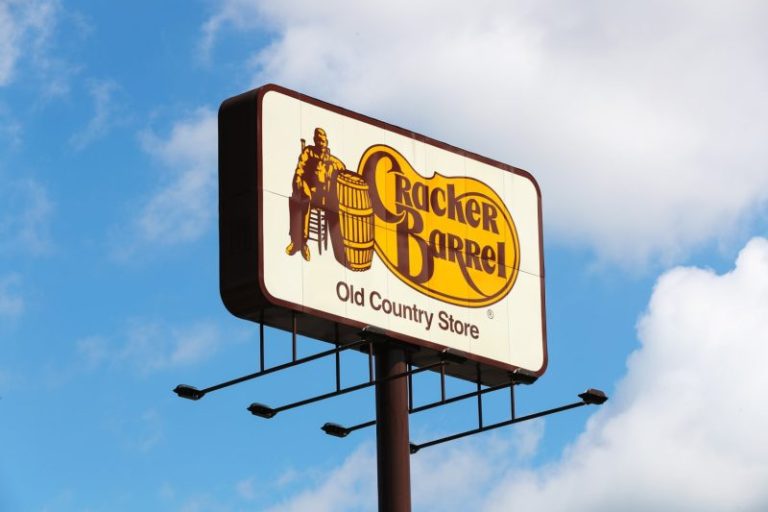
Shares of Cracker Barrel Old Country Store plummeted roughly 10% on Thursday after the restaurant unveiled its new logo earlier this week as part of a larger brand refresh.

The new logo removes the image of a man leaning against a barrel that was prominently featured in the original, leaving behind just the words Cracker Barrel against a yellow background. The phrase “old country store” has also been removed.

The company said the colors in the logo were inspired by the chain’s scrambled eggs and biscuits.

Cracker Barrel’s new logo.Cracker Barrel

The change is part of a “strategic transformation” to revitalize the brand that started back in May 2024. Under that mission, Cracker Barrel’s brand refresh includes updates to visual elements, restaurant spaces and food and retail offerings.

Cracker Barrel said in March that the refresh will still maintain the brand’s “rich history of country hospitality” and “authentic charm that has made the brand a beloved destination for generations of families.”

“We believe in the goodness of country hospitality, a spirit that has always defined us. Our story hasn’t changed. Our values haven’t changed,” Chief Marketing Officer Sarah Moore said in a media release.

However, many social media users have criticized the new logo, especially those in conservative circles. The president’s son, Donald Trump Jr., amplified a post on Wednesday suggesting that the logo change was led by CEO Julie Felss Masino to erase the American tradition aspect of the branding and make it more general, as a way of leaning into diversity, equity and inclusion efforts.

Conservative activist Robby Starbuck added his commentary on Thursday, writing in a post on X, “Good morning @CrackerBarrel! You’re about to learn that wokeness really doesn’t pay.”

The company has a relatively small market cap of about $1.2 billion compared with other restaurant chains.

Customers have also complained on social media about the interior redesign of many Cracker Barrel restaurants, saying that the new decor favors a more sterile and modern style over its tried-and-true country feel.

On the restaurant’s latest earnings call in June, Masino said Cracker Barrel had completed 20 remodels and 20 refreshes. She said the company will be sharing more information about the remodeling initiative in September.

“Employees had given us great feedback about working in those newly remodeled and refreshed stores and guests continue to tell us that they’re lighter, brighter, more welcoming and they’re enjoying them,” Masino said on the call.

Cracker Barrel is not the only stock to see large swings based on political social media posts.

Earlier this month, shares of American Eagle soared after Trump posted that an ad featuring Sydney Sweeney, which faced significant social media pushback from the left, was “the ‘HOTTEST’ ad out there.”

Back in 2023, Anheuser-Busch InBev faced heavy criticism from conservatives after a collaboration between Bud Light and social influencer Dylan Mulvaney, who is transgender.

This post appeared first on NBC NEWS

Walmart on Thursday raised its full-year earnings and sales outlook as its online business posted another quarter of double-digit gains, even as the company said costs are rising from higher tariffs.

The big-box retailer topped Wall Street’s quarterly sales estimates but fell short of earnings expectations, the first time it missed on quarterly earnings since May 2022. The company said it felt pressure on profits for the period, including from some one-time expenses, such as restructuring costs, pricier insurance claims and litigation settlements.

Walmart said it now expects net sales to grow 3.75% to 4.75% for the fiscal year, up from its previous expectations of 3% to 4%. It raised its adjusted earnings per share outlook slightly to $2.52 to $2.62, up from a prior range of $2.50 to $2.60 per share.

In an interview with CNBC, Chief Financial Officer John David Rainey said the company is working hard to keep prices low — including speeding up imports from overseas and stepping up the number of Rollbacks, or limited-time discounts, in its stores.

“This is managed on an item-by-item and category-by-category basis,” he said. “There are certainly areas where we have fully absorbed the impact of higher tariff costs. There are other areas where we’ve had to pass some of those costs along.”

But he added “tariff-impacted costs are continuing to drift upwards.”

Even so, Rainey said Walmart hasn’t seen a change in customer spending. For example, sales of private label items, which typically cost less than national brands, were roughly flat year over year, he said.

“Everyone is looking to see if there are any creaks in the armor or anything that’s happening with the consumer, but it’s been very consistent,” he said. “They continue to be very resilient.”

Yet on the company’s earnings call, CEO Doug McMillon said middle- and lower-income households have been more sensitive to tariff-related price increases, particularly in discretionary categories.

“We see a corresponding moderation in units at the item level as customers switch to other items, or in some cases, categories,” he said.

Here’s what the big-box reported for the fiscal second quarter compared with what Wall Street expected, according to a survey of analysts by LSEG:

Walmart shares fell about 2% in premarket trading Thursday.

Walmart’s net income jumped to $7.03 billion, or 88 cents per share, in the three-month period that ended July 31, compared with $4.50 billion, or 56 cents per share, in the year-ago quarter.

Revenue rose from $169.34 billion in the year-ago quarter.

Comparable sales for Walmart U.S. climbed 4.6% in the second quarter, excluding fuel, compared with the year-ago period, as both the grocery and health and wellness category saw strong growth. That was higher than the 4% increase that analysts expected. The industry metric, also called same-store sales, includes sales from stores and clubs open for at least a year.

At Sam’s Club, comparable sales jumped 5.9% excluding fuel, higher than the 5.2% that analysts anticipated.

E-commerce sales jumped 25% globally and 26% in the U.S., as both online purchases and advertising grew. In the U.S., Walmart said sales through store-fulfilled delivery of groceries and other items grew nearly 50% year over year, with one-third of those orders expedited. The company charges a fee for some of those faster deliveries, and others are included as a benefit of its subscription-based membership program, Walmart+.

Its global advertising business grew 46% year over year, including Vizio, the smart TV maker it acquired for $2.3 billion last year. Its U.S. advertising business, Walmart Connect, grew by 31%.

As Walmart’s online business drums up more revenue from home deliveries, advertising and commissions from sellers on its third-party marketplace, e-commerce has become a profitable business. The company marked a milestone in May — posting its first profitable quarter for its e-commerce business in the U.S. and globally.

Rainey said on Thursday that Walmart doubled its e-commerce profitability in the fiscal second quarter from the prior quarter.

In the U.S., shoppers both visited Walmart more and spent more on those trips during the quarter. Customer transactions rose 1.5% year over year and average ticket increased 3.1% for Walmart’s U.S. business.

As the largest U.S. retailer, Walmart offers a unique window into the financial health of American households. As higher duties have come in fits and starts — with some getting delayed and others going into effect earlier this month — Wall Street has tried to understand how those costs will ripple through the U.S. economy.

Walmart warned in May that it would have to raise some prices due to higher levies on imports, even with its size and scale. The company’s comments drew the ire of President Donald Trump, who said in a social media post that Walmart should “EAT THE TARIFFS.”

About a third of what Walmart sells in the U.S. comes from other parts of the world, with China, Mexico, Canada, Vietnam and India representing its largest markets for imports, Rainey said in May.

According to an analysis by CNBC of about 50 items sold by the retailer, some of those price changes have already hit shelves. Items that rose in price at Walmart over the summer included a frying pan, a pair of jeans and a car seat.

Rainey on Thursday declined to specify items or categories where Walmart had increased prices, saying the company is “trying to keep prices as low as we can.”

He said one of the company’s strategies has been bringing in inventory early, particularly for Sam’s Club as it gets ready for the second half of the fiscal year and its crucial holiday season. At the end of the quarter, inventory was up about 3.5% at Sam’s Club, Rainey said. It was up 2.2% for Walmart U.S.

On the company’s earnings call, McMillon said the impact of tariffs has been “gradual enough that any behavioral adjustments by the customer have been somewhat muted.”

“But as we replenish inventory at post-tariff price levels, we’ve continued to see our costs increase each week, which we expect will continue into the third and fourth quarters,” he said.

Yet even with higher costs from tariffs, Walmart has fared better than its retail competitors as it has leaned into its reputation for value, competed on faster deliveries to customers’ homes and attracted more business from higher-income households.

The Arkansas-based retailer’s performance has diverged sharply from rival Target, which posted another quarter of sales declines on Wednesday and named the new CEO who will be tasked with trying to turn around the company.

Walmart has gained from Target’s struggles. It has followed the Target playbook by launching more exclusive and trend-driven brands, including grocery brand BetterGoods and activewear brand Love & Sports. It has also expanded its third-party marketplace to include prestige beauty brands and more.

Sales of general merchandise, items outside of the grocery department, were a bright spot for Walmart in the fiscal second quarter, Rainey said. That category struggled during peak inflation in recent years, as consumers spent less on discretionary items because of rising grocery bills.

Comparable sales for general merchandise rose by a low-single-digit percentage and accelerated throughout the quarter, Rainey told CNBC. He added clothing and fashion sales “really shined for us.”

This post appeared first on NBC NEWS

The thousands of Ukrainian children abducted since Russia’s invasion began three-and-a-half-years-ago are once again at the forefront of international discussions as NATO leaders convened to discuss the war.

Following Russia’s deadly 2022 invasion, Ukrainian children have been among the war’s chief victims, with Kyiv confirming that there have been at least 19,546 cases of unlawful deportation and forced transfer of Ukrainian children to Russia, Belarus, or Russian-occupied territory, by Russian authorities.

Some reports have suggested the number of forcibly transported Ukrainian children could be significantly higher, ranging closer to 35,000 abductions – many of whom are feared to have been illegally adopted. 

Fox News Digital could not confirm if NATO leaders, who convened on Wednesday for a debrief by U.S. military leaders, will include how to remedy the immense human rights violations targeting Ukrainian children as they look to establish security guarantees, possibly as soon as this week.

But President Donald Trump, who met with Russian President Vladimir Putin on Friday followed by a meeting with Ukrainian President Volodymyr Zelenskyy and NATO leaders on Monday, said the issue of forcibly deported Ukrainian children ‘is a subject at the top of all lists.’

The issue was reignited after First Lady Melania Trump sent a letter to Putin, which Trump hand-delivered during his meeting on Friday, in which she said, ‘it is time’ to restore children’s ‘dream of love, possibility, and safety from danger.’

‘A simple yet profound concept, Mr. Putin, as I am sure you agree, is that each generation’s descendants begin their lives with a purity—an innocence which stands above geography, government, and ideology,’ she wrote. 

The first lady did not specifically mention the war in Ukraine, though her letter, first obtained by Fox News Digital, was championed by Kyiv. 

Zelenskyy appeared to surprise Trump by in turn handing him a letter written by his wife, Olena Zelenska, intended for the first lady. 

The contents of the second letter have not been disclosed, but Trump noted his wife’s compassion when it comes to the issue of children – a topic Zelenska has also worked to address. 

‘She sees the heartbreak, the parents, the funerals that you see on television, always funerals,’ Trump said. 

Some children have been returned to Ukraine incrementally through the help of third-party mediators, like Qatar and the Vatican, though reporting suggests only some 1,500 have been released by Russian authorities. 

Ukrainian negotiators have been pushing for the return of the Ukrainian children for months as they meet with Russian counterparts in Turkey.

While prisoner-of-war swaps have been agreed to, Zelenskyy said Russian officials have refused to hand over any Ukrainian children directly to Kyiv. 

‘We cannot reach an agreement with them on the return of the children,’ Zelenskyy told reporters last week, adding that despite attempts it remains ‘impossible’ without the help of other parties involved. 

‘That is why we wanted to get certain matters settled in this trilateral track: ceasefire, an all-for-all exchange, and the return of children,’ he added. ‘This is something everyone benefits from: President Trump benefits, the Russians lose nothing, the Ukrainians lose nothing. It’s a fair compromise.’

This post appeared first on FOX NEWS