
Author

admin

Browsing

Trump administration regulators have approved Skydance Media’s $8 billion bid to acquire CBS News parent company Paramount, paving the way for a tectonic shift in ownership of one of America’s three major networks.

The Federal Communications Commission said Thursday that it had approved the acquisition, with FCC Chairman Brendan Carr adding in a news release that the move would bring change to the company’s news coverage. Paramount owns CBS, which includes CBS News.

‘Americans no longer trust the legacy national news media to report fully, accurately, and fairly. It is time for a change,’ Carr said. ‘That is why I welcome Skydance’s commitment to make significant changes at the once storied CBS broadcast network. In particular, Skydance has made written commitments to ensure that the new company’s programming embodies a diversity of viewpoints from across the political and ideological spectrum.’

‘Today’s decision also marks another step forward in the FCC’s efforts to eliminate invidious forms of DEI discrimination,’ Carr added.

David Ellison; Shari Redstone.AP; Getty Images

In recent days, Paramount’s new owner made a number of concessions to the FCC, including agreeing to not implement any diversity, equity or inclusion programs. Skydance also said it would ‘undertake a comprehensive review’ of CBS and ‘will commit, for a period of at least two years, to have in place an ombudsman.’ That role would report to the president of the new company.

A number of companies that have billion-dollar transactions pending before Carr’s FCC have also backed off of DEI programs, including Verizon and T-Mobile.

The concessions also came after Paramount Global settled a lawsuit with President Donald Trump for $16 million. Trump brought that suit, saying the way CBS edited a ’60 Minutes’ interview with former Vice President Kamala Harris was ‘election and voter interference.’

The lone Democrat in FCC leadership, Commissioner Anna Gomez, did not mince words about the push to secure promises from the companies.

“After months of cowardly capitulation to this Administration, Paramount finally got what it wanted,’ she said in an emailed statement.

‘In an unprecedented move, this once-independent FCC used its vast power to pressure Paramount to broker a private legal settlement and further erode press freedom,’ she added. ‘Once again, this agency is undermining legitimate efforts to combat discrimination and expand opportunity by overstepping its authority and intervening in employment matters reserved for other government entities with proper jurisdiction on these issues.’

‘Even more alarming, it is now imposing never-before-seen controls over newsroom decisions and editorial judgment, in direct violation of the First Amendment and the law.’

Skydance is run by David Ellison, son of Oracle founder and Trump ally Larry Ellison. While the younger Ellison made a donation to President Joe Biden’s re-election fund in February 2024 shortly before the former president bowed out of the race, Trump recently signaled his comfort with his takeover of Paramount and its assets, which in addition to CBS News include Nickelodeon, Comedy Central, The CW, MTV, BET and film franchises like “Smurfs” and “Sonic the Hedgehog.”

“Ellison is great. He’ll do a great job with it,” Trump said in June.

There is likely to be a sea change in the editorial direction of CBS News under its new ownership. In a recent filing, Ellison and Skydance said they’d told Carr that they were committed to pursuing a focus on “American storytelling” while touting a new, “unbiased” editorial direction for CBS News. Their meeting came shortly after Paramount agreed to settle Trump’s lawsuit.

It also came just days after CBS announced it was canceling “The Late Show,” currently hosted by Stephen Colbert — an announcement Trump praised on social media. Colbert had recently criticized the parent company’s multimillion-dollar settlement with Trump, while CBS said the cancellation was “purely a financial decision against a challenging backdrop in late night.”

There had been signs of an editorial shift ahead of the merger. Most notably, longtime “60 Minutes” editor Bill Owens announced he was stepping down this spring, citing CBS News’ fading editorial independence. Shortly after, CBS News President and CEO Wendy McMahon was pushed out. Last week, The New York Times reported Skydance was in early talks to acquire the conservative-leaning The Free Press media outlet. Meanwhile, “Daily Show” host Jon Stewart has said he did not know whether his program would survive the merger.

Skydance has spent years pursuing Paramount and eventually realized it could successfully execute the transaction by purchasing Paramount’s parent, National Amusements, the company once helmed by Sumner Redstone, the father of the company’s current chairwoman, president and CEO, Shari Redstone. Yet the proposed deal continued to face hurdles, first under the Biden administration then at the outset of Trump’s term. Its approval came in what was its third deadline extension period.

This post appeared first on NBC NEWS

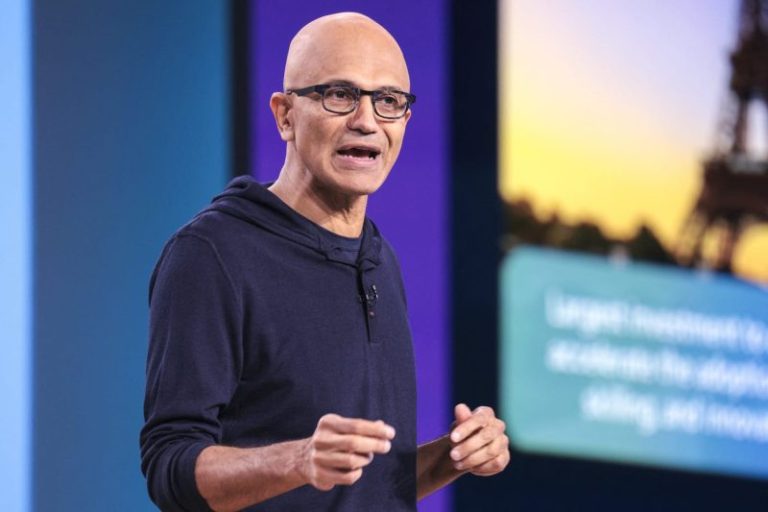
Microsoft has laid off over 15,000 people so far in 2025. The stress of the belt-tightening has gotten to CEO Satya Nadella.

“Before anything else, I want to speak to what’s been weighing heavily on me, and what I know many of you are thinking about: the recent job eliminations,” Nadella wrote in a memo to employees Thursday.

After Microsoft’s latest labor reductions, investors pushed the stock’s closing price above $500 for the first time on July 9. The company announced the layoffs of about 9,000 people a week earlier. Microsoft employed 228,000 people as of June 2024. It hasn’t provided a new figure that takes into account its layoffs this year, but Nadella wrote that headcount is basically flat.

“This is the enigma of success in an industry that has no franchise value,” he wrote. “Progress isn’t linear. It’s dynamic, sometimes dissonant, and always demanding. But it’s also a new opportunity for us to shape, lead through, and have greater impact than ever before.”

The cuts at Microsoft are reflective of an overall trend across the tech industry, with over 80,000 positions eliminated to date in 2025, according to one count. Recruit Holdings announced earlier this month that it would lay off 1,300 people from its human resources technology segment that includes the Indeed and Glassdoor websites. The company’s CEO pointed to artificial intelligence in a memo, Bloomberg reported.

On social media in recent months, some Microsoft employees have become disheartened about the company’s cutbacks, given its stature.

“I have loved working for this company, still do, but this has done so much damage to that loyalty because it has shown that Microsoft’s espoused values do not apply to business decisions at the macro level,” a person who lists themselves as a Microsoft directed on LinkedIn posted last week.

Microsoft is the world’s most valuable public company after Nvidia, whose chips have become a critical piece of the AI arms race. Microsoft’s Windows and Office franchises remain dominant, and its Azure cloud services have seen faster growth in recent years as OpenAI and other companies rent out Nvidia graphics cards to run AI models.

In the memo, Nadella touched on Microsoft’s mission for the past 10 years, which has been to empower every person and every organization on the planet to achieve more, and how the rise of AI is changing it.

“We must reimagine our mission for a new era,” he wrote. “What does empowerment look like in the era of AI? It’s not just about building tools for specific roles or tasks. It’s about building tools that empower everyone to create their own tools. That’s the shift we are driving — from a software factory to an intelligence engine empowering every person and organization to build whatever they need to achieve.”

This post appeared first on NBC NEWS

The S&P 500 ($SPX) just logged its fifth straight trading box breakout, which means that, of the five trading ranges the index has experienced since the April lows, all have been resolved to the upside.

How much longer can this last? That’s been the biggest question since the massive April 9 rally. Instead of assuming the market is due to roll over, it’s been more productive to track price action and watch for potential changes along the way. So far, drawdowns have been minimal, and breakouts keep occurring. Nothing in the price action hints at a lasting change — yet.

While some are calling this rally “historic,” we have a recent precedent. Recall that from late 2023 through early 2024, the index had a strong start and gave way to a consistent, steady trend.

From late October 2023 through March 2024, the S&P 500 logged seven consecutive trading box breakouts. That streak finally paused with a pullback from late March to early April, which, as we now know, was only a temporary hiccup. Once the bid returned, the S&P 500 went right back to carving new boxes and climbing higher.

New 52-Week Highs Finally Picking Up

If there’s been one gripe about this rally, it’s that the number of new highs within the index has lagged. As we’ve discussed before, among all the internal breadth indicators available, new highs almost always lag — that’s normal. What we really want to see is whether the number of new highs begins to exceed prior peaks as the market continues to rise, which it has, as shown by the blue line in the chart below.

As of Wednesday’s close, 100 S&P 500 stocks were either at new 52-week highs or within 3% of them. That’s a strong base. We expect this number to continue rising as the market climbs, especially if positive earnings reactions persist across sectors.

Even when we get that first day with 100+ S&P 500 stocks making new 52-week highs, though, it might not be the best time to initiate new longs.

The above chart shows that much needs to align for that many stocks to peak in unison, which has historically led to at least a short-term consolidation, if not deeper pullbacks — as highlighted in yellow. Every time is different, of course, but this is something to keep an eye on in the coming weeks.

Trend Check: GoNoGo Still “Go”

The GoNoGo Trend remains in bullish mode, with the recent countertrend signals having yet to trigger a greater pullback.

Active Bullish Patterns

We still have two live bullish upside targets of 6,555 and 6,745, which could be with us for a while going forward. For the S&P 500 to get there, it will need to form new, smaller versions of the trading boxes.

Failed Bearish Patterns

In the chart below, you can view a rising wedge pattern on the recent price action, the third since April. The prior two wedges broke down briefly and did not lead to a major downturn. The largest pullbacks in each case occurred after the S&P 500 dipped below the lower trendline of the pattern.

The deepest drawdown so far is 3.5%, which is not exactly a game-changer. Without downside follow-through, a classic bearish pattern simply can’t be formed, let alone be broken down from.

We’ll continue to monitor these formations as they develop because, at some point, that will change.

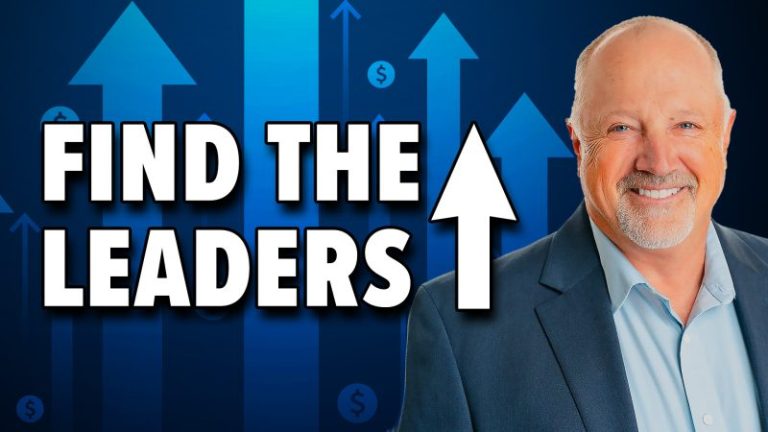
Is the market’s next surge already underway? Find out with Tom Bowley’s breakdown of where the money is flowing now and how you can get in front of it.

In this video, Tom covers key moves in the major indexes, revealing strength in transports, small caps, and home construction. He identifies industry rotation signals, which are pointing to aluminum, recreational products, and furnishings. Tom then demonstrates how to use StockCharts’ tools to scan for momentum stocks in emerging leadership groups — see why SGI tops Tom’s list. He ends with a discussion of post-earnings reactions from major names like GOOGL, TSLA, IBM, and LVS. 

And, of course, Tom wraps every idea with clear chart setups you can act on today. 

This video premiered on July 24, 2025. Click this link to watch on Tom’s dedicated page.

Missed a session? Archived videos from Tom are available at this link.

A Jewish-American national security group is sounding an alarm about how America and Israel’s enemies may exploit low missile stockpiles after the 12-day war with Iran.  

Defending Israel and the Al Udeid Air Base in Qatar from Iranian counterstrikes cost the U.S. and Israel between $1.48 billion to $1.58 billion, according to an analysis by the Jewish Institute for National Security of America (JINSA), and burned through a large portion of missile interceptor stockpiles. 

Both the U.S. and Israel now face an ‘urgent need’ to replace those stocks and sharply increase production rates. 

The U.S. had roughly 632 Terminal High Altitude Area Defense (THAAD) interceptors before June 13, the day Israel began its offensive in Iran. About 540 interceptors remain in its arsenal based on JINSA’s calculations of interceptor deliveries and use, according to the report. 

In addition, the two Patriot missile interceptor systems responsible for defending Al Udeid, the U.S.’s largest base in the Middle East that’s home to 10,000 soldiers, reportedly used roughly 30 Patriot interceptors against the 14 Iranian ballistic missiles targeting the site June 23, The interceptors cost about $3.7 million each, totaling $111 million.

Iran launched 574 medium-range ballistic missiles toward Israel and the U.S. airbase in Qatar after Tel Aviv and Washington conducted strikes on Iranian military and nuclear sites between June 13 and June 24, when the conflict ended in Iran’s counterstrike in Qatar.

Lt. Gen. Thomas Bergeson, former chief of U.S. Central Command, said the U.S. and its allies needed to do more to invest in nonkinetic interception mechanisms,or systems that can neutralize a threat without explosive force, would be much cheaper in defending against future attacks. 

‘There’s any number of operational test and developmental testing going on with a cheaper bullet than a multibillion-dollar interceptor to shoot down a relatively inexpensive missile or UAS,’ he said. ‘Any electro-magnetic interference capability, a microwave laser EMP, whatever that can screw up, the guidance system or the proportion of that particular system is something that could be cheaper.

‘You can have literally hundreds if not thousands of rounds in one interceptor at very low cost.’

While the cost for the U.S. and Israel was high, the cost for Iran was greater — between $1.1 billion and $6.6 billion. Air defenses saved Israel about $13.5 billion in property damage.

Iran used up between a third and a half of its ballistic missile arsenal during the 12-day conflict, suggesting Iranian assertions it could have continued striking Israel for years if it wanted were overblown. 

Replacing its missile stockpiles will be even more costly given that Israel struck many of its launchers and production sites. 

But the U.S. used up 14% of its global stockpile of prized THAAD missile interceptors. America’s THAAD system accounted for nearly half of all interceptions due to ‘insufficient’ capacity of Israel’s Arrow interception system. 

It would take three to eight years to replenish the THAAD interceptors used in the 12-day war at current production rates. 

Patriot interceptor production is more robust than THAAD, according to the report, but the U.S. is providing a number of Patriot interceptors to Ukraine. So, it’s unclear how many remain in the stockpile. 

If the U.S. and Israel fail to urgently replenish their interceptor inventories — especially THAAD and Patriot systems — they risk entering the next crisis with dangerously thin defenses, according to the report. Adversaries may take note of the extended gap between munitions use and stockpile replenishment, which leaves U.S. bases across the world open to vulnerabilities. 

‘Iran’s large-scale missile campaign may have revealed vulnerabilities in Israeli and U.S. air defense systems, providing lessons that Iran or other U.S. adversaries could exploit in the future,’ the report said.

The Pentagon could not immediately be reached for comment on its plan to replenish missile interceptor stocks.

This post appeared first on FOX NEWS

The United States has withdrawn its delegation from Doha, where it was participating in ceasefire negotiations this week, according to United States Special Envoy to the Middle East Steve Witkoff.

The announcement came the same day Israeli Prime Minister Benjamin Netanyahu’s office also announced that its negotiators in Doha would also be leaving in light of the response from Hamas. Witkoff also met with Israeli and Qatari officials in Rome Thursday, according to reports.  

‘We have decided to bring our team home from Doha for consultations after the latest response from Hamas, which clearly shows a lack of desire to reach a ceasefire in Gaza,’ Witkoff said in a statement Thursday. 

‘While the mediators have made a great effort, Hamas does not appear to be coordinated or acting in good faith. We will now consider alternative options to bring the hostages home and try to create a more stable environment for the people of Gaza.’

Witkoff added that it was a ‘shame’ Hamas has acted in such a ‘selfish way,’ adding the U.S. stands resolute in its efforts to bring permanent peace to the region.

According to Israeli media reports, Hamas is now demanding the release of 200 Palestinians serving life sentences for murdering Israelis and an additional 2,000 Palestinians detained in Gaza after Oct. 7. 

The demand significantly exceeds the previous mediator-backed framework reportedly accepted by Israel, which included the release of 125 life-term prisoners and 1,200 other detainees.

At a State Department briefing Thursday, principal deputy spokesperson Tommy Pigott would not elaborate on any details pertaining to the ‘alternative options’ the U.S. was considering in its effort to bring home hostages and create a more stable environment in Gaza.

‘At this point, (there’s) nothing to preview,’ Pigott told reporters. 

Pigott was also asked whether the U.S. would ever work within the Doha framework to advance negotiations again, a framework that has included representatives from Egypt, Qatar, Hamas, Israel and the United States, but he similarly did not share any details on that front. 

‘Ultimately, the special envoy statement speaks for itself, but I think the broader context here is also important. The fact that we have seen Hamas first break that ceasefire that existed on Oct. 7, then break another ceasefire, and then, here, as the special envoy makes clear, not acting in a way in order to achieve a ceasefire again,’ Pigott said Thursday. ‘So, to reiterate, the question has never been our commitment to a ceasefire. It has been Hamas’. They have shown that again and again and again and have just shown it once again.’

‘Israel has long accepted a deal on the table, and Hamas has long rejected it,’ he added.

During Thursday’s press briefing at the State Department, the agency also confirmed that the U.S. would not be participating in an upcoming United Nations conference discussing a potential two-state solution between Israelis and the Palestinians.

Fox News’ Efrat Lachter contributed to this report.

This post appeared first on FOX NEWS

Lies and lying people comprise the sorry epitaph of Barack Obama’s presidency.  

The Big Lie was that then-candidate Donald Trump colluded with Russia to rig the 2016 presidential election. It derived from a phony dossier commissioned and financed by former Secretary of State Hillary Clinton that Obama’s national security team happily peddled to destroy his successor.  

It begat an even bigger whopper that ‘Putin and the Russian Government developed a clear preference for President-elect Trump’ and ‘aspired to help’ his election chances. This notorious deceit was inserted in the official Intelligence Community Assessment (ICA) that was ordered by Obama himself and conjured up by his CIA Director John Brennan.  

None of it was true. 

The bogus dossier was exploited to justify the ICA. Conversely, the ICA was used to legitimize the dossier. The circular faux verification was a clever ruse. And it worked splendidly. When both documents were leaked to the gullible Trump-hating media, journalists adopted them without question as sacred gospel from the Holy Book of Obama. The Russia hoax took off like a rocket.  

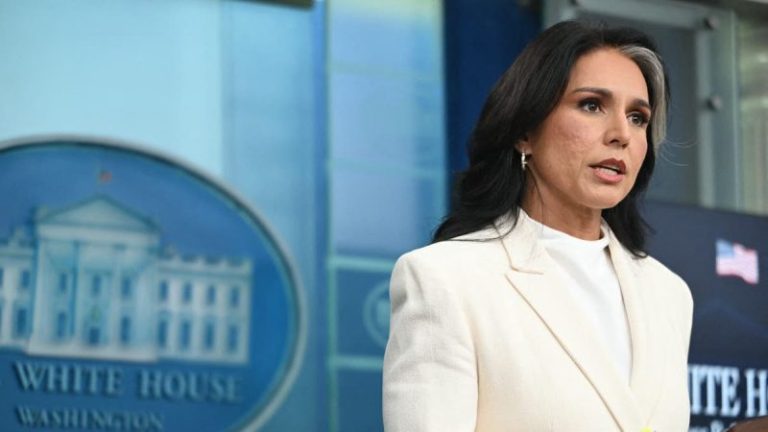
It crash-landed on Wednesday, July 23, when Tulsi Gabbard, the director of National Intelligence, accused Obama, Brennan and others of engineering the false intelligence. ‘They knew it would promote this contrived narrative that Russia interfered in the 2016 election to help President Trump win, selling it to the American people as though it were true. It wasn’t,’ she added.  

Newly declassified documents show that a December 8, 2016, draft of Obama’s Presidential Daily Briefing (PDB) debunked the notion of Russian electoral meddling to help Trump. But wait … that was problematic because it did not conform to the preferred narrative of Trump-Russia collusion. So, FBI Director James Comey and his cohorts reportedly scuttled it. That way, Trump, as president-elect, could not be briefed on its contents.   

The next day Obama convened a highly confidential meeting at the White House. The president ordered his intelligence cronies to expedite a new ICA that would reverse the PDB’s conclusion and energize the collusion fiction. With his marching orders in hand, Brennan immediately went to work on it. 

His challenge was devising a way to contort the known evidence and contradict the consensus of nearly everyone else in the intelligence community. No problem. CIA experts on Russia who strenuously objected were sidelined and silenced. Brennan ignored their warning that there was no direct evidence that Russian President Vladimir Putin wanted to elect Trump.  

Other intel agencies that typically contribute to the assessment were deliberately excluded to stifle dissent. Evidence shows that Brennan then selected a handful of sycophants — with only one principal drafter — to craft the entire ICA that bore little resemblance to the truth and established facts.  

On January 6, 2017, the rushed-to-completion ICA was produced. It offered a remarkable transformation from the earlier PDB: ‘Putin and the Russian Government aspired to help President-Elect Trump’s election chances when possible by discrediting Secretary Clinton and publicly contrasting her unfavorably to him.’ (Page 7 of ICA)  

The head-spinning about-face of intel conclusions was an immaculate conception of corrupt handicraft that belongs in the Intelligence Hall of Shame.  

Although Brennan denied it, numerous delusions drawn from the fake dossier were placed in the formal intelligence assessment to give it the sustenance that it otherwise lacked. Armed with both fallacious documents, Comey then met with Trump later that day in a devious but misbegotten scheme to entrap him. It failed miserably because the newly elected president had no idea what the FBI director was talking about.        

Obama’s dirty fingerprints were all over the cooked-up intelligence claiming that Moscow helped Trump in some grand collusion conspiracy. On Wednesday, Gabbard held a news conference to lift the veil of secrecy and malevolence. She leveled the following broadside:  

‘President Obama, Hillary Clinton, John Brennan, James Clapper, James Comey and others, including their mouthpieces in the media, knowingly lied as they repeated the contrived narrative that was created in this January 2017 intelligence community assessment with high confidence, as though it were fact.’   

Mincing no words, Gabbard accused Brennan of lying about his use of the dossier even though he knew it was a discredited and politically manufactured document. ‘He directed senior CIA officials to use it anyway,’ she said.  

Other intel agencies that typically contribute to the assessment were deliberately excluded to stifle dissent. 

As ‘irrefutable proof,’ she unlocked the 2020 report of the House Intelligence Committee that had never before been seen publicly, thanks to the machinations of then-Rep. Adam Schiff, D-Calif., who buried it as classified in a limited-access vault at CIA headquarters. The report outlined in detail the events that I summarized above. 

It was easy to do so because many of them are contained in the book I wrote six years ago, ‘Witch Hunt:’ ‘John Brennan was instrumental in proliferating the dossier. But even before the Clinton campaign and Democrats funded Christopher Steele’s project to smear Trump with the collusion hoax, the seeds of the collusion narrative were germinated by none other than Brennan.’ (Pages 66-67)  

I recounted how Brennan boasted to the House Intel Committee in May of 2017 that he had been the first to alert the FBI about collusion. ‘As he exerted uncommon pressure on the FBI to pursue a counterintelligence probe on Trump, he resolved to help spread the false allegations to Congress and the media. He politicized phony intelligence and instigated the fraudulent case against Clinton’s opponent.’ (Page 68) 

The Russians never had ‘Kompromat’ (compromising material) on Trump, as the dossier falsely accused. But they apparently did have it on Hillary. And that proved quite a stunner on Wednesday.  

The heretofore hidden House Intelligence report reveals how Russian intelligence ‘possessed DNC communications that in 2016 Clinton was suffering from ‘intensified psycho-emotional problems, including uncontrolled fits of anger, aggression, and cheerfulness.’ Clinton was placed on a daily regimen of ‘heavy tranquilizers’ and while afraid of losing, she remained ‘obsessed with a thirst for power.’’  

Obama and Democrat Party bosses apparently knew all about Clinton’s mental instability and found it ‘extraordinarily alarming.’ So much so, they worried it might have a ‘serious negative impact’ on the November election.    

Unlike the dossier, those shocking discoveries were not just idle gossip. The committee reviewed reams of source material and obtained corroboration during some 20 interviews with FBI agents and intelligence officers.  

How did the Russians get their hands on the damaging material? The report explains that Putin ordered hacking operations on the Clinton campaign and the Democratic National Committee. It seems that since Putin believed Hillary would win the election, he held the ‘Kompromat’ in his back pocket to use as potential blackmail for later use. 

His challenge was devising a way to contort the known evidence and contradict the consensus of nearly everyone else in the intelligence community. No problem. CIA experts on Russia who strenuously objected were sidelined and silenced.

In sending a criminal referral for possible prosecution to the Justice Department, Gabbard stated, ‘The evidence that we have found and that we have released directly point to President Obama leading the manufacturing of this intelligence assessment.’ 

In response, the DOJ announced that it had formed a ‘strike force’ to fully assess all the evidence and to investigate the next legal steps. Attorney General Pam Bondi vowed to ‘leave no stone unturned to deliver justice.’  

Obama denies any wrongdoing. But he should thank Trump for winning the recent landmark Supreme Court decision that provides all presidents with immunity. Ironically, the former president can now hide behind its broad protections. However, no such shield extends to others involved.  

It is folly to predict at this stage what prosecutions, if any, the future may hold. But the stain of corruption is already embedded in the epitaph of Obama’s presidency.   

This post appeared first on FOX NEWS

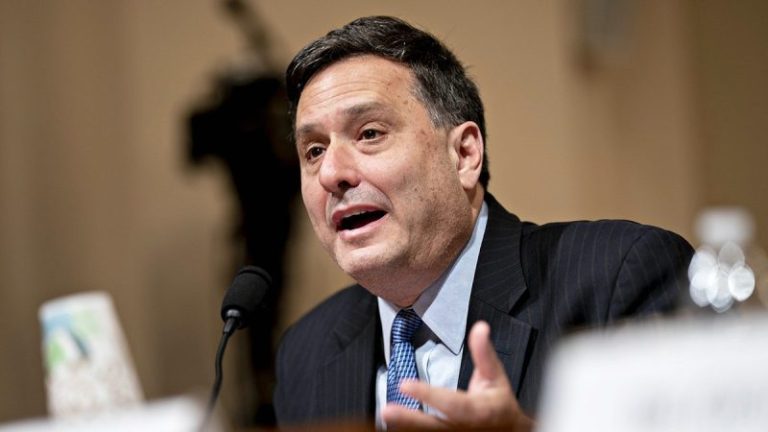
Ex-President Joe Biden’s former chief of staff ignored reporters on his way out of an interview with congressional investigators on Thursday after a marathon grilling behind closed doors.

Ronald Klain served as White House chief of staff for the first half of Biden’s term. He also reportedly played a key role in helping the former leader prepare for what proved to be a disastrous first and only 2024 election debate against current President Donald Trump.

Klain sat with staff and some lawmakers on the House Oversight Committee for hours for a voluntary transcribed interview.

Committee Chair James Comer, R-Ky., earlier told reporters that the interview was going well just after the session broke for lunch.

‘I think we’re having a very good transcribed interview. Mr. Klain is being fairly responsive to our questions,’ Comer said.

Comer is investigating whether Biden’s top White House aides concealed signs of mental decline in the then-president, and if that meant executive actions were signed via autopen without his knowledge.

Lawmakers who briefly attended the interview, however, called him ‘credible.’

‘I think he is telling what he knows accurately,’ Rep. Andy Biggs, R-Ariz., told Fox News Digital.

On the other side of the aisle, Rep. Ro Khanna, D-Calif., told reporters, ‘He answered every single question. He was fully cooperative.’

Comer was guarded, however, in response to questions about how much new information was gleaned.

‘There have been tidbits,’ he said. ‘We’ve asked specific questions. Obviously, evidence emerges on a daily basis that would suggest Joe Biden wasn’t mentally fit to be President of the United States.’

Klain is the sixth former Biden administration aide to appear for Comer’s probe and the third to appear voluntarily.

Former White House physician Kevin O’Connor, as well as senior advisors Annie Tomasini and Anthony Bernal, all appeared under subpoena.

Each also pleaded the Fifth Amendment to avoid answering questions.

Longtime Biden aide Ashley Williams and former staff secretary Neera Tanden both appeared voluntarily.

Like the previous five before him, the longtime Democratic operative did not answer questions from reporters either before or after his interview.

This post appeared first on FOX NEWS

House Republicans are already discussing contours for a potential second ‘big, beautiful bill’ advancing President Donald Trump’s agenda.

The Republican Study Committee (RSC), the 189-member-strong group that acts as a de facto ‘think tank’ for the House GOP, is launching a working group to look at what a second budget reconciliation bill would look like, Fox News Digital has learned.

It’s the largest organized effort so far by congressional Republicans to follow through on GOP leaders’ hopes for a second massive agenda bill.

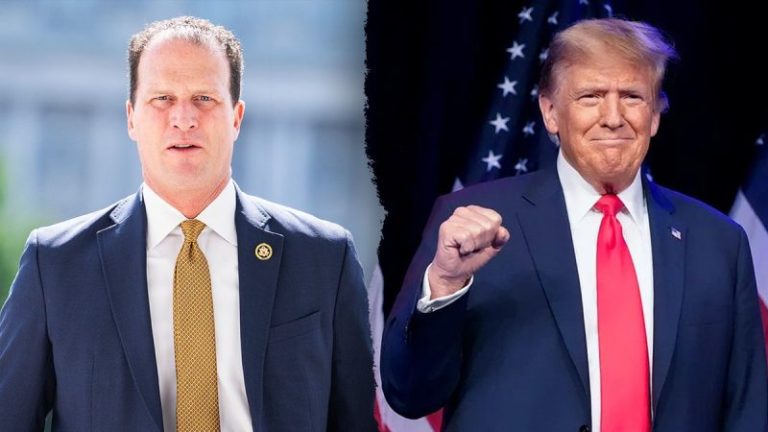
‘We must capitalize on the momentum we’ve generated in the first 6 months of a Republican trifecta in Washington,’ RSC Chairman August Pfluger, R-Texas, told Fox News Digital. ‘To fulfill the promises we made to the American people, conservatives must begin laying the groundwork for the second reconciliation bill to ensure we continue to drive down the cost of living and restore America’s promise for future generations.’

House Republicans left Washington on Wednesday to kick off a five-week recess period, where they’re readying to sell the benefits of their first massive agenda bill to their constituents. 

Meanwhile, Pfluger also directed lawmakers part of the new working group to begin reaching out to colleagues, conservative senators, and GOP organizations about potential policy proposals for a new bill, Fox News Digital was told.

The goal of the new group is to create a framework for what a second ‘big, beautiful bill’ could look like, and to recommend that framework to GOP leaders.

The first bill was a massive piece of legislation advancing Trump’s agenda on taxes, the border, immigration, defense, and energy.

It made much of Trump’s 2017 Tax Cuts and Jobs Act (TCJA) permanent, while imposing new work requirements on Medicaid and food stamps, among other measures.

After passing the House and Senate, Trump signed it into law during a celebratory event on the Fourth of July.

But the political fight to get just one reconciliation bill took Herculean political efforts across both the House and Senate, with debates and even heated arguments ongoing for months before the bill passed.

Notably, however, Republicans did get the legislation to Trump’s desk by July 4 – meeting a goal that many in the media and even within GOP circles thought impossible.

The budget reconciliation process allows the party controlling the White House and both chambers of Congress to pass massive partisan policy overhauls, while completely sidelining the other side – in this case, Democrats.

Reconciliation bills can pass the Senate with a simple majority rather than 60 votes, lining up with the House’s own passage threshold. But the legislation must adhere to a specific set of rules and only involve measures related to fiscal policy.

Speaker Mike Johnson, R-La., told ‘Sunday Morning Futures’ earlier this month that he was eyeing multiple reconciliation bills.

‘With President Trump coming back to the White House, and us having the responsibility for fixing every metric of public policy that Biden and Harris and the Democrats destroyed over the previous four years –  so the big beautiful bill was the first big step in that,’ he told host Maria Bartiromo.

‘But we have multiple steps ahead of us. We have long planned for at least two, possibly three, reconciliation bills, one in the fall and one next spring.’

This post appeared first on FOX NEWS

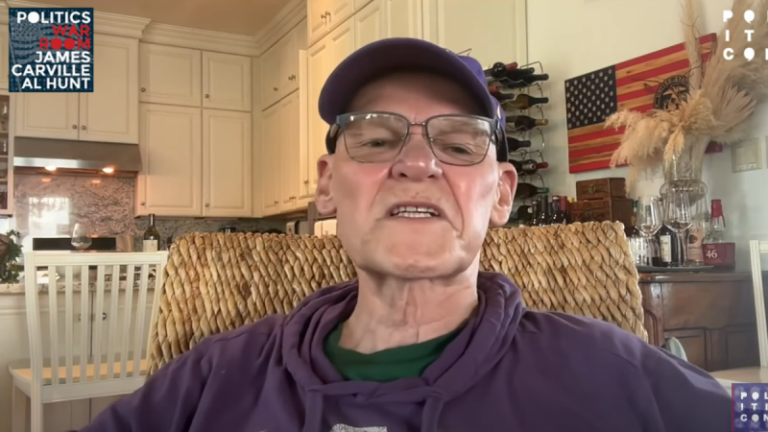
Writing in the New York Times on Monday, longtime Democratic political strategist James Carville outlined a compelling message for Democrats to unite around ahead of the 2026 midterms.

Carville urged Democrats to delay the ‘civil war’ that will eventually erupt between the party’s moderate and progressive wings, and to coalesce around a single ‘oppositional message’ focused entirely on repealing President Donald Trump’s agenda.

With all due respect to Mr. Carville, his myopic focus on a strategy of resisting Trump above all else is simply too narrow to be truly effective.

Put another way, a Democratic agenda built entirely around repealing the Republican agenda may be enough for 2026, but it falls far short of what Democrats must do if they hope to take back the White House in 2028.

Indeed, nowhere in the Times piece is any description of actual policies that Democrats should advance as an alternative to what Republicans are offering, either next year or in three years.

There are no calls for an entirely new economic agenda, one that replaces Democrats’ tendency for profligate spending with a more fiscally conservative plan focused on managing the debt while also protecting the social safety net.

In many ways, Democrats today should look to former President Bill Clinton, who was able to reduce the debt, leave a budget surplus and still protect vital social programs.

Moreover, the word ‘immigration’ is not even mentioned. 

This comes despite 2024 election polling showing that immigration was a top issue for voters, and exit polls showing voters trusted Trump over former Vice President Kamala Harris by a 16-point margin (52% to 36%), per Fox News.

To that end, if Democrats hope to take back more than just one chamber of Congress, the party needs an agenda that prioritizes securing the border, combined with a pathway to citizenship for legal migrants and Dreamers.

And, while I do agree with Mr. Carville that the midterms will be decided based on kitchen table issues rather than foreign policy, that does not mean Democrats can afford to ignore this issue.

As a party, Democrats must advance an agenda that positively asserts democratic values at home and abroad. 

This entails rejecting the belief of the far left – and increasingly the far right – that any use of American power is inherently bad.

To be sure, formulating an entirely new Democratic agenda takes time. And it will require the emergence of moderate candidates at a time when Zohran Mamdani’s win in New York City has energized the progressive wing of the party. 

Nevertheless, as the 2024 election made clear, Democrats cannot afford to run from the center toward the far left. What the party needs is a candidate who can win, not one chosen because they passed progressives’ ideological purity test.

Interestingly, Carville cites former President Clinton as a figure who emerged as Democrats’ ‘savior’ in 1992. 

But Clinton was able to do so because, at a time when the party was moving further to the left, Clinton dragged the party toward the middle on the economy and crime.

Finally, the crux of Carville’s message – ‘we demand a repeal’ of Trump’s agenda – overlooks the core factor behind who Americans cast a vote for.

Voters choose candidates who have plans and policies that will improve their lives. 

Slogans, no matter how catchy, may work for the midterms, but if Democrats then fail to deliver actual change between 2026 and 2028, its unlikely voters will trust them.

Quite simply, voters want a strong economy, safe streets, a government that is not excessively bloated and secure borders, not candidates whose only agenda is resisting the president. 

Now, this is not to say that the agenda outlined by Carville will not be successful next year – it very well may.

Rather, it is to point out that even if it helps Democrats reclaim the House of Representatives, it will not be enough to take back the White House in 2028.

For that, the party needs to advance its own agenda, one that addresses the above issues and actually provides a real, viable alternative to the Trump-GOP agenda. 

This post appeared first on FOX NEWS