
Author

admin

Browsing

Silver took some luster from gold in Q2 as its price climbed to 14 year highs.

Many of the same contributors that affected the gold price were also in play for silver.

Uncertainty in financial markets, driven by a chaotic US trade and tariff policy, coincided with rising tensions in the Middle East and continued fighting between Russia and Ukraine, prompting investors to seek safe-haven assets.

Unlike gold, however, silver also saw gains as industrial demand strained overall supply.

What happened to the silver price in Q2?

The quarter opened with the price of silver sinking from US$33.77 per ounce on April 2 to US$29.57 on April 4. However, the metal quickly found momentum and climbed back above the US$30 mark on April 9.

Silver continued upward through much of April, peaking at US$33.63 on April 23.

Volatility was the story through the end of April and into May, with silver fluctuating between a low of US$32.05 on May 2 and a high of US$33.46 on May 23.

Silver price, April 1 to July 17, 2025.

Chart via Trading Economics.

At the start of June, the price of silver soared to 14 year highs, opening the month at US$32.99 and rising to US$36.76 by June 9. Ultimately, the metal reached a year-to-date high of US$37.12 on June 17. Although the price has eased slightly from its high, it has remained in the US$36 to US$37 range to the end of the quarter and into July.

Silver supply/demand balance still tight

Various factors impacted silver in the second quarter of the year, but industrial demand was a primary driver in both upward and downward movements. Over the past several years, silver has been increasingly utilized in industrial sectors, particularly in the production of photovoltaics. In fact, according to the Silver Institute’s latest World Silver Survey, released on April 16, demand for the metal reached a record 680.5 million ounces in 2024.

Artificial intelligence, vehicle electrification and grid infrastructure all contributed to demand growth

At the same time, mine supply has failed to keep up, with the institute reporting a 148.9 million ounce production shortfall. This marked the fourth consecutive year of structural deficit in the silver market.

“(We have) flat supply, growing demand — demand that’s nearly 20 percent above supply,’ he said. ‘And our ability to meet those deficits is shrinking because we’re tapping into these aboveground stockpiles that have shrunk by about 800 million ounces in the last four years, which is equivalent to an entire year’s mine supply. So it’s the perfect storm.’

But industrial demand can send the silver price in either direction.

The chaos caused by Trump’s on-again, off-again tariffs has caused some consternation among investors.

While gold and silver have traditionally both been viewed as safe-haven assets, silver’s increasing industrial demand has decoupled it slightly from that aspect. When Trump announced his ‘Liberation Day’ tariffs on April 2, silver was impacted due to fears that a recession could cause demand for the metal to slip.

Although the dip in silver was short-lived, it was one of its steepest falls in recent years.

“If a global recession really starts, silver will most likely nosedive momentarily. In terms of its 2025 performance, silver growth has been largely bolstered by consolidated precious metals group appreciation, additionally beefed up by relative USD weakness.’

Geopolitics and the silver price

Adding to the tailwinds is a growing east-west divide. Due to its usage in industrial components, particularly those related to the military and energy sectors, and its role as a safe haven, silver is being influenced by geopolitics.

June’s price rally came alongside growing speculation that Israel was preparing to attack Iranian nuclear sites. Investors became concerned that war could disrupt international trade and oil movements in the region.

Ultimately, their concerns were proven right, and Israel launched attacks on June 12; the US then bombed key nuclear facilities on June 21. While the escalation is new, the underlying politics have been simmering for years.

Sanctions against Russia have strengthened support among the BRICS nations, which have been working to reduce their reliance on US dollar assets, such as treasuries, and increase trade in their own currencies.

But they may also be working to separate themselves from western commodities markets. In October 2024, Russia floated the idea of creating a precious metals exchange to its BRICS counterparts. If established, it could shake up pricing for commodities like silver, allowing Russia to circumvent sanctions and trade with its bloc partners.

While the exchange is still just an idea, a bifurcated world is not. While the US has targeted most nations with tariffs, it has singled out China. Much of the first half of the year saw the world’s two largest economies escalate import fees with one another, with China even restricting the export of rare earth elements to the US.

Discussions on national security and critical minerals have been at the forefront for the last several years. Still, they have become even more pronounced with the US and China on tense footing.

“Even if that’s going to happen, industrial use value — building infrastructure, building national security, national energy priorities — needs a lot of silver, and there just simply isn’t enough supply out of the ground to meet the demand. That’s long-term demand above the ground. This has been a thing, but right now, because of these geopolitical forces and realignments, silver is going to drop more into that industrial role,” she said.

Silver price forecast for 2025

Overall, the expectation is that without new mine supply and dwindling aboveground stockpiles, silver is likely to remain in deficit for some time. Other factors, like Trump tariffs and geopolitics, aren’t likely to disappear either.

Demand could ease off if a global recession were to materialize, but safe-haven investing could offset declines.

For his part, Krauth thinks the silver price is likely to remain above the US$35 mark, but it could fluctuate and he suggested a rally in the US dollar could push the silver price down. However, he also sees some pressure easing on the recession side of the equation if the US signs tariff deals that would eliminate some uncertainty.

“US$40, let’s say by the end of this year,’ he said, adding, ‘Frankly, I could see something really realistically above that, maybe an additional 10 percent if the scenario plays out right.’

He doesn’t think that’s the end. In the longer term, Krauth sees silver going even higher. He pointed to the current gold-silver ratio, which is around 92:1, compared to an average of 60:1 over the last 50 years.

“So we could go to, who knows, somewhere like maybe 40 or 30 to one in the ratio. That would be tremendous for silver — that could bring silver above US$100. I’m not saying that’s happening tomorrow, but in the next couple of years I would say that’s certainly something that could easily be in the cards,” Krauth said.

Fundamentals and geopolitics aligned for silver in the first half of 2025, and barring a recession, they are likely to provide tailwinds in the second half. Whether the price climbs or continues to find support at US$35 is yet to be seen.

Securities Disclosure: I, Dean Belder, hold no direct investment interest in any company mentioned in this article.


This post appeared first on investingnews.com

Consumer prices rose in June as President Donald Trump’s tariffs began to slowly work their way through the U.S. economy.

The consumer price index, a broad-based measure of goods and services costs, increased 0.3% on the month, putting the 12-month inflation rate at 2.7%, the Bureau of Labor Statistics reported Tuesday. The numbers were right in line with the Dow Jones consensus, though the annual rate is the highest since February.

Excluding volatile food and energy prices, core inflation picked up 0.2% on the month, with the annual rate moving to 2.9%, with the annual rate in line with estimates. The monthly level was slightly below the outlook for a 0.3% gain.

A worker prices produce at a grocery store in San Francisco, California, US, on Friday, June 7, 2024.David Paul Morris / Bloomberg via Getty Images

Prior to June, inflation had been on a generally downward slope for the year, with headline CPI at a 3% annual rate back in January and progressing gradually slower in the subsequent months despite fears that Trump’s trade war would drive prices higher.

While the evidence in June was mixed on how much influence tariffs had over prices, there were signs that the duties are having an impact.

Vehicle prices fell on the month, with prices on new vehicles down 0.3% and used car and trucks tumbling 0.7%. However, tariff-sensitive apparel prices increased 0.4%. Household furnishings, which also are influenced by tariffs, increased 1% for the month.

Shelter prices increased just 0.2% for the month, but the BLS said the category was still the largest contributor to the overall CPI gain. The index rose 3.8% from a year ago. Within the category, a measurement of what homeowners feel they could receive if they rented their properties increased 0.3%. However, lodging away from home slipped 2.9%.

Elsewhere, food prices increased 0.3% for the month, putting the annual gain at 3%, while energy prices reversed a loss in May and rose 0.9%, though they are still down marginally from a year ago. Medical care services were up 0.6% while transportation services edged higher by 0.2%.

With the rise in prices, inflation-adjusted hourly earnings fell 0.1% in June, the BLS said in a separate release. Real earnings increased 1% on an annual basis.

Markets largely took the inflation report in stride. Stock market indexes were mixed while Treasury yields were mostly negative.

Amid the previously muted inflation ratings, Trump has been urging the Federal Reserve to lower interest rates, which it has not done since December. The president has insisted that tariffs are not aggravating inflation, and has contended that the Fed’s refusal to ease is raising the costs the U.S. has to pay on its burgeoning debt and deficit problem.

Central bankers, led by Chair Jerome Powell, have refused to budge. They insist that the U.S. economy is in a strong enough position now that the Fed can afford to wait to see the impact tariffs will have on inflation. Trump in turn has called on Powell to resign and is certain to name someone else to the job when the chair’s term expires in May 2026.

Markets expect the Fed to stay on hold when it meets at the end of July and then cut by a quarter percentage point in September.

This post appeared first on NBC NEWS

Relatively healthy earnings reports from the big banks and a June inflation report that came in line with analyst expectations didn’t give the stock market much of a lift, as the S&P 500 ($SPX) and Dow Jones Industrial Average ($INDU) both ended the day lower. The only major index to shine was the Nasdaq Composite ($COMPQ), which closed at a record high.

Technology stocks were the stars of the show. It wasn’t a blowout rally, but the sector still managed to finish in the green. Why? There were a couple of key developments that gave tech a nice boost.

First, semiconductors got some breathing room. Restrictions on chip sales to China were relaxed, and that gave big names like NVIDIA Corp. (NVDA) and Advanced Micro Devices (AMD) a reason to rally. 

Second, there’s a push from the government to invest in AI and energy initiatives in Pennsylvania. One of the biggest winners was Super Micro Computer, Inc. (SMCI), which jumped 6.9% — the biggest percentage gain in the S&P 500. You can see from the StockCharts MarketCarpet for the S&P 500 stocks that, besides the top-weighted stocks in the index, it was mostly a sea of red.

FIGURE 1. MARKETCARPET FOR TUESDAY, JULY 15. Technology was the clear leader, with the largest cap-weighted stocks leading the sector higher.Image source: StockCharts.com. For educational purposes.

Semiconductors Show Strength

If you’ve been watching semiconductors, you may have noticed that the SPDR S&P Semiconductor ETF (XSD) has been on a roll. Since April, the ETF has stayed above its 20-day exponential moving average (EMA). The relative performance of XSD against the SPDR S&P 500 ETF (SPY) has been improving, and its relative strength index (RSI) is at around 62, an indication that momentum is at healthy levels (see chart below). It’s important to note that since May, the RSI has remained above 50, which is supportive of XSD’s upside movement.

Note: StockCharts members can access this chart from the Market Summary page or the Market Summary ChartPack (under US Industries > Bellwether Industries).

FIGURE 2. DAILY CHART OF XSD. Since April, XSD has been trending higher and is now trading above its 21-day EMA.Chart source: StockCharts.com. For educational purposes.

How to Track Semiconductor Stocks

If the environment for semiconductors remains strong, there could be more upside for stocks in that space. A simple way to keep tabs on the stocks using StockCharts tools is to create a ChartList of semiconductor stocks you’re interested in owning.

  • Begin by heading to the US Sectors panel in the Market Summary page or the Sector Summary page on your Dashboard.
  • Click Sector Drill-Down > Technology Sector Fund > Semiconductors.
  • You’ll see the list of semiconductor stocks that make up the industry group.

From there, I prefer to sort the data by the Universe (U) column, starting with the large caps and then the StockCharts Technical Rank (SCTR) score to find large-cap technically strong stocks. You can then view the charts on the list. If you see a chart that appears to have a favorable risk-to-reward ratio, you can save it to your Semiconductor ChartList.

FIGURE 3. SEMICONDUCTOR STOCKS TO REVIEW. The sector drill-down will uncover stocks in leading sectors or industry groups. Scroll down the list to identify charts that meet your investment or trading criteria. Image source: StockCharts.com. For educational purposes.

As you review the charts in your ChartList, you can identify potential support and resistance levels and set alerts to notify you when prices reach your key levels. It’s a great way to stay proactive.

The Bottom Line

This type of top-down analysis helps you stay one step ahead of the market. Start with the broad market, then narrow down to sectors, then industry groups, and then individual stocks. By taking a proactive approach to managing your investments, you’re always preparing for the stock market’s next move.


Disclaimer: This blog is for educational purposes only and should not be construed as financial advice. The ideas and strategies should never be used without first assessing your own personal and financial situation, or without consulting a financial professional.

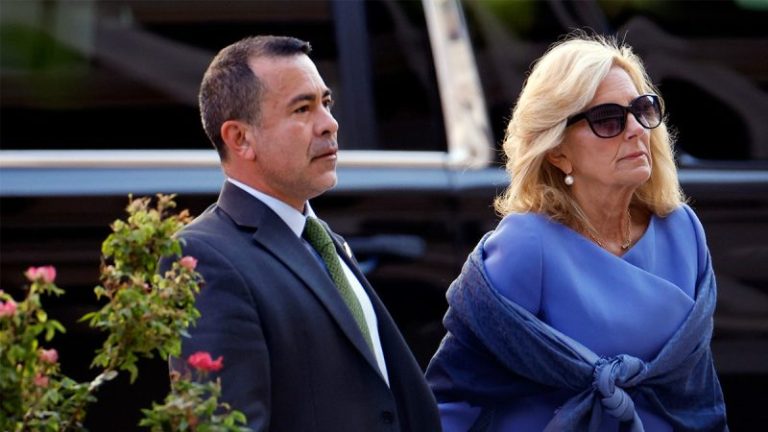
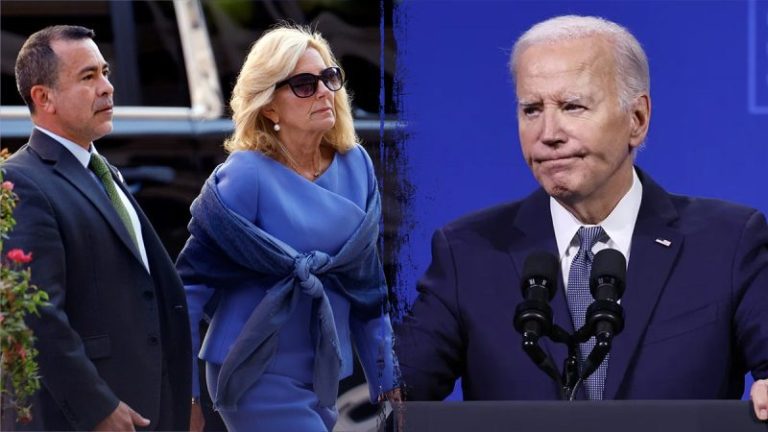
A former top White House advisor to ex-first lady Jill Biden was subpoenaed to appear before the House Oversight Committee on Wednesday.

Anthony Bernal, former assistant to the president and senior advisor to the first lady, was compelled for a July 16 closed-door deposition after missing a previously agreed-upon interview date late last month.

House Oversight Committee Chair James Comer’s subpoena letter to Bernal read: ‘The Committee seeks information about your assessment of and relationship with former President Biden to explore whether the time has come for Congress to revisit potential legislation to address the oversight of presidents’ fitness to serve pursuant to its authority under Section 4 of the Twenty-Fifth Amendment or to propose changes to the Twenty-Fifth Amendment itself.’

While the deposition is moving forward Wednesday morning, it’s not guaranteed Bernal will show up until he’s seen in the corridors of the House office building where the meeting is taking place.

Comer, R-Ky., is investigating allegations that Biden’s former top White House aides covered up signs of his mental and physical decline while in office, and whether any executive actions were commissioned via autopen without the president’s full knowledge. Biden allies have pushed back against those claims.

‘Original Sin,’ a book by CNN anchor Jake Tapper and Axios political correspondent Alex Thompson, positions Bernal as a fiercely protective aide who was dubbed the leader of the ‘loyalty police’ by other former Biden staffers.

His LinkedIn page lists him as currently working as Jill Biden’s chief of staff in the Transition Office of Former President Joe Biden.

Bernal was originally slated to appear last month for a voluntary transcribed interview, but he and his lawyers backtracked after the Trump administration announced it was waiving executive privilege rights for him and several other former White House staffers.

If he appears, he will be the fourth ex-Biden aide to sit down with House GOP investigators.

Longtime Biden advisor Ashley Williams appeared for a nearly six-hour transcribed interview on Friday, following a brief sit-down by former Biden physician Kevin O’Connor.

O’Connor, like Bernal, appeared under subpoena. His closed-door deposition lasted less than 30 minutes, with the doctor invoking the Fifth Amendment on all questions outside his name.

O’Connor’s lawyers said he did so out of concern for doctor-patient confidentiality. Comer, however, accused him of covering for the octogenarian former president. 

This post appeared first on FOX NEWS

When senior State Department officials set out to trim the agency in the ‘biggest reorganization since the Cold War,’ they couldn’t get a total headcount on employees — for months, they say.

‘It took us three months to get a list of the people that actually work in the building,’ one senior State Department official told reporters during a briefing at Foggy Bottom on Monday, defending the job cuts that detractors have claimed will damage U.S. diplomacy. 

‘They couldn’t tell you how many people worked here,’ the official said. ‘It’s sort of scary as a taxpayer and as a public servant to think that we don’t even know how many employees we have. This is a national security agency, you know. Who are these people?’

The reorganization will result in a department with about 3,000 fewer employees. Around half of those took a voluntary buyout, and the other half were given reduction in force (RIF) notices.


A handful of Secretary of State Marco Rubio’s closest advisors evaluated over 700 domestic offices within the State Department, submitting RIF (reduction in force) notices to employees in those they found to be ‘duplicative’ or ‘inefficient.’ 

The idea, officials said, was to put a ‘maximum of 12 clearances on any piece of paper,’ meaning documents would go through 12 layers of approval instead ’40, 50 clearances.’

The department had dozens of different offices handling human resources, and when a new employee was hired, they were accepting faxed records on their past work with other agencies. 

‘It’s crazy that a department that’s tasked with so many critical diplomatic, national security functions, with a $50 billion plus budget is running its affairs that way,’ an official said. 

The investigation found three separate offices dealing with sanctions, two handling arms control issues. 

‘Some of these regional offices within this sort of functional civil liberties, civil society, bureaus of democracy, human rights and labor, population, refugees and migration each had their own regional offices in addition to the country desk, regional bureau, construct,’ the official said. ‘Every independent bureau and office had its own executive director, its own HR department, its own payments.We were making payments out of like 60 plus different offices.’

Rubio’s team maintains the reductions focus on nonessential bureaucratic layers while preserving frontline diplomacy. A Supreme Court decision in late June reopened the door for mass federal layoffs after a lower court had blocked the cuts. Legal challenges from unions remain pending, though the reorganization is moving forward. 

The officials shuttered a ‘diplomats in residence’ program, which they determined to be a ‘cushy job.’ 

‘State Department employees are getting paid to go hang out at Georgetown, and sort of recruit for the Foreign Service,’ one official said, ‘without any sort of metrics or accountability.’

They didn’t touch the country desks, those specifically focused on nations like Iran or China, and didn’t fire anyone from passport services or diplomatic security. They did not make cuts at embassies or foreign posts. 

‘We touched the people that are doing these sort of like wasteful, sort of mindboggling functions or places where we found natural efficiencies in combining two offices.’

Critics have warned that cuts to the diplomatic corps could damage U.S. presence globally and cede soft power to China. 

‘A climate change office is not countering China,’ an official shot back. 

The department also shuttered an office that had been tasked with resettling Afghan refugees seeking to flee Talliban rule and culled the Bureau of Population, Refugees & Migration.

‘That office was not doing work that was countering China or serving the national interest,’ the official said. ‘China has overtaken the United States in a number of those countries. So I would argue growth at the State Department has not coincided with a growth of outcomes for the American taxpayer.’ 

In another example, an official told of a Gulf state foreign minister who complained that the Bureau of Democracy, Human Rights and Labor under the Biden administration kept pushing them to unionize foreign workers. 

‘This created huge diplomatic tension with them,’ the official said. ‘That foreign minister was delighted and wants to work with us on shared prosperity and trade agreements that aren’t trying to to be patronizing to other countries about their domestic affairs.’

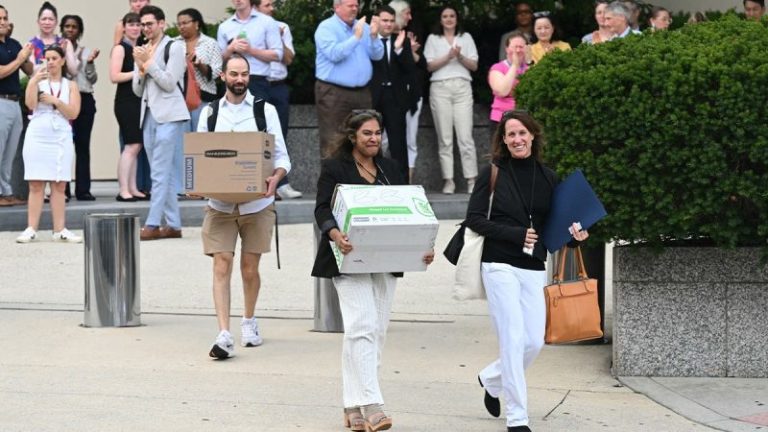
Still, the process has sparked palpable tension within the department. Employees gathered tearfully in the Foggy Bottom lobby to say goodbye, some displaying signs reading, ‘Diplomacy matters.’ 

Signs with messages like ‘resist fascism’ and ‘you made an impact’ were taped up throughout the department. 

A group of more than 130 former senior officials, including former National Security Advisor Susan Rice, signed an open letter expressing concern that deep staff reductions could endanger U.S. foreign policy effectiveness.

Some have seized on the results of a whittled-down State Department and foreign aid apparatus: A report by The Atlantic found the Trump administration had given an order to incinerate 500 tons of emergency food that had been purchased during the Biden administration as aid to be distributed in Afghanistan and Pakistan. 

‘It’s a little bit of a shame to see people behaving that way. You sort of wonder whether they had any interest in following the president and sort of, upholding their oath to listen to the commands of the people,’ one official said.

This post appeared first on FOX NEWS

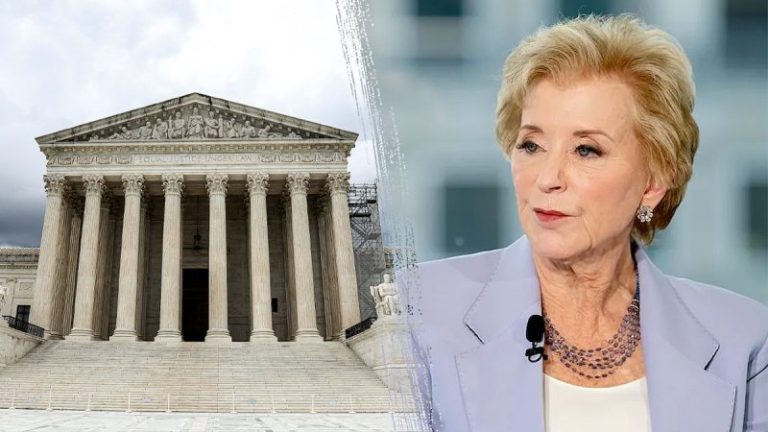
The Supreme Court’s decision to temporarily allow mass layoffs at the Education Department marked the latest in a string of rulings from the high court green-lighting the president’s plans to scale down the size of the federal workforce.

Permitting the termination of about 1,400 Education Department employees is one of several instances of the Supreme Court showing significant deference to Trump’s power over the executive branch. In other cases, the high court has preliminarily approved of Trump’s executive order calling for sweeping federal job cuts and shown an openness to the president diminishing the independence of some agencies.

Often these decisions, issued on an emergency basis at the request of the Trump administration, have come with little explanation. The high court did not, for example, spell out why it allowed Trump to carry out mass layoffs at the Education Department. But the move advances the president’s long-term efforts to dismantle the department, for now.

South Texas College law professor Joshua Blackman said the plaintiffs’ argument that Congress needs to approve such a drastic change to an agency did not appear persuasive to the high court.

‘I think they’re basically saying, ‘We don’t think this is trying to restructure the agency,’’ Blackman told Fox News Digital. ‘Justices Jackson and Sotomayor sort of made that point in the dissent, but I don’t think it’s resonating with the majority.’

Blackman noted that even though these shadow docket decisions are temporary while the lawsuits proceed in the lower courts, they have lasting power. Litigation can take two or three years, and employees who lose their jobs are likely not waiting around for that long to return to the government, he said. 

He also said those employees are not ‘in theory, at least,’ suffering irreparable harm because ‘reinstatements with back pay is an option.’ Irreparable harm is a criterion judges consider before issuing emergency orders.

Another Trump-friendly ruling

Last week, the Supreme Court temporarily reversed Judge Susan Illston’s order blocking the administration from acting on Trump’s executive order to reduce the workforce.

‘The President has the authority to seek changes to executive branch agencies, but he must do so in lawful ways and, in the case of large-scale reorganizations, with the cooperation of the legislative branch,’ Illston, a Clinton-appointed judge based in California, wrote.

Trump signed an executive order after he took office announcing a sweeping ‘reduction in force’ initiative. To carry out Trump’s order, the Office of Management and Budget and the Office of Personnel Management sent a directive to the heads of government agencies in February to craft plans to eliminate jobs.

‘Agencies should focus on the maximum elimination of functions that are not statutorily mandated while driving the highest-quality, most efficient delivery of their statutorily required functions,’ the memo said.

A group of labor organizations and nonprofits sued, arguing a mass reorganization of government required congressional approval.

Last week, the Supreme Court ruled 8-1 against them by pausing Illston’s injunction. Justices Sonia Sotomayor and Elena Kagan sided with the conservative majority, which found that the executive order and memo are lawful. The majority noted that the decision is not a reflection of the justices’ opinions on agency-specific firings and that those should be examined as a separate matter.

Jonathan Turley, a George Washington University law professor, told ‘Fox & Friends’ the high court was sending a ‘clear’ message about judicial overreach.

‘This is another shot across the bow to lower courts that they’ve got to knock this off,’ Turley said. ‘They’ve got to stop with these injunctions. This is six months of delay. It could’ve been much longer, and the court is signaling, ‘We’re going to be on you very quickly if you continue to do these types of orders.”

Pending layoffs

The decision empowered Secretary of State Marco Rubio to lay off more than 1,300 State Department workers.

Since Trump took office, tens of thousands of federal employees have accepted buyout offers from the administration or been let go. But many other layoffs are still wrapped up in lawsuits.

Some firing decisions remain pending because of district court judges’ orders. In some cases, the Trump administration has argued that the Supreme Court’s recent move to do away with universal injunctions is reason enough for those judges to reverse course.

In one lawsuit, Democratic-led states sued over Health and Human Services Secretary Robert Kennedy Jr.’s move to terminate about 10,000 employees. Judge Melissa DuBose, a Biden appointee based in Rhode Island, sided with the states and blocked the terminations. The judge must now decide if her injunction is at odds with the Supreme Court’s new ruling on universal injunctions.

Humphrey’s Executor

The government downsizing coincides with the president’s controversial decision to fire several watchdogs and members of independent agencies without cause.

In May, the Supreme Court sided with Trump on two of the firings, fueling speculation that the high court is aiming to overturn a 90-year precedent set in Humphrey’s Executor v. United States.

That decision found that President Franklin D. Roosevelt could not fire a member of the Federal Trade Commission without a reason, such as neglect of job duties or malfeasance, because it conflicted with a law Congress passed that established the commission.

In Trump’s case, the Supreme Court temporarily approved two firings involving the heads of the National Labor Relations Board and Merit Systems Protection Board. The high court’s order was unsigned but indicated that the three liberal justices dissented.

‘Because the Constitution vests the executive power in the President… he may remove without cause executive officers who exercise that power on his behalf, subject to narrow exceptions recognized by our precedents,’ the order read.

The Supreme Court’s decision was a boon to Trump’s implementation of the unitary executive theory, a legal concept that emphasizes presidential control. However, the order included a cautionary note that the Supreme Court’s finding was cursory and that no final decisions had been made about independent boards.

Kagan tore into the majority for letting Trump move forward with the firings.

‘Not since the 1950s (or even before) has a President, without a legitimate reason, tried to remove an officer from a classic independent agency – a multi member, bipartisan commission exercising regulatory power whose governing statute contains a for-cause provision,’ Kagan wrote.

Other similar lawsuits, including one brought by two fired Democratic-appointed FTC commissioners, are still pending, and the Supreme Court has not yet weighed in on them.

This post appeared first on FOX NEWS

Late-night dramatics and surprise defections capped off the push to advance President Donald Trump’s multibillion-dollar clawback package through procedural hurdles.

But Trump’s $9 billion rescissions package is not over the finish line yet, as lawmakers are set to begin an hourslong stretch of debate over the bill Wednesday morning. Both sides of the aisle will be allotted five hours of debate, but Republicans are likely to use little of their time compared to Democrats, who will try to drag out the process as long as possible.

At stake are clawbacks that would yank back congressionally approved funding for foreign aid programs and public broadcasting, which Senate Democrats, and some Republicans, have admonished.

The president’s rescissions package proposed cutting just shy of $8 billion from the U.S. Agency for International Development (USAID), and over $1 billion from the Corporation for Public Broadcasting (CPB), the government-backed funding arm for NPR and PBS.

Republicans have broadly lauded the targets, arguing that they are scraping back funding for ‘woke’ programs that do little more than to gird the government’s spending addiction.

Senate Minority Leader Chuck Schumer, D-N.Y., charged that the cuts in question were ‘just a piece of a larger Republican puzzle.’ 

He said the goal was using more rescissions packages, the president’s impoundment authority and smaller, pocket rescissions ‘that will pave the way for deeper and more serious spending cuts on things like healthcare, food assistance, energy, and so many other areas – and other democratic safeguards will no longer be around.’

‘They are eliminating Democrats from the process – there’s no discussion, no argument, and there’s no safeguards to help the average American,’ he said. ‘It’s just the billionaires running rampant, and we’re getting what they want.’

Before the vote, Senate Republican leaders agreed to carve out $400 million in cuts in global HIV and AIDS prevention funding that leaders hoped would win over holdouts. But it didn’t work for all.

A trio of Senate Republicans defected – Sens. Lisa Murkowski, R-Alaska, Susan Collins, R-Maine, and Mitch McConnell, R-Ky. – forcing Vice President JD Vance to cast his sixth and seventh tie-breaking votes of the year to keep the package alive.

He will likely be needed again later Wednesday to pass the bill, once lawmakers complete another vote-a-rama, where both sides of the aisle can offer unlimited amendments to the bill. 

Murkowski argued on the Senate floor that the rescissions package was effectively usurping Congress’ duty to legislate.

‘We’re lawmakers, we should be legislating,’ she said. ‘What we’re getting now is a direction from the White House and being told, ‘This is the priority we want you to execute on it. We’ll be back with you with another round.’ I don’t accept that.’

Collins contended that lawmakers actually knew little about how or where the clawbacks would come from, and accused the Office of Management and Budget of not painting a clearer picture on the issue.

‘I recognize the need to reduce excessive spending and I have supported rescissions in our appropriations bills many times, including the 70 rescissions that were included in the year-long funding bill that we are currently operating under,’ she said in a statement. ‘But to carry out our constitutional responsibility, we should know exactly what programs are affected and the consequences of rescissions.’

This post appeared first on FOX NEWS

A top aide to former first lady Jill Biden refused to answer GOP investigators’ questions on Wednesday as the House Oversight Committee probes whether senior ex-White House aides covered up signs of former President Joe Biden’s mental decline.

Anthony Bernal, former assistant to the president and senior advisor to the first lady, was compelled for a July 16 closed-door deposition after missing a previously agreed-upon interview date late last month.

His scheduled sit-down came and went quickly, however. Bernal apparently pleaded the Fifth Amendment to the questions asked by House staffers, a source familiar told Fox News Digital.

House Oversight Committee Chairman James Comer, R-Ky., quickly confirmed Bernal invoked his right against self-incrimination in comments to reporters alongside committee member Rep. Byron Donalds, R-Fla., who was also present.

Both criticized Bernal and his lawyer for arguing the Fifth Amendment was not an admission of guilt, and Comer told reporters ‘all options are on the table’ when asked whether the former president himself should be brought in.

‘We’re gonna continue our investigation. I think that the American people are concerned,’ Comer said.

House Oversight Committee Chair James Comer, R-Ky., is investigating allegations that Biden’s former top White House aides covered up signs of his mental and physical decline while in office, and whether any executive actions were commissioned via autopen without the president’s full knowledge. Biden allies have pushed back against those claims.

In an interview with The New York Times on Thursday, Biden affirmed he ‘made every decision’ on his own.

‘Original Sin,’ a book by CNN anchor Jake Tapper and Axios political correspondent Alex Thompson, positions Bernal as a fiercely protective aide who was dubbed the leader of the ‘loyalty police’ by other former Biden staffers.

His LinkedIn page lists him as currently working as Jill Biden’s chief of staff in the Transition Office of Former President Joe Biden.

Bernal was originally slated to appear last month for a voluntary transcribed interview, but he and his lawyers backtracked after the Trump administration announced it was waiving executive privilege rights for him and several other former White House staffers.

‘Now that the White House has waived executive privilege, it’s abundantly clear that Anthony Bernal – Jill Biden’s so-called ‘work husband’ – never intended to be transparent about Joe Biden’s cognitive decline and the ensuing cover-up,’ Comer said in late June.

He’s now the second former Biden administration staffer to invoke the Fifth Amendment after ex-White House physician Kevin O’Connor did so last week.

O’Connor’s deposition lasted less than 30 minutes, with the doctor refusing to answer any questions after his name.

But O’Connor’s lawyers argued at the time that it was not an admission of guilt. Rather, they were concerned the scope of the committee’s questioning could force him to violate patient-doctor confidentiality, risking his standing as a physician.

A House Oversight Committee aide pushed back: ‘Doctor-patient objection would have meant he would have stayed and answered questions that didn’t implicate such privilege. Instead, he took the Fifth to all and any potential questions.’

Two other former Biden White House staffers appeared for voluntary transcribed interviews already.

Another, former deputy Chief of Staff Annie Tomasini, was also subpoenaed to appear this Friday.

This post appeared first on FOX NEWS

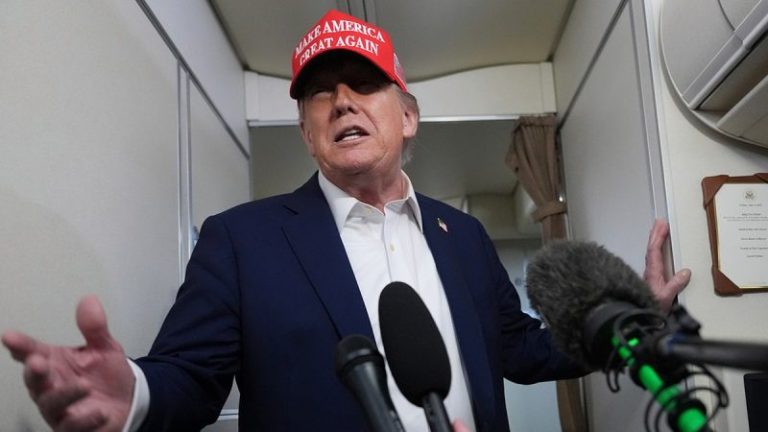
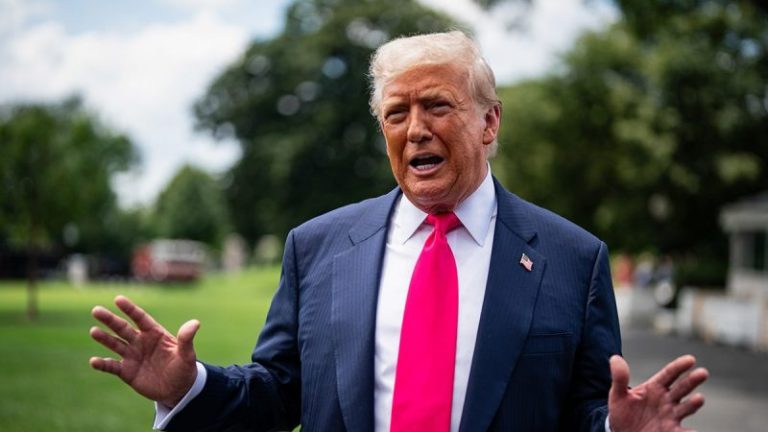
President Donald Trump fielded questions about late financier Jeffrey Epstein’s sex trafficking case on Tuesday, saying at one point that he supported Attorney General Pam Bondi releasing ‘credible’ files from it.

‘She’s handled it very well, and it’s going to be up to her, whatever she thinks is credible she should release,’ Trump told reporters.

Trump claimed former FBI Director James Comey, former President Barack Obama and former President Joe Biden ‘made up’ some of the files, but no evidence has surfaced that supports that accusation.

The president’s remarks came after the Department of Justice (DOJ) and FBI’s decision to close their review of Eptsein’s case without disclosing any new information about it to the public sparked fury among the MAGA base.

When she first took office in February, Bondi told Fox News she had a ‘truckload’ of information about the case and did nothing to quell conspiracies about a supposed nonpublic list of sexual predators associated with Epstein.

However, the DOJ and FBI shared a memo last week saying the agencies found no list and uncovered no new people whom they could bring charges against. The revelation was met with intense backlash from a faction of Trump supporters, which Trump and DOJ leadership have since been struggling to quell.

Later on Tuesday, Trump told reporters no credible information was left to release to the public.

‘He’s dead for a long time. He was never a big factor in terms of life. I don’t understand what the interest or what the fascination is. I really don’t, and the credible information’s been given,’ Trump said of Epstein’s case files.

Trump added, ‘It’s pretty boring stuff. It’s sordid, but it’s boring.’

Bondi also faced numerous questions from reporters on Tuesday during an event about fentanyl. The attorney general repeatedly said she did not want to address off-topic questions but at one point did say she stood by the DOJ and FBI memo.

‘Today our memo speaks for itself, and we will get back to you about anything else,’ Bondi said.

She also declined to talk about ‘personnel matters’ when asked about FBI Deputy Director Dan Bongino’s status. Bongino was ‘enraged’ by the memo rollout and considered resigning, sources told Fox News Digital last week.

This post appeared first on FOX NEWS

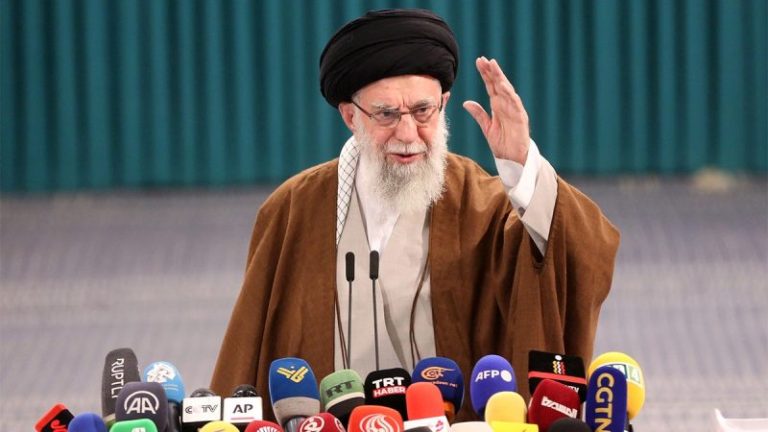
Iranian Supreme Leader Ayatollah Ali Khamenei on Wednesday issued his latest threat against the U.S. and ‘its dog on a leash, the Zionist regime [Israel]’ as nations urge nuclear negotiations but eye sanctions options. 

‘The fact that our nation is ready to face the power of the United States and its dog on a leash, the Zionist regime, is very praiseworthy,’ Khamenei said in comments translated by Reuters to state TV. 

Khamenei went on to claim that last month’s attack on the U.S. Al Udeid Air Base in Qatar was just the beginning of what Tehran could throw at Washington and warned that ‘an even bigger blow could be inflicted on the U.S. and others.’

While the U.S. has assessed that Iran’s nuclear program has been set back by up to two years following its strikes on the Fordow atomic site in June – which followed a series of strikes issued by Israel on Tehran’s nuclear and military sectors – much of Iran’s missile capabilities remain intact. 

It is unclear the exact extent that Iran’s missile and drone program was degraded after the Israeli strikes targeted its stockpiles and launching capabilities, but security experts have warned Tehran’s missile and drone programs remain a ‘significant’ threat.

Israel has estimated that even after its strikes, Iran likely still possesses some 1,500 medium-range ballistic missiles and 50% of its launching capabilities, reported Bill Roggio, senior fellow and editor of Foundation for Defense of Democracies’ (FDD) ‘Long War Journal.’

Similarly, Iranian expert Behnam Ben Taleblu told Fox News Digital that ‘Post strikes, the program still exists and, despite being handicapped, poses a significant regional threat.’

‘This is especially true at shorter distances since Iran’s single-stage solid fuel short-range ballistic are much more precise,’ Ben Taleblu, senior director of the FDD’s Iran program, said. ‘This means that in another iteration of an Israel-Iran-America conflict, the chances of retaliatory strike on U.S. regional bases remains high.’ 

Khamenei’s threats followed similar warnings by other top Iranian officials as western nations mull reinforcing snapback sanctions if Washington is unable to make headway on nuclear negotiations ‘by the end of the summer.’ 

President Donald Trump has said he is committed to continuing talks with Iran to avoid further military action, but on Tuesday evening, he told reporters he’s ‘in no rush to talk’ despite the ever-looming deadline for when a deal needs to be reached. 

Security experts have told Fox News Digital that snapback sanctions pose their own risk as the measure could prompt Iran to withdraw from the world’s largest nuclear agreement – the Treaty on the Non-Proliferation of Nuclear Weapons, which some 190 nations have signed on to.

‘A sustainable and verifiable diplomatic solution that addresses the security interests of the international community is essential,’ the German Foreign Ministry confirmed for Fox News Digital this week. ‘If such a solution is not achieved by the end of the summer, the snapback mechanism will remain an option for the E3.

‘We continue to coordinate closely with our E3 partners on this issue,’ the ministry added in reference to the European nations that signed the 2015 nuclear agreement known as the Joint Comprehensive Plan of Action, which are France, Germany and the U.K.

This post appeared first on FOX NEWS