Author

admin

Browsing

A bipartisan Senate duo want to ensure that a suicide prevention and mental health resource for farmers stays funded.

Sens. Tammy Baldwin, D-Wis., and Joni Ernst, R-Iowa, have joined forces to introduce legislation that would see millions in new funding for the Farm and Ranch Assistance Network, a program the pair first collaborated on in the 2018 Farm Bill.

The program is designed to help create a network for farmers, ranchers and other agriculture workers to have access to stress assistance and mental health programs. There are four regional hubs in Washington, New York, Illinois and Tennessee that act as conduits to aid farmers through the grant-funded program.

‘Too often, the stress, isolation, and physical demands of this job leave them with nowhere to turn when it all gets to be too much,’ Baldwin said of the stress and mental health struggles faced by farmers and agriculture workers.

Indeed, Farmers are about three and half times more likely to die by suicide than the average U.S. population, according to a study from the National Rural Health Association.

Their bill, called the Farmers First Act of 2025, would boost funding for the program by $75 million over the next five years, of which $15 million will be made available each fiscal year starting in 2026 through 2030.

The money would go toward hiring more behavioral health specialists, establish crisis lines, and build referral relationships with health care providers, health centers and critical access hospitals.

‘Iowa farmers work tirelessly from sunrise to sundown – rain or shine – to feed and fuel the world,’ Ernst said. ‘Their work isn’t easy, and mental health issues, including suicide, are too common in our agriculture community, which is why I’m working to ensure farmers have better access to mental health resources.’

The program got a reup in funding in 2020, when a three-year tranche of over $28 million was made available to the regional hubs. That funding was again boosted during the COVID-19 pandemic, when Congress injected an additional $28 million to allow states to maintain their own stress assistance programs. The latter funding was made available through grants of up to $500,000 to the state programs.

The bill is a bicameral effort, too. Reps. Randy Feenstra, R-Iowa, and Angie Craig, D-Minn., are pushing the bill in the House to bolster the program’s funding.

Feenstra argued that refilling the program’s cash coffers would provide ‘farmers with real support in times of crisis.’

‘Agriculture is the economic engine of Iowa, and our farmers and producers work long hours and make unseen sacrifices to feed and fuel our country and the world,’ he said. ‘Those sacrifices can take a toll on our farm producers, especially when commodity prices tumble or severe weather destroys crops.’ 

This post appeared first on FOX NEWS

A group of House conservatives is warning the Senate to leave President Donald Trump’s rescissions package intact as the deadline to consider the spending cuts looms large.

Republicans have until the end of Friday to deal with the bill, the legislative version of the White House’s request to claw back roughly $9.4 billion in funds already allocated by Congress.

Senate Republicans have signaled the bill could change somewhat, however, after passing the House last month.

‘In order to facilitate President Trump’s voter mandate, the Senate must pass the entire $9.4 billion of spending cuts in the rescission bill. Weakening any of these provisions would undermine both his leadership and the discipline our budget urgently demands,’ the letter said.

‘This week, the Senate has a chance to prove its commitment to the voters by passing the long-overdue cuts targeting wasteful, ideologically driven spending programs that have no place in a responsible budget.’

The letter is being led by Rep. Andy Biggs, R-Ariz., a former chairman of the House Freedom Caucus, and signed by 14 other Republican lawmakers.

The bill that passed the House in mid-June would rescind $1 billion in funding from the Corporation for Public Broadcasting, which doles out federal funding to NPR and PBS. The remaining $8.4 billion targets the U.S. Agency for International Development (USAID).

The cuts are part of some $190 billion that the Department of Government Efficiency (DOGE), formerly led by Elon Musk, identified as part of its mission to slash government waste. 

Trump allies are viewing it as a test run of sorts for what kind of spending cuts Congress’ perilously slim GOP majorities can stomach.

It barely passed the House in a 214 to 212 vote, with four House Republicans voting against it over various concerns, including the impact to local public news stations and funding for HIV/AIDS research in Africa, known as PEPFAR.

Senate Appropriations Committee Chair Susan Collins, R-Maine, told reporters last week the bill ‘needs some significant changes.’

‘For example, I want to strike the rescission of funds for PEPFAR, which has an enormous record of success, having seen some 26 million lives over the course of the program,’ Collins said. ‘I can’t imagine why we would want to terminate that program or the maternal and child health program, which is aimed at providing malnourished pregnant women with important vitamins that they need to deliver healthy babies.’

Sen. Mike Rounds, R-S.D., meanwhile, said he was ‘looking at radio stations in some of the rural areas that do a lot of emergency services’ when discussing what changes he’d want in the bill.

Biggs’ letter warned, ‘This rescission package just scratches the surface. The Left will howl, but this package only trims around the edges of a bloated federal spending apparatus. If Congress can’t even support modest clawbacks, fiscal doom isn’t speculative, it’s inevitable.’

‘President Trump has made it clear: Wasteful, unnecessary, or ideologically driven programs and spending must go. The House acted on this mandate. Now, the Senate must do the same. The House—and more importantly, the American people—will be watching,’ the lawmakers wrote.

‘This is a defining moment. Will the Senate stand firm, reject pressure to preserve the status quo, and reaffirm its commitment to leadership and fiscal responsibility? The answer will shape both the future of President Trump’s presidency and the direction of our nation. Respect the President’s plan. Preserve the cuts passed by the House.’

The rescissions process allows the president to request Congress block some of the discretionary funds it appropriates every fiscal year.

A rescissions package must pass the House and Senate within 45 days of introduction to allow those funds to remain blocked, otherwise they must be released.

However, the process also gives the party in power a fast track by lowering the Senate’s threshold for passage from 60 votes to 51.

House and Senate Republicans are both still dealing with razor-thin majorities of three votes each with full attendance, however, meaning any such vote is almost guaranteed to be close.

When reached for a response, Senate Majority Leader John Thune’s office pointed Fox News Digital to comments the South Dakota Republican made to reporters on Monday.

‘We’re hearing people out, and we are obviously weighing what an amendment process on the floor might look like – what, if any, changes could be made in advance of the floor, but we’re hoping to have a vote to proceed to it tomorrow, and the motion to discharge vote tomorrow, so we’ll have to finalize some of the conversations we’re having with our colleagues about an amendment process prior to that,’ Thune said.

This post appeared first on FOX NEWS

Former National Security Advisor Mike Waltz is poised to face members of the Senate Tuesday to get the ball rolling on his nomination to represent the U.S. at the United Nations.

Waltz’s appearance before the Senate Foreign Relations Committee comes months after he exited his job at the White House amid controversy surrounding his role in a Signal group chat with other top administration officials. 

Waltz is expected to call for reforms at the U.N. and is expected to say that it’s time to redirect the organization’s focus back to peacekeeping, according to his opening statement shared exclusively with Fox News Digital. Waltz’s statement says that the U.S. has footed the bill for missions that have endured for decades, and amount to nation-building rather than peacekeeping. 

Likewise, Waltz is expected to promise to turn up the heat on countering China and vow to work with the State Department to mitigate Chinese influence. 

‘Countering China is critical,’ a draft of Waltz’s statement says. ‘It’s absurd that the world’s second-largest economy is treated as a developing nation throughout UN agencies that gives China favorable status.’

Waltz’s prepared remarks also urge weeding out ‘pervasive’ antisemitism in the U.N., and claims that the U.N. passed ‘154 resolutions against Israel versus 71 against all other nations combined.’

Additionally, Waltz’s statement calls for slimming down the U.N. with staff cuts, due to an overlap in missions and ‘wasteful’ resources throughout the U.N.’s more than 80 agencies. 

‘It’s worth remembering that, even with cuts, the US is by far the most generous nation in the world,’ Waltz’s draft statement says. 

Democrats vowed to grill Waltz during his confirmation process in the aftermath of the Atlantic magazine’s reporting about a Signal group chat that his team had set up to discuss strikes against the Houthis in March.

Even so, the tough questioning from Democrats on the so-called ‘Signalgate’ issue isn’t expected to derail Waltz’s confirmation to the post, given that Republicans hold a 53–47 majority in the Senate. 

‘It’s all theater — you know he’s going to get confirmed,’ a GOP foreign relations source told Fox News Digital. ‘If Signalgate’s a big thing against him, it wasn’t enough to get anyone else fired or impeached or anything like that.’ 

Waltz, a former congressman who represented Florida’s 6th congressional district, is a retired Army National Guard colonel and former Green Beret. During his time in uniform, he served four deployments to Afghanistan and earned four Bronze Stars — the fourth-highest military combat award, issued for heroic service against an armed enemy.

Waltz and Secretary of Defense Pete Hegseth were both entangled in the Signal chat that Waltz’s team created where members of the Trump administration discussed strike plans against the Houthis. 

Waltz in March said he took ‘full responsibility’ for the Signal group chat, and the Trump administration has maintained that no war plans were shared in the chat. The Atlantic published the full exchange of messages, which included certain attack details such as specific aircraft and times of the strikes from Hegseth. 

On May 1, President Donald Trump announced Waltz’s departure from his role as national security advisor and hours later unveiled the former Florida congressman’s nomination to represent the U.S. at the U.N. 

Democrats called for Hegseth’s resignation as a result of the chat and warned that Waltz would face the heat during the confirmation process for U.N. ambassador. 

Democratic Sen. Tammy Duckworth of Illinois said in a May interview with CBS News that Waltz could count on a ‘brutal, brutal hearing’ from senators, and described his nomination as ‘failing up.’ 

‘He’s not qualified for the job, just by nature of the fact that he participated in this Signal chain,’ Duckworth, a member of the Senate Foreign Relations Committee, told CBS News. 

Duckworth, who served in the Illinois Army National Guard as a Blackhawk helicopter pilot and lost both of her legs during a 2004 deployment to Iraq, told Fox News Digital Monday that Waltz’s involvement in the group chat should disqualify him from serving as U.N. ambassador. She also said that every official included in the chat should be fired. 

‘As a retired Soldier, Waltz should have shut the unclassified chain down as soon as he saw Hegseth share such classified information that could’ve gotten our pilots killed,’ Duckworth said in a statement. ‘It’s clear Waltz cannot be trusted to make critical and sensitive national security decisions, and I look forward to pressing him on his conduct and holding him accountable.’


Duckworth has pinned most of the blame on Hegseth for Signalgate. Prior to Trump’s announcement on Waltz’s U.N. ambassador nomination, Duckworth said in a May post on X that of ‘all the idiots in that chat, Hegseth is the biggest security risk of all — he leaked the info that put our troops in greater danger.’ 

In addition to Waltz and Hegseth, administration officials including Vice President JD Vance, Secretary of State Marco Rubio and CIA Director John Ratcliffe were part of the group chat. 

Additionally, ranking member of the Senate Foreign Relations Committee Sen. Chris Coons, D-Conn., said that Waltz could brace for a meticulous confirmation hearing before the committee’s members. 

‘I look forward to a thorough confirmation hearing,’ Coons said in a post on X in May. 

A spokesperson for Coons did not respond to a request for comment from Fox News Digital. 

The GOP foreign relations source described the fallout from Signalgate a ‘huge nothing burger,’ and pointed out that Democrats’ previous efforts to use Signalgate against Waltz and Hegseth have proven unsuccessful. 

‘If this was their deathly bullet, it would have killed Hegseth, and it would have killed Waltz, but they’re both left standing,’ the source told Fox News Digital. 

A Senate aide told Fox News Digital that while Waltz took the brunt of the blame for Signalgate because his team created the chat, Democrats’ expected questioning of the group chat during the hearing is actually about finding a new avenue to go after Trump. 

‘I don’t think he’s the target. He’s just the mechanism to go after the target,’ the Senate aide said. ‘At the end of the day, Democrats want to criticize and go after the president, so these guys are just a mechanism to get there.’ 

Meanwhile, Republican lawmakers have voiced support for Waltz, with Senate Foreign Relations Committee Chairman Sen. Jim Risch, R-Idaho, calling him a ‘great choice’ for the position in a post on X in May. Additionally, Sen. Lindsey Graham, R-S.C., said at the time that the Senate would ‘for sure’ confirm Waltz. 

‘Some things I know for sure: the sun rises in the East, sets in the West and Mike Waltz will be confirmed as the next UN Ambassador,’ Graham said in an X post in May. ‘He is highly qualified, well-positioned, and will be a strong voice for our nation at the UN.’

Since Waltz’s departure as serving as national security advisor, Rubio has stepped in to fill that role. 

Trump previously nominated Rep. Elise Stefanik, R-N.Y., to represent the U.S. at the U.N. However, her nomination was pulled in March, and Trump claimed at the time that the House could not give up another Republican seat with its slim 220–212 Republican majority. 

If confirmed as U.N. ambassador, Waltz would be responsible for representing U.S. interests at the U.N.’s New York headquarters, weighing in on resolutions, treaties and other global matters.  

Waltz could not be reached for comment by Fox News Digital. 

The 80th session of the U.N. General Assembly is scheduled for Sept. 9, providing a window of time for Waltz’s nomination to make it through the entire confirmation process beforehand. 

‘The hope is to have him in place before the U.N. General Assembly is in session,’ the GOP foreign relations source told Fox News Digital. 

This post appeared first on FOX NEWS

Secretary Pete Hegseth pulled senior Defense Department officials from the Aspen Security Conference for promoting the ‘evil of globalism.’ 

Military commanders were set to speak at the conference, which begins on Tuesday, as has been tradition through Republican and Democratic administrations. 

But Pentagon spokesperson Kingsley Wilson told Just the News the secretary’s office believes the conference ‘promotes the evil of globalism, disdain for our great country, and hatred for the President of the United States.’

Wilson added that DoD ‘has no interest in legitimizing an organization that has invited former officials who have been the architects of chaos abroad and failure at home.’ 

The forum will host other Trump administration officials: Adam Boehler, presidential envoy for hostage response, and Tom Barrack, U.S. ambassador to Turkey and Syria. 

It will also hear from some contentious Biden administration officials – Jake Sullivan, former national security advisor, and Brett McGurk, a former National Security Council coordinator. 

Mark Esper, Trump’s former acting defense secretary, and David Petraeus, who was briefly CIA director under President Barack Obama, will also be speaking, along with Condoleezza Rice, a national security advisor and secretary of state during the Bush years. 

‘Senior Department of Defense officials will no longer be participating at the Aspen Security Forum because their values do not align with the values of the DoD,’ chief Pentagon spokesman Sean Parnell said in a statement. 

‘The Department will remain strong in its focus to increase the lethality of our warfighters, revitalize the warrior ethos, and project Peace Through Strength on the world stage. It is clear the ASF is not in alignment with these goals.’

The Aspen Institute said in a statement on the Pentagon withdrawal: ‘For more than a decade, the Aspen Security Forum has welcomed senior officials – Republican and Democrat, civilian and military – as well as senior foreign officials and experts, who bring experience and diverse perspectives on matters of national security.’

‘We will miss the participation of the Pentagon, but our invitations remain open.’

This post appeared first on FOX NEWS

Former National Security Advisor Mike Waltz is poised to face members of the Senate on Tuesday to get the ball rolling on his nomination to represent the U.S. at the United Nations.

Waltz’s appearance before the Senate Foreign Relations Committee comes months after he exited his job at the White House amid controversy surrounding his role in a Signal group chat with other top administration officials. 

Democrats vowed to grill Waltz during his confirmation process in the aftermath of The Atlantic magazine’s reporting about a Signal group chat that his team had set up to discuss strikes against the Houthis in March.

Even so, the tough questioning from Democrats on the so-called ‘Signalgate’ issue isn’t expected to derail Waltz’s confirmation to the post, given that Republicans hold a 53–47 majority in the Senate. 

‘It’s all theater — you know he’s going to get confirmed,’ a GOP foreign relations source told Fox News Digital. ‘If Signalgate’s a big thing against him, it wasn’t enough to get anyone else fired or impeached or anything like that.’ 

Waltz, a former congressman who represented Florida’s 6th congressional district, is a retired Army National Guard colonel and former Green Beret. During his time in uniform, he served four deployments to Afghanistan and earned four Bronze Stars — the fourth-highest military combat award, issued for heroic service against an armed enemy.

Waltz and Secretary of Defense Pete Hegseth were both entangled in the Signal chat that Waltz’s team created where members of the Trump administration discussed strike plans against the Houthis. 

Waltz in March said he took ‘full responsibility’ for the Signal group chat, and the Trump administration has maintained that no war plans were shared in the chat. The Atlantic published the full exchange of messages, which included certain attack details such as specific aircraft and times of the strikes from Hegseth. 

On May 1, President Donald Trump announced Waltz’s departure from his role as national security advisor and hours later unveiled the former Florida congressman’s nomination to represent the U.S. at the U.N. 

Democrats called for Hegseth’s resignation as a result of the chat and warned that Waltz would face the heat during the confirmation process for U.N. ambassador. 

Democratic Sen. Tammy Duckworth of Illinois said in a May interview with CBS News that Waltz could count on a ‘brutal, brutal hearing’ from senators, and described his nomination as ‘failing up.’ 

‘He’s not qualified for the job, just by nature of the fact that he participated in this Signal chain,’ Duckworth, a member of the Senate Foreign Relations Committee, told CBS News. 

Duckworth, who served in the Illinois Army National Guard as a Blackhawk helicopter pilot and lost both of her legs during a 2004 deployment to Iraq, told Fox News Digital Monday that Waltz’s involvement in the group chat should disqualify him from serving as U.N. ambassador. She also said that every official included in the chat should be fired. 

‘As a retired Soldier, Waltz should have shut the unclassified chain down as soon as he saw Hegseth share such classified information that could’ve gotten our pilots killed,’ Duckworth said in a statement. ‘It’s clear Waltz cannot be trusted to make critical and sensitive national security decisions, and I look forward to pressing him on his conduct and holding him accountable.’


Duckworth has pinned most of the blame on Hegseth for Signalgate. Prior to Trump’s announcement on Waltz’s U.N. ambassador nomination, Duckworth said in a May post on X that of ‘all the idiots in that chat, Hegseth is the biggest security risk of all — he leaked the info that put our troops in greater danger.’ 

In addition to Waltz and Hegseth, administration officials including Vice President JD Vance, Secretary of State Marco Rubio and CIA Director John Ratcliffe were part of the group chat. 

Additionally, ranking member of the Senate Foreign Relations Committee Sen. Chris Coons, D-Conn., said that Waltz could brace for a meticulous confirmation hearing before the committee’s members. 

‘I look forward to a thorough confirmation hearing,’ Coons said in a post on X in May. 

A spokesperson for Coons did not respond to a request for comment from Fox News Digital. 

The GOP foreign relations source described the fallout from Signalgate a ‘huge nothing burger,’ and pointed out that Democrats’ previous efforts to use Signalgate against Waltz and Hegseth have proven unsuccessful. 

‘If this was their deathly bullet, it would have killed Hegseth, and it would have killed Waltz, but they’re both left standing,’ the source told Fox News Digital. 

A Senate aide told Fox News Digital that while Waltz took the brunt of the blame for Signalgate because his team created the chat, Democrats’ expected questioning of the group chat during the hearing is actually about finding a new avenue to go after Trump. 

‘I don’t think he’s the target. He’s just the mechanism to go after the target,’ the Senate aide said. ‘At the end of the day, Democrats want to criticize and go after the president, so these guys are just a mechanism to get there.’ 

Meanwhile, Republican lawmakers have voiced support for Waltz, with Senate Foreign Relations Committee Chairman Sen. Jim Risch, R-Idaho, calling him a ‘great choice’ for the position in a post on X in May. Additionally, Sen. Lindsey Graham, R-S.C., said at the time that the Senate would ‘for sure’ confirm Waltz. 

‘Some things I know for sure: the sun rises in the East, sets in the West and Mike Waltz will be confirmed as the next UN Ambassador,’ Graham said in an X post in May. ‘He is highly qualified, well-positioned, and will be a strong voice for our nation at the UN.’

Since Waltz’s departure as serving as national security advisor, Rubio has stepped in to fill that role. 

Trump previously nominated Rep. Elise Stefanik, R-N.Y., to represent the U.S. at the U.N. However, her nomination was pulled in March, and Trump claimed at the time that the House could not give up another Republican seat with its slim 220–212 Republican majority. 

If confirmed as U.N. ambassador, Waltz would be responsible for representing U.S. interests at the U.N.’s New York headquarters, weighing in on resolutions, treaties and other global matters.  

Waltz could not be reached for comment by Fox News Digital. 

The 80th session of the U.N. General Assembly is scheduled for Sept. 9, providing a window of time for Waltz’s nomination to make it through the entire confirmation process beforehand. 

‘The hope is to have him in place before the U.N. General Assembly is in session,’ the GOP foreign relations source told Fox News Digital. 

This post appeared first on FOX NEWS
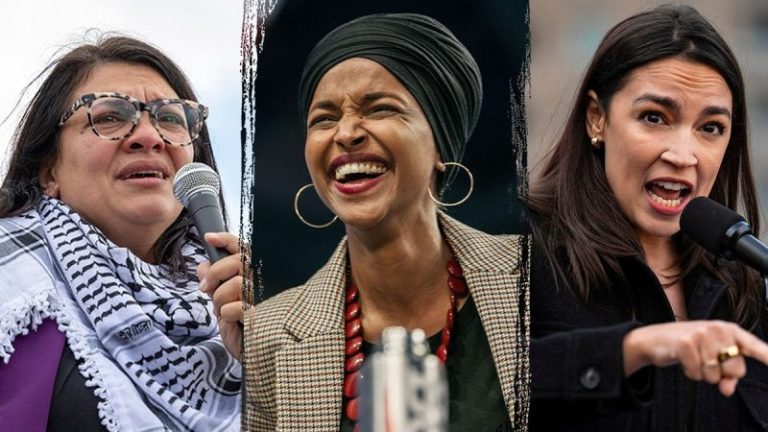
Members of the ‘Squad’ are undermining coexistence between Arabs and Jews in the Middle East, Israeli-Arab activist Yoseph Haddad told Fox News Digital.

‘Representatives of the Squad are trying to harm the coexistence and partnership that exist in the region between Arabs and Jews,’ Haddad said. ‘I think it was [Alexandria] Ocasio-Cortez herself who said she had no idea about the geopolitics of this region—she’s right. Ilhan Omar and Rashida Tlaib know exactly what’s going on here, but they decide to lie and twist the facts.’

Haddad, the CEO of Together Vouch for Each Other — an organization founded in 2018 by young Israeli Arabs to bridge cultural and religious divides — has emerged as a prominent voice in Israel’s public diplomacy efforts following Hamas’ Oct. 7, 2023 massacre. 

Since the attack, Jewish communities across the United States and Europe have faced a sharp rise in antisemitic incidents, with pro-Hamas demonstrations appearing on college campuses as early as October 8.

‘The first group is what I call the useful idiots — people who have no idea what’s going on but joined because it felt like the cool thing to do,’ Haddad said. ‘Then there are the paid protesters. You see the same faces at different rallies holding different signs — sometimes it’s about LGBTQ issues, sometimes it’s pro-Palestinian, sometimes it’s about internal American problems.’

‘It’s always the same person, just a different outfit and a different sign,’ he continued. ‘And the third group — the most dangerous—are the extremists who’ve come from the Middle East. Those are the ones we should be most concerned about.’

Haddad traced the rise of extremist voices in the West to waves of immigration and population displacement from conflict zones in the Middle East. While the majority of Muslim immigrants fled persecution in search of a better life, he said, a vocal minority brought with them the ideology of the Muslim Brotherhood, effectively holding their communities hostage.

‘When you have so many immigrants all around the world, it’s enough for 10 or 20 percent of them to be extremists — and suddenly, you’re dealing with millions of extremists,’ he said.

‘Ostriches, when there is a danger and there is a problem, what they do is they stick their head in the sand thinking the problem will just pass because nobody will notice them,’ he added. ‘And this is what the weak governments are doing right now, becoming like an ostrich. The only problem is that no one will skip them over, it will make it easier to chop their heads off.’

Addressing accusations that Israel enforces an apartheid system between Jews and Arabs, Haddad rejected the comparison outright.

‘In real apartheid, like in South Africa, everything was segregated — transportation, hospitals, courts, sports, even walking on the sidewalks,’ Haddad said. ‘But if you actually come to Israel and see life here, it’s the complete opposite — 180 degrees different.’

‘Stop speaking from a place of emotion — that’s exactly what The Squad is doing,’ he continued. ‘Start talking about facts. Then you’ll realize that anyone who concludes Israel is an apartheid state is an imbecile.’

He also mentioned a run-in he had with a protester, who he refers to as ‘the useful idiots.’

They have no clue … One time, I read the charter of Hamas to some pro-Palestinian useful idiot, I read it to them, and I said you agree to this, and they said no, no, no I didn’t know that. And I said yes, but this is what you are supporting, and he had the headband of Hamas on his head. You understand that this is what you are supporting.

‘He literally took the band off after that. Such useful idiots like this you have a lot, not just in the United States, you can see it in Europe as well.’

When asked what he believes the Palestinians ultimately want, Haddad pointed to slogans often heard at anti-Israel and antisemitic protests, such as ‘From the river to the sea, Palestine will be free’ and ‘There is only one solution: Intifada revolution.’

‘The majority of Palestinians do not want to live side by side with Israel,’ Haddad said. ‘So when people talk about a two-state solution and question Israel’s commitment, I say: Don’t ask the Israelis — ask the Palestinians. You’ll be shocked to find that many of them aren’t willing to accept it.’

Haddad pointed out that history can be approached in multiple ways — through religious texts like the Torah for Jews, the Bible for Christians and the Quran for Muslims. Even those who are atheists can look to history books for evidence of the deep-rooted connection of the Jewish people to the land of Israel.

Haddad argued that the Torah explicitly mentions the presence of Jews in Israel, tracing their presence back thousands of years. He also highlighted the Biblical reference to the birthplace of Jesus in Jewish Bethlehem, challenging the notion that Palestinian Muslims have a historical claim to the land before the Jews.

Haddad noted that while Jerusalem is never mentioned in the Quran, the term ‘sons of Israel’ appears more than 43 times. He also emphasized that the name ‘Palestine’ was imposed by the Romans as a punishment for the Bar Kokhba revolt.

Haddad highlighted that in 1947, Arabs had the opportunity to establish a Palestinian state through the U.N. Partition Plan, which the Jews accepted despite receiving less land and fewer resources. However, the Arabs rejected the plan and opted to wage war. When the Jews emerged victorious, 156,000 Arabs remained within what became Israel. Sharing his personal connection to this history, Haddad explained that his grandfather was one of those Arabs who stayed and eventually became part of the Arab Israeli identity.

‘It’s either you accept the fact that Israel exists and is here to stay, or you continue with this cycle of bloodshed and death that we are trying to escape,’ said Haddad. ‘But the ones who will suffer the most are you, the Palestinians, whether in the West Bank or Gaza.’

Several requests for comment sent to Reps. Ocasio-Cortez, Tlaib and Omar were not returned.

This post appeared first on FOX NEWS
Q2 confirmed that the artificial intelligence (AI) boom is entering a new phase in the physical world.

As the industry evolves, attention is being directed to strengthening underlying infrastructure while advancing areas like embodied AI, a subsector that MarketsandMarkets projects will grow at a CAGR of 39 percent globally by 2030.

Also during Q2, a geopolitical tech rivalry exacerbated shifting macroeconomic conditions.

While the race for compute, energy, hardware and supply chain dominance intensified, talk of tariff policies reigniting inflation or contributing to stagflation created brief periods of contraction.

Concerns also grew around AI-driven job displacement, amplified by Anthropic CEO Dario Amodei’s ominous warning that AI could eliminate up to half of all entry-level white-collar jobs within the next five years.

On a more positive note, the S&P 500 (INDEXSP:.INX) and Nasdaq Composite (INDEXNASDAQ:.IXIC) both ended Q2 up by 0.5 percent, closing the first half of 2025 at all-time highs with gains of 5.5 percent.

That said, investor enthusiasm for AI is showing early signs of recalibration.

Big Tech delivered generally robust Q2 earnings despite initial volatility in April, but posted only modest year-to-date gains, suggesting near-term caution around richly valued growth names. Meanwhile, quantum computing, which NVIDIA (NASDAQ:NVDA) CEO Jensen Huang said was decades away just six months ago, made measurable progress in Q2, drawing attention from both deep-tech investors and national governments.

McKinsey’s annual Quantum Technology Monitor projects that quantum computing, communication and sensing could generate up to US$97 billion in global revenue by 2035, with quantum computing leading the way.

Not surprisingly, AI companies performed well. Thirty-eight AI stocks chosen by Morningstar — including Palantir Technologies (NASDAQ:PLTR), Palo Alto Networks (NASDAQ:PANW), Synopsys (NASDAQ:SNPS) and Micron Technology (NASDAQ:MU) — closed 27.3 percent higher, outpacing the Morningstar US Technology Index, which gained 22 percent.

Ultimately, the quarter underscored a strategic pivot for major tech players, prioritizing vast infrastructure investments alongside aggressive AI monetization efforts to capitalize on this transformative era.

AI results impact major tech players

In public markets, AI-related equities continued to attract attention.

NVIDIA posted another blockbuster quarter, with its market cap on the cusp of $US4 trillion at the end of June. Its performance was driven largely by demand for Blackwell architecture.

Alphabet (NASDAQ:GOOGL), facing a possible Chrome divestiture, reported an increase in AI-related ad revenue and highlighted growing adoption of its Gemini model suite. Amazon (NASDAQ:AMZN) reported a 23 percent annual increase in net sales from its Amazon Web Services segment, beating earnings estimates by 17.78 percent.

Meta Platforms’ (NASDAQ:META) Reality Labs division reported a $US4.2 billion operating loss; however, interest in embodied AI applications for the metaverse and augmented reality continue to be the company’s long-term play, with CEO Mark Zuckerberg poaching the industry’s top talent to assemble the Meta Superintelligence Lab. On July 7, Reuters reported that the company had added Apple’s (NASDAQ:AAPL) Ruoming Pang as its latest recruit.

Microsoft’s (NASDAQ:MSFT) OpenAI partnership faced issues after OpenAI bought Windsurf, an AI coding firm. Disputes arose over Microsoft’s access to WindSurf’s IP and its stake in a restructured OpenAI.

Q2 was also marked by a shift to AI in hardware, robotics and edge applications.

Chipmakers Advanced Micro Devices (NASDAQ:AMD) and Google introduced specialized AI accelerators, a potential challenge to NVIDIA’s nearly three year run as the dominant provider.

Notable developments in robotics included Google Cloud and Samsung Electronics’ (KRX:005930) partnership, integrating Google Cloud’s advanced generative AI technology into Samsung’s new home AI companion robot, Ballie.

Data center operators like Amazon Web Services and Google Cloud also increased their infrastructure investments in the US as part of an effort to reduce reliance on foreign markets and secure long-term AI compute capacity.

Companies began testing or rolling out new AI agent capabilities, empowered by the Model Context Protocol from Anthropic. Major tech players, along with payment giants Visa (NYSE:V), Mastercard (NYSE:MA), Stripe, Block (NYSE:SQ) and PayPal (NASDAQ:PYPL), began adopting the Model Context Protocol to integrate seamless payment functionality directly into AI chatbots, moving beyond simple browse to full commerce.

Microsoft enhanced its GitHub Copilot offering with new coding agents capable of autonomous actions, while a handful of companies, including Dataiku, Databricks and Atlassian (NASDAQ:TEAM), introduced tools designed to build, deploy and manage autonomous systems for real-world enterprise applications.

On the quantum computing side, a paper published by researcher Craig Gidney for Google’s Quantum AI division suggests that a quantum computer could break a highly secure 2048 bit encryption, like the kind used for online banking, much faster than previously thought, requiring fewer than a million qubits.

Quantum computing firms later saw their shares spike following bullish comments from NVIDIA’s Huang at his company’s Paris GTC conference. Before Huang’s comments, IBM (NYSE:IBM) announced its development of the world’s first large-scale, error-free quantum computer, set to launch by 2029.

AI trends to watch in Q3

Q2 confirmed the AI cycle is evolving beyond text-based chatbots to hardware, embodiment and commercial uses.

While the Magnificent Seven still largely drove returns in Q2, there’s an expectation that earnings growth will broaden out to other sectors. Picton Investments’ 2025 mid-year update suggests that foundational model growth is encountering headwinds, with competition challenging the need for extensive capital expenditure.

Graph indicating that investor enthusiasm for AI stocks has recently ‘lost altitude.’

Graph via Picton Investments.

However, the firm also suggests that this shift is redirecting the spotlight to real-world AI applications, leading to an expected acceleration of industrial adoption and the creation of new companies.

At this year’s Web Summit conference in May, panelists emphasized the critical role of strategic early stage investments when it comes to navigating the evolving AI landscape and identifying new opportunities.

“Our take is (that) AI is going to upend a lot of technology businesses. In the specific sense, I am of increasingly high conviction that authoring software is going to be more or less free, and that’s going to shake up the topology of the software business market (in terms of) what makes sense and what’s investable,” said Brett Gibson, managing partner at Initialized Capital, during a panel discussion on where AI investment is headed next.

He added that customizable software will ultimately allow for tailored solutions for virtually any need.

In H2, quantum computing could continue its shift from pure research into early stage commercialization.

Updates may come from firms like IonQ (NYSE:IONQ), which recently raised US$1 billion to expand quantum networking, as well as Quantinuum and PsiQuantum, which may reach technical milestones.

Meanwhile, D-Wave (NYSE:QBTS) is pivoting toward hybrid commercial models, which may offer continued proof of revenue from quantum optimization-as-a-service.

However, the outcome of ongoing trade negotiations between the US and the rest of the world could impact chip capacity and rare earths supply chains, constraining the growth of AI hardware stocks.

The Trump administration’s imposition of 25 percent tariffs on Japan and South Korea may pose a threat to semiconductor capacity and rare earths equipment imports critical for AI hardware.

“Both countries have been close partners on economic security matters and have a lot to offer the United States on priority matters like shipbuilding, semiconductors, critical minerals and energy cooperation,” Asia Society Policy Institute vice president Wendy Cutler said in response to the hikes.

Investor takeaway

The second quarter of the year confirmed an evolution in the AI landscape as the industry moves beyond theoretical discussions to real-world applications and critical infrastructure development.

While geopolitical tensions and concerns about job displacement may continue to present challenges, this pivot could set the stage for continued innovation and adaptation as the industry navigates both opportunities and complexities.

Securities Disclosure: I, Meagen Seatter, hold no direct investment interest in any company mentioned in this article.

This post appeared first on investingnews.com

After soaring to all-time highs during the first quarter of 2025, how could gold follow up during Q2?

By setting new price records, of course.

Tariff threats, financial uncertainty and geopolitical tensions all fueled the yellow metal’s price rise during the second quarter of the year, which saw gold reach the US$3,500 per ounce mark for the first time.

While central banks continued to make gold purchases during the period, so too did retail investors, who shied away from US treasuries in favor of a more tangible safe-haven asset class.

What happened to the gold price in Q2?

Gold had an impressive run during the first quarter of the year, steadily rising from US$2,658.04 on January 2 to US$3,138.24 on April 2, leaving investors to wonder how much more gas was available for Q2.

Gold price, April 1 to July 10, 2025.

Chart via Trading Economics.

The price of gold started the second quarter on a downswing, falling below the US$3,000 mark by April 8, but quickly found momentum and soared to its quarterly high of US$3,434.40 on April 21.

It broke through the US$3,500 threshold briefly during the day’s trading session.

However, the gains were temporary, and gold once again fell; by May 1, it had dropped to US$3,237.30.

The metal saw a slight rebound to US$3,400.70 before the May meeting of the US Federal Reserve, but it came under pressure after that and had fallen to US$3,185 by May 14.

The end of May saw more tailwinds for the gold price, pushing it first to US$3,358 by May 23, then to US$3,381.70 by June 2. By the middle of the month, it was back to trading above US$3,400. Since that time, the precious metal has remained mainly above the US$3,300 level, closing the quarter at US$3,303.30 on June 30.

Tariff uncertainty helps boost gold price

The biggest story from the first quarter has carried over into the second quarter: tariffs.

Since the start of his second term in the Oval Office, US President Donald Trump has applied the threat of tariffs like a cudgel in trade talks with other countries. His long-held belief is that other nations, even longtime allies, are benefiting from trade with the US, while the US itself is facing detrimental effects.

During the first quarter of the year, the Trump administration levied tariff threats against Canada and Mexico. While most of his promised import fees were dialed back at the eleventh hour, a 25 percent tax was still applied to imports of Canadian steel and aluminum, as well as non-CUSMA-compliant automobiles and parts.

On April 2, Trump announced a broader set of tariffs on nearly every country in the world, regardless of trade status with the US. Dubbed “Liberation Day” by Trump, the executive order applied a baseline 10 percent fee to all imports from most countries to the US, plus significant reciprocal measures against countries with the largest trade deficits.

The new measures, set to be implemented on April 9, created panic among investors, causing a global market meltdown. Fear also spread to US debt holders, such as Japan and Canada, which began to sell US treasuries, pushing up the 10 year bond yield. Spooked investors rapidly flocked to gold, pushing the price to record highs above US$3,400.

“The bond market understands that Washington is so broken and the debt situation is so bad,’ he explained. ‘It varies in degrees compared to other countries, but everybody’s in the same boat. That’s why gold all of a sudden … gold is the safe haven now, even more than treasuries. And I don’t think a lot of people every thought they’d see that again.’

Ultimately, the stock market turmoil and the shift in bond market sentiment brought about a quick reversal from Trump, who paused his tariff plans for 90 days. Although the gold price showed signs of easing as market participants calmed, the metal remained high through the end of the quarter as uncertainty remained near the surface.

The pause was set to expire on July 9, but the White House announced a last-minute extension delaying the implementation of the tariffs on all but 14 countries, including Japan, South Korea and South Africa.

However, there are still underlying concerns.

The US-China trade war, which raged through much of the first half of the year, was put on hold on May 12 after tariffs between the two largest economies reached their peak, adding headwinds to the gold price. Up to that point, the US had levied a 145 percent import tax on Chinese goods while China had applied a 125 percent tax on US imports.

Although tensions have stabilized since the pause, on July 7, China warned the US against reigniting conflicts. China also said it would retaliate against any country that makes deals with the US to China’s detriment.

Geopolitical tensions erupt in the Middle East

Financial uncertainty was a key driver of the gold price through the second quarter as investors sought to diversify their portfolios amid a chaotic investment landscape, but it wasn’t the only factor.

Geopolitical tensions also played a significant role, particularly in the Middle East.

With the Israel-Gaza conflict now past 18 months, the larger fear was that it would spill into a broader regional war.

Those fears were stoked in late May, when there was speculation that Israel was preparing to attack nuclear facilities in Iran. The news helped pull gold out of monthly lows as more investors sought the safety of the metal.

Ultimately, the speculation was true — on June 12, Israel launched attacks against key nuclear sites in Iran, causing Iran to launch counterattacks against targets in Israel and providing further tailwinds for the gold price.

What’s driving demand for gold?

Other support for the gold price came from continued purchases from central banks.

According to World Gold Council data, central banks bought 244 metric tons of gold in Q1. The amount was 24 percent higher than the five year quarterly average, but 9 percent lower than the average from the last three years.

The largest first quarter gold buyers were the National Bank of Poland, which added 49 metric tons of the metal to its holdings, increasing its total to 497 metric tons. This was followed by the People’s Bank of China, which purchased 13 metric tons, bringing its reported gold reserves to 2,292 metric tons

In another report, the World Gold Council indicates that despite high prices, central banks continued to buy gold in May, albeit at a slightly reduced pace, with a net 20 metric tons entering their reserves.

But it’s not just central banks that are picking up gold.

“In the past, there has been relatively little involvement, even to now, from western retail investors in this move. This has been overwhelmingly led by central banks and large funds,” Temple said.

However, he noted a shift in buying on the back of wider interest, pointing to gold’s popularity at Costco Wholesale (NASDAQ:COST), although he noted, ‘So far, this hasn’t moved the needle significantly.’

Temple added, “Traditionally the big needle mover when you’ve got these larger swings in markets and market sentiment has come from investors who are buying exchange-traded funds (ETFs) and buying the larger gold stocks, and then ultimately working their way down the food chain and buying the better exploration stories. We finally started in recent months to see some of that where it’s deserved. There have been some really nice moves.’

This idea is echoed in the World Gold Council’s June ETF report, which indicates that ETF flows ended the first half of 2025 with the highest semiannual inflows since the first half of 2020.

The North American movement led the way, with more than US$4.8 billion entering the market in June, bringing the total for the first half of the year to US$21 billion. This was followed by US$2 billion in inflows in Europe, with its first half total reaching US$6 billion. Asian markets added US$610 million with a first-half record of US$11 billion.

Gold price forecast for 2025

The expectation is that the factors that drove the gold price in H1 are unlikely to go away soon.

Trump continues to kick the tariff question down the road. And although a ceasefire has been called between Israel and Iran, tensions in the region are still high. The conflict between Russia and Ukraine is ongoing, with Russia escalating attacks at the start of July, to the point of invoking Trump’s ire.

“We were thinking that by the time you got into June, July, August, not only would you have some seasonal weakness, but you’d also have a situation where financial markets might have calmed down and taken a less pessimistic outlook to the economy, simply because the initial shock of Trump policies was in there and had been digested. What we’re seeing is a prolongation of that shock period.’

Financial uncertainty and conflicts were a theme echoed by Kandoshko.

She pointed to the July 9 — now August 1 — deadline for tariffs as a potential inflection point.

“This could spark another rally in gold prices if trade tensions escalate. I have a feeling that the existing tariffs will gradually push prices up, which might lead the Fed to hold off on cutting rates. In the grand scheme of things, higher inflation is likely to boost gold demand, especially from central banks,” Kandoshko said.

She also believes a weak US dollar will likely be a boon for gold, making it more attractive to overseas buyers.

Securities Disclosure: I, Dean Belder, hold no direct investment interest in any company mentioned in this article.

This post appeared first on investingnews.com

Adrian Day, president of Adrian Day Asset Management, shares his latest thoughts on gold.

He also discusses the opportunity in gold stocks, saying that while as a group they’re up 55 percent in last year, valuation metrics are lower than they were two years ago.

Securities Disclosure: I, Charlotte McLeod, hold no direct investment interest in any company mentioned in this article.

This post appeared first on investingnews.com

Has silver’s moment finally arrived?

Precious metals analyst Ted Butler believes the answer is ‘yes.’

‘I think this is the moment, because we broke through technically what was a really important level — that US$35, US$36 (per ounce) level,’ he said. He sees a clear path for silver to outperform gold.

Securities Disclosure: I, Charlotte McLeod, hold no direct investment interest in any company mentioned in this article.

This post appeared first on investingnews.com