Author

admin

Browsing

Over a number of years working for a large money manager with a rich history of stock picking, I became more and more enamored with the benefits of scanning for constructive price charts regardless of the broad market conditions.  Earlier in my career, as I was first learning technical analysis, I devoured work by stock picking guru Mike Webster and other William O’Neil disciples who advocated for finding strong charts in any market environment.

Given that background, I was super excited this week to apply a true stock picker’s mindset, with the goal of identifying one compelling chart in each of ten S&P 500 sectors.  From Communication Services to Utilities, there are plenty of interesting technical setups and nuances to discuss.  And if you’re wondering why there are only ten charts instead of 11, that’s because I skipped Real Estate.  It’s a smaller sector, which I tend to think of more in terms of sector rotation than specific security selection.

Let’s kick things off with a top-performing chart in Communication Services that is showing all the signs of accumulation.

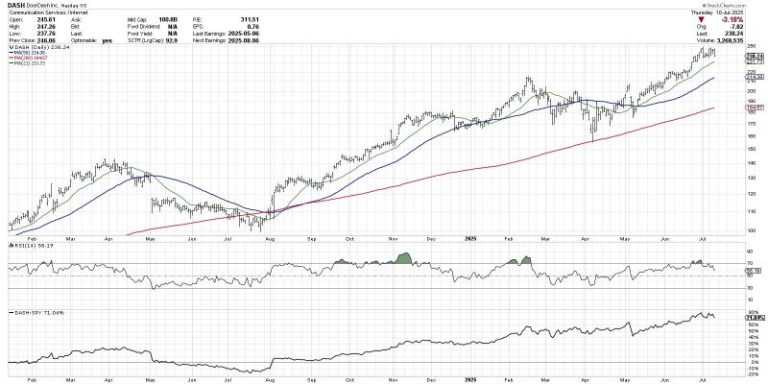
DoorDash Inc. (DASH)

While the mega cap Magnificent 7 stocks like Meta Platforms (META) and Alphabet Inc (GOOGL) tend to grab all the headlines, I’m more intrigued by other names in this sector demonstrating positive technical characteristics.  DoorDash has been making higher highs and higher lows, and remains above three upward-sloping moving averages.

The price is above the 21-day exponential moving average, which is above the 50-day simple moving average, which is above the 200-day simple moving average.  Combined with strong but not excessive momentum, along with improving relative strength, and we have a chart that continues to feature bullish signs in July 2025.

Booking Holdings Inc. (BKNG)

If it seems as if DoorDash is a little too overextended, Booking Holdings is a bit earlier on in its breakout journey.  Here we can see a clear resistance level around $5300, with a breakout and subsequent retest confirming a new uptrend phase.

When a chart like this shows a clear and consistent resistance level, the initial breakout can be quite tempting on the long side.  The subsequent pullback to that same breakout point, followed by new support at the breakout point, serves to validate the breakout and confirm the bullish reading.

With charts like BKNG, I like to use the 21-day exponential moving average as an initial warning sign.  As long as the price remains above this short-term trend mechanism, then the uptrend is still intact.  If and when the price violates this moving average, that’s when I like to review the chart to determine whether the stock still deserves a place in my portfolio.

Boston Scientific Corp. (BSX)

Our final example, Boston Scientific, is one that I would argue still has a bit to prove.  We can observe a clear resistance level around $107.50, which was initially set in February and then retested in May and June.  

This is exactly where I would leverage the Alert Workbench on StockCharts to let me know when the price has finally broken above this crucial resistance level.  I love to save potential breakout candidates to a new ChartList, and then set alerts for if and when the price finally breaks above the entry point.  That way, you’re able to identify an opportunity and develop a simple trading plan up front, and then let StockCharts do the “heavy lifting” and keep a close watch on the price action in the days and weeks to come!

To see the other seven charts in all their glory, head over to the StockCharts TV YouTube channel!

RR#6,

Dave

PS- Ready to upgrade your investment process?  Check out my free behavioral investing course!

David Keller, CMT

President and Chief Strategist

Sierra Alpha Research LLC

marketmisbehavior.com

https://www.youtube.com/c/MarketMisbehavior

Disclaimer: This blog is for educational purposes only and should not be construed as financial advice.  The ideas and strategies should never be used without first assessing your own personal and financial situation, or without consulting a financial professional.  

The author does not have a position in mentioned securities at the time of publication.    Any opinions expressed herein are solely those of the author and do not in any way represent the views or opinions of any other person or entity.

Investing in triple-leveraged ETFs may not be on your radar. But that may change after you watch this video. 

Tom Bowley of EarningsBeats shares how he uses the 3x leveraged ETFs to take advantage of high probability upside moves. Tom shows charts of 3x leveraged ETFs that mirror their benchmark — TNA (Russell 2000), SOXL (Semiconductors), and LABU (Biotech), and maps out how you can use the setups in these charts to multiply your returns. 

With money rotating heavily into growth stocks, investors should be looking for opportunities. Tom shares charts of indexes, sectors, and individual stocks/ETFs that are displaying technical strength and strong accumulation patterns. 

Ready to multiply your returns while the market’s moving higher? Watch Tom chart out the trades he’s making today. 

This video was published on July 10. Click this link to watch on Tom’s dedicated page. 

Missed a session? Archived videos from Tom are available at this link

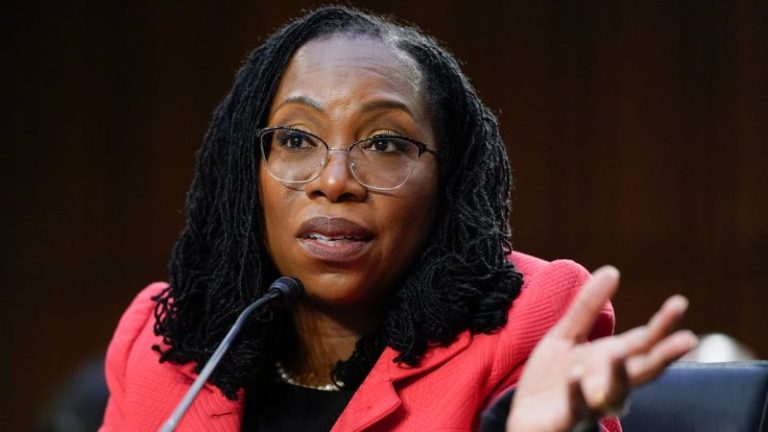
Justice Ketanji Brown Jackson reflected on her role on the Supreme Court during an event in Louisiana over the weekend, saying she enjoyed making her opinion known through court cases.

‘I just feel that I have a wonderful opportunity to tell people in my opinions how I feel about the issues, and that’s what I try to do,’ Jackson said.

Jackson, an appointee of former President Joe Biden, made the remarks during a sit-down with ABC News on stage during the Essence Festival of Culture in New Orleans as part of a tour for her book, ‘Lovely One.’

Despite being the most junior justice, Jackson has made her voice heard in the high court by going out of her way to write her own dissents in high-profile cases, even if she is not the principal dissenter, as she did in a recent major decision in which the Supreme Court found universal injunctions from judges were unlawful.

‘I write separately to emphasize a key conceptual point: The Court’s decision to permit the Executive to violate the Constitution with respect to anyone who has not yet sued is an existential threat to the rule of law,’ Jackson wrote in defense of universal injunctions.

In a biting rebuke, Justice Amy Coney Barrett responded in her majority opinion that Jackson’s remarks were ‘at odds’ with more than 200 years of court precedent and the Constitution and that they were not worth dwelling on.

Recently, Justice Sonia Sotomayor, a liberal justice who often sides with Jackson in prominent cases, went out of her way to disagree with Jackson in an emergency order that permitted President Donald Trump’s sweeping federal job cuts.

Jackson indicated during the interview that the justices have good relationships with one another. She noted that they have a ritual by which they shake each other’s hands before walking out into the courtroom and that some also have lunch together weekly.

‘The rule at lunch is that you don’t talk about cases, so you learn about people’s families and sports and books and movies and that kind of thing, and you get to know them outside of work,’ Jackson said.

Jackson, a Harvard Law School graduate and former federal judge, has also attracted attention for how frequently she chimes in during oral arguments. Analyses by the Empirical SCOTUS blog found Jackson spoke more than any of her colleagues during arguments in the 2022 and 2023 court terms.

‘It’s funny to me how people focus on how much I talk at oral argument,’ Jackson said during the interview.

‘I was always this person on the bench,’ Jackson said. ‘And so it’s been a bit of an adjustment, because, as a trial court judge, you have your own courtroom, so you can go on as long as you want. And, so, trying to make sure that my colleagues get to ask some questions has been a challenge for me, but I’ve enjoyed it. I really have.’

This post appeared first on FOX NEWS

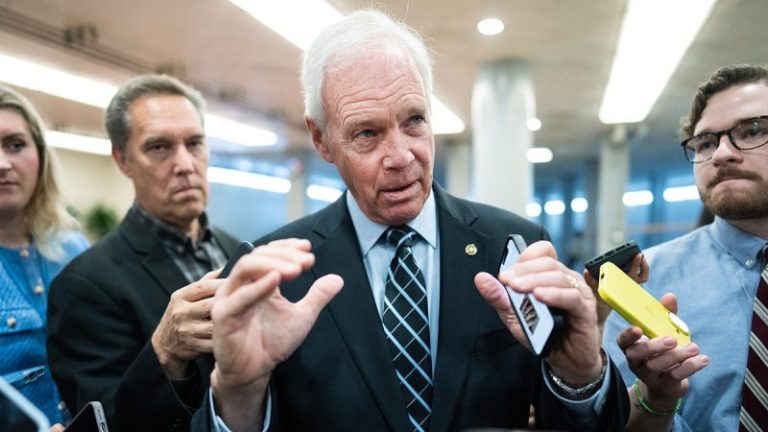
Sen. Ron Johnson, R-Wis., is gearing up to subpoena the FBI and Justice Department for more information on last year’s assassination attempt against President Donald Trump.

Johnson, who chairs the Permanent Subcommittee on Investigations, was a co-author of last year’s bipartisan Senate Homeland Security Committee report on the assassination attempt against Trump in Butler, Pa.

But that report was not the final product. Now he’s plowing ahead with the investigation that he described as ‘maddening’ because of the roadblocks and barriers he has faced along the way. And last night, he approved a subpoena to get more information from the FBI and Department of Justice.

‘I’d like our report to be bipartisan, but everybody else seems to have been moving on here and not particularly interested in an investigation. I am,’ Johnson said. ‘Whether I have the other officers involved or not, I’m moving forward, which is why I approved a subpoena.’

Johnson accused the FBI and DOJ of ‘not sharing with us,’ and said that he needed documentation to move forward with his investigation and that he was ‘not getting it.’

‘We’re continuing to be stonewalled, and I’m not happy about it,’ he said.

Fox News Digital reached out to the FBI and Justice Department for comment.

Nearly a year ago, gunman Thomas Crooks fired off eight rounds from a rooftop near the stage of Trump’s rally, grazing the then-presidential candidate on the ear and killing one rally attendee, firefighter Corey Comperatore, and wounding others before being slain.  

The previous preliminary report was the product of a joint investigation with the Senate Homeland Security and Governmental Affairs Committee and the Permanent Subcommittee on Investigations, which at the time were led by Senate Democrats when they controlled the majority.

That report found that failures in the U.S. Secret Service’s ‘planning, communications, security, and allocation of resources for the July 13, 2024, Butler rally were foreseeable, preventable, and directly related to the events resulting in the assassination attempt that day.’

Johnson reiterated that he hoped the final report, and his subpoena push, would be a bipartisan effort.

‘I’m hoping they all join on. But again, if not … I’ve got unilateral subpoena power, so, I will issue that subpoena,’ he said. ‘But if the other officers join in, great.’

This post appeared first on FOX NEWS

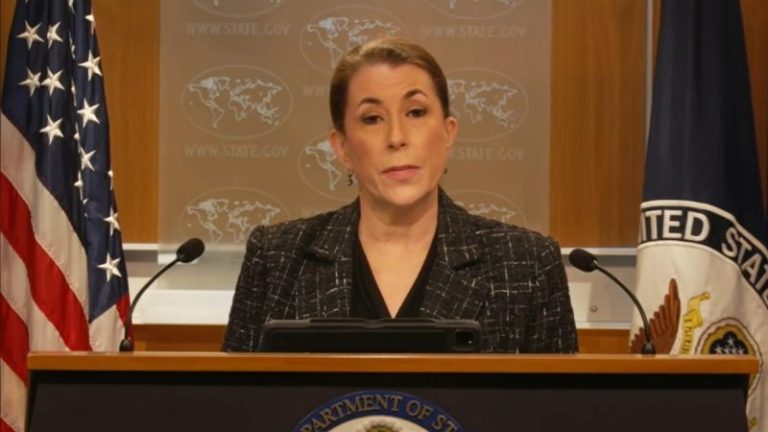
State Department spokesperson Tammy Bruce said the agency is poised to move ‘quickly’ after the Supreme Court shot down a lower court’s ruling blocking the Trump administration from implementing widescale reductions in force across the federal government. 

‘I think it’s fair to say that with everything else that happens [at the State Department], it will happen quickly,’ Bruce said when asked how soon the agency would begin issuing notices to department employees. ‘This is not going to be an extended wait for people who are listening and watching in this building, or fellow Americans at home and around the world, this will happen quickly.’

Bruce pointed out that, up to this point, the only reason there has been a delay in implementing force reductions at the Department of State, is because of the courts that have stepped in to try to halt the reforms.

‘There has been a delay – not to our interests, but because of the courts,’ Bruce added. ‘It’s been difficult when you know you need to get something done for the benefit of everyone. So it will be – it will be quickly.’ 

However, while Bruce indicated the agency would be moving ‘quickly,’ she declined to provide any specific timeline. 

She also declined to provide specifics around whether a court order that followed the Supreme Court’s decision authorizing the Trump administration’s reductions in force, which seeks to resolve a dispute over whether the administration must publicly share the reasoning for their reorganization efforts, might slow down the process. 

The court order seeking to determine whether the Trump administration must publicly share the details of their planned reforms and reductions in force across the government was signed by U.S. District Court Judge Susan Illston. 

It was Illston’s previous ruling in May that temporarily blocked the Trump administration from implementing its executive agency reforms, which the Supreme Court overturned this week.

Illston’s May ruling stemmed from lawsuits initiated by labor unions and advocacy groups, which argued the president’s February work reduction executive order was an overreach of power and undermined certain civil service protections.

This post appeared first on FOX NEWS

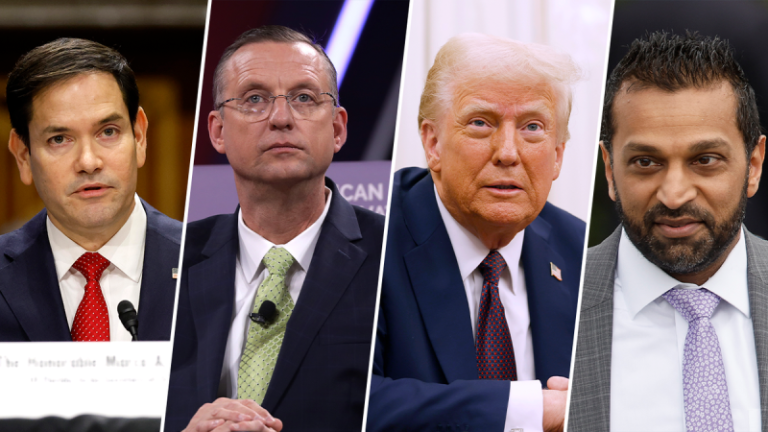
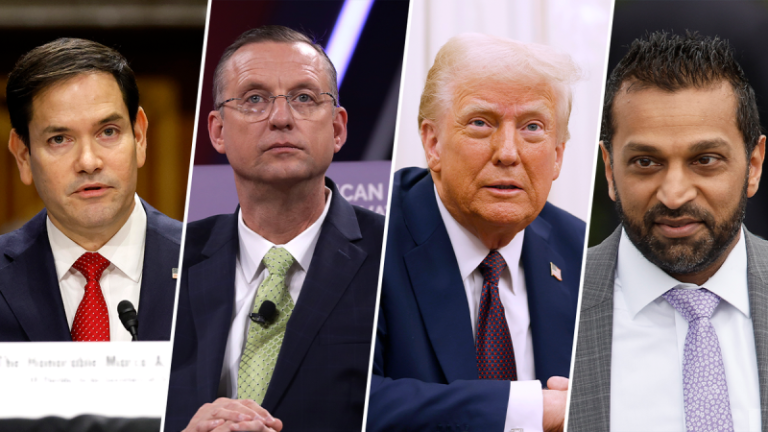
The Trump administration has repeatedly assigned additional job roles to Cabinet members and other officials amid government shake-ups as the president solidifies his agenda for the coming years, Fox News Digital found. 

Secretary of Transportation Sean Duffy was the latest Trump official to be charged with an additional role on June 9. The Transportation chief and Trump ally now also serves as the administration’s acting NASA administrator, after the president pulled a former nominee’s name from consideration to lead NASA. 

Duffy, however, is not alone in taking on multiple roles within Trump’s second administration. Fox News Digital looked back on the various Trump Cabinet members and officials who have or are currently wearing multiple hats as the president works to realign the federal government to track with his ‘America First’ policies. 

Sean Duffy 

Duffy, a former Republican congressman from Wisconsin, was tapped to oversee the Department of Transportation and was confirmed by the Senate on Jan. 28. Since his confirmation, Duffy has juggled a handful of crises related to tragic plane crashes — including the Potomac River mid-air collision on Jan. 29 — and air traffic control issues that plagued New Jersey’s Liberty International Airport earlier this year. 

Trump posted to Truth Social on Wednesday evening that Duffy would also serve as interim chief of NASA. 

‘I am pleased to announce that I am directing our GREAT Secretary of Transportation, Sean Duffy, to be Interim Administrator of NASA,’ Trump wrote in his announcement. 

‘Sean is doing a TREMENDOUS job in handling our Country’s Transportation Affairs, including creating a state-of-the-art Air Traffic Control systems, while at the same time rebuilding our roads and bridges, making them efficient, and beautiful, again. He will be a fantastic leader of the ever more important Space Agency, even if only for a short period of time. Congratulations, and thank you, Sean!’

Duffy replaced Janet Petro, who has served as acting NASA administrator since Trump’s inauguration. The president had previously nominated an Elon Musk ally named Jared Isaacman to lead NASA, but pulled his nomination in June as Trump’s and Musk’s relationship hit the rocks over the ‘One Big Beautiful Bill.’

‘Honored to accept this mission. Time to take over space. Let’s launch,’ Duffy posted to X of the new role. 

Marco Rubio 

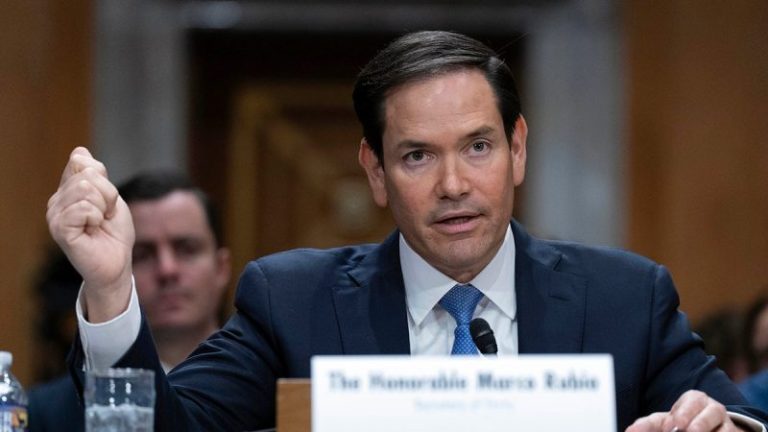
Rubio and the Trump administration came under fire from Democrats for the secretary of state holding multiple high-profile roles in the second administration, including Democrats sounding off on the national security council shake-up on Sunday news shows. 

‘There’s no way he can do that and do it well, especially since there’s such incompetence over at DOD with Pete Hegseth being secretary of defense and just the hollowing out of the top leadership,’ Illinois Democrat Sen. Tammy Duckworth said on CBS’s ‘Face the Nation.’ ‘There’s no way he can carry all that entire load on his own.’

‘I don’t know how anybody could do these two big jobs,’ Democrat Virginia Sen. Mark Warner said Sunday on CNN’s ‘State of the Union.’

Rubio’s roles in the administration include leading the State Department; serving as acting archivist of the United States after Trump ousted a Biden-era appointee; serving as acting administrator of the U.S. Agency for International Development as the admin works to dissolve the independent agency by September; and taking the helm as the interim national security advisor. Rubio’s role overseeing USAID concluded at the start of July when the State Department officially absorbed the agency. 

When asked about the trend of Trump officials wearing multiple work hats back in May, the White House reflected in comment to Fox News Digital on former President Joe Biden’s ‘disaster of a Cabinet.’ 

‘Democrats cheered on Joe Biden’s disaster of a Cabinet as it launched the botched Afghanistan withdrawal, opened the southern border to migrant criminals, weaponized the justice system against political opponents, and more,’ White House spokesperson Anna Kelly told Fox News Digital in May. ‘President Trump has filled his administration with many qualified, talented individuals he trusts to manage many responsibilities.’ 

The Trump administration has repeatedly brushed off concern over Rubio holding multiple roles, most notably juggling both his State Department leadership and serving as acting national security advisor. Similarly, former President Richard Nixon in 1973 named then-National Security Advisor Henry Kissinger to simultaneously serve as secretary of state. 

‘You need a team player who is very honest with the president and the senior team, not someone trying to build an empire or wield a knife or drive their own agenda. He is singularly focused on delivering the president’s agenda,’ an administration official told Politico. 

Despite Democratic rhetoric that Rubio was taking on too many roles, the former Florida senator helped oversee the U.S.’ successful strikes on Iran in June, which destroyed a trio of nuclear facilities and decimated the country’s efforts to advance its nuclear program. 

Kash Patel

FBI Director Kash Patel, who railed against the ‘deep state’ and vowed to strip corruption from the federal law enforcement agency ahead of his confirmation, was briefly charged with overseeing the of the Bureau of Alcohol, Tobacco, Firearms and Explosives (ATF) in February after the Biden-era director resigned in January. 

Patel was later replaced by Secretary of the Army Daniel Driscoll as acting ATF director in a job change that was publicly reported in April. 

‘Director Kash Patel was briefly designated ATF director while awaiting Senate confirmations, a standard, short-term move. Dozens of similar re-designations have occurred across the federal government,’ the White House told Reuters in April. ‘Director Patel is now excelling in his role at the FBI and delivering outstanding results.’

Daniel Driscoll 

Driscoll was sworn in as the 26th secretary of the Army in February. The secretary of the army is a senior-level civilian official charged with overseeing the management of the Army and also acts as an advisor to the secretary of defense in matters related to the Army. 

It was reported in April that Driscoll was named acting ATF director, replacing Patel in that role. 

‘Mr. Driscoll is responsible for the oversight of the agency’s mission to protect communities from violent criminals, criminal organizations, and the illegal trafficking of firearms, explosives, and contraband. Under his leadership, the ATF works to enforce federal laws, ensure public safety, and provide critical support in the investigation of firearms-related crimes and domestic and international criminal enterprises,’ his ATF biography reads. 

Ahead of Trump taking office, Republican Reps. Eric Burlison of Missouri and Lauren Boebert of Colorado introduced legislation to abolish the ATF, saying the agency has worked to strip Second Amendment rights from U.S. citizens. 

The ATF has been tasked with assisting the Department of Homeland Security in its deportation efforts under the Trump administration. 

Doug Collins 

Former Georgia Republican Rep. Doug Collins was sworn-in as the Trump administration’s secretary of Veterans Affairs in February, a Cabinet-level position tasked with overseeing the department and its mission of providing health, education and financial benefits to military veterans. 

Days after his confirmation as VA secretary, Trump tapped Collins to temporarily lead two oversight agencies: the Office of Government Ethics and the Office of Special Counsel. 

The Office of Government Ethics is charged with overseeing the executive branch’s ethics program, including setting ethics standards for the government and monitoring ethics compliance across federal agencies and departments. 

The Office of Special Counsel is charged with overseeing and protecting the federal government’s merit system, most notably ensuring federal whistleblowers don’t face retaliation for sounding the alarm on an issue they’ve experienced. The office also has an established secure channel to allow federal employees to blow the whistle on alleged wrongdoing. 

The Office of Special Counsel also enforces the Hatch Act, which bans executive branch staffers, except the president and vice president, from engaging in certain forms of political activity

Jamieson Greer 

Trump’s trade representative, Jamieson Greer, has also been tapped for multiple roles within the administration, in addition to help leading the administration’s tariff negotiations to bring parity to the U.S.’ chronic trade deficit with other nations. 

Greer took on Collins’ roles as acting director of the Office of Government Ethics and as acting special counsel of the Office of Special Counsel on April 1. 

Trump nominated conservative attorney Paul Ingrassia to lead the Office of Special Counsel in May. 

Russell Vought 

Trump named his former director of the Office of Management and Budget under his first administration, Russell Vought, to the same role in his second administration. Vought was confirmed as the federal government’s budget chief in February. 

Days later, Vought was also named the acting director of the Consumer Financial Protection Bureau (CFPB).  

The CFPB is an independent government agency charged with protecting consumers from unfair financial practices in the private sector. It was created in 2010 under the Obama administration after the financial crash in 2008. Democrat Massachusetts Sen. Elizabeth Warren originally proposed and advocated for the creation of the agency.

The CFPB came under fierce investigation from the Department of Government Efficiency in February, with mass terminations rocking the agency before the reduction in force initiative was tied up in court. 

Ric Grenell 

President Donald Trump’s former ambassador to Germany and acting director of national intelligence under his first term, a pair of roles held at separate times in the first administration, currently serves as president of the Kennedy Center and special presidential envoy for special missions of the United States. 

The John F. Kennedy Center for the Performing Arts serves as the national cultural center of the U.S. Trump notably serves as the center’s chair of the board, with Grenell saying the center will see a ‘golden age’ of the arts during Trump’s second administration through productions and concerts that Americans actually want to see after years of the performing arts center running in the red. 

Trump named Grenell as his special presidential envoy for special missions to the United States in December before his inauguration, saying Grenell will ‘work in some of the hottest spots around the world, including Venezuela and North Korea.’

In this role, Grenell helped lead the administration through its response to the wildfires that tore through Southern California in the last days of the Biden administration through the beginning days of the Trump administration. 

Fox News Digital’s Jasmine Baehr contributed to this report. 

This post appeared first on FOX NEWS

The State Department informed U.S.-based employees on Thursday that it would soon begin laying off nearly 2,000 workers after the recent Supreme Court decision allowing the Trump administration to move forward with mass job cuts as part of its efforts to downsize the federal workforce.

The agency’s reorganization plan was first unveiled in April by Secretary of State Marco Rubio to eliminate functions and offices the department considered to be redundant. In February, President Donald Trump issued an executive order directing Rubio to revamp the foreign service to ensure that the president’s foreign policy is ‘faithfully’ implemented.

Employees affected by the agency’s ‘reduction in force’ would be notified soon, Deputy Secretary for Management and Resources Michael Rigas told employees in an email on Thursday.

‘First and foremost, we want to thank them for their dedication and service to the United States,’ Rigas said in the email.

‘Every effort has been made to support our colleagues who are departing, including those who opted into the Deferred Resignation Programs … On behalf of Department leadership, we extend our gratitude for your hard work and commitment to executing this reorganization and for your ongoing dedication to advancing U.S. national interests across the world,’ he added.

The department did not specify on Thursday how many people would be fired, but in its plans to Congress sent in May, it had proposed laying off about 1,800 employees of the 18,000 estimated domestic workforce. Another 1,575 were estimated to have taken deferred resignations.

The plans to Congress did not state how many of these workers would be from the civil service and how many from the foreign service, but it did say that more than 300 of the department’s 734 bureaus and offices would be streamlined, merged or eliminated.

Once affected staff have been notified, the department ‘will enter the final stage of its reorganization and focus its attention on delivering results-driven diplomacy,’ Rigas said in the email to colleagues.

The expectation is for the terminations to start as soon as Friday.

State Department spokesperson Tammy Bruce told reporters earlier on Thursday that the only reason there had been a delay in implementing force reductions is because the courts have stepped in, as she said the mass layoffs would be happening quickly.

‘There has been a delay – not to our interests, but because of the courts,’ Bruce noted. ‘It’s been difficult when you know you need to get something done for the benefit of everyone.’

‘When something is too large to operate, too bureaucratic, to actually function, and to deliver projects, or action, it has to change,’ she said.

Reuters contributed to this report.

This post appeared first on FOX NEWS

The Trump administration repeatedly has assigned additional job roles to Cabinet members and other officials amid government shake-ups as the president solidifies his agenda for the coming years, Fox News Digital found. 

Secretary of Transportation Sean Duffy was the latest Trump official assigned an additional role Wednesday. The Transportation chief and Trump ally now also serves as the administration’s acting NASA administrator after the president pulled a former nominee’s name from consideration to lead NASA. 

Duffy, however, is not alone in taking on multiple roles within Trump’s second administration. Fox News Digital looked back on the various Trump Cabinet members and officials wearing multiple hats as the president works to realign the federal government with his ‘America First’ policies. 

Sean Duffy 

Duffy, a former Republican congressman from Wisconsin, was tapped to oversee the Department of Transportation and was confirmed by the Senate Jan. 28. Since his confirmation, Duffy has juggled a handful of crises related to tragic plane crashes, including the Potomac River midair collision Jan. 29 and air traffic control issues that plagued New Jersey’s Liberty International Airport earlier in 2025. 

Trump posted to Truth Social Wednesday evening that Duffy would also serve as interim chief of NASA. 

‘I am pleased to announce that I am directing our GREAT Secretary of Transportation, Sean Duffy, to be Interim Administrator of NASA,’ Trump wrote in his announcement. 

‘Sean is doing a TREMENDOUS job in handling our Country’s Transportation Affairs, including creating a state-of-the-art Air Traffic Control systems, while at the same time rebuilding our roads and bridges, making them efficient, and beautiful, again. He will be a fantastic leader of the ever more important Space Agency, even if only for a short period of time. Congratulations, and thank you, Sean!’

Duffy replaced Janet Petro, who has served as acting NASA administrator since Trump’s inauguration. The president had previously nominated an Elon Musk ally named Jared Isaacman to lead NASA but pulled his nomination in June as Trump’s and Musk’s relationship hit the rocks over the ‘big, beautiful bill.’

‘Honored to accept this mission. Time to take over space. Let’s launch,’ Duffy posted to X of the new role. 

Marco Rubio 

Rubio and the Trump administration came under fire from Democrats for the secretary of state holding multiple high-profile roles in the second Trump administration, including Democrats sounding off on the national security council shake-up on Sunday news shows. 

‘There’s no way he can do that and do it well, especially since there’s such incompetence over at DOD with Pete Hegseth being secretary of defense and just the hollowing out of the top leadership,’ Illinois Democratic Sen. Tammy Duckworth told CBS’ ‘Face the Nation.’ ‘There’s no way he can carry all that entire load on his own.’

‘I don’t know how anybody could do these two big jobs,’ Democratic Virginia Sen. Mark Warner said on CNN’s ‘State of the Union.’

Rubio’s roles in the administration include leading the State Department, serving as acting archivist of the United States after Trump ousted a Biden-era appointee, serving as acting administrator of the U.S. Agency for International Development as the administration who works to dissolve the independent agency by September and taking the helm as the interim national security advisor. Rubio’s role overseeing USAID concluded at the start of July when the State Department officially absorbed the agency. 

When asked about the trend of Trump officials wearing multiple work hats in May, the White House reflected in a comment to Fox News Digital on former President Joe Biden’s ‘disaster of a Cabinet.’ 

‘Democrats cheered on Joe Biden’s disaster of a Cabinet as it launched the botched Afghanistan withdrawal, opened the southern border to migrant criminals, weaponized the justice system against political opponents and more,’ White House spokesperson Anna Kelly told Fox News Digital in May. ‘President Trump has filled his administration with many qualified, talented individuals he trusts to manage many responsibilities.’ 

The Trump administration repeatedly has brushed off concerns over Rubio holding multiple roles, most notably juggling both his State Department leadership and serving as acting national security advisor. Similarly, former President Richard Nixon in 1973 named National Security Advisor Henry Kissinger to simultaneously serve as secretary of state. 

‘You need a team player who is very honest with the president and the senior team, not someone trying to build an empire or wield a knife or drive their own agenda,’ an administration official told Politico. ‘He is singularly focused on delivering the president’s agenda.’ 

Despite Democratic rhetoric that Rubio was taking on too many roles, the former Florida senator helped oversee successful U.S. strikes on Iran in June, which destroyed a trio of nuclear sites and decimated the country’s efforts to advance its nuclear program. 

Kash Patel

FBI Director Kash Patel, who railed against the ‘deep state’ and vowed to strip corruption from the federal law enforcement agency ahead of his confirmation, was briefly charged with overseeing the Bureau of Alcohol, Tobacco, Firearms and Explosives (ATF) in February after the Biden-era director resigned in January. 

Patel was later replaced by Secretary of the Army Daniel Driscoll as acting ATF director in a job change that was reported publicly in April. 

‘Director Kash Patel was briefly designated ATF director while awaiting Senate confirmations, a standard, short-term move. Dozens of similar re-designations have occurred across the federal government,’ the White House told Reuters in April. ‘Director Patel is now excelling in his role at the FBI and delivering outstanding results.’

Daniel Driscoll 

Driscoll was sworn in as the 26th secretary of the Army in February. The secretary of the army is a senior-level civilian official charged with overseeing the management of the Army and also acts as an advisor to the secretary of defense in matters related to the Army. 

It was reported in April that Driscoll was named acting ATF director, replacing Patel in that role. 

‘Mr. Driscoll is responsible for the oversight of the agency’s mission to protect communities from violent criminals, criminal organizations, and the illegal trafficking of firearms, explosives, and contraband,’ his ATF biography states. ‘Under his leadership, the ATF works to enforce federal laws, ensure public safety, and provide critical support in the investigation of firearms-related crimes and domestic and international criminal enterprises,’

Ahead of Trump taking office, Republican representatives Eric Burlison of Missouri and Lauren Boebert of Colorado introduced legislation to abolish the ATF, saying the agency has worked to strip Second Amendment rights from U.S. citizens. 

The ATF has been tasked with assisting the Department of Homeland Security in its deportation efforts under the Trump administration. 

Doug Collins 

Former Georgia Republican Rep. Doug Collins was sworn in as the Trump administration’s secretary of Veterans Affairs in February, a Cabinet-level position tasked with overseeing the department and its mission of providing health, education and financial benefits to military veterans. 

Days after his confirmation as VA secretary, Trump tapped Collins to temporarily lead two oversight agencies, the Office of Government Ethics and the Office of Special Counsel. 

The Office of Government Ethics is charged with overseeing the executive branch’s ethics program, including setting ethics standards for the government and monitoring ethics compliance across federal agencies and departments. 

The Office of Special Counsel is charged with overseeing and protecting the federal government’s merit system, most notably ensuring federal whistleblowers don’t face retaliation for sounding the alarm on an issue they’ve experienced. The office also has an established secure channel to allow federal employees to blow the whistle on alleged wrongdoing. 

The Office of Special Counsel also enforces the Hatch Act, which bans executive branch staffers, except the president and vice president, from engaging in certain forms of political activity

Jamieson Greer 

Trump’s trade representative, Jamieson Greer, has also been tapped for multiple roles within the administration, in addition to helping lead the administration’s tariff negotiations to bring parity to the chronic U.S. trade deficit with other nations. 

Greer took on Collins’ roles as acting director of the Office of Government Ethics and as acting special counsel of the Office of Special Counsel April 1. 

Trump nominated conservative attorney Paul Ingrassia to lead the Office of Special Counsel in May. 

Russell Vought 

Trump named his former director of the Office of Management and Budget under his first administration, Russell Vought, to the same role in his second administration. Vought was confirmed as the federal government’s budget chief in February. 

Days later, Vought was also named the acting director of the Consumer Financial Protection Bureau (CFPB).  

The CFPB is an independent government agency charged with protecting consumers from unfair financial practices in the private sector. It was created in 2010 under the Obama administration after the financial crash in 2008. Democratic Massachusetts Sen. Elizabeth Warren originally proposed and advocated for the creation of the agency.

The CFPB came under fierce investigation from the Department of Government Efficiency in February, with mass terminations rocking the agency before the reduction in force initiative was tied up in court. 

Ric Grenell 

President Donald Trump’s former ambassador to Germany and acting director of national intelligence under his first term, a pair of roles held at separate times in the first administration, currently serves as president of the Kennedy Center and special presidential envoy for special missions of the United States. 

The John F. Kennedy Center for the Performing Arts serves as the national cultural center of the U.S. Trump notably serves as the center’s chair of the board, and Grenell said the center will see a ‘golden age’ of the arts during Trump’s second administration through productions and concerts that Americans actually want to see after years of the performing arts center running in the red. 

Trump named Grenell as his special presidential envoy for special missions to the United States in December 2024 before his inauguration, saying Grenell will ‘work in some of the hottest spots around the world, including Venezuela and North Korea.’

In this role, Grenell helped lead the administration through its response to the wildfires that tore through Southern California in the last days of the Biden administration through the beginning days of the Trump administration. 

Fox News Digital’s Jasmine Baehr contributed to this report. 

This post appeared first on FOX NEWS
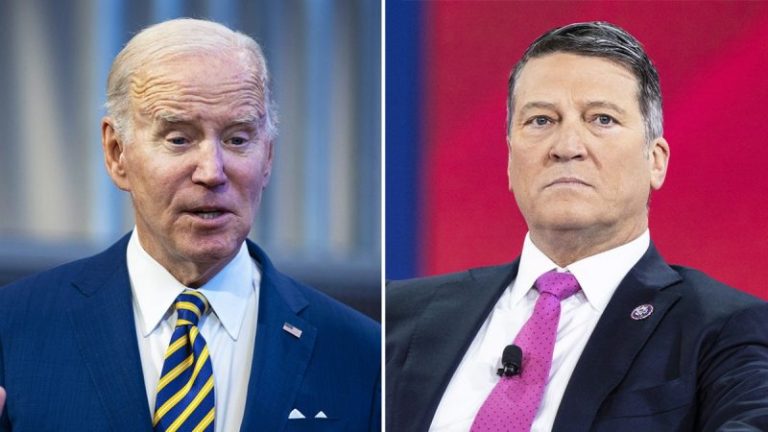
A former White House physician is criticizing Kevin O’Connor after the ex-Biden administration doctor refused to answer questions by House Oversight Committee investigators earlier this week.

Dr. O’Connor, who served as White House physician to former President Joe Biden, sat down for a transcribed interview with committee staff and panel Chair James Comer, R-Ky., on Wednesday. The closed-door meeting lasted roughly 30 minutes, with O’Connor invoking the Fifth Amendment to all questions, save for his name.

His legal team said there were concerns the broad scope of Comer’s probe could force O’Connor into a position of risking doctor-patient confidentiality privileges. 

‘Well, you can’t do both,’ Rep. Ronny Jackson, R-Texas, a former White House doctor himself, told Fox News Digital in an interview afterward.

‘I mean, the Fifth Amendment is designed to keep him from incriminating himself in some type of, you know, criminal or unethical behavior. He’d already addressed the issue of patient-doctor privacy, or confidentiality, with the committee.’

He pointed out that O’Connor’s lawyers had already raised issues with patient-doctor confidentiality in a letter to the committee trying to get the interview delayed, but Comer pressed forward.

‘They had already let him know that in this particular case, because he had been subpoenaed, and it was a legal process, he’d been subpoenaed to testify before Congress in this closed session, that the patient-doctor privilege no longer applied,’ Jackson said. ‘And President Trump had waived presidential privilege. So it left him with nothing. Nothing to stand on except for pleading the Fifth.’

Before being elected to Congress, Jackson served as White House physician to both former President Barack Obama and current President Donald Trump.

Comer told reporters on Wednesday that Jackson played a key role in crafting questions for O’Connor. 

‘We have a lot of questions that we’ve prepared for this. We’ve consulted closely with Ronny Jackson, my colleague, who was the White House physician in the first Trump administration. We’ve consulted with a lot of people in the medical community, so there’s going to be a lot of medical questions that are asked,’ he told reporters before the transcribed interview.

He is investigating accusations that Biden’s former top White House aides covered up signs of his mental and physical decline while in office, and whether any executive actions were commissioned via autopen without the president’s full knowledge. Biden allies have pushed back on those claims.

‘The cover-up could not have happened without the assistance and the help of his personal physician, Kevin O’Connor,’ Jackson said. ‘I think that’s why he pled the Fifth, because he realized he was about to implicate himself as a key player in this cover-up.’

O’Connor’s lawyers have denied any implications of guilt.

Jackson said some of the questions he recommended to the committee would have surrounded any potential neurological concerns or cognitive tests while Biden was in office.

But many of those were left unasked, it appears, after O’Connor’s brief meeting with House investigators.

The doctor’s lawyers said O’Connor’s refusal to answer questions on Fifth Amendment grounds was not an admission of guilt, but rather a response to what they saw as an unprecedented investigatory scope that could have violated the bounds of patient-physician privilege.

‘This Committee has indicated to Dr. O’Connor and his attorneys that it does not intend to honor one of the most well-known privileges in our law – the physician patient privilege. Instead, the Committee has indicated that it will demand that Dr. O’Connor reveal, without any limitations, confidential information regarding his medical examinations, treatment, and care of President Biden,’ the attorney statement said.

‘Revealing confidential patient information would violate the most fundamental ethical duty of a physician, could result in revocation of Dr. O’Connor’s medical license, and would subject Dr. O’Connor to potential civil liability. Dr. O’Connor will not violate his oath of confidentiality to any of his patients, including President Biden.’

Fox News Digital reached out to O’Connor’s lawyers for further comment.

This post appeared first on FOX NEWS

The State Department will move to layoff nearly 2,000 employees on Friday as it begins its reorganization plan. 

An internal memo circulated Thursday evening by Michael Rigas, deputy secretary of management and resources, announced that domestic employees affected by the reduction in force (RIF) would be notified ‘over the coming days.’ 

Approximately 1,800 people will be affected, Fox News has learned. 

The RIF notices plus voluntary departures under the Trump administration amount to a 15% work force reduction. 

‘The departments, bureaus, offices and domestic operations have grown considerably over the last 25 years, and the resulting proliferation of bureaus and offices with unclear, overlapping or duplicative mandates have hobbled the department’s ability to rapidly respond to emerging threats and crises or to effectively advance America’s affirmative interests in the world,’ a senior State Department official said. 

The official added that there are ‘more than 700 domestic offices for 18,000 people.’ 

‘A lot of this, as we said, covers redundant offices and takes some of these cross-cutting functions and moves them to the regional bureaus and to our embassies overseas, to the people who are closest to where diplomacy is happening, to empower them with the resources and authorities they need to be able to carry out the President’s foreign policy.’

State Department spokesperson Tammy Bruce warned on Thursday the agency would move quickly after the Supreme Court stayed the lower court’s injunction blocking the administration from implementing widescale force reductions across federal agencies. 

A senior official said there are currently no plans for overseas closures of embassies and outposts. They added the State Department will work to preserve the dignity of affected workers. 

‘We’re going to work to preserve the dignity of federal workers,’ the official said. ‘We want to be sensitive to that process and make sure people have the resources they need … and make sure everyone is treated with dignity.’

This post appeared first on FOX NEWS