
Author

admin

Browsing

Silver47 Exploration Corp. (TSXV: AGA,OTC:AAGAF) (OTCQB: AAGAF) (‘Silver47’ or the ‘Company’) is pleased to announce the 2025 exploration program is nearing completion at its wholly-owned Adams Plateau Project (the ‘Project’) in southern British Columbia, a silver-zinc-copper-gold-lead SEDEX project.

Gary Thompson, CEO of Silver47, stated: ‘We are glad to continue our work on Adams Plateau toward defining drill targets on this road-accessible project. The abundance of surface mineralization on the Project is very encouraging for the potential of new and exciting discoveries. The Company has received a 5-year permit for drilling. This year is shaping up to be transformational for the Company with a full season of drilling at the flagship Red Mountain Project and the pending merger with Summa Silver.’

Key Highlights:

  • Extensive coverage: 5,008 soil samples were collected over an approximately 35 square kilometer (‘km’) area with a focus on infilling the historical soil geochemical grid. An additional 76 rock samples have been collected with on-going prospecting to support future drill targets.
  • Approach to discovery: soil geochemistry, in conjunction with follow up rock sample prospecting, represents an important step in target development and maximizes discovery efficiency.
  • Significantly underexplored: very limited drilling has occurred outside historic production sites on the project.
  • Work just beginning: the completion of this prospecting and soil geochemical survey serves as an initial step toward pinpointing targets and unlocking a multi-km search space.

Adams Plateau Historic Drilling Highlights:

      Figure 1. Location Map of the Adams Plateau Project.

      To view an enhanced version of this graphic, please visit:
      https://images.newsfilecorp.com/files/10967/258342_c58951fbd4a219ec_002full.jpg

      Historic surface rock grab samples (separate samples) from across the property returned up to 4000 g/t silver, 10.4 g/t gold, 7% copper, 30% zinc, and 64% lead. Recent rock samples collected by Silver47 have returned up to:

      • 3503 g/t silver, 1.0 g/t gold, 9.17% zinc, and >20% lead
      • 170 g/t silver, 2.8 g/t gold, 7.1% copper, 1.05% zinc, and 0.86% lead*
      • 2,400 g/t silver, 1.3 g/t gold, 6.8% zinc, and 20% lead*

      *(BC Assessment Report 40920, 2022, 2022 Assessment Report on the Adams Plateau – https://apps.nrs.gov.bc.ca/pub/aris/Detail/40920)

      Figure 2. Plan Map of the Adams Plateau Project with Zinc in soil and select rock analysis.

      To view an enhanced version of this graphic, please visit:
      https://images.newsfilecorp.com/files/10967/258342_c58951fbd4a219ec_003full.jpg

      Despite the long history of exploration on the plateau, historical geochemical data has been limited to small grids focused around known mineralization. Since acquiring the property in 2022, Silver47 has worked towards building a soil geochemical database which covers the entirety of the prospective Eagle Bay Assemblage. The 2025 soil grid ties together multiple historic grids with anomalous concentrations of silver, zinc and copper, and will provide near-total coverage over the high-priority zones of the central and eastern portions of the property.

      Concurrent with the soil sample program, follow-up prospecting of previous high-grade soil and rock anomalies is taking place across the property. Recent forest fire activity and extensive logging operations have provided additional road access and the potential for new mineralization exposure along road cuts in previously under-explored areas.

      The results of the 2025 sampling program, along with the extensive historic database will be used to refine drill targets, particularly in areas with limited bedrock exposure. With the recently granted 5-year multi-year area-based (‘MYAB’) permit, the company will be poised to begin drill testing for high-grade sulfide mineralization at historic and new, un-drilled targets along the extent of the Eagle Bay assemblage.

      Exploration for silver-lead-zinc mineralization at Adams Plateau has taken place from 1925 to the present day with 137 assessment reports dating back to 1949 that suggest a large mineralized system indicating significant potential for discoveries. This is the first time the mineral claims in the area have been consolidated under one banner. The property hosts over 25 MINFILE occurrences, including limited historical, small-scale production at Beca (1926), Lucky (1956 and 1975-1977) and Spar (1985). Mineralization is typical of SEDEX and VMS type deposits, comprised of semi-massive to massive sulphide layers with pyrrhotite-tetrahedrite-sphalerite-galena-pyrite and localized chalcopyrite

      Historical sampling over the claim group includes 7,021 soil samples, 115 rock samples and 79 silt samples. Recent work in 2022-2024 included the collection of 2,547 soil samples and 140 rock samples. Property-wide LiDAR and orthophotos have been completed to refine exploration targets. Limited historical drilling has occurred on the project outside the historic production sites.

      Figure 3. Select rock grab samples photographs from the Adams Plateau Project 2025.

      To view an enhanced version of this graphic, please visit:
      https://images.newsfilecorp.com/files/10967/258342_c58951fbd4a219ec_004full.jpg

      Note: EX-1 is also referred to as SPAR

      Data Verification

      Historic data disclosed in this news release relating to past production and drilling is historic in nature and sourced from documents filed with the British Columbia Assessment Report Database (ARIS – https://apps.nrs.gov.bc.ca/pub/aris), or the British Columbia MINFILE Mineral Inventory (https://minfile.gov.bc.ca/). Historic production records for the Property are incomplete and of unknown accuracy. The Company is unable to verify the historic drilling data as drill hole rock samples are unavailable, precise collar locations cannot be field-located, and down-hole survey data is incomplete. Neither the Company, nor the qualified person can verify historic production or drill data and therefore investors should not place undue reliance on such data. The Company’s future exploration work will include verification of historic data where it is possible to do so.

      Adams Plateau Project Overview

      The wholly-owned 150 square km Adams Plateau Project is located approximately 100 km north-east of Kamloops, British Columbia with excellent road access, power and rail nearby.

      SEDEX (Sedimentary Exhalative) deposits are known for their high-grade silver, lead, zinc, copper, mineralization. Exploration is primarily focused on sediment-hosted polymetallic massive sulphides within the prolific Eagle Bay Assemblage with silver, copper, gold zinc, lead being the primary commodities of interest with other critical minerals like graphite and antimony.

      The nearby past-producing Samatosum mine, located about 15 km northwest of the project, operated from 1989 to 1992. Before production commenced in June 1989, reserves for the Samatosum open-pit deposit were reported to be estimated at 634 984 tonnes grading 1035 g/t silver, 1.9 g/t gold, 1.2% copper, 1.7% lead and 3.6% zinc. https://minfile.gov.bc.ca/summary.aspx?minfilno=082M%20%20244

      QAQC

      Quality assurance and quality control (QAQC) protocols for rock and soil samples collected in 2022, 2024, and 2025 at the Adams Plateau project followed industry standard practice. Samples were bagged on site and delivered to ALS Minerals Laboratories in Kamloops, British Columbia. ALS Kamloops / North Vancouver is certified with ISO/IEC 17025:2017 and ISO 9001:2015 accreditation from the Standards Council of Canada. The 2022 soil sample program inserted field duplicates at a rate of one duplicate per 20 samples. The 2024 soil sample program inserted one field duplicate per collector per day. Both 2022 and 2024 soil and rock samples relied on ALS Quality control procedures during preparation and analysis. All samples were weighed, pulverized and screened. The 2022 soil samples were analyzed by ALS method ME-ICP41 and Au-AA23. The 2022 rock samples were analyzed by ALS method ME-ICP61 and Au-AA23. Rock samples exceeding limits for Ag, Pb, Zn, and Cu were analyzed by OG62. 2024 soil samples. The 2024 soil samples were analyzed by ALS method ME-ICP41 and Au-ST43, with overlimit gold samples further analyzed by Au-AROR43. The 2024 rock samples were analyzed by ALS method ME-MS61 and Au-AA23.

      Qualified Person

      Mr. Alex S. Wallis, P.Geo., is Vice President of Exploration for Silver47 and a ‘qualified person’ as defined by National Instrument 43-101. Mr. Wallis has verified the data disclosed in this press release, including the sampling, analytical and test data underlying the technical information and has approved the technical information in this press release.

      About Silver47 Exploration 

      Silver47 Exploration Corp. wholly-owns three silver and critical metals (polymetallic) exploration projects in Canada and the US. These projects include the flagship Red Mountain Project in southcentral Alaska, a silver-gold-zinc-copper-lead-antimony-gallium VMS-SEDEX project. The Red Mountain Project hosts an inferred mineral resource estimate of 15.6 million tonnes at 7% zinc equivalent or 335.7 g/t silver equivalent, totaling 168.6 million ounces of silver equivalent, as reported in the NI 43-101 Technical Report dated January 12, 2024. The Company also owns the Adams Plateau Project in southern British Columbia, a silver-zinc-copper-gold-lead SEDEX-VMS project, and the Michelle Project in the Yukon Territory, a silver-lead-zinc-gallium-antimony MVT-SEDEX project. For detailed information regarding the resource estimates, assumptions, equivalency calculations, and technical reports, please refer to the NI 43-101 Technical Report and other filings available on SEDAR+ at www.sedarplus.ca. The Company trades on the TSXV under the ticker symbol AGA and OTCQB under the ticker symbol AAGAF.

      For more information about the Company, please visit www.silver47.ca and see the Technical Report filed on SEDAR+ (www.sedarplus.ca) and titled ‘Technical Report on the Red Mountain VMS Property Bonnifield Mining District, Alaska, USA with an effective date January 12, 2024, and prepared by APEX Geoscience Ltd.’

      Silver47 Contact Information
      Mr. Gary R. Thompson
      Director and CEO
      gthompson@silver47.ca 

      For investor relations
      Kristina Pillon
      info@silver47.ca 
      604.908.1695

      X: @Silver47co
      LinkedIn: Silver47

      No securities regulatory authority has either approved or disapproved of the contents of this release. Neither the TSXV nor its Regulation Services Provider (as that term is defined in the policies of the TSXV) accepts responsibility for the adequacy or accuracy of this release.

      FORWARD-LOOKING STATEMENTS

      This release contains certain ‘forward looking statements’ and certain ‘forward-looking information’ as defined under applicable Canadian securities laws. Forward-looking statements and information can generally be identified by the use of forward-looking terminology such as ‘may’, ‘will’, ‘expect’, ‘intend’, ‘estimate’, ‘upon’ ‘anticipate’, ‘believe’, ‘continue’, ‘plans’ or similar terminology. Forward-looking statements and information include, but are not limited to: closing of the Offering, including the number of Units and FT Units issued in respect thereof; anticipated use of proceeds; expected closing date of the Offering; payment of finder’s fees; ability to obtain all necessary regulatory approvals; insider participation in the Offering; the statements in regards to existing and future products of the Company; and the Company’s plans and strategies. Forward-looking statements and information are based on forecasts of future results, estimates of amounts not yet determinable and assumptions that, while believed by management to be reasonable, are inherently subject to significant business, economic and competitive uncertainties and contingencies. Forward-looking statements and information are subject to various known and unknown risks and uncertainties, many of which are beyond the ability of the Company to control or predict, that may cause the Company’s actual results, performance or achievements to be materially different from those expressed or implied thereby, and are developed based on assumptions about such risks, uncertainties and other factors set out herein, including but not limited to: the ability to close the Offering, including the time and sizing thereof, the insider participation in the Offering and receipt of required regulatory approvals; the use of proceeds not being as anticipated; the Company’s ability to implement its business strategies; risks associated with general economic conditions; adverse industry events; stakeholder engagement; marketing and transportation costs; loss of markets; volatility of commodity prices; inability to access sufficient capital from internal and external sources, and/or inability to access sufficient capital on favourable terms; industry and government regulation; changes in legislation, income tax and regulatory matters; competition; currency and interest rate fluctuations; and the additional risks identified in the Company’s financial statements and the accompanying management’s discussion and analysis and other public disclosures recently filed under its issuer profile on SEDAR+ and other reports and filings with the TSXV and applicable Canadian securities regulators. The forward-looking information are made based on management’s beliefs, estimates and opinions on the date that statements are made and the Company undertakes no obligation to update forward-looking statements if these beliefs, estimates and opinions or other circumstances should change, except as required by applicable securities laws.

      No forward-looking statement can be guaranteed, and actual future results may vary materially. Accordingly, readers are advised not to place undue reliance on forward-looking statements.

      To view the source version of this press release, please visit https://www.newsfilecorp.com/release/258342

      News Provided by Newsfile via QuoteMedia

      This post appeared first on investingnews.com

      Amazon is extending its annual Prime Day sales and offering new membership perks to Gen Z shoppers amid tariff-related price worries and possibly some consumer boredom with an event marking its 11th year.

      For the first time, Seattle-based Amazon is holding the now-misnamed Prime Day over four days. The e-commerce giant’s promised blitz of summer deals for Prime members started at 3:01 a.m. Eastern time on Tuesday and ends early Friday.

      Amazon launched Prime Day in 2015 and expanded it to two days in 2019. The company said this year’s longer version would have deals dropping as often as every 5 minutes during certain periods.

      Prime members ages 18-24, who pay $7.49 per month instead of the $14.99 that older customers not eligible for discounted rates pay for free shipping and other benefits, will receive 5% cash back on their purchases for a limited time.

      Amazon executives declined to comment on the potential impact of tariffs on Prime Day deals. The event is taking place two and a half months after an online news report sparked speculation that Amazon planned to display added tariff costs next to product prices on its website.

      White House Press Secretary Karoline Leavitt denounced the purported change as a “hostile and political act” before Amazon clarified the idea had been floated for its low-cost Haul storefront but never approved.

      Amazon’s past success with using Prime Day to drive sales and attract new members spurred other major retail chains to schedule competing sales in July. Best Buy, Target and Walmart are repeating the practice this year.

      Like Amazon, Walmart is adding two more days to its promotional period, which starts Tuesday and runs through July 13. The nation’s largest retailer is making its summer deals available in stores as well as online for the first time.

      Here’s what to expect:

      Amazon expanded Prime Day this year because shoppers “wanted more time to shop and save,” Amazon Prime Vice President Jamil Ghani recently told The Associated Press.

      Analysts are unsure the extra days will translate into more purchases given that renewed inflation worries and potential price increases from tariffs may make consumers less willing to spend. Amazon doesn’t disclose Prime Day sales figures but said last year that the event achieved record global sales.

      Adobe Digital Insights predicts that the sales event will drive $23.8 billion in overall online spending from July 8 to July 11, 28.4% more than the similar period last year. In 2024 and 2023, online sales increased 11% and 6.1% during the comparable four days of July.

      Vivek Pandya, lead analyst at Adobe Digital Insights, noted that Amazon’s move to stretch the sales event to four days is a big opportunity to “really amplify and accelerate the spending velocity.”

      Caila Schwartz, director of consumer insights and strategy at software company Salesforce, noted that July sales in general have lost some momentum in recent years. Amazon is not a Salesforce Commerce Cloud customer, so the business software company doesn’t have access to the online giant’s e-commerce sales and so is not privy to Prime Day figures.

      “What we saw last year was that (shoppers) bought and then they were done, ” Schwartz said. “We know that the consumer is still really cautious. So it’s likely we could see a similar pattern where they come out early, they’re ready to buy and then they take a step back.”

      Amazon executives reported in May that the company and many of its third-party sellers tried to beat big import tax bills by stocking up on foreign goods before President Donald Trump’s tariffs took effect. And because of that move, a fair number of third-party sellers hadn’t changed their pricing at that time, Amazon said.

      Adobe Digital Insights’ Pandya expects discounts to remain on par with last year and for other U.S. retail companies to mark 10% to 24% off the manufacturers’ suggested retail price between Tuesday and Friday.

      Salesforce’s Schwartz said she’s noticed retailers becoming more precise with their discounts, such as offering promotion codes that apply to selected products instead of their entire websites.

      Amazon Prime and other July sales have historically helped jump-start back-to-school spending and encouraged advance planners to buy other seasonal merchandise earlier. Analysts said they expected U.S. consumers to make purchases this week out of fear that tariffs will make items more expensive later.

      Brett Rose, CEO of United National Consumer Supplies, a wholesale distributor of overstocked goods like toys and beauty products, thinks shoppers will go for items like beauty essentials.

      “They’re going to buy more everyday items,” he said.

      As in past years, Amazon offered early deals leading up to Prime Day. For the big event, Amazon said it would have special discounts on Alexa-enabled products like Echo, Fire TV and Fire tablets.

      Walmart said its July sale would include a 32-inch Samsung smart monitor priced at $199 instead of $299.99; and $50 off a 50-Inch Vizio Smart TV with a standard retail price of $298.00. Target said it was maintaining its 2024 prices on key back-to-school items, including a $5 backpack and a selection of 20 school supplies totaling less than $20.

      Independent businesses that sell goods through Amazon account for more than 60% of the company’s retail sales. Some third-party sellers are expected to sit out Prime Day and not offer discounts to preserve their profit margins during the ongoing tariff uncertainty, analysts said.

      Rose, of United National Consumer Supplies, said he spoke with third-party sellers who said they would rather take a sales hit this week than use up a lot of their pre-tariffs inventory now and risk seeing their profit margins suffer later.

      However, some independent businesses that market their products on Amazon are looking to Prime Day to make a dent in the inventory they built up earlier in the year to avoid tariffs.

      Home fragrance company Outdoor Fellow, which makes about 30% of its sales through Amazon’s marketplace, gets most of its candle lids, labels, jars, reed diffusers and other items from China, founder Patrick Jones said. Fearing high costs from tariffs, Jones stocked up at the beginning of the year, roughly doubling his inventory.

      For Prime Day, he plans to offer bigger discounts, such as 32% off the price of a candle normally priced at $34, Jones said.

      “All the product that we have on Amazon right now is still from the inventory that we got before the tariffs went into effect,” he said. “So we’re still able to offer the discount that we’re planning on doing.”

      Jones said he was waiting to find out if the order he placed in June will incur large customs duties when the goods arrive from China in a few weeks.

      This post appeared first on NBC NEWS

      Just when we thought tariff talk had gone quiet, it’s back on center stage. With the reciprocal tariff deadline landing this Wednesday, President Trump has mailed out notices that new duties will kick in on August 1. Countries such as Japan, South Korea, Malaysia, and Kazakhstan face a 25% levy, while a few others may see steeper rates.  

      Wall Street didn’t take the news well. On Monday, the S&P 500 ($SPX) closed lower by 0.79%.  

      Before the July 4 long weekend, the S&P 500 and Nasdaq Composite ($COMPQ) notched fresh record highs, buoyed by solid jobs data. But like migratory birds, tariffs circled back on Monday and pushed stocks lower almost across the board.  

      Monday’s performance can be encapsulated by the StockCharts MarketCarpets screenshot below. It was pretty much red except for a few lonely green squares. 

      FIGURE 1. STOCK MARKET’S PERFORMANCE ON MONDAY, JULY 7. Besides a few lonely green squares, the screen lit up red. Image source: StockCharts.com. For educational purposes.

      Why Pullbacks Can Be Your Friend

      Stock market pullbacks aren’t all bad. They give investors and traders a chance to go bargain hunting. A handy tool is the Market Movers panel in your StockCharts Dashboard. Check the “S&P 500 % Down” category to spot the 10 stocks in the index that had the largest % loss for the trading day. Then view the charts and see if any deserve a place in your ChartLists.

      Two names that caught my eye: 

      1. Tesla, Inc. (TSLA)
      2. ON Semiconductor Corp. (ON) 

      FIGURE 2. MARKET MOVERS PANEL FROM MONDAY, JULY 7. From this list, two stocks worth considering as “buy the dip” opportunities are TSLA and ON. Image source: StockCharts.com. For educational purposes.

      Tesla, Inc. (TSLA): Sitting on the Fence

      While it’s clear that politics helped knock TSLA down, the chart tells a fuller story. 

      From the daily chart of TSLA below, it’s clear that the stock has seen some erratic movement recently. 

      FIGURE 3. DAILY CHART OF TSLA’S STOCK PRICE. TSLA’s stock price has danced above and below its 200-day simple moving average, and momentum is relatively weak. Chart source: StockCharts.com. For educational purposes.

      Since April, TSLA’s stock price looked like it was recovering after it broke out above its 200-day simple moving average (SMA). However, in early June it dipped below it and then went above it, and is now back below it. The June 23 high was below the end of May high. The relative strength index (RSI) and percentage price oscillator (PPO) indicate weakening momentum. The big question is where is TSLA going to find support? 

      Watch three support levels on your chart. TSLA’s stock price has moved above the first support level. Look for momentum to pick up to confirm the upside move. If TSLA’s stock price doesn’t hold at this level and falls further towards the $270 or $220 levels, similar conditions would apply. However, a significant fall in price would weaken momentum significantly and would need stronger evidence to consider going long. 

      ON Semiconductor (ON): Stalling at Resistance

      ON has lagged its chip-making peers. Over the past year, ON Semiconductor has underperformed the VanEck Semiconductor ETF (SMH). ON supplies chips to automakers and manufacturers, so its fortunes rise and fall with car demand. 

      The daily chart of ON below shows that since early April the stock price has recovered with a series of higher highs and higher lows. It is now facing resistance of its 200-day SMA, a resistance area that coincides with the February high and the early January gap down. Momentum looks like it’s rising as indicated by the slight rise in RSI and a potential bullish crossover in the PPO. 

      FIGURE 4. DAILY CHART OF ON SEMICONDUCTOR. Since early April, ON has printed higher highs and higher lows. The stock price is now hovering around its 200-day SMA, and momentum seems to be gaining a little strength. Chart source: StockCharts.com. For educational purposes.

      I would look for ON to clear $58 on strong volume and improving momentum before opening a long position.  

      Closing Position

      • Add price alerts in StockCharts at each support level (for TSLA) or resistance level (for ON).
      • When an alert triggers, re-evaluate the chart to confirm if momentum is strong enough for a price reversal and upside follow-through. 

      A short-term investment could be a better choice for TSLA since its price performance is correlated to Elon Musk’s involvement with the company. 

      ON could be a steadier, longer-term investment if the stock price breaks above resistance. 

      No matter what, decide in advance where you’ll place your stops. Then stick to your plan because discipline always wins.


      Disclaimer: This blog is for educational purposes only and should not be construed as financial advice. The ideas and strategies should never be used without first assessing your own personal and financial situation, or without consulting a financial professional.

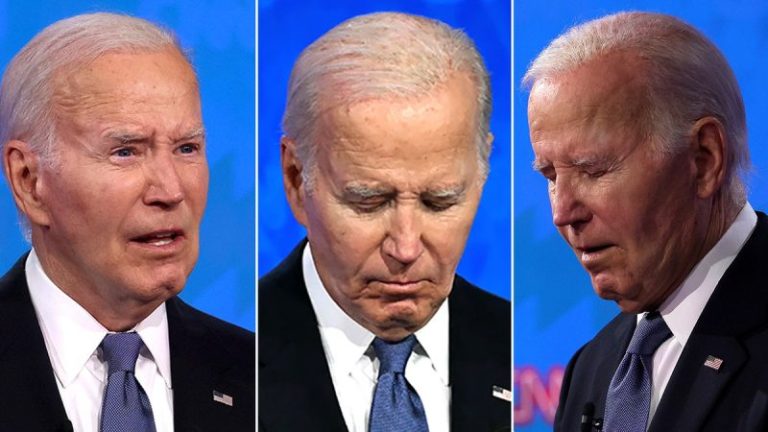
      Former President Joe Biden’s persistent use of a teleprompter during public events, including during a fundraiser with just a couple dozen supporters, left donors complaining for months and dashed their expectations of hearing from the 46th president, a new book claims. 

      ‘For most of the campaign, Biden only ever spoke with the assistance of a teleprompter, even for small private audiences,’ a new book, ‘2024: How Trump Retook the White House and the Democrats Lost America,’ reported. ‘The presence of the machine made for extremely awkward interactions in intimate settings, and irked donors who had paid thousands of dollars for a personal view of the president, not expecting a canned speech they could see on TV.’ 

      ‘He once read from a teleprompter in front of thirty people in the open kitchen of a Palo Alto mansion,’ the book continued. ‘Donors complained for months about the president’s reliance on the machine. Aides defended the teleprompter as a tool to keep the famously garrulous president on schedule.’ 

      ‘2024: How Trump Retook the White House and the Democrats Lost America’ was released Tuesday and authored by Josh Dawsey of the Wall Street Journal, Tyler Pager of the New York Times and Isaac Arnsdorf of the Washington Post. It details the 2024 presidential campaign cycle, including Biden’s cratering health issues. 

      The book detailed that just days after Biden’s disastrous June 2024 debate against President Donald Trump that opened the floodgates to typical Democrat supporters turning their backs on Biden ahead of the election, the president attended a campaign event at Virginia Democrat Rep. Dan Beyers’ house without a teleprompter. The book claims Biden only spoke for about six minutes.

      ‘At Beyer’s house, the campaign was eager to prove Biden could speak off the cuff. There was no teleprompter to be found. The president blamed his poor debate performance on a heavy travel schedule and said he ‘almost fell asleep onstage.’ He spoke for about six minutes,’ the book detailed. 

      The word ‘teleprompter’ appears in the new book a dozen times, mostly referencing the president’s reliance on the machine, as well as concern among some staffers that using a teleprompter was crucial to the president avoiding the unexpected as his health deteriorated. 

      ‘The officials who planned events at the White House tried to avoid any surprises or unpredictable situations. If the president was going to speak, he would go to the podium, deliver remarks from a teleprompter, and leave. There was no room for creativity or spontaneity,’ the book states in a section on how Biden had fallen during a commencement in 2023 and staff devised plans to prevent another public fall in the future. 

      ‘Everyone could see the president was aging. He sometimes failed to recognize former staff at functions. Still, current aides insisted his decline was strictly physical, and even then they acknowledged it only by trying to Bubble Wrap the president and avoid any more catastrophes. Staff limited direct access to the president, keeping meetings with him small,’ the book continued.

      Biden entered his 2024 reelection cycle already racked by claims and concerns that his mental acuity had slipped and he was not mentally fit to continue serving as president, which was underscored by special counsel Robert Hur’s report in February 2024 that rejected criminal charges against Biden for possessing classified materials, citing he was ‘a sympathetic, well-meaning, elderly man with a poor memory.’ Fox News has been reporting on Biden’s apparent health decline since at least 2020. 

      Biden brushed off the claims throughout 2024, until his debate against Trump in June of that year, when he was seen tripping over his words, speaking in a far more subdued tenor than during his vice presidency, and losing his train of thought at times. The debate opened the floodgates to criticism among Democrats that Biden should step aside and pass the mantle to a younger generation of Democrats. 

      After weeks of the White House and campaign staffers vowing Biden would stay in the race and to ‘keep the faith,’ Biden announced in a social media post on a Sunday afternoon in July 2024 that he dropped out of the race. He endorsed then-Vice President Kamala Harris to run for the Oval Office, giving her just over 100 days to launch her own campaign that failed to rally enough support when up against Trump. 

      Fox News Digital reached out to Biden’s office regarding the claims in the new book, but did not immediately receive a reply.

      This post appeared first on FOX NEWS

      The Supreme Court on Tuesday allowed the Trump administration to move forward, at least for now, with plans to implement large-scale cuts to the federal workforce, issuing a stay that lifts a lower court’s injunction against the administration’s executive order.

      In a 6–3 decision, the justices granted the emergency request filed by the White House last week, clearing the way for Executive Order No. 14210 to take effect while legal challenges play out in the Ninth Circuit and potentially the high court.

      The order directs federal agencies to carry out sweeping reductions in force (RIFs) and agency reorganizations. 

      It has been described by administration officials as a lawful effort to ‘streamline government and eliminate waste.’ Critics, including labor unions, local governments and nonprofit organizations, argue the president is unlawfully bypassing Congress to dismantle major parts of the federal government.

      A majority on the Court stressed that it was not ruling on the legality of specific agency cuts, only the executive order itself.

      ‘Because the Government is likely to succeed on its argument that the Executive Order and Memorandum are lawful—and because the other factors bearing on whether to grant a stay are satisfied—we grant the application,’ the Court wrote. ‘We express no view on the legality of any Agency RIF and Reorganization Plan produced or approved pursuant to the Executive Order and Memorandum. The District Court enjoined further implementation or approval of the plans based on its view about the illegality of the Executive Order and Memorandum, not on any assessment of the plans themselves. Those plans are not before this Court.’

      The district court in California had blocked the order in May, calling it an overreach. But the Supreme Court’s unsigned decision on Tuesday set aside that injunction, pending appeal. The majority said the government is ‘likely to succeed’ in defending the legality of the order.

      Justice Ketanji Brown Jackson dissented forcefully, writing that ‘this Court sees fit to step in now and release the President’s wrecking ball at the outset of this litigation.’ She warned that the executive action represents a ‘structural overhaul that usurps Congress’s policymaking prerogatives’ and accused the majority of acting prematurely in an emergency posture without fully understanding the facts.

      ‘This unilateral decision to ‘transform’ the Federal Government was quickly challenged in federal court,’ she wrote. ‘The District Judge thoroughly examined the evidence, considered applicable law, and made a reasoned determination that Executive Branch officials should be enjoined from implementing the mandated restructuring… But that temporary, practical, harm-reducing preservation of the status quo was no match for this Court’s demonstrated enthusiasm for greenlighting this President’s legally dubious actions in an emergency posture.’

      The executive order, issued in February, instructed agencies to prepare immediate plans for reorganizations and workforce reductions, including eliminating roles deemed ‘non-critical’ or ‘not statutorily mandated.’ The administration says it is a necessary response to bloated government and outdated structures, claiming the injunction was forcing agencies to retain ‘thousands of employees whose continuance in federal service… is not in the government and public interest.’

      Labor unions and state officials opposing the plan say it goes beyond normal workforce management and could gut services across multiple agencies. They point to proposed cuts of over 50% at the Department of Energy, and nearly 90% at the National Institute for Occupational Safety and Health.

      The case is Trump v. American Federation of Government Employees.

      ‘Today’s U.S. Supreme Court ruling is another definitive victory for the President and his administration,’ wrote White House principal deputy press secretary Harrison Fields in an email to Fox News Digital. ‘It clearly rebukes the continued assaults on the President’s constitutionally authorized executive powers by leftist judges who are trying to prevent the President from achieving government efficiency across the federal government.’

      This post appeared first on FOX NEWS

      As the fragile ceasefire between Israel and Iran continues, the Jewish State’s leader said that he would be open to having access to some of America’s most powerful military equipment.

      Israeli Prime Minister Benjamin Netanyahu made a stop on Capitol Hill Tuesday afternoon to meet with House Speaker Mike Johnson before a later confab with the Senate. It’s his first trip to Washington since the 12-day war between Israel and Iran erupted, and comes on the heels of a stoppage in fighting between the two countries.

      When asked if he would be open to Israel gaining access to B-2 stealth bombers and bunker-busting bombs — the same U.S. military equipment used to cripple Iran’s nuclear program — Netanyahu appeared to relish the thought.

      ‘Would I like to see Israel have the capacities that the United States has? Of course we’d like it. Who wouldn’t want it?’ he said.

      ‘But we are appreciative of what assistance we’ve received, and I think it’s served not only the interest of Israel’s security but America’s security and the security of the free world,’ Netanyahu continued.

      Netanyahu’s sentiment comes as a bipartisan duo in the House, Reps. Mike Lawler, R-N.Y., and Josh Gottheimer, D-N.J., are pushing to allow President Donald Trump the capability to send Israel the stealth bomber and powerful, 30,000-pound bombs capable of burrowing 200-feet into the ground before exploding, if Iran is found to still be marching forward with its nuclear program.

      Their bill currently has three other Democratic co-sponsors, including Reps. Jared Moskowitz, D-Fla., Tom Suozzi, D-N.Y., and Juan Vargas, D-Calif.

      The same aircraft and munitions were used in Operation Midnight Hammer, the secretive strike authorized by Trump last month to hit some of Iran’s key nuclear facilities, including Fordow, a facility buried below layers of rock that previous Israeli strikes couldn’t crack. Currently, the U.S. does not loan out any of its fleet of B-2s to allies.

      Netanyahu’s remarks also came after he met with Trump on Monday, and he lauded his work with the president since his return to the White House.

      ‘I have to say that the coordination between our two countries, the coordination between an American president and Israel Prime Minister has been unmatched,’ he said. ‘It offers great promise for Israel, for America, for our region and for the world.’

      He also hinted that ‘it may be very likely’ the pair may meet again before he leaves Washington. 

      Morgan Phillips contributed to this report.

      This post appeared first on FOX NEWS

      Former Vice President Kamala Harris offered a take so ‘weird’ and ‘not good’ in an interview with social media personality Kareem Rahma that they both agreed to nix airing the footage, according to Rahma. 

      Rahma, who hosts the popular series ‘Subway Takes,’ where he asks commuters and sometimes celebrities their opinions, previously told the New York Times that he conducted an interview with Harris during the summer of 2024, but that it was never released. 

      Rahma said in an interview clip with Forbes’ Steven Bertoni posted on social media Monday that Harris’ take was so ‘bad’ he felt fortunate it didn’t make the cut. 

      ‘Her take was really confusing and weird – not good,’ Rahma told Bertoni. And we ‘mutually agreed to not publish it. And I got lucky, because I didn’t want to be blamed for her losing.’

      ‘Her take was that bad?’ Bertoni said. 

      ‘It was really, really bad… it like, didn’t make any sense,’ Rahma said, revealing Harris’ take was ‘bacon as a spice.’ 

      Neither Harris nor Rahma immediately responded to a request for comment from Fox News Digital. 

      Rahma, who is Muslim, told the New York Times in a story published in November 2024 that Harris’ team originally proposed she would share a ‘hot take’ against people removing their shoes on airplanes.

      But Harris went on to declare that bacon was a spice – a food that Rahma and other Muslims do not consume for religious reasons. The Times reported that Rahma was ‘taken aback’ by Harris’ statement. 

      ‘Think about it, it’s pure flavor,’ she said, per the unaired footage obtained by the Times. 

      The Times’ story said two senior campaign managers for Harris said the topic of bacon had been previously raised, while Rahma and his manager said that wasn’t the case. Harris’ campaign reportedly apologized for sharing her take on bacon and offered to re-film the episode, but Rahma declined, according to the Times. 

      Rahma told the Times that his reasoning for not airing the interview was because he didn’t want to upset the Muslim community, and that he was hoping to ask Harris questions about the Biden administration’s policy regarding the Israel–Hamas war. 

      ‘It was so complicated because I’m Muslim and there’s something going on in the world that 100% of Muslims care about,’ Rahma told the Times. ‘And then they made it worse by talking about anchovies. Boring!’

      Harris’ running mate, Minnesota Gov. Tim Walz, also appeared on Rahma’s series leading up to the 2024 election, where he discussed gutter maintenance. Walz’s interview was posted in August 2024. 

      Fox News’ Yael Halon contributed to this report. 

      This post appeared first on FOX NEWS

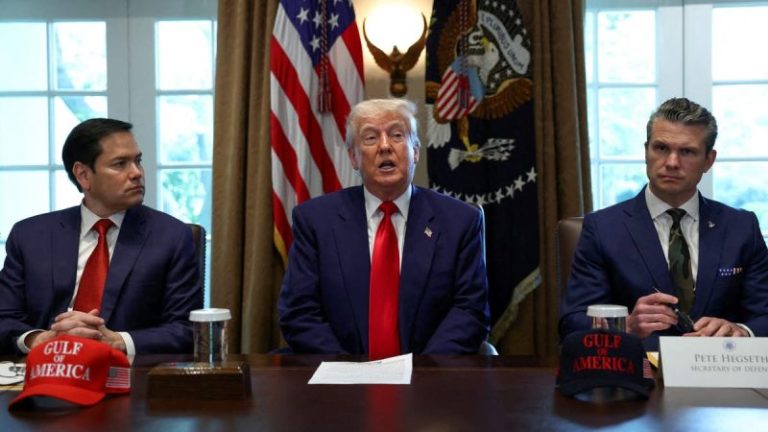
      President Donald Trump disclosed he and former Chairman of the Joint Chiefs of Staff Gen. Mark Milley clashed over leaving equipment in Afghanistan as the U.S. withdrew troops in 2021. 

      Trump, who historically has pushed to recover billions of dollars’ worth of equipment U.S. troops left in Afghanistan, said Milley argued at the time it was cheaper to leave the equipment there. 

      ‘That’s when I knew he was an idiot,’ Trump said during a Cabinet meeting Tuesday. ‘Didn’t take long to figure that one out. But they left all that equipment. But they left their dignity behind. It was the most embarrassing moment, in my opinion, in the history of our country. Not that we got out. We should have not been there, but that we got out the way we got out with great embarrassment and death.’ 

      Milley, who is now retired, did not immediately respond to a request for comment from Fox News Digital. 

      The Taliban seized nearly all of the more than $7 billion worth of equipment U.S. troops left in Afghanistan during the withdrawal process, according to a 2022 Department of Defense report.

      While U.S. troops removed or destroyed most of the major equipment, aircraft, ground vehicles and other weapons were left in Afghanistan. The condition of these items remains unknown, but the Pentagon said in the report the equipment likely would fail operationally without maintenance from U.S. contractors. 

      In 2021, President Joe Biden signed off on pulling U.S. troops from Afghanistan, following up on existing plans from the first Trump administration in 2020 with Taliban leaders to end the conflict. 

      However, Biden bore the brunt of criticism for the withdrawal after the Taliban rapidly took over Afghanistan again, and more than a dozen U.S. service members died supporting evacuation efforts. 

      Thirteen U.S. service members were killed during the withdrawal process due to a suicide bombing at Abbey Gate, outside the then-Hamid Karzai International Airport, as the Taliban gained control of Kabul.

      Secretary of Defense Pete Hegseth announced in May that he had instructed the Pentagon to launch a comprehensive review of the U.S. withdrawal to provide a more comprehensive evaluation of the event and to hold those responsible accountable. 

      ‘The Department of Defense has an obligation, both to the American people and to the warfighters who sacrificed their youth in Afghanistan, to get to the facts,’ Hegseth said in a memo in May. ‘This remains an important step toward regaining faith and trust with the American people and all those who wear the uniform and is prudent based on the number of casualties and equipment lost during the execution of this withdrawal operation.’ 

      While Trump tapped Milley to serve as the chairman of the Joint Chiefs of Staff in 2019, the relationship between the two unraveled after Milley issued an apology for appearing beside Trump in uniform during a photo-op outside the White House during the 2020 protests following the death of George Floyd at the hands of a police officer.

      Milley said in his apology that his appearance ‘created a perception of the military involved in domestic politics.’

      ‘As a commissioned uniformed officer, it was a mistake that I have learned from, and I sincerely hope we all can learn from it,’ Milley said in the apology. 

      Since then, Trump has issued various threats toward Milley, such as appearing to suggest Milley deserved to face execution for actions, including speaking to Chinese officials. Prior to departing office, Biden issued a preemptive pardon to Milley to safeguard the retired general from retributive actions by Trump. 

      Hegseth yanked Milley’s security clearance in January. 

      Milley told lawmakers on the House Foreign Affairs Committee in March 2024 that he and the commander of U.S. Central Command at the time of the withdrawal, Marine Gen. Kenneth F. McKenzie Jr., both advised Biden to keep some U.S. troops in Afghanistan after pulling most forces. 

      ‘The outcome in Afghanistan was the result of many decisions from many years of war,’ Milley told lawmakers. ‘Like any complex phenomena, there was no single causal factor that determined the outcome.’

      This post appeared first on FOX NEWS

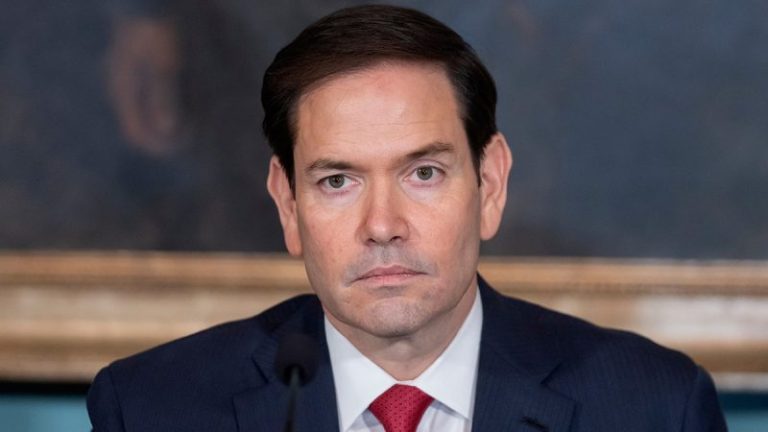
      The State Department is investigating an impostor who reportedly pretended to be Secretary of State Marco Rubio with the help of AI. 

      The mystery individual posing as one of President Donald Trump’s Cabinet members reached out to foreign ministers, a U.S. governor and a member of Congress with AI-assisted voice and text messages that mimicked Rubio’s voice and writing style, the Washington Post reported, citing a senior U.S. official and State Department cable. 

      ‘The State Department, of course, is aware of this incident and is currently monitoring and addressing the matter. The department takes seriously its responsibility to safeguard its information and continuously take steps to improve the department’s cybersecurity posture to prevent future incidents. For security reasons, we do not have any further details to provide at this time,’ State Department spokesperson Tammy Bruce said Tuesday. 

      When asked by Fox News about Rubio’s reaction to being impersonated, she said, ‘We’re not at a point here where I will discuss or portray what actions are being taken or his reaction.’ 

      ‘The secretary… is very transparent, quite transparent, and he’s direct with everyone. I think that any description of his reaction, of course, belongs to him. And I would suspect that at some point we’ll have that for you,’ Bruce added. 

      She also said that ‘We live in a technological age that we are well enmeshed in.’ 

      It’s unclear who is using AI to impersonate Rubio, but it’s suspected they are doing so in an attempt to manipulate government officials ‘with the goal of gaining access to information or accounts,’ the State Department cable said, according to the Washington Post. 

      The cable reportedly said the impersonation act started in mid-June when someone created a Signal account with the display name Marco.Rubio@state.gov — which isn’t Rubio’s actual email address. 

      The July 3 cable reportedly added that the fake Rubio ‘contacted at least five non-Department individuals, including three foreign ministers, a U.S. governor, and a U.S. member of Congress.’ 

      ‘The actor left voicemails on Signal for at least two targeted individuals and in one instance, sent a text message inviting the individual to communicate on Signal,’ the Washington Post also cited the cable as saying. 

      The impersonation attempt ultimately was unsuccessful and ‘not very sophisticated,’ a senior U.S. official told The Associated Press.

      Fox News’ Nick Kalman contributed to this report.  

      This post appeared first on FOX NEWS

      In a blockbuster report, the CIA has belatedly exposed the rank corruption among top intelligence officials who connived to frame President Donald Trump and drive him from office during his first term.  

      Their pernicious lie was that Trump colluded with Russia to rig the 2016 presidential election in his favor. The principal piece of so-called evidence was a document known infamously as the dossier.  

      It was secretly financed by Hillary Clinton’s presidential campaign and Democrats, conceived by a foreign agent with a checkered past in espionage, and then brokered to solicitous collaborators at the FBI, CIA, the Department of Justice and the Trump-hating media.  

      The dossier was garbage, of course. The FBI largely debunked it before Trump was even sworn in and fired its author, Christopher Steele, for lying as a confidential human source. But the bureau concealed those inconvenient facts under then-Director James Comey and deftly exploited the document as a cudgel to bludgeon the newly elected president.  

      Comey was aided and abetted by others in the intelligence community, including CIA Director John Brennan and Director of National Intelligence James Clapper. This malignant force of unelected officials plotted to smear Trump with what is surely the dirtiest trick in political history.  

      Recently, current CIA Director John Ratcliffe declassified and released an internal agency review of the machinations that helped fuel the Russia hoax. In a statement posted on social media, Ratcliffe stated, ‘All the world can now see the truth: Brennan, Clapper and Comey manipulated intelligence and silenced career professionals — all to get Trump.’ 

      Citing previously hidden records, the review concluded that Brennan, in particular, pushed for the phony dossier to be included in the Intelligence Community Assessment (ICA) to catalyze a false narrative against Trump. Senior CIA experts on Russia objected but were sidelined and silenced.  

      The CIA’s deputy director for analysis warned Brennan in writing that including the discredited dossier in any capacity jeopardized ‘the credibility of the entire paper.’ Brennan didn’t care. The fiction penned by the ex-British spy conformed to the director’s preconceived fable that Trump colluded with Russia.  

      The ICA, which was ordered by President Barack Obama, was rushed to completion just days before Trump’s inauguration. Brennan directed its composition and handpicked the analysts who compiled the ersatz information. To stifle dissent, 13 other key intelligence agencies were deliberately excluded. To put it bluntly, Trump was set up.  

      According to the new CIA review, Comey and Clapper were all in on the scheme. In an interview with the New York Post, Ratcliffe said, ‘This was Obama, Comey, Clapper and Brennan deciding ‘We’re going to screw Trump.’’ 

      They knew the dossier was junk, which motivated them to prop it up as a reliable indictment of Trump. By incorporating it in the ICA they could leak and propagate both documents as mutual corroboration. It was a clever ruse. An illusion.  

      Those of us who have long covered the bogus collusion story knew it long ago. In my 2019 book, ‘Witch Hunt,’ I recounted how Brennan ‘insisted that the dossier be included in the classified intelligence report,’ but then told Congress under oath that the dossier was ‘not in any way used as the basis for the intelligence community’s assessment.’ Clapper’s testimony was nearly identical.  

      Here is what I wrote in chapter 2: 

      ‘Brennan and Clapper were spinning a deception. A prominent colleague contradicted them and produced documents as proof that they were not telling the truth. In a classified letter to Congress, National Security Agency director Michael Rogers disclosed that the uncorroborated document (the dossier) ‘did factor into the ICA’ report. Having been caught in a falsehood, Clapper then repudiated his earlier statement. Brennan continued to deny all of it, the contrary evidence notwithstanding.’  

      Neither Brennan nor Clapper was ever prosecuted for perjury.  

      None of that bothered news organizations. MSNBC promptly hired Brennan, while Clapper went to work for CNN. I described what they did from their media perches:  

      ‘The two super spooks launched an all-out attack on Trump, exploiting their new television platforms to advance the toxic fiction that the president was a secret Russian asset who had ‘colluded’ with Putin. It didn’t matter to CNN that a House Intelligence Committee report determined that it had been Clapper who had leaked news of the phony dossier to the network before Trump had ever taken office.’  

      The collusion narrative was a conspiracy itself. The collaborators knew it was a lie, but they manipulated the dossier and the ICA to peddle their fairy tale. With Hillary and her confederates, they engineered the hoax. Brennan even accused Trump of treason.  

      Comey also knew the dossier was spurious, as I wrote in chapter 4:  

      ‘He knew exactly where the dossier came from and who paid for it. He used it as the primary basis for the warrants, used it as part of the nonpublic version of the intelligence community assessment, and used it to debrief President-elect Trump so that it could be leaked to the media in January 2017.’ 

      They knew the dossier was junk, which motivated them to prop it up as a reliable indictment of Trump. By incorporating it in the ICA they could leak and propagate both documents as mutual corroboration. It was a clever ruse. An illusion.  

      Comey’s decision to purloin and leak additional FBI documents triggered — just as he planned — the appointment of Special Counsel Robert Mueller and his dilating investigation of Trump that hobbled his presidency for two years.  

      On the day that Mueller issued his report concluding that there was no evidence of a Trump-Russia collusion conspiracy, the sheepish Brennan conceded, ‘I don’t know if I received bad information, but I think I suspected there was more than there actually was.’  

      That’s quite the Jekyll-Hyde metamorphosis for a guy who enthusiastically endorsed the dossier and who kept claiming that ‘it was in line’ with his own CIA sources, in which he ‘had great confidence.’ That, too, was a fabrication, according to the newly released CIA review.  

      What did Comey have to say?  In public, the master prevaricator dissembled and pleaded ignorance.  But before Congress, he was forced to admit that some of his actions would have been different had he known then what he knows now.  Not likely.  He was wedded to the artifice of collusion because he despised Trump. 

      Director of National Intelligence Tulsi Gabbard has vowed a reckoning. She told Fox News, ‘We are digging deep to find everything that has been related to this, and I guarantee you there are some U.S. attorneys who are eager to see what we are finding — in some cases are already working their own cases to bring about that necessary accountability.’  

      Unless those who unscrupulously weaponized their immense power for political purposes are held to account, it will happen again. And again. The only remedy for lawlessness is justice.  

      The reckoning awaits. 

      This post appeared first on FOX NEWS