
Author

admin

Browsing

Seasoned Experts in Mining Talk about Silver Market and what’s next for Apollo’s (APGO) (APGOF) Flagship Silver Properties

Investorideas.com, a global investor news source covering mining and metals stocks releases a new episode of the Exploring Mining Podcast. In today’s episode, Cali Van Zant hosts a top tier Silver discussion featuring renowned mining investment expert, Chris Temple, editor and publisher of The National Investor, and Apollo Silver Corp’s. (TSXV: APGO) (OTCQB: APGOF) management; Chairman Andy Bowering and recently appointed President and CEO, Ross McElroy.

Exploring Mining’s Silver Discussion with Apollo Silver, and Mining Expert Chris Temple 

To view an enhanced version of this graphic, please visit:
https://images.newsfilecorp.com/files/6292/256852_aefa4502c45f8b17_001full.jpg

Ross McElroy joined Apollo following the successful acquisition of Fission Uranium, a company he co-founded and led as CEO, by Paladin Energy in a $1.14 billion transaction. He is a professional geologist with over 38 years of mining industry experience, both in operational and corporate roles, having worked with majors, mid-tiers, and juniors.

For investors following the silver market and silver stocks, the podcast explores silver’s current market, with Temple noting its technical improvement and chronic supply shortfalls. McElroy highlights silver’s 25% price surge over the past six months, outpacing gold.

The episode also dives into Apollo’s strategic advancements and updates on their flagship Calico (California) project and Cinco de Mayo (Mexico) project. The company recently expanded the Calico Project land package by over 285%. Already the one of the largest undeveloped silver projects in the US, the additional Calico claims form just one part of Apollo’s aggressive growth strategy. Cinco de Mayo in Mexico is a silver-zinc asset with a historic resource of 50 million ounces of silver and 1.8 billion pounds of zinc.

The combined expertise of the three panel members provides investors with in-depth perspective and insight into what it takes to build a successful mining company in today’s silver market.

Listen to the podcast: https://www.spreaker.com/episode/silver-s-next-big-surge-apollo-silver-s-mining-legends-discuss-with-chris-temple–66749524

Watch on YouTube: 

About Apollo Silver(TSXV: APGO) (OTCQB: APGOF)

Apollo Silver has assembled an experienced and technically strong leadership team who have joined to advance quality precious metals projects in sought after jurisdictions. The Company is focused on advancing its portfolio of two prospective silver exploration and resource development projects, the Calico Project, in San Bernardino County, California and the Cinco de Mayo Project, in Chihuahua, Mexico.

Visit www.apollosilver.com for further information.

Corporate Presentation: https://apollosilver.com/wp-content/uploads/2025/06/APGO-Investor-Presentation-2025-06-13.pdf

About Chris Temple

Chris Temple is editor and publisher of The National Investor. He has had an over 40-year career now in the financial/investment industry. Temple is a sought-after guest on radio stations, podcasts, blogs and the like all across North America, as well as a sought-after speaker for organizations. His ability to help average investors unravel, understand and navigate today’s markets is unparalleled; and his ability to uncover ‘off-the-radar’ companies is likewise.

Home

Listen to Exploring Mining on Spotify

Listen to Exploring Mining podcast on iTunes Apple podcasts

Hear other episodes of the Exploring Mining Podcast , rated as one of the top 30 mining podcasts to listen to in 2025,

The Investorideas.com podcasts are also available on Apple Podcasts, Audible, Spotify, Tunein, Stitcher, Spreaker.com, iHeartRadio, Google Podcasts and most audio platforms available.

Visit the Podcast page at Investorideas.com:
https://www.investorideas.com/Audio/

Research mining stocks at Investorideas.com with our free mining stocks directory at Investorideas.com

About Investorideas.com – Big Investing Ideas

Investorideas.com is the go-to platform for big investing ideas. From breaking stock news to top-rated investing podcasts, we cover it all.

Disclaimer/Disclosure: This podcast and article featuring Apollo Silver Corp is paid for content as part of a monthly featured mining stock service (payment disclosure). Our site does not make recommendations for purchases or sale of stocks, services or products. Nothing on our sites should be construed as an offer or solicitation to buy or sell products or securities. All investing involves risk and possible losses. This is not investment opinion. This site is currently compensated for news publication and distribution, social media and marketing, content creation and more. Disclosure is posted for each compensated news release, content published/created if required but otherwise the news was not compensated for and was published for the sole interest of our readers and followers. Contact management and IR of each company directly regarding specific questions. More disclaimer info: https://www.investorideas.com/About/Disclaimer.asp. Learn more about publishing your news release and our other news services on the Investorideas.com newswire https://www.investorideas.com/News-Upload/. Global investors must adhere to regulations of each country. Please read Investorideas.com privacy policy: https://www.investorideas.com/About/Private_Policy.asp.

Follow us on X @investorideas @Exploringmining
Follow us on Facebook https://www.facebook.com/Investorideas
Follow us on YouTube https://www.youtube.com/c/Investorideas

Contact Investorideas.com to be a guest or sponsor this podcast
800-665-0411

To view the source version of this press release, please visit https://www.newsfilecorp.com/release/256852

News Provided by Newsfile via QuoteMedia

This post appeared first on investingnews.com

Chris Schwegmann is getting creative with how artificial intelligence is being used in law.

At Dallas-based boutique law firm Lynn Pinker Hurst & Schwegmann, he sometimes asks AI to channel Supreme Court Chief Justice John Roberts or Sherlock Holmes.

Schwegmann said after uploading opposing counsel’s briefs, he’ll ask legal technology platform Harvey to assume the role of a legal mind like Roberts to see how the chief justice would think about a particular problem.

Other times, he will turn to a fictional character like Holmes, unlocking a different frame of mind.

“Harvey, ChatGPT … they know who those folks are, and can approach the problem from that mindset,” he said. “Once we as lawyers get outside those lanes, when we are thinking more creatively involving other branches of science, literature, history, mythology, that sometimes generates some of the most interesting ideas that can then be put, using proper legal judgement, in a framework that works to solve a legal problem.”

It’s just one example of how smaller businesses are putting AI to work to punch above their weight, and new data shows there’s an opportunity for much more implementation in the future.

Only 24% of owners in the recent Small Business and Technology Survey from the National Federation of Independent Business said they are using AI, including ChatGPT, Canva and Copilot, in some capacity.

Notably, 98% of those using it said AI has so far not impacted the number of employees at their firms.

At his trial litigation firm of 50 attorneys, Schwegmann said AI is resolving work in days that would sometimes take weeks, and said the technology isn’t replacing workers at the firm.

It has freed up associate lawyers from doing “grunt work,” he said, and also means more senior-level partners have the time to mentor younger attorneys because everyone has more time.

The NFIB survey found AI use varied based on the size of the small business. For firms with employees in the single digits, uptake was at 21%. At firms with fifty or more workers, AI implementation was at nearly half of all respondents.

“The data show clearly that uptake for the smallest businesses lags substantially behind their larger competitors. … With a little attention from all the relevant stakeholders, a more equal playing field is possible,” the NFIB report said.

For future AI use, 63% of all small employers surveyed said the utilization of the technology in their industry in the next five years will be important to some degree; 12% said it will be extremely important and 15% said it will not be important at all.

Some of the most common uses in the survey were for communications, marketing and advertising, predictive analysis and customer service.

“We still have the need for the independent legal judgment of our associate lawyers and our partners — it hasn’t replaced them, it just augments their thinking,” Schwegmann said. “It makes them more creative and frees their time to do what lawyers do best, which is strategic thought and creative problem solving.”

The NFIB data echoes a recent survey from Reimagine Main Street, a project of Public Private Strategies Institute in partnership with PayPal.

Reimagine surveyed nearly 1,000 small businesses with annual revenue between $25,000 and $50,000 and also found that a quarter had already started integrating AI into daily workflows.

Schwegmann said at his firm, AI is helping to even the playing field.

“One of the things Harvey lets us do is review, understand and incorporate and respond much faster than we would prior to the use of these kinds of AI tools,” he said. “No longer does a party have an advantage because they can paper you to death.”

This post appeared first on NBC NEWS

Nvidia CEO Jensen Huang sold 100,000 shares of the chipmaker’s stock on Friday and Monday, according to a filing with the U.S. Securities and Exchange Commission.

The sales are worth nearly $15 million at Tuesday’s opening price.

The transactions are the first sale in Huang’s plan to sell as many as 600,000 shares of Nvidia through the end of 2025. It’s a plan that was announced in March, and it’d be worth $873 million at Tuesday’s opening price.

The Nvidia founder still owns more than 800 million Nvidia shares, according to Monday’s SEC filing. Huang has a net worth of about $126 billion, ranking him 12th on the Bloomberg Billionaires Index.

The 62-year-old chief executive sold about $700 million in Nvidia shares last year under a prearranged plan, too.

Nvidia stock is up more than 800% since December 2022 after OpenAI’s ChatGPT was first released to the public. That launch drew attention to Nvidia’s graphics processing units, or GPUs, which were needed to develop and power the artificial intelligence service.

The company’s chips remain in high demand with the majority of the AI chip market, and Nvidia has introduced two subsequent generations of its AI GPU technology.

Nvidia continues to grow. Its stock is up 9% this year, even as the company faces export control issues that could limit foreign markets for its AI chips.

In May, the company reported first-quarter earnings that showed the chipmaker’s revenue growing 69% on an annual basis to $44 billion during the quarter.

This post appeared first on NBC NEWS

The stock market has been on quite the rollercoaster of late, thanks to news headlines. But investors seem to have shrugged off the past weekend’s geopolitical tensions, at least for now. 

On Tuesday, we saw a surge of enthusiasm. Investors were diving back into stocks and selling off their oil and precious metals holdings. Last week, oil prices spiked amid Middle East tensions, but have now fallen to pre-conflict levels. After what felt like a few weeks of the market moving sideways, maybe the stock market got the catalyst it needed to push the major indexes out of their trading range. A ceasefire between Israel and Iran was enough to get things going.

Stocks Get a Boost

Tuesday’s positive tone helped move the stock market higher, with the S&P 500 ($SPX) closing up 1.1%, finally breaking above the top of its trading range. The Nasdaq Composite ($COMPQ) followed suit, with both indexes within spitting distance of their all-time highs. The Nasdaq 100 ($NDX), which closed 1.53% higher, hit a new all-time high. And let’s not forget the Dow Industrials ($INDU), which is also making a strong attempt to push through key resistance levels, even though it’s a little bit further from its all-time high.

Given the Nasdaq 100’s strong performance on Tuesday, it’s worth taking a closer look at the daily chart of the Invesco QQQ Trust (QQQ).

FIGURE 1. DAILY CHART OF QQQ. The ETF hit a new high on June 24 with a potential Golden Cross. If the relative strength index and percentage price oscillator confirm upside momentum, QQQ could rise higher.Chart source: StockCharts.com. For educational purposes.

Besides hitting a new high, note that the 50-day simple moving average (SMA) crossed above the 200-day SMA. This is referred to as a Golden Cross and can be an early sign of bullishness. While it’s not a guaranteed “green light” at such an early stage, it’s worth watching to see if the 50-day SMA continues to stay above the 200-day SMA.

The relative strength index (RSI) is getting closer to overbought territory. If it crosses above 70, it would be another sign of strong bullish momentum. Similarly, the percentage price oscillator (PPO) needs to move into positive territory, meaning the shorter moving average should cross above the longer one. They’re close, but remember these are lagging indicators, meaning they’ll confirm trends that are already underway. Thus, if the 50-day SMA remains above the 20-day SMA, RSI crosses above 70, and PPO confirms upside momentum, it would confirm further upside move in QQQ.

Another interesting point to note: The Cboe Volatility Index ($VIX) closed at 17.48, which suggests investors are relatively complacent. The VIX was relatively subdued during the Middle East conflict, hitting a high of around 22. With less fear, the charts of the major indexes look like they’re going to hit fresh highs. On Tuesday, Technology, Financials, and Communication Services were the top-performing sectors.

Tech Regains Lead

The Technology sector was powered by semiconductors, which have been driving the market lately. The VanEck Vectors Semiconductor ETF (SMH) has broken above the range it’s been trading within for the last couple of weeks and is now close to its 52-week high (see daily chart of SMH below).

FIGURE 2. DAILY CHART OF SMH. Semiconductors have been driving the stock market lately and broke out above the range from the last couple of weeks.Chart source: StockCharts.com. For educational purposes.

Looking at individual stocks, NVIDIA Corp. (NVDA) was the most actively traded S&P 500 stock. A handful of big names are hitting new all-time highs, too; this includes Broadcom, Inc. (AVGO), Cisco Systems, Inc. (CSCO), International Business Machines (IBM), JP Morgan Chase (JPM), Microsoft Corp. (MSFT), and Netflix Inc. (NFLX), just to name a few. For the complete list, check out the “New Highs” panel in your StockCharts Dashboard; you’ll likely notice a significant percentage of tech stocks on the list.

The positive price action on Tuesday suggests investors are rotating into growth stocks, which signals further upside moves in the S&P 500 and Nasdaq stocks. Here’s a more encouraging sign: even the S&P 500 Equal-Weighted Index ($SPXEW) is breaking out and moving towards its highs. This indicates that the market’s strength isn’t limited to a few big, heavily-weighted growth stocks; participation is much broader.

Travel Stocks Get a Lift

Beyond tech stocks, consumer discretionary stocks also traded higher. The top three performers in the Consumer Discretionary sector were Carnival Corp. (CCL), Norwegian Cruise Lines Holdings (NCLH), and Caesars Entertainment (CZR). The MarketCarpet for the Consumer Discretionary sector below shows travel stocks were strong performers on Tuesday.

FIGURE 3. MARKETCARPET FOR THE CONSUMER DISCRETIONARY SECTOR. The table on the right shows CCL, NCLH, and CZR were the top performers.Image source: StockCharts.com. For educational purposes.

CCL’s stock price gapped up after the company reported strong earnings and guidance. An increase in cruise line bookings indicates consumer sentiment is strong. As a result, cruise lines and travel stocks traded higher. This goes against June’s Consumer Confidence report, which showed weakening confidence. It didn’t seem to impact the market, but it may come back to bite us depending on what news headlines we are likely to receive on Wednesday.

Closing Position

Tuesday’s price action suggests that equities are back on their bullish track after a period of consolidation. Will the upside move hold, or will a negative news headline bring the bears back into the market?

This is where your StockCharts tools come in handy! Keep a close eye on the performance of the major indexes and other helpful indicators such as the RSI and PPO. By using these tools, you can stay on top of the stock market and make investment decisions with greater confidence.


Disclaimer: This blog is for educational purposes only and should not be construed as financial advice. The ideas and strategies should never be used without first assessing your own personal and financial situation, or without consulting a financial professional.

Join Dave as he shares how he uses the power of Fibonacci retracements to anticipate potential turning points. He takes viewers through the process of determining what price levels to use to set up a Fibonacci framework, and, from there, explains what Fibonacci retracements are telling him about the charts of NCLH, RTX, and the S&P 500

This video originally premiered on June 24, 2025. Watch on StockCharts’ dedicated David Keller page!

Previously recorded videos from Dave are available at this link.

As the cycle of uncertainty continues to yield confusion than clarity, investors are again caught having to decide between taking an offensive and defensive posture in the market. The tough part in today’s market environment is how fast situations can shift. With headlines driving the action, sentiment can flip on a dime. So how do you position yourself when breaking news drives the market?

No one can predict how the stock market will play out in the coming months. But keeping an eye on the ratio of “offense” to “defense” stocks can offer some clues. This may not give you a decisive trade scenario, but it can provide a clearer context that can help you form a more bullish or bearish decisive bias.

For this article, let’s refer to the StockCharts Market Summary tool and zoom in on the Technology vs. Utilities ratio (XLK:XLU), which you can find in the Key Ratios – Offense vs Defense panel.

Why XLK:XLU Ratio Matters

This ratio compares the Technology Select Sector SPDR Fund (XLK) with the Utilities Select Sector SPDR Fund (XLU), both being sector proxies (see the one-year ratio chart below).

FIGURE 1. TECH VS UTILITIES RATIO: From a one-year perspective, utilities have outperformed tech.

The key question is whether capital will continue chasing innovation and growth or seek shelter in the relative stability of power grids and water systems. The answer, when it eventually comes, could signal the economy’s next move.

On the one-year chart, the XLK:XLU ratio shows an attempted recovery from a general decline. Note how the ratio percentage is negative. That’s because, over the past year, utilities have generally performed stronger than tech. But we’re seeing tech’s performance strengthening, and a sustained move toward (and eventually into) positive territory would suggest a stronger shift in bullish sentiment.

Notably, XLK and XLU are trading at their respective highs, with XLK already breaking above it. The question remains which sector may be topping or outpacing the other in a more sustained manner.

XLK Breaks Higher: A Bullish Signal?

Here’s a daily chart of XLK.

FIGURE 2. DAILY CHART OF XLK. A proxy for the tech sector, XLK has broken above resistance. The key question now is whether it can hold above this level and follow through, or if it’s topping out amid the current geopolitical uncertainties.

XLK’s surge from its April bottom, including the gap above $243, signals bullish momentum. It’s also trading above the 200-day simple moving average (SMA) while its StockCharts Technical Rank (SCTR) score has climbed above 76, signaling technical strength. Volume-wise, the Chaikin Money Flow (CMF) shows renewed strength in buying pressure, though CMF levels are down considerably since their highest levels in May.

XLU’s Rally: Strong, But Losing Steam

Compare XLK’s chart to XLU’s daily chart.

FIGURE 3. DAILY CHART OF XLU. The Utilities sector is challenging its highs, but is XLU losing steam, and will XLK eventually outpace it?

XLU is attempting to challenge its highs near the $82.50 range, though it hasn’t penetrated the top. Its SCTR score is also bullish at 77, though it’s not as convincing as that of XLK. XLU’s CMF reading also shows weakened buying pressure, as its levels are barely hovering above the zero line.

What These Charts Are Saying

Taken together, these charts aren’t about calling the next big trade. They’re about reading near-term sentiment and getting a feel for where investors think the economy is headed amid this tense geopolitical backdrop.

When both offense and defense are rising, it suggests uncertainty, with capital flowing in both directions. But when one sector pulls ahead, it may signal where institutional money is placing its bets. Whether you’re a short-term trader or long-term investor, tracking this ratio can help anchor your outlook, especially as global events continue to fuel market volatility.

Keep XLK and XLU on your ChartLists and continue to monitor this ratio, along with other comparative tools on the Market Summary page. Also, pay close attention to news developments.

At the Close

The XLK:XLU ratio might not give you the most comprehensive or surefire signal about investor sentiment, but it’s an important piece of the puzzle. It can help you see the bigger picture, which is a crucial step before placing any trades.


Disclaimer: This blog is for educational purposes only and should not be construed as financial advice. The ideas and strategies should never be used without first assessing your own personal and financial situation, or without consulting a financial professional.

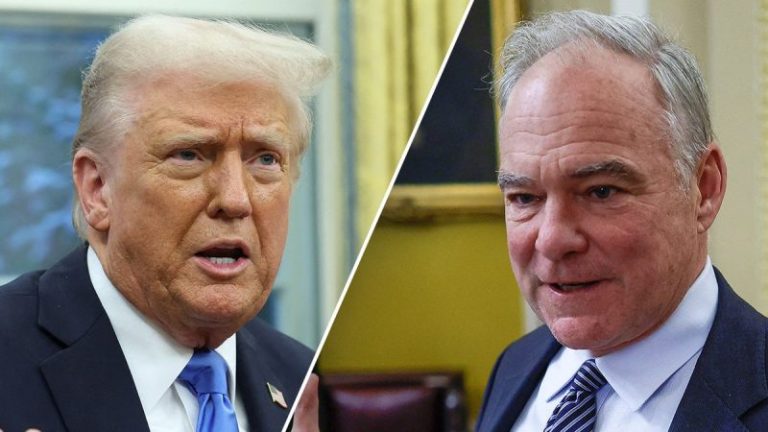
Sen. Tim Kaine, D-Va., plans to move full steam ahead with his war powers resolution, despite a fragile ceasefire reached Tuesday between Israel and Iran.

The fresh ceasefire deal between the warring countries faced early hiccups, with President Donald Trump accusing both sides of breaking the truce, but it has so far held, despite widespread skepticism over its longevity on Capitol Hill.

And Kaine argued that the halt in fighting actually gave his resolution more credence.

‘I think the ceasefire actually gives us the ability to have the conversation without the pressure of like, ‘Oh, you know, [Trump’s] got to do a bombing run tomorrow night,’’ he said.

‘The combination of the ceasefire and the Israelis saying that the nuclear program has been sent back at least two or three years opens up — you can really have the deliberate discussion that this merits,’ Kaine continued.

Kaine’s war powers resolution is designed to both put a check on Trump’s power and reaffirm Congress’ constitutional authority to declare war. However, whether a strike like the one over the weekend constituted an act of war that required congressional approval was a hot topic of debate among lawmakers last week.

The Constitution divides war powers between Congress and the White House, giving lawmakers the sole power to declare war, while the president acts as the commander-in-chief directing the military.

A similar bipartisan resolution cropped up in the House, too, but one of its co-sponsors, Rep. Thomas Massie, R-Ky., told Fox News Digital that he is ready to stand down if the ceasefire lasts.

‘If the ceasefire becomes a truce and holds, we won’t press for the vote,’ he said. ‘We need to hear from Iran and Israel, and also whether our own president is satisfied that the predicate for his first attack, nuclear weapons, no longer exists.’

Kaine’s bill could hit the floor by Friday in the Senate, but whether it survives is another question.

‘Bring it up. Let’s vote it down,’ Sen. Ron Johnson, R-Wis., told Fox News Digital.

The resolution does have the backing of Senate Minority Whip Dick Durbin, D-Ill., who told Fox News Digital that before the strikes there were up to eight Republicans that supported it.

‘I support Tim,’ Durbin said. ‘His approach to this is entirely consistent with the Constitution, and I wish the Senate would stand up as a body for its own rights and authority under the Constitution.’

This post appeared first on FOX NEWS

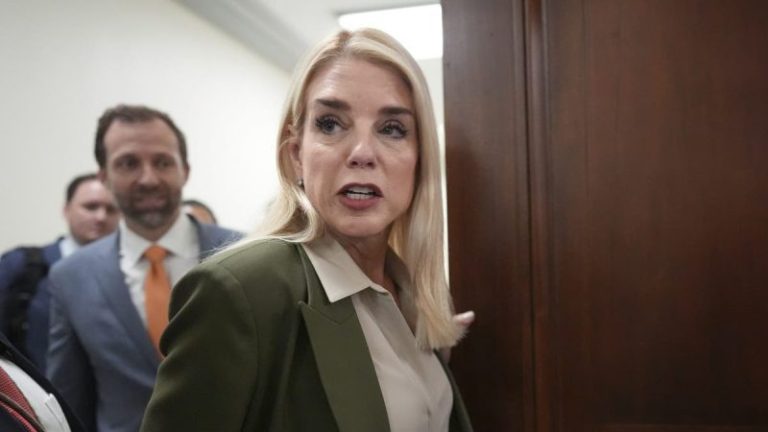
The FBI has initiated criminal investigations of three children’s hospitals after commitments from Attorney General Pam Bondi that the Trump administration would enforce federal statutes outlawing female genital mutilation to protect children from often irreversible sex-change surgeries.

The investigations target providers who work at Boston Children’s Hospital, Children’s Hospital Colorado and Children’s Hospital Los Angeles, according to a source familiar with the investigation who spoke to Fox News Digital on the condition of anonymity. These hospitals have been among some of the foremost providers of sex change procedures for minors in America over the last several years, according to the source.

Just days after taking office, President Donald Trump issued an executive order directing all federal agencies to work toward terminating the ability for children under 18 to receive ‘irreversible medical interventions’ as a treatment for gender dysphoria. Part of that effort included Attorney General Bondi issuing a memorandum several weeks later, directing Justice Department personnel to enforce 18 U.S.C. § 116, which is a federal statute that makes female genital mutilation against the law. 

‘I am putting medical practitioners, hospitals and clinics on notice: In the United States, it is a felony to perform, attempt to perform or conspire to perform female genital mutilation (‘FGM’) on any person under the age of 18,’ Bondi’s memo said. ‘That crime carries a maximum prison sentence of 10 years per count. I am directing all U.S. Attorneys to investigate all suspected cases of FGM — under the banner of so-called ‘gender-affirming care’ or otherwise — and to prosecute all FGM offenses to the fullest extent possible.’

Bondi also said in the memo that the Justice Department would be launching a new Coalition Against Child Mutilation, which will partner with state attorneys general to build cases against hospitals and practitioners violating federal or state laws banning female genital mutilation. The memo added that the Justice Department’s Office of Legislative Affairs is drafting legislation establishing a private right of action for children and parents of children ‘whose healthy body parts have been damaged by medical professionals through chemical and surgical mutilation’ so they can hold hospitals and providers retroactively liable.

Amid the Trump administration’s focus on banning irreversible transgender medical treatments for minors, numerous hospitals have amended their policies for who can obtain gender transition treatments and surgeries.


Earlier this month, Children’s Hospital Los Angeles announced it would permanently close its Center for Transyouth Health and Development, effective July 22, 2025. The decision was attributed to ‘significant operational, legal and financial risks stemming from the shifting policy landscape at both the state and federal levels,’ according to CBS News.

Children’s Hospital Los Angeles did not respond to Fox News Digital’s repeated requests for comment. 

Children’s Hospital Colorado initially suspended its transgender medical treatments for patients under 19 in response to the president’s executive order directing hospitals to halt irreversible transgender treatments for minors. But after a judge’s ruling blocking Trump’s order, the hospital announced it would resume providing puberty blockers and hormone-based treatments to minors.

In a statement to Fox News Digital, a spokesperson for Children’s Hospital Colorado noted that it has ‘never’ provided transgender surgeries for those under 18, adding that, two years ago, the hospital stopped providing these surgeries for patients over 18. Instead, starting in 2023, the hospital decided to begin referring patients to outside providers for such services, according to Colorado Newsline. 

Boston Children’s Hospital continues to operate its Gender Multispecialty Service (GeMS) program, according to publicly available information. While the hospital only provides gender-change surgeries for patients over 18, its GeMS program does offer transgender hormone therapy, puberty blockers and social transitioning for patients under 18. It also provides referrals for gender-transition surgeries to minors as well.

In a statement to Fox News Digital, Boston Children’s said it had not yet received any notice from the FBI regarding alleged violations of federal law. The FBI said that, as a matter of policy, it ‘declines to confirm or comment on investigations.’

This post appeared first on FOX NEWS

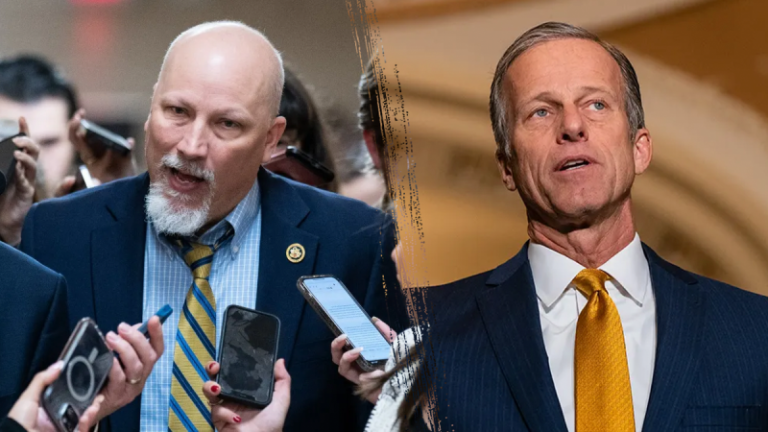
The House’s conservative fiscal hawks are warning that President Donald Trump’s ‘one big, beautiful bill’ could run into serious problems after the Senate made key changes to the legislation.

‘There’s real problems with it,’ Rep. Ralph Norman, R-S.C., told Fox News Digital on Tuesday. ‘We’re on board with the president… but we’re concerned about the changes.’

He and other members of the right-wing House Freedom Caucus are particularly incensed by the Senate’s decision to defer the expiration of certain green energy tax credits from the former Biden administration’s Inflation Reduction Act (IRA) — which those conservatives have dubbed ‘the Green New Scam.’

They’re also wary of additional dollars being spent on raising the debt limit, which Trump has directed GOP lawmakers to do before the U.S. runs out of cash to pay its obligations sometime this summer. 

The Senate’s version of the bill increases the U.S. debt limit by $5 trillion, whereas the earlier House version hiked it by $4 trillion.

Congressional Republicans are working to pass Trump’s agenda on tax, immigration, defense, and energy in one massive bill via the budget reconciliation process.

By lowering the Senate’s threshold for passage from 60 votes to 51, reconciliation allows the party in power to pass sweeping legislation while sidelining the minority – in this case, Democrats – provided the measures included fall within a strict set of budgetary rules.

The House passed its own version of the bill late last month by just one vote. House Speaker Mike Johnson, R-La., has pleaded with his Senate counterparts to change as little as possible, citing his razor-thin majority.

But Senate Majority Leader John Thune, R-S.D., is also grappling with a small majority of Republicans – and his chamber’s product has made several key updates to please the GOP conference there.

‘The changes that we’re hearing about are not good. And Mike Johnson told the Senate, ‘Don’t send us back a revised bill, a significantly revised bill, because we passed it with a one-vote margin in the House,’’ Rep. Keith Self, R-Texas, told Fox News Digital. 

House Freedom Caucus Chairman Andy Harris, R-Md., told Fox News Digital he would vote against the bill if the Senate’s product was returned in its current form – though he did not discuss the parliamentarian’s further changes.

Harris voted ‘present’ on the bill when it passed the House in May, telling reporters he had some lingering concerns but would not vote ‘no,’ in order to keep Trump’s agenda moving.

‘The currently proposed Senate version of the One Big Beautiful Bill weakens key House priorities – it doesn’t do enough to eliminate waste, fraud, and abuse in Medicaid, it backtracks on the Green New Scam elimination included in the House bill, and it greatly increases the deficit – taking us even further from a balanced budget,’ Harris said in a statement.

‘If the Senate tries to jam the House with this version, I won’t vote ‘present.’ I’ll vote NO.’

Rep. Eric Burlison, R-Mo., similarly said in a statement that he would oppose the bill if it came back to the House in its current form. The Missouri Republican voted to advance the bill in May.

Freshman House Freedom Caucus member Rep. Mark Harris, R-N.C., who also voted for the House version of the bill, said in a public statement, ‘In the many moving pieces and rumors of how the Senate’s One Big Beautiful Bill is shaping up, I get more concerned each day!’

And Rep. Chip Roy, R-Texas, the Freedom Caucus policy chair, wrote on X, ‘Rumor is Senate plans to jam the House with its weaker, unacceptable OBBB before 7/4.  This is not a surprise, but it would be a mistake…I would not vote for it as is.’

Republican leaders have set a goal of getting a bill to Trump’s desk by Fourth of July. 

The president ordered congressional Republicans to remain in Washington until the legislation is passed in a lengthy Truth Social post on Tuesday.

‘To my friends in the Senate, lock yourself in a room if you must, don’t go home, and GET THE DEAL DONE THIS WEEK,’ Trump wrote. ‘Work with the House so they can pick it up, and pass it, IMMEDIATELY. NO ONE GOES ON VACATION UNTIL IT’S DONE.’

While right-wing conservatives rail against the bill, other moderate Republican factions within the House GOP have demanded changes to the Senate’s revisions to the state and local tax (SALT) deduction and Medicaid, specifically tweaks to the provider tax rate, among others.

Compounding issues for House Republicans are a slew of cost-saving provisions that have been ruled out by the Senate Parliamentarian during a process called the ‘Byrd bath,’ which tests whether an item in the bill comports with reconciliation rules that stipulate policy has to deal directly with budgetary and spending effects. 

Senate Budget Committee Chair Lindsey Graham, R-S.C., scoffed at the House GOP’s threats. 

‘‘We’ll do better than what you did,’ is what I would tell them,’ he said. 

Sen. John Kennedy, R-La., told Fox News Digital that a bill of the magnitude that Republicans were trying to pass would be hard to build a complete consensus around. He noted in particular complications around tax negotiations, as Republicans work to extend Trump’s 2017 Tax Cuts and Jobs Act (TCJA).

‘Follow your heart. Take your brain with you,’ Kennedy said. ‘Don’t impose the largest tax increase in history on the American people. Look, it’s undeniable that everybody’s not going to be completely happy. I’m not completely happy with where we are, and we’re not there yet. We’re making progress.’ 

When asked his thoughts on conservatives bashing the bill, Sen. Kevin Cramer, R-N.D., said, ‘Everybody’s got to thump their chest a little bit, gotta stake their ground.’ 

‘But at the end of the day, if [Roy] votes against making the Trump tax cuts permanent, and against economic growth and against significant and serious reforms to IRA credits, reforms to Medicaid, I just don’t know how he lives with his own sort of conscience and votes ‘no,’’ he said.

But it’s not clear if Senate Republicans are unified on the bill themselves. Thune acknowledged there could be defections when he puts the bill on the floor. He can only afford to lose three votes. 

‘We’ve got a lot of very independent-thinking senators who have reasons and things that they’d like to have in this bill that would make it stronger,’ he said. 

Speaker Johnson downplayed the differences between the two chambers in his regular press conference on Tuesday.

‘I don’t think we can say it’s a vastly different product and prejudge it yet. We’re still awaiting the final details. We’ve given space for the Senate to work their separate chamber,’ Johnson said. ‘I’ve been emphasizing from the very beginning this is a one-team approach. The House and Senate Republicans working together in tandem with the White House. There’s no daylight between any of us and the ultimate goal and objective.’

This post appeared first on FOX NEWS

Fresh satellite imagery released by Maxar Technologies shows significant damage at three of Iran’s key nuclear sites, Fordow, Natanz, and Isfahan, just days after U.S. B-2 stealth bombers conducted strikes ordered by President Donald Trump.

The new photos, released on June 24, provide the clearest post-strike visuals to date, showing the precision and depth of the U.S. assault on Iran’s nuclear infrastructure.

At the heavily fortified Fordow Fuel Enrichment Facility, located deep beneath a mountain near Qom, satellite views reveal multiple craters along the primary access roads and directly at the entrances to tunnel complexes. 

Several perimeter buildings were destroyed outright, and one crater can be seen blasted into the access road leading to the facility.

The Isfahan Nuclear Technology Center also shows signs of recent damage. An overview image highlights new destruction at the surface, while detailed shots capture tunnel entrances that appear to have been struck directly, echoing earlier reporting that the operation aimed to neutralize buried infrastructure previously unreachable by conventional air power.

Meanwhile, at Natanz, a site known for its history with the Stuxnet cyberattack and long a target of Israeli and American scrutiny, two craters believed to have been caused by U.S. ordnance now appear filled and covered with dirt. 

These strikes had reportedly targeted the underground centrifuge halls that are central to Iran’s uranium enrichment operations.

IAEA Director General Rafael Grossi confirmed that key buildings and underground systems at all three sites were hit. 

American officials say Iran’s nuclear program has been severely set back.

Trump has claimed a ‘very successful’ mission.

In addition to the nuclear sites hit by the U.S., Maxar’s images also documented separate airstrike damage in the capital city of Tehran. 

The images show widespread destruction believed to be linked to suspected nuclear program buildings near Tehran’s Shahid Rajaee University.

Fox News’ Greg Norman contributed to this report.

This post appeared first on FOX NEWS