Author

admin

Browsing

Emil Bove will appear Wednesday before the Senate, where he is expected to face tough questions during a hearing about his controversial entrance into Justice Department leadership and former role as President Donald Trump’s personal lawyer.

Trump nominated Bove, who fiercely defended the president during his criminal prosecutions, to serve in a lifetime role as a judge on the Pennsylvania-based Third Circuit Court of Appeals.

Trump said Bove would ‘restore the Rule of Law,’ a remark that came as sitting judges have drawn Trump’s ire for handing down dozens of orders blocking parts of his agenda.

Deputy Attorney General Todd Blanche, who has worked closely with Bove for years, told Fox News Digital in a phone interview ahead of the Senate Judiciary Committee hearing that Bove was a ‘freaking brilliant lawyer’ and that his nomination to the appellate court was a ‘no-brainer.’

Blanche described his colleague as the ‘most gentle, empathetic, great person that anybody could ever work with,’ a characterization sharply at odds with some who have been in Bove’s crosshairs.

In his early years, Bove was a high-achieving student, a division one athlete on his college lacrosse team and a Georgetown University law school graduate.

He went on to clerk for two federal judges and worked for about a decade as federal prosecutor in the Southern District of New York, where he led high-profile terrorism and drug trafficking cases through 2019.

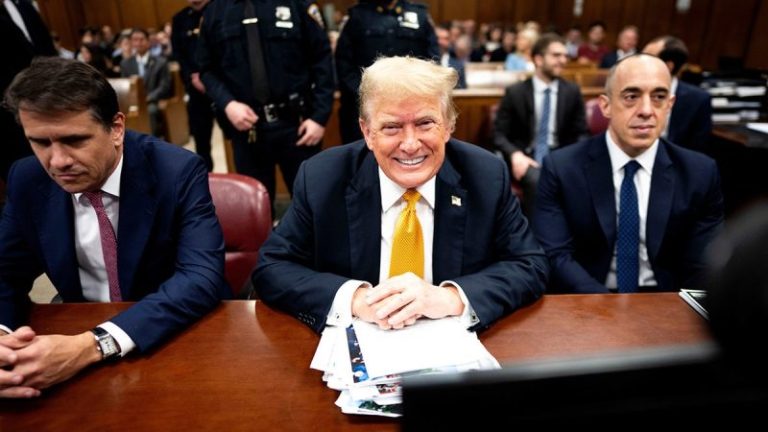
Blanche brought Bove into his private practice, where they tag-teamed Trump’s prosecutions, including by appearing by the president’s side during his six-week hush money trial in Manhattan last year. At the end of it, Trump was convicted by a jury of 34 counts of falsifying business records, marking the lone case out of Trump’s four to lead to a conviction.

Blanche said that behind the scenes, Bove was critical to their defense work and wrote the vast majority of their legal briefs.

In letters to the Senate, a group of Republican state attorneys general said Bove was courageous for representing Trump ‘when few other attorneys would step up.’ Attorney Gene Schaerr called Bove’s brief writing ‘superb.’ One of Bove’s past law firms said he was ’eminently qualified.’

Nearly three dozen retired law enforcement officials praised Bove as a ‘trusted and respected partner,’ saying he had a profound understanding of the Drug Enforcement Administration and was responsible for breaking apart transnational criminal networks.

‘His efforts have directly contributed to high-impact cases that have saved lives and protected vulnerable populations,’ the retired officials wrote. Others heaped similar praise.

The rosy picture that Blanche and Bove’s supporters paint is drastically different from the one presented by a handful of DOJ officials who left the department because of Bove and defense lawyers who observed him in action during his time as a New York prosecutor.

While Bove was serving as acting deputy attorney general ahead of Blanche’s confirmation in March, two top lawyers in the Manhattan U.S. attorney’s office and five officials in the DOJ’s Public Integrity Section chose to abruptly leave their jobs instead of complying with Bove’s order to drop New York Mayor Eric Adams’s federal corruption charges.

During the debacle, a judge dismissed the Democratic mayor’s charges with prejudice, instead of without prejudice as Bove had requested, meaning the Trump administration could not bring the case again.

The judge’s decision came after the ousted lawyers blasted Bove for engaging in a dishonest quid pro quo with the mayor. The chain of events left some conservative legal analysts harshly questioning the wisdom of Bove’s actions, saying it undermined the DOJ’s work.

Trump’s mass deportation plan involved the unprecedented move of invoking a wartime law called the Alien Enemies Act. Bove indicated during an internal meeting in March that he anticipated judges would attempt to shut down the operation, according to attorney Erez Reuveni.

Reuveni, a 15-year DOJ veteran who was fired after struggling to defend one of the Trump administration’s deportation during a Maryland court hearing, said in a whistleblower complaint published Tuesday that Bove shocked meeting attendees by telling them they would ‘need to consider telling the courts ‘f*** you’ and ignore any such court order.’

Reuveni said Bove’s remarks were far afield of anything he had heard at DOJ during his tenure there and that court defiance and misleading judges were a hallmark of the department during some of the most controversial immigration cases that arose in March.

DOJ attorneys have been admonished by judges for appearing to flout court orders, but they have, thus far, avoided being held in contempt of court and other sanctions.

Bove was known by some of his peers as a zealous prosecutor during his SDNY days, but defense lawyers were alarmed by his ruthlessness. Some viewed him as vicious, rude and power-hungry, according to interviews with attorneys and media reports.

One longtime defense lawyer who crossed paths with Bove in New York told Fox News Digital the nominee was an arrogant ‘bully’ and browbeat people.

In 2018, a band of defense lawyers said in emails reported by the Associated Press that Bove needed ‘adult supervision’ and could not ‘be bothered to treat lesser mortals with respect or empathy.’

A retired New York City FBI agent told the Associated Press that Bove’s perceived turnabout on Jan. 6 riot cases was ‘almost like Dr. Jekyll and Mr. Hyde.’ Bove showed no outward concerns while in New York when he helped with prosecuting the cases, the retired agent said.

When Bove stepped into his role at Trump’s DOJ, he warned the FBI in a formidable memo that leadership would take ‘personnel action’ against FBI agents who participated in Jan. 6 cases, which Trump ‘appropriately described as a ‘grave national injustice’ that has been perpetrated upon the American people,’ Bove wrote. The notion that thousands of employees who interacted in some way with a Jan. 6 case would see their jobs at risk prompted Bove to issue a follow-up note clarifying that employees who merely followed orders had no reason to worry.

An online petition launched by retired New York federal prosecutor Laurie Korenbaum has dozens of signatures as of this publishing and calls Bove’s nomination a ‘travesty.’

Senate Judiciary Committee Democrats have demanded more information on Bove’s time at SDNY, signaling they plan to grill Bove over it during the hearing.

Blanche told Fox News Digital the viewpoints surfacing in the media about Bove were ‘distorted.’

‘The misconception about him is completely driven by kind of a fear that if he takes the bench, he’s going to do something crazy, which he will not,’ Blanche said.
This post appeared first on FOX NEWS

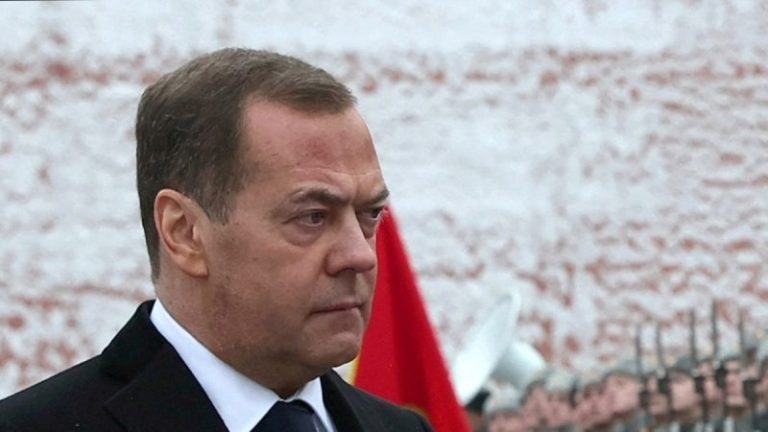
Former Russian President Dmitry Medvedev said that Moscow is not planning to supply Iran with nuclear warheads, after President Donald Trump mocked him for suggesting that other countries would step in and provide Iran with nuclear weapons after the U.S. strikes against Iranian nuclear facilities. 

Medvedev, now the deputy chairman of the Security Council of Russia, originally said Sunday that Iran would continue to advance its nuclear program and would receive assistance from other nations to do so.

Although Medvedev did not specify any countries, he clarified later Monday that he was not talking about Russia. 

‘I condemn the U.S. strike on Iran — it failed to achieve its objectives,’ Medvedev said in a Monday post on X. ‘However, Russia has no intention of supplying nuclear weapons to Iran because, unlike Israel, we are parties to the Nuclear Non-Proliferation Treaty.’

‘I know quite well what this would entail, having overseen our nuclear forces as president,’ Medvedev said. ‘But other countries might — and that’s what was said.’ 

Medvedev’s statement came after Trump called him out by name in a post on Truth Social following the Russian leader’s original Sunday remarks. 

‘Did I hear Former President Medvedev, from Russia, casually throwing around the ‘N word’ (Nuclear!), and saying that he and other Countries would supply Nuclear Warheads to Iran? Did he really say that or, is it just a figment of my imagination? If he did say that, and, if confirmed, please let me know, IMMEDIATELY. The ‘N word’ should not be treated so casually. I guess that’s why Putin’s ‘THE BOSS,’’ Trump said in a Monday Truth Social Post. 

Andrea Sticker, the deputy director of the Foundation for Defense of Democracies’ nonproliferation and biodefense program, chalked up Medvedev’s initial statement as an attempt to brag and said it was unrealistic for any country to provide such assistance to Iran. 

‘Medvedev’s original claim was likely bluster about Russia or another country supplying Iran with nuclear weapons,’ Stricker said in a Monday email to Fox News Digital. ‘No country, including Pakistan or North Korea, would supply atomic devices to Tehran because they would be held accountable by the United States if Iran used the weapons. Moscow and Pyongyang, at least from available open-source information, appear to be standing mostly idle as their ally Iran takes a major beating.’

The U.S. launched strikes late Saturday targeting key Iranian nuclear facilities, which involved more than 125 U.S. aircraft, Chairman of the Joint Chiefs of Staff Gen. Dan Caine told reporters Sunday. 

Trump announced early Tuesday that a ceasefire had gone into effect between Israel and Iran but scolded both countries hours later following accusations from both sides that the other had violated the agreement. 

Trump told reporters both Israel and Iran failed to follow the terms of the agreement, which he said is still in effect. 

‘I’m not happy with them. I’m not happy with Iran either but I’m really unhappy with Israel going out this morning,’ Trump said at the White House Tuesday morning. 

‘We basically have two countries that have been fighting so long and so hard that they don’t know what the f— they’re doing,’ he said. 

This post appeared first on FOX NEWS

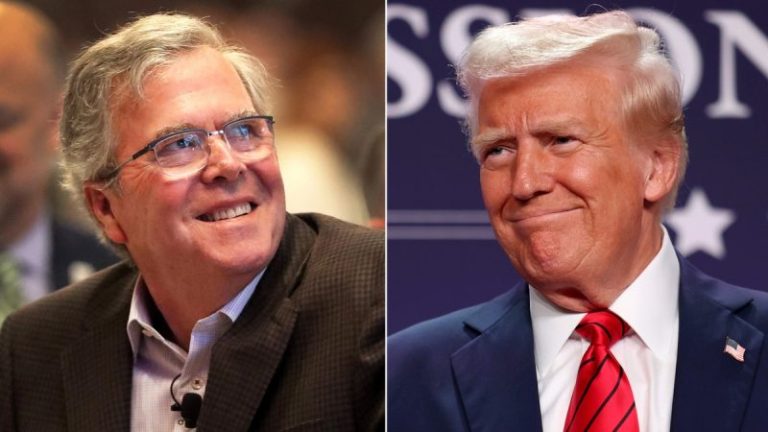
President Donald Trump thanked former Florida Gov. Jeb Bush after he praised the president’s decision to order strikes against the Islamic Republic of Iran.

‘Thank you to Jeb Bush — Very much appreciated!’ Trump declared in a Tuesday Truth Social post.

Bush, the chairman of the organization United Against Nuclear Iran, issued a statement with several others from the group hailing the president’s move.

‘We applaud President Trump and the United States for this decision—one of the most important of the 21st century,’ the statement declared, calling it ‘an act of courage, clarity, and historical necessity.’

‘President Trump’s decision to neutralize Iran’s regime’s nuclear program is a watershed moment—one that reasserts American strength, restores deterrence, and sends an unmistakable message to rogue regimes: the era of impunity is over. Where others delayed and wavered, President Trump acted,’ the statement asserted, in part.

Bush is the son of the late President George H.W. Bush, and the brother of former President George W. Bush.

The former Sunshine State governor was one of the Republicans who pursued the GOP presidential nomination during the 2016 election cycle, but he dropped out after failing to perform well in early GOP nominating contests.

Former U.S. Ambassador to the UN Nikki Haley and former Vice President Mike Pence are also among those who have expressed support for Trump’s move.

This post appeared first on FOX NEWS

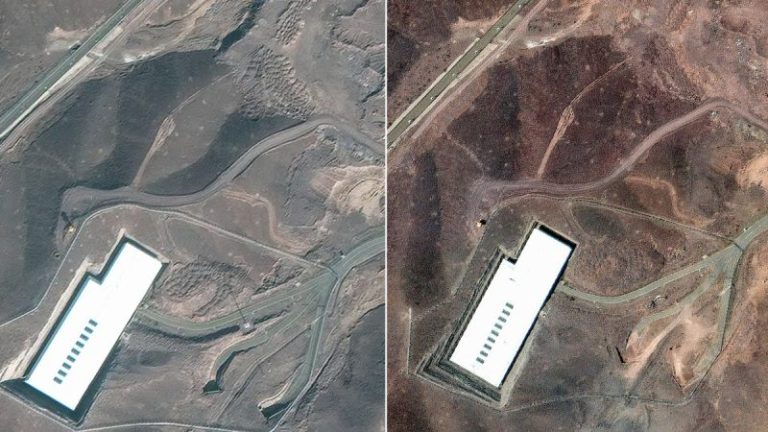
Fresh satellite imagery released by Maxar Technologies shows significant damage at three of Iran’s key nuclear sites, Fordow, Natanz, and Isfahan, just days after U.S. B-2 stealth bombers conducted strikes ordered by President Donald Trump.

The new photos, released on June 24, provide the clearest post-strike visuals to date, showing the precision and depth of the U.S. assault on Iran’s nuclear infrastructure.

At the heavily fortified Fordow Fuel Enrichment Facility, located deep beneath a mountain near Qom, satellite views reveal multiple craters along the primary access roads and directly at the entrances to tunnel complexes. 

Several perimeter buildings were destroyed outright, and one crater can be seen blasted into the access road leading to the facility.

The Isfahan Nuclear Technology Center also shows signs of recent damage. An overview image highlights new destruction at the surface, while detailed shots capture tunnel entrances that appear to have been struck directly, echoing earlier reporting that the operation aimed to neutralize buried infrastructure previously unreachable by conventional air power.

Meanwhile, at Natanz, a site known for its history with the Stuxnet cyberattack and long a target of Israeli and American scrutiny, two craters believed to have been caused by U.S. ordnance now appear filled and covered with dirt. 

These strikes had reportedly targeted the underground centrifuge halls that are central to Iran’s uranium enrichment operations.

IAEA Director General Rafael Grossi confirmed that key buildings and underground systems at all three sites were hit. 

American officials say Iran’s nuclear program has been severely set back.

Trump has claimed a ‘very successful’ mission.

In addition to the nuclear sites hit by the U.S., Maxar’s images also documented separate airstrike damage in the capital city of Tehran. 

The images show widespread destruction believed to be linked to suspected nuclear program buildings near Tehran’s Shahid Rajaee University.

Fox News’ Greg Norman contributed to this report.

This post appeared first on FOX NEWS

It’s a measure of President Trump’s success in bombing Iran’s key nuclear sites that even some of his harshest detractors are praising the risky endeavor.

The calculated deception – ‘I may do it, I may not do it’ – and dispatching of a decoy fleet of B-2 bombers were crucial to achieving the mission. 

Yes, the situation may look very different in six months, depending in part on the response of Russia and other allies of Iran, the world’s largest terror state. Just yesterday, Tehran launched ballistic missiles at the U.S. military base in Qatar, with no reported casualties. 

Still, Trump should avoid landing on any aircraft carriers with a ‘Mission Accomplished’ banner, a reminder of how George W. Bush’s premature celebration turned into the Iraq quagmire that cost more than 4,000 American lives.

Yes, a sizable chunk of the MAGA coalition was opposed to U.S. intervention after the original Israeli airstrikes on grounds that Trump had always vowed to keep this country out of faraway wars. Some of them are falling into line, as there’s a rally-round-the-president effect after military action – especially when it’s successful. 

Sure, Trump followed up by posting about the possibility of ‘regime change’ – this after JD Vance told ‘Meet the Press:’ ‘We’re not at war with Iran. We’re at war with Iran’s nuclear program.’

Maybe the Truth Social message was simply designed to boost pressure on Ayatollah Ali Khamenei – who could have been taken out – or maybe Trump is tempted by the W-era mentality of ‘we will be greeted as liberators.’ 

No one is quibbling with the deceptions, any more than Dwight Eisenhower was criticized for deploying dummy tanks and vehicles on D-Day to convince the Nazis that the 1944 attack would come at a different location rather than Normandy.

Bret Stephens, an anti-Trump conservative columnist at the New York Times, called the bombings ‘a courageous and correct decision that deserves respect, no matter how one feels about this president and the rest of his policies…Trump could have continued to outsource the dirty work of hitting Iran’s nuclear capabilities to Israel, hoping that it could at least buy the West some diplomatic leverage and breathing room.’

David Ignatius, not a fan of the president’s foreign policy, wrote in his Washington Post column that ‘Trump and his top advisers acted boldly to hit the prize targets in Iran’s nuclear program — at Fordow, Isfahan and Natanz — that remained after nine days of Israeli bombing. The operation was bigger and more comprehensive than even some Israelis had expected, and it showed that the U.S. military, even during the chaotic Trump presidency, still performs with unmatched power, precision and reach.’

But these are among the relatively few exceptions. By and large, liberals and Democrats denounced the president’s action, and conservatives and Republicans hailed it. 

And you know the reaction would have been reversed if Joe Biden was in office and had ordered the airstrikes. 

There’s a legitimate question about whether Trump should have sought approval from the Hill, but this Congress has largely ceded its role on foreign affairs (and on tariffs, for that matter). Besides, a floor debate would have been like sending up neon lights about the coming attack.

Sometimes a commander-in-chief has to attack unilaterally. When Barack Obama and Bill Clinton ordered military strikes without consulting Congress, almost nobody made a big issue of it.

The Times reports that Iran warned Qatar of the retaliatory attack, which was an obvious attempt to minimize casualties and render the half-dozen missiles largely symbolic (though not to the military personnel having to seek shelter). That amounted to a muted initial response by the Iranians, since any American deaths would clearly trigger a further escalation by the Trump military.

The United States is the only country with bunker-busting bombs, which enabled it to damage or destroy the underground uranium enrichment site buried under the Fordow site. The truth is that our experts don’t know how much damage was done far below the surface and may not for weeks.

But given that the U.S. completely controls Iranian airspace, thanks to the earlier Israeli strikes, Trump could order devastating new attacks at any time with virtually no fear of our planes being shot down. And the Iranians are acutely aware of that.

It was deception and misdirection that enabled the Pentagon to pull this off. When Trump said he would decide what to do in the next ‘two weeks’ – a stance echoed by Press Secretary Karoline Leavitt – he had already approved the military plan, subject to last-minute reservations. The attack began 30 hours later.  

When Trump dined with Steve Bannon, the most prominent opponent of the U.S. attacks, along with Tucker Carlson, some surmised he was changing his mind. The same was true when he went to a fundraising dinner at his Bedminster, N.J. golf club, and nothing seemed imminent.

When Fox’s Brian Kilmeade asked Leavitt yesterday about her boss’s regime change posting, she did not minimize it:

‘If the Iranian regime refuses to come to a peaceful diplomatic solution, which the president is still interested and engaging in, by the way, why shouldn’t the Iranian people take away the power of this incredibly violent regime that has been suppressing them for decades?’

Multiple media reports say Trump was angry with his director of national intelligence, Tulsi Gabbard, for testifying in March that the intelligence community believes that Iran is nowhere near building a nuclear weapon, and a video she made after visiting Hiroshima. She has tried to walk it back, but there is little question she has been partially sidelined.

The Washington Post yesterday reported having obtained the audio file of an Israeli intelligence operative’s June 13 call to a senior Iranian commander:

‘I can advise you now, you have 12 hours to escape with your wife and child. Otherwise, you’re on our list right now,’ the translation said. The operative suggested Israel could target the general and his family at any moment: ‘We’re closer to you than your own neck vein.’

There is no independent verification that the call was actually made.

I don’t use this word lightly, but Iran is an evil country. Anyone of a certain age recalls how the Iranians, in 1979 after the ouster of the Shah, held our embassy staffers hostage for 444 agonizing days.

The ruling theocracy also finances the terror groups Hezbollah and Hamas. In fact, if it had not been for Hamas’ spectacular miscalculation in mounting the barbaric massacre in Israel on Oct. 7 – which again included the seizing of civilian hostages – Gaza would not now be the wasteland it has become. Israel bears some responsibility for this, yet also knows that it would be the prime target if Iran succeeds in enriching weapons-grade uranium.

Finally, even if things go south, what happened on Sunday has in my view changed the way people look at Donald Trump. He rolled the dice in a high-stakes gamble. He’s not just a garden-variety isolationist. He doesn’t have to run again, but he managed to keep everything secret and pulled it off with the aid of our superb military. And that took guts.

This post appeared first on FOX NEWS

Trading resumes in:

Company: 1911 Gold Corporation

TSX-Venture Symbol: AUMB

All Issues: Yes

Resumption (ET): 8:00 AM 6/25/2025

CIRO can make a decision to impose a temporary suspension (halt) of trading in a security of a publicly-listed company. Trading halts are implemented to ensure a fair and orderly market. CIRO is the national self-regulatory organization which oversees all investment dealers and trading activity on debt and equity marketplaces in Canada .

SOURCE Canadian Investment Regulatory Organization (CIRO) – Halts/Resumptions

View original content: http://www.newswire.ca/en/releases/archive/June2025/24/c0974.html

News Provided by Canada Newswire via QuoteMedia

This post appeared first on investingnews.com

Toni McAllister is a prominent voice in Louisiana’s logging industry, but as she told Fox News Digital on Tuesday, she is also ‘a mom and a wife’ from a middle-class family.

She is one of four Americans from across the country invited by House GOP leaders to Capitol Hill to promote President Donald Trump’s ‘one big, beautiful bill.’

It is a vast piece of legislation aimed at advancing Trump’s priorities on taxes, immigration, energy, defense and the national debt – which is taking Herculean political maneuvering to pass.

On Tuesday, House Speaker Mike Johnson, R-La., and other leaders pivoted from promoting it themselves, instead inviting their four guests to talk about their support for the bill, and what is at stake if it does not pass by the end of this year.

‘I believe that our tax rates in Louisiana for small businesses will jump up to around 43.4%. I mean, that’s literally half of what we’re working for. So what will we be working for to pay taxes?’ McAllister told Fox News Digital.

She is the executive director of the Louisiana Logger’s Association, a trade group representing loggers in the Bayou State. In addition to that, however, McAllister said she was concerned about a tax hike for her family if the bill is not passed.

‘I’m just a regular middle-class family. And in Louisiana, the average tax hike would be around $1,300. That’s a month of groceries. That’s anything extra that we can do with our kids. $1,300 is a lot of money,’ she said.

Projections released by the House GOP show that under the lower chamber’s version of the bill, an average family could see an additional $1,300 in tax relief, while a failure to pass it could lead to a $1,700 tax hike.

Republicans are aiming to use the bill to extend Trump’s 2017 Tax Cuts and Jobs Act, as well as implement a host of new policies like eliminating taxes on tipped and overtime wages.

Retired Sheriff James Stuart said those latter measures, which Trump campaigned on in 2024, will be critical to law enforcement recruitment in Minnesota.

‘One of the most persistent struggles of agencies across the country is retention and recruitment. No tax on overtime will increase take-home pay for our peace offices, which will boost morale and ease burdens for them and their families,’ Stuart, who is also executive director of the Minnesota Sheriff’s Association, told Fox News Digital.

However, Paul Danos, the head of a family-owned offshore energy service company in Gray, Louisiana, told Fox News Digital that Republicans’ energy policies are also critical for his business.

‘If this bill doesn’t pass, then we find ourselves where we were in the last administration, with that lack of predictability around lease sales,’ Danos said.

‘Those multibillion-dollar investments that are creating jobs, that are providing safe and affordable energy here in the US, are jeopardized. We start having to depend on other nations for our oil and gas.’

That, he argued, would lead to higher prices for everyone.

Sam Palmeter, who leads engineering at Laser Marking Technologies, one of the last two laser technology companies owned and operated in America, said he and others in Michigan were ‘tired of brain drain,’ hoping Trump’s bill could reverse that and revitalize manufacturing in the region.

‘We won’t grow, and we won’t provide as many jobs in the industrial manufacturing and engineering space,’ Palmeter said.

‘And that’s sad, because there’s nothing that makes me more proud than hiring a local kid…So he’s working 13 miles from home. He doesn’t have to leave his family and everything to exercise that degree.’

It is not yet clear if their arguments or others in favor of Trump’s bill will have any effect, however. 

The legislation has been met with Republican critics in the House and Senate, while GOP leaders have styled it as the best possible path forward for a conservative policy overhaul while they control Congress and the White House.

While the dissent is coming from a relatively small number of Republicans, it could be enough to derail the legislation – both House and Senate GOP leaders are grappling with razor-thin margins of just a few votes.

Trump recently ordered lawmakers to remain in Washington, D.C., until the bill is passed – despite a planned recess next week for the Fourth of July holiday.

The bill passed the House by one vote last month, and a modified version is expected to get a Senate vote sometime this week. Both the House and Senate must pass identical products before they can be sent to Trump’s desk.

This post appeared first on FOX NEWS

Copper miners with productive assets have much to gain as supply and demand tighten.

In May 2024, the copper price hit a new all-time high of US$10,954 per metric ton (MT) on the London Metal Exchange and US$5.20 per pound on the COMEX on the back of increasing demand and growing supply concerns.

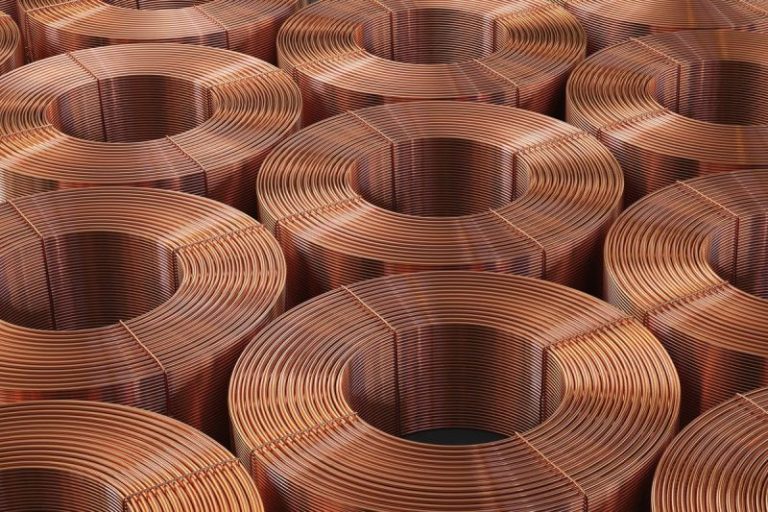
Copper is one of the most important resources for the energy transition. However, in recent years, demand for the red metal has outpaced mining supply. While construction and electrical grids have long been major markets for copper, today the rise in demand for electric vehicles, EV charging infrastructure and energy storage applications are emerging drivers of copper consumption.

Another trend driving future copper demand is the rapid urbanization in the Global South, as rural populations migrate to cities, putting pressure on electricity grids.

Due to the challenges associated with finding, developing, permitting and mining copper deposits, the higher demand is being met by slow growth of new supply. Mines that are in operation tend to be quite large and operate for decades as copper producers concentrate on mine expansions and brownfield projects aimed at extending mine lifetimes.

Given those factors, investors should keep an eye on the world’s top copper miners and their operations.

This list of the 10 largest copper-mining companies in the world is ranked by attributable copper production for 2024.

1. BHP (ASX:BHP,NYSE:BHP,LSE:BHP)

Copper production: 1.46 million metric tons

BHP is one of the world’s largest mining companies, and its global portfolio of assets includes significant copper mining operations in Chile, Australia and Peru.

According to the company’s quarterly operational review data, the mining giant reported consolidated copper production of 1.46 million metric tons across the calendar year 2024.

Its most significant copper asset is the Escondida mine, the world’s largest copper mine. BHP holds a 58 percent stake in the Chilean operation, which, according to MDO data, produced 2.04 billion pounds of copper in 2024. The company wholly owns the Pampa Norte operations in Chile, which produced 586 million pounds of copper in 2024.

BHP also owns the Olympic Dam polymetallic mine, the largest mine in Australia. The South Australian mine hosts one of the world’s largest copper deposits as well as the largest uranium deposit. In 2023, BHP expanded its portfolio in the state with its acquisition of OZ Minerals and its Prominent Hill and Carrapateena copper operations.

2. Codelco

Copper production: 1.44 million metric tons

The Chilean state-owned Codelco is the world’s third-largest producer with copper production of 1.44 million metric tons in 2024. According to its 2024 annual report, its copper output increased 1.2 percent from 1.42 million metric tons in 2023.

Its largest asset is the Chuquicamata mine located in Northern Chile, between 2017 and 2021 annual production was in the 700 million to 850 million pound range. However, lower grades in recent years have led to production falling below 600 million pounds. In 2024, Chuquicamata increased slightly to 637 million pounds.

The mine transitioned from an open pit to an underground mine beginning in 2019. In its report, the company stated that phase one of its continuity infrastructure project had reached 73 percent completion and that plans for the second phase were undergoing feasibility studies.

The company’s other significant Chilean mines include El Teniente, Quebrada Blanca and Andina.

3. Freeport-McMoRan (NYSE:FCX)

Copper production: 1.26 million metric tons

Freeport-McMoRan is consistently ranked among the world’s top copper producers, and its share of copper production from its mines totaled 1.26 million metric tons of copper in 2024. The company reported producing 4.21 billion pounds, or 1.9 million metric tons, of the red metal, calculated on a 100 percent basis for all operations except its Morenci joint venture.

The largest contributor to its output is the Grasberg copper-gold mine in Indonesia. The mine itself is a joint venture between Freeport and state-owned Indonesia Asahan Aluminum, with the entities holding interests of 48.76 percent and 51.24 percent respectively. According to MDO, copper output for the mine in 2024 totaled 1.8 billion pounds.

Grasberg has undergone a transition from an open pit to an underground block cave, and expansion work continues at the site. As of the close of 2024, the mine had 469 open drawbells.

Additionally, Freeport holds a 55 percent stake in the Cerro Verde copper-molybdenum complex in Peru. The mine routinely produces between 800 million and 1 billion pounds of copper and is expected to be in operation until 2052.

Its largest US based operation is its 72 percent owned Morenci mine in Arizona, which produced 700 million pounds in 2024. It also owns the Safford and Sierrita mines in the same state.

4. Glencore (LSE:GLEN,OTC Pink:GLCNF)

Copper production: 951,600 metric tons

Mining major Glencore’s copper production dipped by 6 percent in 2024 to 951,600 metric tons from the 1.01 million metric tons produced in 2023. The company’s 2024 annual report attributed the decline to lower planned production at its Antapaccay and Collahuasi mines due to factors including lower grades, water constraints and geotechnical challenges.

Located along Chile’s coast, Collahuasi is the company’s largest operation, a 44/44/12 joint operation between Glencore, Anglo American (LSE:AAL,OTCQX:NGLOD) and Japan’s Mitsui & Co. (OTC Pink:MITSF,TSE:8031). The mine produced 558,600 metric tons of copper in 2024.

The partners are working to build a large-scale desalination plant designed to help overcome water shortage issues. The plant reached 86 percent completion in 2024 and is expected to begin operating in 2026. Once open, it will provide 1,050 litres of desalinated water per second to the mine via a 194 kilometer pipeline.

Other significant copper-producing assets in the company’s portfolio include Antamina in Peru, Mount Isa in Australia and the Katanga Complex in the Democratic Republic of the Congo.

5. Southern Copper (NYSE:SCCO)

Copper production: 883,462 metric tons

A majority-owned, indirect subsidiary of Grupo Mexico (OTC Pink:GMBXF), Southern Copper recorded 883,462 metric tons of total copper production for 2024, a 6.9 percent increase over 2023. In the company’s 2024 results, the company attributed the increase to higher production across all operations, with a 10.7 percent increase from its Peruvian assets and a 4.3 percent increase from Mexican production.

The company operates major copper mines in Peru and Mexico and has exploration projects in Argentina, Chile, Ecuador, Mexico and Peru.

Its largest copper-producing asset is the Buenavista mine in Northern Mexico, which sits atop one of the world’s largest porphyry copper deposits. According to MDO, the site produces approximately 700 billion to 750 billion pounds of copper per year.

Its other copper operations include the Cuajone and Toquepala mines in Peru and the La Caridad mine in Mexico.

6. Anglo American (LSE:AAL,OTCQX:NGLOD)

Copper production: 772,700 metric tons

British miner Anglo American reported a 6.5 percent decrease in copper production to 772,700 metric tons from 826,200 metric tons in 2023.

The company attributed the decline to lower recovery and grades at the Collahuasi and Los Bronces operations in Chile, noting that the planned closure of the Los Bronces processing plant also impacted production. The company holds a 44 percent stake in Collahuasi and 50 percent in Los Bronces.

In addition to Collahuasi, the company also owns a 60 percent stake in the Quellaveco mine in Peru, with Mitsubishi owning the remaining 40 percent. The open pit mine started operating in 2022 and, according to MDO, produced 675 million pounds of copper in 2024.

It also owns a 50 percent stake in the El Soldado mine in Chile, which it operates in partnership with Mitsui, which holds a 30 percent stake, and Mitsubishi Materials (OTC Pink:MIMTF), which holds the remaining 20 percent. Data from MDO shows that the mine produced 48,200 metric tons of copper in 2024.

7. KGHM Polska Miedz (FWB:KGHA.F)

Copper production: 729,700 metric tons

Poland’s KGHM Polska Miedz Group has operations in Europe, North America and South America, and says that it controls over 40 million metric tons of copper ore resources worldwide. In 2024, KGHM produced 729,700 metric tons of copper, a slight increase from the 710,900 metric tons of copper produced in 2023.

According to MDO, KGHM’s largest operation is the Polkowice-Sieroszowice mine in Western Poland. The mine has been in operation since 1968 and produces approximately 430 million to 440 million pounds of copper annually.

The company’s Polish operations also include the Rudna mine, which produced 338 million pounds of copper last year, and the Lubin mine, which produced 156 million pounds.

Other options under the KGHM banner include the Robinson mine in Nevada, United States, and the 55 percent owned Sierra Gorda mine in Chile.

8. CMOC Group (OTC Pink:CMCLF,HKEX:3993)

Copper production: ~502,600 metric tons

CMOC Group is a new addition to the top 10 after its copper production jumped significantly in 2024, with its share of production from its joint venture copper-cobalt mines in the Democratic Republic of the Congo totaling approximately 502,600 metric tons. On a 100 percent basis, the company reported annual copper production of 650,161 metric tons.

The majority of CMOC’s copper production came from its Tenke Fungurume copper-cobalt mine, an 80/20 joint venture with the state-owned mining firm Gecamines. According to MDO data, the mine has experienced significant growth over the past few years, ramping up from 400 million pounds of copper in 2020 to 618 million pounds in 2023. In 2024, Tenke Fungurume’s copper production soared to 992 million pounds, or 450,138 metric tons.

Its other DRC mine is Kisanfu, a 71/24/5 joint venture with Chinese battery manufacturer Contemporary Amperex Technology (SZSE:300750) and the DRC government. The mine produced 200,013 metric tons of copper cathode in 2024, up substantially from 114,000 in 2023.

9. Antofagasta (LSE:ANTO)

Copper production: 448,800 metric tons

Antofagasta’s share of copper production from its four joint venture operations in Chile totaled 448,800 metric tons in 2024.

The company’s largest operation is its 60 percent owned Los Pelambres mine, a joint venture with Mitsubishi. According to MDO, Los Pelambres’ copper production totaled 320,000 metric tons in 2024, up from 300,000 the previous year.

Its Centinela mine is another significant producer, with 224,000 metric tons of copper mined in 2024. The company is constructing a second concentrator at Centinela that, once it comes online in 2027, should add 144,000 metric tons of copper production annually and extend Centinela’s mine life by 15 years to 2051.

The company’s other Chilean joint ventures are the Antucoya and Zaldivar mines.

10. Teck (TSX:TECK.A,TECK.B,NYSE:TECK)

Copper production: 358,910 metric tons

Rounding out the top 10 is Canada’s Teck, which increased consolidated copper production by 50 percent in 2024, reaching 446,000 metric tons. On an attributable basis, the copper company’s production totaled 358,910 metric tons in 2024.

Much of the gain came from the ramp-up of the Quebrada Blanca mine in Chile. The mine started production in 2023 and produced just 122 million pounds of copper that year. 2024 saw a significant advancement, with the mine producing 458 million pounds of the red metal.

Teck holds a 60 percent ownership stake in the mine, while Japan’s Sumitomo (OTC Pink:SSUMF,TSE:8053) controls a 30 percent stake and Chile’s state-run Codelco owns the final 10 percent.

Teck also owns the Highland Valley mine in British Columbia, Canada. The mine is one of the largest open pit mines in Canada and produced 226 million pounds of copper in 2024.

Other copper operations in the Teck portfolio include Antamina in Peru and Carmen de Andacollo in Chile.

Securities Disclosure: I, Dean Belder, hold no direct investment interest in any company mentioned in this article.

This post appeared first on investingnews.com

Rio Tinto (ASX:RIO,NYSE:RIO,LSE:RIO) and privately owned Hancock Prospecting said on Tuesday (June 24) that they will invest US$1.6 billion to develop the Hope Downs 2 iron ore project in Pilbara, Western Australia.

According to Rio Tinto, Hope Downs 2 has received all necessary approvals and is set to sustain production from the Hope Downs joint venture, in which Rio Tinto and Hancock are equal partners.

Each company will shell out US$0.8 billion for the project.

Hope Downs 2 holds the Hope Downs 2 and Bedded Hilltop deposits, which will have a combined total annual production capacity of 31 million tonnes.

“Approval of Hope Downs 2 is a key milestone for Rio Tinto, as we invest in the next generation of iron ore mines in the Pilbara,” said Rio Iron Ore Chief Executive Simon Trott in the company’s press release.

“These projects are part of our strategy to continue investing in Australian iron ore and to sustain Pilbara production for decades to come, supporting jobs, local businesses and the state and national economies.”

Pilbara is one of Australia’s key mining regions and has been critical to global steel supply for more than six decades.

The joint venture between Rio Tinto and Hancock was established in 2006. Production at Hope Downs 1 began in 2007.

In 2018, the joint venture opened Baby Hope, a new deposit at Hope Downs that was developed to help sustain existing capacity at the Hope 1 operation and support ongoing jobs at Hope Downs.

According to Rio Tinto, an average of 950 jobs will be created during construction of Hope Downs 2, and approximately 1,000 jobs will be sustained at Greater Hope Downs once operational.

The company expects to invest more than US$13 billion on new mines, plant and equipment from 2025 to 2027.

Rio Tinto and Hancock said ore from the new deposits will be processed at Hope Downs 1, with first ore expected and associated infrastructure planned to be operational by 2027.

Other Rio Tinto developments

Earlier this month, Rio Tinto opened the US$3.1 billion Western Range iron ore mine in Western Australia.

Western Range is a joint venture between Rio Tinto and China Baowu Group, a state-owned iron and steel Chinese company. The operation is projected to produce up to 25 million tonnes of iron ore annually.

Rio also recently announced a leadership shakeup after Chief Executive Jakob Stausholm stepped down.

Hancock to unite Roy Hill and Atlas Iron

In a separate development, Hancock said it is uniting its Roy Hill and Atlas Iron operations under a new banner called Hancock Iron Ore. The major operational realignment is set to take effect on July 1.

Executive Chair Gina Rinehart said that the world of iron ore is evolving, so Hancock follows.

“We are not just rebranding. We are building on the exceptional legacy and remarkable achievements of Roy Hill, Atlas Iron and Hancock,’ Australian Mining quotes her as saying.

Roy Hill is among Australia’s leading iron ore miners, delivering approximately 64 million tonnes annually to steelmaking markets in nearby Asia. Atlas Iron exports 10 million tonnes a year.

The latter was acquired by Hancock in 2018 and has since undergone ‘a successful operational turnaround.’

Hancock and Rinehart have a long history of investing in Australian iron ore and other commodities.

Securities Disclosure: I, Gabrielle de la Cruz, hold no direct investment interest in any company mentioned in this article.

This post appeared first on investingnews.com