Author

admin

Browsing

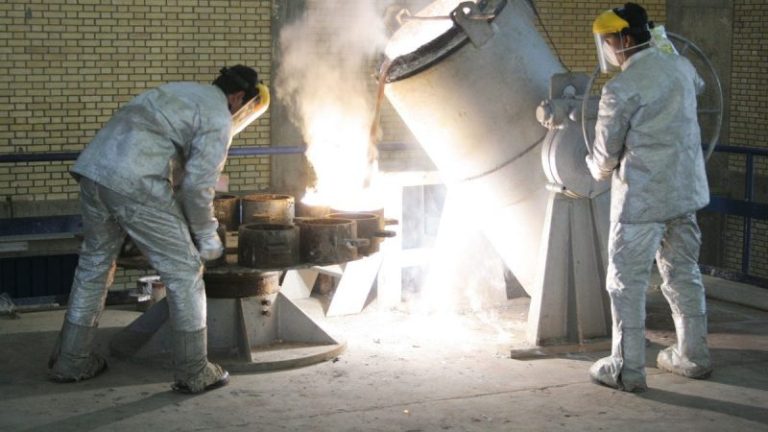
Iran on Monday confirmed it will not give up its nuclear enrichment program in an exclusive interview with Fox News’ Bret Baier and Iranian Foreign Minister Abbas Araghchi, set to air at 6 pm on Monday’s ‘Special Report.’ 

Araghchi confirmed that the U.S.’s top ambition in preventing Tehran from further developing a nuclear weapon by blocking all enrichment capabilities is unlikely to come to fruition, despite threats of intense international sanctions.

‘We cannot give up enrichment because it is an achievement of our own scientists. And now, more than that, it is a question of national pride,’ Araghchi said. ‘Our enrichment is so dear to us,’ he told Bret Baier, anchor and executive editor of Special Report, in a clip released before the full interview airs.

The foreign minister confirmed that the extent of the damage to its nuclear facilities caused by the U.S. strikes last month was ‘serious,’ but he would not comment on whether any enriched uranium survived the strikes.

‘Our facilities have been damaged – seriously damaged,’ Araghchi said. ‘The extent of which is now under evaluation by our atomic energy organization.

‘But as far as I know, they are seriously damaged,’ he added, noting that the damage has also currently ceased all enrichment capabilities for the time being. 

Iran has maintained that it was not seeking a nuclear weapon, but in the lead up to the Israeli and U.S. strikes, security experts were sounding the alarm that Tehran was likely capable of producing at least one nuclear weapon in a matter of days, and several warheads in a matter of weeks. 

While nuclear enrichment is a process needed for nations that also rely on nuclear power, Iran’s nuclear energy usage amounts to less than one percent of the nation’s energy consumption. 

The U.S. has suggested that given the low amounts of nuclear energy which Iran relies on, it should join a consortium that could potentially involve nations like the UAE and Saudi Arabia for its enriched uranium needs for civil nuclear power use. 

But Iran has repeatedly rejected this proposal, with Iranian Supreme Leader Ayatollah Ali Khamenei also referring to Tehran’s capabilities as a source of national pride just last month.

‘The number of countries in the world that have achieved a complete nuclear fuel cycle is perhaps fewer than the number of fingers on a person’s two hands,’ Khamenei said in early June. ‘We’re capable of producing nuclear fuel starting from the mine and all the way to the power plant.’

But Iran also faces immense international sanctions and even greater arms restrictions should it fail to reach a nuclear agreement by the end of August – though it is unclear if that agreement must include the U.S. or just European nations including France, Germany and the U.K., also referred to as the E3.

Iranian officials will not only be meeting with its top allies and chief adversaries to the West, Russia and China, on Tuesday, but Tehran is also set to hold talks on Friday with officials from the E3.

Washington and Tehran have yet to resume talks following the U.S. strikes last month.

This post appeared first on FOX NEWS

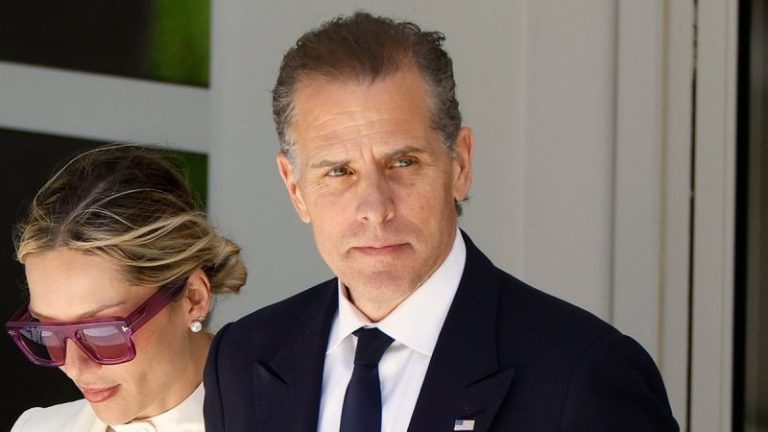
Former special counsel David Weiss got little support from the Department of Justice (DOJ) when he sought lawyers to help prosecute President Joe Biden’s son Hunter, Weiss told Congress during a recent closed-door interview.

Amid delicate plea deal negotiations between Hunter Biden and Weiss in 2023, Weiss said he asked the DOJ deputy attorney general’s office for a team of trial lawyers and received a single resume, according to a transcript of the interview reviewed by Fox News Digital.

‘Actually, as I think about the sequencing, I had started to reach out myself directly to offices or people that I knew and make my own inquiries,’ Weiss told House Judiciary Committee staff of his struggle to hire lawyers for the sensitive job of trying the president’s son.

Weiss appeared on Capitol Hill for the interview in June as part of the committee’s inquiry into the DOJ’s years-long investigation and prosecution of Hunter Biden.

Now no longer a DOJ employee, Weiss spoke candidly for hours with the committee, shedding new light on his interactions with the Biden DOJ and giving fresh insight into why Hunter Biden was never charged with certain violations.

Who is David Weiss?

Weiss was appointed U.S. attorney of Delaware during the first Trump administration and began investigating Hunter Biden at that time. Former Attorney General Merrick Garland made Weiss special counsel in August 2023 after a plea agreement with Hunter Biden fell apart.

Republicans had accused Weiss of offering Hunter Biden a ‘sweetheart’ plea deal that involved only misdemeanors. But in an unusual move, a judge rejected the deal, leading Weiss to instead bring two successful indictments against the then-first son, one for illegal gun possession and another for nine tax charges, including three felonies.

Weiss came under enormous scrutiny by Republicans and Democrats for his handling of the investigation, which had become a hyper-political national news story centered on the salacious behavior and wrongdoings of Hunter Biden, a recovering drug and alcohol addict, and allegations that Joe Biden was complicit in his son’s crimes.

Republicans claimed Weiss was not tough enough on Hunter Biden, while Democrats said he was being treated more harshly than a typical defendant because he was the president’s son. Joe Biden ultimately granted an unconditional pardon to his son, a move widely criticized by members of both parties.

Weiss gets ‘one resume’

Weiss said during the interview that he was ‘fortunate enough to obtain a couple very excellent prosecutors,’ a reference to the two DOJ attorneys who handled trial preparations for Hunter Biden.

But, Weiss also indicated that when he first requested lawyers in the spring of 2023, he had to be self-sufficient in finding them and that the deputy attorney general’s office was unhelpful. Weiss noted he did not deal directly with former Deputy Attorney General Lisa Monaco at all and assumed she was recused from Hunter Biden’s cases.

Weiss said that at one point he ran into the director of the Executive Office for United States Attorneys, which handles recruitment, at an event and asked if any hiring progress had been made.

Weiss did not ‘have a whole lot of success’ during that conversation, he said.

‘What do you mean, you didn’t have success? … They didn’t give you lawyers?’ a committee aide asked.

‘I got one resume,’ Weiss replied.

The aide asked, ‘Nobody wanted to come prosecute Hunter Biden?’

‘I don’t want to say that because I don’t know that they weren’t trying to find people,’ Weiss said. ‘All I know was I didn’t get a whole lot of resumes.’

Weiss eventually gained two attorneys, Leo Wise and Derek Hines, who went on to secure a conviction by a jury in Delaware after a week-long trial on gun possession charges and a guilty plea to all nine of Hunter Biden’s tax charges.

A committee aide pressed Weiss on why he felt there was ‘such a drought’ of help at DOJ headquarters.

‘As I said a moment ago … I did not receive a lot of resumes in response to my initial request,’ Weiss said, noting that eventually the DOJ’s Public Integrity Section assisted him.

Asked if the Public Integrity Section helped him because Weiss proactively reached out, Weiss replied, ‘Probably.’

Burisma tax years and FARA

For his testimony, the Trump DOJ gave Weiss permission in a letter to talk to Congress about Hunter Biden’s cases. The department noted, however, that it could not authorize Weiss to talk about the former first son’s confidential tax information.

Weiss suggested, though, that he would have charged Hunter Biden for the 2014 and 2015 tax years if he could have.

‘To the extent I can put together — and this is general — a case that involves more years than not and allows me to more fully develop allegations about a course of conduct and a scheme, that’s better for the prosecution,’ Weiss said. ‘So it’s not like I’m looking to cut out years generally when you’re pursuing a tax investigation.’

During the years in question, Hunter Biden was raking in $1 million per year as a board member of the Ukrainian energy company Burisma while his father, then vice president, was overseeing foreign policy with Ukraine. The scenario became ripe for questions about conflicts of interest, in part because of suspicious interactions between Hunter Biden and the Obama State Department.

In Weiss’s final special counsel report, he dodged explaining why he brought charges of failure to pay taxes and tax evasion against Hunter Biden only for the tax years after 2015, citing Joe Biden’s pardon. Now, Weiss said, he would be more willing to talk about it if he were legally allowed to do so.

Chairman Jim Jordan, R-Ohio, pressed Weiss, saying the ‘political aspects of Burisma’ raised ‘glaring’ questions about the prosecutorial decisions made for the years for which Hunter Biden avoided charges.

‘I understand,’ Weiss replied. ‘Absolutely. Yes. And I wish that I could address it. But it’s my understanding that, for me to trip into 2014 and ’15 is a violation of [U.S. code].’

Weiss also told the committee his team had no serious discussions about charging Hunter Biden under a foreign lobby law called the Foreign Agents Registration Act.

‘We just couldn’t put together a sufficient case,’ Weiss said.

This post appeared first on FOX NEWS

The Trump administration announced Tuesday that the United States will exit the United Nations Educational, Scientific and Cultural Organization (UNESCO).

‘President Donald Trump has decided to withdraw the United States from UNESCO – which supports woke, divisive cultural and social causes that are totally out-of-step with the commonsense policies that Americans voted for in November. This president will always put America First and ensure our country’s membership in all international organizations aligns with our national interests,’ White House Deputy Spokesperson Anna Kelly said on Tuesday.

‘The U.S. continues to demonstrate moral clarity in the international arena and when it comes to its involvement and financial investments in international organizations, and makes it clear that it is unwilling to support entities that promote hatred, historical revisionism, and political divisiveness over advancing shared universal values,’ Israeli U.N. Ambassador Danny Danon said in a statement.

Israeli Minister of Foreign Affairs Gideon Sa’ar also commended the decision, which he said ‘is a necessary step, designed to promote justice and Israel’s right to fair treatment in the U.N. system, a right which has often been trampled due to politicization in this arena.’

‘Singling out Israel and politicization by member states must end, in this and all professional U.N. agencies,’ Sa’ar added.

The move comes as the administration continues to make waves in the international community, and in particular at the U.N. The U.S.- and Israel-backed Gaza Humanitarian Foundation has drawn the ire of the U.N. and other international bodies. 

Additionally, Secretary-General António Guterres has expressed his concerns about the Trump administration’s foreign aid cuts, which he said would be ‘especially devastating’ to the world’s vulnerable populations, according to Reuters.

State Department Spokesperson Tammy Bruce said in a statement on the exit that ‘continued involvement with UNESCO is not in the national interest of the United States.’

‘UNESCO works to advance divisive social and cultural causes and maintains an outsized focus on the U.N.’s Sustainable Development Goals, a globalist, ideological agenda for international development at odds with our America First foreign policy,’ the statement read. ‘UNESCO’s decision to admit the ‘State of Palestine’ as a Member State is highly problematic, contrary to U.S. policy, and contributed to the proliferation of anti-Israel rhetoric within the organization.’

Trump withdrew the U.S. from UNESCO in October 2017, during his first term, but former President Joe Biden had the country rejoin the agency in 2023. In 2017, the State Department said the U.S. was withdrawing from the agency for very similar reasons, suggesting UNESCO has not sufficiently fixed the issues at the center of the Trump administration’s concerns.

This post appeared first on FOX NEWS
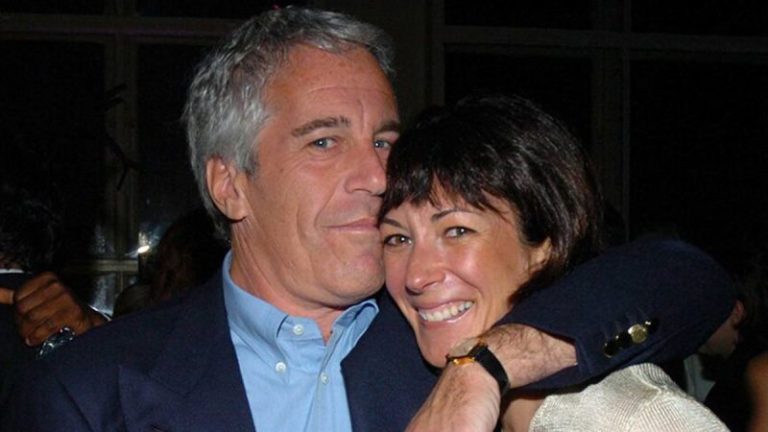
The Department of Justice signaled a shift in its approach to the Jeffrey Epstein investigation, with Deputy Attorney General Todd Blanche revealing that he has reached out to Ghislaine Maxwell to gauge her willingness to cooperate with prosecutors.

Blanche confirmed Tuesday that, under the direction of Attorney General Pam Bondi, the DOJ is now open to hearing what Maxwell might have to offer regarding uncharged individuals who may have participated in Epstein’s criminal enterprise.

‘This Department of Justice does not shy away from uncomfortable truths, nor from the responsibility to pursue justice wherever the facts may lead,’ Blanche said in a post on X Tuesday.

Blanche reaffirmed the July 6 joint statement issued by the DOJ and FBI, which concluded that a thorough review of FBI files related to the Epstein case uncovered no new evidence to support charges against additional parties. 

‘Namely, that in the recent thorough review of the files maintained by the FBI in the Epstein case, no evidence was uncovered that could predicate an investigation against uncharged third parties,’ Blanche wrote.

That memo, which was signed by FBI Director Kash Patel and Deputy Director Dan Bongino, sparked controversy after President Donald Trump, Bondi and FBI leaders repeatedly said they would release all documents related to Epstein.

Sources told Fox News that Bongino, who signed off on the memo, complained about it in private following public backlash.

The new outreach to Maxwell is in the hopes that Epstein’s convicted accomplice ‘has information about anyone who has committed crime against victims,’ Blanche said.

‘President Trump has told us to release all credible evidence…’ he wrote. ‘Therefore, at the direction of Attorney General Bondi, I have communicated with counsel for Ms. Maxwell to determine whether she would be willing to speak with prosecutors from the Department.’

The new outreach to Maxwell marks the first time, according to Blanche, that any administration has approached her legal team with an inquiry into potential cooperation. 

‘That changes now,’ Blanche emphasized.

Blanche said he ‘anticipates meeting with Ms. Maxwell in the coming days.’

David Oscar Markus, Maxwell’s attorney, confirmed to Fox News that they are ‘in discussions with the government and that Ghislaine will always testify truthfully.’

‘We are grateful to President Trump for his commitment to uncovering the truth in this case,’ he said.

Patel responded succinctly to Blanche’s statement, writing on X Tuesday: ‘Get it.’

Maxwell was convicted in 2021 of helping Epstein traffic teen girls. She was sentenced to 20 years in prison and has appealed her case to the U.S. Supreme Court.

According to prosecutors’ and survivor’s testimony, Maxwell helped recruit and groom underage girls, arrange travel and housing, as well as facilitate abuse at properties owned by Epstein.

Victims described Maxwell as a trusted adult figure who manipulated and coerced them into sexual encounters with Epstein and others.

Fox News Digital has reached out to the DOJ and the FBI for comment.

This post appeared first on FOX NEWS
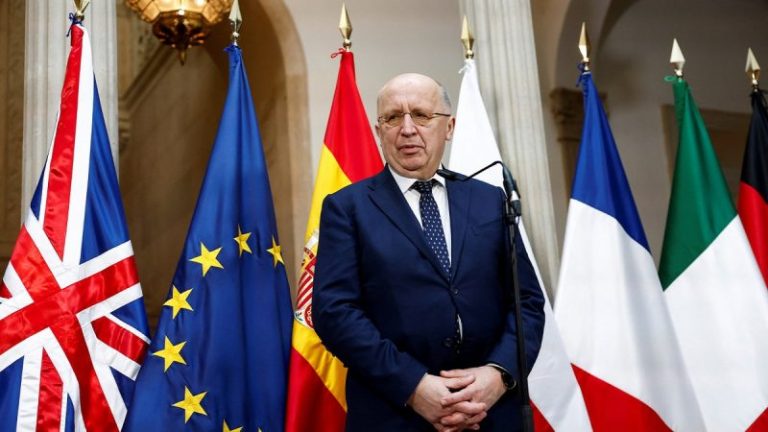
The European Union’s first-ever defense commissioner has issued a stark warning: the world’s ‘most dangerous moment’ could arrive as soon as 2027, when Russia and China may coordinate aggressive moves designed to overwhelm Western defenses.

Andrius Kubilius, the EU’s commissioner for defense and space, echoed recent remarks by U.S. Air Force Gen. Alexus Grynkewich, NATO’s top commander for air operations. Both officials highlighted 2027 as a potential flashpoint year when simultaneous military actions by Moscow and Beijing could stretch the transatlantic alliance to its limits.

‘The most dangerous moment can be in 2027, when both Russia and China will make these aggressive moves in a coordinated way,’ Kubilius told reporters during a briefing in Washington.

Grynkewich had warned last week that the United States and its European allies must be prepared to fight two wars simultaneously – one in Europe, should Russian President Vladimir Putin escalate in Ukraine or Eastern Europe, and another in the Pacific if Chinese President Xi Jinping launches an invasion of Taiwan.

‘We’re going to need every bit of kit and equipment and munitions that we can in order to beat that,’ Grynkewich said.

In a speech later Monday evening, Kubilius said the U.S. has the ‘right and reason’ to turn its focus to China.

‘We are recognizing that you, Americans, have really the right and the reason in the longer-term perspective to start to shift more and more toward the Indo-Pacific in order to mitigate Chinese rising military power,’ he said.

‘We Europeans need to ramp up our defense capabilities,’ the former Lithuanian prime minister said, adding: ‘That is what we are doing.’

Their warnings align with growing concerns across the U.S. defense establishment over what is often referred to as the ‘Davidson Window’ – a term coined by former Indo-Pacific Command chief Adm. Philip Davidson, who testified before Congress in 2021 that China could attempt to forcibly reunify with Taiwan by 2027. The assessment has since become a widely cited benchmark for military planners preparing for a potential crisis in the Indo-Pacific.

The 2027 window has taken on added urgency as China rapidly accelerates its military modernization program, aiming to achieve what Xi Jinping has called ‘world-class’ warfighting capabilities by the People’s Liberation Army’s centennial in 2027. U.S. and NATO officials also fear that Russia, despite sustaining major losses in Ukraine, could reconstitute and redirect its forces toward renewed aggression in Eastern Europe by that same timeframe – placing strategic pressure on two fronts simultaneously.

Kubilius traveled to Washington to assess potential shortfalls in European defense capabilities as the U.S. increasingly pivots its strategic attention toward the Indo-Pacific. He said EU member states are actively preparing for a shift in the American military posture on the continent.

As of 2025, more than 80,000 U.S. troops are stationed in Europe – a presence widely expected to decline in the coming years as the Pentagon presses its European allies to assume greater responsibility for their own defense.

‘We are preparing ourselves to take responsibility on our shoulders,’ Kubilius said. ‘We don’t know what Americans will decide.’

Kubilius emphasized that Europe must not only fund its own defense but also build it. He noted that the EU has reduced its reliance on U.S.-made weapons from 60% of total imports to 40%, and hopes to lower that dependency further through increased domestic production.

As defense commissioner, Kubilius is tasked with implementing an $840 billion framework to ‘Re-Arm Europe,’ including a €150 billion loan facility available to member states for building out their armed forces and industrial capacities.

Separately, NATO leaders at last month’s summit in Washington agreed to a sweeping pledge to increase defense spending – raising the benchmark from 2% of GDP to 5% for member countries, a historic shift in alliance posture amid growing global instability.

Adding to the sense of urgency, President Donald Trump announced that the United States would offer advanced weapons systems to Ukraine – on the condition that European partners cover the cost. Western defense ministers convened on Monday to discuss the proposed financing mechanism.

‘We’re going to be sending Patriots to NATO and then NATO will distribute that,’ Trump said last week, referring to the high-value air defense systems that Kyiv has long sought.

Kubilius declined to elaborate on which other weapons may be included in the package, but underscored the critical importance of maintaining unwavering support for Ukraine’s defense against Russia’s full-scale invasion.

‘China is watching,’ he said. ‘China will be able to make a conclusion that if the West is weak in Ukraine, then we can expect aggressive behavior from China against anyone.’

This post appeared first on FOX NEWS
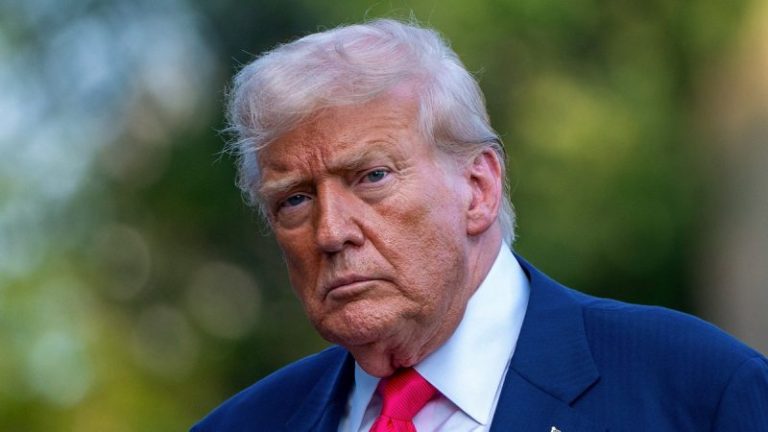
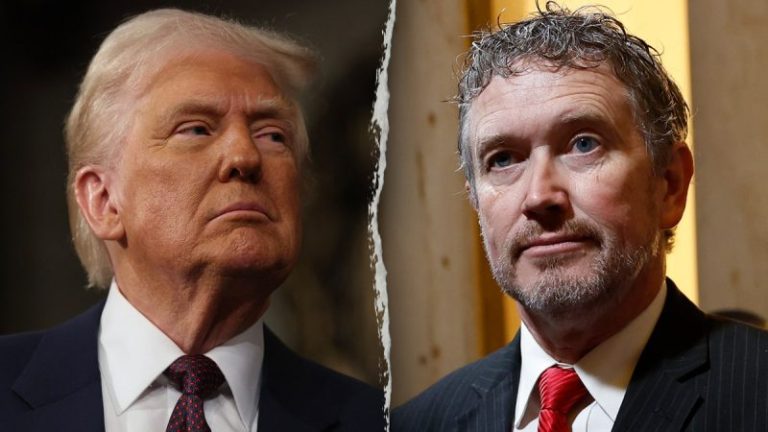
President Donald Trump slammed Rep. Thomas Massie, R-Ky., calling the lawmaker ‘the worst Republican Congressman’ in a Monday night Truth Social post, while noting that he is seeking a challenger he can support against the incumbent lawmaker.

‘Thomas Massie, the worst Republican Congressman, and an almost guaranteed NO VOTE each and every time, is an Embarrassment to Kentucky. He’s lazy, slow moving, and totally disingenuous – A real loser! Never has anything positive to add. Looking for someone good to run against this guy, someone I can Endorse and vigorously campaign for!’ Trump declared in the post.

The president’s post linked to a video by MAGA KY targeting the congressman for ouster. ‘Let’s fire Thomas Massie,’ the voiceover declares.

Fox News Digital reached out to Massie early on Tuesday morning, but did not receive a response by the time of publication.

Massie, a fiscal hawk, voted against passage of the Trump-backed One Big Beautiful Bill Act.

Trump has been a vociferous critic of the congressman.

In a Truth Social post last month, the president asserted that Massie ‘is not MAGA,’ and declared, ‘we will have a wonderful American Patriot running against him in the Republican Primary, and I’ll be out in Kentucky campaigning really hard.’

Billionaire business tycoon Elon Musk has indicated that he will donate to support Massie’s re-election bid.

This post appeared first on FOX NEWS
 

TSXV: DMCU,OTC:DMCUF; OTCQB: DMCUF; FSE: 03E) announces that its common shares have started trading on the OTCQB marketplace, a U.S. marketplace operated by OTC Markets Group Inc., as of the opening of markets today. Domestic was previously trading on the OTCID marketplace and will retain its trading symbol of DMCUF on the OTCQB. The Company’s common shares will continue to trade on the TSX Venture Exchange under the symbol DMCU and on the Frankfurt Stock Exchange under the symbol 03E.


The OTCQB Venture Market provides an established platform for early-stage and growth companies to enhance their visibility in the U.S. market. Companies listed on OTCQB must meet rigorous reporting standards, undergo annual verification, and comply with management certification requirements, providing investors with a trusted market for trading. Real-time quotes and market information on Domestic can be found at www.otcmarkets.com .


Patricio Varas, Chairman and CEO of Domestic Metals, stated: ‘The Company believes that with the current needs in the United States for critical minerals and in particular the shortage of domestic internal production of copper coupled with new tariffs on copper imports, it is an opportune time for Domestic to enhance the Company’s exposure to the vast USA investor base, which this up-listing provides. Mr. Varas further stated that: ‎‎’The State of Montana is an excellent mining jurisdiction to explore for copper and the Smart Creek Project has key attractive exploration characteristics, including, a large copper and gold endowed footprint, alluring previous drilling data, including an intercept of 109 meters of 0.75% copper, which support the Project’s potential to host a major bulk mineable orebody that warrants commensurate exploration investment.’


Domestic’s technical team is launching a Geological Mapping program and follow up geophysical surveys in preparation for a third quarter drilling campaign to test multiple copper porphyry and CRD targets.


  About Domestic Metals Corp.  


 Domestic Metals Corp. is a mineral exploration company focused on the discovery of large-scale, copper and gold deposits in exceptional, historical mining project areas in the Americas.


The Company aims to discover new economic mineral deposits in historical mining districts that have seen exploration in geologically attractive mining jurisdictions, where economically favorable grades have been indicated by historic drilling and outcrop sampling.


The Smart Creek Project is strategically located in the mining-friendly state of Montana, containing widespread copper mineralization at surface and hosts 4 attractive porphyry copper, epithermal gold, replacement and exotic copper exploration targets with excellent host rocks for mineral deposition.


 Domestic Metals Corp. is led by an experienced management team and an accomplished technical team, with successful track records in mine discovery, mining development and financing.


Follow us on:


   X:    https://x.com/domestic_metals  
  Facebook:    https://www.facebook.com/domesticmetals  
  LinkedIn:    https://www.linkedin.com/company/domestic-metals-corp/  
  Instagram:    @domesticmetals  


  On behalf of Domestic Metals Corp.  


Patricio Varas, Chairman and CEO
(604) 831-9306


For more information on Domestic Metals, please contact:


Patricio Varas, Phone: 604-831-9306 or Michael Pound, Phone: 604-363-2885.


Please visit the Company website at www.domesticmetals.com or contact us at info@domesticmetals.com .


For all investor relations inquiries, please contact:
John Liviakis, Liviakis Financial Communications Inc., Phone: 415-389-4670.


  Neither TSX Venture Exchange nor its Regulation Services Provider (as that term is defined in the policies of the TSX Venture Exchange) accepts responsibility for the adequacy or accuracy of this release.  


  Cautionary Note Regarding Forward-Looking Statements  


This news release contains certain statements that may be deemed ‘forward-looking statements’. Forward-looking statements are statements that are not historical facts and are generally, but not always, identified by the words ‘expects’, ‘plans’, ‘anticipates’, ‘believes’, ‘intends’, ‘estimates’, ‘projects’, ‘potential’ and similar expressions, or that events or conditions ‘will’, ‘would’, ‘may’, ‘could’ or ‘should’ occur. Forward-looking statements may include, without limitation, statements relating to the Company’s continued stock exchange listings and the planned exploration activities on properties. Although the Company believes the expectations expressed in such forward-looking statements are based on reasonable assumptions, such statements are not guarantees of future performance, are subject to risks and uncertainties, and actual results or realities may differ materially from those in the forward-looking statements. Such material risks and uncertainties include, but are not limited to: competition within the industry; actual results of current exploration activities; environmental risks; changes in project parameters as plans continue to be refined; future price of commodities; failure of equipment or processes to operate as anticipated; accidents, and other risks of the mining industry; delays in obtaining approvals or financing; risks related to indebtedness and the service of such indebtedness; as well as those factors, risks and uncertainties identified and reported in the Company’s public filings under the Company’s SEDAR+ profile at www.sedarplus.ca . Although the Company has attempted to identify important factors that could cause actual actions, events or results to differ materially from those described in forward-looking information, there may be other factors that cause actions, events or results not to be as anticipated, estimated or intended. Accordingly, readers should not place undue reliance on forward-looking statements. There can be no assurance that such information will prove to be accurate as actual results and future events could differ materially from those anticipated in such statements. Forward-looking statements are made as of the date hereof and, accordingly, are subject to change after such date. The Company disclaims any intention or obligation to update or revise any forward-looking information, whether as a result of new information, future events or otherwise unless required by law.


News Provided by GlobeNewswire via QuoteMedia

This post appeared first on investingnews.com


(TheNewswire)


Vancouver, BC TheNewswire – July 21, 2025 – Element79 Gold Corp. (CSE: ELEM,OTC:ELMGF | FSE: 7YS0 | OTCQB: ELMGF) (‘Element79 Gold’ or the ‘Company’) is pleased to announce the appointment of Michael Smith as Vice President, Corporate Development, engaged under contract to support the Company’s renewed growth trajectory and strategic capital markets initiatives.


Mr. Smith brings over 15 years of diverse business leadership experience across business development, capital raising, public company operations, and investor relations. He has held executive and board-level roles with several CSE-listed companies and is the Founder of Lions Bridge Capital, a boutique advisory firm supporting startups and growth-stage businesses. His expertise spans capital raising, mergers and acquisitions, regulatory compliance, and corporate messaging—skills directly aligned with Element79 Gold’s objectives as it accelerates exploration and development across its Nevada portfolio, including the Gold Mountain and Elephant projects.


‘Michael brings the energy and market perspective that are critical as we transition into this next phase of strategic execution,’ said James Tworek, CEO of Element79 Gold. ‘His capital markets experience and ability to connect with investors will be instrumental in unlocking the value of our core projects in Nevada, as well as while the picture for advancing our Lucero project becomes more clear.’


‘Element79 Gold is at a pivotal point in its growth story, with outstanding assets in Nevada that are ready for the market’s attention,’ said Michael Smith. ‘I’m excited to bring my network and capital markets experience to help shape the next chapter of the Company’s journey.’


The Company’s website at   www.element79.gold   is under development to reflect the current portfolio and evolving team.


  About Element79 Gold Corp.  


 Element79 Gold Corp is a mining company focused on gold and silver exploration, with a portfolio of assets in Nevada and Peru. The Company is actively advancing its Elephant project in the Battle Mountain trend of Nevada, acquiring the drill-ready Gold Mountain project in Battle Mountain, Nevada, and holds an option to purchase the high-grade Lucero mine in southern Peru.  Element79 Gold has completed the transfer of its Dale Property in Ontario to its wholly owned subsidiary, Synergy Metals Corp., and is progressing through the Plan of Arrangement spin-out process.  Element79 Gold is listed on the Canadian Securities Exchange (CSE: ELEM,OTC:ELMGF), the Frankfurt Stock Exchange (FSE: 7YS0), and the OTC Markets (OTC: ELMGF).


Investor Relations Contact:


Investor Relations Department
Email:   investors@element79.gold   
Phone: +1.604.319.6953


Corporate Contact:


James C. Tworek, Chief Executive Officer and Director
Email:   jt@element79.gold   


Copyright (c) 2025 TheNewswire – All rights reserved.


News Provided by TheNewsWire via QuoteMedia

This post appeared first on investingnews.com

The second quarter of 2025 brought more downward pressure for lithium prices, as values for lithium carbonate continued to contract, slipping to their lowest level since January 2021.

After starting the year at US$10,484.37 per metric ton, battery-grade lithium carbonate rose to a year-to-date high of US$10,853.85 on January 27. Prices sank through Q1 and most of Q2, bottoming at US$8,329.08 on June 24.

Lithium hydroxide followed a similar trajectory, with Fastmarkets analysts noting an 89 percent drop in prices for battery-grade lithium hydroxide monohydrate between 2022 and 2025.

“The lithium industry is definitely navigating a period of complexity,” said Paul Lusty, head of battery raw materials at Fastmarkets, at Fastmarkets’ Lithium Supply & Battery Raw Materials conference in June.

“We’re facing headwinds, no doubt, and we’re also seeing quite a lot of negative or bearish sentiment widespread in the market, and I think at times, it’s amplified by voices that really overlooked the phenomenal levels of demand that we’re seeing in many aspects of the market.”

However, Lusty explained that despite facing a multi-quarter price slump, lithium’s long-term drivers remain robust, and are primarily driven by what he described as “mega trends.”

“The fundamentals are really still very strong, and these are anchored in some very powerful, mega trends that we see developing within the global economy; the urgent drive for climate change mitigation, the once in a generational shift in the global energy system, and also the rise of energy intensive technologies such as artificial intelligence,” he said.

Chinese expansions behind lithium oversupply

Although the long-term outlook for lithium remains positive, oversupply and market saturation have added headwinds during the first half of 2025. Demand, particularly from the electric vehicle (EV) sector, remains strong, but global lithium mine supply has outpaced it, rising by an estimated 22 percent in 2024 alone.

“We’re forecasting similar year on year increases for both 2025 and 2026 equivalent to around 260,000 tons of additional (lithium carbonate) alone just this year,” explained Fastmarkets’ Lusty.

“Chinese producers have been particularly aggressive in terms of expanding capacity.” Australia, Argentina and Chile are also driving growth alongside emerging producers like Brazil, and several African nations.

According to data from the US Geological Survey, mined supply from China increased 14.85 percent from 35,700 metric tons in 2023 to 41,000 in 2024, however an asterisk notes that the tallies are estimates, and exact numbers may be “withheld to avoid disclosing company proprietary data.”

For Fastmarkets, the total is likely higher.

“China has rapidly expanded its mining footprint, boosting domestic lithium output by 55 percent since 2023 and is on track to surpass Australia as the world’s top producer by 2026,’ said Lusty. “One of the most notable developments has been the rise of African supply that we started to see over the last two years,” said Lusty.

Africa’s emerging role in the lithium sector

The importance of African supply to the future lithium market was also the topic at Claudia Cook’s presentation, ‘The Lithium Market Shift: China’s and Africa’s Role in Redefining Supply.’

During the 20 minute overview Cook explained that China is increasingly looking to African hard-rock lithium supply to provide feedstock for the country’s growing chemical segment.

So much so that by 2030 18 percent of global hard-rock lithium supply will originate from the continent.

Additionally, the continent will see a 170 percent uptick in hard-rock lithium supply output between 2025 and 2035, according to Cook, who attributes the massive expansion to China’s need to diversify its lithium sources due to domestic supply constraints. To facilitate this demand, China has invested heavily in African production.

“In 2025, 79 percent of African output will be China owned,” she said. “That percentage reduces down to 65 percent in 2035 however, with the increase in tonnage, even though there’s a reduction in percentage, there’ll be an almost doubling in terms of how much that’s actually being put out.”

Regionally, Cook pointed to Zimbabwe and Mali as the country’s poised to see the most growth.

In 2025, Zimbabwe alone is expected to account for 70 percent of African lithium supply, though its share is projected to fall to 43 percent by 2035 as new countries come online.

Despite that shift, African output overall is set to rise significantly, with nations like the DRC, Ethiopia, and Namibia expected to begin production by 2035, said Cook.

Lithium demand surges, but prices lag

The rapid increase in supply has pushed prices to multi year lows, levels that are unsustainable and fail to incentivize new production. Despite this demand remains strong and is expected to grow.

According to the US Geological Survey, global consumption of lithium in 2024 was estimated to be 220,000 tons, a 29 percent increase from revised consumption of 170,000 tons in 2023.

Much of the demand story is attributed to soaring global EV sales, which were up 35 percent in Q1. Lithium consumption in this segment is projected to grow 12 percent annually through 2030.

“Globally, electric car sales this year are forecast to surpass about 20 million units in 2025 representing more than a quarter of all cars sold,” said Lusty.

Future lithium demand remains underpinned by deep structural shifts in global energy consumption.

“We’re witnessing extraordinary battery demand tied to the electrification of the global economy and the rise of renewable energy,” said Lustyt, pointing to surging electricity needs and the increasing role of storage solutions.

In 2024, global electricity demand rose by over 4 percent, adding 1,100 terawatt-hours to the grid, more than Japan’s total annual consumption. This marks the largest year-on-year increase outside post-recession rebounds and reflects broad trends such as greater electricity access, the proliferation of energy-intensive appliances, the expansion of artificial intelligence and data centers, and the shift to electric-powered heavy manufacturing.

Notably, 95 percent of future demand growth is expected to be met by renewables like solar and wind, further boosting the need for battery energy storage systems (BESS) to manage intermittency and stabilize grids.

“Batteries are now essential — not just for EVs, but to balance power systems across sectors,” Lusty added.

Data centers, in particular, are becoming a key growth driver. Since 2017, their electricity use has grown 12 percent annually, according to Fastmarkets, with the US seeing half its centers concentrated in five regional hubs.

By 2030, BESS demand from data centers alone could represent a third of the market, with a projected compound annual growth rate of 35 percent over the next five years.

Overall, lithium demand is forecast to grow 12 percent annually through 2030, underpinned by EV adoption, renewable integration, and digitalization. While China currently accounts for 60 percent of global demand, that dominance is expected to wane as other regions scale up.

“The long-term fundamentals remain intact,” he said, “and it’s hard to envision a future where lithium isn’t central to the global economy.”

What’s next for lithium in 2025?

After June saw prices slip to year-to-date lows, lithium saw a brief uptick in early July amid speculation about supply cuts from Australian miners Mineral Resources (ASX:MN,OTC Pink:MALRF) and Liontown Resources (ASX:LTR,OTC Pink:LINRF). However, gains were reversed after the rumors were denied.

In the US, policy uncertainty continues to weigh on sentiment. A rollback of EV tax credits under the Trump administration could spark a short-term sales bump, but longer-term support appears fragile.

New fair competition rules in China, aimed at curbing downstream dumping, have fueled speculation about broader impacts. While upstream effects are unclear, the policy contributed to July’s brief price rise.

“The nascency of the lithium market means that it is prone to be led by sentiment,” wrote Cook in a monthly update.

‘We have especially seen this at play this month as prices ticked up momentarily mainly from rumors of supply cuts, highlighting how twitchy and reactive the market currently is,’ she continued.

‘These rumors have since been denied … However, with healthy inventory levels and continued ramp-up of production, the reported supply cuts, even if they proved true, may not be enough to dip the market into a deficit.”

Securities Disclosure: I, Georgia Williams, hold no direct investment interest in any company mentioned in this article.

This post appeared first on investingnews.com

Here’s a quick recap of the crypto landscape for Monday (July 21) as of 9:00 p.m. UTC.

Get the latest insights on Bitcoin, Ethereum and altcoins, along with a round-up of key cryptocurrency market news.

Bitcoin and Ethereum price update

Bitcoin (BTC) was priced at US$116,854, down by 1.2 percent over the last 24 hours and its lowest valuation of the day. The highest valuation today was US$119,100.

Bitcoin price performance, July 21, 2025.

Chart via TradingView.

The signing of the GENIUS Act, which will regulate stablecoins with one-to-one reserves, sparked renewed investor confidence in stablecoins, while Bitcoin pulled back slightly.

Last week’s spot-Bitcoin exchange-traded fund (ETF) inflows reached roughly US$2.2 billion, supporting market momentum. Analysts note institutional interest remains strong but still has room to grow.

Ethereum (ETH) was priced at US$3,733.95, down by 0.7 percent over the past 24 hours. Its lowest valuation as of Monday was US$3,731.27, and its highest was US$3,848.92.

Altcoin price update

  • Solana (SOL) was priced at US$193.61, up by 6.3 percent over 24 hours. Its lowest valuation on Monday was US$191.12 as the markets opened for the day, and its highest was US$198.29.
  • XRP was trading for US$3.54, up 0.2 percent in the past 24 hours. The cryptocurrency’s lowest valuation was US$3.53 as the markets opened, and its highest was US$3.64.
  • Sui (SUI) is trading at US$3.95, up by 0.1 percent over the past 24 hours. Its lowest valuation of the day was US$3.96 and its highest was US$4.09.
  • Cardano (ADA) was trading at US$0.8794, up by 0.6 percent over 24 hours, and its lowest violation of the day. Its highest was US$0.9295.

Today’s crypto news to know

Crypto funds record all-time high weekly inflows

Digital asset investment products posted an impressive US$4.39 billion in inflows last week, marking the highest weekly total on record, according to data from CoinShares.

This eclipses the previous high of US$4.27 billion set in late 2024, highlighting a fresh wave of institutional demand.

Ethereum products accounted for US$2.12 billion — their strongest weekly showing ever — nearly matching the US$2.2 billion inflow into Bitcoin funds. Analysts have attributed the spike to increasing confidence in the cryptocurrency, bolstered by improving US regulatory clarity and ongoing ETF demand.

Altcoins like Solana and Avalanche also saw gains, but ETH led the market by volume and momentum. The current 14 week streak of inflows has now pushed 2025’s year-to-date total beyond 2024’s full-year inflows.

CoinShares notes that Ethereum’s US$6.2 billion year-to-date figure now represents 23 percent of total ETH assets under management, underscoring a shift in portfolio allocation trends.

Ether Machine set to raise over US$1.6 Billion in Nasdaq debut

The Ether Reserve, a new institutional vehicle holding Ethereum, is going public via a merger with energy investment firm Dynamix (NASDAQ:DYNX). The deal, which will list the combined entity under the name ‘The Ether Machine” on the Nasdaq, is expected to raise more than US$1.6 billion and launch with 400,000 ETH on its balance sheet.

This would make it the largest publicly traded Ethereum-holding entity to date.

Shares of Dynamix surged over 100 percent in premarket trading following the announcement.

Investors backing the deal include major industry names such as Blockchain.com, Kraken, and Pantera Capital, who have committed over US$800 million through an upsized common stock offering.

Ether has climbed steadily amid regulatory clarity around stablecoins and new institutional inflows.

Andrew Keys, formerly of ConsenSys, will chair the board. Once finalized, the company will trade under the ticker “ETHM,” with deal closure expected by Q4 2025.

BitGo submits IPO filing

Digital asset custodian BitGo announced that it has confidentially submitted a draft registration statement on Form S-1 to the Securities and Exchange Commission (SEC) for a proposed IPO of its Class A common stock.

The filing adds the company to a growing list of crypto companies seeking public exposure. Bullish, a crypto exchange, recently filed for an IPO with the SEC, with plans to list on the New York Stock Exchange, and crypto asset manager Grayscale also submitted a filing to the SEC earlier this month.

GameSquare expands digital asset treasury

Building on its previously outlined ETH strategy, GameSquare Holdings (NASDAQ:GAME), a next-generation media and technology company, has expanded its digital asset treasury, with its board of directors approving an increase in the program’s authorization from US$100 million to US$250 million.

In an press release, the company explained that this expanded framework now includes a new NFT yield strategy, allocating an initial US$10 million. The company aims to deploy capital into high-quality Ethereum-based assets to generate sustainable stablecoin yields, targeting a 6- to 10 percent return.

CEO Justin Kenna emphasized that this initiative, developed over months of planning, represents “the future of capital strategy for modern media companies,” focused on generating “real on-chain yield that funds innovation.”

‘We are excited to be among the first public companies to include NFTs as part of a diversified digital asset strategy, Kenna added. “This reflects the innovative approach to our treasury management initiatives. With deep experience building in-game and real-world creative environments, GameSquare is uniquely positioned to understand the cultural and economic value of these digital assets.”

Aave to launch centralized services

Major crypto lending platform Aave will soon launch a centralized version of its services on Kraken’s Ink blockchain.

An Aave request for comment for the deployment of a whitelabel version of Aave v3 for the Ink Foundation, the organization behind the Ink blockchain, was approved with 99.8 percent of the votes cast in favor. An Aave Improvement Proposal (AIP) will be drafted next, followed by an on-chain vote. This partnership aims to expand Aave’s reach into institutional lending, generating new revenue for the Aave community.

Securities Disclosure: I, Giann Liguid, hold no direct investment interest in any company mentioned in this article.

Securities Disclosure: I, Meagen Seatter, hold no direct investment interest in any company mentioned in this article.

This post appeared first on investingnews.com