
Author

admin

Browsing

President Donald Trump has been back in the Oval Office for a full six months as of Sunday, and is expected to keep a busy pace as he heads into his 27th week as commander-in-chief. 

‘Wow, time flies! Today is that Sixth Month Anniversary of my Second Term. Importantly, it’s being hailed as one of the most consequential periods of any President,’ Trump wrote on social media on Sunday. ‘In other words, we got a lot of good and great things done, including ending numerous wars of Countries not related to us other than through Trade and/or, in certain cases, friendship,’ he added on TRUTH Social. ‘Six months is not a long time to have totally revived a major Country.’ 

‘One year ago our Country was DEAD, with almost no hope of revival. Today the USA is the ‘hottest’ and most respected Country anywhere in the World. Happy Anniversary!!!’ 

Trump travels to Scotland

Ahead of Trump’s highly-anticipated trip to London in September, White House press secretary Karoline Leavitt announced that the president will travel to Scotland on Friday to visit Turnberry and Aberdeen, which are homes to Trump golf courses. 

He will also meet again with UK Prime Minister Keir Starmer to continue ironing out the U.S.-UK trade deal. 

‘During the visit, President Trump will meet again with Prime Minister Starmer to refine the great trade deal that was brokered between the United States and the United Kingdom,’ Leavitt said during a Thursday press briefing. 

‘The president and the first lady will travel to the United Kingdom for an official state visit from September 17 to September 19 later this fall. This will mark a truly unprecedented second state visit for President Trump and he is honored and looking forward to meeting with His Majesty the King at Windsor Castle,’ Leavitt added, previewing the president’s highly-anticipated trip to London. 

The UK’s monarch typically does not invite a U.S. president for a second state visit if they are re-elected to office, opting for more intimate meetings such as tea or lunch, making Trump’s second state visit unprecedented. 

Scotland holds a special place in Trump’s life, as his mother, Mary Anne MacLeod Trump, was born and raised in Scotland before moving to Queens, New York. 

The Trump Organization purchased the historic golf resort and hotel at Turnberry in 2014, and the Aberdeen golf club in 2012, which is set to open new course next month. 

Trump traveled to the same golf courses in July 2018 under his first administration. 

Tariff negotiations continue 

A 90-day pause on tariffs was set to end July 9, after Trump first announced reciprocal tariffs on foreign nations in April. The administration announced earlier this month that foreign nations now face an Aug. 1 deadline or face higher tariffs. 

Commerce Secretary Howard Lutnick told the media on Sunday that the next two weeks will showcase Trump delivering on his vow to roll out trade deals favorable to the U.S. economy. 

‘The next two weeks are going to be weeks for the record books. President Trump is going to deliver for the American people,’ Lutnick said on CBS’ ‘Face the Nation.’

‘They’re going to love the deals that President Trump and I are doing. I mean, they’re just going to love them. You know, the president figured out the right answer, and sent letters to these countries, said this is going to fix the trade deficit. This will go a long way to fixing the trade deficit, and that’s gotten these countries to the table and they’re going to open their markets or they’re going to pay the tariff. And if they open their markets, the opportunity for Americans to export, to grow the business, farmers, ranchers, fishermen, this is going to be…’ he continued before remarking the next two weeks would be ones ‘for the record books.’

Epstein grand jury testimony release

Trump directed Attorney General Pam Bondi last week to release grand jury transcripts in the case of Jeffrey Epstein after a memo released earlier this month concluded that there is ‘no credible evidence found that Epstein blackmailed prominent individuals,‘ or kept a ‘client list’ of such individuals after years of Trump surrogates vowing to reveal the Epstein’s alleged secrets. 

Longtime conservatives and supporters of Trump subsequently slammed the memo, and sounded off on social media that Epstein won’t ‘go away.’

‘Based on the ridiculous amount of publicity given to Jeffrey Epstein, I have asked Attorney General Pam Bondi to produce any and all pertinent Grand Testimony, subject to Court approval,’ Trump wrote on Truth Social late Thursday last week. ‘This SCAM, perpetuated by the Democrats, should end, right now!’ 

It is unclear if Bondi could convince a judge to release the grand jury testimony, but the Department of Justice reported on Friday that it formally moved to unseal long-secret grand jury transcripts. 

Deputy Attorney General Todd Blanche submitted the motion in Manhattan federal court, urging a judge to release the transcripts from Epstein’s 2019 grand jury proceedings and those from the prosecution of Epstein’s convicted associate, Ghislaine Maxwell, as part of a new transparency push by the department.

Epstein was a notorious predator who pleaded guilty to procuring underage girls for prostitution in 2008, before he was arrested in 2019 on new federal charges of sex trafficking minors and conspiracy to engage in sex trafficking of minors. He was found dead in his New York City jail cell in 2019 of suicide, according to Trump officials. 

Fox News Digital’s Bradford Betz and Jasmine Baehr contributed to this report. 

This post appeared first on FOX NEWS

The Biden administration’s State Department authorized more than $1 million in taxpayer funds for renovating swimming pools at U.S. embassies and mission residences in war-torn countries such as Haiti, Sudan and Iraq, a report from Sen. Joni Ernst’s office found. 

‘The Biden State Department threw a blowout summer pool party on your dime,’ Ernst, R-Iowa, said in a statement provided to Fox News Digital.

‘Bureaucrats might think wasting millions is a drop in the bucket, but I am sick and tired of taxpayers getting tossed in the deep end by Washington,’ Ernst added. ‘I will continue working with the Trump administration to put a stop to the splashy spending of the Biden years.’  

Ernst’s office found that the State Department under the Biden administration authorized that two pools in Haiti, five in Iraq, three in Sudan, one in Russia, one in Zimbabwe and one in Ghana be renovated, totaling more than $1.2 million, according to the New York Post, which first reported on the pool renovations on Thursday. 

Taxpayers spent $41,259 to rehabilitate the pool at the U.S. embassy in Moscow in a contract inked three months after Russia invaded Ukraine in a war that has continued raging. The purchase order was dated June 3, 2022, through Aug. 15, 2022, after the war began in February that same year. 

The U.S. embassy in Baghdad was awarded a whopping $444,000 to replace its indoor dehumidification system for its pool in a contract that began on Sept. 27, 2024. While the U.S. Consulate in Erbil, Iraq received over $10,000 to conduct mechanical repairs to its pool, according to the Ernst report reviewed by Fox News Digital. 

In Sudan, taxpayers spent $24,000 in 2021 for the installation of a pool deck. Sudan has notably been under a State Department do not travel advisory ‘due to armed conflict, civil unrest, crime, terrorism, and kidnapping,’ with the embassy in Khartoum suspending operations in 2023 over the ongoing violent conflicts in the nation. 

Some of the contracts detailed in the report have not been fully paid out, such as a $173,000 award to conduct work on a swimming pool in Indonesia at the embassy in Jakarta. 

The federal government has previously been criticized for the amount of taxpayer funds spent on U.S. embassies overseas, including spending hefty sums on artwork under the Obama administration, Fox Digital reported at the time. 

U.S. embassies are primarily funded through congressional appropriations to the U.S. Department of State. 

Ernst’s report follows months of the Department of Government Efficiency reporting it has saved the federal government billions of dollars amid its ongoing investigations into various federal agencies in search of corruption, overspending and mismanagement. 

Secretary of State Marco Rubio has been at the forefront of gutting departments and programs under State’s purview, including shuttering USAID earlier in July for failing to ensure its programs actually supported America’s interests. 

‘This era of government-sanctioned inefficiency has officially come to an end. Under the Trump administration, we will finally have a foreign funding mission in America that prioritizes our national interests. As of July 1st, USAID will officially cease to implement foreign assistance. Foreign assistance programs that align with administration policies – and which advance American interests – will be administered by the State Department, where they will be delivered with more accountability, strategy, and efficiency,’ Rubio said in comment regarding shuttering USAID. 

This post appeared first on FOX NEWS

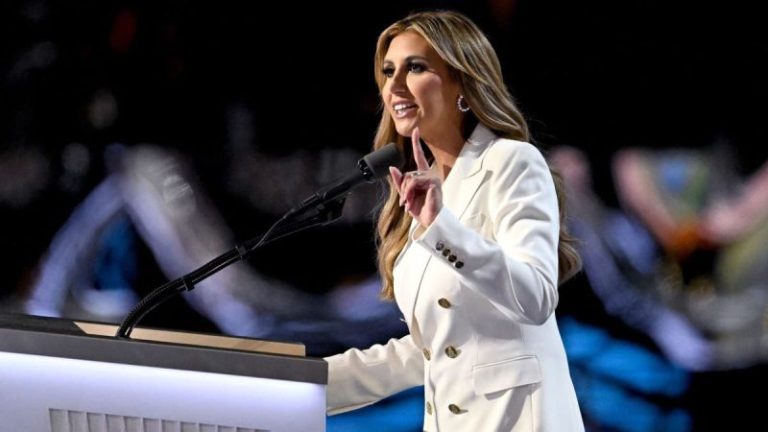
Republican legal activists are filing a complaint in defense of U.S. Attorney Alina Habba after House Minority Leader Hakeem Jeffries called for federal district judges to remove her from her position. 

Jeffries’ complaints about Habba stemmed from her decision to charge Rep. LaMonica McIver, D-N.J., with obstructing Homeland Security agents during an altercation at an immigration facility in Newark on May 9. 

McIver has pleaded not guilty. She is now headed for trial on Nov. 10.

‘The so-called U.S. Attorney in NJ maliciously indicted Congresswoman LaMonica McIver for doing her job,’ said Jeffries in a post on X. ‘Habba is a woefully unqualified political hack who must go.

‘She must be rejected by the Federal District Court Judges who are considering whether to retain her.’ 

The Article III Project filed a House Ethics complaint against Jeffries over the weekend for ‘improperly inserting himself into a criminal proceeding.’ 

‘This is clear corruption by House Democrat Leader Hakeem Jeffries.’

Attorney General Pam Bondi appointed Habba, a former Trump campaign legal spokesperson and White House counselor, to the position in March in an acting capacity. 

Habba’s confirmation has been held up in the Senate. But if a majority of U.S. district court judges in New Jersey decide to allow her to retain her position on Monday, she could stay on through the Trump presidency. 

Of the 17 sitting district court judges from New Jersey, 15 were nominated by Democratic presidents. 

‘A House member – particularly the House Democratic leader – who disagrees with the merits of a pending criminal case abuses his official position when he attempts to strong-arm federal judges to corruptly prejudice the ongoing criminal proceeding by firing the U.S. attorney for the purely political reason of protecting a partisan House colleague,’ the complaint said, asking the House Ethics Committee to hold Jeffries ‘accountable.’ 

McIver and two other members of Congress said they were conducting a congressional oversight visit that coincided with an immigration protest, when a clash ensued with federal agents. 

According to a DOJ press release, Newark Mayor Ras Baraka was allowed into the Delaney Hall immigration facility’s secured area and then federal agents warned him to leave, but he refused to do so.

When officers tried to arrest Baraka, McIver allegedly blocked them, putting her arms around the mayor, and ‘slammed her forearm’ into one officer while grabbing another and using both of her forearms to forcibly strike the second officer.

Each of the first two counts carries a maximum eight-year prison sentence. The third carries up to one year.

The Campaign for Accountability, a liberal watchdog group, has filed a complaint against Habba for bringing charges against McIver and Baraka, alleging she politically targeted the pair in retaliation for participating in the protest and oversight visit because their views oppose those of President Donald Trump. 

Fox News Digital has reached out to Jeffries’ office for comment. 

Fox News’ Michael Dorgan contributed to this report. 

This post appeared first on FOX NEWS

Recent studies confirm what many clinicians, myself included, have quietly observed for years: Liberals — especially young liberals — are reporting worse mental health than their conservative peers. Statistician Nate Silver’s Substack recently spotlighted this disparity, and while many factors are at play, one explanation remains oddly absent from the national conversation: the psychological cost of cutting people off over politics. 

In my work as a clinical psychologist, I’ve watched this pattern unfold in real time. Some clients describe rising anxiety, loneliness and a growing sense of disconnection — but they don’t initially trace it back to politics. Only after reflection do they realize: they’ve quietly (or, in some cases quite loudly and proudly) distanced themselves from family, ended friendships, or withdrawn from romantic prospects — not because of mistreatment, but because of political disagreement. 

As I was researching for my upcoming book Can I Say That? Why Free Speech Matters and How to Use It Fearlessly, I noticed a striking pattern — what I now call ‘The Five Ds’: defriending, declining to date, disinviting, decreasing contact and outright dropping someone over political views. These behaviors are often framed as moral stands. But when practiced habitually, they can degrade the very relationships we rely on for emotional well-being. Research backs this up — liberals are statistically more likely than conservatives to engage in the Five Ds over political differences. 

The cost is real. The U.S. surgeon general has declared loneliness a public health crisis, linking it to depression, anxiety and even physical health problems. Social support is a powerful protective factor — it helps regulate emotions, buffer stress and reinforce a person’s sense of meaning and connection.  

As social creatures, humans rely on relationships to regulate stress. When those bonds are cut over politics — especially through the habitual use of the Five Ds — liberals may be isolating themselves in ways that make them more vulnerable to loneliness, anxiety and diminished emotional regulation. 

Some do this in the name of safety, seeing opposing views as threatening. But this is a dangerous shift. Conflating disagreement with danger undermines mental health and shrinks our capacity for dialogue. Even The New York Times recently published an essay titled ‘Is It Time to Stop Snubbing Your Right-Wing Family?’ in which former Obama speechwriter David Litt wrestles with whether to stay in contact with his conservative brother-in-law. To his credit, Litt expresses openness to reconnecting. But his tone is hesitant, not declarative.  

The piece reads less like someone awakening to the dangers of ideological cutoffs and more like someone reluctantly conceding a grudge. That this question — whether to maintain ties with family — was posed at all in a national newspaper shows how far the goalposts have shifted. Ostracizing loved ones over votes once seemed extreme. Now it’s mainstream content. 

This mindset of seeing opposing views as intolerable, or even threatening, isn’t just common — it’s increasingly celebrated, even when it harms us. The phrase ‘words are violence’ may feel righteous, but taken literally, it breeds anxiety and isolation. When we view differing viewpoints as threats, we push people away — not because we must, but because we’ve convinced ourselves we should. The result? We’re lonelier and more brittle than ever. 

None of this is to say that all relationships must be preserved. Boundaries are important. But ideological purging — done habitually and reflexively — is something different. It’s corrosive. Ironically, conservatives — often caricatured as emotionally rigid — may be faring better precisely because they are less likely to sever ties over politics. Their emotional well-being may benefit from tolerating disagreement and maintaining bonds across divides. 

As a psychologist, I don’t believe political ideology is destiny. But relational habits shape mental health. When we cut off those closest to us, even over serious disagreement, we deprive ourselves of a key buffer against emotional distress. What’s worse, we often do so under the illusion that the cutoff is virtuous. 

The solution is not to avoid politics. It’s to resist the reflex to cut and run. That begins with a simple mindset shift: disagreement isn’t danger, and tension doesn’t always mean toxicity. We can learn to talk through our differences — even when it’s hard. 

Mental health and free speech are more connected than people realize. If we want to feel less anxious, less isolated and more connected, we need to rethink the social costs of ideological purity. The Five Ds may feel righteous in the moment — but the long-term cost to our mental health may be far too high. 

This post appeared first on FOX NEWS

After years of Republicans leading the push for government transparency on Jeffrey Epstein, the notoriously well-connected sex offender who died in jail in 2019, Democrats are now leading the charge to release the so-called ‘Epstein files.’

‘I’m glad they’re joining the party, but they should have been a little more transparent a year ago,’ Rep. Mark Messmer, R-Ind., told Fox News Digital.

Seizing on the Republicans’ demand for transparency about Epstein during former President Joe Biden’s administration, President Donald Trump campaigned in 2024 on releasing the ‘Epstein files’ and his allegedly incriminating ‘client list.’

But Trump’s Department of Justice (DOJ) and the FBI released a memo this week concluding that Epstein died by suicide in his cell, there is no ‘client list,’ and the supposed ‘Epstein files’ are thousands of illegal child sex abuse material and other pornography subject to court-ordered sealing.

The Trump administration’s handling of the Epstein files has created a rift among the ‘MAGA’ wing of the Republican Party, who are demanding more transparency. 

‘We should expect transparency, no matter what administration is involved, if there was or wasn’t a client list, if there was or wasn’t video. I mean, we should expect transparency and full disclosure of whatever they are covering up,’ Messmer told Fox News Digital. 

Democrats have been quick to seize on the intraparty conflict. 

‘It’s pretty rich on their part,’ Rep. David Kustoff, R-Tenn., told Fox News Digital. ‘But again, if there is no new information, then that’s fine. Just have the Department of Justice come out and explain that and answer questions. And if there is something, but it’s not relevant, well, explain that also.’

House Speaker Mike Johnson, R-La., has reiterated that ‘all credible evidence should come out’ regarding Epstein and criticized Democrats who he said are politicizing the issue.

California Democrat Rep. Ro Khanna tied a procedural vote on releasing all Epstein files to an unrelated crypto bill earlier this week, and Rep. Marc Veasey, D-Texas, announced he would be filing a resolution on Monday to demand the Trump administration release all files related to the late pedophile’s case.

Democrats on the House Judiciary Committee, including Jamie Raskin, D-Md., Jerry Nadler, D-N.Y., and progressives like Pramila Jayapal, D-Wash., and Jasmine Crockett, D-Texas., are also seizing on Republican fractures over the Epstein case, demanding a public hearing on the issue. 

‘The Democrats will never give Donald Trump credit for anything,’ Rep. Ralph Norman, R-S.C., told Fox News Digital.Where were the questions when Biden was in office?’

And Rep. Beth Van Duyne, R-Texas, said Democrats’ newfound investment in transparency on Epstein ‘proves that all along it was just political.’

‘I respect a call for transparency,’ Rep. Blake Moore, R-Utah, added. ‘If it’s from a Democrat or a Republican, I totally respect that. I have no idea of anything on this front. And I hope to just know that people are being transparent and that things aren’t being done in any nefarious way or for any nefarious reason. I think a lot of it’s overblown.’

‘I put the Epstein matter in my don’t know, don’t care file,’ Rep. Tom McClintock, R-Calif., told Fox News Digital.

This post appeared first on FOX NEWS

Investor Insight

With a strategic asset base in the prolific Abitibi Gold Belt near Val d’Or, and a fully permitted gold mill facility, LaFleur Minerals is well-positioned for near-term production and long-term growth.

Overview

LaFleur Minerals (CSE:LFLR,OTCQB:LFLRF) is a growth-focused gold exploration and development company with assets in Québec’s Abitibi Gold Belt, one of the most prolific gold regions globally. The company is focused on the production restart at Beacon Mill in parallel to advancing key exploration programs at its Swanson gold project, a well-located, resource-rich deposit with strong growth potential.

LaFleur Minerals boasts a favourable entry point with a market cap yet to reflect the company’s asset base, as well as solid fundamentals with strong growth catalysts and significant upside potential from a near-term producing gold mill with low restart cost.

Company Highlights

  • Focused on developing high-potential gold projects in the Abitibi Gold Belt in Québec, a top-tier mining jurisdiction with strong government support and flow-through financing incentives, and Canada’s largest gold producing region.
  • Successfully assembled over 150 square kilometers of mineral claims and a mining lease, anchored by the Swanson gold deposit and complemented by recent acquisitions from Abcourt Mines.
  • The Swanson gold project hosts an NI 43-101-compliant mineral resource of 123 koz indicated and 64 koz inferred, with significant exploration upside.
  • LaFleur owns the fully permitted and refurbished 750 tpd Beacon Gold Mill, which previously underwent ~$20 million in upgrades, providing a clear pathway to near-term gold production from Swanson and other potential regional sources.
  • The company has launched an extensive exploration program, including geophysics, geochemistry and a planned 10,000-meter drill campaign for 2025, targeting a resource expansion to over 1 Moz.
  • LaFleur Minerals has commenced its diamond drilling program at its Swanson Gold Project after receiving all the necessary permits, including the Authorization to Intervene (ATI) and the Forestry Intervention permits.
  • Led by CEO Paul Ténière, a highly experienced geologist and mining executive, supported by a team with extensive expertise in gold exploration, project development and corporate finance.

Key Projects

Swanson Gold Project – Flagship Asset

The Swanson gold project is located in Québec, Canada, rated as the fifth top jurisdiction in the world for mining investment (Fraser Institute’s 2023 annual survey), offering a stable and supportive environment for resource development with easy access to flow through capital. The Swanson gold project has had in excess of 36,000 metres of historical drilling, which underscores the advanced exploration and development potential of the project, which includes several favourable gold bearing regional structures and deformation corridors extending across the property.

Project Highlights:

  • +16,600 hectares (166 sq km) and rich in gold and critical metals, hosts the Swanson, Bartec and Jolin gold deposits
  • Previously held by Monarch Mining, Abcourt Mines and Globex
  • Accessible by road/rail, 66 km north of Val-d’Or on the Southend Abitibi gold belt, close proximity to established producers such as Agnico Eagle and Eldorado, as well as developers like Probe Gold and O3 Mining, with direct access to several nearby gold mills
  • Mineral resource estimate reinforces status as flagship project:
    • Indicated mineral resource estimate of 2,113,000 t with avg grade of 1.8 g/t gold, containing 123,400 oz of gold.
    • Inf. Mineral Resource Estimate of 872,000 t with avg grade of 2.3 g/t gold, containing 64,500 oz of gold
  • The project’s current MRE was optimized with a price of gold at US$1,850/oz, current gold market price has hit above US$3,000/oz
  • $3 million in flow-through to deploy with immediate plans to increase gold resources through diamond drilling at Swanson, Bartec, Jolin, and other gold deposits, and up to 10,000 metres of drilling expected to commence by mid-2025
  • Other key developments include a decline portal and ramp extending to a depth of 80 metres; well positioned for advanced exploration with over $5 million invested by the previous owner between 2021 and 2023
  • Since acquiring the Swanson deposit and consolidating the large claims package, the company has deployed in excess of $1 million in flow-through funds, completed detailed soil geochemistry and prospecting across several gold targets, completed a very-high resolution airborne magnetic and VLF-EM geophysical survey, and is currently in the process of completing a ground IP survey over the Swanson, Jolin, and Bartec gold deposits
  • Several new promising gold targets have been identified from the recent surface exploration and geophysics programs, highlighting the potential for mineral resource growth and new discoveries at Swanson

2025 Drill Program:

LaFleur Minerals has commenced its diamond drilling program at the Swanson Gold Project following receipt of all necessary permits, including the Authorization to Intervene (ATI) and Forestry Intervention permits.

The company also completed an independent valuation of its Beacon Gold Mill by Bumigeme Inc., confirming the mill is in excellent condition, with rehabilitation costs estimated at C$4.1 million and a full replacement value exceeding C$71.5 million—underscoring its strategic importance.

LaFleur has expanded its Swanson land package to over 18,300 hectares across 445 claims and one mining lease, reinforcing its district-scale potential.

With advanced assets and infrastructure in place, LaFleur Minerals is well-positioned as a leading gold development company in Québec.

Beacon Gold Mill – Near-term Production

The Beacon Gold Mill is a strategically positioned, fully permitted 750 tpd processing facility located less than 50 km from Swanson. Originally acquired through the Monarch Mining CCAA process, the mill underwent a $20 million refurbishment in 2022 and remains in excellent condition. LaFleur’s strategic location on the mineral rich Abitibi Greenstone Belt is key to its plans to restart gold production as its positioned in a prime area with over 100 historical and operational mines, allowing for rapid monetization of ore from nearby gold deposits.

Project Highlights:

  • Low restart cost with processing capacity of over 750 tonnes per day, targeting production of up to 30,000 oz of gold per year. At US$2900/oz, the projected potential revenue is ~$100 million
  • Capable of custom milling operations for other nearby gold projects
  • Currently being evaluated for processing mineralized material from Swanson as part of a high-level preliminary mining and economic study
  • Past-producing Beacon Mine is located on the site of the Beacon Mill: the property consists of a mining lease, a mining concession, and 11 mining claims
  • Beacon I and II mines include mineralized zones where limited historical gold production was achieved during the period of 1984 to 1988 and again in 2005
  • The advancement of operations at the Beacon Mill has transformational qualities for the company, evolving it from explorer to a near term gold producer in a Tier 1 jurisdiction with significant upside potential
  • The restart of production at the Beacon Mill to process bulk samples and/or for custom milling purposes is targeted for before 2025 year end, or once all required restart work has been completed and final approvals have been received by the Québec government, meanwhile equipment inspections, parts inventory, and maintenance work continues on a full-time basis at the company’s Beacon Gold Mill as part of its restart program including a final plan and budget to restart the mill to be completed by ABF Mines by late April once final inspections are complete

Management Team

Kal Malhi – Chairman

A successful entrepreneur and the founder of Bullrun Capital, Kal Malhi has raised over $300 million for various public and private companies across multiple industries, including mining, biotechnology and technology.

Paul Ténière – CEO

Paul Ténière has more than 20 years of experience in mine development, geology and project management. He has held senior leadership roles across multiple mining companies and is a recognized expert in NI 43-101 compliance and technical reporting.

Harry Nijjar – CFO and Corporate Secretary

Harry Nijjar is currently a managing director with Malaspina Consultants and provides CFO and strategic financial advisory services to his clients across many industries. This experience has allowed him to help his clients successfully navigate regulatory and financial environments within which they operate. Harry holds a CPA CMA designation from the Chartered Professional Accountants of British Columbia and a BComm from the University of British Columbia

Louis Martin – Technical Advisor and Exploration Manager

Louis Martin is a professional geoscientist. and has been a major contributor to the discovery of several gold and base metal deposits during his more than 40-year career. Martin has been fortunate to be part of the exploration teams that were awarded the Discovery of the Year by the AEMQ for the West Ansil Deposit (2005) and the Louvicourt Deposit (1989). He has worked on several advanced exploration projects that included bringing four of these projects into production. For the last eight years, Martin has worked as a technical advisor and geological consultant for numerous junior and major mining companies.

Preet Gill – Director

Preet Gill is a business professional offering leading development and implementation of superior business strategy. Gill has a proven track record of identifying and creating profitable business opportunities, qualifying authentic prospects, and cultivating strong partnerships. She has over 28 years of experience in leadership roles within Home Depot Canada and has an MBA from Royal Roads University and certificates in business leadership from Queen’s University.

Harveer Sidhu – Director

Harveer Sidhu is the founder of BuildSmartr.com and has served as a director, officer and audit committee member for publicly listed companies. Sidhu is experienced in manufacturing, import and exporting, information technology systems, e-commerce and construction project management. He is also the president and director of Beyond Medical Technologies. He holds a bachelor’s degree from Simon Fraser University and has been a licensed builder with BC Housing since 2014.

Michael Kelly – Director

Michael Kelly is a former member of the Canadian Armed Forces Military Police and a retired member of the Royal Canadian Mounted Police. Kelly currently serves as a Partner at BullRun Capital Inc. and is a respected businessman based in Kelowna, British Columbia. He is also a director and member of the audit committee of Beyond Medical Technologies, an industrial/technology company with a manufacturing facility located in Delta, British Columbia.

Jean Lafleur – Senior Advisor

A highly respected geologist with over 40 years of experience in the mining sector, Jean Lafleur has led multiple exploration programs and mining projects, contributing to major gold discoveries worldwide.

This post appeared first on investingnews.com

Rep. Alexandria Ocasio-Cortez, D-N.Y., is getting broadsided from her left over her vote on an amendment aimed at blocking U.S. funding for Israel’s Iron Dome.

The Democratic Socialists of America (DSA) are criticizing the progressive firebrand for voting against an amendment by Rep. Marjorie Taylor Greene, R-Ga., to block $500 million in Congress’ annual defense spending bill that was aimed at helping fund Israeli missile defense systems.

‘An arms embargo means keeping all arms out of the hands of a genocidal military, no exceptions. This is why we oppose Representative Alexandria Ocasio-Cortez’[s] vote against an amendment that would have blocked $500 million in funding for the Israeli military’s Iron Dome program,’ the DSA said over the weekend.

The DSA noted she did vote against the defense funding bill itself, thereby ‘voting against funding for the imperialist military-industrial complex and the Israeli genocide.’

The group added, however, ‘We were further deeply disappointed by her clarifying statement on her position on the Iron Dome.’

‘Along with other US-funded interceptor systems, the Iron Dome has emboldened Israel to invade or bomb no less than five different countries in the past two years,’ the DSA said.

‘The fact that Representative Ocasio-Cortez acknowledges that Israel is carrying out this genocide makes her support for military aid all the more disappointing and incongruous. We urge the representative to continue voting against the Iron Dome, whether it is part of a larger defense spending bill or as a stand-alone bill.’

The DSA commended Reps. Rashida Tlaib, D-Mich.; Ilhan Omar, D-Minn.; Summer Lee, D-Pa., and Al Green, D-Texas, for voting against the amendment.

Fox News Digital reached out to Ocasio-Cortez’s campaign and congressional office for comment.

She posted on X after the vote, ‘Marjorie Taylor Greene’s amendment does nothing to cut off offensive aid to Israel nor end the flow of US munitions being used in Gaza. Of course I voted against it.’

‘What it does do is cut off defensive Iron Dome capacities while allowing the actual bombs killing Palestinians to continue. I have long stated that I do not believe that adding to the death count of innocent victims to this war is constructive to its end,’ she said.

‘That is a simple and clear difference of opinion that has long been established. I remain focused on cutting the flow of US munitions that are being used to perpetuate the genocide in Gaza.’

The clash exemplifies how Israel continues to drive an ideological wedge within the Democratic Party. 

It’s not the first time Ocasio-Cortez caught heat from the progressive base for failing to take a critical enough stance on Israel.

In 2021, the New York Democrat cried on the House floor after voting ‘present’ on funding Israel’s Iron Dome defense system.

‘Yes, I wept,’ she wrote in an open letter to constituents after the incident. ‘I wept at the complete lack of care for the human beings that are impacted by these decisions. I wept at an institution choosing a path of maximum volatility and minimum consideration for its own political convenience.’

The overall bill that passed last week calls for $832 billion in defense funding for fiscal year 2026.

That’s separate from the National Defense Authorization Act (NDAA), another annual bill that sets defense and national security policy each fiscal year – essentially detailing how those funds will be spent.

Greene’s amendment to strip $500 billion going toward Israeli missile defense programs lost in a lopsided 6-422 vote.

This post appeared first on FOX NEWS

China is solidifying its position as the primary engine for global platinum demand

Record participation in Shanghai Platinum Week underscores the country’s expanding influence in a market facing a deepening supply deficit. The event, which attracted over 590 delegates from 30 countries, took place at a critical moment — just as the platinum market is tightening and a supply shortfall is deepening through 2029.

The World Platinum Investment Council (WPIC) notes that China now accounts for 64 percent of global demand for platinum bars and coins — up from 11 percent in 2019 — driven largely by investors seeking alternatives to gold.

“Platinum demand in China is continuing to expand, as the growth in physical platinum investment we are currently witnessing demonstrates,” said WPIC CEO Trevor Raymond, who also warned of persistent market tightness to 2029.

Also during the event, Valterra Platinum (JSE:VAL) CEO Craig Miller delivered his first public address in Asia since the company’s high-profile demerger from Anglo American (LSE:AAL,OTCQX:AAUKF) in May.

Miller confirmed Shanghai as one of Valterra’s three new international marketing hubs, emphasizing the company’s intent to shape demand within China’s growing platinum-group metals (PGMs) ecosystem.

“Attending Shanghai Platinum Week has highlighted its value for connecting with the PGM market in China,” he said. “Shaping demand for PGMs through market development remains an integral part of our strategy.”

Although new tariffs are expected to dent platinum demand by an estimated 112,000 ounces in 2025, that 1.4 percent decline is being far outweighed by a boom in investment and jewelry consumption.

The Chinese jewelry sector, too, is undergoing a transformation. Wholesalers are commissioning stock that mimics popular gold designs, making platinum jewelry more accessible and appealing to retailers and consumers alike.

If this trend continues, the WPIC forecasts a sharp rise in jewelry-related platinum usage from 2026 onward.

Platinum market fundamentals also remain tight, with supply expected to lag behind growing demand through at least 2029. Several Chinese refiners have recently secured “good delivery” accreditation from the London Platinum and Palladium Market, bolstering investor confidence and strengthening the local trading ecosystem.

Beyond investment and jewelry, regulatory and industrial shifts are setting the stage for long-term structural demand. China’s upcoming China VII/7 vehicle emissions standards, due to take effect in 2026, are expected to significantly increase PGMs loadings per vehicle due to more stringent cold start and real-world emissions testing.

Meanwhile, a global phaseout of mercury-based catalysts in polyvinyl chloride manufacturing is likely to drive adoption of platinum-based alternatives by 2030. In the hydrogen economy — a sector widely seen as platinum’s next frontier — the outlook remains bullish. Installed global electrolysis capacity is forecast to reach 100 gigawatts by 2030, with platinum-intensive proton exchange membrane (PEM) technology expected to dominate nearly half the market.

“This year we were delighted to welcome more overseas interest than ever before,” said Raymond. “Platinum investment is a natural mechanism for attracting metal into any geography, providing a pool of liquidity to supply future demand — particularly vital for countries like China, which rely on imports and recycling for supply.”

The week also celebrated Shanghai Platinum Week’s fifth anniversary with the unveiling of a commemorative 999.5 platinum medal designed by master engraver Luo Yonghui, limited to just 200 pieces.

Securities Disclosure: I, Giann Liguid, hold no direct investment interest in any company mentioned in this article.

This post appeared first on investingnews.com

The US government has imposed a 93.5 percent anti-dumping tariff on battery-grade graphite imports from China, targeting what officials have described as unfairly low-priced shipments.

They claim domestic producers have been undercut, and have cited concerns over critical minerals dependence.

The US Department of Commerce announced the duty on Thursday (July 17) after an investigation prompted by from US manufacturers, who argued that Chinese producers were flooding the market with underpriced graphite.

The new duty, when combined with existing countervailing tariffs, raises the total effective rate to around 160 percent, according to the American Active Anode Material Producers (AAAMP), the coalition that filed the complaint.

The move affects roughly US$347 million worth of Chinese graphite imports, according to commerce department estimates, and comes as US policymakers scramble to secure critical mineral supply chains.

“Commerce’s determination proves that China is selling [active anode material] at less than fair value into the domestic market,” Erik Olson, a spokesperson for AAAMP, said in a Thursday press release.

The department said final rulings on both anti-dumping and anti-subsidy investigations will be announced by December 5.

A separate ruling in May placed a 6.55 percent preliminary countervailing duty on most Chinese producers, but singled out Huzhou Kaijin New Energy Technology and Shanghai Shaosheng for exceptionally high rates — 712.03 percent and 721.03 percent, respectively.

Graphite’s importance draws new scrutiny

While graphite rarely draws headlines like lithium or cobalt, it comprises up to 50 kilograms of every electric vehicle (EV) battery, forming the anode — a component as essential as the more widely discussed cathode.

China accounts for roughly 95 percent of global anode production, according to data from SNE Research.

Imports from China represented two-thirds of the 180,000 metric tons (MT) of graphite products shipped to the US in 2023, BloombergNEF data shows. Industry analysts say the new duties could significantly reshape market economics — especially for foreign battery suppliers that serve US automakers.

Supporters of the decision, including domestic producers and some lawmakers, argue the tariffs are a long-overdue corrective measure to level the playing field and stimulate US production.

“The decision today underscores the strategic importance of building a domestic supply chain for critical minerals, including synthetic graphite, in North America,” said Michael O’Kronley. “It affirms our business strategy as well as the diversification strategy of our customers to source critical battery materials and components locally.’

O’Kronley is CEO of Novonix (ASX:NVX,NASDAQ:NVNXF), which is building one of the largest synthetic graphite facilities in North America with support from a US$750 million US Department of Energy loan.

Westwater Resources (NYSEAMERICAN:WWR), which is constructing a graphite plant in Alabama, said the ruling provides the policy clarity and market signals needed to accelerate domestic graphite production.

“These two rulings by the DOC are distinct from legislative-driven global trade tariffs,” said Chief Commercial Officer Jon Jacobs in a statement of support. “They reflect long-term support for US-based graphite production.”

The company expects to produce 12,500 MT of graphite in 2026 and ramp up to 50,000 MT annually by 2028.

Despite efforts to boost local production, US automakers and battery makers warn that domestic graphite supply remains years away from meeting commercial demand — either in scale or purity.

In filings with the commerce department, Tesla (NASDAQ:TSLA) cautioned that US producers have yet to demonstrate the technical ability to deliver the quality needed for EV batteries. Panasonic (OTC Pink:PCRFF,TSE:6752) echoed similar concerns, and both companies opposed the tariff earlier this year.

This leaves companies with a difficult choice: pay sharply higher prices for Chinese imports or risk shortages from an unproven local market.

Trade frictions add to supply chain strain

The timing complicates matters further. Just days before the US tariff announcement, China finalized new export controls on key battery technologies, including those used in lithium iron phosphate (LFP) cells — an area where China leads globally. The combination of trade restrictions on both sides is stoking fears of a wider resource standoff.

For US automakers, the downstream pressure is immediate. The tariff could wipe out up to 20 percent of the value of production tax credits under the Inflation Reduction Act, while added import costs may ripple through the supply chain.

Higher battery costs could also push EV sticker prices further upward, straining affordability and slowing adoption.

But experts caution that breaking China’s dominance in graphite will not be quick or easy. According to the International Energy Agency, developing alternative supply chains for battery materials could take years, if not decades — especially given the high purity and consistency required in EV-grade materials.

Still, supporters argue the short-term pain is worth the strategic payoff. “It’s a very strong signal that they are intent on fostering an ex-China supply chain,” Ben Lyons of Jarden told the Financial Times.

Securities Disclosure: I, Giann Liguid, hold no direct investment interest in any company mentioned in this article.

This post appeared first on investingnews.com