Author

admin

Browsing

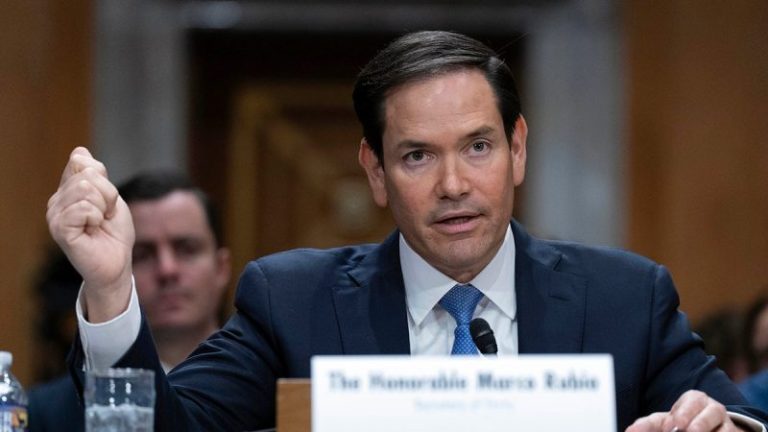
The State Department informed U.S.-based employees on Thursday that it would soon begin laying off nearly 2,000 workers after the recent Supreme Court decision allowing the Trump administration to move forward with mass job cuts as part of its efforts to downsize the federal workforce.

The agency’s reorganization plan was first unveiled in April by Secretary of State Marco Rubio to eliminate functions and offices the department considered to be redundant. In February, President Donald Trump issued an executive order directing Rubio to revamp the foreign service to ensure that the president’s foreign policy is ‘faithfully’ implemented.

Employees affected by the agency’s ‘reduction in force’ would be notified soon, Deputy Secretary for Management and Resources Michael Rigas told employees in an email on Thursday.

‘First and foremost, we want to thank them for their dedication and service to the United States,’ Rigas said in the email.

‘Every effort has been made to support our colleagues who are departing, including those who opted into the Deferred Resignation Programs … On behalf of Department leadership, we extend our gratitude for your hard work and commitment to executing this reorganization and for your ongoing dedication to advancing U.S. national interests across the world,’ he added.

The department did not specify on Thursday how many people would be fired, but in its plans to Congress sent in May, it had proposed laying off about 1,800 employees of the 18,000 estimated domestic workforce. Another 1,575 were estimated to have taken deferred resignations.

The plans to Congress did not state how many of these workers would be from the civil service and how many from the foreign service, but it did say that more than 300 of the department’s 734 bureaus and offices would be streamlined, merged or eliminated.

Once affected staff have been notified, the department ‘will enter the final stage of its reorganization and focus its attention on delivering results-driven diplomacy,’ Rigas said in the email to colleagues.

The expectation is for the terminations to start as soon as Friday.

State Department spokesperson Tammy Bruce told reporters earlier on Thursday that the only reason there had been a delay in implementing force reductions is because the courts have stepped in, as she said the mass layoffs would be happening quickly.

‘There has been a delay – not to our interests, but because of the courts,’ Bruce noted. ‘It’s been difficult when you know you need to get something done for the benefit of everyone.’

‘When something is too large to operate, too bureaucratic, to actually function, and to deliver projects, or action, it has to change,’ she said.

Reuters contributed to this report.

This post appeared first on FOX NEWS

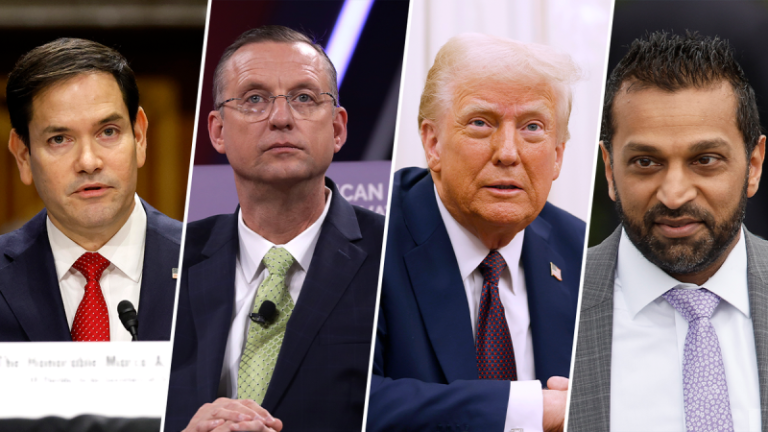
The Trump administration repeatedly has assigned additional job roles to Cabinet members and other officials amid government shake-ups as the president solidifies his agenda for the coming years, Fox News Digital found. 

Secretary of Transportation Sean Duffy was the latest Trump official assigned an additional role Wednesday. The Transportation chief and Trump ally now also serves as the administration’s acting NASA administrator after the president pulled a former nominee’s name from consideration to lead NASA. 

Duffy, however, is not alone in taking on multiple roles within Trump’s second administration. Fox News Digital looked back on the various Trump Cabinet members and officials wearing multiple hats as the president works to realign the federal government with his ‘America First’ policies. 

Sean Duffy 

Duffy, a former Republican congressman from Wisconsin, was tapped to oversee the Department of Transportation and was confirmed by the Senate Jan. 28. Since his confirmation, Duffy has juggled a handful of crises related to tragic plane crashes, including the Potomac River midair collision Jan. 29 and air traffic control issues that plagued New Jersey’s Liberty International Airport earlier in 2025. 

Trump posted to Truth Social Wednesday evening that Duffy would also serve as interim chief of NASA. 

‘I am pleased to announce that I am directing our GREAT Secretary of Transportation, Sean Duffy, to be Interim Administrator of NASA,’ Trump wrote in his announcement. 

‘Sean is doing a TREMENDOUS job in handling our Country’s Transportation Affairs, including creating a state-of-the-art Air Traffic Control systems, while at the same time rebuilding our roads and bridges, making them efficient, and beautiful, again. He will be a fantastic leader of the ever more important Space Agency, even if only for a short period of time. Congratulations, and thank you, Sean!’

Duffy replaced Janet Petro, who has served as acting NASA administrator since Trump’s inauguration. The president had previously nominated an Elon Musk ally named Jared Isaacman to lead NASA but pulled his nomination in June as Trump’s and Musk’s relationship hit the rocks over the ‘big, beautiful bill.’

‘Honored to accept this mission. Time to take over space. Let’s launch,’ Duffy posted to X of the new role. 

Marco Rubio 

Rubio and the Trump administration came under fire from Democrats for the secretary of state holding multiple high-profile roles in the second Trump administration, including Democrats sounding off on the national security council shake-up on Sunday news shows. 

‘There’s no way he can do that and do it well, especially since there’s such incompetence over at DOD with Pete Hegseth being secretary of defense and just the hollowing out of the top leadership,’ Illinois Democratic Sen. Tammy Duckworth told CBS’ ‘Face the Nation.’ ‘There’s no way he can carry all that entire load on his own.’

‘I don’t know how anybody could do these two big jobs,’ Democratic Virginia Sen. Mark Warner said on CNN’s ‘State of the Union.’

Rubio’s roles in the administration include leading the State Department, serving as acting archivist of the United States after Trump ousted a Biden-era appointee, serving as acting administrator of the U.S. Agency for International Development as the administration who works to dissolve the independent agency by September and taking the helm as the interim national security advisor. Rubio’s role overseeing USAID concluded at the start of July when the State Department officially absorbed the agency. 

When asked about the trend of Trump officials wearing multiple work hats in May, the White House reflected in a comment to Fox News Digital on former President Joe Biden’s ‘disaster of a Cabinet.’ 

‘Democrats cheered on Joe Biden’s disaster of a Cabinet as it launched the botched Afghanistan withdrawal, opened the southern border to migrant criminals, weaponized the justice system against political opponents and more,’ White House spokesperson Anna Kelly told Fox News Digital in May. ‘President Trump has filled his administration with many qualified, talented individuals he trusts to manage many responsibilities.’ 

The Trump administration repeatedly has brushed off concerns over Rubio holding multiple roles, most notably juggling both his State Department leadership and serving as acting national security advisor. Similarly, former President Richard Nixon in 1973 named National Security Advisor Henry Kissinger to simultaneously serve as secretary of state. 

‘You need a team player who is very honest with the president and the senior team, not someone trying to build an empire or wield a knife or drive their own agenda,’ an administration official told Politico. ‘He is singularly focused on delivering the president’s agenda.’ 

Despite Democratic rhetoric that Rubio was taking on too many roles, the former Florida senator helped oversee successful U.S. strikes on Iran in June, which destroyed a trio of nuclear sites and decimated the country’s efforts to advance its nuclear program. 

Kash Patel

FBI Director Kash Patel, who railed against the ‘deep state’ and vowed to strip corruption from the federal law enforcement agency ahead of his confirmation, was briefly charged with overseeing the Bureau of Alcohol, Tobacco, Firearms and Explosives (ATF) in February after the Biden-era director resigned in January. 

Patel was later replaced by Secretary of the Army Daniel Driscoll as acting ATF director in a job change that was reported publicly in April. 

‘Director Kash Patel was briefly designated ATF director while awaiting Senate confirmations, a standard, short-term move. Dozens of similar re-designations have occurred across the federal government,’ the White House told Reuters in April. ‘Director Patel is now excelling in his role at the FBI and delivering outstanding results.’

Daniel Driscoll 

Driscoll was sworn in as the 26th secretary of the Army in February. The secretary of the army is a senior-level civilian official charged with overseeing the management of the Army and also acts as an advisor to the secretary of defense in matters related to the Army. 

It was reported in April that Driscoll was named acting ATF director, replacing Patel in that role. 

‘Mr. Driscoll is responsible for the oversight of the agency’s mission to protect communities from violent criminals, criminal organizations, and the illegal trafficking of firearms, explosives, and contraband,’ his ATF biography states. ‘Under his leadership, the ATF works to enforce federal laws, ensure public safety, and provide critical support in the investigation of firearms-related crimes and domestic and international criminal enterprises,’

Ahead of Trump taking office, Republican representatives Eric Burlison of Missouri and Lauren Boebert of Colorado introduced legislation to abolish the ATF, saying the agency has worked to strip Second Amendment rights from U.S. citizens. 

The ATF has been tasked with assisting the Department of Homeland Security in its deportation efforts under the Trump administration. 

Doug Collins 

Former Georgia Republican Rep. Doug Collins was sworn in as the Trump administration’s secretary of Veterans Affairs in February, a Cabinet-level position tasked with overseeing the department and its mission of providing health, education and financial benefits to military veterans. 

Days after his confirmation as VA secretary, Trump tapped Collins to temporarily lead two oversight agencies, the Office of Government Ethics and the Office of Special Counsel. 

The Office of Government Ethics is charged with overseeing the executive branch’s ethics program, including setting ethics standards for the government and monitoring ethics compliance across federal agencies and departments. 

The Office of Special Counsel is charged with overseeing and protecting the federal government’s merit system, most notably ensuring federal whistleblowers don’t face retaliation for sounding the alarm on an issue they’ve experienced. The office also has an established secure channel to allow federal employees to blow the whistle on alleged wrongdoing. 

The Office of Special Counsel also enforces the Hatch Act, which bans executive branch staffers, except the president and vice president, from engaging in certain forms of political activity

Jamieson Greer 

Trump’s trade representative, Jamieson Greer, has also been tapped for multiple roles within the administration, in addition to helping lead the administration’s tariff negotiations to bring parity to the chronic U.S. trade deficit with other nations. 

Greer took on Collins’ roles as acting director of the Office of Government Ethics and as acting special counsel of the Office of Special Counsel April 1. 

Trump nominated conservative attorney Paul Ingrassia to lead the Office of Special Counsel in May. 

Russell Vought 

Trump named his former director of the Office of Management and Budget under his first administration, Russell Vought, to the same role in his second administration. Vought was confirmed as the federal government’s budget chief in February. 

Days later, Vought was also named the acting director of the Consumer Financial Protection Bureau (CFPB).  

The CFPB is an independent government agency charged with protecting consumers from unfair financial practices in the private sector. It was created in 2010 under the Obama administration after the financial crash in 2008. Democratic Massachusetts Sen. Elizabeth Warren originally proposed and advocated for the creation of the agency.

The CFPB came under fierce investigation from the Department of Government Efficiency in February, with mass terminations rocking the agency before the reduction in force initiative was tied up in court. 

Ric Grenell 

President Donald Trump’s former ambassador to Germany and acting director of national intelligence under his first term, a pair of roles held at separate times in the first administration, currently serves as president of the Kennedy Center and special presidential envoy for special missions of the United States. 

The John F. Kennedy Center for the Performing Arts serves as the national cultural center of the U.S. Trump notably serves as the center’s chair of the board, and Grenell said the center will see a ‘golden age’ of the arts during Trump’s second administration through productions and concerts that Americans actually want to see after years of the performing arts center running in the red. 

Trump named Grenell as his special presidential envoy for special missions to the United States in December 2024 before his inauguration, saying Grenell will ‘work in some of the hottest spots around the world, including Venezuela and North Korea.’

In this role, Grenell helped lead the administration through its response to the wildfires that tore through Southern California in the last days of the Biden administration through the beginning days of the Trump administration. 

Fox News Digital’s Jasmine Baehr contributed to this report. 

This post appeared first on FOX NEWS

I wrote recently about the chilling jurisprudence of Justice Ketanji Brown Jackson, who has drawn the ire of colleagues in opinions for her rhetoric and extreme positions. Many have expressed alarm over her adherence to what has been described by one as an ‘imperial judiciary’ model of jurisprudence. Now, it appears that Jackson’s increasingly controversial opinions are serving a certain cathartic purpose for the far-left Biden appointee.

‘I just feel that I have a wonderful opportunity to tell people in my opinions how I feel about the issues, and that’s what I try to do,’ Jackson told ABC News.

Her colleagues have not entirely welcomed that sense of license. The histrionic and hyperbolic rhetoric has increased in Jackson’s opinions, which at times portray her colleagues as abandoning not just the Constitution but democracy itself.

Her dissent in the recent ruling on universal injunctions drew the rebuke of Justice Amy Coney Barrett over what was described as ‘a vision of the judicial role that would make even the most ardent defender of judicial supremacy blush.’

‘We will not dwell on Justice Jackson’s argument, which is at odds with more than two centuries’ worth of precedent, not to mention the Constitution itself,’ Barrett wrote. ‘We observe only this: Justice Jackson decries an imperial Executive while embracing an imperial Judiciary.’

Jackson, however, clearly feels that opinions are a way for her to opine on issues of the day. 

She is not alone. Across the country, liberal judges have been adding their own commentary to decisions in order to condemn Trump, his supporters, and his policies.

I previously wrote about this pattern of extrajudicial commentary.

District Court Judge Tanya Chutkan, an Obama appointee who previously presided over Trump’s election interference case, was criticized for failing to recuse herself from that case after she made highly controversial statements about Trump from the bench. Chutkan lashed out at ‘a blind loyalty to one person who, by the way, remains free to this day.’ That ‘one person’ was still under investigation at the time, and when Trump was charged, Chutkan refused to let the case go.

Later, Chutkan again added her own commentary when asked to dismiss a case due to Trump pardoning January 6 defendants. She acknowledged that she could not block the pardons, but proclaimed that the pardons could not change the ‘tragic truth’ and ‘cannot whitewash the blood, feces and terror that the mob left in its wake. And it cannot repair the jagged breach in America’s sacred tradition of peacefully transitioning power.’

One of Chutkan’s colleagues, Judge Beryl Howell, also an Obama appointee, lashed out at Trump’s actions, writing, ‘[T]his Court cannot let stand the revisionist myth relayed in this presidential pronouncement.’

Then there is Judge Amit Mehta, another Obama appointee, who has been criticized for conflicted rulings in Trump cases and his bizarre (and ultimately abandoned) effort to banish January 6 defendants from the Capitol.

Last week, Mehta had a straightforward question of jurisdiction concerning a challenge to the denial of grants by the Trump administration. While correctly dismissing the challenge, Mehta decided to add his own commentary on Trump’s priorities and policies:

‘Defendants’ rescinding of these awards is shameful. It is likely to harm communities and individuals vulnerable to crime and violence. But displeasure and sympathy are not enough in a court of law.’

For Jackson, her opinions have at times left her isolated on the Court. Weeks ago, Jackson and Sotomayor were alone in dissent over the defiance of a district court judge of the Court’s decision on universal injunctions. To her credit, Justice Elena Kagan (who voted with Sotomayor and Jackson in dissent in the earlier case) voted with her conservative colleagues in rebuking Judge Brian Murphy in Boston.

Kagan joined in the reversal of Murphy’s conflicting order and wrote the new order ‘clarifies only one thing: Other litigants must follow the rules, but the administration has the Supreme Court on speed dial.’

This week, Jackson lost even Sotomayor and stood alone in her dissent in support of an injunction over plans to downsize the government. Sotomayor observed that the Trump order only directed agencies to plan for such downsizing and said that the courts could hardly enjoin such policy preparations in the Executive Branch.

However, Jackson could and would. 

The controversial position of Jackson on the Court is not due to her liberal views. We have had many such liberal jurists. The difference is how Jackson views her role as a justice.

The danger is not confined to opinions. For years, justices have yielded to the temptations of public speaking before supportive groups. I have long been a critic of what I called the era of ‘celebrity justices,’ where members seem to maintain political constituencies at public events. 

Such speeches not only undermine the integrity of the Court by discussing matters that may come before it, but they can create a desire to maintain the adoration of supporters. The greatest danger is that justices will consciously or subconsciously pander to their bases with soundbites and inflammatory rhetoric.

Judicial advocacy from the bench has been a concern since the founding. Article III can have a corrosive impact on certain jurists who come to view themselves as anointed rather than appointed. Most judges and justices are acutely aware of that danger and struggle to confine their rulings to the merits of disputes, avoiding political questions or commentary.

The ‘opportunity to tell people how I feel’ can become a slippery slope where opinions become more like judicial op-eds. The Court is not a cable show. The price of the ticket to being ‘one of nine’ is that you should speak only through your opinions and only on the narrow legal matter before you. 

Opinions must remain ‘opportunities’ to do simple justice, not a supreme editorial.

This post appeared first on FOX NEWS
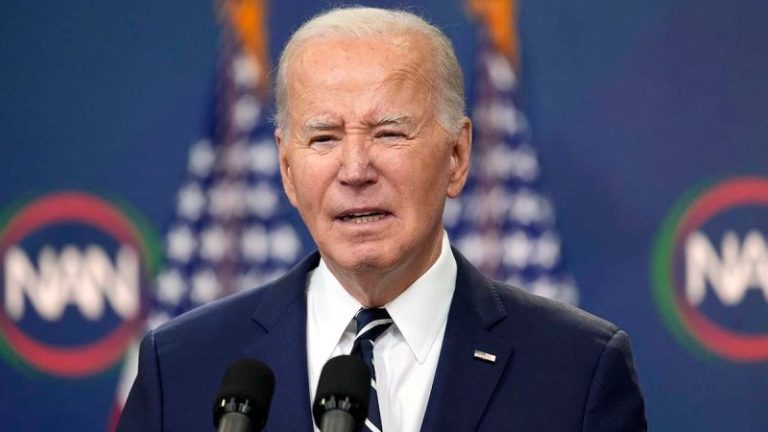
A former White House physician is criticizing Kevin O’Connor after the ex-Biden administration doctor refused to answer questions by House Oversight Committee investigators earlier this week.

Dr. O’Connor, who served as White House physician to former President Joe Biden, sat down for a transcribed interview with committee staff and panel Chair James Comer, R-Ky., on Wednesday. The closed-door meeting lasted roughly 30 minutes, with O’Connor invoking the Fifth Amendment to all questions, save for his name.

His legal team said there were concerns the broad scope of Comer’s probe could force O’Connor into a position of risking doctor-patient confidentiality privileges. 

‘Well, you can’t do both,’ Rep. Ronny Jackson, R-Texas, a former White House doctor himself, told Fox News Digital in an interview afterward.

‘I mean, the Fifth Amendment is designed to keep him from incriminating himself in some type of, you know, criminal or unethical behavior. He’d already addressed the issue of patient-doctor privacy, or confidentiality, with the committee.’

He pointed out that O’Connor’s lawyers had already raised issues with patient-doctor confidentiality in a letter to the committee trying to get the interview delayed, but Comer pressed forward.

‘They had already let him know that in this particular case, because he had been subpoenaed, and it was a legal process, he’d been subpoenaed to testify before Congress in this closed session, that the patient-doctor privilege no longer applied,’ Jackson said. ‘And President Trump had waived presidential privilege. So it left him with nothing. Nothing to stand on except for pleading the Fifth.’

Before being elected to Congress, Jackson served as White House physician to both former President Barack Obama and current President Donald Trump.

Comer told reporters on Wednesday that Jackson played a key role in crafting questions for O’Connor. 

‘We have a lot of questions that we’ve prepared for this. We’ve consulted closely with Ronny Jackson, my colleague, who was the White House physician in the first Trump administration. We’ve consulted with a lot of people in the medical community, so there’s going to be a lot of medical questions that are asked,’ he told reporters before the transcribed interview.

He is investigating accusations that Biden’s former top White House aides covered up signs of his mental and physical decline while in office, and whether any executive actions were commissioned via autopen without the president’s full knowledge. Biden allies have pushed back on those claims.

‘The cover-up could not have happened without the assistance and the help of his personal physician, Kevin O’Connor,’ Jackson said. ‘I think that’s why he pled the Fifth, because he realized he was about to implicate himself as a key player in this cover-up.’

O’Connor’s lawyers have denied any implications of guilt.

Jackson said some of the questions he recommended to the committee would have surrounded any potential neurological concerns or cognitive tests while Biden was in office.

But many of those were left unasked, it appears, after O’Connor’s brief meeting with House investigators.

The doctor’s lawyers said O’Connor’s refusal to answer questions on Fifth Amendment grounds was not an admission of guilt, but rather a response to what they saw as an unprecedented investigatory scope that could have violated the bounds of patient-physician privilege.

‘This Committee has indicated to Dr. O’Connor and his attorneys that it does not intend to honor one of the most well-known privileges in our law – the physician patient privilege. Instead, the Committee has indicated that it will demand that Dr. O’Connor reveal, without any limitations, confidential information regarding his medical examinations, treatment, and care of President Biden,’ the attorney statement said.

‘Revealing confidential patient information would violate the most fundamental ethical duty of a physician, could result in revocation of Dr. O’Connor’s medical license, and would subject Dr. O’Connor to potential civil liability. Dr. O’Connor will not violate his oath of confidentiality to any of his patients, including President Biden.’

Fox News Digital reached out to O’Connor’s lawyers for further comment.

This post appeared first on FOX NEWS
The State Department will move to layoff nearly 2,000 employees on Friday as it begins its reorganization plan. 

An internal memo circulated Thursday evening by Michael Rigas, deputy secretary of management and resources, announced that domestic employees affected by the reduction in force (RIF) would be notified ‘over the coming days.’ 

Approximately 1,800 people will be affected, Fox News has learned. 

The RIF notices plus voluntary departures under the Trump administration amount to a 15% work force reduction. 

‘The departments, bureaus, offices and domestic operations have grown considerably over the last 25 years, and the resulting proliferation of bureaus and offices with unclear, overlapping or duplicative mandates have hobbled the department’s ability to rapidly respond to emerging threats and crises or to effectively advance America’s affirmative interests in the world,’ a senior State Department official said. 

The official added that there are ‘more than 700 domestic offices for 18,000 people.’ 

‘A lot of this, as we said, covers redundant offices and takes some of these cross-cutting functions and moves them to the regional bureaus and to our embassies overseas, to the people who are closest to where diplomacy is happening, to empower them with the resources and authorities they need to be able to carry out the President’s foreign policy.’

State Department spokesperson Tammy Bruce warned on Thursday the agency would move quickly after the Supreme Court stayed the lower court’s injunction blocking the administration from implementing widescale force reductions across federal agencies. 

A senior official said there are currently no plans for overseas closures of embassies and outposts. They added the State Department will work to preserve the dignity of affected workers. 

‘We’re going to work to preserve the dignity of federal workers,’ the official said. ‘We want to be sensitive to that process and make sure people have the resources they need … and make sure everyone is treated with dignity.’

This post appeared first on FOX NEWS
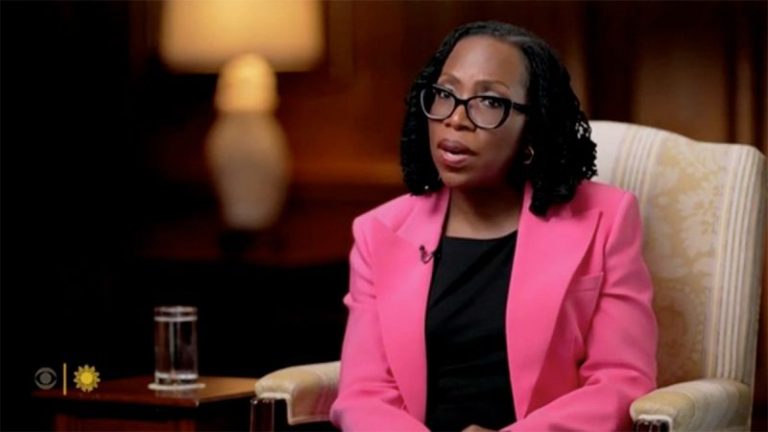
A former top White House advisor is slated to appear before House Oversight Committee investigators on Friday as GOP lawmakers probe whether ex-President Joe Biden’s top aides covered up evidence of his mental and physical decline.

Ashley Williams, who served as deputy director of Oval Office Operations during the Biden administration, is expected to sit with investigators behind closed doors for a transcribed interview around 11 a.m. Friday.

If she appears, Williams will be the third member of the former president’s White House inner circle summoned in Comer’s probe in recent weeks.

In addition to whether senior aides covered up Biden’s alleged decline, Comer is looking at whether any presidential orders were signed via autopen without the former commander-in-chief’s knowledge.

Any allegations of wrongdoing so far have been denied by the ex-president’s allies.

But Republican investigators have pointed to Biden’s disastrous June 2024 debate and subsequent revelations in the media that there were more concerns from Biden’s inner circle about his fitness for office than previously known.

Williams was one of three then-Biden aides called before Comer’s House Oversight Committee in July 2024 to discuss the former president’s mental state, but the White House at the time called it a ‘baseless political stunt’ to NBC News.

Her expected appearance on Friday comes two days after ex-Biden White House physician Dr. Kevin O’Connor briefly sat down with investigators on Wednesday.

O’Connor’s encounter with the committee lasted roughly 30 minutes, with the doctor invoking the Fifth Amendment for all questions except his name.

‘It’s clear there was a conspiracy to cover up President Biden’s cognitive decline after Dr. Kevin O’Connor, Biden’s physician and family business associate, refused to answer any questions and chose to hide behind the Fifth Amendment,’ Comer said in a statement after O’Connor’s appearance.

‘Dr. O’Connor took the Fifth when asked if he was told to lie about President Biden’s health and whether he was fit to be President of the United States. Congress must assess legislative solutions to prevent such a cover up from happening again. We will continue to interview more Biden White House aides to get the answers Americans deserve.’

O’Connor’s lawyers said he did so out of concerns that House investigators would violate doctor-patient privilege.

‘This Committee has indicated to Dr. O’Connor and his attorneys that it does not intend to honor one of the most well-known privileges in our law – the physician patient privilege. Instead, the Committee has indicated that it will demand that Dr. O’Connor reveal, without any limitations, confidential information regarding his medical examinations, treatment, and care of President Biden,’ the attorney statement said.

‘Revealing confidential patient information would violate the most fundamental ethical duty of a physician, could result in revocation of Dr. O’Connor’s medical license, and would subject Dr. O’Connor to potential civil liability. Dr. O’Connor will not violate his oath of confidentiality to any of his patients, including President Biden.’

This post appeared first on FOX NEWS
Maritime Resources (TSXV:MAE) is a Canadian gold development company advancing the fully permitted, high-grade Hammerdown project in Newfoundland & Labrador’s prolific Baie Verte mining district. A past-producing asset, Hammerdown is shovel-ready and de-risked, with construction underway and first ore deliveries to the Pine Cove Mill anticipated between late summer and early fall 2025.

Hammerdown is uniquely positioned to capitalize on existing infrastructure, with close access to paved roads, power, ports, and Maritime’s wholly owned Pine Cove processing facility. Unlike many greenfield developers, Maritime is pursuing a low-capex, staged production strategy—leveraging its established infrastructure and skilled local workforce to reduce costs, mitigate risk, and fast-track value creation through near-term cash flow generation amid record-high gold prices.

Hammerdown project site

Looking ahead, Maritime Resources aims to establish a 100,000 oz/year production platform by integrating nearby deposits—including Orion, Stoger Tight, and Deer Cove—and reactivating its 700 tpd Nugget Pond gold plant. The company’s extensive regional land package spans over 435 sq km of highly prospective terrain, with strong potential for gold, VMS, and porphyry-style mineralization.

Company Highlights

  • Near-term Gold Production: First production targeted for H2/2025 from the fully permitted Hammerdown open pit project.
  • High-grade Gold Reserves: 1.9 Mt at 4.46 g/t gold (272 koz) proven and probable reserves support initial 35,000-45,000 oz/year production.
  • Low-CAPEX Startup: Initial capital estimated at C$15 to $20 million, among the lowest in the sector for a new mine, leveraging Maritime’s fully operational Pine Cove mill
  • Owned Processing Infrastructure: Pine Cove Mill (1,300 tpd, operational) and the Nugget Pond gold plant (700 tpd CIP circuit, on standby).
  • Exploration Upside: 435 sq km land package includes multiple brownfield and greenfield targets proximal to infrastructure.
  • Institutional Backing: Strong support from Dundee Corporation, Eric Sprott and other institutions.
  • Local Workforce Advantage: Fully staffed Pine Cove Mill with 100 percent local residents

This Maritime Resources profile is part of a paid investor education campaign.*

Click here to connect with Maritime Resources (TSXV:MAE) to receive an Investor Presentation

This post appeared first on investingnews.com

For Ekin Ober, bringing generative artificial intelligence (AI) to the critical metals sector through her work at Aethos Labs wasn’t just about technological innovation — it reshaped how she thinks about strategy and sustainability in mining.

Now a principal at Kinterra Capital, Ober applies that broad, cross-disciplinary lens to investment decisions, emphasizing the importance of digital fluency, stakeholder alignment and long-term viability.

Her experience helps her identify operational bottlenecks and social license challenges early — essential in guiding assets like nickel and copper projects from concept to production.

While mining has long been viewed as a slow adopter of new technologies, Ekin Ober sees the tide turning — especially when it comes to AI.

However one of the largest learning curves has been educating industry stakeholders about the value of generative AI.

“They don’t need to be tech experts,” she said, “but it’s our job to show them how the tools work, and how their concerns can be addressed.”

As AI gains traction across the sector, she noted that even conservative markets are beginning to host dedicated discussions on the technology — a sign that change is accelerating.

How AI is being deployed

In addition to benefiting project planning through better modeling and digital twin, AI is making mining more efficient, safe and environmentally responsible.

In exploration, startups like KoBold use machine learning to analyze geological data, drastically cutting the time and cost of identifying potential lithium, copper, nickel and cobalt deposits

Operationally, majors such as Rio Tinto (ASX:RIO,NYSE:RIO,LSE:RIO), BHP (ASX:BHP,NYSE:BHP,LSE:BHP) and Freeport-McMoRan (NYSE:FCX), deploy AI-powered autonomous haul trucks, drills and predictive maintenance systems that have slashed downtime and fuel use by up to 15 percent, while boosting throughput by 10 to 15 percent.

On the environmental front, AI tools optimize water management, monitor air quality and reduce waste, BHP’s Escondida mine reportedly saved over 3 gigaliters of water and 118 gigawatt hours of energy since 2022.

While AI isn’t without its own controversy, usually arising from its energy consumption, Ober explained that AI integration can help reduce a mining site’s overall energy intensity.

It is estimated that one billion daily AI prompts utilize 340 megawatt hours of electricity each day, while a mining site can use upwards of 1000 – 5000 megawatt hours. According to data from Natural Resources Canada, global mining operations consume 3 percent – 6 percent of the world’s electricity.

Together, AI can help the mining sector better target deposits and reduce the amount of energy deployed.

“Drill holes (alone) use 3000 liters of diesel. And when you look at grinding, grinding ore is 70 percent of the mine’s electricity (consumption),” said Ober.

She added: So if you’re using the technology for scans, you’re able to use computer vision and scan a core, or look at the geography to reduce the number of drills, or the grinding exercise that you’re going through, then it can actually save 1000s of hours of energy, conserving more than it consumes.”

From policy bottlenecks to permit approvals

This efficiency has made AI data sets appealing to governments as well. Through initiatives like DARPA’s CriticalMAAS and a collaboration with the US Geological Survey, AI models can now transform geologic map processing — from years to mere days — by automating georeferencing and mineral feature extraction.

These tools help rapidly assess hundreds of critical minerals across vast regions, accelerating decision-making and reducing exploration risk.

Meanwhile, the Pentagon’s AI-driven metals forecasting program, now managed by the Critical Minerals Forum, models supply, pricing and policy scenarios to bolster US sourcing strategies — especially for rare earths, nickel and cobalt.

For Ober, AI can also be integral to the often extended permitting process, while also implementing ESG goals and best practices. She explained that at Kinterra, AI is already playing a key role in streamlining permitting assessments, one of the most complex hurdles in mine development.

The firm has built a closed-loop system using large language models layered with its own criteria and values, including permitting stages, Indigenous engagement and community sentiment. The tool filters thousands of data points — from state filings to news releases and emails — extracting only what’s relevant.

Jurisdiction-specific updates are then summarized and delivered directly into Microsoft Teams, offering a real-time, digestible overview of key permitting signals.

“We need the company and the community to be engaged,” she said. “We take a very proactive approach. We engage very early on.”

Industry wide Ober sees AI improving the efficiency and transparency of mining permitting.

“One of the biggest concerns we hear is around security,” said Ober. “But we already trust companies like Google, Microsoft and Apple with sensitive data every day. If you’re using legitimate tools with strong policies in place, it’s manageable.”

Ober believes AI’s biggest value lies in its ability to accelerate slow, document-heavy government processes.

“Permitting can stall a project for years — not because of technical issues, but because no one has time to read the documents,” she said. “That’s where AI can help. Large language models can extract key information, layer in governance or environmental criteria and summarize it in a way that’s actionable.”

To address the risk of accuracy, Kinterra has designed its systems to generate traceable outputs.

“You can click a link and go straight to the original document and quote,” she explained, adding that this level of transparency is crucial for regulators and investors alike.

“It’s hard to commit capital when you don’t know if or when a permit will be granted,” she said. “AI won’t replace people, but it can get us to decision points faster — something the entire sector needs.”

Securities Disclosure: I, Georgia Williams, hold no direct investment interest in any company mentioned in this article.

This post appeared first on investingnews.com

Torex Gold (TSX:TXG,OTCQX:TORXF) is taking a step toward diversification with its planned acquisition of Reyna Silver (TSXV:RSLV,OYCQB:RSNVF), a junior explorer with early stage projects in Mexico and the US.

The US$26 million all-share deal, announced in late June, is set to close later this year and marks Torex’s first major move outside its flagship Mexico-based Morelos Complex.

The acquisition comes at a pivotal moment for Torex. The company is in the early ramp-up phase at its Media Luna project, part of the Morelos Complex southwest of Mexico City.

The site also includes the ELG underground and open-pit mines, which together produced 452,523 ounces of gold in 2024, meeting guidance for the sixth consecutive year at an all-in sustaining cost (AISC) of US$1,156 per ounce.

Looking ahead to 2025, Torex is forecasting production of 400,000 to 450,000 gold equivalent ounces, but expects a higher AISC range of US$1,400 to US$1,600 per ounce as development spending continues.

CEO Jody Kuzenko said the Reyna deal reflects Torex’s broader strategy to build out a pipeline of earlier-stage projects.

Reyna’s exploration-stage portfolio offers Torex low-cost entry into silver-rich terrain, while also signaling a shift in the producer’s long-term vision — one that includes earlier-stage risk and greater geographic flexibility.

Kuzenko stated that, with the company’s exploration team already having spent months conducting due diligence, Torex is ready to hit the ground running once the transaction is complete. She also noted the company had already developed conceptual programs and expects to commence work shortly after closing.

“We plan to leverage the same systematic approach to exploration employed at Morelos through which we effectively identify, rank, evaluate and prioritize targets with the success of the system demonstrated by the reserve and resource growth we have experienced at Morelos over the last several years,” Kuzenko said.

With the acquisition, Torex will gain immediate access to Reyna’s Mexican silver assets, including:

  • Guigui, a 4,750 hectare property covering a significant portion of the Santa Eulalia Mining District in Chihuahua. The area has a history of mining dating back to the 1700s and has recorded the production of 450 million ounces of silver.
  • Batopilas, a 1,183 hectare site that covers 94 percent of the Batopilas Mining District, which has significant deposits of native silver. Historic mining at the site produced an estimated 200 million to 300 million ounces of silver dating back to the mid-1600s.

Until now, Torex has primarily focused on operations in Mexico; however, with the takeover of Reyna, the company also has the option to acquire a 70 percent stake in the Griffin Summit project, located along the Carlin Trend in Nevada, US. The project covers an area of 10,300 hectares and is prospective for gold, silver and critical minerals.

Additionally, Torex will also have an option to acquire a 100 percent interest in the Medicine Springs project, also located in Nevada. The property spans 4,831 hectares south of Elko and is situated in a region with several large gold mines operated by major companies, including Newmont (TSX:NGT,NYSE:NEM) and Barrick Mining (TSX:ABX,NYSE:B).

Previous exploration at the site identified lead, zinc and silver mineralization.

“What attracted us to Reyna Silver is the immediate exposure to a portfolio of four properties in key mining regions of northern Mexico and Nevada,” Kuzenko said. She added that with the completion of Media Luna, Morelos is now positioned as the company’s flagship operation and serves as a foundation upon which it can build from.

Although shareholders won’t vote on the transaction until August, Kuzenko noted that the acquisition has the full support of management and the board of directors at Reyna Silver.

Securities Disclosure: I, Dean Belder, hold no direct investment interest in any company mentioned in this article.

This post appeared first on investingnews.com

President Donald Trump’s new round of tariffs —this time targeting copper— has intensified concerns about rising costs across key sectors, including healthcare.

But despite significant price pressures on steel, aluminum, and now copper, all vital to medical device production, there is no indication that US hospitals are stockpiling equipment ahead of expected price hikes, according to recent findings from GlobalData.

Announced earlier this week, Trump’s 50 percent tariff on copper imports matches the doubled rates already in effect for steel and aluminum.

The White House has defended these actions, imposed under Section 232 of the Trade Expansion Act of 1962, as necessary to protect US national security and revive domestic manufacturing.

But with tariffs applied indiscriminately across all import sources —excluding only the United Kingdom on certain metals—concerns are mounting over the downstream impact, especially on industries reliant on foreign raw materials.

“Although these tariffs are likely to impact distribution and increase consumer costs, some facilities may not have the financial resources to buy devices in advance,” said Amy Paterson, a medical analyst at GlobalData.

“While some markets have seen an increase in spending, it does not appear that healthcare facilities have been stocking up on medical devices in preparation for potential price increases or supply chain disruptions.”

Steel and aluminum are critical materials in the production of surgical tools, implants, diagnostic machines, and hospital infrastructure. Copper, now under the same elevated tariff level, is widely used in imaging equipment, monitors, and wiring for medical devices. All told, the latest tariff decisions mean higher input costs across a range of essential equipment.

GlobalData’s US Healthcare Facility Invoicing Database, which tracks procurement activity across 56 medical device categories, shows no significant increase in healthcare spending between January and May 2025.

Even as May and June data continue to roll in, early signs suggest healthcare purchasing behavior remains steady, not preemptive.

This spending inertia comes despite broader signals that cost pressures on US healthcare providers may worsen. Unlike certain exemptions applied to pharmaceuticals or food products, the latest tariffs make no carveouts for medical equipment or life-saving devices.

This means that hospitals, who are already facing tight budgets and post-pandemic financial strain, may have to absorb higher equipment costs or pass them on to patients.

Taken together, the policy shifts and trade actions illustrate a broader Trump administration approach centered on cutting international dependencies, regardless of sector.

In metals, the administration argues, cheap imports from China and elsewhere have flooded global markets, putting US producers out of business and threatening industrial self-sufficiency.

The move to double tariffs on steel and aluminum reflects that ambition. Copper, added to the list this week, signals a continued hardline stance that could affect everything from defense manufacturing to consumer electronics.

The US imports more than half its aluminum and about one-third of its copper, much of it from countries like Canada and Chile.

By raising costs on these materials, the administration hopes to encourage domestic mining and refining. However, in the short term, US industries are bearing the brunt.

Securities Disclosure: I, Giann Liguid, hold no direct investment interest in any company mentioned in this article.

This post appeared first on investingnews.com