Author

admin

Browsing

Former Vice President Kamala Harris offered a take so ‘weird’ and ‘not good’ in an interview with social media personality Kareem Rahma that they both agreed to nix airing the footage, according to Rahma. 

Rahma, who hosts the popular series ‘Subway Takes,’ where he asks commuters and sometimes celebrities their opinions, previously told the New York Times that he conducted an interview with Harris during the summer of 2024, but that it was never released. 

Rahma said in an interview clip with Forbes’ Steven Bertoni posted on social media Monday that Harris’ take was so ‘bad’ he felt fortunate it didn’t make the cut. 

‘Her take was really confusing and weird – not good,’ Rahma told Bertoni. And we ‘mutually agreed to not publish it. And I got lucky, because I didn’t want to be blamed for her losing.’

‘Her take was that bad?’ Bertoni said. 

‘It was really, really bad… it like, didn’t make any sense,’ Rahma said, revealing Harris’ take was ‘bacon as a spice.’ 

Neither Harris nor Rahma immediately responded to a request for comment from Fox News Digital. 

Rahma, who is Muslim, told the New York Times in a story published in November 2024 that Harris’ team originally proposed she would share a ‘hot take’ against people removing their shoes on airplanes.

But Harris went on to declare that bacon was a spice – a food that Rahma and other Muslims do not consume for religious reasons. The Times reported that Rahma was ‘taken aback’ by Harris’ statement. 

‘Think about it, it’s pure flavor,’ she said, per the unaired footage obtained by the Times. 

The Times’ story said two senior campaign managers for Harris said the topic of bacon had been previously raised, while Rahma and his manager said that wasn’t the case. Harris’ campaign reportedly apologized for sharing her take on bacon and offered to re-film the episode, but Rahma declined, according to the Times. 

Rahma told the Times that his reasoning for not airing the interview was because he didn’t want to upset the Muslim community, and that he was hoping to ask Harris questions about the Biden administration’s policy regarding the Israel–Hamas war. 

‘It was so complicated because I’m Muslim and there’s something going on in the world that 100% of Muslims care about,’ Rahma told the Times. ‘And then they made it worse by talking about anchovies. Boring!’

Harris’ running mate, Minnesota Gov. Tim Walz, also appeared on Rahma’s series leading up to the 2024 election, where he discussed gutter maintenance. Walz’s interview was posted in August 2024. 

Fox News’ Yael Halon contributed to this report. 

This post appeared first on FOX NEWS

President Donald Trump disclosed he and former Chairman of the Joint Chiefs of Staff Gen. Mark Milley clashed over leaving equipment in Afghanistan as the U.S. withdrew troops in 2021. 

Trump, who historically has pushed to recover billions of dollars’ worth of equipment U.S. troops left in Afghanistan, said Milley argued at the time it was cheaper to leave the equipment there. 

‘That’s when I knew he was an idiot,’ Trump said during a Cabinet meeting Tuesday. ‘Didn’t take long to figure that one out. But they left all that equipment. But they left their dignity behind. It was the most embarrassing moment, in my opinion, in the history of our country. Not that we got out. We should have not been there, but that we got out the way we got out with great embarrassment and death.’ 

Milley, who is now retired, did not immediately respond to a request for comment from Fox News Digital. 

The Taliban seized nearly all of the more than $7 billion worth of equipment U.S. troops left in Afghanistan during the withdrawal process, according to a 2022 Department of Defense report.

While U.S. troops removed or destroyed most of the major equipment, aircraft, ground vehicles and other weapons were left in Afghanistan. The condition of these items remains unknown, but the Pentagon said in the report the equipment likely would fail operationally without maintenance from U.S. contractors. 

In 2021, President Joe Biden signed off on pulling U.S. troops from Afghanistan, following up on existing plans from the first Trump administration in 2020 with Taliban leaders to end the conflict. 

However, Biden bore the brunt of criticism for the withdrawal after the Taliban rapidly took over Afghanistan again, and more than a dozen U.S. service members died supporting evacuation efforts. 

Thirteen U.S. service members were killed during the withdrawal process due to a suicide bombing at Abbey Gate, outside the then-Hamid Karzai International Airport, as the Taliban gained control of Kabul.

Secretary of Defense Pete Hegseth announced in May that he had instructed the Pentagon to launch a comprehensive review of the U.S. withdrawal to provide a more comprehensive evaluation of the event and to hold those responsible accountable. 

‘The Department of Defense has an obligation, both to the American people and to the warfighters who sacrificed their youth in Afghanistan, to get to the facts,’ Hegseth said in a memo in May. ‘This remains an important step toward regaining faith and trust with the American people and all those who wear the uniform and is prudent based on the number of casualties and equipment lost during the execution of this withdrawal operation.’ 

While Trump tapped Milley to serve as the chairman of the Joint Chiefs of Staff in 2019, the relationship between the two unraveled after Milley issued an apology for appearing beside Trump in uniform during a photo-op outside the White House during the 2020 protests following the death of George Floyd at the hands of a police officer.

Milley said in his apology that his appearance ‘created a perception of the military involved in domestic politics.’

‘As a commissioned uniformed officer, it was a mistake that I have learned from, and I sincerely hope we all can learn from it,’ Milley said in the apology. 

Since then, Trump has issued various threats toward Milley, such as appearing to suggest Milley deserved to face execution for actions, including speaking to Chinese officials. Prior to departing office, Biden issued a preemptive pardon to Milley to safeguard the retired general from retributive actions by Trump. 

Hegseth yanked Milley’s security clearance in January. 

Milley told lawmakers on the House Foreign Affairs Committee in March 2024 that he and the commander of U.S. Central Command at the time of the withdrawal, Marine Gen. Kenneth F. McKenzie Jr., both advised Biden to keep some U.S. troops in Afghanistan after pulling most forces. 

‘The outcome in Afghanistan was the result of many decisions from many years of war,’ Milley told lawmakers. ‘Like any complex phenomena, there was no single causal factor that determined the outcome.’

This post appeared first on FOX NEWS

The State Department is investigating an impostor who reportedly pretended to be Secretary of State Marco Rubio with the help of AI. 

The mystery individual posing as one of President Donald Trump’s Cabinet members reached out to foreign ministers, a U.S. governor and a member of Congress with AI-assisted voice and text messages that mimicked Rubio’s voice and writing style, the Washington Post reported, citing a senior U.S. official and State Department cable. 

‘The State Department, of course, is aware of this incident and is currently monitoring and addressing the matter. The department takes seriously its responsibility to safeguard its information and continuously take steps to improve the department’s cybersecurity posture to prevent future incidents. For security reasons, we do not have any further details to provide at this time,’ State Department spokesperson Tammy Bruce said Tuesday. 

When asked by Fox News about Rubio’s reaction to being impersonated, she said, ‘We’re not at a point here where I will discuss or portray what actions are being taken or his reaction.’ 

‘The secretary… is very transparent, quite transparent, and he’s direct with everyone. I think that any description of his reaction, of course, belongs to him. And I would suspect that at some point we’ll have that for you,’ Bruce added. 

She also said that ‘We live in a technological age that we are well enmeshed in.’ 

It’s unclear who is using AI to impersonate Rubio, but it’s suspected they are doing so in an attempt to manipulate government officials ‘with the goal of gaining access to information or accounts,’ the State Department cable said, according to the Washington Post. 

The cable reportedly said the impersonation act started in mid-June when someone created a Signal account with the display name Marco.Rubio@state.gov — which isn’t Rubio’s actual email address. 

The July 3 cable reportedly added that the fake Rubio ‘contacted at least five non-Department individuals, including three foreign ministers, a U.S. governor, and a U.S. member of Congress.’ 

‘The actor left voicemails on Signal for at least two targeted individuals and in one instance, sent a text message inviting the individual to communicate on Signal,’ the Washington Post also cited the cable as saying. 

The impersonation attempt ultimately was unsuccessful and ‘not very sophisticated,’ a senior U.S. official told The Associated Press.

Fox News’ Nick Kalman contributed to this report.  

This post appeared first on FOX NEWS

In a blockbuster report, the CIA has belatedly exposed the rank corruption among top intelligence officials who connived to frame President Donald Trump and drive him from office during his first term.  

Their pernicious lie was that Trump colluded with Russia to rig the 2016 presidential election in his favor. The principal piece of so-called evidence was a document known infamously as the dossier.  

It was secretly financed by Hillary Clinton’s presidential campaign and Democrats, conceived by a foreign agent with a checkered past in espionage, and then brokered to solicitous collaborators at the FBI, CIA, the Department of Justice and the Trump-hating media.  

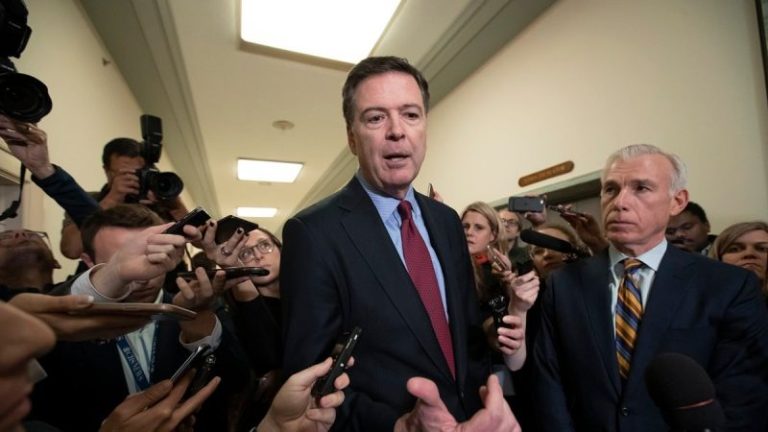
The dossier was garbage, of course. The FBI largely debunked it before Trump was even sworn in and fired its author, Christopher Steele, for lying as a confidential human source. But the bureau concealed those inconvenient facts under then-Director James Comey and deftly exploited the document as a cudgel to bludgeon the newly elected president.  

Comey was aided and abetted by others in the intelligence community, including CIA Director John Brennan and Director of National Intelligence James Clapper. This malignant force of unelected officials plotted to smear Trump with what is surely the dirtiest trick in political history.  

Recently, current CIA Director John Ratcliffe declassified and released an internal agency review of the machinations that helped fuel the Russia hoax. In a statement posted on social media, Ratcliffe stated, ‘All the world can now see the truth: Brennan, Clapper and Comey manipulated intelligence and silenced career professionals — all to get Trump.’ 

Citing previously hidden records, the review concluded that Brennan, in particular, pushed for the phony dossier to be included in the Intelligence Community Assessment (ICA) to catalyze a false narrative against Trump. Senior CIA experts on Russia objected but were sidelined and silenced.  

The CIA’s deputy director for analysis warned Brennan in writing that including the discredited dossier in any capacity jeopardized ‘the credibility of the entire paper.’ Brennan didn’t care. The fiction penned by the ex-British spy conformed to the director’s preconceived fable that Trump colluded with Russia.  

The ICA, which was ordered by President Barack Obama, was rushed to completion just days before Trump’s inauguration. Brennan directed its composition and handpicked the analysts who compiled the ersatz information. To stifle dissent, 13 other key intelligence agencies were deliberately excluded. To put it bluntly, Trump was set up.  

According to the new CIA review, Comey and Clapper were all in on the scheme. In an interview with the New York Post, Ratcliffe said, ‘This was Obama, Comey, Clapper and Brennan deciding ‘We’re going to screw Trump.’’ 

They knew the dossier was junk, which motivated them to prop it up as a reliable indictment of Trump. By incorporating it in the ICA they could leak and propagate both documents as mutual corroboration. It was a clever ruse. An illusion.  

Those of us who have long covered the bogus collusion story knew it long ago. In my 2019 book, ‘Witch Hunt,’ I recounted how Brennan ‘insisted that the dossier be included in the classified intelligence report,’ but then told Congress under oath that the dossier was ‘not in any way used as the basis for the intelligence community’s assessment.’ Clapper’s testimony was nearly identical.  

Here is what I wrote in chapter 2: 

‘Brennan and Clapper were spinning a deception. A prominent colleague contradicted them and produced documents as proof that they were not telling the truth. In a classified letter to Congress, National Security Agency director Michael Rogers disclosed that the uncorroborated document (the dossier) ‘did factor into the ICA’ report. Having been caught in a falsehood, Clapper then repudiated his earlier statement. Brennan continued to deny all of it, the contrary evidence notwithstanding.’  

Neither Brennan nor Clapper was ever prosecuted for perjury.  

None of that bothered news organizations. MSNBC promptly hired Brennan, while Clapper went to work for CNN. I described what they did from their media perches:  

‘The two super spooks launched an all-out attack on Trump, exploiting their new television platforms to advance the toxic fiction that the president was a secret Russian asset who had ‘colluded’ with Putin. It didn’t matter to CNN that a House Intelligence Committee report determined that it had been Clapper who had leaked news of the phony dossier to the network before Trump had ever taken office.’  

The collusion narrative was a conspiracy itself. The collaborators knew it was a lie, but they manipulated the dossier and the ICA to peddle their fairy tale. With Hillary and her confederates, they engineered the hoax. Brennan even accused Trump of treason.  

Comey also knew the dossier was spurious, as I wrote in chapter 4:  

‘He knew exactly where the dossier came from and who paid for it. He used it as the primary basis for the warrants, used it as part of the nonpublic version of the intelligence community assessment, and used it to debrief President-elect Trump so that it could be leaked to the media in January 2017.’ 

They knew the dossier was junk, which motivated them to prop it up as a reliable indictment of Trump. By incorporating it in the ICA they could leak and propagate both documents as mutual corroboration. It was a clever ruse. An illusion.  

Comey’s decision to purloin and leak additional FBI documents triggered — just as he planned — the appointment of Special Counsel Robert Mueller and his dilating investigation of Trump that hobbled his presidency for two years.  

On the day that Mueller issued his report concluding that there was no evidence of a Trump-Russia collusion conspiracy, the sheepish Brennan conceded, ‘I don’t know if I received bad information, but I think I suspected there was more than there actually was.’  

That’s quite the Jekyll-Hyde metamorphosis for a guy who enthusiastically endorsed the dossier and who kept claiming that ‘it was in line’ with his own CIA sources, in which he ‘had great confidence.’ That, too, was a fabrication, according to the newly released CIA review.  

What did Comey have to say?  In public, the master prevaricator dissembled and pleaded ignorance.  But before Congress, he was forced to admit that some of his actions would have been different had he known then what he knows now.  Not likely.  He was wedded to the artifice of collusion because he despised Trump. 

Director of National Intelligence Tulsi Gabbard has vowed a reckoning. She told Fox News, ‘We are digging deep to find everything that has been related to this, and I guarantee you there are some U.S. attorneys who are eager to see what we are finding — in some cases are already working their own cases to bring about that necessary accountability.’  

Unless those who unscrupulously weaponized their immense power for political purposes are held to account, it will happen again. And again. The only remedy for lawlessness is justice.  

The reckoning awaits. 

This post appeared first on FOX NEWS

The Cato Institute is warning that the federal government is testing the outer limits of executive power with President Donald Trump’s use of emergency tariffs, and it wants the courts to put a stop to it.

In a new amicus brief filed in V.O.S. Selections, Inc. v. Trump, Cato argues that the president overstepped his legal authority under the International Emergency Economic Powers Act (IEEPA) by imposing steep tariffs on imports from countries including China, Mexico and Canada.

The libertarian thinktank argues the move undermines the Constitution’s separation of powers and expands executive authority over trade in ways Congress never intended.

‘This is an important case about whether the president can impose tariffs essentially whenever he wants,’ Cato Institute legal fellow Brent Skorup said in an exclusive interview with Fox News Digital. ‘There has to be a limit — and this administration hasn’t offered one.’

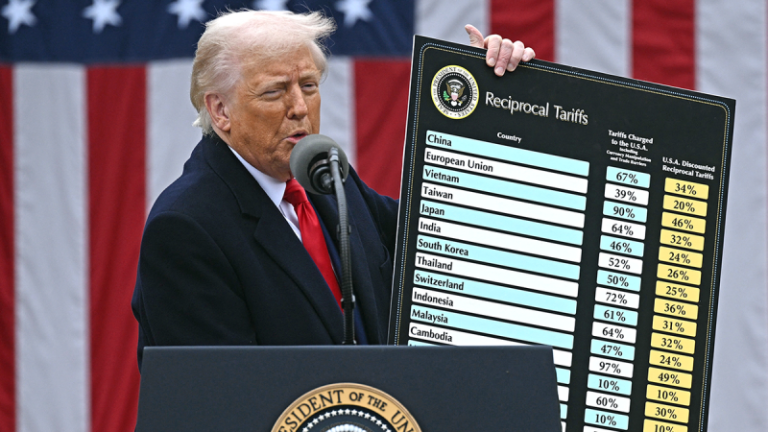
‘Tariff rates went up to 145% on some products from China,’ he said. ‘And the president’s lawyers couldn’t offer a limiting principle. That tells you the administration believes there’s no real cap, and that’s a problem.’

Cato’s brief urges the appeals court to uphold a lower court ruling that found the tariffs exceeded the president’s statutory authority. The U.S. Court of International Trade ruled earlier this year that the president’s use of IEEPA in this case was not legally authorized. The court said the law does not permit the use of tariffs as a general tool to fight drug trafficking or trade imbalances.

Skorup said in court the administration was unable to define a clear limit on its authority under IEEPA. 

‘They couldn’t articulate a cap,’ he said. ‘There’s nothing in the law that mentions duties or tariffs. That’s a job for Congress.’

The administration has defended its actions, arguing that IEEPA provides the necessary tools for the president to act swiftly in times of national emergency. Trump officials maintain that both the fentanyl crisis and America’s trade vulnerabilities qualify.

‘There are real emergencies, no one disputes that,’ Skorup said. ‘But declaring an emergency to justify global tariffs or solve domestic trade issues goes far beyond what most Americans would recognize as a legitimate use of emergency powers.’

Skorup acknowledged that the real issue may be how much discretion Congress gave the president in the first place. 

‘It’s a bipartisan problem. Presidents from both parties have taken vague laws and stretched them. Congress bears some of the blame for writing them that way,’ he said, adding that’s why courts should ‘step in and draw the line.’

For small businesses like V.O.S. Selections, the costs go beyond legal fees. Skorup said businesses who rely on imports, like V.O.S., have struggled to plan ahead as tariffs have been paused and reinstated repeatedly.

Skorup said there are several small businesses that rely on global imports and it becomes a ‘matter of survival’ when tariff rates change unexpectedly.

‘V.O.S. Selections imports wine and spirits and when the tariff rates go up unexpectedly, they can’t get products to their distributors as planned,’ he said. ‘And that’s true for others too, like pipe importers and specialized manufacturers. These companies don’t have the flexibility to absorb those costs or adjust overnight.’

If the appeals court sides with the administration, it could mark a major expansion of presidential power over trade policy. Skorup warned that such a ruling would allow future presidents to take similar actions with little oversight.

‘It would bless Congress’ ability to hand over immense economic power to the president,’ he said. ‘That would blur the separation of powers that the Constitution is supposed to protect.’

A decision from the appeals court is expected later this year.

The White House did not immediately respond to Fox News Digital’s request for comment.

This post appeared first on FOX NEWS
A Senate Republican wants to give the U.S. a leg up in its race against China and to ween the nation off of its reliance on imports of key raw materials needed for weapons systems.

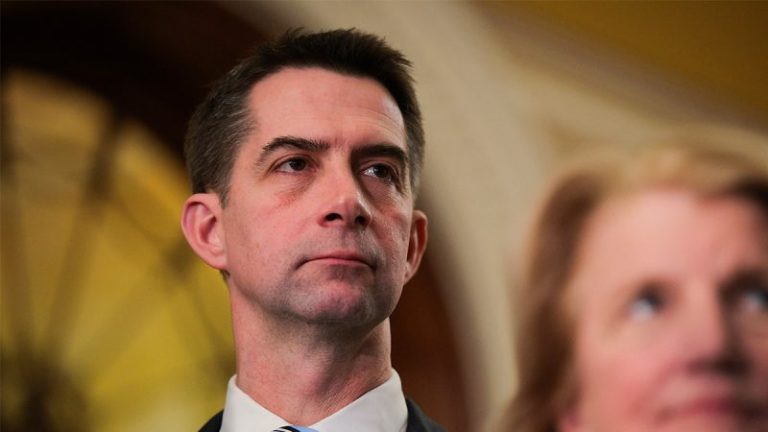
Sen. Tom Cotton, R-Ark., would like to fast-track the harvesting of raw materials in the U.S. needed for the nation’s defensive capabilities, and plans to blow through federal and judicial red tape to do it.

Cotton plans to introduce legislation that would allow critical mineral mining projects deemed necessary to bolster the nation’s military and defensive readiness by Secretary of Defense Pete Hegseth to skirt environmental laws and possible blockages by the courts.

His bill is designed to give the U.S. an edge against China, the world’s largest producer of critical minerals like cobalt, lithium, graphite and other rare earth minerals used in weapons systems, electric vehicles and consumer electronics.

Currently, China produces roughly 60% of the world’s critical mineral supply, and processes up to 90%.

‘Current environmental laws put our readiness to counter Communist China at risk and waste taxpayer dollars on projects that stall out and die on the vine,’ Cotton said in a statement to Fox News Digital. ‘This bill will create jobs, better arm and prepare our soldiers, and spend taxpayer dollars more efficiently.’

Cotton’s bill, dubbed the Necessary Environmental Exemptions for Defense Act, would create a waiver for mining activities and projects related to countering China and to allow the Pentagon to ‘operate with maximum agility and efficiency to ensure it is prepared to deter and, if necessary, fight and win a conflict with the Chinese Communist Party,’ according to bill text first obtained by Fox News Digital.

Among the regulations and environmental review standards that could be skirted with the waiver are the National Environmental Policy Act, Endangered Species Act, Marine Mammal Protection Act and Federal Water Pollution Control Act.

Cotton argued in his legislation that the aforementioned regulations ‘frequently and unnecessarily delay’ the preparedness of the military without ‘substantial benefit to the environment or protected species,’ and that time is of the essence when it comes to national defense.

The projects that would fall under the umbrella of the regulation exemption include testing and production and deployment of technologies, systems or equipment and the construction, maintenance, expansion, or repair of facilities or Defense Department infrastructure, among others.

It would also prevent projects from being snarled in the courts, as long as the initiative is deemed necessary for military preparedness by the Secretary of Defense.

The bill fits into the White House’s broader plan to jump-start critical mineral mining in the country, be it through executive action, a bid to buy Greenland, a minerals agreement with Ukraine, or opening up more offshore mining in the Gulf of America.

It also comes after President Donald Trump reached a deal with Chinese President Xi Jinping to resume trade of critical minerals after shipments were stopped earlier this year following the White House’s slew of tariffs against China and other countries. 

This post appeared first on FOX NEWS
The Trump administration landed a legal victory on Monday after a federal judge allowed the Department of Justice (DOJ) to rescind nearly $800 million dollars in grants for programs supporting violence reduction and crime victims.

U.S. District Judge Amit Mehta in Washington denied a preliminary injunction that five organizations sought against the DOJ’s cancellation of more than 360 grant awards and granted a motion to dismiss the case. 

Metha described the DOJ’s actions as ‘shameful’ in his ruling, though he ultimately declared that the court lacked jurisdiction and the organizations had failed to state a constitutional violation or protection.

‘Defendants’ rescinding of these awards is shameful. It is likely to harm communities and individuals vulnerable to crime and violence,’ Mehta wrote. ‘But displeasure and sympathy are not enough in a court of law.’

The DOJ’s Office of Justice Programs canceled more than $800 million in grants in April as part of what it called a priority shift to include more direct support to certain law enforcement operations, combat violent crime and support American victims of trafficking and sexual assault.

Democracy Forward Foundation and the Perry Law firm filed the lawsuit, arguing the grant terminations did not allow due process, lacked sufficient clarity and violated the constitutional separation of powers clause that gives Congress appropriation powers.

The loss of the federal money triggered layoffs, program closures and loss of community partnerships, according to many of the organizations that had the grants rescinded.

The Justice Department argued in a court filing that there was ‘no legal basis for the Court to order DOJ to restore lawfully terminated grants and keep paying for programs that the Executive Branch views as inconsistent with the interests of the United States.’

Noting that it intended to redirect the grant funds, it called the suit a ‘run-of-the mill contract dispute’ and said it belonged in a different court.

The Associated Press contributed to this report.

This post appeared first on FOX NEWS
The year’s second quarter was a defining period for digital assets.

The industry converged at events like Consensus, held in May in Toronto, where discussions heavily focused on critical themes like regulatory clarity and real-world asset (RWA) tokenization.

Stablecoins, with their promise of enhanced cross-border payment efficiency, were heavily covered, especially regarding the growing interest and innovation in yield-generating products.

Legislative initiatives, policy shifts and infrastructure developments have moved at a dizzying pace, and the ongoing integration of traditional finance with decentralized technologies has driven credibility and institutional engagement.

Looking ahead, continued adoption of digital assets is slated to reshape the global financial landscape fundamentally.

Q2 review: Market maturation, institutional integration and regulatory milestones

Q2 highlighted a maturing market that can absorb shocks while maintaining focus on long-term growth.

While scrutiny of officials’ crypto dealings, including those of US President Donald Trump and his family, kept headlines lively, the broader trend was one of increased credibility.

Early in the quarter, trade tensions between the US and China, combined with ongoing concerns that tariffs will lead to an economic fallout, dampened investor sentiment and weighed on risk assets.

However, investor confidence in Bitcoin was evident in its resilience. After a slide to around US$76,000 at the start of April, it reached the US$90,000s mid-month, before hitting a new all-time high of US$111,000 on May 22.

Institutional accumulation and clearer regulatory signals backed this sentiment, exemplified by the US Securities and Exchange Commission’s (SEC) approval of rule changes allowing Ether exchange-traded fund (ETF) options.

The SEC also updated its guidance on crypto company disclosures, while US President Donald Trump signed a resolution repealing the IRS’s DeFi broker rule. Closing off the quarter, the Federal Housing Finance Agency directed mortgage backers Fannie Mae and Freddie Mac on June 25 to propose single-family mortgage loan risk assessments that consider cryptocurrency on US-regulated exchanges as reserve assets.

These policy shifts were accompanied by surging investor interest in tokenized assets, including tokenized gold — with PAXG and XAUt hitting US$1.54 billion in market cap — and RWA products, particularly within real estate. Momentum was further extended into stablecoin yield products and new ETF filings.

A US$300 million large-scale infrastructure deal between global financial group Macquarie (ASX:MQG) and Bitfarms (TSX:BITF,NASDAQ:BITF) for a high-performance computing center exemplified the growing confidence among fintechs in the long-term viability of digital assets. This growing confidence was further underscored by Robinhood’s (NASDAQ:HOOD) expansion of its crypto footprint, notably with the early June acquisition of Bitstamp.

Combined, these events demonstrated growing market confidence in crypto’s future.

Meanwhile, Ripple’s acquisition of global prime broker Hidden Road signaled a new phase in TradFi-DeFi integration, accompanied by the Fed’s easing of restrictions on banks’ crypto exposure.

The Office of the Comptroller of the Currency’s clarification allowing banks to trade and outsource crypto operations signaled that US regulators increasingly view crypto infrastructure as critical to modern financial services.

Reports of Circle (NYSE:CRCL), BitGo, Coinbase Global (NASDAQ:COIN) and Paxos exploring bank charters further underscored the convergence of TradFi and DeFi, as did Coinbase’s US$100 million credit facility to Riot Platforms (NASDAQ:RIOT); this type of structured financing is typically reserved for banks.

Further solidifying this trend, Stripe finalized a deal to acquire Privy, bringing crypto wallet infrastructure in-house and underscoring how fintech leaders are embedding digital asset rails into their core platforms.

Coinbase also acquired derivatives marketplace Deribit, a US$2.9 billion investment, part of a broader move to dominate digital asset infrastructure and market access. In the retail space, investor exposure widened through Galaxy Digital (NASDAQ:GLXY) and Circle’s Wall Street debut.

Policy also evolved. The GENIUS Act, a legislative companion to the STABLE Act, advanced in the Senate, proposing guardrails for stablecoins while carving out flexibility for banks to issue tokenized deposits, while crypto reserve legislation advanced in New Hampshire, Texas and Arizona.

Still, operational risks remained. A US$223 million exploit hit the Cetus protocol, and Coinbase suffered a US$20 million ransomware attack, reminders that digital assets remain a high-stakes environment.

Bitcoin price performance, Q2 2025. 

Chart courtesy of CoinGecko.

Q3 outlook: Regulatory progress, tokenization growth and market expansion

Further regulatory clarity is expected in Q3, clearing the way to enable more use cases and a deeper integration between DeFi and TradFi. House Republicans are prioritizing the swift enactment of comprehensive stablecoin legislation, aiming to unify the Senate’s GENIUS Act and the House’s STABLE Act.

Meanwhile, the CLARITY Act, which has a broader focus on establishing a general market structure for all digital assets, is positioned for a vote in the House of Representatives after clearing two committees.

Regulators on the SEC’s Crypto Task Force are considering a conditional exemptive order to allow crypto firms to bypass certain broker-dealer, clearing agency and exchange registration requirements. The nuances of regulated staking activities are still being worked out, especially regarding how they apply to specific products like ETFs.

On the retail front, tokenization momentum shows no sign of slowing. A discussion group on RWAs at Consensus agreed that the resurgence of tokenization is largely driven by the utility and functionality it provides to assets.

Beyond efficiency, Carlos Domingo, co-founder and CEO of Securitize, added that tokenization brings assets with intrinsic, real-world value onto the blockchain, allowing new financial applications and broader access to those holdings.

“Now we’re seeing more large-scale production,” he explained.

“We’re seeing (things) like precious minerals coming up, and we’re seeing commodities and other equities, a lot of startups that want to tokenize and use platforms like ours to tokenize their cap tables.”

At Consensus, Arthur Breitman, co-founder of Tezos, explained that his platform, uranium.io, enables the trading of physical uranium using a token, xU3O8, which allows for fractional ownership of a commodity that trades over-the-counter for roughly US$4 million. “Typically, uranium will look at pounds, but you can buy a fraction of a token. So really, you can buy a few cents of xU308,” he told the audience during his presentation.

Additionally, crypto infrastructure development by major fintechs and traditional finance entities, coupled with new public market entrants, could broaden investment opportunities.

For Q3, investors will be monitoring key publicly traded players such as Robinhood, fresh off its Bitstamp acquisition, as well as new Wall Street newcomers Circle and Galaxy Digital.

In the mining and compute infrastructure sector, CoreWeave (NASDAQ:CRWV) is in advanced talks to acquire Core Scientific (NASDAQ:CORZ), marking a move to merge compute-intensive infrastructure with mining operations, driven by crossover demand from AI and crypto sectors.

Beyond dedicated crypto firms, Strategy (NASDAQ:MSTR) and Japan’s Metaplanet (TSE:3350,OTCQX:MTPLF) added substantially to their crypto holdings in Q2, with no signs of slowing down.

For Bitcoin, price projections for Q3 range between a new resistance level around US$120,000 and support at US$75,000. ARK Invest increased its Bitcoin price forecast for 2030 from US$1.5 million to US$2.4 million in Q2, citing growing institutional interest and Bitcoin’s expanding role as “digital gold.’

These developments suggest Q3 will may continue building on the credibility and utility that defined Q2. With regulation advancing, institutional rails expanding and tokenization gaining real-world traction, digital assets are increasingly seen not as a parallel world to the world of finance, but as the next evolution of it.

Securities Disclosure: I, Meagen Seatter, hold no direct investment interest in any company mentioned in this article.

This post appeared first on investingnews.com

Here’s a quick recap of the crypto landscape for Friday (July 4) as of 12:00 p.m. UTC.

Get the latest insights on Bitcoin, Ethereum and altcoins, along with a round-up of key cryptocurrency market news.

Bitcoin and Ethereum price update

Bitcoin (BTC) is priced at US$108,948, down by 1.6 percent in the last 24 hours. The day’s range for the cryptocurrency brought a low of US$107,741 and a high of US$109,997.

Bitcoin price performance, July 4, 2025.

Chart via TradingView.

Bitcoin’s rally to US$108,000 followed strong US labor data that boosted risk appetite early on, alongside continued inflows into Bitcoin spot ETFs (nearly US$50 billion), which helped anchor prices despite broader equity market pullbacks.

Market watchers also noted heightened volatility following the reactivation of two long-dormant Bitcoin wallets containing roughly 20,000 BTC (worth over US$2 billion), raising questions about potential future dumping.

Ethereum (ETH) is priced at US$2,549.85, down by 2.7 percent over the past 24 hours. Its lowest valuation on Wednesday was US$2,502.39 and its highest was US$2,600.55.

Altcoin price update

  • Solana (SOL) was priced at US$150.30, up by 5 percent over 24 hours. Its highest valuation as of Friday was US$153.26, and its lowest was US$146.61.
  • XRP was trading for US$2.24, down by 1.4 percent in 24 hours. The cryptocurrency’s lowest valuation was US$2.21 and its highest was US$2.28.
  • Sui (SUI) is trading at US$2.92, showing a decrease of 3.6 percent over the past 24 hours. Its lowest valuation was US$2.87 and its highest was US$3.07.
  • Cardano (ADA) is priced at US$0.5817, down by 3.1 percent in the last 24 hours. Its lowest valuation as of Wednesday was US$0.5715 and its highest was US$0.6028.

Today’s crypto news to know

Trump’s Big Beautiful Bill passes Congress, sending cryptos higher

US President Donald Trump’s flagship Big Beautiful Bill, featuring sweeping tax cuts, narrowly passed the House of Representatives on July 3 with a 218 to 214 vote and now awaits his signature.

Elon Musk criticized the bill for potentially inflating the deficit by trillions, while Trump suggested Musk’s criticism stemmed from policy clashes on EV incentives.

Coinbase Global (NASDAQ:COIN) CEO Brian Armstrong also raised concerns that a ballooning debt could paradoxically fuel Bitcoin’s status as a reserve asset.

Bitcoin traded near US$109,886 after the news, with other leading coins including Ethereum and Solana also posting gains. The total crypto market cap climbed to US$3.39 trillion following the vote.

Bitcoin power shift as whales sell 500,000 BTC to institutions

A major redistribution of Bitcoin is underway as long-time holders of large amounts of Bitcoin have sold off around 500,000 Bitcoin over the past year, worth more than US$50 billion at current prices.

According to a Bloomberg report, these sales are being absorbed almost equally by institutional buyers, including spot ETFs and corporate treasuries. That pattern is turning Bitcoin from a high-volatility speculative bet into a steadier institutional portfolio allocation. Despite consistent positive news for crypto in recent months, the asset has struggled to break through resistance around US$110,000, showing a consolidation phase.

Some of the whales cashing out are early holders dating back to Bitcoin’s earliest cycles, Bloomberg reports, who are swapping Bitcoin for stock-linked deals instead of simply liquidating.

Russian giant Rostec to issue ruble-backed stablecoin

State-owned Russian conglomerate Rostec is moving to launch a ruble-pegged stablecoin called RUBx and a payments network named RT-Pay before year-end, according to Russian state media.

The stablecoin will be anchored one-to-one with ruble deposits held in treasury accounts, and its code will be independently audited by CertiK. RT-Pay will integrate directly with Russia’s banking system, aiming for instant settlement and smart contract functionality even outside business hours.

Rostec says its platform will follow Russia’s anti-money-laundering and terrorism-financing requirements, in line with the Bank of Russia’s rules.

The stablecoin will run on the Tron blockchain, with its smart contract code to be published on GitHub.

Coinbase’s Base sees US$4 billion in outflows, Ethereum gains US$8.5 billion

Coinbase’s Layer 2 network Base has lost significant traction this year, registering US$4.3 billion in net outflows through cross-chain bridges, data shows.

This downturn is a sharp reversal from the US$3.8 billion of inflows Base attracted in 2024, when it led the sector in bridge activity. Meanwhile, Ethereum has staged a comeback, seeing US$8.5 billion in inflows compared to net outflows last year.

The slowdown in stablecoin supply growth on Base, now holding steady above US$4 billion since May, points to a maturing user base and declining trading volumes.

Bridges are key pieces of crypto infrastructure that allow assets to move between chains, supporting interoperability.

Nano Labs starts US$1 billion BNB buying plan with US$50 million purchase

Hong Kong-based chipmaker Nano Labs (NASDAQ:NA) has made its first major move in an ambitious plan to hold up to 10 percent of Binance Coin (BNB) in circulation, snapping up US$50 million of BNB this week.

The company disclosed buying around 74,315 BNB at an average price of US$672, funded partly by convertible notes.

Nano Labs ultimately plans to allocate US$1 billion to BNB holdings, signaling a vote of confidence in Binance’s ecosystem. However, its shares fell nearly 5 percent on Thursday and lost another 2 percent after hours, reflecting investor worries about its exposure to volatile crypto reserves.

Nano Labs’ reserves, including Bitcoin, now stand around US$160 million in total.

Securities Disclosure: I, Giann Liguid, hold no direct investment interest in any company mentioned in this article.

This post appeared first on investingnews.com

Investor Insight

Quimbaya Gold’s strategic focus on Colombia offers a compelling opportunity for gold exploration in a prolific, yet underexplored region supported by a favorable permitting environment. The upside potential is worthy of examination by any savvy investor.

Overview

Quimbaya Gold (CSE:QIM) is a junior gold exploration company focused on its high-grade gold projects in Colombia. The company’s portfolio spans 59,057 hectares across three highly prospective regions in the Antioquia mining district. This region is responsible for approximately 50 percent of Colombia’s total gold production, equivalent to around 1 million ounces (Moz) annually.

Positioned right next to Aris Mining’s (TSX:ARIS) Segovia mine, Quimbaya leverages its proximity to established infrastructure and gold-rich geological formations. With Colombia being one of the most underexplored yet top mining jurisdictions in South America, Quimbaya’s projects are uniquely poised for significant discoveries.

Quimbaya’s projects benefit from Colombia’s favorable permitting environment, enabling faster transitions from discovery to production, compared to its global peers. Quimbaya’s strategy focuses on value creation through new discoveries and monetizing them via strategic transactions, including joint ventures and operational contracts.

Quimbaya has established a significant partnership with Independence Drilling, Colombia’s largest drilling company with over 40 years of experience. The agreement secures 100,000 meters of drilling over five years, with Independence Drilling accepting part of its payment in Quimbaya shares. This innovative structure demonstrates strong confidence in Quimbaya’s projects, ensuring cost-effective and efficient drilling operations.

The company’s management team brings extensive and deep expertise in exploration in Colombia, corporate finance and project development. Quimbaya trades on multiple exchanges: CSE (QIM), OTCQB (QIMGF), and FSE (K05).

Company Highlights

  • Quimbaya Gold controls 59,057 hectares across three distinct projects in Antioquia, Colombia — renowned as the country’s top mining department, accounting for over half of Colombia’s gold production.
  • The flagship Tahami project is adjacent and on trend to Aris Mining’s Segovia mine, one of the highest-grade gold mines globally. Tahami benefits from its strategic proximity to Segovia and its potential for discovery of high-grade vein gold systems.
  • Tight share structure (60 percent insider/family offices/institutions ownership) with a market cap of approximately C$11.45 million, ensuring alignment with shareholder interests.
  • Quimbaya has entered into a partnership with Independence Drilling, Colombia’s largest drilling company, which secures an extremely cost-effective 100,000 meters of drilling over five years.
  • Quimbaya utilizes software that allows for rapid and cost-effective acquisition of mining claims, giving the company a competitive edge in securing high-value assets.
  • The technical team’s proven track record of major discoveries in Colombia positions Quimbaya as a standout explorer in the region.
  • Fully funded into 2026 for multi-project advancement in Colombia after closing $4 million financing

Key Projects

Tahami Project (Flagship)

The Tahami project is located in Segovia, Antioquia, adjacent to Aris Mining’s Segovia mine, one of the highest-grade gold mines in the world. Spanning 17,087 hectares, Tahami’s geology features mesothermal veins with multiple mineralization events underlain by Precambrian metamorphic rocks consolidated within the San Lucas Gneiss unit.

Several vein systems from Aris Mining’s Segovia project, including the Sandra K and El Silencio veins, extend towards Quimbaya’s tenements. Both the Sandra K and El Silencio veins align with structural orientations of known high-grade deposits. The project also boasts more than 25 historical artisanal mines, underscoring its prospectively.

Quimbaya’s exploration plan for Tahami involves leveraging advanced geochemical and geophysical surveys to generate drill targets. These efforts will be complemented by modern 3D geological modelling and an initial drilling campaign to test high-grade zones. The integration of historical data and cutting-edge technology positions Tahami as a prime asset for discovery. The initial drilling campaign is anticipated to commence by late Q2 of 2025 and will prioritize the high-grade targets identified in preliminary exploration work.

Maitamac Project

Located in Abejorral, Antioquia, 80 kilometers south of Medellín, the Maitamac project spans 33,223 hectares and offers excellent road access. This emerging gold metallogenic district features mesothermal veins and potential porphyry gold-copper systems.

Initial surface rock samples have reported gold grades of up to 3.2 g/t, with stream sediments revealing over 1 g/t gold. Identified as a promising district by the Colombian Geological Services, Maitamac is positioned alongside the past producing ABE project and structural corridor which has produced mined shoots averaging 26 g/t gold.

Team

Alexandre P. Boivin – CEO and Director

Alexandre Boivin is an entrepreneur with more than 10 years of experience in corporate finance and Colombian mining. Through his extensive experience in the mining industry, corporate finance, capital markets and business development, Boivin has been instrumental in managing and funding early-stage companies through a network of partners and investors immersed in the capital markets. Under his leadership, Quimbaya Gold has secured significant investments to advance its exploration projects. His commitment to the company’s growth is further demonstrated by his substantial shareholding in Quimbaya Gold.

Olivier Berthiaume – CFO and Director

Olivier Berthiaume is an accountant with over 12 years of experience working with early-stage companies in the Canadian markets. He holds a Bachelor of Business Administration from HEC Montreal and specializes in private-to-public market transactions, compliance, corporate governance, and corporate growth strategies. Berthiaume has held various director and officer positions in junior mining companies.

Sebastian Wahl – Vice-president, Business Development

Sebastian Wahl brings over 15 years of experience in the mining industry, with a strong focus on precious metals trading, capital markets, and corporate development. Wahl has played a pivotal role in shaping Quimbaya Gold’s strategic direction and elevating its external positioning during a critical growth phase.

Ricardo Sierra – Exploration Manager

Ricardo Sierra is a professional economic Geologist with over 18 years of exploration experience in Colombia-Chile-Cuba-Brazil in orogenic, mesothermal, porphyry type deposits, epithermal systems, and stratabound. Sierra started his career with ANGLO AMERICAN as an exploration geologist in greenfield and brownfield exploration, supervising diamond drilling on their Colombian properties. His knowledge in vein systems, critical in understanding mineralization processes, was honed while exploration superintendent with Continental Gold (now Zijin Mining Group) on their Buritica (Antioquia) deposit, also in their regional exploration (Choco, Nariño, Cauca, Antioquia). Sierra graduated in 2007 as a geologist from Universidad de Caldas (Colombia). He is a member of the Australian Institute of Mining and Metallurgy (MAusIMM) and is a qualified person (QP) as defined by National Instrument 43-101, also he is a Competent Person (CP) of Comision Colombiana de Recursos y Reservas Mineras (CCRR).

Dr. Stewart Redwood – Senior Technical Advisor

Stewart Redwood is a distinguished geological consultant with more than 40 years of experience in mineral exploration and economic geology, specializing in epithermal, porphyry and skarn deposits, particularly in Latin America and the Caribbean. His notable achievements include significant discoveries, including the San Cristobal silver-zinc deposit in Bolivia, the Romero gold-copper deposit in the Dominican Republic, and the Antamina copper-zinc project in Peru, recognized as the world’s largest copper skarn deposit. Throughout his career, Redwood has held key positions in prominent mining and exploration companies, including as chief geologist Latin America for AngloGold Ashanti, founder president and CEO of GoldQuest Mining, and VP exploration of Colombia Goldfields (which merged with Gran Colombia Gold). He has been instrumental in the success of Gran Colombia Gold’s Marmato project (now owned by Aris Mining), currently an 8.8 Moz deposit in the construction stage.

Nicolas Lopez Villegas – Technical Advisor

A Colombian native, with over 28 years of experience focused in the mining district of Antioquia, currently the CEO of MINING BRAIN SAS, Nicolas Lopez, leads this consulting company advising on the implementation, development of sustainable mining projects all over Colombia. Prior to the establishment of his consultancy practice, Lopez spent 12 years as Colombia & Nicaragua’s country manager for IAMGOLD, having devoted the previous 10 years with MINEROS SA as head of exploration & geology. Villegas played a pivotal role in major discoveries, including the first porphyry copper-gold deposit in the Colombian middle Cauca belt, known as Titiribi. a significantly rich gold-copper geological region. As a seasoned executive in gold exploration, Villegas holds a geology degree from Universidad de Caldas (Colombia), a Governance in Oil & Mining degree from Oxford University (UK) and he is a Qualified Person (QP).

Terence Ortslan – Advisor

Terence Ortslan is a seasoned resource executive with over 40 years of experience, having served in advisory capacities across the mining, metals, and fertilizer sectors. He provides guidance on investment and technical aspects of the industry, as well as strategic and policy advice tailored to mining companies. Additionally, Ortslan advises financial institutions on investment decisions, offers direction to international industry organizations, and consults with governments on fiscal and industrial regulations. He also supports universities in enhancing their educational standards and assists corporations with decision-making, boardroom leadership, shareholder value enhancement, and strengthening ES parameters. Ortslan holds a Bachelor of Engineering & Applied Geophysics and an MBA from McGill University.

This post appeared first on investingnews.com