
Author

admin

Browsing

In a year when the U.S. consumer has been weighed down by economic uncertainty, geopolitical tensions and inflation, Black entrepreneurs are eager to get to the Essence Festival of Culture to connect with their core customers.

“Essence Fest is like my Black Friday,” said Rochelle Ivory, owner of beauty brand On the Edge Baby Hair. “It is my biggest sales weekend of the year. It’s where I make all the capital I reinvest in my business.”

Essence Fest kicks off on Friday, with roughly 500,000 people attending the event in New Orleans. It generates around $1 billion in economic activity, according to organizers.

“It’s the cannot-miss event for us,” said Brittney Adams, owner of eyewear brand Focus and Frame. She said this year Essence Fest is even more important because she’s seen Black consumers pulling back on spending.

“I would say the uncertainty of just the economic and political climate — that’s giving people a little bit of hesitancy. Should they save the money? Should they buy the things they want?” Adams said.

Ivory said her sales are down roughly 30% year over year, but she’s hopeful people come to New Orleans looking to spend their time and money in the festival marketplace.

“This could make or break some of us,” she said. “It’s one of the few places where Black women, Black founders can really come together and be seen.”

The Global Black Economic Forum aims to bring visibility and create solutions for Black business owners at Essence Fest. This year speakers include Supreme Court Justice Ketanji Brown-Jackson and Maryland Gov. Wes Moore. Last year, then-Vice President Kamala Harris spoke.

“We intentionally curate a space that allows leaders to preserve, build and reimagine how we can collectively increase economic opportunity to thrive,” said Alphonso David, CEO of the GBEF.

While many Black Americans express economic anxiety, the data is less clear.

In the first quarter of this year, according to Federal Reserve data, the median weekly salary for Black workers was $1,192 a 5% increase year over year. Black unemployment stood at 6% in the most recent jobs report, a historically low number, but still higher than the national average of 4.2%.

However, the data doesn’t appear to fully reflect the sentiment for many Black Americans who are concerned about the political, cultural and economic shifts that have taken place since President Donald Trump’s election.

“Never let a good crisis go to waste,” said John Hope Bryant, founder and CEO of Operation Hope, one of the nation’s largest non-profits focused on financial education and empowerment.

Bryant said he sees the concerns of Black Americans as an opportunity in the second half of 2025.

“This president has done something that hasn’t been done since the 1960s, which is unify Black America. Wealth was created in the early 20th century because Blacks were forced to work together. But instead of Black Lives Matter, let’s make Black capitalist matter,” he said.

Pastor Jamal Bryant of New Birth Missionary Baptist Church has galvanized Black consumers with an organized boycott of Target that began in February in response to the retailer’s decision to roll back diversity, equity and inclusion initiatives.

Bryant said he is in discussions with Target but is ready to organize a longer-term boycott if the retailer does not fulfill the promises it made to the Black community after the killing of George Floyd. He is urging Black Americans to use the estimated $2.1 trillion dollars in spending power forecast by 2026 to drive economic and political change.

“I would dare say that ‘pocketbook protests’ are a revolutionary activity,” said Bryant.

“I think we have to be very selective in light of the ‘Big Ugly Bill’ that just passed and how it will adversely affect our community,” he said, referencing Trump’s megabill that passed through Congress this week.

Invest Fest, an event that blends commerce and culture created by financially focused media company Earn Your Leisure kicks off in Atlanta in August.

Co-CEOs Rashad Bilal and Troy Millings said the event will remain focused on financial literacy, but this year they are emphasizing the urgent need for education and entrepreneurship in technology.

“It’s definitely now or never, the time is now,” said Bilal.

“The important thing this year is the way technology is going to disrupt a lot of career paths and the businesses, and we have to prepare for that, which is why AI is at the forefront of the conversation, crypto is at the forefront of the conversations, real estate as always and entrepreneurship,” said Millings.

New this year is a partnership with venture capital firm Open Opportunity and a pitch competition where an entrepreneur can win $125,000 in funding to scale their business.

“We need more businesses that can reach $100 million valuation to a $1 billion valuation, get on the stock market. The pathway to that 9 times out of 10 is technology,” Bilal said.

The National Black MBA Association Conference in Houston in September will have a similar tone. The event is known for its career fair where the nation’s largest companies recruit as well as for networking and vibrant social activities.

This year, interim CEO Orlando Ashford is working to establish artificial intelligence education and financial literacy as pillars of the event.

“Doing business as usual is not an option,” Ashford told CNBC. “AI is something I literally refer to as a tsunami of change that’s on its way. All of us will be forced to pivot in some ways as it relates to AI. Those of us that are out in front, that embrace it and leverage it actually can turn it into a tremendous and powerful opportunity. Those that wait and ignore it will be overtaken by the wave.”

This post appeared first on NBC NEWS

Roblox Corporation (RBLX), the company behind the immersive online gaming universe, has been on a strong run since April. This isn’t the first time the stock demonstrated sustained technical strength: RBLX has maintained a StockCharts Technical Rank (SCTR) above 90, aside from a few dips, since last November.

Currently, RBLX is showing up on a few scans that may signal an opportunity for those who are bullish on the stock. It currently ranks among the SCTR Report Top 10, but also appeared on a few cautionary scans, including the Parabolic SAR Sell Signals and Overbought with a Declining RSI scans (both of which are available in the StockCharts Sample Scan Library).

So here’s the question: Is RBLX a strong stock that’s about to undergo a buyable dip?

Weekly Chart: Key Breakout and Resistance Levels

Before we explore that question, let’s take a look at a weekly chart for a broader perspective.

FIGURE 1. WEEKLY CHART OF RBLX. The stock is barely above halfway between its three-year lows and highs. If it delivers the growth investors expect, you could see another leg higher once the pullback completes.

The weekly chart shows RBLX trading in a broad range from late 2022 to late 2024, repeatedly failing to clear resistance near $47–$48. When it finally broke out in November, the stock’s technical strength was reflected in its SCTR score, which held a sustained position above the 90 line save a few declines.

Breaking above the $47–$48 resistance was a key move, as that level turned into support in December and again in April, where RBLX established a base ahead of its current rally. The subsequent move up was sharp, arguably even parabolic, peaking at $106.17 before pulling back.

If you look closely, you’ll see a swing high at around the $125 level (December 2022). This marks a technical level that happens to align with several Wall Street price targets. The blue line at $140 marks RBLX’s all-time high. Both levels can serve as potential price targets and are also likely to act as resistance.

RBLX is a technically strong stock that is fundamentally robust, despite remaining unprofitable on a GAAP basis. With strong user engagement, accelerating revenue growth, and plenty of free cash flow, it’s a favorable growth stock. However, it’s overbought. So, for those looking to get in, what are the key levels to watch out for?

Daily Chart: Fixed and Dynamic Support Levels to Watch

Let’s shift over to a daily chart.

FIGURE 2. DAILY CHART OF RBLX. Although the stock is currently overbought, there are plenty of support levels below. If you’re bullish on the stock, now’s the time to add RBLX to your ChartLists and set price alerts.

The strength of RBLX’s current surge is highlighted by the Bollinger Bands. The stock has been “walking the band” over the past two months. Now that it has pulled back, it appears to be bouncing off the middle band, suggesting that investors are still accumulating the stock.

As far as the pullback is concerned, the Money Flow Index (MFI), a volume-weighted Relative Strength Index (RSI), shows that RBLX entered overbought territory in May and began declining in late June, revealing a divergence between MFI and price—an early signal that RBLX was about to pull back. That pullback materialized on Tuesday. Whether it continues in the coming sessions is something we’ll have to see. In contrast, the Chaikin Money Flow (CMF), a measure of volume-based momentum, suggests that buying pressure is still relatively strong.

Whether RBLX continues advancing or pulls back in the near term, keep an eye on the Bollinger Bands for potential support. You may also encounter a bounce and favorable entry point at $92.50, a “local” swing low.

Another stronger support level sits near $75, aligning with the February and April swing highs. HOWEVER, that’s a huge drop; if the price falls toward this level, you’d have to reevaluate the stock’s momentum, volume, market sentiment, and the broader economic factors that may be driving such a decline.

When to Consider Entering RBLX

If you’re bullish on the stock, RBLX is something you’ll want to monitor in the days ahead. Add it to your ChartLists and observe how it acts within the context of the Bollinger Bands. If the stock declines further, you may want to set a price alert at $92.50 to see how price responds to this recent swing low. As mentioned above, further declines would warrant a re-evaluation, so keep a close eye on the price action.

Is Roblox Stock Still a Buy?

RBLX’s surge reflects growing optimism about the company’s future growth prospects. While it isn’t profitable yet by GAAP standards, its strong performance relative to analyst expectations and its strong free cash flow have made it something of a Wall Street darling. For now, the technicals are the proof in the pudding. If it is what growth investors seek, the price action should provide evidence before the fundamentals validate it in the coming earnings quarters.


Disclaimer: This blog is for educational purposes only and should not be construed as financial advice. The ideas and strategies should never be used without first assessing your own personal and financial situation, or without consulting a financial professional.

Joe presents a deep dive into MACD crossovers, demonstrating how to use them effectively across multiple timeframes, establish directional bias, and improve trade timing. He explains why price action should confirm indicator signals, sharing how to identify “pinch plays” and zero-line reversals for higher-quality setups. Joe then analyzes a wide range of stocks and ETFs, from QQQ and IWM to Nvidia, Tesla, Palantir, and Reddit; he highlights the importance of momentum, relative strength, and ADX in spotting potential reversals or breakouts. This video is a must-see for traders looking to sharpen their multi-timeframe analysis.

The video premiered on July 2, 2025. Click this link to watch on Joe’s dedicated page.

Archived videos from Joe are available at this link. Send symbol requests to stocktalk@stockcharts.com; you can also submit a request in the comments section below the video on YouTube. Symbol Requests can be sent in throughout the week prior to the next show.

This week, Frank analyzes recent technical signals from the S&P 500, including overbought RSI levels, key price target completions, and the breakout potential of long-term bullish patterns. He examines past market breakouts and trend shifts, showing how overbought conditions historically play out. Frank also walks through a compelling mean-reversion trade idea in Apple, emphasizing its lagging performance and potential rebound based on past patterns.

This video originally premiered on July 2, 2025.

You can view previously recorded videos from Frank and other industry experts at this link.

Stocks keep notching record highs. If you’re like most investors, you’re probably wondering, “Should I really chase these prices or sit tight and wait for a pullback?”

Instead of overthinking and ending up in Analysis-Paralysis land, however, it may be worth exploring other avenues — and maybe even something you’ve never thought of.

Enter bearish counter-trend options strategies. Yup, it sounds crazy, especially when the S&P 500 ($SPX) and Nasdaq Composite ($COMPQ) closed at fresh highs. But here’s the reality: a well-planned put strategy has the potential to generate some revenue while you wait for the market to slow down or pull back. I got the idea after watching a recent video that dives into these strategies (worth watching if you haven’t).

Finding an Optimal Options Strategy

If you click the OptionsPlay Strategy Center tab on your StockCharts Dashboard (OptionsPlay Add-On for StockCharts required), choose the Bearish Counter Trend or Bullish Counter Trend categories (depending on whether the market is bullish or bearish), and then select the Bear Put Spread strategy, you’ll see all the stocks that meet the criteria. Since stocks are in a bullish trajectory, I decided to look at stocks in the Bearish Counter Trend list. I also chose the 45-day timeframe, a balanced risk profile, and $2,500 max risk. I sorted the list based on IV rank. Walt Disney Co. (DIS) made it to the top of the list.

A couple of points to consider:

  • A risk/reward ratio of 0.6 to 1
  • Disney’s earnings date of August 6, which falls before the spread expires.

However, looking through the other charts on the list, DIS appeared to be the most likely to pull back in the near term.

Here’s where the beauty of options comes into play. They’re extremely flexible, and you can tweak the strategies to give you a risk/reward that’s more desirable.

With that in mind, let’s dive into Disney’s stock chart and consider how low the stock could go.

Disney’s Daily Chart

Looking at the daily chart of DIS, the stock price has pulled back a bit, and momentum, although relatively high as indicated by the relative strength index (RSI) and percentage price oscillator (PPO), is showing signs of slowing down. If momentum continues to weaken, DIS could move lower and fall to around the $120 level (dashed blue horizontal line).

FIGURE 1. DAILY CHART OF DISNEY STOCK. DIS has been rising after its early May gap up. It’s now pulling back, and Disney’s stock price closed today at $122.98.Chart source: StockCharts.com. For educational purposes.

The Put Spread Can Bring a Little Magic

If you click the Options tab below the chart, you’ll see three strategies you could apply. Since I have a bearish bias, I clicked the Bearish button. The three optimized strategies that came up:

  •  Sell 100 shares of DIS.
  • Buy one DIS put.
  • Buy a put vertical. The put vertical has the highest OptionsPlay score and is the one that aligns with the bearish counter-trend strategy.

Looking at the risk curve for the put spread — buying 1 Aug 15 125 put and selling 1 Aug 15 110 put (see below) — you’re risking $471 for a potential reward of $1029. This is slightly better than a 0.6 to 1 risk/reward ratio. The breakeven level is $120.29, which aligns with the support level on the price chart. At least there’s a high probability of breaking even, although you want to do better than that. DIS could fall below the $120 level. I would consider placing this trade.

FIGURE 2: RISK CURVES FOR THREE OPTIMAL STRATEGIES FOR TRADING DIS STOCK. The put vertical spread has the best score, defined-risk, and an attractive payoff.Chart source: StockCharts.com. For educational purposes.

Final Thoughts

Options are dynamic, and if you decide to put on the trade, monitor your open positions regularly. With options, it’s not just about price. Time decay and volatility can change the premiums. If these variables change significantly, consider adjusting your trade.


Disclaimer: This blog is for educational purposes only and should not be construed as financial advice. The ideas and strategies should never be used without first assessing your own personal and financial situation, or without consulting a financial professional.

President Donald Trump’s $3.3 trillion ‘big, beautiful bill’ has reportedly set the House record for the longest vote in the history of the lower chamber of Congress. 

The procedural vote on the Senate-amended version of the bill lasted for more than seven hours. In 2021, the House spent seven hours and six minutes voting on former President Joe Biden’s ‘Build Back Better’ legislative package. 

Wednesday night’s voting surpassed the previous record at 9:15 p.m. ET Wednesday by at least 15 minutes, according to Axios.

Assistant House Minority Leader Joe Neguse, D-Colo., goaded House Republicans by claiming the protracted voting period Wednesday violated House rules, Axios reported. 

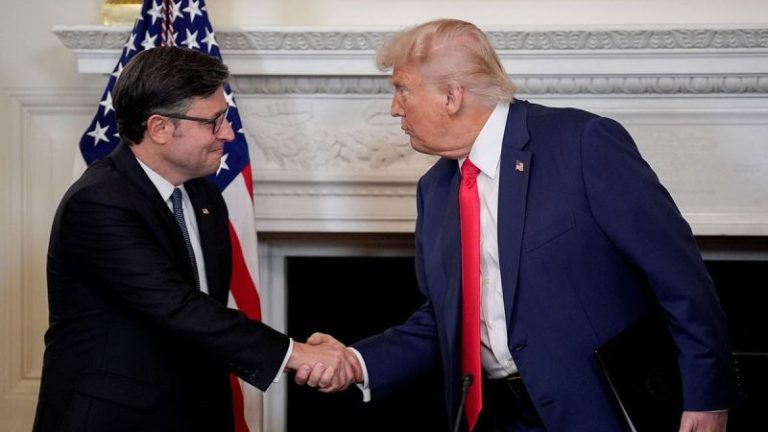
The extended voting period came as House Speaker Mike Johnson, R-La., wrangled with members of the conservative House Freedom Caucus. They pushed back on the Senate’s version of the megabill over its projected increase to the federal deficit, as well as what they deemed insufficient Medicaid reforms and spending cuts. Rep. Chip Roy, R-Texas, took issue with Senate revisions reintroducing green energy tax credits despite House efforts to roll back such programs. 

With the Democrats united in opposition, the future of the more than 800-page, Trump-backed legislative package depends on a handful of GOP holdouts. 

Following the overnight session, Johnson said Thursday he was determined to get the Senate-amended bill passed by the House and to the president’s desk by the Independence Day deadline on Friday. 

Lawmakers voted to proceed with debate on the Trump agenda bill in the early hours of Thursday – a mechanism known as a ‘rule vote’ – teeing up a final House-wide vote sometime later Thursday morning.

Speaking to reporters Thursday morning, House Majority Leader Steve Scalise, R-La., said that beyond the House Freedom Caucus, some moderate Republicans also have final questions about how the megabill would be implemented. 

‘Some of them wanted to talk to some of the different agencies about, you know, how they’re planning on implementing it, which obviously the agency heads have been planning for months on these changes,’ Scalise said. ‘So they walk through those things and that was helpful to members just to at least get a good idea of what to expect once the bill becomes law. Of course, none of it happens if the bill doesn’t become law. So the focus has always been, let’s get this bill passed.’ 

The Senate passed the ‘big, beautiful bill’ by a razor-thin, 51-50 margin last week, with Vice President JD Vance casting the tie-breaking vote. 

Fox News’ Liz Elkind and Tyler Olson contributed to this report.

This post appeared first on FOX NEWS

President Donald Trump’s administration released its annual report revealing the salaries for every staffer inside the White House on Thursday.

The report shows employees’ earnings in a range of $59,070 at the lowest to $225,700 at the highest, though a few aren’t accepting salaries at all.

The top-paid staffer at the White House is Jacalynne Klopp, a senior adviser and the sole staffer earning $225,700. Behind her is Edgar Mkrtchian, an associate counsel making $203,645.

Behind them comes a group of 33 staffers making $195,200, which includes many well-known names. White House press secretary Karoline Leavitt takes in this level of salary, as does border czar Tom Homan, chief of staff Susan Wiles, trade adviser Peter Navarro, communications director Steven Cheung, and homeland security adviser Stephen Miller.

The White House did not immediately respond to a request for comment from Fox News Digital.

According to the report, there are 108 employees who make between $59,000 and $80,000, while Trump’s speechwriters earn between $92,500 and $121,500.

Eight employees do not receive salaries at all, though some of those are due to overlapping roles in other sections of government.

Secretary of State Marco Rubio is chief among these, not receiving any compensation for his White House role as national security adviser. Special envoy Steve Witkoff also receives compensation from the state department rather than the White House.

Trump’s own compensation is not listed in the report, but the pay scheme for the president is laid out in federal law. As president, Trump earns a base salary of $400,000, as well as a $50,000 expense allowance, $100,000 for travel, and $19,000 for entertainment.

Trump donated his salary to government agencies during his first term in office, but he has not clarified whether he will do the same during his second term.

The White House did not immediately respond when asked about Trump’s compensation.

Read the full list of White House salaries below (App users click here)

This post appeared first on FOX NEWS

Omaha City Councilman Brinker Harding has launched a bid to succeed outgoing U.S. Rep. Don Bacon, R-Neb., who announced that he will not seek re-election next year.

‘I’m a husband, father, businessman, and Omaha City Councilman. Today, I am announcing my run for Congress in NE-02 to make America more like its Heartland and to make the next 250 years a New Golden Age for America. I hope you’ll join me!’ Harding declared in a July 1 post on X.

Bacon, who has served in Congress since 2017, has announced that he will finish his current term, but will not run for re-election in 2026.

‘Thank you, @DonJBacon, for your 30 years of distinguished service in the Air Force and a decade of dedicated leadership representing NE-02 in Congress,’ Harding declared in a June 30 post on X. ‘You’ve been a true statesman who’s served with integrity and heart. Wishing you and Angie all the best in this next chapter.’

While Republicans have been divided on the issue, Bacon is a staunch proponent of U.S. aid to Ukraine.

‘It is a time for honesty. Peace talks are having zero effect on Putin. His goal is to dominate Ukraine & he won’t stop until he realizes he cannot win. The U.S. & Allies must arm Ukraine to the teeth, sanction Russia to the max, & confiscate the $300B in overseas Russian assets,’ the congressman declared in a post on X in late May.

U.S. Sen. Deb Fischer, R-Neb., is backing Harding for the House seat.

‘Throughout a lifetime of service to Omaha and Nebraska, Brinker Harding has always championed public safety, economic development, and fiscal responsibility. Brinker will make America safer, stronger, and more prosperous. I am honored to endorse him for Congress,’ Fischer noted in a post on X.

This post appeared first on FOX NEWS

The House of Representatives has voted to advance President Donald Trump’s $3.3 trillion ‘big, beautiful bill’ to its final phase in Congress, overcoming fears of a potential Republican mutiny.

It’s a significant victory for House Speaker Mike Johnson, R-La., though the fight is not over yet.

Lawmakers voted to proceed with debate on the mammoth-sized Trump agenda bill in the early hours of Thursday – a mechanism known as a ‘rule vote’ – teeing up a final House-wide vote sometime later Thursday morning.

The House adopted the rules for debate on the measure in a dramatic 219 to 213 vote – with all but moderate Rep. Brian Fitzpatrick, R-Pa., voting to proceed.

The vote had been stalled for hours, since Wednesday afternoon, with five House Republicans poised to kill the measure before lawmakers could weigh the bill itself.

Several members of the conservative House Freedom Caucus and their allies, meanwhile, appeared ready to skip the vote altogether in protest of GOP leaders’ compromise bill.

But both Johnson and Trump spent hours negotiating with holdouts, apparently to some success.

But the process could still take hours. Democrats could still call up various procedural votes to delay the final measure, as they did when the legislation passed the House by just one vote for the first time in late May.

Plus, the bill itself could still face opposition from both moderates and conservative Republicans.

Conservative lawmakers were threatening to derail the rule vote as recently as Wednesday over changes the Senate made to the legislation, which fiscal hawks argued would add billions of dollars to the federal deficit.

But those concerns appear to have been outweighed by pressure from House GOP leaders and the president himself – who urged House Republicans to coalesce around the bill.

The Senate passed its version of the bill late on Tuesday morning, making modifications to the House’s provisions on Medicaid cost-sharing with states, some tax measures, and raising the debt ceiling.

Moderates are wary of Senate measures that would shift more Medicaid costs to states that expanded their programs under Obamacare, while conservatives have said those cuts are not enough to offset the additional spending in other parts of the bill.

Two members of the conservative House Freedom Caucus who also sit on the House Rules Committee, Reps. Ralph Norman, R-S.C., and Chip Roy, R-Texas, voted against the measure during the Rules Committee’s 12-hour hearing to consider the bill.

Johnson himself publicly urged the Senate to change as little as possible in the run-up to the vote. But the upper chamber’s bill ultimately passed by a similarly narrow margin as the House – with Vice President JD Vance casting the tie-breaking vote.

‘I’m not happy with what the Senate did to our product,’ Johnson told reporters late on Tuesday afternoon. ‘We understand this is a process that goes back and forth, and we’ll be working to get all of our members to yes.’

But Trump took to Truth Social after the Senate passed the bill to urge House Republicans to do the same.

‘It is no longer a ‘House Bill’ or a ‘Senate Bill’. It is everyone’s Bill. There is so much to be proud of, and EVERYONE got a major Policy WIN — But, the Biggest Winner of them all will be the American People, who will have Permanently Lower Taxes, Higher Wages and Take Home Pay, Secure Borders, and a Stronger and More Powerful Military,’ the president posted.

‘We can have all of this right now, but only if the House GOP UNITES, ignores its occasional ‘GRANDSTANDERS (You know who you are!), and does the right thing, which is sending this Bill to my desk. We are on schedule — Let’s keep it going, and be done before you and your family go on a July 4thvacation. The American People need and deserve it. They sent us here to, GET IT DONE.’

Both the House and Senate have been dealing with razor-thin GOP majorities of just three votes each.

The bill would permanently extend the income tax brackets lowered by Trump’s 2017 Tax Cuts and Jobs Act (TCJA), while temporarily adding new tax deductions to eliminate duties on tipped and overtime wages up to certain caps.

It also includes a new tax deduction for people aged 65 and over.

The legislation also rolls back green energy tax credits implemented under former President Joe Biden’s Inflation Reduction Act, which Trump and his allies have attacked as ‘the Green New Scam.’

The bill would also surge money toward the national defense, and to Immigrations and Customs Enforcement (ICE) in the name of Trump’s crackdown on illegal immigrants in the U.S.

The bill would also raise the debt limit by $5 trillion in order to avoid a potentially economically devastating credit default sometime this summer, if the U.S. runs out of cash to pay its obligations.

New and expanded work requirements would be implemented for Medicaid and federal food assistance, respectively.

Democrats have blasted the bill as a tax giveaway to the wealthy while cutting federal benefits for working-class Americans.

But Republicans have said their tax provisions are targeted toward the working and middle classes – citing measures eliminating taxes on tipped and overtime wages – while arguing they were reforming federal welfare programs to work better for those who truly need them.

Progressive Rep. Maxwell Frost, D-Fla., told reporters it was Democrats’ intent to delay proceedings on Wednesday for as long as possible.

‘This last go around, we were able to delay the bill upwards of 30 hours. And so we’re going to do the same thing, do everything we can from a procedural point of view to delay this,’ Frost said.

Meanwhile, there were earlier concerns about if weather delays in Washington could delay lawmakers from getting to Capitol Hill in time for the planned vote.

‘We’re monitoring the weather closely,’ Johnson told reporters. ‘There’s a lot of delays right now.’

Fox News’ Dan Scully contributed to this report.

This post appeared first on FOX NEWS

President Donald Trump’s Justice Department filed an emergency appeal with the Supreme Court on Wednesday, seeking to overturn lower court rulings that blocked the administration from firing three Biden-appointed regulators.

The emergency appeal asks the High Court to allow the Trump administration to fire three members of the U.S. Consumer Product Safety Commission (CPSC), a five-member independent regulatory board that sets standards and oversees safety for thousands of consumer products. The appeal comes after the Supreme Court, in May, granted a separate emergency appeal request from the Trump administration pertaining to the firing of two Biden-appointed agency officials from the National Labor Relations Board (NLRB) and the Merit Systems Protection Board (MSPB).  

‘It’s outrageous that we must once again seek Supreme Court intervention because rogue leftist judges in lower courts continue to defy the high court’s clear rulings,’ said White House spokesperson Harrison Fields. 

‘The Supreme Court decisively upheld the president’s constitutional authority to fire and remove executive officers exercising his power, yet this ongoing assault by activist judges undermines that victory,’ he continued. ‘President Trump remains committed to fulfilling the American people’s mandate by effectively leading the executive branch, despite these relentless obstructions.’

Mary Boyle, Alexander Hoehn-Saric and Richard Trumka Jr. were appointed to serve seven-year terms on the independent government agency by former President Joe Biden. Their positions have historically been protected from retribution, as they can only be terminated for neglect or malfeasance.

After Trump attempted to fire the three Democratic regulators, they sued, arguing the president sought to remove them without due cause. Eventually, a federal judge in Maryland agreed with them, and this week an appeals court upheld that ruling. 

However, according to the emergency appeal from the Trump administration, submitted to the High Court on Wednesday morning, the three regulators in question have shown ‘hostility to the President’s agenda’ and taken actions that have ‘thrown the agency into chaos.’

The emergency appeal to the Supreme Court added that ‘none of this should be possible’ after the High Court ruled in favor of the Trump administration’s decision to fire two executive branch labor relations officials.

‘None of this should be possible after Wilcox, which squarely controls this case. Like the NLRB and MSPB in Wilcox, the CPSC exercises ‘considerable executive power,’ 145 S. Ct. at 1415—for instance, by issuing rules, adjudicating administrative proceedings, issuing subpoenas, bringing enforcement suits seeking civil penalties, and (with the concurrence of the Attorney General) even prosecuting criminal cases,’ Solicitor General John Sauer wrote in the emergency appeal to the Supreme Court.

The request, according to Politico, will go to Chief Justice John Roberts, who is in charge of emergency appeals stemming from the appeals court that upheld the previous Maryland court ruling blocking the Trump administration’s firings.

This post appeared first on FOX NEWS