Author

admin

Browsing

Israel has agreed to a proposal led by the Trump administration for a 60-day ceasefire, during which time President Donald Trump said all parties will work to end the war in the Middle East.

‘My Representatives had a long and productive meeting with the Israelis today on Gaza,’ Trump said in a post on Truth Social on Tuesday. ‘Israel has agreed to the necessary conditions to finalize the 60 Day CEASEFIRE, during which time we will work with all parties to end the War. 

‘The Qataris and Egyptians, who have worked very hard to help bring Peace, will deliver this final proposal,’ Trump added. ‘I hope, for the good of the Middle East, that Hamas takes this Deal, because it will not get better — IT WILL ONLY GET WORSE. Thank you for your attention to this matter!’

Israeli Minister of Foreign Affairs Gideon Sa’ar said Monday, ‘Israel is serious in its will to reach a hostage deal and ceasefire in Gaza.’

He pointed to Jerusalem’s acceptance of a recent proposal presented by Special Envoy Steve Witkoff, but which Hamas rejected as it did not include a solution to a permanent ceasefire and a plan to withdraw Israeli forces from Gaza.

Witkoff is expected to head to Cairo in the coming days to begin hashing out new negotiations.

The president has been pushing for Israel to end its conflict in Gaza and to secure a hostage deal.

Ending Israel’s military operations in Gaza will prove a crucial step in expanding Trump’s ambitions to bring new nations into the Abraham Accords. 

‘We have opportunities in front of us,’ Sa’ar said, echoing Jerusalem’s ambitions to reach a deal. ‘We paid for the new reality in the Middle East with the blood of our soldiers and citizens.’

‘Israel is interested in expanding the Abraham Accords circle of peace and normalization. We have an interest in adding countries, such as Syria and Lebanon, our neighbors, to the circle of peace and normalization – while safeguarding Israel’s essential and security interests,’ he added. 

Prior to today, Trump had not detailed which nations are interested in normalizing diplomatic relations with Israel, though nations like Saudi Arabia have made clear that so long as Palestinians continue to suffer in the Israel-Hamas conflict, normalization is off the table.

Fox News Digital’s Caitlin McFall contributed to this report.

This post appeared first on FOX NEWS

A conservative legal group is trying to uncover whether the former Biden administration’s focus on diversity, equity and inclusion (DEI) initiatives seeped into the nation’s organ transplant system and led to prioritizing patients based on race. 

MAGA law group America First Legal is suing a number of federal health agencies to obtain documents related to the nation’s organ transplant system. 

Specifically, they’re targeting the Department of Health and Human Services, the Centers for Medicare and Medicaid Services and the Health Resources Services Administration, in an attempt to compel them to turn over documents related to the Organ Procurement and Transplantation Network (OPTN).

In April 2023, AFL filed a Freedom of Information Act (FOIA) request seeking documents relevant to the Biden administration’s efforts to infuse DEI into the organ transplant system. However, to date, AFL says it has not received any of the requested information and, as a result, decided to sue in an effort to compel the release of it.

‘The Biden Administration infected the federal government with ‘equity,’ replacing traditional principles of fairness and need with race-conscious criteria,’ said America First Legal Counsel Will Scolinos. ‘AFL is determined to uncover the complete scope of Biden-era DEI policies and will continue to take decisive action to restore colorblind healthcare.’ 

Just days after taking office in 2021, former President Joe Biden signed Executive Order 13985, directing all federal agencies to conduct ‘Equity Assessments’ to determine whether ‘underserved communities and their members’ faced systemic barriers to accessing federal programs. The order also required each agency to develop an action plan to address those barriers.

As part of this effort, in December 2021, CMS issued a request to the public for comments on how the agency could ‘Advance Equity and Reduce Disparities in Organ Transplantation.’

‘CMS is focused on identifying potential system-wide improvements that would increase organ donations, improve transplants, enhance the quality of care in dialysis facilities, increase access to dialysis services, and advance equity in organ donation and transplantation,’ the agency said at the time. 

‘Communities of color have much higher rates of high blood pressure, diabetes, obesity, and heart disease, all of which increase the risk for kidney disease. Black Americans are almost four times more likely, and Latinos are 1.3 times more likely, to have kidney failure compared to White Americans. Despite the higher risk, data shows that Black and Latino patients on dialysis are less likely to be placed on the transplant waitlist and have a lower likelihood of transplantation. Because of these stark inequities, CMS’ [Request For Information] asks the public for specific ideas on advancing equity within the organ transplantation system.’

Meanwhile, several weeks later, the HRSA announced that the ‘labeling of race and ethnicity information for organ donors’ would ‘change on a number of data reports available on the Organ Procurement and Transplantation Network (OPTN) website.’ According to the HRSA, the move made the data ‘clearer, more consistent and easier for users to interpret,’ and did not impact the manner in which data is collected. OPTN collects and manages data pertaining to the patient waiting list, organ donation, matching and transplantation in the U.S.

HRSA also announced a ‘modernization initiative’ for OPTN around the same time, which included plans to strengthen ‘equity, and performance in the organ donation and transplantation system.’

In its lawsuit, AFL chronicled a series of delays, non-responses and incomplete communications following its April 2023 FOIA request. AFL is hoping to obtain a judge’s order requiring the release of the records it is seeking, as well as an index of any withheld material and explanations for why it could not be provided. 

‘The last administration’s pervasive directives requiring consideration of immutable characteristics like race, color, and ethnicity — to make healthcare more ‘equitable’ — should concern all Americans,’ Scolinos said Tuesday. ‘AFL is determined to uncover the complete scope of Biden-era DEI policies and will continue to take decisive action to restore colorblind healthcare.’

HHS declined to comment on AFL’s lawsuit.

This post appeared first on FOX NEWS

Once a revolutionary militia, Iran’s Islamic Revolutionary Guard Corps built power through ideology and fear. Now, after devastating losses, its future is uncertain.

After major military setbacks, Iran’s IRGC faces a turning point. Experts explain its roots, power, and whether its reign of repression and terror can endure.

Once a fringe militia born of revolution, Iran’s Islamic Revolutionary Guard Corps (IRGC) has grown into the regime’s most feared and powerful force. But according to Dr. Afshon Ostovar, a leading expert on Iran and author of ‘Vanguard of the Imam: Religion, Politics, and Iran’s Revolutionary Guards,’ said the recent U.S. and Israeli strikes in Iran may have permanently altered its trajectory.

‘What the IRGC tried to achieve over the last 25 years is basically toast,’ Ostovar told Fox News Digital, ‘Their campaign to build a military deterrent at home through missiles and nuclear enrichment, and to expand regionally through proxies, has essentially collapsed.’

Founded in the wake of the 1979 revolution, the IRGC was created to safeguard and spread the Islamic Republic’s values — often through violence. Ostovar describes how its legitimacy evolved over time, initially drawn from the overthrow of the Shah, then the Iran-Iraq War, and later through the manufactured narrative of an eternal struggle with the U.S. and Israel.

Behnam Ben Taleblu, Senior Director of FDD’s Iran Program Behnam Ben Taleblu, told Fox News Digital the IRGC’s origin reflects a deep mistrust of Iran’s traditional military, which had remained loyal to the Shah. 

‘The IRGC were created through efforts to collect pro-regime armed gangs called Komitehs. They enforced revolutionary edicts and developed a parallel and ideological military force due to clerical skepticism in the national army,’ he explained.

‘The IRGC are tasked with preserving and defending the revolution in Iran,’ Taleblu said. ‘That’s one reason why the 1979 Islamic Revolution has not been tamed, nor has the regime’s extremism lost any luster. If anything, terrorism and hostage-taking have continued.’

‘They created a boogeyman in the U.S. and Israel,’ Ostovar added. ‘But today, that ideology no longer resonates with most Iranians. The majority want better relations with the West and are tired of the regime’s isolationist stance.’

Today, the IRGC is deeply intertwined with the clerical elite. ‘The IRGC and the clerical elite are partners in power, treating Iran as a springboard to export their revolution,’ Taleblu noted.

Over the past year, Iran has suffered a series of strategic defeats: Hezbollah has been degraded in Lebanon, Hamas crippled in Gaza, Syria effectively lost, and Iranian military infrastructure — including nuclear and missile sites — destroyed in many cases by U.S. and Israeli strikes. Ostovar says these losses have decimated the IRGC’s regional footprint and forced the regime to reevaluate its strategy.

‘They can try to rebuild everything — but that would take too long and be too difficult,’ he said. ‘More likely, we’ll see them repress harder at home and lean on China and Russia to rebuild conventional military capabilities like air defense and advanced jets.’

Internally, the IRGC’s economic empire is also under growing strain. Sanctions, cyberattacks, and battlefield losses have made operations far more difficult. Ostovar said that foreign banks avoid any connection with Iran out of fear they may inadvertently deal with IRGC-linked entities, forcing the group to operate through front companies abroad. ‘They’ve lost a lot, and now they’ll have to redirect their limited resources to rebuild. That’s going to stretch them even thinner.’

Despite these pressures, both Ostovar and Taleblu agree that the IRGC is unlikely to turn against the regime. ‘Much like the regime elite, the IRGC is at a crossroads,’ Taleblu said. ‘They have lost much of their strategic brain trust, but are likely to remain loyal for a combination of ideological and material reasons — so long as the status quo doesn’t change.’

Looking ahead, Iran may shift focus inward, relying more on domestic repression than on external terror. ‘They can’t get weapons into Gaza. They’ve lost access to Lebanon. They may still attempt terrorism, but they’ve failed repeatedly — especially against Israeli targets,’ Ostovar said. ‘In contrast, repressing their own people is something they can do easily.’

He warns that Iran could become ‘more insular, more autocratic — more like North Korea than what it is today.’ While regime collapse is always a possibility, Ostovar believes autocracies are often resilient. ‘Look at Venezuela or Cuba — they’ve run their countries into the ground but still hold on to power.’

Ostovar thinks change — and not for the better — could come via generational shift. ‘The IRGC’s younger cadre is less religious but no less hardline,’ he said. ‘They may not care about hijabs, but they’ve spent the last two decades fighting the U.S. and Israel in Iraq, Syria, and Lebanon. That’s the war they know.’

Some reformist elements within the regime envision a different path — one focused on normalization and growth. ‘They want to preserve the regime not by fighting the world, but by opening up to it,’ Ostovar said. ‘They look more to Vietnam or China as models.’

Taleblu warned that despite recent setbacks, the IRGC’s grip remains strong. ‘Right now, the Guards have power without accountability, wielding political, economic, and military influence in Iranian policy. How this influence is channeled by the next generation of Guardsmen remains to be seen.’

This post appeared first on FOX NEWS

The federal website created to host the U.S. national climate assessments, congressionally-mandated and peer-reviewed reports that cover the effects of climate change in the U.S. has been inaccessible so far this week.

A Fox News Digital review found that the websites for the U.S. Global Change Research Program and the pages for the national assessments were down on Tuesday without any links or referrals to other websites. 

The White House said the climate-related reports will be located within the National Aeronautics and Space Administration (NASA) going forward. However, searches for the assessments did not bring anything up on the NASA website, according to The Associated Press.

The U.S. national climate assessments, of which five have been created to date, are published every four years. Some scientists argue the reports save money and lives, AP reported.

‘It’s critical for decision-makers across the country to know what the science in the National Climate Assessment is,’ University of Arizona climate scientist Kathy Jacobs said in a statement. ‘That is the most reliable and well-reviewed source of information about climate that exists for the United States.’

In March, President Donald Trump’s energy chief vowed a reversal of ‘politically polarizing’ Biden-era climate policies as the new administration approaches climate change as ‘a global physical phenomenon.’

‘I am a climate realist,’ Energy Secretary Chris Wright said at S&P Global’s CERAWeek conference in Houston in March. ‘The Trump administration will treat climate change for what it is, a global physical phenomenon that is a side effect of building the modern world.’

In February, the Trump administration similarly revamped agency websites to be rid of climate change-filled content, amid a widespread rebranding of federal departments from content deemed as not aligning with Trump’s agenda.

The White House and NASA did not immediately respond to Fox News Digital’s request for comment.

This post appeared first on FOX NEWS

The House Rules Committee has teed up President Donald Trump’s ‘big, beautiful bill’ for a chamber-wide vote Wednesday after a nearly 12-hour-long session debating the massive piece of legislation.

It now heads to the entire chamber for consideration, where several Republicans have already signaled they’re concerned with various aspects of the measure.

Just two Republicans voted against reporting the bill out of committee – Reps. Ralph Norman, R-S.C., and Chip Roy, R-Texas, conservatives who had expressed reservations with the bill earlier on Tuesday. No Democrats voted to advance it, while the remaining seven Republicans did.

The majority of Republican lawmakers appear poised to advance the bill, however, believing it’s the best possible compromise vehicle to make Trump’s campaign promises a reality.

‘This bill is President Trump’s agenda, and we are making it law. House Republicans are ready to finish the job and put the One Big Beautiful Bill on President Trump’s desk in time for Independence Day,’ House GOP leaders said in a joint statement after the Senate passed the bill on Tuesday.

The House Rules Committee acts as the final gatekeeper before most pieces of legislation get a chamber-wide vote.

Democrats attempted to delay the panel’s hours-long hearing by offering multiple amendments that were shot down along party lines.

They criticized the bill as a bloated tax cut giveaway to wealthy Americans, at the expense of Medicaid coverage for lower-income people. Democrats have also accused Republicans of adding billions of dollars to the national debt, chiefly by extending Trump’s 2017 tax cuts.

‘I don’t know what it means to be a fiscal hawk, because if you vote for this bill, you’re adding $4 trillion to the debt,’ Rep. Gwen Moore, D-Calif., said during debate on the measure. 

‘Republicans have gone on TV for months and months and months solemnly insisting to the American people that this bill is going to cut the debt, that this will not hurt anybody on Medicaid, just those lazy bums and, you know, unworthy people.’ 

But Republicans have said the bill is targeted relief for middle and working-class Americans, citing provisions temporarily allowing people to deduct taxes from tipped and overtime wages, among others.

‘If you vote against this bill, you’re voting against the child tax credit being at $2,200 per child. At the end of this year, it will drop to $1,000. That makes a huge impact to 40 million hardworking Americans. And it’s simply, when they vote no, they’re voting against a $2,200 child tax credit, and they’re okay with $1,000,’ House Ways & Means Committee Chairman Jason Smith, R-Mo., said.

‘If you listen to the Democrats here, they say this is all about billionaires and millionaires. No tax on tips, no tax on overtime work. How many millionaires and billionaires, Madam Chair, work by the hour?’

The bill numbers more than 900 pages and includes Trump’s priorities on taxes, the border, defense, energy and the national debt. 

An initial version passed the House in May by just one vote, but the Senate has since made multiple key modifications to Medicaid, tax cuts and the debt limit.

Moderates are wary of the Senate measures that would shift more Medicaid costs to states that expanded their programs under ObamaCare, while conservatives have said those cuts are not enough to offset the additional spending in other parts of the bill.

Several key measures were also removed during the ‘Byrd Bath,’ a process in the Senate where legislation is reviewed so that it can be fast-tracked under the budget reconciliation process – which must adhere to a strict set of fiscal rules.

Among those conservative critics, Reps. Scott Perry, R-Pa., and Andy Ogles, R-Tenn., introduced resolutions to change the Senate version to varying degrees.

Ogles’ amendment would have most dramatically changed the bill. If passed, it would have reverted the legislation back to the House version. 

Perry’s amendments were aimed at tightening the rollback of green energy tax credits created by the former Biden administration’s Inflation Reduction Act.

Another amendment by Rep. Andrew Clyde, R-Ga., would have restored certain Second Amendment-related provisions stripped out by the Byrd Bath.

Any changes to the legislation would have forced it back into the Senate, likely delaying Republicans’ self-imposed Fourth of July deadline to get the bill onto Trump’s desk.

The full House is expected to begin considering the bill at 9 a.m. ET Wednesday.

Sometime that morning, House lawmakers will vote on whether to begin debating the bill, a procedural measure known as a ‘rule vote.’

If that’s cleared, a final vote on the bill itself is expected sometime later Wednesday.

Speaker Mike Johnson, R-La., conceded on Tuesday evening that poor weather in Washington that forced a number of flight delays could also weigh on Wednesday’s attendance – depending on how many lawmakers are stuck outside the capital.

‘We’re monitoring the weather closely,’ Johnson told reporters. ‘There’s a lot of delays right now.’

With all lawmakers present, Republicans can only afford to lose three votes to still advance both the rule vote and the final bill without any Democratic support.

This post appeared first on FOX NEWS

Hamas confirmed on Wednesday that it is ‘ready to accept’ a ceasefire agreement with Israel, but did not endorse a 60-day pause put forward by President Donald Trump on Tuesday.

Hamas official Taher al-Nunu said the terrorist organization is ‘ready to accept any initiative that clearly leads to the complete end to the war.’ Trump has increasingly pressured Israel and Hamas to accept a ceasefire, but the details of such an agreement still have not been worked out.

A Hamas delegation is expected to meet with Egyptian and Qatari mediators in Cairo on Wednesday to discuss Trump’s proposal, according to an Egyptian official.

Hamas has previously said it was willing to release the remaining 50 hostages as part of a ceasefire agreement, though it has noted that fewer than half of the hostages are still alive. In return, however, Hamas demands that Israel fully withdraw from Gaza and end the war.

Meanwhile, Israel has said Hamas must surrender, disarm and exile itself from Gaza.

An Israeli official said the latest proposal calls for a 60-day deal that would include a partial Israeli withdrawal from Gaza and a surge in humanitarian aid to the territory. The mediators and the U.S. would provide assurances about talks to end the war, but Israel is not committing to that as part of the latest proposal, the official said.

Roughly 10 hostages would be released under the agreement.

Trump announced the ceasefire proposal in a Tuesday statement on social media.

‘My Representatives had a long and productive meeting with the Israelis today on Gaza. Israel has agreed to the necessary conditions to finalize the 60 Day CEASEFIRE, during which time we will work with all parties to end the War,’ Trump wrote on Truth Social. 

‘The Qataris and Egyptians, who have worked very hard to help bring Peace, will deliver this final proposal. I hope, for the good of the Middle East, that Hamas takes this Deal, because it will not get better – IT WILL ONLY GET WORSE. Thank you for your attention to this matter!’ he added.

‘Israel is serious in its will to reach a hostage deal and ceasefire in Gaza,’ Israeli Minister of Foreign Affairs Gideon Sa’ar said Monday.

The Associated Press contributed to this report.

This post appeared first on FOX NEWS

The State Department is launching a new ‘America First’ rebranding initiative to consolidate all the logos for its offices under a singular one depicting the American flag — an effort that aligns with the agency’s massive overhaul plans. 

Whereas separate logos existed previously for offices, including embassies, bureaus and programs under the U.S. Agency for International Development, the rebranding effort seeks to establish ‘consistent branding’ across all these platforms to best reflect American contributions abroad, according to a State Department official. 

‘The redesign is very simple, and that was to recenter and re-anchor the visual identity of American efforts overseas in the American flag,’ Darren Beattie, undersecretary for public diplomacy at the State Department, told Fox News Digital Tuesday. 

Beattie said that inconsistent branding across State Department offices and programs has meant that sometimes U.S. efforts abroad aren’t as widely recognized, while other countries that do have uniformity in branding receive greater credit. 

‘There’s some things you look at it, and you have no clue that’s associated with the United States government at all, and that’s obviously contrary to our purposes,’ Beattie said. ‘If we’re contributing something great overseas, we want that positivity and that contribution to be immediately visually distinguished as something associated with the United States.’

The State Department rolled out guidance on the rebranding effort Wednesday — just a day after Secretary of State Marco Rubio announced that USAID would officially no longer continue to provide foreign assistance. 

Fox News Digital first reported in March that the State Department would absorb remaining functions from the previously independent organization, which delivered aid to impoverished countries and development assistance. 

Compliance with the rebranding effort across State Department offices and bureaus is slated for Oct. 1, according to Beattie. 

The effort seeks to visually complement the State Department’s reorganization already underway, which officials have said is the largest restructuring of the agency since the Cold War. 

Rubio unveiled plans in April to revamp the agency because the department was ‘bloated, bureaucratic, and unable to perform its essential diplomatic mission.’

Additionally, Rubio told lawmakers on the Senate Appropriations Subcommittee overseeing foreign affairs in May that the restructuring aimed to ’empower’ regional bureaus and embassies who are responsible for spearheading the ‘best innovations.’ 

‘They are identifying problems and opportunities well in advance of some memo that works its way to me,’ Rubio told lawmakers. ‘We want to get back to a situation or we want to get to a situation where we are empowering ideas and action at the embassy level and through our regional bureaus. Those are literally the front lines of American diplomacy. And so we have structured a State Department that can deliver on that.’

Fox News Digital first reported in May that the agency’s reorganization plans would involve cutting or consolidating more than 300 of the agency’s 700 offices and bureaus in an attempt to streamline operations. 

The reorganization involves axing roughly 3,400 State Department personnel, amounting to approximately 15% to 20% of the agency’s domestic headcount, State Department officials previously told Fox News Digital. 

This post appeared first on FOX NEWS

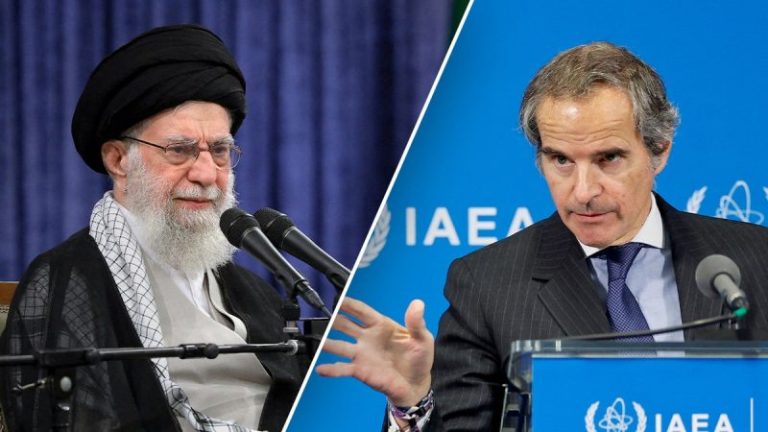
Iranian President Masoud Pezeshkian enacted a law passed by the country’s parliament last week that would end Tehran’s cooperation with the International Atomic Energy Agency (IAEA). 

The legislation was approved within days of the U.S. carrying out Operation Midnight Hammer, in which it struck three major nuclear sites in Iran: Natanz, Isfahan and Fordow.

The law stipulates that any future inspection of Iran’s nuclear facilities by the IAEA must be approved by the country’s Supreme National Security Council, according to Reuters. Iran maintains that the IAEA sided with the U.S. and Israel in the recent conflict. Additionally, Tehran claims that the IAEA’s resolution in early June paved the way for Israel’s strikes.

Pezeshkian’s order reportedly had no timetable or details about what the suspension of cooperation would entail, The Associated Press reported.

IAEA head of Media, Multimedia and Public Outreach Section and spokesperson Fredrik Dahl told Fox News Digital that the agency was still awaiting confirmation from Iran.

Nuclear negotiations between the U.S. and Iran have been on pause since Israel launched Operation Rising Lion. Iran then wavered on whether it would continue the talks, claiming that the U.S. was complicit in Israel’s actions. However, President Donald Trump appeared hopeful that the two countries would return to the table, even after the U.S.’ historic strikes. On June 25, the president told reporters that the U.S. would talk with Iran the following week.

Iranian Foreign Minister Abbas Araghchi recently told CBS News that ‘the doors for diplomacy will never slam shut.’ However, he also cast doubt on Trump’s timeline for when talks would resume.

‘I don’t think negotiations will restart as quickly as that,’ Araghchi told CBS News. ‘In order for us to decide to reengage, we will have to first ensure that America will not revert back to targeting us in a military attack during the negotiations.’

While Trump’s critics have argued that the administration has exaggerated the extent of the damage to Iran’s nuclear sites, parties involved in the conflict seemingly agreed on the status of the facilities. Iranian Foreign Ministry spokesperson Esmail Baghaei acknowledged that the sites were ‘badly damaged’ in an interview with Al Jazeera. 

This post appeared first on FOX NEWS
Critical minerals and energy company QEM Limited (ASX: QEM) is pleased to announce completion of the previously announced Leadership Transition (refer ASX Announcement 29 May 2025).

Highlights:

  • Seasoned global mining executive Robert Cooper has completed a comprehensive handover and is appointed to the QEM board as MD & CEO effective 2 July 2025.

With the Company entering its next stage of development, founder Gavin Loyden has retired as Managing Director and CEO effective 1 July 2025.

Mr Loyden has been instrumental in shaping the Company’s vision since 2014, securing the Julia Creek asset and progressing it into a nationally significant critical minerals project.

The Board is pleased to announce that Robert Cooper is appointed to the QEM board as Managing Director, effective 2 July 2025

Mr Cooper brings over 30 years of global mining experience, including senior executive leadership and non-executive board roles across the resources and battery materials sectors. He most recently served as MD/CEO of New Century Resources, and prior to that, as CEO of Round Oak Minerals, a wholly owned subsidiary of Washington H. Soul Pattinson (ASX:SOL). He has held senior roles with Discovery Metals, BHP, and has been a NED at Novonix ASX:NVX), Syndicated Metals, and Verdant Minerals.

Click here for the full ASX Release

This post appeared first on investingnews.com