Author

admin

Browsing

Uranium market watchers know that Canada’s Athabasca Basin is among the world’s richest uranium jurisdictions and hosts several of the highest-grade uranium deposits on the planet.

Spanning close to 100,000 square kilometers of the Canadian Shield of Northern Saskatchewan and Alberta, the Athabasca Basin is a major contributor to Canada’s status as the second largest uranium producer and the third largest country by uranium reserves.

Unsurprisingly, the region is home to the world’s largest uranium mine, Cigar Lake. The mine reports average grades of 14.69 percent U3O8 and accounts for 14 percent of global uranium production.

First commissioned in 2014, Cigar Lake is operated by uranium major Cameco (TSX:CCO,NYSE:CCJ), which holds a 54.547 percent stake in the mine, as part of a joint venture with Orano Canada at 40.453 percent and TEPCO Resources at 5 percent. Ore from the underground mine property is processed at Orano’s McClean Lake mill, located 70 kilometers from the mine.

Uranium was first discovered in the Athabasca Basin in 1934, and today the region remains a major hot spot for uranium exploration. In recent years, a number of Athabasca Basin uranium companies have made exciting new discoveries, sparking a staking rush by others looking to get in on the action.

Athabasca Basin uranium exploration companies

1. ATHA Energy (TSXV:SASK,OTCQB:SASKF)

ATHA Energy has an extensive uranium exploration pipeline across Canada, including in Saskatchewan’s Athabasca Basin. At 3.8 million acres, ATHA’s land package in the Athabasca Basin includes the Gemini project, a basement-hosted near-surface uranium deposit with uranium intercepts of between 6,190 and 96,600 parts per million.

The company also holds a 10 percent carried interest in exploration projects operated by NexGen Energy (TSX:NXE,NYSE:NXE) and IsoEnergy (TSX:ISO).

2. Azincourt Energy (TSXV:AAZ,OTCQB:AZURF)

Azincourt Energy has two uranium projects in Canada, one of which is its East Preston joint venture project near the southern edge of the Western Athabasca Basin. Azincourt has an 86.5 percent interest, with the remainder held by Skyharbour Resources. The 20,647 hectare property is adjacent to Skyharbour’s minority-owned Preston project.

Azincourt says it is targeting basement-hosted unconformity-related uranium deposits in two prospective conductive, low-magnetic-signature corridors. The company is planning for a fall 2025 geophysics exploration program at East Preston in preparation for a potential winter 2026 diamond drill program.

3. Baselode Energy (TSXV:FIND)

Baselode Energy’s strategy is developing assets near the Athabasca Basin with similar geology. Its ACKIO near-surface uranium discovery at its Hook project is located directly adjacent to the Athabascan Basin. First discovered by the company in September 2021, the ACKIO near-surface uranium prospect is more than 375 meters along strike, and more than 150 meters wide.

Baselode has identified at least nine separate uranium pods, or small bodies of mineralization, on the project. Drill results from its summer 2024 exploration program were released in May 2025, demonstrating the potential for further expansion of the known uranium mineralization at ACKIO.

4. CanAlaska Uranium (TSXV:CVV)

CanAlaska Uranium is a project generator with interests in a portfolio of assets in the Athabasca Basin covering 1.24 million acres. The company is advancing its West McArthur joint venture with Cameco, which is situated near the McArthur River mine in the Eastern Athabasca Basin. CanAlaska owns 85 percent of the project.

CanAlaska’s 2025 C$12.5 million drill program at West McArthur is aimed at expanding and delineating the high-grade Pike Zone uranium discovery.

Earlier this year, the company completed the first drilling in over 10 years at its wholly owned Cree East deposit in the south-eastern portion of the Basin. The drill program was fully funded by Nexus Uranium (CSE:NEXU,OTCQB:GIDMF) as part of an option earn-in agreement to earn up to 75 percent interest in the project.

5. Denison Mines (TSX:DML)

Uranium miner Denison Mines’ direct ownership interests in the Athabasca Basin region covers approximately 384,000 hectares. The company has a 22.25 percent stake in the McClean Lake mine and mill joint venture project operated by Orano Canada.

Denison’s flagship project in the region is Wheeler River, considered the largest undeveloped uranium project in the eastern region of the Athabasca Basin. Wheeler River hosts the high-grade Phoenix and Gryphon deposits.

According to a 2023 feasibility study, Phoenix hosts a proven and probable resource of 219,000 metric tons at an average grade of 11.7 percent uranium for 53.3 million pounds. The company plans to develop the deposit as an in-situ recovery operation.

The Canadian Nuclear Safety Commission is slated to conduct hearings for the project’s environmental assessment and license on October 8 and December 8 to 12, 2025. If approval is granted, the company is looking to break ground in early 2026 and commence production by the first half of 2028.

As for the Gryphon deposit, Denison has evaluated it as a conventional mine in a pre-feasibility study. The company conducted a field program in the first quarter 2025 that may be used for a future feasibility study.

6. F3 Uranium (TSXV:FUU,OTCQB:FUUFF)

F3 Uranium has three exploration properties in the western region of the Athabasca Basin: the advanced-stage Patterson Lake North project, which hosts the JR discovery, as well as the early-stage Minto and Broach projects.

In February 2025, the company launched a drill campaign at its Patterson Lake North project followed by ground geophysical exploration programs at its Broach and Minto projects. F3 Uranium raised C$7 million in flow-through shares in May 2025, which will go towards further exploration of its uranium projects.

7. Forum Energy Metals (TSXV:FMC,OTCQB:FDCFF)

Forum Energy Metals has numerous wholly owned and joint venture projects hosting new discoveries of high-grade unconformity-related uranium deposits in the Athabasca Basin. So far in 2025, the company’s focus has been on the Northwest Athabasca (NWA) project, a joint venture between Forum at 45.4 percent, NexGen Energy at 25.3 percent, Cameco at 18 percent and Orano Canada at 11.3 percent.

Early in the year, Forum announced an option agreement allowing Global Uranium (CSE:GURN,OTCQB:GURFF) to earn up to 75 percent of Forum’s stake in the property by spending C$20 million in exploration expenditures at NWA.

In April, Global Uranium completed a diamond drilling program and ground geophysical surveys on the project, which intersected elevated radioactivity and alteration systems distinct to unconformity-type uranium mineralization.

8. IsoEnergy (TSX:ISO)

IsoEnergy has a portfolio of projects and joint ventures in the Eastern Athabasca Basin, and its main focus is the Hurricane deposit at its wholly owned Larocque East uranium property.

The company discovered Hurricane in 2018 and it now stands as the world’s highest-grade indicated resource of uranium. A 2022 resource estimate reported an indicated high-grade resource of 63,800 metric tons grading 34.5 percent uranium for 48.61 million pounds of contained uranium.

IsoEnergy’s summer exploration program will include drilling to test potential resource expansion at Larocque East as well as exploration at its other Athabasca Basin projects.

9. NexGen Energy (TSX:NXE,NYSE:NXE)

NexGen is another uranium mining company with a large land package in the basin, including its development-stage Rook I project.

Rook I has a measured and indicated resource estimate of 256.7 million pounds contained uranium from ore grading an average of 3.1 percent U3O8. The 2021 feasibility study outlines an 11.5 year initial mine life with up to 29.2 million pounds of U3O8 production per year for the first five years.

The Federal Environmental Impact Statement for Rook I was accepted in January 2025, and the Canadian Nuclear Safety Commission has proposed hearing dates for the project on November 19, 2025, and February 9 to 13, 2026. NexGen plans to immediately begin construction activities following final federal approval.

10.Paladin Energy (TSX:PDN)

Paladin Energy’s Patterson Lake South (PLS) project hosts the large, high-grade and near-surface Triple R deposit, which has the potential to produce both uranium and gold. The company acquired it as part of its acquisition of Fission Uranium in 2024. Paladin also holds six early-stage uranium projects in the basin.

PLS’s mineral reserve estimate includes probable reserves of 93.7 million pounds from 3 million metric tons of ore at an average grade of 1.41 percent U3O8. The 2023 feasibility study demonstrates life of mine production of approximately 9 million pounds U3O8 per year over a 10 year mine life.

The company released positive drill results from its winter drill program on the Saloon East zone in June 2025 showing the potential to further grow the resource base of the property outside of the Triple R deposit. The project is advancing through the environmental permitting process.

11. Purepoint Uranium (TSXV:PTU)

Purepoint Uranium has an extensive uranium portfolio, including six joint ventures and five wholly owned projects all located in the Athabasca Basin.

Purepoint has a significant joint venture relationship with IsoEnergy (TSX:ISO) that includes a 50/50 joint venture agreement to explore 10 uranium projects across 98,000 hectares in the eastern portion of the Athabasca Basin. The partners launched a 2025 drill campaign in May at the Dorado project, which will include approximately 5,400 meters across 18 holes, targeting high-priority electromagnetic conductors for uranium mineralization.

Its joint ventures also include the Hook Lake uranium project in the Patterson region, in which it owns a 21 percent interest alongside Cameco and Orano Canada, which both hold 39.5 percent.

12. Skyharbour Resources (TSXV:SYH,OTCQX:SYHBF)

Skyharbour Resources is another junior mining company with an extensive portfolio of uranium exploration projects in the Athabasca Basin, comprising 36 uranium projects over 614,000 hectares. The company’s core projects include its 57.7 percent owned Russell Lake project — a joint venture with Rio Tinto (ASX:RIO,NYSE:RIO,LSE:RIO) — and its wholly owned Moore project.

Skyharbour’s 49,635 hectare Preston uranium project in the western portion of the Athabasca Basin is the subject of a 7,000 meter 2025 summer drill campaign being conducted by its joint venture partner, Orano Canada. Orano is the majority owner and operator at the project at 53.4 percent, while Skyharbour owns a minority interest of approximately 25.6 percent. The remainder is held by Dixie Gold.

13. Standard Uranium (TSXV:STND,OTCQB:STTDF)

Standard Uranium is an emerging project generator that holds interest in over 94,476 hectares in the Athabasca Basin, including its flagship Davidson River project in the southwest region of the basin.

In spring 2025, Standard Uranium partnered with Fleet Space Technologies Canada on three ExoSphere Multiphysics survey grids across the Warrior, Bronco and Thunderbird conductors at Davidson River. The surveys will provide important data for upgrading drill targets across the property through imaging of density anomalies in the basement rock.

Securities Disclosure: I, Melissa Pistilli, hold no direct investment interest in any company mentioned in this article.


This post appeared first on investingnews.com

Thanks to exchange-traded funds (ETFs), investors don’t have to be tied to one specific stock. When it comes to biotech ETFs, they give sector participants exposure to many biotech companies via one vehicle.

ETFs are a popular choice as they allow investors to enter the market more safely compared to investing in standalone stocks. A key advantage is that even if one company in the ETF takes a hit, the impact will be less direct.

All other figures were also current as of that date. Read on to learn more about these investment vehicles.

1. ALPS Medical Breakthroughs ETF (ARCA:SBIO)

AUM: US$81.2 million

Launched in December 2014, the ALPS Medical Breakthroughs ETF tracks small- and mid-cap biotech stocks that have one or more drugs in either Phase II or Phase III US FDA clinical trials. Its holdings must have a market cap between US$200 million and US$5 billion.

There are 104 holdings in this biotechnology fund, with about 50 percent being small- and micro-cap stocks. Its top holdings include Nuvalent (NASDAQ:NUVL) at a weight of 3.55 percent, Axsome Therapeutics (NASDAQ:AXSM) at 3.42 percent and Alkermes (NASDAQ:ALKS) at 3.18 percent.

2. Tema Oncology ETF (NASDAQ:CANC)

AUM: US$72.18 million

The Tema Oncology ETF provides exposure to biotech companies operating in the oncology industry. It includes companies developing a range of cancer treatments, including CAR-T cell therapies and bispecific antibodies.

Launched in August 2023, there are 51 holdings in this biotechnology fund, of which about half are small- to mid-cap stocks. Among its top holdings are Roche Holding (OTCQX:RHHBF,SWX:RO) at a weight of 5.32 percent, Eli Lilly and Company (NYSE:LLY) at 5.19 percent and BridgeBio Pharma (NASDAQ:BBIO) at 4.88 percent.

3. Direxion Daily S&P Biotech Bear 3x Shares (ARCA:LABD)

AUM: US$52.8 million

The Direxion Daily S&P Biotech Bear 3x Shares ETF is designed to provide three times the daily return of the inverse of the S&P Biotechnology Select Industry Index, meaning that the ETF rises in value when the index falls and falls in value when the index rises. Leveraged inverse ETFs are designed for short-term trading and are not suitable for holding long-term. They also carry a high degree of risk as they can be significantly affected by market volatility.

Unlike the other ETFs on this list, LABD achieves its investment objective through holding financial contracts such as futures rather than holding individual stocks.

4. Tema Heart and Health ETF (NASDAQ:HRTS)

AUM: US$50.83 million

Launched in November 2023, the Tema GLP-1 Obesity and Cardiometabolic ETF tracks biotech stocks with a focus on diabetes, obesity and cardiovascular diseases. The fund was renamed on March 25 from Tema Cardiovascular and Metabolic ETF, and again on June 27 from the GLP-1 Obesity and Cardiometabolic ETF.

There are 47 holdings in this biotechnology fund, with about 75 percent being large-cap stocks and 18 percent mid-cap. About three-quarters of its holdings are based in the US. Its top holdings are Eli Lilly and Company at a 9.78 percent weight, Abbott Laboratories (NYSE:ABT) at 4.58 percent and Novo Nordisk (NYSE:NVO) at 4.42 percent.

5. ProShares Ultra NASDAQ Biotechnology (NASDAQ:BIB)

AUM: US$47 million

The ProShares Ultra NASDAQ Biotechnology ETF was launched in April 2010 and is leveraged to offer twice daily long exposure to the broad-based NASDAQ Biotechnology Index, making it an ideal choice “for investors with a bullish short-term outlook for biotechnology or pharmaceutical companies.” However, analysts also advise investors with a low risk tolerance or a buy-and-hold strategy against investing in this fund due to its unique nature.

Of the 262 holdings in this ETF, the top biotech stocks are Gilead Sciences (NASDAQ:GILD) at a 5.57 percent weight, Vertex Pharmaceuticals (NASDAQ:VRTX) at 5.53 percent and Amgen (NASDAQ:AMGN) at 5.33 percent.

Securities Disclosure: I, Meagen Seatter, hold no direct investment interest in any company mentioned in this article.
This post appeared first on investingnews.com

Mali’s military-led government has completed its takeover of the Yatela and Morila gold mines.

Reuters reported on Monday (June 30) that according to the Malian government, control of the Yatela mine in Western Kayes and the Morila mine in Southern Sikasso has officially been transferred to the Society for Research and Exploitation of Mineral Resources of Mali (SEMOS), a newly formed entity in the country.

The Yatela mine was abandoned in 2016 by Sadiola Exploration Company — a joint venture between South Africa’s AngloGold Ashanti (NYSE:AU,JSE:ANG) and Canada’s IAMGOLD (TSX:IMG,NYSE:IAG) — after the operators deemed continued production uneconomic despite leftover reserves.

Morila, once one of Mali’s flagship gold sites, was abandoned in 2022 by Australia’s Firefinch, which had taken over the site from Barrick Mining (TSX:ABX,NYSE:B) and AngloGold. Mali’s government says Morila was left with “significant environmental and financial liabilities,” raising concerns about whether SEMOS can turn operations around profitably.

These moves are part of a broader push by Mali’s military government, which came to power after coups in 2020 and 2021, to restructure the gold sector and capture more revenue from high commodities prices.

Mali produces around 65 metric tons of gold annually, making it Africa’s second largest producer, yet it lacks an internationally certified refinery and is heavily dependent on foreign operators for both technology and market access.

Earlier this year, Business Insider Africa reported that the country had started construction on a Russia-backed gold refinery, another step meant to increase control over its natural resources.

Since taking power, Mali’s authorities have steadily pressured miners via higher taxes, tougher licensing conditions and new contract terms aligned with its 2023 mining code, which grants the state a bigger stake in operations.

Yet critics caution that simply taking over mines without clear management plans or technical expertise risks undercutting investor confidence and missing out on today’s high gold price.

Gold is up 28.5 percent year-to-date, hitting an all-time high of US$3,500 per ounce in April, driven by geopolitical fears and US President Donald Trump’s aggressive tariff policy.

Mali’s ongoing dispute with Barrick Mining

Mali’s relationship with Barrick has soured amid the country’s move to exert resource sector control.

Earlier this month, a commercial court in Bamako ordered the temporary transfer of control of Barrick’s flagship Loulo-Gounkoto gold complex to a state-appointed administrator for six months.

Judge Issa Aguibou Diallo appointed Soumana Makadji, a former health minister and certified accountant, to oversee the complex, participate in negotiations and report to the court quarterly, but not to the government directly.

Barrick called the move “unjustified” and “unprecedented,” maintaining that it remains committed to previous mining conventions and that the Malian government’s push to apply the 2023 mining code retroactively is legally invalid.

Barrick’s Loulo-Gounkoto complex, among the most productive gold mines in Africa, has been inactive since January after Malian authorities seized roughly 3 metric tons of gold over disputed taxes.

Since November 2024, the government has also blocked gold exports from the site, escalating tensions as the gold rally has boosted Mali’s hopes for greater revenue.

The government insists that Barrick must comply with its revised mining framework. Barrick, on the other hand, has started international arbitration to protect its long-term agreements.

Securities Disclosure: I, Giann Liguid, hold no direct investment interest in any company mentioned in this article.

This post appeared first on investingnews.com

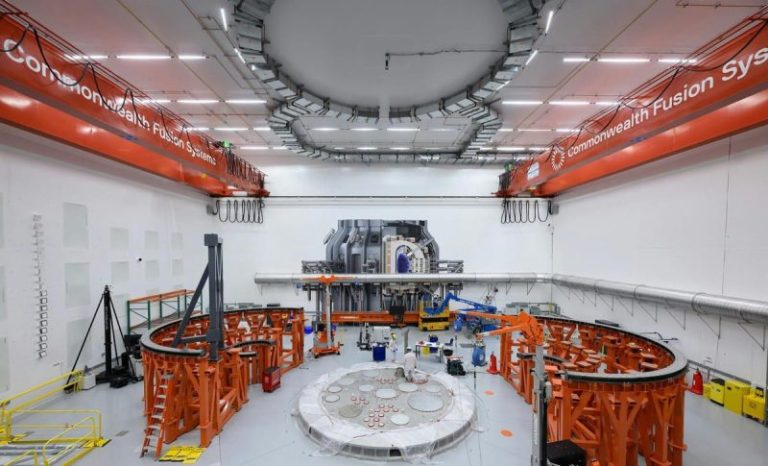
Google on Monday announced a partnership with Commonwealth Fusion Systems, or CFS, a private company spun off from the Massachusetts Institute of Technology, which marks the tech giants first commercial commitment to fusion.

The company unveiled plans to buy 200 megawatts of clean fusion power from what CFS describes as the world’s first grid-scale fusion power plant, known as ARC, based in Chesterfield County, Virginia.

ARC is expected to come online and generate 400 megawatts of clean, zero-carbon power in the early 2030s, which is enough energy to power large industrial sites or roughly 150,000 homes, according to CFS. The agreement also gives Google the option to purchase power from additional ARC plants.

Google, which has invested in CFS since 2021, said it also increased its stake in the Devens, Massachusetts-based company.

Google and CFS did not disclose the financial terms.

“We’re excited to make this longer-term bet on a technology with transformative potential to meet the world’s energy demand, and support CFS in their effort to reach their scientific and engineering milestones needed to get there,” Michael Terrell, head of advanced energy at Google, said in a statement.

Fusion is a process that takes light atomic nuclei and heats them to over 100 million degrees Celsius. At these temperatures, the fuel becomes a plasma, which eventually causes the nuclei to fuse and release significant amounts of energy. The energy is then captured to create carbon-free electricity.

CFS is one of many firms racing to achieve commercial-scale fusion energy and Google has invested in others. Earlier this month, Google announced continued funding for TAE Technologies, a California-based fusion energy company.

This post appeared first on NBC NEWS

Home Depot said Monday that it is buying GMS, a building-products distributor, for about $4.3 billion as the retailer moves to draw more sales from contractors and other home professionals.

Shares of Home Depot were roughly flat in early trading Monday. GMS shares jumped more than 11%.

As part of the deal, the Home Depot-owned subsidiary SRS Distribution will buy all outstanding shares of GMS for $110 per share, which adds up to about $4.3 billion and amounts to total enterprise value including net debt of about $5.5 billion, the company said.

Home Depot said it expects the acquisition to be completed by early 2026.

Home Depot’s announcement also concludes a potential bidding war between the big-box retailer and billionaire Brad Jacobs. Jacobs’ building-products distributor QXO had offered about $5 billion in cash to acquire GMS and said it would press forward with a hostile takeover if the company’s management rejected the proposal.

As Home Depot chases growth, it’s gone after a steadier and more lucrative piece of the home improvement business: electricians, roofers, home renovators and other professionals who tackle large projects year-round and need a lot of supplies. Home Depot said it’s speeding along that strategy with the GMS deal.

Home Depot bought SRS Distribution — the subsidiary that’s acquiring GMS — last year for $18.25 billion, in the largest acquisition in its history. Texas-based SRS sells supplies to professionals in the landscaping, roofing and pool businesses and it has bought up many other smaller suppliers as it’s grown.

Home Depot’s focus on selling to professionals is well-timed. Sales from do-it-yourself customers have slowed as higher mortgage rates have decreased housing turnover and dampened homeowners’ demand for larger projects because of higher borrowing costs.

The company said it expects total sales to grow by 2.8% for the full fiscal year and comparable sales, which take out the impact of one-time factors like store openings and calendar differences, to rise about 1%.

This post appeared first on NBC NEWS

Home Depot said Monday that it is buying GMS, a building-products distributor, for about $4.3 billion as the retailer moves to draw more sales from contractors and other home professionals.

Shares of Home Depot were roughly flat in early trading Monday. GMS shares jumped more than 11%.

As part of the deal, the Home Depot-owned subsidiary SRS Distribution will buy all outstanding shares of GMS for $110 per share, which adds up to about $4.3 billion and amounts to total enterprise value including net debt of about $5.5 billion, the company said.

Home Depot said it expects the acquisition to be completed by early 2026.

Home Depot’s announcement also concludes a potential bidding war between the big-box retailer and billionaire Brad Jacobs. Jacobs’ building-products distributor QXO had offered about $5 billion in cash to acquire GMS and said it would press forward with a hostile takeover if the company’s management rejected the proposal.

As Home Depot chases growth, it’s gone after a steadier and more lucrative piece of the home improvement business: electricians, roofers, home renovators and other professionals who tackle large projects year-round and need a lot of supplies. Home Depot said it’s speeding along that strategy with the GMS deal.

Home Depot bought SRS Distribution — the subsidiary that’s acquiring GMS — last year for $18.25 billion, in the largest acquisition in its history. Texas-based SRS sells supplies to professionals in the landscaping, roofing and pool businesses and it has bought up many other smaller suppliers as it’s grown.

Home Depot’s focus on selling to professionals is well-timed. Sales from do-it-yourself customers have slowed as higher mortgage rates have decreased housing turnover and dampened homeowners’ demand for larger projects because of higher borrowing costs.

The company said it expects total sales to grow by 2.8% for the full fiscal year and comparable sales, which take out the impact of one-time factors like store openings and calendar differences, to rise about 1%.

This post appeared first on NBC NEWS

President Donald Trump’s 24th week back in the Oval Office is set to focus on Republican lawmakers sprinting to meet a July 4 deadline to pass a massive piece of legislation that will advance the president’s agenda, while the White House simultaneously juggles ongoing talks related to conflict and tensions in the Middle East.

Trump’s 23rd week in office was one of his most consequential on the books after he ordered U.S. military strikes on a trio of nuclear facilities in Iran last Saturday evening that critics said threatened to pull the U.S. into another war. Instead, the strikes appear to have wiped out Iran’s burgeoning nuclear program that had the Middle East and nations worldwide on edge. It ended in a ceasefire between Iran and Israel as Trump took a victory lap for ending the ’12 Day War.’

‘This is a War that could have gone on for years, and destroyed the entire Middle East, but it didn’t, and never will! God bless Israel, God bless Iran, God bless the Middle East, God bless the United States of America, and GOD BLESS THE WORLD!’ Trump posted to Truth Social last week.

‘One big, beautiful bill’ 

Republicans in Washington, D.C., are hyper-focused on passing the ‘one big, beautiful bill’ this week, ahead of lawmakers’ July 4 deadline to land the legislation on Trump’s desk for his signature. The budget reconciliation bill, if passed, will advance Trump’s agenda on taxes, immigration, energy, defense and the national debt. The legislation is currently before the Senate. 

Senate Republicans successfully carried the legislation over a procedural hurdle late on Saturday in a 51-49 party-line vote after hours of negotiations. All Republicans voted in support of advancing the bill except for Sens. Thom Tillis, R-N.C., and Rand Paul, R-Ky. Tillis announced on Sunday, after bucking Republican colleagues and the president, that he would not seek reelection in 2026.

Following the procedural vote, Senate Minority Leader Chuck Schumer, D-N.Y., required clerks on the Senate floor to read the entire 940-page Senate GOP’s version of Trump’s megabill as a delay tactic that stalled debate on the package by about 16 hours.

Senate lawmakers will hold 20 hours of debate that is evenly divided between Democrats and Republicans as the bill moves along ahead of the Friday deadline. Senate Democrats are expected to use all of their allotted time, while Senate Republicans will likely only use a portion of their hours.

‘Tonight we saw a GREAT VICTORY in the Senate with the ‘GREAT, BIG, BEAUTIFUL BILL,’ but, it wouldn’t have happened without the Fantastic Work of Senator Rick Scott, Senator Mike Lee, Senator Ron Johnson, and Senator Cynthia Lummis,’ Trump posted to Truth Social overnight Saturday. 

‘They, along with all of the other Republican Patriots who voted for the Bill, are people who truly love our Country! As President of the USA, I am proud of them all, and look forward to working with them to GROW OUR ECONOMY, REDUCE WASTEFUL SPENDING, SECURE OUR BORDER, FIGHT FOR OUR MILITARY/VETS, ENSURE THAT OUR MEDICAID SYSTEM HELPS THOSE WHO TRULY NEED IT, PROTECT OUR SECOND AMENDMENT, AND SO MUCH MORE.’ 

Ongoing discussions with Iran 

The White House is expected to hold ongoing talks with Iran this week after the U.S. successfully carried out military strikes on three nuclear facilities in the country last Saturday. 

‘So Iran wants to meet. As you know, their sites were obliterated. Their very evil nuclear sites,’ Trump told the media last week.

Details related to the reported discussions are vague, with Iran denying it is participating in ongoing talks, while the White House said the U.S. remains in close communication with Iranians and intermediaries.  

‘I spoke to our special envoy Witkoff at length this morning and I can assure all of you we continue to be in close communication with the Iranians and through our intermediaries as well, namely the Qataris, who have been an incredible ally and partner throughout this entire effort,’ White House press secretary Karoline Leavitt said during a briefing on Thursday. ‘And as I said, this administration is always focused on diplomacy and peace, and we want to ensure we can get to a place where Iran agrees to a non-enrichment civil nuclear program.

‘The president wants peace. He always has, and right now we’re on a diplomatic path with Iran. The president and his team, namely special envoy Witkoff, continue to be in communication with the Iranians and especially our Gulf and Arab partners in the region to come to an agreement with Iran,’ she added.

Trump announced on June 21 that the U.S. successfully carried out strikes on Iran in a Truth Social post that was not preceded by media leaks or speculation that an attack was imminent. The unexpected social media post was followed just hours later by a brief Trump address to the nation while flanked by Secretary of Defense Pete Hegseth, Secretary of State Marco Rubio and Vice President JD Vance. 

‘A short time ago, the U.S. military carried out massive precision strikes on the three key nuclear facilities in the Iranian regime: Fordow, Natanz and Isfahan,’ Trump said from the White House late on Saturday in an address to the nation regarding the strikes. ‘Everybody heard those names for years as they built this horribly destructive enterprise. Our objective was the destruction of Iran’s nuclear enrichment capacity, and a stop to the nuclear threat posed by the world’s No. 1 state sponsor of terror. Tonight, I can report to the world that the strikes were a spectacular military success.’

The operation included the longest B-2 spirit bomber mission since 2001, the second-longest B-2 mission ever flown and the largest B-2 operational strike in U.S. history, Hegseth said. 

Operation Midnight Hammer followed Israel launching preemptive strikes on Iran on June 12 after months of attempted and stalled nuclear negotiations and subsequent heightened concern that Iran was advancing its nuclear program.

Trump floats ceasefire in Gaza 

While celebrating the ceasefire between Israel and Iran, as well as a separate U.S.-brokered peace deal between Rwanda and the Democratic Republic of Congo on Friday, Trump predicted a potential ceasefire in Gaza as the war between Hamas and Israel continues since 2023. 

Trump called the situation in Gaza ‘terrible’ while speaking to the media from the Oval Office on Friday, but expressed optimism there could soon be a ceasefire between Israel and Hamas. 

‘I think it’s close. I just spoke with some of the people involved,’ said the president, adding, ‘We think within the next week we’re going to get a ceasefire.’ 

Trump also addressed the ongoing humanitarian crisis in Gaza, saying, ‘We’re supplying, as you know, a lot of money and a lot of food to that area because we have to. I mean, you have to. In theory, we’re not involved in it, but we’re involved because people are dying.’

‘MAKE THE DEAL IN GAZA. GET THE HOSTAGES BACK!!! DJT,’ Trump posted to Truth Social early on Sunday as he posted other messages related to the Big Beautiful Bill. 

Israeli Minister for Strategic Affairs Ron Dermer is expected to travel to Washington, D.C., this week to meet with U.S. counterparts to discuss a ceasefire deal, The Associated Press reported. 

Fox News Digital’s Alex Miller and Peter Pinedo contributed to this report.

This post appeared first on FOX NEWS

President Donald Trump declared last week that Iran’s underground nuclear facilities bombed by the U.S. were ‘obliterated,’ while adding the U.S. and Israeli strikes delivered ‘monumental damage to all nuclear sites in Iran.’ 

U.S. Defense Secretary Pete Hegseth echoed that message in a briefing, saying the ‘CIA can confirm that a body of credible intelligence indicates Iran’s nuclear program has been severely damaged by recent targeted strikes.’

Israeli intelligence sources told Fox News Digital that strikes on Natanz, Fordow and Esfahan caused severe and possibly irreversible damage to Iran’s known enrichment infrastructure. ‘We hit the heart of their capabilities,’ one official said. 

But despite the overwhelming success of the mission, questions remain about what survived – and what might come next. Analysts warn that while Iran’s declared facilities have been largely destroyed, covert elements of the program may still exist, and enriched uranium stockpiles could resurface.

International Atomic Energy Agency (IAEA) Director Rafael Grossi said in an interview with CBS on Saturday that although ‘it’s clear that what happened in particular in Fordow, Natanz, [and] Isfahan—where Iran used to have, and still has to some degree, capabilities in terms of treatment, conversion, and enrichment of uranium—has been destroyed to an important degree,’ the threat remains. 

Nuclear experts say that while Iran’s nuclear progress has been dealt a historic blow, the regime may still retain the technical know-how and residual capabilities to reconstitute its program over time – especially if it chooses to go dark.

A detailed assessment released Tuesday by the Institute for Science and International Security (ISIS) found that Israel’s Operation Rising Lion, followed by U.S. bunker-busting strikes, ‘effectively destroyed Iran’s centrifuge enrichment program.’ But authors David Albright and Spencer Faragasso cautioned that ‘residuals such as stocks of 60%, 20%, and 3-5% enriched uranium and centrifuges manufactured but not yet installed… pose a threat as they can be used in the future to produce weapon-grade uranium’.

Jonathan Ruhe, director of foreign policy at the Jewish Institute for National Security of America (JINSA), echoed that concern in an interview with Fox News Digital.

‘The threat now is certainly much reduced,’ Ruhe said. ‘But the threat from here on out is going to be much more difficult to detect because Iran could try to rebuild covertly. They don’t need much space or time to enrich 60% to 90%. And the IAEA has said for years that Iran likely retains some secret capability.’

Ruhe added that while Israeli intelligence was likely aware of attempts to move uranium before the strikes, ‘any planning assumption going forward must consider Iran’s residual capacity – even if it’s diminished.’

John Spencer, chair of urban warfare studies at the Modern War Institute, said critics who argue the program wasn’t completely destroyed are missing the bigger picture.

‘Can everything be rebuilt eventually? Sure. But there’s no question the program was rolled back – years, if not more,’ Spencer told Fox News Digital. ‘People fixate on how many pounds of uranium are missing. But building a bomb requires much more than material. You need the conversion, the metallurgy, the delivery system – all of which were hit.’

Dr. Or Rabinowitz, a nuclear proliferation scholar at Hebrew University and visiting associate professor at Stanford, noted that many unknowns remain.

‘There’s no verified answer yet to what happened to the 60% enriched uranium – or to the other feedstocks at 20% or 3.5%,’ Rabinowitz said. ‘If Iran has access to advanced centrifuges, they could in theory enrich back to weapons-grade – but we don’t know how many centrifuges survived or in what condition they are.’

She also explained that even if Iran retains the material, converting uranium gas into metal for a bomb requires a specialized facility. ‘From what we know, that conversion facility in Isfahan was bombed. Without it, Iran faces a significant bottleneck,’ she said. But she warned that nuclear weapons technology is not insurmountable: ‘This is 1940s science. If North Korea could do it, Iran could too – eventually.’

According to the ISIS report, ‘extensive damage’ was confirmed at nearly all major Iranian nuclear and missile facilities, including the destruction of uranium metal conversion plants, fuel fabrication centers, and the IR-40 Arak heavy water reactor. The report noted that the Israeli and U.S. strikes ‘rendered the Fordow site inoperable,’ citing high-resolution satellite imagery of deep bunker penetrations.

Rabinowitz also emphasized that the intelligence picture is still developing in real time. ‘The Israelis and the Americans are now hard at work to generate the most accurate intelligence picture they can,’ she said. ‘Without having my own sources in the Mossad, I can guarantee the Israelis are monitoring internal Iranian communications, trying to figure out what the Iranians have figured out. As they learn more, so will Israel and the U.S.’

As debate continues over whether the strikes were enough to permanently disable Iran’s nuclear ambitions, analysts agree on one point: Iran’s assumption that it could push forward without consequence is gone.

During a press conference on Friday. Trump was asked if he would bomb Iran’s nuclear program again if it was restarted. He told reporters, ‘Sure without question.’

This post appeared first on FOX NEWS

The Supreme Court on Monday agreed to take up a Republican-led challenge to U.S. campaign finance restrictions that limit the amount of money that political parties can spend on behalf of certain candidates. 

The case, National Republican Senatorial Committee v. Federal Election Commission, was originally appealed to the court by the National Republican Senatorial Committee (NRSC), the National Republican Congressional Committee (NRCC), and on behalf of two Senate Republican candidates running for election at the time — among them, now-Vice President JD Vance.

It centers on whether federal limits on campaign spending by political parties run afoul of free speech protections under the First Amendment of the Constitution.

In asking the Supreme Court to review the case, petitioners said the spending limits ‘severely restrict political party committees from doing what the First Amendment entitles them to do: fully associate with and advocate for their own candidates for federal office.’

A decision from the Supreme Court’s 6-3 conservative majority could have major implications on campaign spending in the U.S., further eroding the Federal Election Campaign Act of 1971, a law Congress passed more than 50 years ago with the aim of restricting the amount of money that can be spent on behalf of candidates.

The case comes as federal election spending has reached record highs: Presidential candidates in 2024 raised at least $2 billion and spent roughly $1.8 billion in 2024, according to FEC figures.

The challenge will almost certainly be among the most high-profile cases to be heard by the Supreme Court in the upcoming term.

The Trump-led Justice Department also said it will side with the NRSC in arguing the case, putting the administration in the somewhat unusual move of arguing against laws passed by Congress. The Democratic National Committee, Democratic Senatorial Campaign Committee, and Democratic Congressional Campaign Committee, meanwhile, have asked to defend the decision of a lower appeals court that ruled in 2024 to keep the limits in place.

The Justice Department cited free speech protections as its basis for siding with the NRSC, saying their decision to do so represents ‘the rare case that warrants an exception to that general approach’ of backing federal laws.’

Oral arguments will be held in the fall.

This post appeared first on FOX NEWS

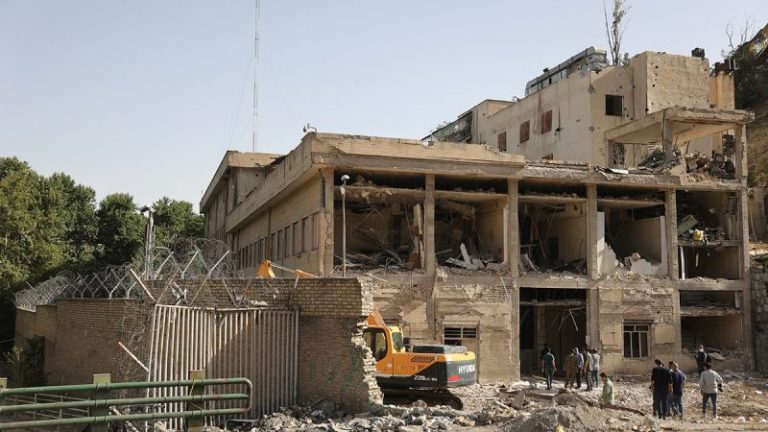
Iran acknowledged on Sunday that an Israeli strike on Tehran’s notorious Evin prison last week killed dozens of people.

Iran’s judiciary spokesperson Asghar Jahangir posted on the office’s official Mizan news agency website that the strike killed at least 71 people, including staff, soldiers, prisoners and members of visiting families. Officials did not provide a breakdown of casualty figures.

The Washington-based Human Rights Activists in Iran said at least 35 of those killed were staff members and two were inmates. Others killed included a person walking in the prison vicinity and a woman who went to meet a judge about her imprisoned husband’s case, the organization said.

Jahangir said some of the injured were treated on site, while others were taken to hospitals. Iran has not said how many were injured.

Iran had also confirmed on Saturday that top prosecutor Ali Ghanaatkar had been killed in the attack. Ghanaatkar’s prosecution of dissidents, including Nobel Peace Prize winner Narges Mohammadi, had led to widespread criticism by human rights groups.

Israel carried out the strike on June 23 as its Defense Ministry said it was attacking ‘regime targets and government repression bodies in the heart of Tehran.’ The facility was known to hold many of Iran’s political prisoners and dissidents.

The prison attack came near the end of 12 days of Israeli strikes, which Israel claimed killed around 30 Iranian commanders and 11 nuclear scientists, while hitting eight nuclear-related facilities and more than 720 military infrastructure sites.

The status of Iran’s nuclear program remains unclear, even after President Donald Trump said American strikes on June 22 ‘obliterated’ Iran’s nuclear capabilities.

Rafael Grossi, the head of the International Atomic Energy Agency (IAEA), told CBS’ ‘Face the Nation’ in an interview Sunday that Iran’s capacities remain, but it is impossible to assess the full damage to the nuclear program unless inspectors are allowed in, which Iranian officials have not authorized.

‘It is clear that there has been severe damage, but it’s not total damage, first of all. And secondly, Iran has the capacities there, industrial and technological capacities. So if they so wish, they will be able to start doing this again,’ Grossi said.

Grossi said Iran could have centrifuges spinning enriched uranium ‘in a matter of months.’

‘Frankly speaking, one cannot claim that everything has disappeared and there is nothing there,’ he said.

The Associated Press contributed to this report.

This post appeared first on FOX NEWS