Author

admin

Browsing

(TheNewswire)


Brossard, Quebec, le 22 décembre 2025 TheNewswire – CORPORATION Charbone (TSXV: CH,OTC:CHHYF; OTCQB: CHHYF; FSE: K47) (« Charbone » ou la « Société »), un producteur et distributeur nord-américain spécialisé dans l’hydrogène propre Ultra Haute Pureté (« UHP ») et les gaz industriels stratégiques, est heureuse d’annoncer la livraison réussie du premier chargement d’hydrogène propre UHP à un distributeur indépendant basé en Ontario, marquant le début officiel de la génération de revenus pour sa division de production.

Première livraison d’hydrogène propre UHP vers un client distributeur indépendant en Ontario

Dans le cadre du démarrage commercial, Charbone annonce son tout premier chargement d’hydrogène propre UHP produit à Sorel-Tracy, pour son partenaire distributeur indépendant situé en Ontario. Cette première expédition confirme la capacité de la Société à approvisionner efficacement des marchés hors Québec dès la mise en service initiale.

Ce contrat marque le début d’une nouvelle phase de croissance commerciale pour Charbone, qui prévoit élargir progressivement son réseau de distribution et renforcer sa présence dans les principaux corridors industriels de l’Est du Canada et du Midwest américain. Compte tenu de l’accès limité à un approvisionnement constant et fiable en hydrogène propre UHP sur le marché nord-américain et de la forte demande pour ses produits, Charbone ne divulgue pas les volumes de ses commandes ni les prix afin de préserver sa position concurrentielle. Les revenus issus des activités de production, de distribution et de conseil de Charbone sont présentés trimestriellement sur une base consolidée.

« Nous sommes extrêmement fiers de livrer dès aujourd’hui un hydrogène propre UHP produit localement à nos premiers clients, » a déclaré Dave B. Gagnon, PDG de Charbone. « Il s’agit d’un autre jalon majeur pour Charbone, mais également pour l’industrie de l’hydrogène propre UHP en Amérique du Nord. »

Pour plus d’informations sur la vision de Charbone, la configuration modulaire de ses usines et ses perspectives économiques, veuillez consulter le site web de la société pour accéder aux documents destinés aux investisseurs, notamment la présentation et la fiche d’information. Si vous ne l’avez pas encore fait, nous vous invitons également à visionner le webinaire destiné aux investisseurs, enregistré le 16 décembre 2025, en cliquant sur le lien suivant : https://info.rbmilestone.com/Charbone-webinar-dec-2025.


À propos de CORPORATION Charbone

Charbone est un développeur et producteur d’hydrogène propre Ultra Haute Pureté (UHP) doté d’une plateforme de distribution de gaz industriels en pleine expansion. Grâce à une approche modulaire, Charbone se concentre sur le développement d’un réseau d’usines de production d’hydrogène propre en Amérique du Nord et sur certains marchés à l’étranger, en commençant par son projet phare de Sorel-Tracy au Québec. Le modèle intégré de l’entreprise réduit les risques, améliore l’évolutivité et permet de diversifier ses sources de revenus grâce à des partenariats dans le domaine de l’hélium et d’autres gaz de spécialités. Charbone s’engage à soutenir la transition mondiale vers une économie bas carbone en fournissant des solutions d’hydrogène propre et de gaz de spécialités accessibles et décentralisées, tout en soutenant les clients industriels mal desservis en gaz et en accélérant la transition vers une énergie propre locale. Charbone est coté sur la bourse de croissance TSX (TSXV: CH,OTC:CHHYF); sur les marchés OTC (OTCQB: CHHYF); et à la Bourse de Francfort (FSE: K47). Pour plus d’informations, veuillez visiter www.Charbone.com.


Énoncés prospectifs

Le présent communiqué de presse contient des énoncés qui constituent de « l’information prospective » au sens des lois canadiennes sur les valeurs mobilières (« déclarations prospectives »). Ces déclarations prospectives sont souvent identifiées par des mots tels que « a l’intention », « anticipe », « s’attend à », « croit », « planifie », « probable », ou des mots similaires. Les déclarations prospectives reflètent les attentes, estimations ou projections respectives de la direction de Charbone concernant les résultats ou événements futurs, sur la base des opinions, hypothèses et estimations considérées comme raisonnables par la direction à la date à laquelle les déclarations sont faites. Bien que Charbone estime que les attentes exprimées dans les déclarations prospectives sont raisonnables, les déclarations prospectives comportent des risques et des incertitudes, et il ne faut pas se fier indûment aux déclarations prospectives, car des facteurs inconnus ou imprévisibles pourraient faire en sorte que les résultats réels soient sensiblement différents de ceux exprimés dans les déclarations prospectives. Des risques et des incertitudes liés aux activités de Charbone peuvent avoir une incidence sur les déclarations prospectives. Ces risques, incertitudes et hypothèses comprennent, sans s’y limiter, ceux décrits à la rubrique « Facteurs de risque » dans le rapport de gestion de la Société pour la période terminée le 30 septembre 2025, qui peut être consultée sur SEDAR+ à l’adresse www.sedarplus.ca; ils pourraient faire en sorte que les événements ou les résultats réels diffèrent sensiblement de ceux prévus dans les déclarations prospectives.

Sauf si les lois sur les valeurs mobilières applicables l’exigent, Charbone ne s’engage pas à mettre à jour ni à réviser les déclarations prospectives.

Ni la Bourse de croissance TSX ni son fournisseur de services de réglementation (tel que ce terme est défini dans les politiques de la Bourse de croissance TSX) n’acceptent de responsabilité quant à la pertinence ou à l’exactitude du présent communiqué.

Pour contacter Corporation Charbone :


Téléphone bureau: +1 450 678 7171


Courriel:  ir@Charbone.com

Benoit Veilleux

Chef de la direction financière et secrétaire corporatif


Copyright (c) 2025 TheNewswire – All rights reserved.

News Provided by TheNewsWire via QuoteMedia

This post appeared first on investingnews.com

Here’s a quick recap of the crypto landscape for Monday (December 22) as of 9:00 am UTC.

Get the latest insights on Bitcoin, Ether and altcoins, along with a round-up of key cryptocurrency market news.

Bitcoin and Ether price update

Bitcoin (BTC) was priced at US$89,286.25, up by 2.3 percent over 24 hours.

Bitcoin price performance, December 22, 2025.

Chart via TradingView

Ether (ETH) was priced at US$3,026.40, up by 3.3 percent over the last 24 hours.

Altcoin price update

  • XRP (XRP) was priced at US$1.92, up by 1.4 percent over 24 hours.
  • Solana (SOL) was trading at US$126.14, up by 2.3 percent over 24 hours.

Today’s crypto news to know

US crypto funds See US$952M outflow amid regulatory delays

Investors pulled US$952 million from U.S. crypto investment products last week, marking the first weekly outflow in a month, according to data from CoinShares.

The exodus was concentrated in the US totaling US$990 million, which was partially offset by modest inflows into Canadian and German products.

Analysts attributed the sell-off to continued delays in the US CLARITY Act, prolonging regulatory uncertainty, alongside concerns about large holders offloading positions.

Ethereum-based funds led the outflows with US$555 million, while Bitcoin products saw US$460 million leave.

Hong Kong moves to unlock insurance capital for crypto investments

Hong Kong’s Insurance Authority has proposed new rules that would allow licensed insurers to invest in cryptocurrencies and related infrastructure, potentially unlocking billions in capital.

According to a Bloomberg report, insurers under the proposed framework would face a 100 percent “risk charge” on direct crypto holdings, meaning a dollar of capital must be set aside for every dollar invested. Stablecoins pegged to fiat would attract lower risk charges.

The initiative aims to attract institutional investors while maintaining prudential safeguards against crypto volatility.

Public consultation on the draft rules is scheduled for February through April 2025, with formal legislative submissions expected later in the year.

Binance allowed high-risk accounts post-plea deal, FT reports

Binance reportedly continued to permit suspicious accounts to operate after its US$4.3 billion U.S. plea agreement in 2023, according to a Financial Times investigation.

Internal files reviewed by the FT showed accounts linked to terror financing networks, improbable login patterns, and failed identity checks remained active, moving billions of dollars in crypto.

One account from Venezuela moved US$93 million, with portions connected to networks tied to Iran and Hezbollah.

Securities Disclosure: I, Meagen Seatter, hold no direct investment interest in any company mentioned in this article.

Securities Disclosure: I, Giann Liguid, hold no direct investment interest in any company mentioned in this article.

This post appeared first on investingnews.com

//NOT FOR DISTRIBUTION TO UNITED STATES NEWSWIRE SERVICES OR FOR DISSEMINATION IN THE UNITED STATES//

Copper Quest Exploration Inc. (CSE: CQX,OTC:IMIMF; FRA: 3MX) (‘Copper Quest’ or the ‘Company’) is pleased to announce that, further to its news releases of November 14, 2025 and December 10, 2025, it has completed its acquisition of the past producing Alpine Gold Property (the ‘Property’), located in the West Kootenay region of British Columbia (the ‘Acquisition’).

We are excited to offer our shareholders the opportunity to leverage a pure gold play in what has been a primarily copper-focused company. Having now successfully acquired this exceptional property with an existing historical gold resource, excellent expansion potential, and a seasoned technical team, including Alan Matovich, Ted Murano, and John Mirko, we look forward to updating our shareholders on our endeavor towards growing this current historical resource, and the possibility of seeing near-term cash flow from existing stockpiles,’ commented Brian Thurston, CEO of Copper Quest. ‘The Alpine Gold Property presents a tremendous opportunity to create near-term value for our shareholders through exposure to an all-time high gold market while we also continue to advance our multiple copper properties. Our recent financing of approximately two million dollars ensures that our shareholders will benefit from more than one exploration opportunity.’

Highlights of the Alpine Gold Property

  • 2018 National Instrument 43-101 Standards of Disclosure for Mineral Projects (‘NI 43-101’) Historical Inferred Resource of 268,000 tonnes estimated using a cut-off grade of 5.0 g/t Au and an average grade of 16.52 g/t Au that represents an inferred resource of 142,000 oz of gold (McCuaig & Giroux, 2018).
  • Substantial opportunity to grow the maiden Alpine resource to the east-west and to depth with only about 300m of the roughly 2km long vein system explored to date by underground mine workings and drilling.
  • Estimated 24,000 tonnes Run-of-Mine mineralized stockpile on surface presenting a possible near-term cash flow opportunity.
  • 1,650 metres of clean and dry underground workings accessing sampled and mineable zones.
  • At least four additional relatively unexplored vein systems on the Property (Black Prince, Cold Blow, Gold Crown, and past-producing King Solomon), all hosting historic high-grade gold values.
  • Road accessible 4,611.49-hectare Property including 15 Crown Grants (one with surface rights) and 19 staked mineral claims with all-season operation potential (Figure 1).
  • Additions of Mr. Allan Matovich to the Board of Directors of the Company (the ‘Board‘), and Mr. Ted Muraro and Mr. John Mirko as Technical Advisors on closing. They have a combined mining and exploration experience of 150+ years in the industry.

The 4,611.49-hectare Property is approximately 20 kilometres northeast of the City of Nelson (Figure 1) and hosts a former operating underground mine with a recorded production of approximately 16,810 tonnes of mineralized vein material (Table 1). This material contained 356,360 grams of gold, 222,054 grams of silver, 49,329 kilograms of lead, and 17,167 kilograms of zinc. The other four significant vein systems on the Property will also be explored including the Black Prince and Cold Blow quartz veins approximately 3km to the northeast of the Alpine mine, the Gold Crown vein system 600m southeast, and the past-producing King Solomon vein workings 1.8km to the south. Further information about the Alpine Gold property will be forthcoming in the upcoming weeks.

Figure 1: Location Claim Map

Appointment of Mr. Allan Matovich as Director

Copper Quest is also pleased to announce the appointment of Mr. Allan Matovich to the Board. Mr. Matovich has 60+ years of mining and exploration experience in Canada and the United States. He first started with Cominco in Trail, BC, working in the smelter operation. Mr. Matovich then started Matovich Mining Industries, which supplied considerable tonnages of siliceous flux materials, lead and zinc concentrates to Cominco for over 20 years. He then opened a mining operation in 1997 in Northern British Columbia to supply barite for drilling fluids in the oil and gas industry. This mining operation is still in production today. Mr. Matovich also opened a barite operation in Washington State that is going into production. He also worked with Halliburton, Baker Hughes, and Newmont and was very successful. In 2000, Mr. Matovich purchased the Alpine Gold Property and has spent a considerable amount of time proving up the project.

Mr. Matovich commented,I am very pleased to bring the Alpine Gold Property to Copper Quest and join as a director. The Company has a fantastic portfolio of advancing critical mineral projects and the Alpine Gold Project gives a potential near-term cash flow opportunity along with upside to grow the current resource with drilling. I look forward to working with the Copper Quest team to create value for all stakeholders.’

Table 1 – Production History – Minfile (082FNW127) for Alpine Mine for gold (Au) and silver (Ag)

YEAR

Tonnes Tonnes Au Grams Ag Grams Est Grade Est Grade
Mined Milled Recovered Recovered Au (g/t) Ag (g/t)
1988 200 90 198 591 2.20 6.57
*1948 16,889 11,384 25.32 17.07
*1947 2,768 1,866 15.38 10.37
*1946 11,042 5,785 18.59 9.74
*1942 56,079 34,182 824.69 502.68
1941 11,517 11,517 219,350 130,011 18.26 11.29
1940 3,992 3,992 57,852 35,333 14.49 8.85
1939 3 0 62 62    
1938 35 0 1,120 902    
1915 4 0   1,938    

*ore milled not reported

Appointment of Mr. Ted Muraro as Technical Advisor to the Board

Mr. Theodore (Ted) W. Muraro has been appointed as Technical Advisor to the Board. Mr. Muraro has accumulated over six decades of experience in mineral exploration, including 35 years with Cominco where he advanced to serve as the company’s Chief Geologist and Internal Consulting Geologist. Early in his career, Mr. Muraro gained underground experience at Keno Hill, HB Mine, Sullivan, and Western Mines.

His tenure at Cominco was marked by direct involvement in the discovery and subsequent successful development of the Westmin Mine at Buttle Lake, the Polaris Mine on Little Cornwallis Island in the high Arctic and Snip Mine on the Iskut River. Following his service at Cominco, Mr. Muraro assumed the role of Vice President, Exploration at Romanex and International Barytex Resources, contributing his expertise to international gold projects.

Mr. Muraro, who was awarded the Spud Huestis award in 2021 for his outstanding contributions to the industry and excellence in exploration, worked as an independent consultant (T.W. Muraro Consulting 1993-2016) on base metal and gold exploration projects around the world until his retirement in 2016. In these later years, he served on several boards as Director and/or Advisor, most recently with Imperial Metals. Mr. Muraro’s working relationship with Al Matovich started in the Rossland Mining Camp and shifted to the Alpine Property in the late 80s.

Appointment of Mr. John Mirko as Technical Advisor to the Board

Mr. John Mirko has been appointed as Technical Advisor to the Board. Mr. Mirko has over 40 years’ experience in the mining industry, including as past President and Founder of Canam Alpine Ventures Ltd. (recently sold to Vizsla Resources Ltd., a TSX Venture Exchange listed company), and currently as President and Founder of Canam Mining Corp. and Rokmaster Resources Corporation.

From 1986 to 2010 Mr. Mirko founded and served as CEO, President, and Director of four public mineral exploration companies and founded and served as Director of three other companies. He has been self-employed in the sector since 1972 as a prospector, contractor, and consultant involved in the exploration, development, and mine construction of various projects in 12 counties, and commercial production of mineral concentrates and metal products from five of the projects.

In 2008, he was a recipient of the ‘E. A. Scholtz Medal for Excellence in Mine Development’ from the Association for Mineral Exploration of British Columbia, and in 2009, the Mining Association of British Columbia’s ‘Mining and Sustainability Award’ for the MAX Mine. He is currently a member in good standing of the Society of Economic Geologists, Inc., the Canadian Institute of Mining, Metallurgy and Petroleum, the Prospectors and Developers Association of Canada and AME BC.

Transaction Details

The Company has purchased of all the minerals claims and crown grants that comprise the Property from 0847114 B.C. Ltd. (‘Privco‘), a private company. As consideration for the Property, Copper Quest has issued an aggregate of 14,177,517 common shares in its capital (the ‘Shares‘) at a deemed price of $0.135 per Share for deemed consideration of $1,913,964.80 to Privco.

The Shares are subject to a statutory hold period expiring April 19, 2026, being the date that is four months and one day from the date of issuance in accordance with applicable Canadian securities legislation. In addition, the Shares are subject to further trading restrictions as the Shares will be released in stages over the next 24 months, such that (i) 2,362,920 Shares will be released April 19, 2026; (ii) 2,362,919 Shares will be released August 19, 2026; (iii) 2,362,920 Shares will be released December 19, 2026; (iv) 2,362,920 Shares will be released April 19, 2027; (v) 2,362,920 Shares will be released August 19, 2027; and (vi) the final 2,362,920 Shares will be released December 19, 2027.

Copper Quest will also reimburse Privco a total of $225,000 towards 2025 expenditures incurred on exploring the Property and has granted a 2% net smelter returns royalty (the ‘Royalty‘) to Privco on all minerals mined, produced, or otherwise recovered from the Property. The Company retains the right to purchase half of the Royalty in consideration of $1,000,000 paid to Privco at any time.

Subject to the approval of the Canadian Securities Exchange, a finder’s fee of 587,212 common shares of the Company (the ‘Finder’s Shares‘) is applicable in connection with the acquisition of the Property. The Finder’s Shares will be subject to a statutory hold period of four months in accordance with applicable Canadian securities legislation. It is anticipated that the Finder’s Shares will be issued on or about December 31, 2025.

Debt Settlement Transactions

The Company also wishes to announce it intends to issue 218,620 common shares of the Company (the ‘Debt Settlement Shares‘) at a deemed value of $0.15 per Debt Settlement Share in order to satisfy an aggregate of $32,793 in outstanding debt for services previously provided to the Company.

The Debt Settlement Shares will be subject to a statutory hold period of four months in accordance with applicable Canadian securities legislation. It is anticipated that the Finder’s Shares will be issued on or about December 31, 2025. The issuance of the Debt Settlement Shares is subject to the receipt of all required approvals, including the approval of the Canadian Securities Exchange.

The securities described herein have not been, and will not be, registered under the United States Securities Act of 1933, as amended (the ‘U.S. Securities Act‘), or any state securities laws, and may not be offered or sold within the United States except in compliance with the registration requirements of the U.S. Securities Act and applicable state securities laws or pursuant to available exemptions therefrom. This release does not constitute an offer to sell or a solicitation of an offer to buy any securities in the United States.

Qualified Person

Brian Thurston, P.Geo., the Company’s CEO and a Qualified Person as defined by NI 43-101 has reviewed and approved the technical information in this news release.

ABOUT Copper Quest Exploration Inc.

Copper Quest (CSE: CQX,OTC:IMIMF; FRA: 3MX) is committed to building shareholder value through acquisitions, discovery-driven exploration, disciplined execution, and responsible development of its North American Critical Mineral portfolio of assets. Please visit our website at www.copper.quest.

The Company’s land package currently comprises six projects that span over 40,000+ hectares in great mining jurisdictions as well as the Kitimat Cu-Au Project pending acquisition.

Copper Quest has a 100% interest in the Stars Property, a porphyry copper-molybdenum discovery, covering 9,693 hectares in central British Columbia’s Bulkley Porphyry Belt. Contiguous to the Stars Property, Copper Quest has a 100% interest in the 5,389-hectare Stellar Property. CQX also has an earn-in option up to 80% and joint-venture agreement on the 4,700-hectare porphyry copper-molybdenum Rip Project, also in the Bulkley Porphyry Belt.

Copper Quest has a 100% interest in the Nekash Copper-Gold Project, a porphyry exploration opportunity located in Lemhi County, Idaho, along the prolific Idaho-Montana porphyry copper belt that hosts world-class systems such as Butte and CUMO. The project is fully road-accessible via maintained U.S. highways and forest service roads and currently consists of 70 unpatented federal lode claims covering 585 hectares.

Copper Quest has a 100% interest in the Thane Project located in the Quesnel Terrane of Northern BC which spans over 20,658 ha with 10 high-priority targets identified demonstrating significant copper and precious metal mineralization potential.

Copper Quest has a 100% interest in the past-producing Alpine Gold Mine located approximately 20 kilometers northeast of the City of Nelson spanning 4,611.49 hectares. Apart from the Alpine Mine the property hosts 4 significant vein systems including the Black Prince and the Cold Blow quartz veins, the Gold Crown vein system, and the past-producing King Solomon vein workings.

Copper Quest’s leadership and advisory teams are senior mining industry executives who have a wealth of technical and capital markets experience and a strong track record of discovering, financing, developing, and operating mining projects on a global scale. Copper Quest is committed to sustainable and responsible business activities in line with industry best practices, supportive of all stakeholders, including the local communities in which it operates. The Company’s common shares are principally listed on the Canadian Stock Exchange under the symbol ‘CQX’.

On behalf of the Board of Copper Quest Exploration Inc.

Brian Thurston, P.Geo.
Chief Executive Officer and Director
Tel: 778-949-1829

For further information contact:

Investor Relations
info@copper.quest

Forward Looking Information

This news release contains certain ‘forward-looking information’ and ‘forward-looking statements’ (collectively, ‘forward-looking statements‘) within the meaning of applicable securities legislation. All statements, other than statements of historical fact included herein, including without limitation, statements regarding the merits and benefits of the acquisition of the Alpine Gold Property, and the issuance of the Finder’s Shares and Debt Settlement Shares, including the anticipated issuance date thereof, are forward-looking statements. Forward-looking statements are frequently, but not always, identified by words such as ‘expects’, ‘anticipates’, ‘believes’, ‘intends’, ‘estimates’, ‘potential’, ‘possible’, and similar expressions, or statements that events, conditions, or results ‘will’, ‘may’, ‘could’, or ‘should’ occur or be achieved. Forward-looking statements reflect the beliefs, opinions and projections on the date the statements are made and are based upon a number of assumptions and estimates based on or related to many of these factors. Such factors include, without limitation, the ability of the Company to obtain the necessary approvals with respect to the issuance of the Finder’s Shares and Debt Settlement Shares, risks associated with possible accidents and other risks associated with mineral exploration operations, the risk that the Company will encounter unanticipated geological factors, risks associated with the interpretation of exploration results, the possibility that the Company may not be able to secure permitting and other governmental clearances necessary to carry out the Company’s exploration plans, the risk that the Company will not be able to raise sufficient funds to carry out its business plans, and the risk of political uncertainties and regulatory or legal changes that might interfere with the Company’s business and prospects. Readers should not place undue reliance on the forward-looking statements and information contained in this news release concerning these items. The Company does not assume any obligation to update the forward-looking statements of beliefs, opinions, projections, or other factors, should they change, except as required by applicable securities laws.

The Canadian Securities Exchange has not reviewed, approved or disapproved the contents of this press release, and does not accept responsibility for the adequacy or accuracy of this release.

A photo accompanying this announcement is available at https://www.globenewswire.com/NewsRoom/AttachmentNg/818db0aa-2347-40b4-82aa-6b1e2169da3e


News Provided by GlobeNewswire via QuoteMedia

This post appeared first on investingnews.com

A bipartisan Obamacare fix remains out of reach in the Senate, for now, and lawmakers can’t agree on who is at fault. 

While many agree that the forthcoming healthcare cliff will cause financial pain, the partisan divide quickly devolved into pointing the finger across the aisle at who owns the looming healthcare premium spikes that Americans who use the healthcare exchange will face. 

Part of the finger-pointing has yielded another surprising agreement: Lawmakers don’t see the fast-approaching expiration of the Biden-era enhanced Obamacare subsidies as Congress failing to act in time.

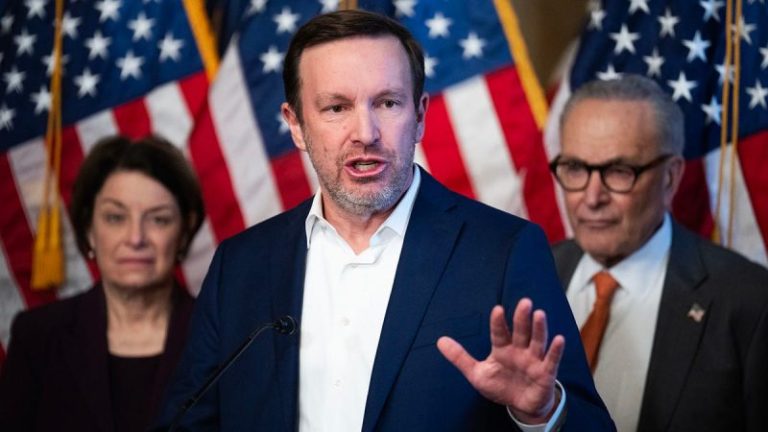
‘Obviously, it’s not a failure of Congress to act,’ Sen. Chris Murphy, D-Conn., told Fox News Digital. ‘It’s a failure of Republicans to act. Democrats are united and wanting to expand subsidies. Republicans want premium increases to go up.’

Senate Republicans and Democrats both tried, and failed, to advance their own partisan plans to replace or extend the subsidies earlier this month. And since then, no action has been taken to deal with the fast-approaching issue, guaranteeing that the subsidies will lapse at the end of the year.

A report published last month by Kaiser Family Foundation, a nonprofit healthcare think tank, found that Americans who use the credits will see an average increase of 114% in their premium costs.

The increase can vary depending on how high above the poverty level a person is. The original premium subsidies set a cap at 400% above the poverty level, while the enhanced subsidies, which were passed during the COVID-19 pandemic, torched the cap.

For example, a person 60 years or older making 401% of the poverty level, or about $62,000 per year, would on average see their premium prices double. That number can skyrocket depending on the state. Wyoming clocks in at the highest spike at 421%.

In Murphy’s home state of Connecticut, premiums under the same parameters would hike in price by 316%.

‘When these do lapse, people are going to die,’ Murphy said. ‘I mean, I was talking to a couple a few months ago who have two parents, both with chronic, potentially life-threatening illnesses, and they will only be able to afford insurance for one of them. So they’re talking about which parent is going to survive to raise their three kids. The stakes are life and death.’

Both sides hold opposing views on the solution. Senate Republicans argue that the credits effectively subsidize insurance companies, not patients, by funneling money directly to them, and that the program is rife with fraud.

Senate Democrats want to extend the subsidies as they are, and are willing to negotiate fixes down the line. But for the GOP, they want to see some immediate reforms, like income caps, anti-fraud measures and more stringent anti-abortion language tied to the subsidies.

Sen. Rick Scott, R-Fla., who produced his own healthcare plan that would convert subsidies into health savings accounts (HSAs), argued that congressional Democrats ‘set this up to expire.’

But he doesn’t share the view that the subsidies’ expected expiration is a life-or-death situation.

‘I’m not taxing somebody who makes 20 bucks an hour to pay for healthcare for somebody who makes half a million dollars a year, that’s what they did,’ he told Fox News Digital. ‘All they did was mask the increase in healthcare costs. That’s all they did with it.’

Sen. Jim Banks, R-Ind., similarly scoffed at the notion, and told Fox News Digital, ‘The Democrat plan to extend COVID-era Obamacare subsidies might help less than half a percent of the American population.’

‘The Republican plan brings down healthcare costs for 100% of Americans,’ he said. ‘More competition, expands health savings accounts. That needs to be the focus.’

Democrats are also not hiding their disdain for the partisan divide between their approaches to healthcare.

Sen. Brian Schatz, D-Hawaii, told Fox News Digital that the idea that this ‘is a congressional failure and not a Republican policy is preposterous.’

‘They’ve hated the Affordable Care Act since its inception and tried to repeal it at every possible opportunity,’ he said, referring to Obamacare. ‘The president hates ACA, speaker hates ACA, majority leader hates ACA, rank-and-file hate ACA. And so this is not some failure of bipartisanship.’

While the partisan rancor runs deep on the matter of Obamacare, there are Republicans and Democrats working together to build a new plan. Still, it wouldn’t deal with the rapidly approaching Dec. 31 deadline to extend the subsidies.

Senate Majority Leader John Thune, R-S.D., predicted that the Senate would have a long road to travel before a bipartisan plan came together in the new year, but he didn’t rule it out.

‘It’s the Christmas season. It would take a Christmas miracle to execute on actually getting something done there,’ he said. ‘But, you know, I think there’s a potential path, but it’ll be heavy lift.’

This post appeared first on FOX NEWS

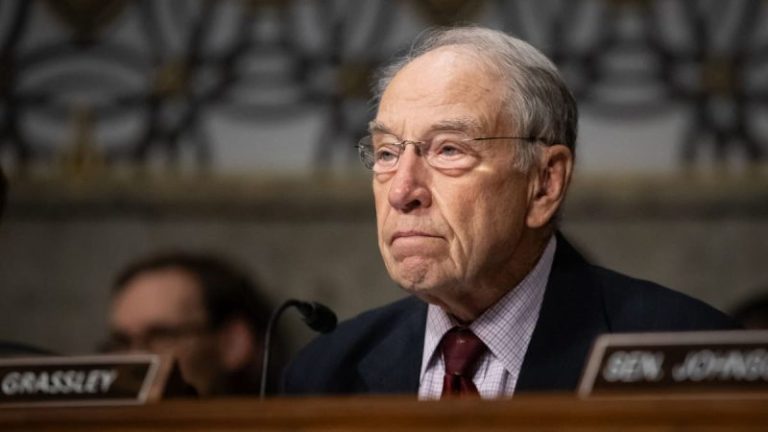
President Trump is rightfully angry that some of his top choices for U.S. attorneys in Democrat-controlled states are being blocked by Democrats and their leftist allies in the judicial branch. But the recent attacks from some supporters of the president against Sen. Chuck Grassley, Trump’s most effective ally in the Senate, are misplaced.

To start, remember who Grassley is. He’s a dignified statesman but also a shrewd legislator, fearless investigator and Senate workhorse. He doesn’t chase the limelight but quietly puts one win after the other on the scoreboard for Trump and his MAGA agenda.

This isn’t bluster. Trump appointed three Supreme Court justices, and two were carried squarely on the shoulders of Grassley, who chairs the Senate Judiciary Committee. He stopped former President Barack Obama from filling a Supreme Court seat with Merrick Garland, Joe Biden’s anti-Trump lawfare-supporting AG, enabling Trump to install Justice Neil Gorsuch instead. And when Democrats tried to ruin Justice Brett Kavanaugh’s life and derail his nomination, it was Grassley’s steady hand that guided Kavanaugh through the partisan spectacle, shut down the lies and got him confirmed.

Grassley’s done more than anybody in Congress to expose partisan lawfare against Trump. It’s thanks to Grassley that we know of the existence of Arctic Frost, Jack Smith and the Biden FBI’s demented campaign to put Trump behind bars and make any Republican that so much as breathed a subject of a criminal investigation. 

Whistleblowers at the FBI knew they could only trust one man to bring these damning details to light: Chuck Grassley. Now we know the Biden Justice Department and complicit judges spied on Republican members of both the House and the Senate and sought records for hundreds of other MAGA patriots, many of whom are a part of Trump’s administration today, like Dan Scavino, Peter Navarro and Harmeet Dhillon, who Grassley led to confirmation as Judiciary Committee chairman.

In fact, Grassley is literally breaking his own records when it comes to Senate confirmations. He’s processing and confirming judges at a rate faster than in Trump’s first administration, when Grassley was also Judiciary chairman. He navigated the vicious onslaught to confirm Judge Emil Bove, flipping the 3rd Circuit to majority Republican appointees. He bulldozed opposition and confirmed Attorney General Pam Bondi, FBI Director Kash Patel and other Justice Department leaders. 

He’s also processing U.S. attorneys through his committee faster than Democrats did during the Biden administration. And he’s doing it all while leading the charge against judicial activism and unconstitutional universal injunctions. And the billions of dollars the administration received in Trump’s One Big Beautiful Bill to secure our border and lock up dangerous criminals? Those border security provisions were written by none other than — you guessed it — Chuck Grassley.

We’re on pace to see the same number of attorney confirmations by year’s end as in Biden’s first year. But a few of his top choices — friends of mine and fellow warriors like Alina Habba and Lindsey Halligan— have been stopped by Democrats using a century-old ‘blue slip’ rule.

Sideline commentators and keyboard warriors seem to think Grassley could just bang his chairman’s gavel and make the blue slip go away. But is Grassley, the man who’s done so much for Trump, really sandbagging these nominees? The answer, for those who care to actually do their homework, is no.

The blue slip should go, but Grassley can’t just make it happen alone. He needs votes to advance nominees, and he doesn’t have them without blue slips. Months ago, Sen. Thom Tillis, R-N.C., stated unequivocally on the Senate floor he wouldn’t confirm nominees without one. Sen. John Kennedy, R-La., echoed this. That ends the conversation. Without the vote of either of these two members of the Judiciary Committee, nominees fail, regardless of Grassley’s actions.

And Tillis and Kennedy are hardly alone. Senators, both Republican and Democrat, won’t soon give up this power. All 100 senators prioritize having a say in who gets to be a judge or prosecutor in their state over letting the president decide who serves in other states. That’s why Democrat Dick Durbin couldn’t get rid of the blue slip when he chaired the Judiciary Committee during the Biden administration, even though progressive activists and their media allies begged him to do it.

Senators also won’t get rid of the blue slip because they know it benefits them when they’re in the minority. Republicans used the blue slip to block Biden from appointing nearly 30 district judges, and, so far, Trump has nominated 15 bold constitutionalist judges to fill the seats that Republicans held open.

I don’t like blue slips, but I live in the real world. I can count votes, and I know blue slips aren’t going away. As the Senate Judiciary Committee’s chief counsel for nominations, working for Grassley in Trump’s first term, I helped end blue slips for circuit judges because their jurisdictions cover multiple states and therefore their fates obviously shouldn’t be determined by a single state’s senators. That was a major achievement, but the limit of what was possible for now.

Democrats will stop at nothing to evade accountability, and Trump shouldn’t let them. His administration should use every tactic to overcome obstruction and pursue lawfare perpetrators. He’s right to want the blue slip’s end. But the Senate simply won’t deliver it this Congress as the votes don’t exist, and the president’s public outrage unfortunately hasn’t moved the needle yet.

As I’ve said before, to abolish the blue slip, the administration must build support by securing commitments from at least 50 Republican senators, including every Senate Judiciary Republican, to vote for nominees without blue slips. Grassley wants Trump’s nominees to succeed and knows the votes currently aren’t there for nominees who don’t have blue slips. Trump should trust his most effective Senate ally’s judgment. Grassley is a workhorse, not a showhorse. And Grassley has delivered more for Trump than any other senator.

This post appeared first on FOX NEWS

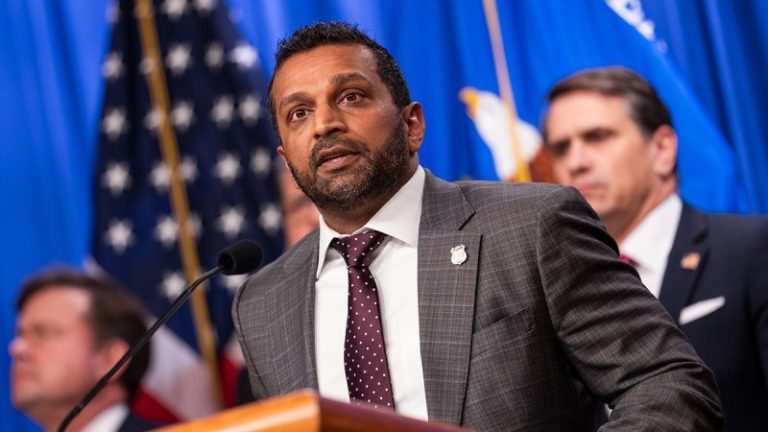
FBI Director Kash Patel said Saturday the agency is ramping up its use of artificial intelligence (AI) tools to counter domestic and international threats.

In a post on X, Patel said the FBI has been advancing its technology, calling AI a ‘key component’ of its strategy to respond to threats and stay ‘ahead of the game.’

‘FBI has been working on key technology advances to keep us ahead of the game and respond to an always changing threat environment both domestically and on the world stage,’ Patel wrote. ‘Artificial intelligence is a key component of this.

‘We’ve been working on an AI project to assist our investigators and analysts in the national security space — staying ahead of bad actors and adversaries who seek to do us harm.’

Patel added that FBI leadership has established a ‘technology working group’ led by outgoing Deputy Director Dan Bongino to ensure the agency’s tools ‘evolve with the mission.’

‘These are investments that will pay dividends for America’s national security for decades to come,’ Patel said.

A spokesperson for the FBI told Fox News Digital it had nothing further to add beyond Patel’s X post.

The FBI uses AI for tools such as vehicle recognition, voice-language identification, speech-to-text analysis and video analytics, according to the agency’s website.

Earlier this week, Bongino announced he would leave the bureau in January after speculation rose about his departure.

‘I will be leaving my position with the FBI in January,’ Bongino wrote in an X post Wednesday. ‘I want to thank President [Donald] Trump, AG [Pam] Bondi, and Director Patel for the opportunity to serve with purpose. Most importantly, I want to thank you, my fellow Americans, for the privilege to serve you. God bless America, and all those who defend Her.’

This post appeared first on FOX NEWS

A woman whose concerns about Jeffrey Epstein were brushed off by the FBI three decades ago was vindicated Friday after the Department of Justice finally made her complaint public.

Maria Farmer’s complaint was buried in the thousands of files related to Epstein’s and Ghislaine Maxwell’s sex trafficking cases that the DOJ published as part of its obligations under the Epstein Files Transparency Act.

The document was dated Sept. 3, 1996, more than 10 years before Epstein first faced prosecution for sex crimes involving girls. In it, Farmer accused Epstein of stealing and selling photos of her young sisters. Farmer worked as an artist for Epstein and has long been outspoken about what she said was his abusive behavior.

Farmer has said the photos of her sisters cited in the 1996 complaint included nudity, and the complaint is labeled as a possible ‘child pornography’ case.

Names on the complaint were redacted, but The New York Times confirmed with Farmer that she was the one who filed it. Farmer told the outlet she felt ‘vindicated.’ 

‘I’ve waited 30 years. … I can’t believe it. They can’t call me a liar anymore,’ she said.

The complaint noted that Farmer was a professional artist whose work included the images of her then 12- and 16-year-old sisters.

‘Epstein stole the photos and negatives and is believed to have sold the pictures to potential buyers,’ the complaint stated. ‘Epstein at one time requested [redacted] to take pictures of young girls at swimming pools. Epstein is now threatening [redacted] that if she tells anyone about the photos he will burn her house down.’

Farmer and her sister Annie brought separate lawsuits in 2019 alleging Epstein and Maxwell sexually assaulted them, but the suits were dropped as part of a settlement involving accepting compensation from Epstein’s estate.

Farmer also sued the DOJ in July, alleging the Clinton administration FBI ‘chose to do absolutely nothing’ with her complaint in 1996, and that in the years since, Epstein was able to victimize more women. Farmer said she also complained again to the FBI in 2006 during the Bush administration.

Farmer’s complaint was among the tens of thousands of documents related to Epstein and Maxwell that the DOJ released on Friday, the transparency bill’s deadline. Other accusers, such as Marina Lacerda, have spoken out about their dissatisfaction with the file release, observing that it was incomplete and contained heavy redactions. The department has said more files are coming within the next two weeks.

This post appeared first on FOX NEWS

Preparations for the second phase of the Gaza ceasefire plan are underway, according to U.S. special envoy Steve Witkoff. The announcement comes after representatives from Egypt, Qatar and Turkey participated in high-level U.S.-led talks in Miami.

‘In our discussions regarding phase two, we emphasized enabling a governing body in Gaza under a unified Gazan authority to protect civilians and maintain public order,’ Witkoff wrote on X. ‘We also discussed regional integration measures, including trade facilitation, infrastructure development, and cooperation on energy, water, and other shared resources, as essential to Gaza’s recovery, regional stability, and long-term prosperity.

‘We reviewed next steps in the phased implementation of the Comprehensive Peace Plan for Gaza, underscoring the importance of sequencing, coordination, and effective monitoring in partnership with local Gazan institutions and international partners.’

In addition to looking forward to the next phase, the group reflected on the implementation of the first part of the ceasefire, which Witkoff said ‘yielded progress.’

During the first phase, humanitarian aid went into the Gaza Strip, hostilities were reduced and there was a partial withdrawal of Israeli forces. Additionally, all living hostages and most deceased hostages were released. The last remaining hostage is Ran Gvili, an Israeli police officer killed during the Oct. 7, 2023, attacks.

The U.S.-led talks on the second phase of the plan were proceeded by a similar meeting in Cairo, which reportedly included Turkey and Egypt’s intelligence chiefs, as well as Qatar’s prime minister.

‘During the meeting, [they] also agreed to continue strengthening coordination and cooperation with the Civil Military Coordination Center to eliminate all obstacles to ensure the continuity of the ceasefire and to prevent further violations,’ a Turkish source told Reuters, adding that they also discussed countering alleged Israeli ceasefire violations.

The second phase of the deal involves the deployment of an international stabilization force and the development of an international body to govern Gaza. It also includes the disarmament of Hamas. Additionally, Israel will move further from the so-called ‘yellow line’ ahead of the international force taking over, according to The Times of Israel.

This post appeared first on FOX NEWS

The silver price was on the rise once again this week — it surged past the US$67 per ounce level on Friday (December 19), hitting a new record before pulling back.

As for gold, it spent much of the period around the US$4,330 per ounce level, although it rose as high as US$4,360 on Thursday (December 18), approaching its own all-time high.

Investors were eyeing November US consumer price index (CPI) data, which came out on Thursday. It was up 2.7 percent year-on-year, while core CPI was measured at 2.6 percent.

Those figures were quite a bit lower than analysts’ estimates, and data collection issues caused by the US government shutdown have left market participants questioning the results.

Notably, Bureau of Labor Statistics officials had to make ‘certain methodological assumptions’ because the October CPI report was canceled entirely. The bureau also started November data collection later than usual, driving concerns about a rebound in numbers for December.

US jobs data for both October and November came out this week as well, showing that the unemployment rate for last month rose to 4.6 percent, the highest since 2021.

While 64,000 jobs were added in November, 105,000 were lost in October, and revisions took 33,000 jobs away from the months of August and September.

Outside US economic data, it’s worth noting that for silver there’s still a lot of focus on behind-the-scenes actions that could be impacting the price.

Here’s what Substack newsletter writer John Rubino had to say about that:

‘A lot of the discontinuities that we’re seeing in the silver market right now are due to the fact that the big exchanges like Comex may not have enough silver to satisfy the demands of futures contract holders.

‘In other words, there are a lot more people out there with long futures contracts that could come in and demand silver than there is silver to satisfy that demand. And the number of people who are standing for delivery on futures contracts is rising, and the amount of silver in these exchanges is shrinking.’

Bullet briefing — Platinum beats gold, copper hits new record

Platinum price on the move

I’d be remiss if I didn’t also take a moment to mention platinum.

While gold and silver have been making headlines, platinum’s 2025 rise has been quiet, but significant — it’s up over 100 percent year-to-date and nearly hit US$1,980 per ounce this week.

Platinum is somewhat similar to silver in that they both have precious and industrial sides, and they’ve both seen persistent deficits in recent years.

Platinum’s deficit has definitely helped it rise this year, but looking forward to next year the World Platinum Investment Council is expecting a balanced market. When I saw that, I wondered if that would mean lower prices in 2026. But that may not necessarily be the case.

Edward Sterck said there are a couple of nuances in the council’s outlook — for example, it’s anticipating profit taking from exchange-traded funds, but if that doesn’t happen, then the platinum deficit may persist. He also noted that balance in 2026 wouldn’t erase years of deficits:

‘A balanced market doesn’t solve for the fact we’ve had three years of deficits. It doesn’t in any way, I suppose, rebuild aboveground stocks. And it’s the shortage of aboveground stocks that seems to be one of the major catalysts behind this price action and behind the market tightness.’

Copper price hits new high

It’s not only precious metals that have been hitting new highs this year.

The price of copper has been climbing as well, hitting a new all-time high of close to US$12,000 per metric ton last week on the London Metal Exchange.

It’s pulled back slightly since then, but market watchers agree the copper outlook remains strong as rising demand meets constrained supply. In fact, I’ve been asking experts what they think the top-performing asset of next year will be, and copper has been a popular pick.

Lobo Tiggre of IndependentSpeculator.com chose the base metal as his highest-confidence trade of 2025, and he said he’s sticking with it next year.

Here’s what he had to say about copper:

‘Top pick for 2026 is copper. Similar reasons to 2025 —the copper price has been kicked around, up and down by what I think of as sort of extraneous issues. But the fundamentals mean the demand scenario just looks phenomenal, and the supply has been really constrained.’

Securities Disclosure: I, Charlotte McLeod, hold no direct investment interest in any company mentioned in this article.

This post appeared first on investingnews.com

We also break down next week’s catalysts to watch to help you prepare for the week ahead.

In this article:

    This week’s tech sector performance

    US stocks advanced this week amid key economic data releases, with tech leading gains after Micron Technology’s (NASDAQ:MU) results release and easing artificial intelligence (AI) sector pressures.

    The S&P 500 (INDEXSP:.INX) rose 0.02 percent on the week, closing Friday (December 19) at 6,834.5.

    However, tech stock losses earlier in the week kept gains in check. The Nasdaq Composite (INDEXNASDAQ:.IXIC) lost 0.1 percent for the week to close at 23,307.62 on Friday.

    3 tech stocks moving markets this week

    1. Micron Technology (NASDAQ:MU)

    Micron Technology reported earnings for its first fiscal quarter of 2026 on Thursday (December 18), showing strong results driven by surging high-bandwidth memory sales for AI data centers

    Revenue reached US$13.64 billion, up 93 percent from last year and higher than the company’s September revenue projection of US$12.8 billion. Adjusted earnings per share were US$4.78, beating estimates of US$3.95. The company generated strong free cashflow and declared a US$0.115 per share dividend payable on January 14, 2026.

    Looking ahead, Micron adjusted its profit guidance for the upcoming quarter to US$8.42 per share, higher than Wall Street’s US$4.78 consensus, due to continued AI boom momentum.

    Investors responded to the results by sending Micron shares up 10 percent post-earnings. Momentum carried into Friday’s trading session, spilling over into other tech stocks, which have come under pressure in recent weeks over lofty valuations and funding concerns. The company ended the week 0.58 percent higher.

    2. Trump Media & Technology Group (NASDAQ:DJT)

    Trump Media & Technology Group rose nearly 30 percent before Thursday’s opening bell after the company announced plans to merge with fusion power company TAE Technologies.

    The all-stock deal is reportedly valued at more than US$6 billion. Devin Nunes, chair and chief executive of Trump Media, and Dr. Michl Binderbauer, CEO and director at TAE, are set to serve as co-CEOs.

    TAE is a private company with backing from Alphabet (NASDAQ:GOOGL) and other companies. The merger is slated to create one of the first publicly traded nuclear fusion companies. “We’re taking a big step forward toward a revolutionary technology that will cement America’s global energy dominance for generations,“ Nunes said.

    Shares of Trump Media closed the week with a gain of 39.53 percent.

    3. Oracle (NYSE:ORCL)

    Oracle shares dropped 5.4 percent on Wednesday (December 17) after a Financial Times report claimed data center investor Blue Owl Capital pulled out of a US$10 billion financing round for one of the AI data centers Oracle is constructing for OpenAI in Michigan. Talks reportedly stalled due to concerns over project delays, tougher debt terms, Oracle’s rising debt load and lease arrangements, per sources cited by the news outlet.

    Oracle disputed the report’s implications, stating that Michigan negotiations are “on schedule” without Blue Owl.

    The company said its project development partner, Related Digital, has chosen “the best equity partner from a competitive group of options, which in this instance was not Blue Owl.” Still, the company finished the week with its share price ahead by 2.18 percent as tech stocks staged an end-of-year comeback.

    Oracle, Micron Technology and Trump Media performance, December 15 to 19, 2025.

    Chart via Google Finance.

    Top tech news of the week

                Tech ETF performance

                Tech exchange-traded funds (ETFs) track baskets of major tech stocks, meaning their performance helps investors gauge the overall performance of the niches they cover.

                This week, the iShares Semiconductor ETF (NASDAQ:SOXX) declined by 0.94 percent, while the Invesco PHLX Semiconductor ETF (NASDAQ:SOXQ) saw a loss of 0.66 percent.

                The VanEck Semiconductor ETF (NASDAQ:SMH) also decreased by 0.61 percent.

                Tech news to watch next week

                Markets will be closed mid-week next week, with low trading volumes likely keeping movement calm.

                Watch for year-end selling in tech stocks, a potential rotation into safer sectors and light data like factory orders and home sales reports. Any comments on future interest rates could move markets somehwat, but expect mostly flat trading unless big news like policy changes breaks through.

                Securities Disclosure: I, Meagen Seatter, hold no direct investment interest in any company mentioned in this article.

                This post appeared first on investingnews.com