Author

admin

Browsing

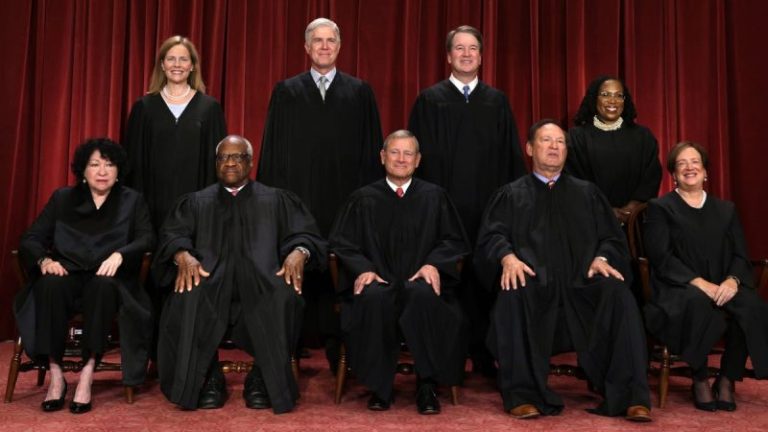
The Supreme Court on Monday agreed to take up a Republican-led challenge to U.S. campaign finance restrictions that limit the amount of money that political parties can spend on behalf of certain candidates. 

The case, National Republican Senatorial Committee v. Federal Election Commission, was originally appealed to the court by the National Republican Senatorial Committee (NRSC), the National Republican Congressional Committee (NRCC), and on behalf of two Senate Republican candidates running for election at the time — among them, now-Vice President JD Vance.

It centers on whether federal limits on campaign spending by political parties run afoul of free speech protections under the First Amendment of the Constitution.

In asking the Supreme Court to review the case, petitioners said the spending limits ‘severely restrict political party committees from doing what the First Amendment entitles them to do: fully associate with and advocate for their own candidates for federal office.’

A decision from the Supreme Court’s 6-3 conservative majority could have major implications on campaign spending in the U.S., further eroding the Federal Election Campaign Act of 1971, a law Congress passed more than 50 years ago with the aim of restricting the amount of money that can be spent on behalf of candidates.

The case comes as federal election spending has reached record highs: Presidential candidates in 2024 raised at least $2 billion and spent roughly $1.8 billion in 2024, according to FEC figures.

The challenge will almost certainly be among the most high-profile cases to be heard by the Supreme Court in the upcoming term.

The Trump-led Justice Department also said it will side with the NRSC in arguing the case, putting the administration in the somewhat unusual move of arguing against laws passed by Congress. The Democratic National Committee, Democratic Senatorial Campaign Committee, and Democratic Congressional Campaign Committee, meanwhile, have asked to defend the decision of a lower appeals court that ruled in 2024 to keep the limits in place.

The Justice Department cited free speech protections as its basis for siding with the NRSC, saying their decision to do so represents ‘the rare case that warrants an exception to that general approach’ of backing federal laws.’

Oral arguments will be held in the fall.

This post appeared first on FOX NEWS

Iran acknowledged on Sunday that an Israeli strike on Tehran’s notorious Evin prison last week killed dozens of people.

Iran’s judiciary spokesperson Asghar Jahangir posted on the office’s official Mizan news agency website that the strike killed at least 71 people, including staff, soldiers, prisoners and members of visiting families. Officials did not provide a breakdown of casualty figures.

The Washington-based Human Rights Activists in Iran said at least 35 of those killed were staff members and two were inmates. Others killed included a person walking in the prison vicinity and a woman who went to meet a judge about her imprisoned husband’s case, the organization said.

Jahangir said some of the injured were treated on site, while others were taken to hospitals. Iran has not said how many were injured.

Iran had also confirmed on Saturday that top prosecutor Ali Ghanaatkar had been killed in the attack. Ghanaatkar’s prosecution of dissidents, including Nobel Peace Prize winner Narges Mohammadi, had led to widespread criticism by human rights groups.

Israel carried out the strike on June 23 as its Defense Ministry said it was attacking ‘regime targets and government repression bodies in the heart of Tehran.’ The facility was known to hold many of Iran’s political prisoners and dissidents.

The prison attack came near the end of 12 days of Israeli strikes, which Israel claimed killed around 30 Iranian commanders and 11 nuclear scientists, while hitting eight nuclear-related facilities and more than 720 military infrastructure sites.

The status of Iran’s nuclear program remains unclear, even after President Donald Trump said American strikes on June 22 ‘obliterated’ Iran’s nuclear capabilities.

Rafael Grossi, the head of the International Atomic Energy Agency (IAEA), told CBS’ ‘Face the Nation’ in an interview Sunday that Iran’s capacities remain, but it is impossible to assess the full damage to the nuclear program unless inspectors are allowed in, which Iranian officials have not authorized.

‘It is clear that there has been severe damage, but it’s not total damage, first of all. And secondly, Iran has the capacities there, industrial and technological capacities. So if they so wish, they will be able to start doing this again,’ Grossi said.

Grossi said Iran could have centrifuges spinning enriched uranium ‘in a matter of months.’

‘Frankly speaking, one cannot claim that everything has disappeared and there is nothing there,’ he said.

The Associated Press contributed to this report.

This post appeared first on FOX NEWS

We are nearly halfway through the first year of the second Trump administration, and the American people are seeing something unprecedented in American politics in the 21st Century: the development and implementation of a grand strategy. 

Critics and talking heads have tried to paint President Donald Trump as brash and careless, especially when it comes to foreign relations and international affairs. Nothing could be further from the truth. Since the beginning, Trump has been clear that America’s interests are his interests, and he has designed America’s grand strategy around American priorities. 

Critics say the Trump Doctrine is causing chaos. Not so. The chaos caused by the flawed designs of previous presidents and their advisers in this century alone made it necessary for a radical course correction. In other words, what Trump has done this year has also opened up new opportunities for collaboration and commerce in regions that were overlooked in previous administrations. The Middle East is a case in point.  

For decades, the only narrative coming out of the region was conflict. Trump saw past that and identified opportunities for trade, commerce and cooperation. This has directly led to a transformation in foreign relations with many Middle Eastern and Gulf countries and new partnerships that have the potential to revolutionize America’s engagement in the area — as well as the American economy. 

That was not Trump’s only goal. On his trip to the region, he also laid the groundwork for the now-apparent isolation of Iran. No one wants the Iran problem. Even Syria — a long-term Iranian ally — is watching from the sidelines. 

The Trump administration has also simultaneously put to bed the blanket ‘isolationist’ and ‘warmonger’ caricatures, which hold no water after strategic strikes against Iranian uranium enrichment facilities. These were calculated strikes that sent two important messages. 

First, it was a reminder that America supports its allies. Israel has been fighting against constant opposition long before the second Trump administration began. The lone beacon of democracy in the Middle East, it has done an admirable job of weakening the state and non-state actors that threaten not only the existence of the state of Israel but also democratic values that undergird all free societies.  

Israel has stood boldly when other nations have cowered. And they did it without asking for help. This is something that has set Israel apart. Israeli Prime Minister Benjamin Netanyahu has always acknowledged that Israel must fight for itself and has ultimate responsibility for its own defense. 

Trump honored that position and leveraged America’s unmatched military to support Israel through bombings that neutralized targets that were important to America, Israel, and the rest of the free world. 

This reminded America’s other allies that the Trump administration is ready and willing to work in tandem when priorities are aligned. The fact that this happened ahead of the NATO meeting demonstrates just how comprehensive the new American doctrine is. It is also not a coincidence that NATO agreed to support Trump’s recommendation of 5% of GDP going toward defense spending. 

The second message that Trump has sent is that he is always open to diplomacy. In fact, it is his preference. Iran was repeatedly warned against using force. They were encouraged to find a peaceful solution and explicitly told the consequences if they continued to violate the JCPOA agreement. Only when it became clear that Iran was not interested in negotiations was military force used.  

The Trump administration has also simultaneously put to bed the blanket ‘isolationist’ and ‘warmonger’ caricatures, which hold no water after strategic strikes against Iranian uranium enrichment facilities. 

Importantly, that was not the end of the story. Quickly after the strikes were completed, Trump again began working toward peace, personally working with top officials to broker a ceasefire between Israel and Iran. Force was only ever used in an effort to bring both parties to the negotiating table. 

These are not the actions of a warmonger or an isolationist. They are the actions of a peace strategist. Someone who is unashamed to put his country first on the world’s stage but opens the hand of friendship and cooperation to those willing to join together to achieve shared goals. Sounds a bit like President Ronald Reagan, who ended the Cold War without firing a shot.  

This post appeared first on FOX NEWS

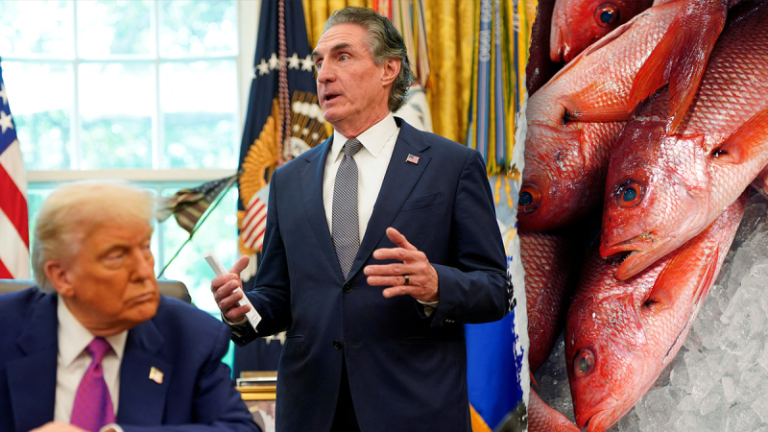
A multi-year grant to a Washington-area nonprofit focused on promoting fishing, boating and outdoor activities was canceled by the Interior Department after Senate DOGE leadership flagged the original Fox News Digital report to the Cabinet agency.

More than $26 million has already been paid out – on top of $164 million since 2012 – to the Recreational Boating and Fishing Foundation (RBFF), based in Alexandria, Virginia.

From the government website USA Spending, the grant’s purpose highlights RBFF’s ‘Take Me Fishing’ consumer campaign that includes a social and digital media component, as well as ads on Walt Disney Company-branded streaming services and ‘mobile fishing units’ that cater to urban communities and ‘underserved audiences.’

At least $40.5 million will be saved in the near-term, the Senate DOGE Caucus told Fox News Digital, citing Interior’s response.

‘Today’s catch of the day is Washington waste,’ said Senate DOGE Caucus Chairwoman Joni Ernst, R-Iowa.

‘I am proud to have exposed bloated overhead costs and worked with Secretary Burgum to ensure tax dollars collected to boost fishing are not siphoned into the pockets of slick D.C.-based consultants.’

‘There’s more pork in the sea, and I am going to keep fishing for it!’

Burgum’s office struck a similar tone, saying the agency is committed to fiscal responsibility, efficiency and accountability – while still fully supporting the recreational boating, fishing and outdoors industries.

A spokeswoman for the agency, which oversees the National Park Service that provides outlets for all of the above, said that ‘under President Donald J. Trump’s leadership, we are ensuring that every taxpayer dollar serves a clear purpose and aligns with our core mission.’

‘Following a review of discretionary spending, the Department determined that the use of this particular [RBFF] grant had not demonstrated sufficient alignment with program goals or responsible stewardship of taxpayer resources,’ Charlotte Taylor said.

The grant, largely funded by excise taxes on fishing poles, came under DOGE scrutiny when Ernst discovered an RBFF contract with Disney worth $1.99 million plus hundreds of thousands in ‘SEO consulting,’ and $5 million to a Minnesota creative media development agency. Several RBFF executives are paid from the mid-$100,000s on up.

In part of a lengthy response to the grant’s cancellation, RBFF officials told Fox News Digital the organization has ‘devised a plan we believe would meet the goals and priorities of the administration, which includes adjusted employee compensation, reduced headcount and updated investment priorities.’

But the group claimed it has not been able to connect directly with DOGE or Interior during the grant review process ‘despite repeated outreach attempts during the past three months.’ 

A source familiar with the situation indicated the group had met with Ernst’s office, and Taylor said Burgum’s office did meet with RBFF in Washington earlier this month and has been in contact ‘multiple’ times: ‘Anything to say otherwise is inaccurate.’

‘Since 1998, [RBFF] has helped build what has become a $230.5 billion industry that supports 1.1 million American jobs, generates $263 million in tax revenue, and contributes $2 billion annually to fisheries and conservation efforts in all 50 states,’ RBFF’s statement continued.

‘Alarmingly, in just the past two months since RBFF’s funding has been paused, fishing license sales are down 8.6% across 16 states, representing the loss of over $590 million in angler spending and 5,600 jobs.’

Several other groups came to RBFF’s defense.

Matt Gruhn, president of the Marine Retailers Association of the Americas, told Fox News Digital he was disappointed in Interior’s decision to terminate the grant.

‘[RBFF’s] work was pivotal to enhancing the recreational boating and fishing industry’s recruitment, retention and reactivation efforts. Their training and resources vastly improved state agency processes and marketing and has made boating and fishing licensing and registration far easier for Americans,’ Gruhn said.

‘RBFF has been a responsible steward of these taxpayer dollars from the very beginning, with oversight from the very stakeholders that paid into the fund that RBFF’s grant originates from, as well as passing every audit with flying colors.’

Additionally, the head of the American Sportfishing Association warned of the ‘severe impact’ the loss of grant money will have on the outdoors industry.

CEO Glenn Hughes said his organization’s members agreed in 1950 to self-impose a tax on fishing rods to reinvest back into the industry and bolster license sales, habitat conservation and more.

The RBFF’s ‘Take Me Fishing’ campaign began in 1998 with congressional funding from the tackle tax. Hughes claimed the effort has generated a total of $230.5 billion in economic impact since.

‘Without consultation and coordination with the recreational fishing industry, the Department of the Interior decided to withhold critical funding from RBFF, ultimately ending a 27-year history of increasing fishing participation and efforts to bolster the economic impact of the fishing industry.’

This post appeared first on FOX NEWS

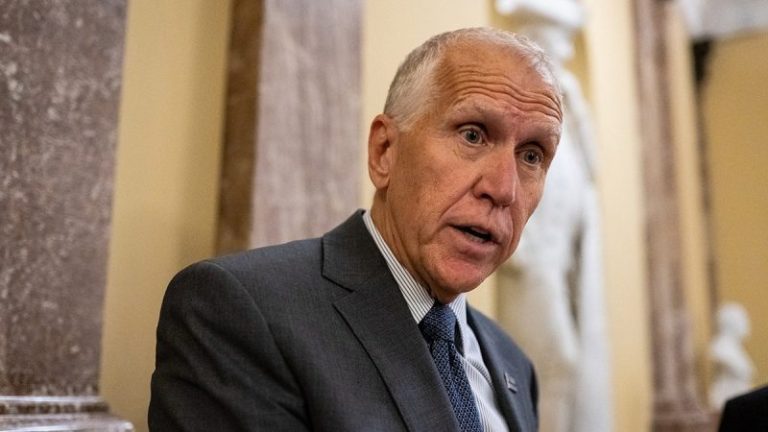
Sen. Thom Tillis, R-N.C., denounced President Donald Trump’s ‘big, beautiful bill,’ just hours after making the surprise announcement that he would not run for a third term in 2026. 

Tillis voted against a motion to proceed with the spending package on Saturday and then announced his retirement on Sunday, citing political polarization and a desire to spend more time with family.

He then took to the Senate floor later Sunday to warn that ‘Republicans are about to make a mistake on healthcare and betraying a promise’ on Medicaid should the package clear the upper chamber. 

‘It is inescapable that this bill in its current form will betray the very promise that Donald J. Trump made in the Oval Office or in the Cabinet room when I was there with finance. He said, ‘We can go after waste, fraud and abuse’ on any programs,’ Tillis said. ‘Now, those amateurs that are advising him, not Dr. Oz, I’m talking about White House healthcare experts, refuse to tell him that those instructions that were to eliminate waste, fraud and abuse, all of a sudden eliminates a government program that’s called the provider tax. We have morphed a legal construct that admittedly has been abused and should be eliminated into waste, fraud and abuse, money laundering. Read the code. Look how long it’s been there.’

‘I’m telling the president that you have been misinformed,’ Tillis said. ‘You supporting the Senate mark will hurt people who are eligible and qualified for Medicaid.’

‘I love the work requirement. I love the other reforms in this bill. They are necessary, and I appreciate the leadership of the House for putting it in there,’ Tillis said. ‘But what we’re doing, because we have a view of an artificial deadline on July 4, that means nothing but another date in time. We could take the time to get this right if we lay down the House mark of the Medicaid bill and fix it.’ 

The two-term senator said he consulted with Republican experts in the state legislature, Democrats loyal to Gov. Josh Stein and an independent body from the hospitals’ association to gain insight on how the provider tax cuts would impact North Carolinians. In the best-case scenario, he said, the findings showed a $26 billion cut in federal support for Medicaid. Tillis said he presented the report to the Administrator of the Centers for Medicare & Medicaid Services, Dr. Mehmet Oz. 

‘After three different attempts for them to discredit our estimates, the day before yesterday they admitted that we were right,’ Tillis said. ‘They can’t find a hole in my estimate.’

‘So what do I tell 663,000 people in two years or three years when President Trump breaks his promise by pushing them off of Medicaid because the funding is not there anymore, guys?’ Tillis said. ‘I think the people in the White House, those advising the president are not telling him that the effect of this bill is to break a promise, and do you know the last time I saw a promise broken around healthcare? With respect to my friends on the other side of the aisle, it’s when somebody said, ‘If you like your healthcare, you could keep it, if you like your doctor, you could keep it.’ We found out that wasn’t true.’ 

In promoting the Affordable Care Act (ACA), also known as Obamacare, from 2009 to 2010, former President Barack Obama repeatedly claimed, ‘If you like your healthcare plan, you can keep it. If you like your doctor, you can keep your doctor.’ Tillis argued that it was the failures of that package that led to him becoming the second Republican Speaker of the North Carolina House since the Civil War and later to his election to the U.S. Senate. 

Trump celebrated Tillis’ retirement announcement and issued a warning to other ‘cost-cutting Republicans.’ 

‘For all cost-cutting Republicans, of which I am one, REMEMBER, you still have to get reelected. Don’t go too crazy!’ Trump wrote Sunday night. ‘We will make it all up, times 10, with GROWTH, more than ever before.’ 

After his Senate speech, Tillis told reporters that he had told Trump that he ‘probably needed to start looking for a replacement.’

‘I told him I want to help him,’ Tillis said, according to Politico. ‘I hope that we get a good candidate that I can help and we can have a successful 2026.’

The senator told reporters Trump is ‘getting a lot of advice from people who have never governed and all they’ve done is written white papers.’ He condemned ‘people from an ivory tower driving him into a box canyon.’

In his retirement announcement, Tillis said that ‘it’s become increasingly evident that leaders who are willing to embrace bipartisanship, compromise, and demonstrate independent thinking are becoming an endangered species.’ 

This post appeared first on FOX NEWS
House lawmakers could kick off consideration of President Donald Trump’s ‘big, beautiful bill’ as soon as Wednesday morning.

A notice sent to congressional offices on Sunday night indicated House GOP leaders think they may begin the process at 9 a.m. Wednesday with an initial House-wide vote.

Nothing is set in stone, however, and the Senate is still working its way through the massive piece of legislation as of Monday morning. 

‘The president has been very clear that it’s time to get this bill out of Congress and over to his desk,’ House GOP Policy Chair Kevin Hern, R-Okla., told Fox News Digital. ‘We’re going to celebrate Independence Day with a big, beautiful signing ceremony and finally deliver this tax relief to American families.’

The initial House-wide vote would be a ‘rule’ vote, a procedural hurdle to allow lawmakers to begin debating the bill. That could set up a final vote by Wednesday evening or Thursday morning, depending on last-minute maneuvering to rally support. The House Rules Committee, the final gatekeeper before most legislation is considered chamber-wide, is likely to consider the bill on Tuesday.

The initial version of the bill passed the House of Representatives by just one vote in late May.

House GOP leaders are facing similarly slim odds now, with just four Republican defections being enough to sink the bill, assuming all Democrats vote against it as expected.

Some House Republicans have already voiced concerns about some of the Senate’s key modifications to the bill. Moderates are wary of additional cost-sharing burdens for states that expanded their Medicaid populations under the Affordable Care Act, while conservatives argue other measures in the bill will mean it adds more to the $36 trillion national debt than the House version.

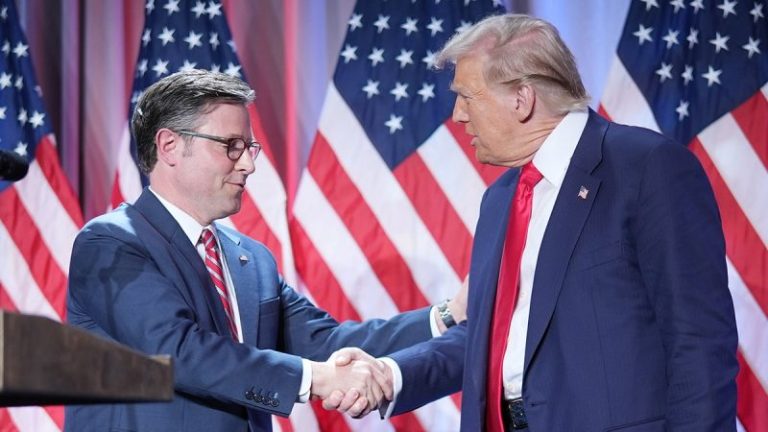
House Speaker Mike Johnson, R-La., and House Majority Leader Steve Scalise, R-La., urged Republicans to take their concerns to leadership or their Senate counterparts rather than airing those grievances on social media.

Meanwhile, leadership allies have been hitting the media sphere in support of the bill.

‘The One, Big, Beautiful Bill delivers President Trump’s pro-worker promises by eliminating tax on tips, overtime, and auto interest, while also delivering tax relief for seniors,’ House Ways & Means Committee Chairman Jason Smith, R-Mo., posted on X amid a litany of other statements promoting the bill.

Republican Study Committee Chair August Pfluger, R-Texas, wrote, ‘The average taxpayer in my district would face a 26% tax increase if we don’t pass the One Big Beautiful Bill. Failure is not an option. We must pass this bill to prevent the largest tax hike in history!’

The 940-page legislation is aimed at advancing Trump’s priorities on taxes, the border, energy, defense and the national debt.

The president has said he wants the bill on his desk on or around the Fourth of July.

Additionally, the legislation could still change before it gets to Trump – the Senate is kicking off a marathon ‘vote-a-rama’ on the bill with various senators on both sides offering an unlimited number of amendments.

This post appeared first on FOX NEWS