
Author

admin

Browsing

Ground radiometrics, soil geochemistry and mapping reinforce the potential for a Rossing-style system beneath shallow cover

ReeXploration Inc. (TSXV: REE) (FSE: K2I0) (‘ReeXploration’ or the ‘Company’) is pleased to announce results from its uranium field program, which provide strong support for the scale and technical validity of the previously-announced uranium target at the Eureka Project in Namibia. The Company believes the target has the potential to represent a large, under-cover Rössing-style uranium system. A drill program is planned for early 2026 to provide initial testing of the target.

HIGHLIGHTS:

  • Strong correlation between airborne and ground uranium signatures strengthens confidence in continuity of target
    • Areas of very high total gamma readings, including zones above 1,500 counts per second (‘cps’), identified above interpreted leucogranites
  • Soil geochemistry confirms the radiometric signal is uranium-bearing
    • Uranium-rich soils mapped with values up to 114 ppm U (pXRF)
  • Mapping highlights key indicators consistent with Rössing-style uranium systems
    • Favourable rock types and grab samples up to 853 ppm U (pXRF) provide encouraging indicators of a uranium-bearing system below cover
  • Evidence points to a large, cohesive uranium system
    • Geological setting and signature show strong similarity with known Namibian uranium systems (Rössing, Omaholo and Etango) when compared at equal scale
  • Drill program planned to test Rössing-style model
    • Program aims to provide initial testing of the large-scale target

Christopher Drysdale, Interim CEO for ReeXploration, added, ‘This field program has materially advanced our understanding of the uranium target at Eureka. The strong alignment between airborne radiometrics, ground radiometrics, geology and soil geochemistry provides exactly the type of multi-layered confirmation you want to see before drilling. Namibia is one of the world’s most important uranium jurisdictions, and Eureka lies in the same structural corridor that hosts Rössing, Husab, Etango, Omaholo and Norasa. The scale of this anomaly, and the quality of the early technical indicators, point to a meaningful discovery opportunity.’

Field Program Results

Four grids across the broad airborne uranium anomalies southwest of the Eureka Dome were defined for follow-up ground investigation (Figure 1). A ground spectrometer survey and soil sampling program were executed by the Company across the four grids. The objectives included obtaining a greater understanding of the nature, cause and extent of the anomalies, and identifying any highly anomalous areas.

Figure 1: Grids 1 to 4 covering the airborne uranium radiometric anomalies.

To view an enhanced version of this graphic, please visit:
https://images.newsfilecorp.com/files/6102/277795_8e4d6f7a54a09b55_001full.jpg

Ground Spectrometer Survey

A total of 102-line kilometers of ground spectrometer survey was completed across the four grids, with survey lines running east-west and spaced 100 m apart. Overall, a very good correlation was achieved with the airborne radiometric uranium anomalies. The ground surveying highlighted areas of very high anomalism with values up to 2,255 cps. Low radioactivity corresponds with more massive calc-silicate exposure, covered areas, and drainage sediments, whereas high radioactivity corresponds with gypcretes/calcretes overlying leucogranite. Secondary uranium (carnotite) was found in the overburden (sand/sheetwash), as well as in in-situ leucogranite and schist. Sand cover increases to south attenuating radioactive signal (Figure 2).

Figure 2: Ground spectrometer survey completed across the four grids.

To view an enhanced version of this graphic, please visit:
https://images.newsfilecorp.com/files/6102/277795_8e4d6f7a54a09b55_002full.jpg

The field spectrometer survey has confirmed the regional scale of the airborne radiometric uranium anomalies. The anomalies relate to widespread uranium mineralization occurring within thin overburden, which is best visible where drainages have incised a regionally occurring gypcrete/calcrete horizon with anomalous values ranging from 300 to 1,500 cps (Figure 3).

Figure 3: Mineralized leucogranite and gypcrete/calcrete found during reconnaissance field work and the ground spectrometer survey.

To view an enhanced version of this graphic, please visit:
https://images.newsfilecorp.com/files/6102/277795_8e4d6f7a54a09b55_003full.jpg

Soil Sampling pXRF Results

A total of 1,040 soil samples were collected across the four grids at 100 x 100 m spacing and analyzed with the Company’s portable XRF. High uranium in soils are evident where secondary uranium (carnotite) was found in gypcrete / calcretes primarily along drainages (Figure 4).

Figure 4: Uranium in soil pXRF results from the soil sampling campaign.

To view an enhanced version of this graphic, please visit:
https://images.newsfilecorp.com/files/6102/277795_8e4d6f7a54a09b55_004full.jpg

Initial Drill Target Areas

Six initial drill target areas have been identified based on coincident; 1) airborne uranium radiometric anomalies, 2) high total gamma (>500 cps) from ground spectrometer survey, 3) uranium in soils (>10 ppm pXRF), and 4) zones of interpreted leucogranites in contact with reactive calc-silicate rocks (Figure 5). The target areas include occurrences of visible secondary uranium mineralization identified within leucogranites and gypcretes/calcretes.

Figure 5: Initial drill target areas.

To view an enhanced version of this graphic, please visit:
https://images.newsfilecorp.com/files/6102/277795_8e4d6f7a54a09b55_005full.jpg

Next Steps: Diamond Drilling Expected to Commence Early 2026

ReeXploration is in the final stages of contractor selection and anticipates mobilizing in early 2026 for a 2,000-metre inaugural diamond drilling program. The program is designed to test for primary uranium mineralization within the leucogranites (Rössing-style model) beneath the weathering profile. Drilling is expected to comprise a series of heel-to-toe drill fences across priority target areas. The initial program is planned to consist of approximately ten holes averaging 200 metres in length. A detailed drilling schedule will be released once mobilization dates are confirmed, and the program remains subject to financing.

Technical Disclosure

Field analysis of rock and soil samples was carried out using a calibrated SciAps X-555 portable X-Ray Fluorescence (pXRF) analyzer. The instrument is capable of detecting uranium providing a rapid, preliminary, and semi-quantitative indication of uranium concentrations which is considered sufficiently reliable for initial reporting of initial field reconnaissance results. Select samples are expected to be verified through uranium assay at an accredited laboratory.

Counts per second (‘cps’) results were collected using an RS-125 handheld gamma-ray spectrometer. The RS-125 measures natural radioactivity from potassium (K), uranium (U), and thorium (Th), providing real-time counts-per-second (cps) readings that assist in identifying zones of elevated radioactivity and guiding geological mapping and sampling programs. The cps measurements are qualitative in nature and should not be interpreted as equivalent to uranium concentrations obtained through laboratory analysis.

Qualified Person

Tolene Kruger, BSc. (Hons), M.Sc., is a consulting geologist and has reviewed and approved the scientific and technical information in this news release. Mrs. Kruger is registered as Professional Natural Scientist (Pr.Sci.Nat.) with the South African Council for Natural Science Professions (SACNASP, Reg. No.: 148182), and a Qualified Person for the purposes of National Instrument 43-101 – Standards of Disclosure for Mineral Projects.

About ReeXploration Inc.

ReeXploration (TSXV: REE) (FSE: K2I0) is a Canadian exploration company positioned to help meet surging global demand for secure, responsible supplies of critical minerals essential to the clean energy transition, advanced technologies and national defense. The Company’s flagship Eureka Project in central Namibia pairs a technically proven rare earth foundation – supported by the production of a clean, Western-standard monazite concentrate – with a newly defined, high-priority uranium target located within one of the world’s most established uranium corridors. Together, these commodities provide multi-path discovery potential aligned with accelerating global efforts to diversify critical mineral and nuclear fuel supply. Supported by a Namibia-based technical team and guided by global critical minerals experts, ReeXploration is advancing a disciplined, discovery-led strategy, building a credible, ESG-aligned platform positioned to benefit from the global race to diversify and secure responsible supply chains.

Caution Regarding Forward-Looking Information

This press release may contain forward-looking information. This information is based on current expectations and assumptions (including assumptions relating to general economic and market conditions) that are subject to significant risks and uncertainties that are difficult to predict. Actual results may differ materially from results suggested in any forward-looking information. Exploration does not assume any obligation to update forward-looking information in this release, or to update the reasons why actual results could differ from those reflected in the forward-looking information unless and until required by securities laws applicable to ReeXploration. Additional information identifying risks and uncertainties is contained in the filings made by ReeXploration with Canadian securities regulators, which filings are available at www.sedarplus.ca.

Neither the TSX Venture Exchange nor its Regulation Services Provider (as that term is defined in policies of the TSX Venture Exchange) accepts responsibility for the adequacy or accuracy of this release.

Further details are available on the Corporation’s website at www.rareearthexploration.com or contact Christopher Drysdale, Interim CEO of ReeXploration Inc., at +1 902-334-1949, contact@rareearthexploration.com.

To view the source version of this press release, please visit https://www.newsfilecorp.com/release/277795

News Provided by Newsfile via QuoteMedia

This post appeared first on investingnews.com

NOT FOR DISTRIBUTION TO UNITED STATES NEWS WIRE SERVICES OR FOR DISSEMINATION IN THE UNITED STATES

Stallion Uranium Corp. (the ‘ Company ‘ or ‘ Stallion ‘ ) ( TSX-V: STUD ; OTCQB: STLNF ; FSE: B76 ) is pleased to announce that it is proceeding on a non-brokered private placement for gross proceeds of up to $4.55M, consisting of flow-through shares of the Company to be issued as a ‘flow-through share’ within the meaning of the Income Tax Act (Canada) (each, a ‘ FT Share ‘) at a price of $0.45 per FT Share (the ‘ Offering ‘).

The gross proceeds from the FT Shares will be used by the Company to incur eligible ‘Canadian exploration expenses’ that qualify as ‘flow-through critical mineral mining expenditures’ as such terms are defined in the Income Tax Act (Canada) (the ‘ Qualifying Expenditures ‘) related to the Company’s uranium projects in the Athabasca Basin, Saskatchewan, on or before December 31, 2026. All Qualifying Expenditures will be renounced in favour of the subscribers of the FT Shares effective December 31, 2025.

The Offering is subject to TSX Venture Exchange approval. All securities to be distributed under the Offering will be subject to a hold period of four months and one day following the closing date of the Offering.

The Company may pay finders fees in connection with the Offering, in accordance with the policies of the TSX Venture Exchange.

This press release does not constitute an offer to sell or a solicitation of an offer to buy any of the securities in the United States. The securities have not been and will not be registered under the United States Securities Act of 1933, as amended (the ‘ U.S. Securities Act ‘), or any state securities laws and may not be offered or sold within the United States or to or for the account or benefit of a U.S. person (as defined in Regulation S under the U.S. Securities Act) unless registered under the U.S. Securities Act and applicable state securities laws or an exemption from such registration is available.

About Stallion Uranium Corp.:

Stallion Uranium is working to ‘Fuel the Future with Uranium’ through the exploration of roughly 1,700 sq/km in the Athabasca Basin, home to the largest high-grade uranium deposits in the world. The company, with JV partner Atha Energy holds the largest contiguous project in the Western Athabasca Basin adjacent to multiple high-grade discovery zones. With a commitment to responsible exploration and cutting-edge technology such as the use of the proprietary Haystack TI technology, Stallion is positioned to play a key role in the future of clean energy.

Our leadership and advisory teams are comprised of uranium and precious metals exploration experts with the capital markets experience and the technical talent for acquiring and exploring early-stage properties. For more information visit stallionuranium.com .

On Behalf of the Board of Stallion Uranium Corp.:

Matthew Schwab
CEO and Director

Corporate Office:
700 – 838 West Hastings Street,
Vancouver, British Columbia,
V6C 0A6

T: 604-551-2360
info@stallionuranium.com

Neither the TSX Venture Exchange nor its Regulation Services Provider (as that term is defined in the policies of the TSX Venture Exchange) accepts responsibility for the adequacy or accuracy of this release.

This news release contains forward-looking statements and forward-looking information within the meaning of Canadian securities legislation (collectively, ‘forward-looking statements’) that relate to the Company’s current expectations and views of future events. Any statements that express, or involve discussions as to, expectations, beliefs, plans, objectives, assumptions or future events or performance (often, but not always, through the use of words or phrases such as ‘will likely result’, ‘are expected to’, ‘expects’, ‘will continue’, ‘is anticipated’, ‘anticipates’, ‘believes’, ‘estimated’, ‘intends’, ‘plans’, ‘forecast’, ‘projection’, ‘strategy’, ‘objective’ and ‘outlook’) are not historical facts and may be forward-looking statements and may involve estimates, assumptions and uncertainties which could cause actual results or outcomes to differ materially from those expressed in such forward-looking statements. No assurance can be given that these expectations will prove to be correct and such forward-looking statements included in this material change report should not be unduly relied upon. These statements speak only as of the date they are made.

Forward-looking statements are based on a number of assumptions and are subject to a number of risks and uncertainties, many of which are beyond the Company’s control, which could cause actual results and events to differ materially from those that are disclosed in or implied by such forward-looking statements. The Company undertakes no obligation to update or revise any forward-looking statements, whether as a result of new information, future events or otherwise, except as may be required by law. New factors emerge from time to time, and it is not possible for the Company to predict all of them or assess the impact of each such factor or the extent to which any factor, or combination of factors, may cause results to differ materially from those contained in any forward-looking statement. Any forward-looking statements contained in this presentation are expressly qualified in their entirety by this cautionary statement .

News Provided by GlobeNewswire via QuoteMedia

This post appeared first on investingnews.com

Saga Metals Corp. (‘SAGA’ or the ‘Company’) (TSXV: SAGA,OTC:SAGMF) (OTCQB: SAGMF) (FSE: 20H) a North American exploration company advancing critical mineral discoveries, is pleased to announce the successful completion of diamond drilling in the Trapper South zone comprised of 977 m in four diamond drill holes. The Trapper North and South zone drilling is located on two cross-sections across an extensive ground magnetic anomaly that stretches over 3 km.

Highlights

  • Phase 1 & 2 have confirmed extensive oxide mineralization in all drill locations validating the entire 3+ km magnetic anomaly within the Trapper zone.
  • Completion of these initial phases of the 2025-2026 mineral resource estimate drill program has further validated about 16 km of the oxide trend that extends from the Hawkeye zone to the Trapper North zone.
  • Trapper South: R-0012, -0013, -0014, and -0015 are located on drill section S-9 and intercepted a continuous rhythmic oxide layering across the full width of the magnetic anomaly.
  • Trapper North: R-0008, -0009, and -0010 on drill section N-11 transected the magnetic anomaly and demonstrated a likely structural repetition of the cumulate oxide layers dominated by semi-massive to massive cumulate oxides , confirming the strong magnetic response.
  • The planned 15,000 m mineral resource estimate drill program is funded marked by the recent closing of the Company’s $6M oversubscribed brokered LIFE Offering .

‘We are thrilled with the momentum building at Saga Metals as we mark the successful completion of Phases 1 and 2 of our mineral resource estimate drill program, where we tested both the North and South targets within the Trapper zone and encountered extensive oxide mineralization at all eight drill locations,’ stated Michael Garagan, CGO & Director, Saga Metals. ‘This achievement, combined with finalizing the largest capital raise in our Company’s history, has positioned us to advance through what is undoubtedly the most critical drill program we’ve ever undertaken. Drilling in Trapper North and South have validated the 2025 ground magnetic survey and provides a template for future definition drilling of the zone. A full 3 km of strike is now open for follow-up drilling across widths of up to 400 m. These milestones not only validate our strategic vision but also fuel our enthusiasm for unlocking the full potential of our assets and delivering substantial value to our shareholders.’

Figure 1: Location of the Phase 1 and Phase 2 of Fall 2025 Drilling at Trapper Zone, showing the TMI of the 2025 Trapper Zone ground magnetic survey.

Figure 2: Image of drill core from hole R-0014 highlighting the consistent and extensive rhythmic oxide layering.

Trapper South Summary

All four holes of cross-section S-9, totalling 977 meters, have now been drilled in Trapper South. Logging is still in progress with respect to drill holes R-0014 & R-0015 with final logs available within the next week. Both holes continued to intercept rhythmic oxide layering, and the team expects to report on the lithological observations and the structure’s width in the coming days.

Drill holes R-0012 & R-0013 intersected significant oxide layering. R-0012 clipped the eastern side of the main oxide layering with a cumulative 59.88 m of rhythmic oxide layering and 13.67 m of Intercumulus oxides. R-0013 intersected a cumulative 174.87 m of oxide comprised of 135.87 m of rhythmic oxide layering and 39 m of intercumulus oxides.

Figure 3 below depicts the impressive intercept of oxide across the main magnetic anomaly within the Trapper South zone, with a significant width that is only half the total width of the multiple-layered sequence of the Trapper South anomalies.

Figure 3: Cross-Section S-9 showing R-0012, -0013, -0014 and -0015 with the 3D Magnetic Inversion of the 2025 Trapper Zone ground magnetic survey. Logging of R-0014 & -0015 oxide mineralization units will be completed in the coming days. Additional targets lie SW of the collar of R-0015.

Trapper North Summary

Phase 1 of drilling in the Trapper North Zone targeted a strong magnetic anomaly delineated in the 2025 ground geophysical survey. The anomaly traces the shape of an apparent fold structure. Drilling fences are oriented to cross the fold structure at right angles, with drilling directions of mostly N038°E. A total of 1,073 m of drilling has been completed in four diamond drill holes.

Drilling on Section N-11, in diamond drill holes R-0008, -0009, and -0010, demonstrated variations in the structural attitude that map an open anticline in the semi-massive to massive oxides. The exceptional thickness of the oxide units on Section N-11 is partly due to the structural repetition of the units. A mylonitic shear zone occupies the axial plane of the fold. Significantly, this drilling tested both the SW and NE limbs of the fold structure and was dominated by semi-massive to massive cumulate oxides, confirming the strong magnetic response.

The first 420 samples include 202 from the complete R-0008 drill hole and 218 from the complete R-0009 drill hole. All samples have been received by the lab, and assay results are expected in the next few weeks.

Figure 4: Cross-Section N-11 showing R-0008, -0009, -0010 and -0011 with the 3D Magnetic Inversion of the 2025 Trapper Zone ground magnetic survey.

Drill Program Objectives:

Phase 1 and 2 aimed at garnering early structural, geometrical and mineralogical information in both the North and South Trapper zones in Q4 2025 to set the stage for the remainder of SAGA’s robust 2026 maiden resource estimate.

The Trapper Zone drill campaign will target:

  • Grade continuity across a 3 km strike length.
  • Oxide layering widths and continuity to true depths of about 200 meters.
  • Integration of structural insights from trenching and drilling into collar orientation and drill design.
  • Interpretation of grades, widths and structures before initiating the detailed grid and drill sections in 2026 for an indicated mineral resource estimate.

Completed to date:

  • Testing of both the North and South sections of the Trapper zone with initial drilling of 2,050 meters in 8 holes has been completed as planned before the December break.
  • Confirmation of extensive oxide mineralization at all drill locations validating the entire 3+ km strike within the Trapper zone.
  • Drilling has been complemented by metallurgical sampling through the winter, with core from the Hawkeye zone (results expected in the coming weeks) and further metallurgical sampling will continue with core from the Trapper zone starting in Q1 2026.

Figure 5: Radar Project’s Trapper Zone depicting a 3+ km Total Magnetic Intensity (TMI) anomaly from the 2025 ground survey and the oxide layering trend. The Trapper Trail (in black) will be the target of the planned 15,000 m diamond drilling program aimed at establishing Saga’s maiden mineral resource estimation.

The Radar Property spans 24,175 hectares and hosts the entire Dykes River intrusive complex (~160 km²), a unique position among Western explorers. Geological mapping, geophysics, and trenching have already confirmed oxide layering across more than 20 km of strike length, with mineralization open for expansion.

Vanadiferous titanomagnetite (‘VTM’) mineralization at Radar is comparable to global Fe–Ti–V systems such as Panzhihua (China), Bushveld (South Africa), and Tellnes (Norway), positioning the Project as a potential strategic future supplier of titanium, vanadium, and iron to North American markets.

Figure 6: Radar Project’s prospective oxide layering zone validated over ~16 km strike length through Fall 2025 drilling, as shown on a compilation of historical airborne geophysics as well as ground-based geophysics in the Hawkeye and Trapper zones completed by SAGA in the 2024/2025 field programs. SAGA has demonstrated the reliability of the regional airborne magnetic surveys after ground-truthing and drilling in the 2024 and 2025 field programs .

Corporate Update

Further to the Company’s October 10, 2025 news release, the Company also wishes to announce that it has increased the maximum budget of its October 10, 2025 engagement with i2i Marketing Group, LLC (‘ i2i ‘) for the continued provision of a range of corporate marketing and investor awareness services, including, but not limited to, content creation management, author sourcing, project management and media distribution, by an additional US$250,000. The services are expected to run until the end of January 2026, or until budget exhaustion. No securities have been provided to i2i or its principals as compensation.

Qualified Person

Paul J. McGuigan, P. Geo., is an Independent Qualified Person as defined under National Instrument 43-101 and has reviewed and approved the technical information disclosed in this news release.

About Saga Metals Corp.

Saga Metals Corp. is a North American mining company focused on the exploration and discovery of a diversified suite of critical minerals that support the North American transition to supply security. The Radar Titanium Project comprises 24,175 hectares and entirely encloses the Dykes River intrusive complex, mapped at 160 km² on the surface near Cartwright, Labrador. Exploration to date, including a 2,200m drill program, has confirmed a large and mineralized layered mafic intrusion hosting vanadiferous titanomagnetite (VTM) with strong grades of titanium and vanadium.

The Double Mer Uranium Project, also in Labrador, covers 25,600 hectares featuring uranium radiometrics that highlight an 18km east-west trend, with a confirmed 14km section producing samples as high as 0.428% U3O8 and uranium uranophane was identified in several areas of highest radiometric response (2024 Double Mer Technical Report).

Additionally, SAGA owns the Legacy Lithium Property in Quebec’s Eeyou Istchee James Bay region. This project, developed in partnership with Rio Tinto, has been expanded through the acquisition of the Amirault Lithium Project. Together, these properties cover 65,849 hectares and share significant geological continuity with other major players in the area, including Rio Tinto, Winsome Resources, Azimut Exploration, and Loyal Metals.

With a portfolio that spans key commodities crucial for the clean energy future, SAGA is strategically positioned to play an essential role in critical mineral security.

On Behalf of the Board of Directors

Mike Stier, Chief Executive Officer

For more information, contact:

Rob Guzman, Investor Relations
Saga Metals Corp.
Tel: +1 (844) 724-2638
Email: rob@sagametals.com
www.sagametals.com

Neither the TSX Venture Exchange nor its Regulation Service Provider (as that term is defined in the policies of the TSX Venture Exchange) accepts responsibility for the adequacy or accuracy of this release

Cautionary Disclaimer
This news release contains forward-looking statements within the meaning of applicable securities laws that are not historical facts. Forward-looking statements are often identified by terms such as ‘will’, ‘may’, ‘should’, ‘anticipates’, ‘expects’, ‘believes’, and similar expressions or the negative of these words or other comparable terminology. All statements other than statements of historical fact, included in this release are forward-looking statements that involve risks and uncertainties. In particular, this news release contains forward-looking information pertaining to the Company’s Radar Project and other corporate initiatives including market awareness contracts. There can be no assurance that such statements will prove to be accurate and actual results and future events could differ materially from those anticipated in such statements. Important factors that could cause actual results to differ materially from the Company’s expectations include, but are not limited to, changes in the state of equity and debt markets, fluctuations in commodity prices, delays in obtaining required regulatory or governmental approvals, environmental risks, limitations on insurance coverage, inherent risks and uncertainties involved in the mineral exploration and development industry, particularly given the early-stage nature of the Company’s assets, and the risks detailed in the Company’s continuous disclosure filings with securities regulations from time to time, available under its SEDAR+ profile at www.sedarplus.ca. The reader is cautioned that assumptions used in the preparation of any forward-looking information may prove to be incorrect. Events or circumstances may cause actual results to differ materially from those predicted, as a result of numerous known and unknown risks, uncertainties, and other factors, many of which are beyond the control of the Company. The reader is cautioned not to place undue reliance on any forward-looking information. Such information, although considered reasonable by management at the time of preparation, may prove to be incorrect and actual results may differ materially from those anticipated. Forward-looking statements contained in this news release are expressly qualified by this cautionary statement. The forward-looking statements contained in this news release are made as of the date of this news release and the Company will update or revise publicly any of the included forward-looking statements only as expressly required by applicable law.

Photos accompanying this announcement are available at
https://www.globenewswire.com/NewsRoom/AttachmentNg/836c5cc6-dd49-437b-a26c-63882305e983
https://www.globenewswire.com/NewsRoom/AttachmentNg/74ccc26a-f307-4577-84fa-4954feb37a1e
https://www.globenewswire.com/NewsRoom/AttachmentNg/5e1c9022-de0a-45b8-ad14-6116a512ed24
https://www.globenewswire.com/NewsRoom/AttachmentNg/097be762-a6d9-4631-9679-a6c46bdc0b8f
https://www.globenewswire.com/NewsRoom/AttachmentNg/404acf6f-4eb0-4e1d-8903-8caac8a9eddc
https://www.globenewswire.com/NewsRoom/AttachmentNg/81e1562e-4266-4ca3-9d27-3e0c9ef3247d

News Provided by GlobeNewswire via QuoteMedia

This post appeared first on investingnews.com

Apex Resources Inc. (TSXV: APX,OTC:SLMLF) (OTCID: SLMLF) (‘Apex’ or the ‘Company’) announces the appointment of Michael Malana as Chief Financial Officer (‘CFO’) of the Company, effective today, following the resignation of Dennis Cojuco as the Company’s CFO.

Mr. Malana brings more than 20 years of international experience in financial management, financial reporting and general corporate governance. He has held senior financial executive roles across the natural resources, biotechnology, and manufacturing sectors. Mr. Malana holds a Bachelor of Commerce from Concordia University and is a Chartered Professional Accountant (Certified Management Accountant).

The Board, management, and extended Apex team extend their sincere thanks to Mr. Cojuco for his exemplary service and dedication and contribution to the company.

Clarification on the Amended Lithium Creek Project Option Agreement

The Company also wishes to clarify that the exploration and development expenditures due to be completed on or before August 25, 2026, in its news release dated October 27, 2025, increased from $1,000,000 (instead of $1,200,000) to $1,266,000.

About Apex Resources Inc.

Apex is a Vancouver-based exploration company with a suite of precious and critical minerals projects and historic mines located in the United States and Canada.

The Lithium Creek Project is Apex’s flagship project with placer claims covering hundreds of square miles within the aerially extensive Fernley, Humboldt, and Carson Sinks, and includes widespread naturally flowing lithium brine groundwater. The Lithium Creek Project is strategically located near the City of Reno and within 40 minutes of the principle North American battery hub, hosting the Tesla Gigafactory and other key industry players in the Lithium Ion battery supply chain.

The Jersey-Emerald Property is wholly owned by Apex and encompasses the historic Jersey Lead-Zinc Mine – British Columbia’s second largest historic zinc mine, and the Emerald Tungsten Mine – Canada’s second largest historic tungsten mine, both located in southern British Columbia.

On Behalf of the Board of Directors of

Apex Resources Inc.

Ron Lang
President and CEO
info@apxresources.com website: www.apexresources.com

Neither TSX Venture Exchange nor its Regulation Services Provider (as that term in defined in the policies of the TSX Venture Exchange) accepts responsibility for the adequacy or accuracy of this press release.

To view the source version of this press release, please visit https://www.newsfilecorp.com/release/277830

News Provided by Newsfile via QuoteMedia

This post appeared first on investingnews.com

Here’s a quick recap of the crypto landscape for Friday (December 12) as of 9:00 a.m. UTC.

Get the latest insights on Bitcoin, Ether and altcoins, along with a round-up of key cryptocurrency market news.

Bitcoin and Ether price update

Bitcoin (BTC) was priced at US$92,265, down by 2.2 percent over 24 hours.

Bitcoin price performance, December 12, 2025.

Chart via TradingView

Bitcoin extends its bullish tone this week as markets absorbed the Federal Reserve’s latest rate cut and risk sentiment improved across global assets.

US equities returned to all-time highs on Thursday (December 11). The Fed has now cut interest rates three times in three months, bringing the target range down to 3.50–3.75 percent as of the December 10 decision.

Bitcoin has responded in kind. After slipping sharply in the immediate aftermath of the Fed’s latest cut, the cryptocurrency rebounded on Friday, rising more than 2 percent over the past 24 hours to trade above US$92,000. The bounce kept BTC within the upward-sloping channel that has formed since the early-October correction.

Santiment noted that all three rate cuts since September have triggered similar intraday pullbacks in Bitcoin, followed by stabilizing rebounds once volatility eased. According to the firm, the latest episode appears consistent with that historical behavior, suggesting that traders are still recalibrating expectations under looser monetary policy.

Ether (ETH) was priced at US$3,243.92, up by 1 percent over the last 24 hours.

Altcoin price update

  • XRP (XRP) was priced at US$2.03, up by 1.6 percent over 24 hours.
  • Solana (SOL) was trading at US$138, up by 1.8 percent over 24 hours.

Fear and Greed Index snapshot

Chart via CoinMarketCap.

CMC’s Crypto Fear & Greed Index continues to hold firm in fear territory, remaining firmly risk-averse on Friday and STAYING at 29 for a second consecutive day.

Despite Bitcoin’s recent upward trend and stabilization at the US$92,000 mark, investors continue to exercise caution after a volatile fourth quarter and reinforcing the view that traders remain reluctant to take on aggressive positions despite improved liquidity conditions elsewhere.

Today’s crypto news to know

Fed signals pause after third straight rate cut

Federal Reserve officials lowered interest rates for the third consecutive meeting, cutting the benchmark federal-funds rate to a range of 3.5 to 3.75 percent, its lowest level in three years.

The vote also revealed rare division inside the central bank, with three officials dissenting—two saying the cut was unnecessary and one pushing for a larger reduction.

Chair Jerome Powell said the Fed is now positioned to hold a “wait and see” mode for the foreseeable future.

Powell also noted that adjusted job-growth figures may have been slightly negative since April. He also defended the timing of the cut, saying waiting for data delayed by the government shutdown would have created avoidable risks.

After the decision, the Dow posted its strongest reaction to a Fed announcement in two years.

Treasury’s Bessent prepares policy shift on crypto regulation

Treasury Secretary Scott Bessent is preparing a major policy letter that would redirect the Financial Stability Oversight Council away from its post-2008 focus on tightening rules and toward reevaluating whether existing regulations hinder growth.

The draft letter, obtained by CNBC, says FSOC will begin assessing whether certain oversight measures “impose undue burdens” that may actually undermine stability by limiting innovation.

The FSOC, originally created to prevent another financial collapse, coordinates oversight between the Fed, SEC, CFTC and other agencies.

If finalized, the policy would empower agencies to roll back or revise rules that are deemed outdated or overly restrictive.

Pakistan clears Binance and HTX to begin licensing process

Pakistan has granted initial clearance for Binance and HTX to set up local subsidiaries and begin preparing applications for full digital-asset exchange licences.

The Pakistan Virtual Assets Regulatory Authority issued “no objection certificates” after reviewing each platform’s governance, compliance structures, and risk controls, though the approvals stop short of permitting trading activity.

The NOCs also allow both companies to register on Pakistan’s anti-money-laundering system and begin establishing regulated local entities ahead of a forthcoming licensing regime.

PVARA Chair Bilal bin Saqib said the phased model will admit only platforms that meet strict global standards on anti-money-laundering and counter-terror financing.

Pakistan, one of the world’s largest crypto markets by retail activity, is simultaneously developing a Virtual Assets Act, while coordinating with US-based World Liberty Financial on digital-infrastructure proposals.

Securities Disclosure: I, Meagen Seatter, hold no direct investment interest in any company mentioned in this article.

Securities Disclosure: I, Giann Liguid, hold no direct investment interest in any company mentioned in this article.

This post appeared first on investingnews.com

The Trump administration is weighing whether to pursue terrorism-related sanctions against the United Nations Relief and Works Agency (UNRWA), as officials review allegations the agency has ties to Hamas and consider steps that could further pressure its leadership and operations, two sources with direct knowledge of the matter told Reuters. 

The United Nations agency provides aid, schooling, healthcare, shelter and social services to millions of Palestinians in Gaza, the West Bank, Lebanon, Jordan and Syria. U.N. officials have described UNRWA as the backbone of Gaza’s aid effort during the two-year war between Israel and Hamas, but the Trump administration has accused the group of ties to Hamas – an allegation the agency vehemently disputes.

Washington, once UNRWA’s biggest donor, froze funding in January 2024 after Israel accused roughly a dozen staff members of involvement in the Oct. 7, 2023, Hamas attack that triggered the war.

In October, Secretary of State Marco Rubio referred to UNRWA as a subsidiary of Hamas.

‘UNRWA’s not going to play any role in it,’ Rubio said at the time when asked whether the agency would assist in delivering humanitarian aid to Gaza. ‘The United Nations is here. They’re on the ground. We’re willing to work with them if they can make it work, but not UNRWA. UNRWA became a subsidiary of Hamas.’

Reuters reported it was unclear whether recent internal discussions focused on sanctioning the entire agency or specific officials or operations, and that U.S. officials have not yet settled on what type of sanctions they might pursue.

The sources said the State Department has discussed declaring UNRWA a ‘foreign terrorist organization,’ or FTO – a step that would financially isolate the agency.

Any broad move against UNRWA could disrupt refugee aid across the region, as the agency is already facing a severe funding crisis. Such sanctions would be highly unusual, since the U.S. is both a U.N. member and the host nation of the body that created the agency in 1949.

William Deere, who heads UNRWA’s Washington office, said the group would be ‘disappointed’ if officials were discussing an FTO designation, calling such a step ‘unprecedented and unwarranted.’

He pointed to multiple investigations – including one by the U.S. National Intelligence Council – that concluded UNRWA remains a neutral and essential humanitarian actor.

The White House and State Department did not immediately respond to Fox News Digital’s request for comment. The U.S. and Israel have maintained tough positions towards the agency, particularly in the aftermath of the Oct. 7, 2023, massacre.

President Donald Trump in February reaffirmed that the U.S. would not fund UNRWA. In the executive order, Trump said that ‘UNRWA has reportedly been infiltrated by members of groups long designated by the Secretary of State as foreign terrorist organizations, and UNRWA employees were involved in the October 7, 2023, Hamas attack on Israel.’

When the International Court of Justice (ICJ) in April 2025 demanded Israel work with UNRWA, Washington backed Israel, saying it was under no obligation to work with the agency and had ‘ample grounds to question UNRWA’s impartiality.’

UNRWA announced in August 2024 the end of an investigation by the Office of Internal Oversight Services into whether its staff participated in the attacks, as Israel claimed.

The probe examined 19 employees and resulted in nine dismissals over evidence that ‘could indicate’ involvement. The investigation found one case with no evidence of involvement and nine others in which ‘the evidence obtained by OIOS was insufficient’ to prove participation, the agency said.

Fox News Digital’s Rachel Wolf and Reuters contributed to this report.

This post appeared first on FOX NEWS

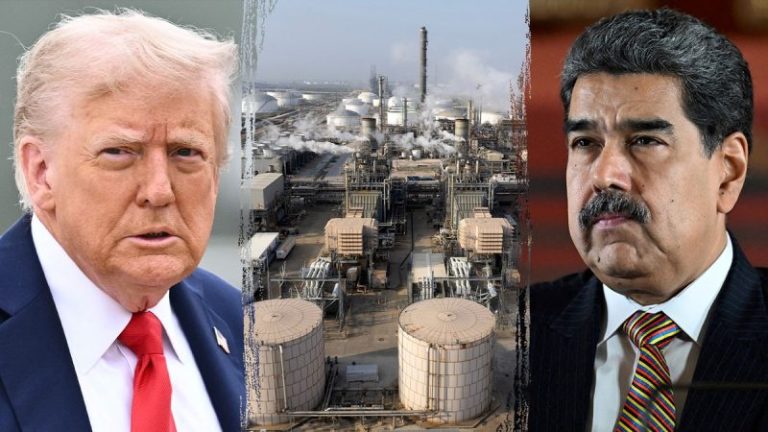
The U.S. has seized a Venezuelan oil tanker, President Donald Trump announced Wednesday, marking a sharp escalation in tensions with Caracas.

‘We’ve just seized a tanker on the coast of Venezuela. Large tanker, very large. Largest one ever seized action. And, other things are happening. So you’ll be seeing that later. And you’ll be talking about that later with some other people,’ Trump said at the White House.

The move is likely to further strain relations with Nicolás Maduro’s government, which already is subject to extensive U.S. sanctions targeting Venezuela’s oil sector. It comes after U.S. military strikes have targeted alleged narcotraffickers near Venezuela at least 22 times since September, killing 87 people.

The seizure was led by the Coast Guard and supported by the Navy, a U.S. official told the Associated Press. The Coast Guard and U.S. Southern Command directed Fox News Digital back to the White House, which could not be reached for comment. 

The Trump administration is considering launching land strikes on Venezuelan territory in an effort to further ramp up pressure on Maduro, who the U.S. views as the illegitimate leader of Venezuela and the leader of the Cartel de Los Soles drug trafficking cartel. 

Trump recently said Maduro’s ‘days are numbered’ and refused to rule out a ground operation in the South American country. 

‘I don’t want to rule in or out,’ Trump told Politico. ‘I don’t talk about it.’ 

Venezuela has some of the largest oil reserves in the world and exports close to 750,000 barrels per day. Around half goes to China, according to Kplr data. 

Prior to broad sanctions, Venezuela was historically a major crude-oil supplier for the U.S.

After sanctions on Venezuela’s state oil company Petróleos de Venezuela SA (PDVSA) in 2019, imports dropped sharply. Limited sanctions relief and occasional licensing, notably for Chevron, allowed some Venezuelan crude to flow again to U.S. refineries in 2024 and 2025. Trump revoked Chevron’s license to purchase oil from Caracas earlier in 2025. 

The region around Venezuela has seen the largest U.S. military buildup in decades, including the presence of the world’s largest aircraft carrier, USS Gerald R. Ford, and the deployment of 10 F-35 jets to Puerto Rico to support Southern Command operations. On Tuesday, two F/A-18 flew over the waters north of Venezuela in training. 

In November, President Trump directed airlines to steer clear of the area — a move that raised speculation among analysts that Washington was preparing for land strikes. 

Trump and Maduro recently held a phone call, but the two sides failed to come to an agreement that would have seen Maduro leave power.

Oil revenue remains the central pillar of Venezuela’s collapsing economy, with the country relying heavily on discounted exports to China and other buyers willing to navigate sanctions exposure.

The nation moves much of its crude through a shadow network of reflagged tankers, shell companies and ship-to-ship transfers designed to conceal the origin of its oil. Many vessels operate with their transponders off or spoofing locations to avoid detection.

This is a developing story. Please check back for updates.

This post appeared first on FOX NEWS

A group of moderate Republicans is defying House GOP leaders to try and force a vote on extending enhanced Obamacare subsidies that expire at the end of this year.

Republicans led by Rep. Brian Fitzpatrick, R-Pa., on Wednesday filed a measure known as a discharge petition, a mechanism designed to force a vote on legislation over the wishes of leadership, provided it gets support from a majority of House lawmakers.

A dramatic series of events unfolded on the House floor as House GOP leaders worked to win support for an unrelated vote that first appeared poised to fail.

While a group of conservatives threatened to mutiny Republicans on that vote for separate reasons, several moderates also appeared to withhold their votes altogether, and Fox News Digital witnessed them in tense discussions with Speaker Mike Johnson, R-La., and other GOP leaders.

Those moderates eventually voted in favor of passing the legislation at hand before marching to the front of the House chamber to file their discharge petition. They lined up one by one to sign the document that would move their healthcare agenda full steam ahead despite Johnson signaling little appetite to entertain it.

So far, the petition has support from six House Republicans and two Democrats but is expected to grow in numbers as the clock ticks on the looming healthcare cost cliff awaiting millions across the country.

‘We know we need a temporary extension of the tax credits — with reforms — and then we can do more serious things, but we’re not gonna do serious changes to the [Affordable Care Act] in the next two or three weeks,’ Rep. Don Bacon, R-Neb., one of the signatories, told Fox News Digital. ‘So, we just felt like, since there doesn’t seem to be any impetus to do this, we’re gonna try to force the issue.’

Asked if he believed they would get House GOP leaders’ blessing, Bacon said, ‘Probably not.’

Fitzpatrick’s bill is aimed at advancing a two-year extension of Obamacare subsidies that Democrats expanded during the COVID-19 pandemic.

Democrats in Congress voted twice during the pandemic to expand the availability of premium tax credits for Obamacare, also called the Affordable Care Act (ACA), to make sure more Americans had access to healthcare coverage.

A majority of House Republicans have signaled they are not open to extending them, at least not without significant reforms. Conservatives in particular have panned the enhanced subsidies as a COVID-19-era relic that benefited insurance companies rather than Americans.

But some GOP lawmakers have joined Democrats in warning that failing to extend them at least temporarily at this point will result in millions of Americans seeing their healthcare premiums skyrocket while Congress refuses to act.

Rep. Ryan Mackenzie, R-Pa., another Republican who signed the petition, said House GOP leaders signaled they would be ‘putting forward’ a number of healthcare reforms ‘that are very positive in nature,’ but ‘an extension of the ACA tax credits was not included in that package.’

‘So, we have been talking about and advocating for that to move forward, and so this seems like the best vehicle to do that,’ Mackenzie said. 

He told Fox News Digital, ‘The reason we’re in this mess to begin with is that things were done in a partisan fashion. And, so, I think if we want longevity and reforms and changes, we should be doing it in a bipartisan fashion.

‘It’s a time-sensitive matter, and it’s an existential matter for people back home who we care about where this is a very real problem,’ Fitzpatrick told reporters. ‘You try to do things through the normal course, you try to do things through regular order. When all those remedies are exhausted, then you’ve got to go this route, unfortunately.’

Asked if it was spurred at all by moderates’ conversation on the House floor with Johnson, Rep. Mike Lawler, R-N.Y., said, ‘It was clear that, given the timeframe and given some of the differences within our conference on particular issues, that a bill was not going to be put forward. And so I think we all recognize the importance of getting an extension passed.’

But it’s not clear whether House Democratic leaders, who have their own discharge petition for a three-year extension of the Obamacare subsidies, will support the bill. It likely will not succeed without buy-in from all House Democrats.

Asked if his leaders would back it, Rep. Jared Golden, D-Maine, said, ‘Go ask them. But I think they ought to.’

Johnson, for his part, told reporters discharge petitions were ‘typically used as a tool against the majority’ but said he was ‘very sympathetic’ to moderate Republicans’ concerns.

‘We have spent many, many hours trying to find a way out of the conundrum that we’re in. With regard to those extensions, there’s a lot of people who are very concerned about Obamacare and the fact that the subsidies were created by Democrats for COVID-era limited use,’ Johnson said.

‘We just can’t get Republican votes on that for lots of reasons, not enough of them. And, so, look, my colleagues have made a decision. I don’t take it against them personally, I don’t operate that way. I have great respect for those guys, I understand the situation they’re in for their districts, and we’ll see how it plays out.’

This post appeared first on FOX NEWS

Senate Republicans rammed through the first procedural hurdle on their road to confirming nearly 100 of President Donald Trump’s nominees on Wednesday.

The move tees up a later vote on 97 of Trump’s picks and marks the third time Senate Republicans advanced a bloc of the president’s nominees since changing the confirmation rules in September.

The final vote to confirm the latest tranche of picks is expected next week. Once Republicans clear this latest package, they will have confirmed over 400 of Trump’s picks during the first year of his second term.

That benchmark would place him well ahead of former President Joe Biden, who at the same point in his presidency had 350 of his nominees confirmed.

Among the list of nominees are former Rep. Anthony D’Esposito, R-N.Y., to serve as inspector general at the Department of Labor, and two picks for the National Labor Relations Board, James Murphy and Scott Mayer, among several others across nearly every federal agency.

The inclusion of Murphy and Mayer in the package comes after Trump fired National Labor Relations Board member Gwynne Wilcox, a move that was ultimately found to be legal by the Supreme Court earlier this year.

It’s also Senate Republicans’ second attempt to move this package after Sen. Michael Bennet, D-Colo., objected last week in a bid to derail the process.

Senate Republicans went nuclear and changed the rules surrounding the confirmation process in a bid to break through Senate Democrats’ monthslong blockade of Trump’s nominees and limited the scope to only sub-Cabinet-level positions that would be advanced through a simple, 50-vote majority.

But one of the nominees in the original package, Sara Carter, a former Fox News contributor whose legal name is Sara Bailey, was considered a ‘Level 1’ nominee, meaning she would hold a Cabinet-level position.

Trump tapped Carter in March to be his drug czar as director of the Office of National Drug Control Policy.

Carter’s inclusion in the package meant that if Republicans wanted to confirm the 87 other nominees and her, they would have to break the 60-vote filibuster threshold. That outcome was highly unlikely, given Senate Democrats’ near-universal disapproval of several of Trump’s picks and accusations that many were not qualified to serve in the positions they had been tapped to fill.

Senate Republicans took advantage of the opportunity, however, and moved instead to offer a new, more beefed-up package that added nine more nominees.

This post appeared first on FOX NEWS

The Department of Justice (DOJ) has charged a Ukrainian woman with helping to carry out dozens of cyberattacks on critical U.S. infrastructure, working with Russian-backed hackers, according to newly unsealed indictments.

The State Department’s Rewards for Justice program is also offering up to $10 million for information leading to others tied to one of the pro-Russia hacking groups she was allegedly affiliated with.

Victoria Eduardovna Dubranova, 33, was arraigned Tuesday on a second federal indictment after being extradited to the U.S. earlier this year.

Dubranova, also known as Vika, Tory and SovaSonya, pleaded not guilty to charges related to her alleged work with two Russian-backed operations, CyberArmyofRussia_Reborn (CARR) and NoName057(16).

Prosecutors say both groups receive backing from Russian government bodies to push Russian geopolitical interests.

According to the DOJ, CARR was founded and funded by Russia’s military intelligence agency, the GRU, and operated a popular Telegram channel with more than 75,000 followers.

Officials allege the group’s attacks caused real-world harm, including damage to public water systems that spilled hundreds of thousands of gallons of drinking water.

They also cited a November 2024 breach at a Los Angeles meat processing plant that spoiled thousands of pounds of product and released ammonia.

Today’s actions demonstrate the Department’s commitment to disrupting malicious Russian cyber activity — whether conducted directly by state actors or their criminal proxies — aimed at furthering Russia’s geopolitical interests,’ said Assistant Attorney General for National Security John A. Eisenberg. 

‘We remain steadfast in defending essential services, including food and water systems Americans rely on each day, and holding accountable those who seek to undermine them.’

NoName057(16) is described as a Russia-linked hacktivist group responsible for more than 1,500 attacks between March 2022 and June 2025.

Its targets included government agencies, telecommunications firms, the military, financial institutions and transportation authorities across Ukraine, Estonia, Finland, Lithuania, Norway, Poland and Sweden.

The group also claimed responsibility for cyberattacks on Dutch infrastructure ahead of and during the 2025 NATO Summit in The Hague.

These groups ‘are actively engaging in opportunistic, low-sophistication malicious cyber activity to gain notoriety and create mayhem,’ said Chris Butera, CISA’s acting deputy executive assistant director for cybersecurity.

Dubranova faces up to five years in the NoName case and as many as 27 years in the CARR matter. Trials are set for February and April 2026.

Rewards for Justice announced its $10 million reward with a pointed message aimed at other NoName participants: ‘They call themselves ‘NoName.’ But maybe YOU can name some names,’ it said.

Fox News Digital has reached out to the DOJ for further comment.

This post appeared first on FOX NEWS